
That first step out the door is the hardest part of the habit — a bulky, confusing watch with a dead battery shouldn’t make it harder. A good beginner running watch needs to be light enough to forget you’re wearing it, smart enough to log a solid GPS track without a phone, and durable enough to survive rain, sweat, and the occasional drop on asphalt. The wrong pick buries you in menus, loses satellite lock mid-run, or demands charging every other day, killing the momentum just when you’re building it.
I’m Min — the co-founder and writer behind Gadgets Feed. I spend my days deep in market data, cross-referencing technical specifications, and filtering through thousands of customer insights to separate marketing claims from real-world performance for this narrow category.
A confusing sports wearable market can stall a new running habit before it starts, which is why this guide cuts through the noise to deliver the definitive best beginner running watch recommendations based on GPS accuracy, battery longevity, weight, and ease of use at every budget level.
How To Choose The Best Beginner Running Watch
Picking your first GPS watch is less about maxing out specs and more about which compromises fit your running reality. Most beginners over-index on features they’ll never use and under-prioritize the three things that actually matter: GPS accuracy, battery life in your usage mode, and weight that doesn’t annoy you during daily wear.
GPS Accuracy — Dual-Band Matters More Than Satellite Count
Single-frequency GPS (common on entry-level models) loses accuracy near tall buildings and under tree cover, sometimes adding 5-10 percent to your reported distance. Dual-band GNSS — found on the COROS PACE 4, SUUNTO Run, and both mibro models here — locks onto multiple satellite frequencies simultaneously and holds a consistent track through urban canyons and park trails. For a beginner building trust in their pace and distance data, dual-band is the single most important accuracy upgrade you can make.
Battery Life — Daily Mode vs. GPS Mode Are Different Numbers
A watch that claims “15 days of battery” usually means minimal notifications, no GPS, and the display off. The real metric is GPS battery life: how many hours of tracked running you get before it dies. The Garmin Forerunner 55 offers 20 hours in GPS mode, while the COROS PACE 4 pushes to 41 hours. If you run four times a week for an hour, a 10-hour GPS battery model forces a charge every few days. A 20-hour model gets you two weeks between charges.
Weight and Comfort — You Won’t Wear a Brick on Your Wrist
The sub-40-gram watches in this list (mibro GS Active2 at 39g, SUUNTO Run at 36g, COROS PACE 4 at 32g) disappear on your wrist. Heavier models add noticeable bob during arm swing and can irritate skin during all-day wear and sleep tracking. For a beginner who hasn’t yet developed the tolerance for a chunky trainer, ultralight construction directly correlates with 24/7 compliance — the watch you forget about is the watch you keep wearing.
Training Features — Look for Guidance, Not Data Dumps
The best beginner watches don’t just record data — they interpret it. Garmin’s Daily Suggested Workouts adapt to your recovery status. mibro Coach in the GS Pro2 creates plans for 5K/10K/half-marathon distances. COROS offers training load and recovery tracking that tells you when to push and when to rest. Avoid watches that require manual interpretation of complex graphs; look for models that serve up actionable advice like “your body needs 48 hours to recover from today’s effort.”
Quick Comparison
On smaller screens, swipe sideways to see the full table.
| Model | Category | Best For | Key Spec | Amazon |
|---|---|---|---|---|
| COROS PACE 4 | Premium | Ultralight daily training | 32g weight / 41h GPS | Amazon |
| Garmin vívoactive 5 | Premium | Health & fitness hybrid | AMOLED / 11 days battery | Amazon |
| SUUNTO Run | Mid-Range | Music on the move | 4GB offline music / 36g | Amazon |
| Garmin Forerunner 55 | Mid-Range | Reliable entry-level Garmin | PacePro guidance / MIP display | Amazon |
| mibro GS Pro2 | Mid-Range | Best battery value | 20 days daily / 20h GPS | Amazon |
| Motorola Moto Watch Fit | Budget | Basic daily activity logging | 1.9″ OLED / 300mAh battery | Amazon |
| mibro GS Active2 | Budget | Entry-level GPS with plans | 39g weight / dual-band GNSS | Amazon |
In‑Depth Reviews
1. COROS PACE 4
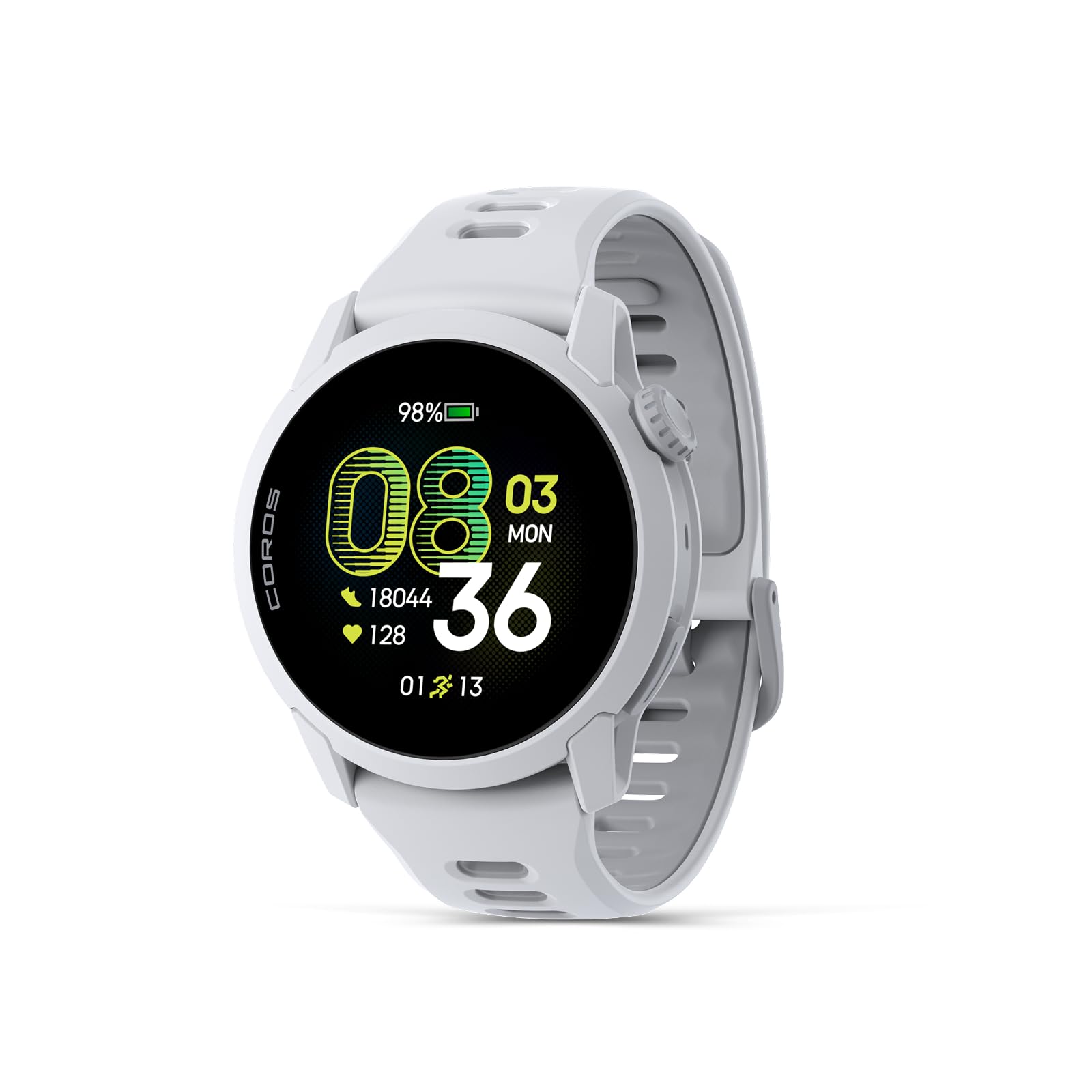
The COROS PACE 4 weighs just 32 grams with the nylon band — lighter than most running fuel gels — and its 1.2-inch AMOLED touchscreen delivers 164 percent higher resolution than its predecessor without adding bulk. The 41-hour continuous GPS battery means a beginner running an hour a day can go over a month between charges, eliminating the charger-dependency that kills the habit.
Dual-band GNSS locks onto multiple satellite frequencies simultaneously, so pace and distance data stay consistent even when you run under heavy tree canopy or beside downtown buildings. Voice recording lets you log thoughts mid-run without stopping, and the digital crown plus two physical buttons offer tactile control when your fingers are sweaty and the touchscreen is unreliable.
Training load and recovery metrics in the COROS app tell you when to push harder and when to rest, turning raw data into actionable guidance. The 4GB onboard storage holds music playlists from third-party services, so you can leave your phone at home during short runs.
Why it’s great
- Ultralight 32g design disappears on the wrist for 24/7 wear.
- 41-hour GPS battery tops every watch in this comparison.
- Dual-band GNSS delivers reliable pace and distance on any route.
Good to know
- Heart rate correlation with pace zones can feel slightly off for some users.
- App ecosystem lacks the third-party integration depth of Garmin Connect.
2. Garmin vívoactive 5

The vívoactive 5 positions itself as a health-and-fitness hybrid rather than a pure running watch, with a bright AMOLED display, 11-day battery life in smartwatch mode, and an elegant ivory silicone band that passes as daily casual wear. Its Body Battery energy monitoring combines sleep, naps, stress, and workout data into a single readiness score — a feature beginners find genuinely motivating.
Beyond running, it offers 30+ built-in sports apps including HIIT, Pilates, swimming, and golf, plus a wheelchair mode that tracks pushes instead of steps. Garmin Coach adaptive training plans deliver free, structured running programs that adjust based on your progress and recovery, removing the guesswork from workout selection.
The wrist-based heart rate sensor, stress tracking, morning report, and nap detection create a comprehensive wellness picture without requiring manual logging. Music storage lets you download Spotify or Amazon Music playlists directly, and connectivity with wireless headphones makes phone-free runs practical.
Why it’s great
- AMOLED display is sharp and readable in direct sunlight at auto brightness.
- Body Battery and personalized sleep coaching build health awareness.
- Garmin Coach adaptive plans guide beginners through structured training.
Good to know
- Nap detection can trigger false positives that can’t be manually deleted.
- Fewer advanced running metrics than the Forerunner series.
3. SUUNTO Run
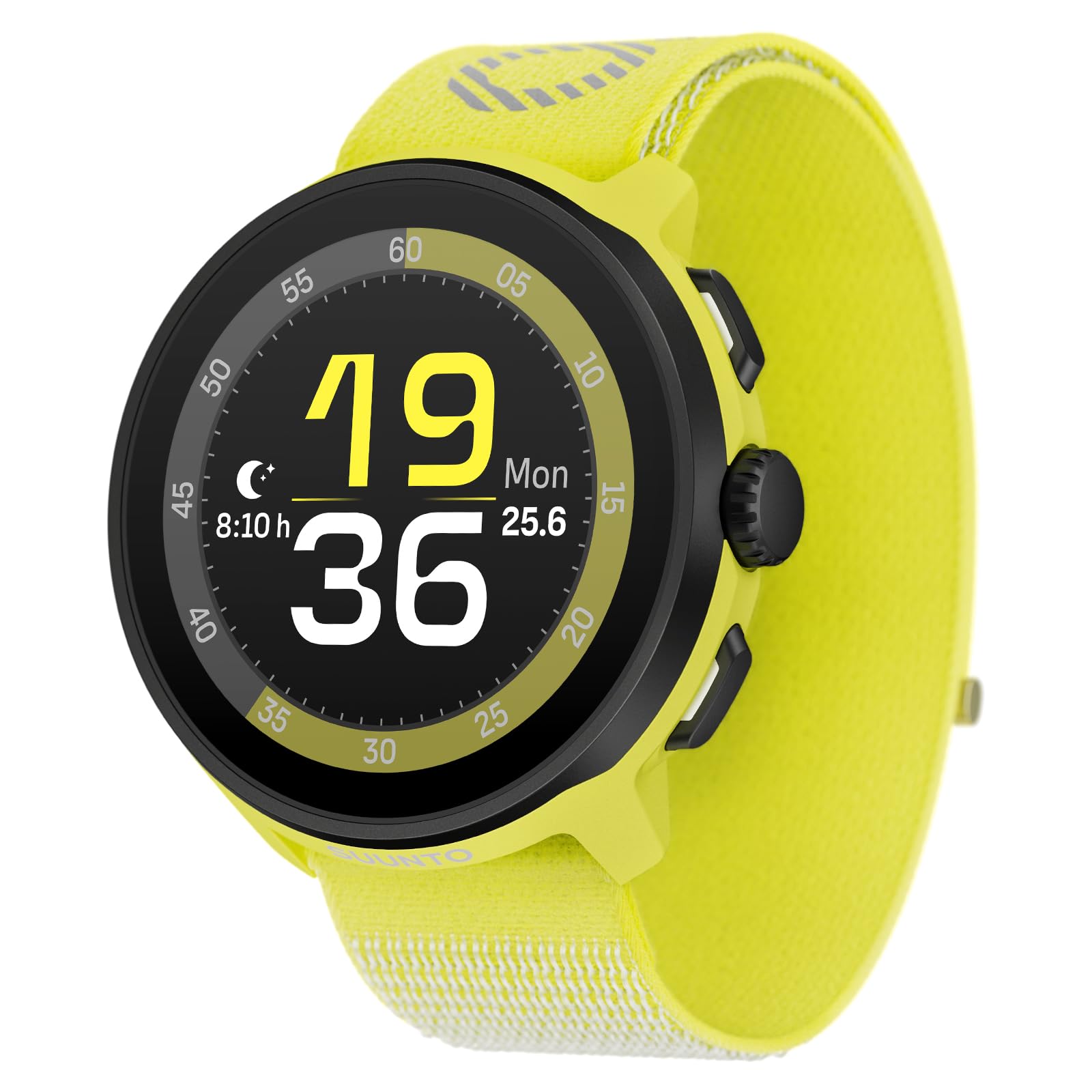
At 36 grams with the textile Velcro strap, the SUUNTO Run is among the lightest options in this roundup and feels nearly imperceptible during arm swing. Its 1.32-inch AMOLED touchscreen with a crown button provides quick glances at pace and distance, and dual-frequency GPS ensures accurate breadcrumb navigation even on winding trails where single-band models drift.
The standout feature for beginners who want phone-free runs is 4GB of onboard music storage — load a playlist and pair Bluetooth earbuds directly to the watch. The 12-day battery life in daily mode drops to roughly 21 hours of continuous GPS tracking, which is adequate for weekly training but shorter than the COROS PACE 4’s 41-hour endurance.
Training Stress Score (TSS) and post-exercise heart rate recovery metrics give actionable recovery insights. The SUUNTO app provides detailed performance analysis, though some users report the sleep and stress tracking occasionally miss the mark compared to more mature platforms like Garmin’s.
Why it’s great
- 4GB of music storage frees you from carrying a phone on short runs.
- 36g weight with textile band is one of the lightest in class.
- Dual-band GPS and breadcrumb navigation keep you on route.
Good to know
- Battery life in GPS mode is shorter than premium competitors at 21 hours.
- Sleep and stress tracking accuracy lags behind Garmin and COROS.
4. Garmin Forerunner 55 (Renewed)

The Forerunner 55 is the watch that made Garmin the default recommendation for new runners, and this renewed model brings that reliability at a lower entry point. The memory-in-pixel (MIP) display stays readable in direct sunlight without a backlight, and the five-button interface works reliably with sweaty or gloved fingers — no touchscreen to fumble with mid-stride.
Daily Suggested Workouts automatically adjust intensity based on your training history, fitness level, and recovery time, removing the mental overhead of deciding what to run each day. PacePro provides GPS-based pace guidance for a selected course or distance, helping beginners learn to hold consistent splits rather than starting too fast and fading early.
The 20-hour GPS battery supports roughly two weeks of training before charging, and wellness features like intensity minutes, fitness age estimation, and all-day respiration round out the health picture. It lacks AMOLED brightness and music storage, but for pure running function it delivers everything a beginner needs and nothing they don’t.
Why it’s great
- Daily Suggested Workouts automate training intensity decisions.
- MIP display is always-on and sunlight-readable without battery drain.
- Five-button control works perfectly in rain, snow, and heavy sweat.
Good to know
- Screen appears dark indoors compared to AMOLED competitors.
- No music playback or contactless payment functionality.
5. mibro GS Pro2
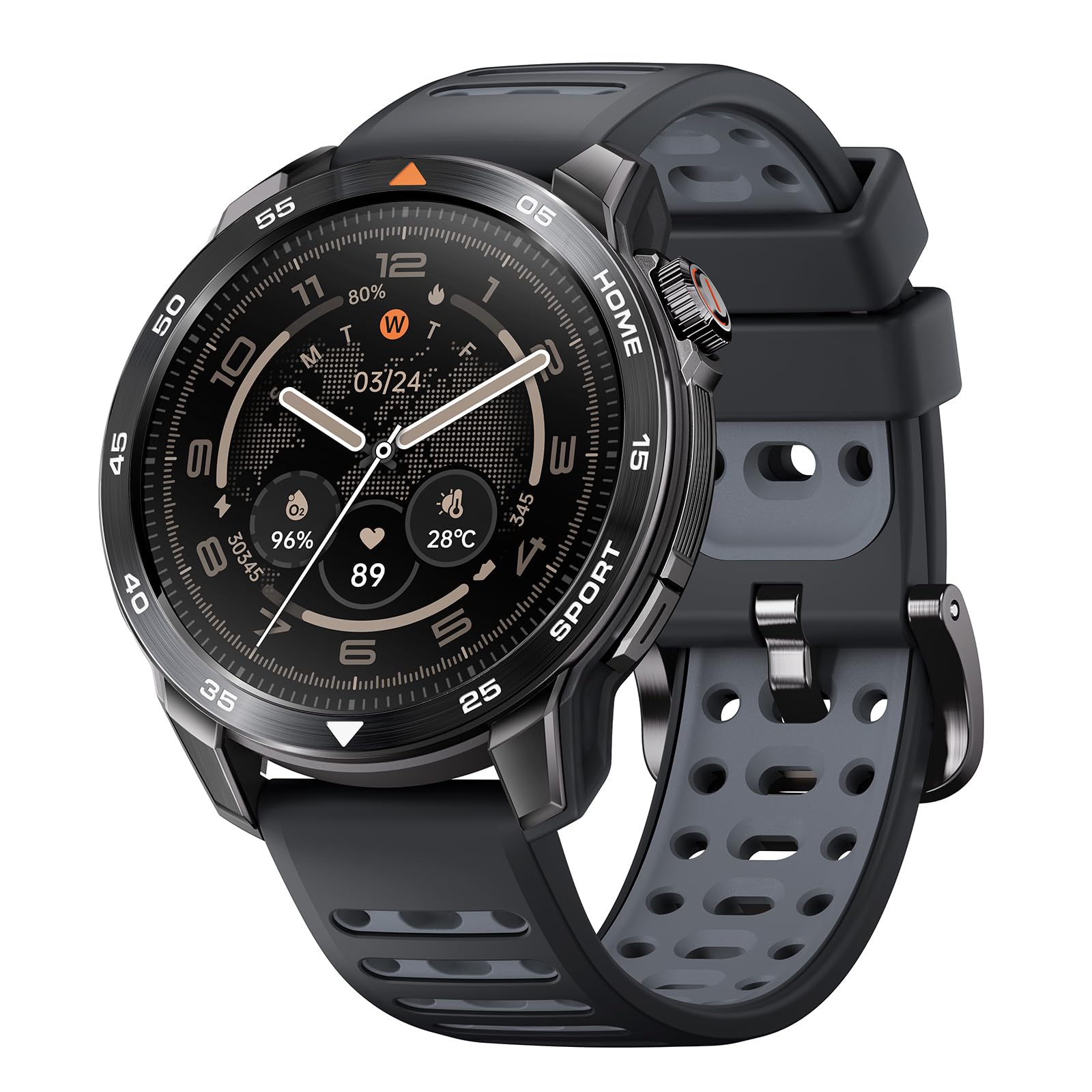
The mibro GS Pro2 packs a 460mAh battery that delivers up to 20 days of daily use and 20 hours of continuous GPS tracking, competitive with watches costing twice as much. The 1.43-inch AMOLED display is large and sharp, and the stainless steel case gives it a premium heft that belies its mid-range position.
The mibro Coach feature builds personalized running plans based on your current fitness level and goals, offering structured guidance for 5K, 10K, and half-marathon distances. Dual-band GNSS locks onto five satellite systems simultaneously, and real-time tracking of pace, cadence, and stride length gives beginners the same data points as more expensive training watches.
With 150+ sport modes and 5ATM water resistance, it handles pool swimming and rainy runs without concern. Some users report the stock silicone band runs short for larger wrists, so factor in a potential strap upgrade if you’re above average circumference.
Why it’s great
- 20-day battery in daily mode dramatically reduces charging frequency.
- mibro Coach provides structured training plans for common race distances.
- Large 1.43-inch AMOLED is one of the brightest displays in this tier.
Good to know
- Stock band may be too short for wrists larger than 7.5 inches.
- App ecosystem lacks the third-party polish of Garmin or COROS.
6. Motorola Moto Watch Fit

The Moto Watch Fit prioritizes style and basic daily health tracking over deep running analytics, with an ultra-thin aluminum frame, a large 1.9-inch OLED screen, and interchangeable 22mm bands that let you swap from sport to casual in seconds. The IP68 rating and 5 ATM pressure certification mean it survives pool swims and dusty trails without issue.
With over 100 sports modes and GPS tracking (though reviews note GPS accuracy is not its strongest suit), it serves well as a general activity tracker for the casual jogger who also wants step counting, sleep monitoring, and stress insights.
Where it falls short for committed runners is the lack of real-time pace data during hikes, no onboard GPS for standalone run tracking, and a locked-down operating system that limits third-party app integration. It’s a lifestyle watch with fitness features, not a running watch — ideal if your primary goal is general wellness with occasional jogging.
Why it’s great
- Large 1.9-inch OLED display is easy to read at a glance.
- Interchangeable 22mm bands offer daily style flexibility.
- Solid IP68 and 5 ATM water resistance for swim and trail use.
Good to know
- GPS accuracy is inconsistent, especially on wooded trails.
- Bluetooth connectivity can drop and fail to auto-reconnect.
7. mibro GS Active2
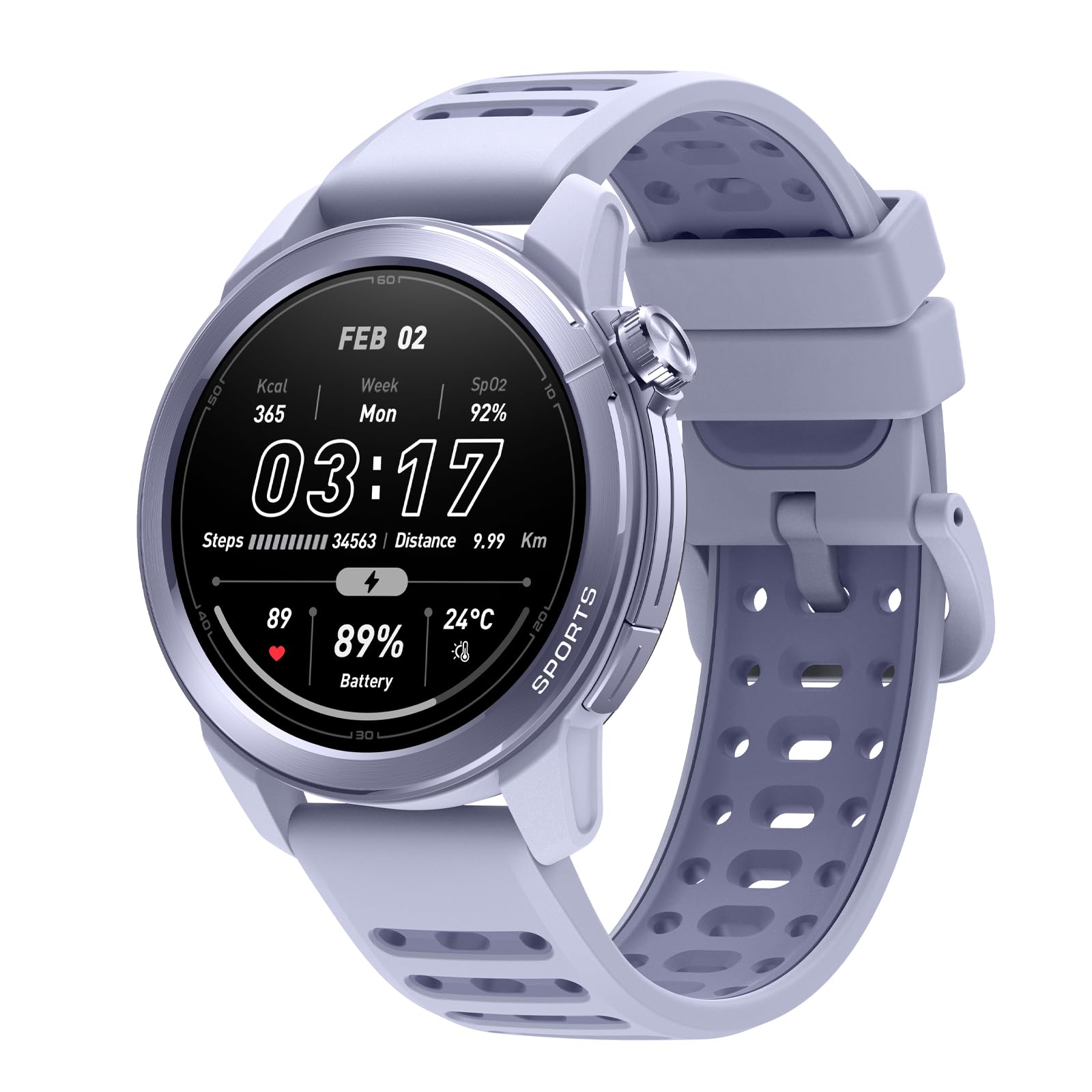
The mibro GS Active2 brings dual-band GNSS and structured training plans to an entry-level price point, a combination usually reserved for watches costing significantly more. At 39 grams with the nylon band, it’s light enough for sleep tracking and comfortable for all-day wear, and the 46mm AMOLED display provides clear data readouts during runs.
The watch calculates VO₂ Max trends, cadence, stride length, and running ability index, feeding data into a professional algorithm that offers coach-like guidance. Adaptive race training plans for 5K, 10K, and half-marathon adjust based on your goals and logged runs, giving beginners a clear path forward without requiring manual workout design.
Battery life hits approximately 15 days in daily mode and 15 hours in GPS mode — enough for a full marathon with charge to spare. The 5ATM water resistance handles pool swimming and surf, though the brand advises against hot showers or hot springs. Some users report occasional GPS drift compared to premium units, and Bluetooth reconnection can require manual intervention.
Why it’s great
- Dual-band GNSS at an entry-level price is rare and valuable.
- 39g weight with nylon band makes it comfortable for 24/7 wear.
- Built-in training plans for 5K, 10K, and half-marathon distances.
Good to know
- GPS accuracy can drift on twisty urban routes compared to premium rivals.
- Bluetooth pairing occasionally requires manual reconnection.
FAQ
Do I need onboard music or can I just run with my phone?
What is the lowest weight I can expect from a beginner running watch?
How important is Cadence and Stride tracking for a total beginner?
Final Thoughts: The Verdict
For most beginners, the best beginner running watch is the COROS PACE 4 because it combines a 32g ultralight build with 41 hours of GPS battery and dual-band GNSS accuracy at a mid-range price point that outperforms premium options in run-specific metrics. If you want deep health-tracking integration and an AMOLED screen that works as a daily smartwatch, grab the Garmin vívoactive 5. And if your budget is tight but you still demand structured training plans and dual-band positioning, nothing beats the value of the mibro GS Active2.