
Our readers keep the lights on and my morning glass full of iced black tea. As an Amazon Associate, I earn from qualifying purchases.
Specs are compiled from manufacturer listings and verified buyer reviews and can change over time — please confirm the key details on the product page before buying.
If you keep leaving shots in the sand or blading chips across the green, the fix is almost never your swing — it is the wedge in your bag. A beginner sand wedge uses a wide, heavy sole and a high loft to slide under the ball instead of digging into it, which turns nerve-wracking bunker shots into something you can actually repeat. This guide covers nine wedges that real high-handicap and new golfers keep buying, and it explains in plain words which loft, bounce, and head shape each one gives you. One quick heads-up before you read: this list uses flexible, human-like matching for sand wedge loft, so it accepts anything in the 54 to 58 degree range — not every pick is the exact number you typed in, but the nearest same-type club does the same job. You will never be misled about what you are buying.
I’m Min — the founder and writer behind Gadgets Feed. This guide is built by comparing the manufacturers’ published specifications and the patterns across verified customer reviews, so you get each pick’s real strengths and trade-offs instead of marketing spin.
Short-game clubs are the fastest place to shave strokes, and the right one should feel almost automatic in the sand. Here is what actually separates the good ones from the frustrating ones, so you can pick the Best Beginner Sand Wedge with confidence.
Our Picks at a Glance


How To Choose The Best Beginner Sand Wedge
A sand wedge is the one club in your bag built specifically to get you out of trouble, so the choices here matter more than they do for almost any other club. Buy the wrong loft and you will skull shots across the green. Buy the wrong sole and you will dig straight into the sand. The four things below decide whether a wedge feels forgiving or punishing in your hands.
Loft: Why 54 to 58 Degrees Is Your Starting Zone
Loft is the angle of the clubface, and on a sand wedge it usually sits between 54 and 58 degrees. That range gives you enough height to pop the ball up and out of a bunker without the extreme steepness of a lob wedge. A 56 degree wedge is the classic middle ground and the single most common sand wedge loft you will find. If you only carry one specialty wedge, this is the number to start with. The higher you go, the more the ball climbs — and the shorter your full-swing distance gets.
Bounce and Sole Width: The Real Forgiveness Switch
Bounce is the angle built into the sole that lets the club skim through sand or grass instead of digging in. More bounce and a wider sole are what stop a beginner from burying the leading edge on a fat shot. This is exactly why high-handicap players get on better with a wide-soled sand wedge than with a thin, blade-style club. If you play soft, fluffy sand or wet, thick rough, extra bounce helps most. If your course has firm, tight turf, a very wide sole can bounce off the ground instead of through it, so balance matters.
Head Weight and Grip: Feel You Can Trust
A heavier club head gives you more momentum, which helps the club push through sand and thick grass without stalling. That weight also makes it easier to feel where the clubhead is during your swing. Grip size and material matter too — a standard synthetic rubber or corded grip keeps your hands quiet, while an oversized grip can reduce wrist roll for players who struggle with consistency. Neither is right or wrong; they simply suit different hands.
Quick Comparison
Scan the three spec columns to see how these wedges stack up on the numbers that actually change your shots — the loft angle, the bounce built into the sole, and the head weight you will feel swinging it.
| Model | Best For | Loft | Weight | Head Type | Amazon |
|---|---|---|---|---|---|
| Alien Roswell Golf Wedge★ Best Overall | Instant confidence from bunkers and rough | 56 degrees | 1.1 pounds | Cavity back | Amazon |
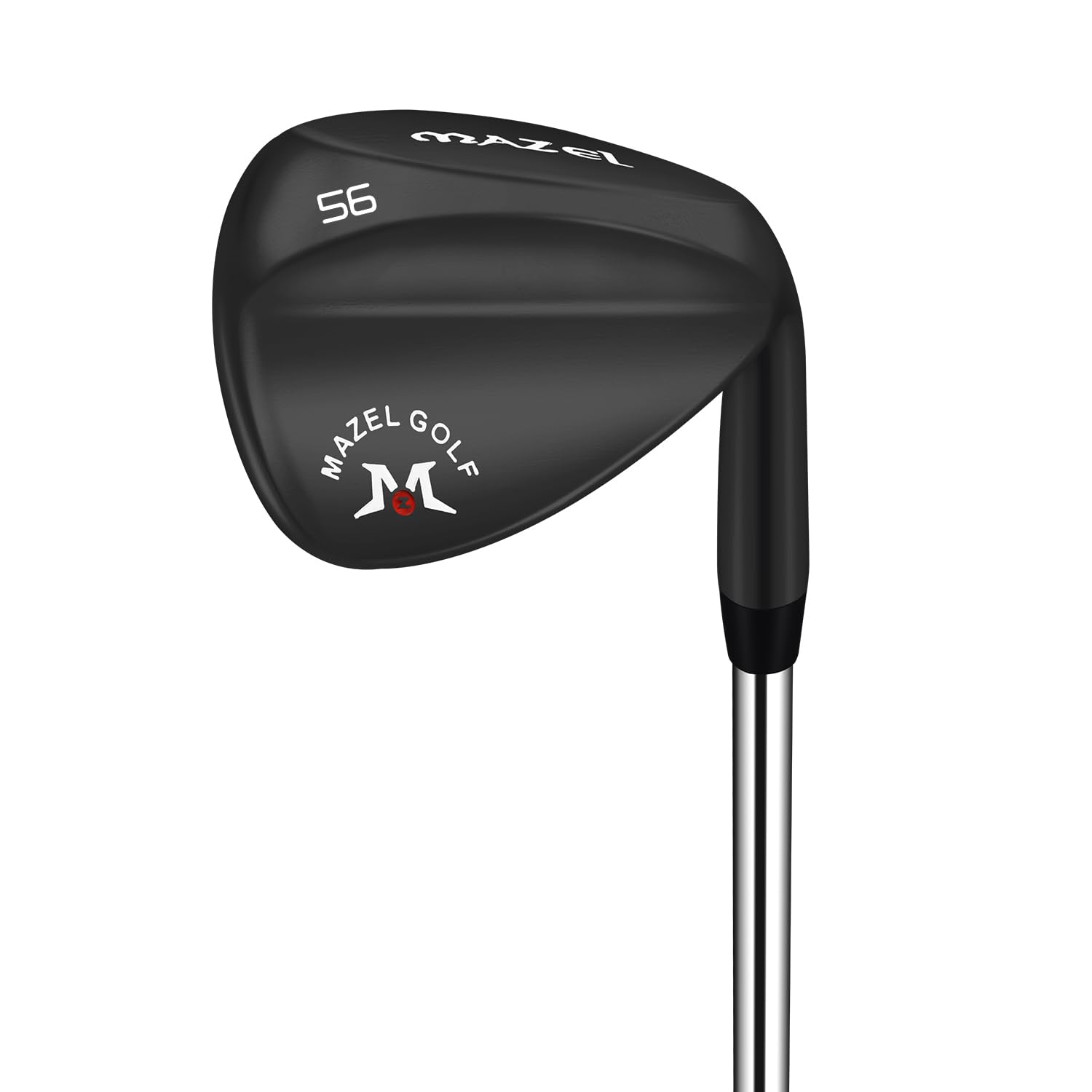
| MAZEL Forged Golf WedgeBest Value | Flop shots and steep bunker escapes | 56 degrees | 300 g | Forged | Amazon |
| Yamato Full Face Golf WedgeFull-Face Spin | Spin on off-center contact | 60 degrees | 0.48 kg | Milled | Amazon |
| Orlimar Spin Tech 56 | Controlling spin from the rough | 56 degrees | — | Blade | Amazon |
| Wilson Harmonized Wedge | One club that does both sand and chipping | 56 degrees | 0.41 kg | Wedge | Amazon |
| A11N SPORTS Forged Wedge Set | Filling every yardage gap in one buy | 52/56/60 degrees | — | Blade | Amazon |
| GoSports Tour Pro Wedge Set | A full short-game setup on a budget | 52/56/60 degrees | 1.59 kg | Wedge | Amazon |
| ALVO GOLF Full Face Wedge Set | Maximum spin on off-center strikes | 56 degrees | — | Blade | Amazon |
| Cleveland Smart Sole Full-Face | Forgiveness on almost any lie | — | — | Cavity back | Amazon |
In‑Depth Reviews
1. Alien Roswell Golf Wedge
Our pick — over 4.5★ from 400+ verified ratings; the strongest balance of quality and price.
The confidence-builder that turns a hated bunker shot into a full swing you can trust.
If you are the golfer who dreads the sand and blades half your chips, start here. This is a 56 degree wedge with a cavity back head — meaning the weight is pushed to the outside edges of the clubhead instead of sitting behind the balance. That extra weight low and around the edges is exactly what makes the club want to get under the ball and glide through sand rather than dig. The steel shaft and uniflex bend (a middle-of-the-road stiffness that suits a wide range of swing speeds) keep the setup simple for a newer player who does not want to think about shaft flex yet. It carries a 1.1 pound head weight, which gives you real momentum through thick lies.
What buyers report feeling first is that the ball simply goes up. Getting the ball airborne on demand is the single hardest thing for a high-handicap player, and this club takes that off your plate — the weighting does it for you, so you can commit to a full swing instead of a hesitant little poke. The recurring theme across owner feedback is that it just keeps working in the places beginners struggle most: the sand trap, the thick rough, the greenside chip that used to roll eight feet past the hole. One owner credits it with saving several strokes a round. Cut down on the shaft and choke down for chips, and it takes even less work.
Set against the more expensive premium names, this one holds its own at a fraction of the spend — and it arrives game-ready. Conforms to the Rules of Golf, so you can play it in your weekend competitions without worrying about legality. Compared with the Orlimar Spin Tech 56 below, the two share the same 56 degree loft, but this one leans harder on fat-shot forgiveness while the Orlimar chases raw backspin. If you want the widest margin for error off the rack, the Alien wins that argument.
What Makes It Click
- 56 degree loft pairs a high, forgiving flight with real usable distance on full swings
- Cavity back head puts weight low and around the edges, so it glides through sand instead of digging
- 1.1 pound head keeps momentum going through thick rough and wet lies
- Steel shaft with uniflex bend means you do not have to fuss over flex
- Conforms to the Rules of Golf for tournament play
Where It Asks a Little Back
- Not a brand name, so it will not win any bag-flex contests
- Bunker shots still take a little practice before they feel automatic
- One green color choice only
Grab it if: you are a beginner or high-handicap player who wants one wedge to rescue shots from sand, rough, and greenside trouble with the least fuss.
Think twice if: you already shape shots competently and want the low running chip style instead of a high flight — a steep, aggressive head may feel busy to you.
2. MAZEL Forged Golf Wedge
A forged wedge with a full milled face that pops the ball out of sand and stops it flat.
If flop shots and steep bunker escapes are your nemesis, this one was built for the job. That 63 degree bounce angle is the standout number here — bounce is the angle on the sole that lets the club slide through the sand and up out of a trap rather than digging a trench. A 63 degree bounce is very high, and with the extra-wide sole MAZEL describes, it makes the club skim rather than dig. The price floor here is entry-level money for a forged head with a full CNC milled face — meaning the grooves are cut by a milling machine rather than stamped, which gives a cleaner, sharper edge that grabs the ball. On loft, the MAZEL’s 56 degrees sits 6 degrees above the Yamato Full Face’s 50, giving the MAZEL extra height and stopping power around the green.
What owners rave about is the quality-to-price ratio and the ball control on flop shots — full swings send it high and it lands softly near the pin. A nine-handicap player found it swings normally with no setup tinkering. The recurring honest note is weight — some feel the clubhead is heavy, others say it feels perfect. That disagreement is really about feel preference, not a flaw, and it depends on how much feedback you want from your short game.
It carries the look of a premium wedge too — the black 56 degree head, a standard synthetic rubber grip, and a regular flex shaft. The trade-off to know about is the finish; a few owners mention the black coating can scuff with heavy use. Cosmetic only, but worth knowing if pristine looks matter to you. For a forged wedge with a milled face at this spend, the value is hard to argue with.
The high-bounce win: that 63 degree bounce plus a wide sole is tailor-made for soft sand and soggy turf, exactly the lies beginners fighting a trap will meet most.
The finish caveat: black coatings on budget wedges tend to wear, particularly around the sole where you strike the ground. Plan on a scuffed face eventually.
Go this way if: you want maximum help escaping bunkers and executing flop shots from soft lies without spending big on a brand name.
Look on if: you prefer a lighter swing feel or you play very firm, tight fairway turf where a high-bounce sole can skip off the ground.
3. Yamato Full Face Golf Wedge
Grooves that run all the way to the toe, so a mishit still bites the green.
The defining feature of this club is its full-face groove pattern — the milled grooves run across the entire hitting surface instead of stopping short of the toe. With grooves reaching all the way out, a toe strike still generates spin and control instead of a dead shot that runs off the back. The leading edge is also shaped to not dig into the ground, which helps you avoid the fat, chunked shots that make you want to quit. This particular configuration is a 60 degree wedge (a lob wedge loft) in black, with a 50 degree listing figure on the spec sheet, and it comes in a range of lofts that includes 50/52/54/56/58/60.
Owners mention the performance around the green is where it shines — plenty of spin, a nice grip, and a solid weight you can feel. The black finish draws compliments, and one buyer described significant backspin on normal chips with the 60 degree head. For chipping close to the green and digging out of sand, this is a genuine upgrade over a worn-out old wedge. The leading edge you can rely on is the detail most first-time buyers miss, but it is the one saving you the most grief.
Compared to the forged MAZEL above, this one trades the extremely high bounce for a more universal sole and a full-face groove pattern that hides toe misses. If your biggest problem is contact quality rather than bunker escapes, this is the more logical pick. A few owners do report durability concerns over the long haul, so treat the face gently and check your grooves every season. At its price, still a strong short-game starter.
Why Beginners Warm to It
- Full-face grooves mean a toe strike still spins the ball
- Leading edge resists digging — fewer fat shots from tight lies
- The 60 degree head pops the ball high on chips and sand shots
- Grip and finish feel premium for the money
Things to Keep in Mind
- A few customers note durability issues over time
- The 60 degree loft is a specialty club, not a do-everything wedge
Buy this when: your mishits are costing you strokes around the green and you want spin protection that covers toe contact.
Skip ahead if: you are specifically after a single 56 degree sand wedge for the majority of your bunker play.
4. Orlimar Spin Tech 56

A classic-shaped 56 that puts spin on the ball without charging like a tour brand.
This is the sand wedge for the golfer who wants a proper club that looks and feels like the expensive ones but does not want to pay for the badge. Its a neat extra is a dual-milling face that creates a rougher surface than a standard wedge — that surface roughness is what grabs the ball and generates backspin around the green. A 14 degree bounce angle gives you a solid, forgiving sole that handles sand and rough without excessive dig, and the leading edge stays higher than the trailing edge for cleaner contact. The precision cast 431 stainless steel construction with a non-glare brushed satin finish is built to hold up round after round.
What wins people over here is the appearance and value — it looks as premium as clubs that cost several times more. Reviewers point out using it successfully out of thick Bermuda rough and getting the ball to check up on the green. The face is genuinely milled, the balance is right, and it swings with proper wedge flex. One honest note from owners is that the grip can have an odd smell from the start and the grip labeling can wear off. Easy fix — a new grip is cheap.
Positioned against the Wilson Harmonized below, both are 56 degree lofts, but the Orlimar leans toward spin control and a classic blade profile while the Wilson goes for a friendly all-rounder. If your priority is stopping the ball on the green from the rough, the dual-milled face here is the point of difference. The blade-style head means less built-in forgiveness than the cavity-backed Alien above — a slight trade for the sharper feel.
Spin you can see: the dual-milled face and 14 degree bounce are a smart pairing — enough texture to grab the ball, enough bounce to forgive a slightly heavy strike.
The handle: a fixable quirk rather than a flaw. Swap in your preferred grip and the wedge is ready for a full season.
Pick this if: you want classic wedge looks, real backspin from the rough, and a durable cast stainless head that will not flinch.
Choose differently if: you need maximum off-center forgiveness, which a blade profile simply cannot give as generously as a cavity-back head.
5. Wilson Harmonized Wedge
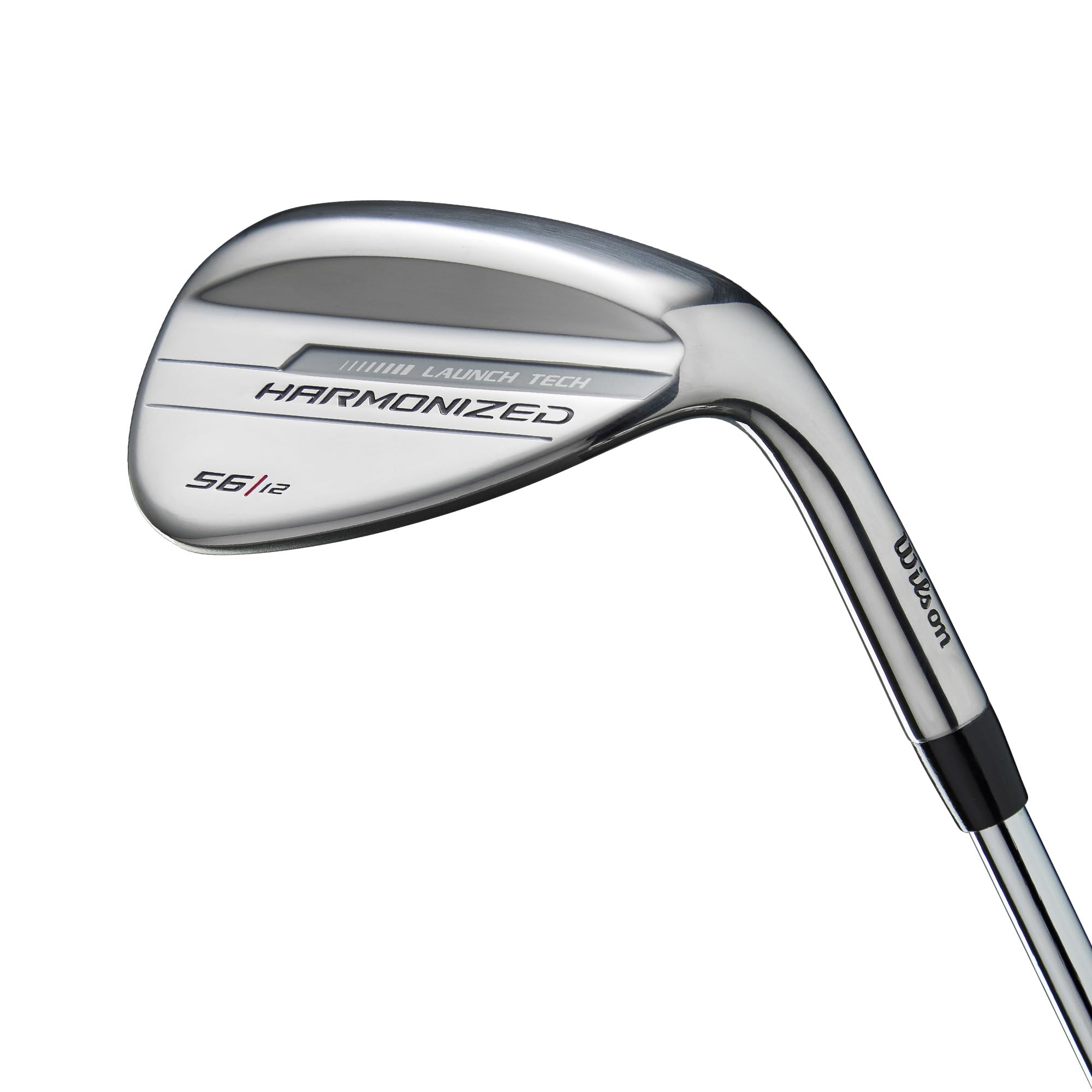
One reliable 56 degree club that handles both sand escapes and close-range chipping.
Here is the wedge for the golfer who wants one club to do a bit of everything without fuss. This is a 56 degree loft with a steel shaft and a regular flex, which is a friendly all-round setup for a newer player. The grip is Regular Midsize, a little fuller than standard, which quiets the hands and suits someone whose chips tend to roll past the hole. At 0.41 kg, the head weight feels solid without being heavy enough to slow down your swing. That combination — moderate loft, steady grip, manageable weight — is exactly why this makes a good teaching club for learning to stop the ball on the green.
The performance story here is easy to understand. Owners say it swings cleanly and produces a good hit, with the 56 degree loft checking up on the green while a lower-lofted 50 degree head rolls out instead. Shoppers say that toe strikes still carry reasonable distance — a genuinely useful trait for a beginner. The brand loyalty is real too; players who chose this over far more expensive wedges say it performs right alongside them on the course and replaces their pricier backup in the bag. The recurring point of debate is feel — weight and swing weight draw mixed feedback, which again is a preference matter, not a build problem.
Match it against the Orlimar above: both are 56 degrees, but the Wilson gives up a little spin tuning to gain a larger, friendlier grip and an easier swing. If your game is still developing and you want the club to feel calm in your hands, that trade points your way. A dependable steel-shafted starter for anyone committed to the long game of improvement.
This suits you if: you are a newer golfer who wants a steady steel shaft, a midsize grip, and one wedge that handles both sand and greenside work.
Rethink if: you are chasing the stopping power of a fully milled, spin-focused face — the harmonized sole favors consistency over bite.
6. A11N SPORTS Forged Wedge Set

A three-wedge set that fills every yardage gap so you never stare at a shot without a club.
For the golfer who wants to stop buying wedges piecemeal, this is a complete short-game lineup in one purchase. You get a 52 degree gap wedge, a 56 degree sand wedge, and a 60 degree lob wedge — the three lofts that cover the majority of shots from around 100 yards in. The precision-milled face cuts grooves uniformly so the spin is consistent from club to club, and the forged construction gives you a soft, responsive feel at impact. Because all three are forged and milled the same way, your touch and feedback stay constant as you rotate clubs — a genuine plus for a learning player.
Owners of this set talk about quality that stands up to name-brand clubs, and about the premium look and strong spin across the board. Players filling the gap between an existing pitching wedge and a mid wedge find the three-piece spread exactly right. One note to plan around is that these wedges run heavier than normal — a couple of owners specifically call out adjusting your setup by reaching your arms under at address so the extra weight does not cause fat contact. Make that small adjustment and the wedges land sweetly, with owners calling them among the best they have owned.
For readers juggling the single-club choices in this guide, this set is the “buy once, cover everything” route. It pairs naturally with learning players who are actively building out a bag and want a cohesive set of wedges rather than one custom pick. The forged feel at this price is the draw, and the three-loft coverage is the practical payoff.
Where the Set Earns Its Spot
- Three lofts (52, 56, 60) cover the full short-game range so you are never caught without the right club
- Forged heads with a precision-milled face keep spin and feel consistent across the set
- Owners find them comparable to name-brand wedges for a fraction of the spend
What to Account For
- These feel heavier than standard wedges, so expect a short adjustment period
- The finish is reported to wear with heavy use
- No left-handed options in this set
Claim one if: you are filling out a full set and want a forged, milled trio giving you gap, sand, and lob coverage in one consistent purchase.
Pass for now if: you are only after a single sand wedge and would rather dial in one club before expanding.
7. GoSports Tour Pro Wedge Set

Three wedges with a tour-club look — a gap, a sand, and a lob for one sensible buy.
This is the “tour look without the tour tariff” play. The set includes a 52 degree gap wedge, a 56 degree sand wedge, and a 60 degree lob wedge, each with a milled clubface and conforming grooves for spin and control from any lie. The clubhead design, with its wrap grip in polyurethane and its brushed silver or black satin finish, is meant to feel like a club far higher up the price ladder. The item weight of 1.59 kg across three clubs is a solid indicator that these heads have real presence in your hands — good news for pushing through heavy lies and for building confidence when you swing.
What buyers value most is straightforward quality for the money — a strong set for a junior or new player being outfitted for the season. One parent bought the set for a son and ended up gaming the approach wedge himself. The loft spread makes them genuinely useful for a developing golfer — you get the full progression from approach to green-side lob so there is no distance hole in your short game. The four-star feedback centers on feel and flight rather than durability, and the construction has held up well through a season of play.
Set against the more premium offerings above, the GoSports set is the best pick for putting a starter or a junior golfer into a coordinated set without spending on brand names. If you want a single club to master first, the standalone wedges earlier on this list make more sense — but if you want instant short-game coverage across distances, this trio delivers.
The aspirational look: brushed or black satin finishes and a polyurethane wrap grip give this set the feel of a tour club for new players weighing first impressions.
The honest read: at four out of five stars, feedback varies more than on the pricier singles, so treat these as great value rather than premium tour precision.
Best matched to: a beginner or junior golfer who needs a coordinated three-wedge setup covering gap, sand, and lob distances at once.
Less suited to: the experienced player hunting a single specialist sand wedge with top-tier feedback.
8. ALVO GOLF Full Face Wedge Set
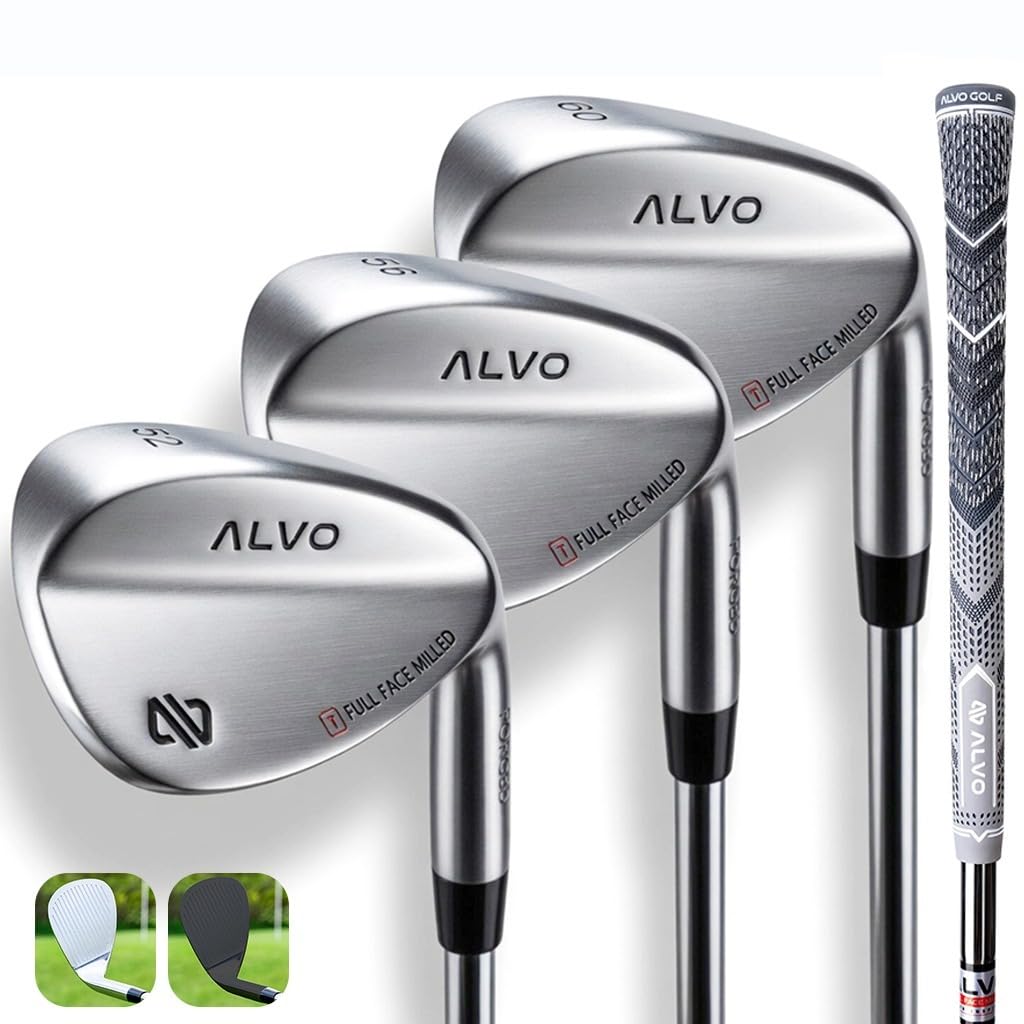
Full-face grooves across all three lofts, so mis-hits still bite and stop dead.
These are made for the golfer who wants tour-style spin all over the face, not just in the balance. The set covers 52, 56, and 60 degree lofts, and every head wears a CNC-milled full-face groove pattern — the grooves extend across the entire face, so a strike out toward the toe still generates spin and control. An 11 degree bounce angle sits in the versatile middle — enough to forgive a slightly heavy strike on a greenside pitch without the club bouncing off firm turf. The multi-compound corded grip blends a soft feel with responsive control, which is a meaningful detail for a player building a consistent short game.
Owners describe the forged heads as soft and the grips as nicely tactile, and the spin performance is the standout. A low-handicap tester rated the feel between the pricier tour models, and an owner replacing a ten-year-old set reported stronger spin on full shots with the same control on partial pitches. There is a real “why pay more” quality to these — three wedges that perform close to premium for a mid-range spend. One owner reported the black finish held its color through many rounds.
Compared against the GoSports and A11N sets above, the ALVO is the strongest pick if spin and full-face coverage are your priorities, though it lists the highest bounce figure of the trio at 11 degrees. It is engineered to help you stop the ball on fast greens — the exact problem most beginners fight when a chip rolls off the back. A couple of owners flag the grooves run aggressive, which is the spin advantage itself, so keep them clean and they will reward you.
What Earns Its Keep
- Full-face CNC-milled grooves give spin even on toe strikes
- Forged heads feel soft and damped at impact
- Multi-compound corded grip keeps control in your hands
- 11 degree bounce handles soft and firm turf reasonably
Worth Weighing
- A couple of players note these wedges run heavy compared with a standard setup
- The aggressive grooves can chew into soft-cover balls over time
Best for you if: spin and off-center forgiveness are your top priorities and you want a three-wedge spread that stops the ball where it lands.
Maybe not if: you prefer an ultra-light feel or want a single wedge to learn on rather than a full trio to manage.
9. Cleveland Smart Sole Full-Face Wedge

An extra-wide sole that glides through sand and short rough without asking much of you.
The Smart Sole is a premium single wedge built around making the game easier rather than harder. Its defining spec is the Three-Tiered Sole — an extra-wide sole with added leading edge bounce. That wide, tiered sole is exactly what lets the club glide across sand and short rough rather than digging in, which is why this is a strong choice for a player who fears bunkers. The cavity back head pushes weight to the perimeter, and Cleveland states these are their largest faces with improved MOI (moment of inertia, meaning the club resists twisting on off-center hits). It uses a Lamkin Crossline Connect grip, a genuine upgrade over standard grips.
What owners consistently mention is the size and the shot accuracy — this is the club that gets people out of trouble around the green. Chipping and low running pitch shots feel controlled, and the wide sole slides through short rough without catching. Several players call it their new favorite club, and one long-time skeptic was won over after hitting it. Sand performance draws praise — the sole glides rather than digs. The honest caveat here is chipping feedback, which is more mixed — this is a club designed to help you get the ball onto the green and rolling, not to offer the delicate touch of a traditional blade.
Between the two premium singles — the Alien above and this Cleveland — the Alien gives you a cavity back 56 degree head with a soft price, while this one brings a large face, a wide smart sole, and premium grip. If your honest priority is simply getting out of the sand and onto the green, the wide sole here is designed for exactly that job. A single-league specialist, not a do-everything wedge.
Reach for this if: you want premium build quality, a wide forgiving sole, and a grip upgrade from the start for sand and greenside escapes.
Look elsewhere if: you already have a refined short game and want a thin blade for feel around the green — the broad sole is built for forgiveness, not finesse.
Understanding the Specs
Six terms decide whether a beginner sand wedge helps you or hurts you. Here is what each one actually means in your hands.
Loft in Degrees
Loft is the angle of the clubface, measured in degrees. On a sand wedge it typically sits between 54 and 58 degrees, and a 56 degree club is the classic middle ground. The more loft, the higher and softer the ball flies — and the shorter the distance on a full swing. That high flight is what stops the ball near the flag instead of rolling off the back of the green.
Bounce
Bounce is the angle built into the sole that lets the club skim through sand and grass instead of digging. Higher bounce and a wider sole help most on soft sand and wet, thick rough. Lower bounce suits firm, tight turf where a wide sole can bounce off the ground. For a beginner who tends to hit slightly behind the ball, more bounce is usually the safer choice.
Head Weight and Swing Weight
A heavier head gives you momentum through sand and thick grass, and helps you feel where the club is during your swing. Too heavy can slow your tempo; too light can let the club get tossed around by the lie. Weight is a feel preference, which is why the same club can draw different opinions from different players.
Forged vs Cast Heads
Forging means the head is shaped by pressing or hammering heated steel, which generally produces a softer, more responsive feel. Casting pours molten metal into a mold, which tends to feel firmer and is often more affordable. Neither is better for a beginner in absolute terms — forged gives a livelier touch, cast gives a durable head at entry prices.
Full-Face Grooves
Grooves are the scored lines on the face that grip the ball and create spin. A full-face design runs those grooves all the way across the hitting area, including out toward the toe. Since beginners miss toward the toe far more often than the center, full-face grooves keep a mishit spinning and stopping instead of skidding straight across the green.
Grip Type and Size
Grip size changes how much your hands rotate through the swing. A standard grip lets the club release naturally; a larger grip quiets the hands for players fighting a slice or inconsistent wrist roll. Materials like synthetic rubber, corded, and polyurethane vary in tack and feel, but all keep the club secured — pick the one that fits your hand size.
FAQ
What loft should a beginner sand wedge be?
What does bounce mean on a sand wedge?
Will a full-face groove wedge help a high handicap golfer?
Is a 60 degree wedge better than a 56 for bunker shots?
How long does a sand wedge usually last?
Should I buy a single wedge or a three-wedge set?
Do heavier golf wedges make chipping easier for beginners?
Are forged wedges better than cast for a beginner?
Can I use a sand wedge for chipping around the green?
Do I need a left handed sand wedge option?
Final Thoughts: The Verdict
If you want to stop losing strokes in the sand and around the green, the Alien Roswell Golf Wedge is the pick to start with. A 56 degree loft, a cavity back head that pushes weight low for clean contact, and a 1.1 pound head that carries through thick rough — it is built to make the hardest shots in golf feel routine, and the crowd agrees. For a forged feel with a full milled face and a soaring 63 degree bounce, the MAZEL Forged Golf Wedge is the value play worth grabbing. And if you are building out a full bag and want gap, sand, and lob coverage in one buy, the A11N SPORTS Forged Wedge Set is the one to reach for.
How We Picked
We do not accept paid placement. Every pick is matched to a real buyer and a real use-case; we do not hands-on test units.
Sources & Methodology
Specifications: manufacturer listings and product documentation. Review insights: verified customer reviews, as of September 2026. Pricing: not shown on this page (it changes often); check the current price via the retailer link.
As an Amazon Associate, Gadgets Feed earns from qualifying purchases. This does not affect which products we feature.