
That first run toward the water’s edge is pure anticipation — dropping the board, sprinting, and hoping the slide feels as effortless as it looks. The difference between a frustrating afternoon of stalled landings and that first smooth, silent glide comes down to one decision: choosing a board built for a beginner’s weight, stance, and confidence, not a pro’s aerial routine. A board that’s too stiff, too small, or wrapped in slick plastic without grip will punish every mistake before you’ve even learned the timing.
I’m Min — the co-founder and writer behind Gadgets Feed. I’ve combed through the construction layers, rocker profiles, and weight recommendations across dozens of beginner-focused boards to separate the ones that genuinely help a first-timer stand up from those that just look good hanging on a wall.
This guide breaks down the seven most reliable options on the market right now, from compact wooden boards to larger pintail designs, so you can find the best beginner skimboard for your height, weight, and skill progression without wasting a single day of beach weather.
How To Choose The Best Beginner Skimboard
Picking a first skimboard isn’t about flashy graphics or the biggest size. It’s about matching the board’s wood layup, length, and surface grip to your body and the kind of shore break you’ll be riding. Here are the three factors that matter most for a new rider.
Plywood Construction and the Magic Number 7
The number of layers — or ply count — directly determines how the board absorbs impact without snapping. A 7-layer Canadian maple or poplar core delivers the stiffness needed to glide over shallow water while flexing just enough to forgive a hard landing. Budget boards with fewer plies or soft wood cores tend to delaminate after a few sessions, especially when you’re still catching the board edge-first.
Length, Width, and Your Weight Range
A skimboard that’s too short won’t generate enough float for heavier riders; one that’s too long feels sluggish underfoot. General rule of thumb: riders under 80 pounds can manage a 30-inch board, 80-150 pounds works well with 35-38 inches, and anyone over that needs 40 inches or more. Width also matters — a wider platform (around 19-20 inches) gives new riders more stability while they learn to shift their weight.
Traction Pads vs. Wax
Every second counts when you’re running toward the water and jumping onto a moving board. Pre-applied EVA foam traction pads give immediate bite the moment your foot lands, with no need to warm up or reapply wax. Wax works fine once you’re comfortable, but for a first board, a built-in grip pad removes one more variable from the learning curve so you can focus on timing your drop.
Quick Comparison
On smaller screens, swipe sideways to see the full table.
| Model | Category | Best For | Key Spec | Amazon |
|---|---|---|---|---|
| DB Proto Plank | Premium | Transitioning to tricks | 39.4″ x 18.75″ (Small) | Amazon |
| Osprey Pintail 41″ | Premium | Taller/heavier beginners | 7-layer poplar plywood | Amazon |
| BPS Gator 40″ | Mid-Range | All-around family use | EVA grip pad, nose rocker | Amazon |
| iBoard Skipper 36″ | Mid-Range | Kids and lighter teens | 36″ x 15″ x 0.5″ | Amazon |
| seething 31″ | Budget | Young kids (ages 7-10) | 7-layer maple, double kick | Amazon |
| Wavestorm 36″ Bodyboard | Budget | Prone bodyboarding | 36″ foam core, wrist leash | Amazon |
| iBoard 37″ Bodyboard | Budget | Lightweight foam option | HDPE slick bottom | Amazon |
In‑Depth Reviews
1. DB Skimboards Proto Plank

The DB Proto Plank is the benchmark for a performance-oriented first board. Its 100% North American Maple core with a poplar flex layup delivers a springy, responsive feel that rewards proper technique without punishing mistakes. The three size options — Small (39.4″ x 18.75″ for riders under 125 lbs), Medium (41.4″ x 19.6″ for under 160 lbs), and Large (43.4″ x 20.5″ for under 200 lbs) — mean you can dial in the exact platform for your weight without guessing.
The 3D rocker pattern adds a pronounced curve that helps the board pivot once you start attempting turns, while the HPL laminate on both top and bottom resists the shell-scratches and sand abrasion that destroy cheaper boards. It’s built in Tacoma, Washington, which means the manufacturing tolerances are tighter than the mass-produced alternatives, and it shows in the consistent flex from board to board.
Customer feedback highlights the board’s durability — one reviewer reported it outlasting a full season of beach use and even off-road abuse on a four-wheeler. The trade-off is that you’ll need surf wax for grip since it doesn’t come with a traction pad, and the strong rocker might feel twitchy at first if you’re used to flat wooden boards. But for anyone serious about progressing past the beginner stage, this is the board that grows with you.
Why it’s great
- True performance construction (maple/poplar) that lasts multiple seasons
- Three precise sizes match rider weight to board float
- HPL laminate protects against sand and shell damage
Good to know
- No traction pad — requires surf wax for grip
- Strong rocker may feel unstable for absolute beginners
2. Osprey Surf 41″ Pintail Skimboard
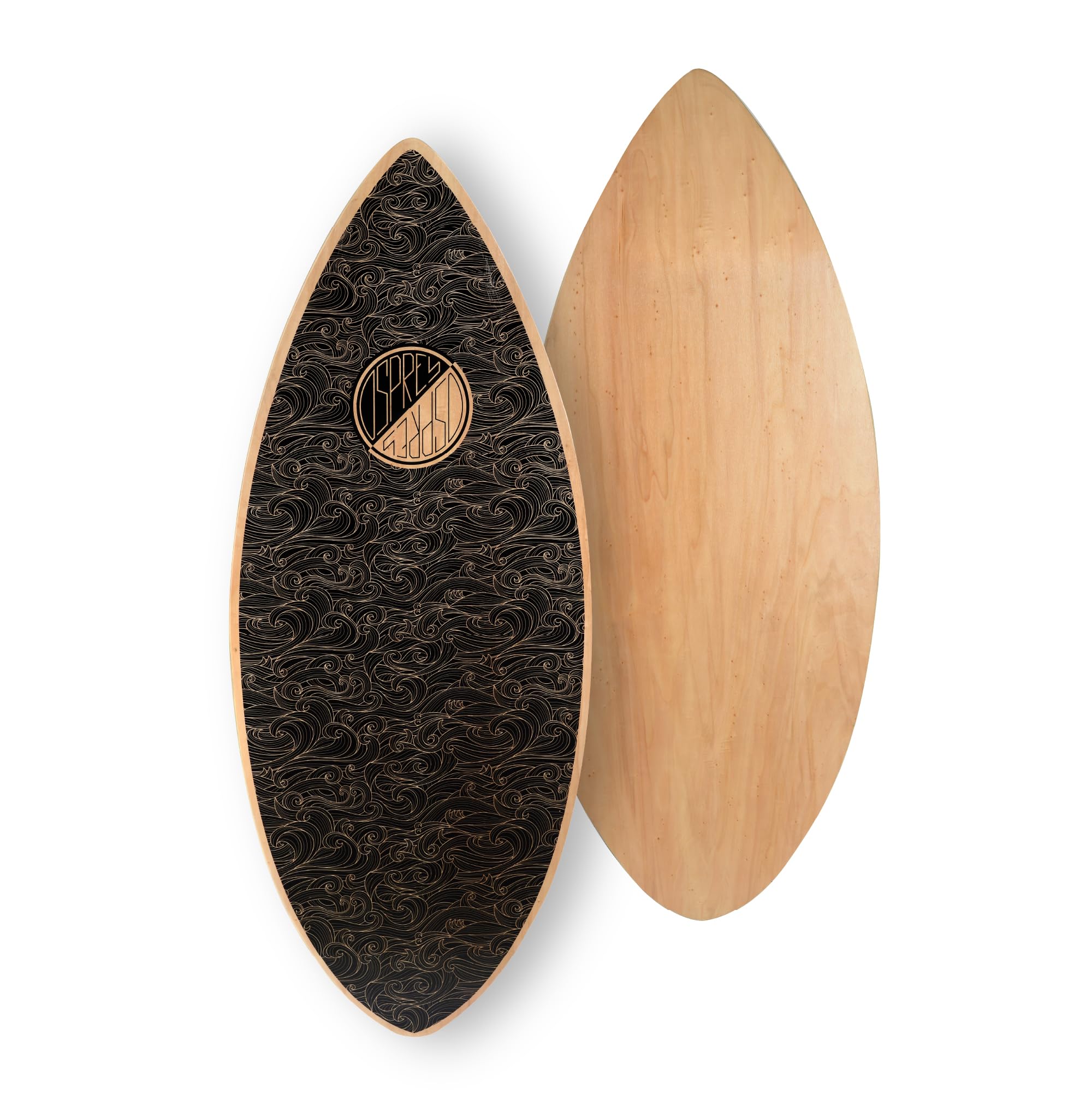
Taller beginners and heavier riders often struggle to find a board that generates enough lift without feeling like a door. The Osprey 41-inch pintail solves that with a generous 41-inch length and a tapered tail that reduces drag, allowing you to maintain speed longer after the drop. The 7-layer poplar plywood construction is light enough to carry under one arm but stiff enough to hold an edge when you shift weight.
One of the biggest problems new riders face is catching the nose on the sand during a run-out. The pintail shape minimizes that risk by pulling the widest point of the board back, giving you a cleaner release as you step on. The board is designed specifically for UK-style fast, shallow waves, but that translates well to any beach with a gradual slope and a thin layer of water.
Reviewers consistently note the build quality — the graphics hold up well against UV and salt, and the poplar core doesn’t warp after repeated wet-dry cycles. A few European customers mentioned delivery delays, but the board itself earned high marks for performance. If you’re over 150 pounds and want a board that floats without feeling oversized, this is the strongest option in its length class.
Why it’s great
- Pintail shape reduces drag and prevents nose-catching
- 41-inch length supports taller/heavier riders without sacrificing speed
- 7-ply poplar construction is lightweight and warp-resistant
Good to know
- No included traction pad — wax or aftermarket grip needed
- International shipping can be slow in some regions
3. BPS New Zealand ‘Gator’ Skimboard 40″

BPS built the Gator around the idea that a beginner shouldn’t have to deal with wax on day one. The board comes with a full-length EVA foam traction pad bonded directly to the deck, so your foot sticks the moment you jump on — even if the board is wet. It also features a subtle nose rocker, which lifts the tip slightly off the sand and makes it easier to pivot when you’re learning to turn.
The high-gloss epoxy coating seals the 7-ply wood core against water intrusion, a common failure point on budget boards that arrive with bare wood edges. BPS offers three sizes — 30-inch (under 80 lbs), 35-inch (80-150 lbs), and 40-inch (over 150 lbs) — giving families the flexibility to buy for multiple riders without overspending. The design prints are bright and distinctive; one reviewer called it “like art, fun to show off.”
Customer service from this family-owned New Zealand brand gets frequent shout-outs in reviews, with responsive support for sizing questions. The trade-off is that the 40-inch model maxes out at 150 pounds, so very heavy riders may find it under-floated. But for the vast majority of beginners — especially families buying for themselves and their kids — the Gator delivers a ready-to-ride package at a mid-range price.
Why it’s great
- Factory-installed EVA traction pad — no wax needed
- Nose rocker helps with early turns and prevents nose-diving
- Three size options cover the whole family
Good to know
- Weight capacity tops out at 150 pounds
- Epoxy coating is durable but can scratch from shell contact
4. iBoard 36″ Skipper Skimboard

Young riders between 80 and 120 pounds often get stuck with boards that are either too big to control or too small to glide. The iBoard Skipper splits the difference at 36 inches by 15 inches with a half-inch thickness that strikes a balance between portability and float. The 7-layer engineered wood core is sealed with an epoxy coating that prevents delamination, and the soft IXPE foam traction pad provides grip without being abrasive on bare feet.
What sets this board apart for the younger crowd is the weight — at roughly 4 pounds, it’s light enough for a 9-year-old to carry to the water without dragging the tail in the sand. The three color options (yellow, blue, pink) let kids pick their own aesthetic, which goes a long way toward getting them excited about practicing. One reviewer specifically noted it was “perfect size for my 9 year old” and held up well over multiple beach trips.
The board does come with a 3-month warranty rather than the 6-month or 1-year coverage some competitors offer, so it’s best suited for riders who will outgrow it within a season or two rather than someone looking for a long-term investment. The 80-120 pound weight limit also means most adults won’t get enough float, but for its target demographic, it’s a well-executed youth board.
Why it’s great
- Lightweight 4-pound build perfect for kids to carry
- IXPE foam pad gives good grip without wax
- Epoxy-sealed edges resist water damage
Good to know
- Weight limit of 120 pounds excludes most teens and adults
- Only 3-month warranty included
5. seething 31″ Standard Skimboard
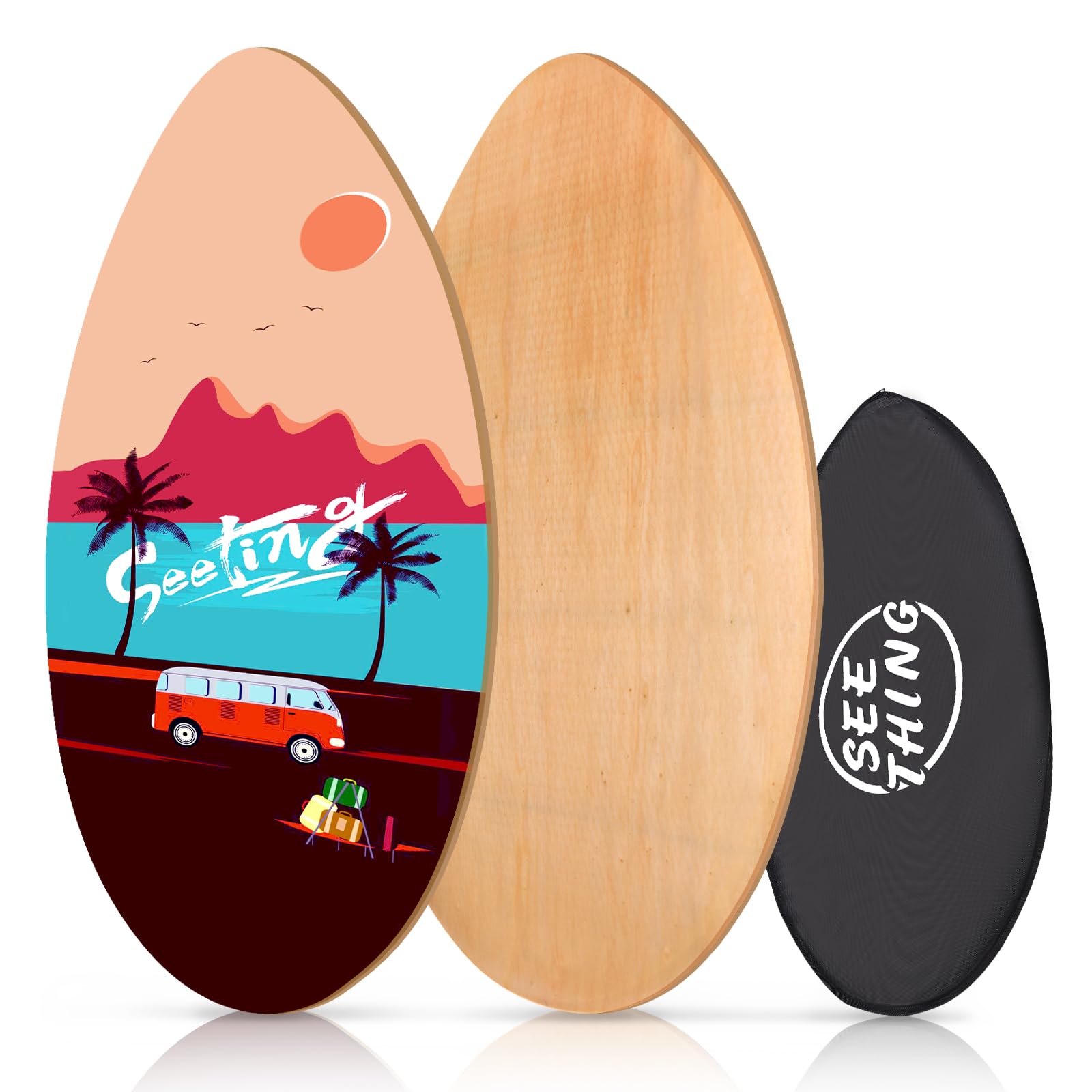
The seething 31-inch board proves you don’t need to spend a lot to get a real 7-layer Canadian maple skimboard. It features a double kick concave — a subtle curve at both the nose and tail — that helps with early trick attempts like shove-its or basic wraps once the rider gains confidence. The high-gloss coating seals the wood against moisture, and the package includes a shoulder bag with enough room for a towel, making beach transport easy.
At 31 inches, this board is best suited for kids aged 7 to 10 or very lightweight beginners under 80 pounds. Multiple verified reviews from grandparents buying for 7- and 8-year-old grandsons report that the board is “sturdy and well made” and that the kids picked up the basics quickly. The included bag is a thoughtful addition that many competitors at this price point skip entirely.
One recurring note from buyers is that the high-gloss top can feel slippery without wax — there’s no traction pad, so you’ll need to add surf wax or grip tape for secure footing. A few customers also noted the board scratches easily, which is expected at this budget level. But as an entry point for a young child to decide if they love skimboarding before investing in a premium board, it’s hard to beat this value.
Why it’s great
- Real 7-layer Canadian maple at a budget price
- Double kick concave helps with early trick progression
- Comes with a carry bag for convenient storage and transport
Good to know
- No traction pad — requires surf wax for grip
- Glossy surface scratches easily from sand and shells
6. Wavestorm 36″ Bodyboard
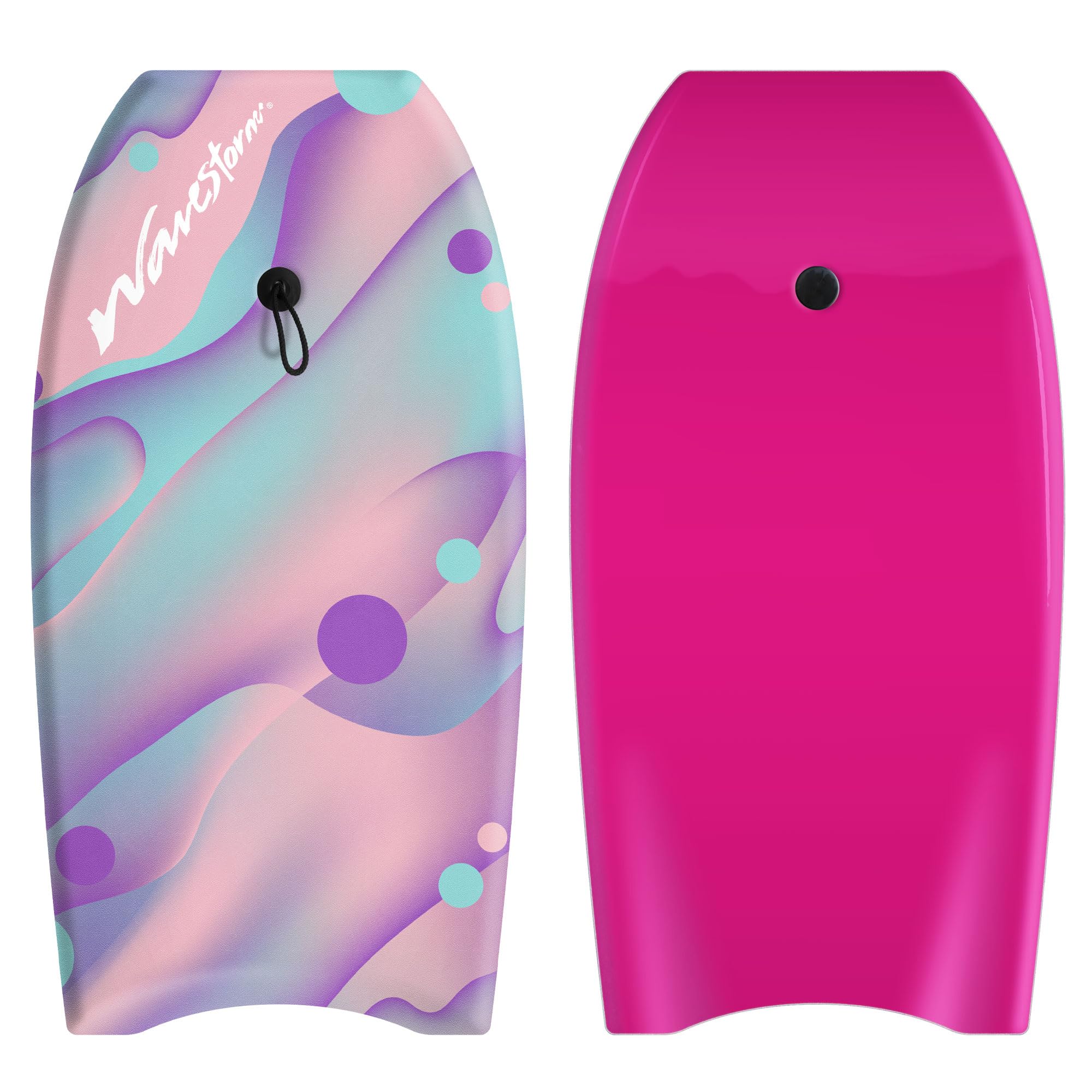
While bodyboards and skimboards serve different riding styles, the Wavestorm 36-inch earns a spot here because many beginners buy it as a low-commitment alternative for riding shore break. Its molded foam core with a high-density slick bottom glides well on shallow water, and the 2-inch thickness gives enough buoyancy for riders up to 200 pounds to catch small waves in the prone position. The included wrist leash prevents the board from washing away after a wipeout.
The IXL graphic top deck provides a soft, non-slip surface that’s gentle on elbows and knees — ideal for children who are still building confidence in the water. Verified reviews confirm the board survived heavy Pacific waves that destroyed three previous boards, thanks to a reinforced cord fixation. The lavender pink color option is particularly popular with younger riders.
The trade-off is obvious: you can’t stand up on a foam bodyboard the way you would on a wooden skimboard. This is strictly for prone riding or kneeling. If your goal is to learn standing skimboarding, this isn’t the right tool. But for families looking for a durable, lightweight board that lets multiple kids take turns riding waves without the learning curve of standing, the Wavestorm delivers proven durability.
Why it’s great
- Durable foam core with reinforced leash attachment
- Soft IXL deck is comfortable for prone riding
- Supports riders up to 200 pounds
Good to know
- Not designed for standing skimboarding — prone only
- Foam can compress over time with heavy use
7. iBoard 37″ Bodyboard

Rounding out the list is another foam-bodyboard option from iBoard, this time with an EPS core and a high-density polyethylene (HDPE) slick bottom that reduces friction against the water for better glide. The 37-inch length works well for kids and small adults, and the crescent-moon tail shape follows hydrodynamic principles to increase taxiing distance before you catch a wave. At just 1.85 pounds, it’s the lightest board in this roundup.
The round nose with a slight tilt helps the board cut into the water more smoothly, preventing the front edge from digging in during a drop. The printed graphic designs are playful and colorful, which kids gravitate toward. Multiple reviews mention that the board works equally well for surfing down snow hills in winter, adding off-season utility.
Like the Wavestorm, this is a prone riding board — you won’t stand on it. The foam construction is softer and safer for young children, but it lacks the rigidity needed for standing skimboarding. If your primary goal is learning to skimboard upright, skip this one. But if you want an ultra-light, inexpensive board for bodyboarding with the family, the iBoard 37-inch gets the job done with a 6-month warranty, which is better than most budget foam boards offer.
Why it’s great
- Ultra-light 1.85-pound weight ideal for young children
- HDPE slick bottom improves glide speed
- 6-month warranty for a budget foam board
Good to know
- Not suitable for standing skimboarding
- EPS core can dent if stored under heavy objects
FAQ
What size skimboard should a beginner adult buy?
Can you use a bodyboard as a beginner skimboard?
Do I need wax on a beginner skimboard with a grip pad?
How do I prevent my skimboard from cracking after a few uses?
Final Thoughts: The Verdict
For most users, the best beginner skimboard winner is the DB Proto Plank because its precise sizing, maple/poplar construction, and 3D rocker profile give new riders a performance platform that doesn’t need upgrading after the first season. If you want a board that comes ready to ride out of the box with no wax needed, grab the BPS Gator 40″. And for a tall or heavier beginner looking for maximum float, nothing beats the Osprey 41″ Pintail.