
Our readers keep the lights on and my morning glass full of iced black tea. As an Amazon Associate, I earn from qualifying purchases.
Specs are compiled from manufacturer listings and verified buyer reviews and can change over time — please confirm the key details on the product page before buying.
The right beginner snowshoes make your first outing feel easy, not like a balancing act. For beginners, the key is finding bindings that lock in easily and a deck that floats on snow, not the flashiest brand. This guide breaks down the best beginner snowshoes by what actually matters on your first few outings: binding ease, weight, and how much weight they are rated to carry.
I’m Min — the founder and writer behind Gadgets Feed. This guide is built by comparing the manufacturers’ published specifications and the patterns across verified customer reviews, so you get each pick’s real strengths and trade-offs instead of marketing spin.
Whether you are facing packed trail or deep backcountry powder, finding the right pair of beginner snowshoes means matching the deck size and bindings to your weight and winter plans for a stable, enjoyable first season.
Our Picks at a Glance


How To Choose The Best Beginner Snowshoes
Your first pair should keep you floating on deep snow without turning every outing into a struggle. To get that, you only need to nail three decisions: your total weight (you plus gear), the terrain you will walk, and how much fuss you can tolerate with bindings when your fingers are numb at 7 a.m. Nail those three, and any quality pair will serve you well.
Match Length to Your Weight
Snowshoes float because of surface area. A longer and wider deck spreads your weight out so you don’t punch through the crust. Heavier hikers need more inches, while lighter hikers can get away with a shorter shoe that is easier to maneuver on tight trails.
Choose Bindings You Can Operate With Gloves
Beginners quit when frozen fingers can’t get boots strapped in. Look for ratcheting buckles or one-pull systems instead of complicated lace-ups. The best starter bindings are ones you can master indoors before hitting the snow.
Look for Traction You Can Trust
Snowshoeing often involves icy patches and steep sidehills. Crampons under the toe and traction rails along the deck give you the grip to stay upright. A heel lift bar reduces calf strain on ascents, a welcome feature for beginners.
Quick Comparison
| Model | Best For | Max Load | Item Weight | Deck Size | Amazon |
|---|---|---|---|---|---|
| MSR Hiking Snowshoes★ Best Overall | All-condition durability | 180 pounds | 3.6 pounds | 22″L x 8″W | Amazon |
| Retrospec DrifterBest Value | Budget-friendly quality | 160 pounds | 5.8 pounds | 25″L x 8″W | Amazon |
| G2 Light WeightHigh-Capacity Pick | High-capacity value | 250 pounds | 2.29 kg | 25″L x 8″W | Amazon |
| Yukon Charlie’s Advanced Kit | Complete kit simplicity | 200 pounds | 4.2 pounds | 8×25-inch | Amazon |
| Retrospec Drifter & Poles Bundle | Beginner versatility | 200 pounds | 4.2 pounds | 25″L x 8″W | Amazon |
| Tubbs Xplore Kit | Trusted brand starter kit | 220 pounds | 6.5 pounds | 32″L x 10.5″W | Amazon |
| Cascade Mountain Tech Kit | Premium trail kit | 250 pounds | 6.5 pounds | 30″L x 9″W | Amazon |
| Yukon Charlie’s Sherpa | Heavy-duty beginners | 250 pounds | 4.8 pounds | 9×30-inch | Amazon |
| MSR Evo Trail | Lightweight trail flex | 180 pounds | 16 ounces | 22″L x 8″W | Amazon |
In‑Depth Reviews
1. MSR Hiking Snowshoes
Our pick — over 4.5★ from 300+ verified ratings; the strongest balance of quality and price.
A rugged all-condition workhorse that earns its keep on icy sidehills and packed trails alike.
The quality here is what wins people over, and it shows in the details that keep you safe. Steel traction rails and brake bars are molded right into the decking, and carbon steel crampons add bite—so you get secure grip in tricky conditions without thinking about it. At just 3.6 pounds for the pair, they are noticeably lighter than the Retrospec Drifter’s 5.8 pounds, which you feel on a long afternoon.
The DuoFit binding is freeze-proof and glove-friendly, adjusting to a wide range of footwear from hiking boots to winter runners. Buyers report testing them hard: “Tested 11 miles with 40lb pack in varied snow (powder, icy, wet) without issues.” That real-world durability means these hold up where cheaper webbing-style shoes break and ice up.
They measure 8 x 22 inches and carry up to a 180-pound load, with bindings that fit men’s shoe sizes 4.5-15. The honest trade-off is noise—the solid body clatters on hard snow, loud enough to be heard from far away—and the 22-inch length means very deep powder may call for the optional 6-inch tails, sold separately.
Built to Last
- Steel rails and crampons grip ice and sidehills securely
- Lightweight feel at 3.6 pounds for all-day wear
- Replaceable parts extend the life of the shoe
Consider Before Buying
- Solid deck is noisy on hard, packed snow
- Deep powder may require extra floatation tails
Ideal for: The hiker who wants one dependable pair that handles ice, slush, and packed trails for years without needing an upgrade.
Think twice if: Most of your winter plans involve breaking trail through deep, fluffy powder—you will want the optional tails.
2. Retrospec Drifter Snowshoes
A tank-like budget pair that punches above its price with easy ratchet bindings and real uphill help.
Value for money is the loudest praise here, and it is easy to see why. The aluminum frame keeps your steps feeling light while the double-ratchet binding system gets you strapped in fast on cold mornings. Owners describe the build as sturdy and tank-like, with ratchet straps that excel at locking in a secure fit.
Built-in heel lifters reduce leg strain on steep climbs, letting you tackle hills without burning out, and the full-floating pivot system moves naturally with your stride. They come in at 5.8 pounds for the pair and carry up to 160 pounds, which is a lighter load rating than the G2’s 250-pound capacity—so bigger hikers need to check the math.
As owners mention: “Seems to work well for the price. Good grip and really light. Though I could see the bindings breaking after alot of use being plastic.” That is the honest catch—the plastic binding parts are the weak link for heavy, frequent use. The mesh carry bag makes storage and transport simple.
Why It Wins
- Easy double-ratchet bindings work with gloved hands
- Heel lifters take the burn out of steep climbs
- Lightweight aluminum frame feels easy
Watch Out For
- 160-pound max load suits lighter hikers
- Plastic bindings may wear faster under heavy use
Grab these if: You want a low-cost entry into snowshoeing with features like heel lifts that usually cost more.
Look elsewhere if: You are over 160 pounds or plan to log serious miles weekly in rough terrain.
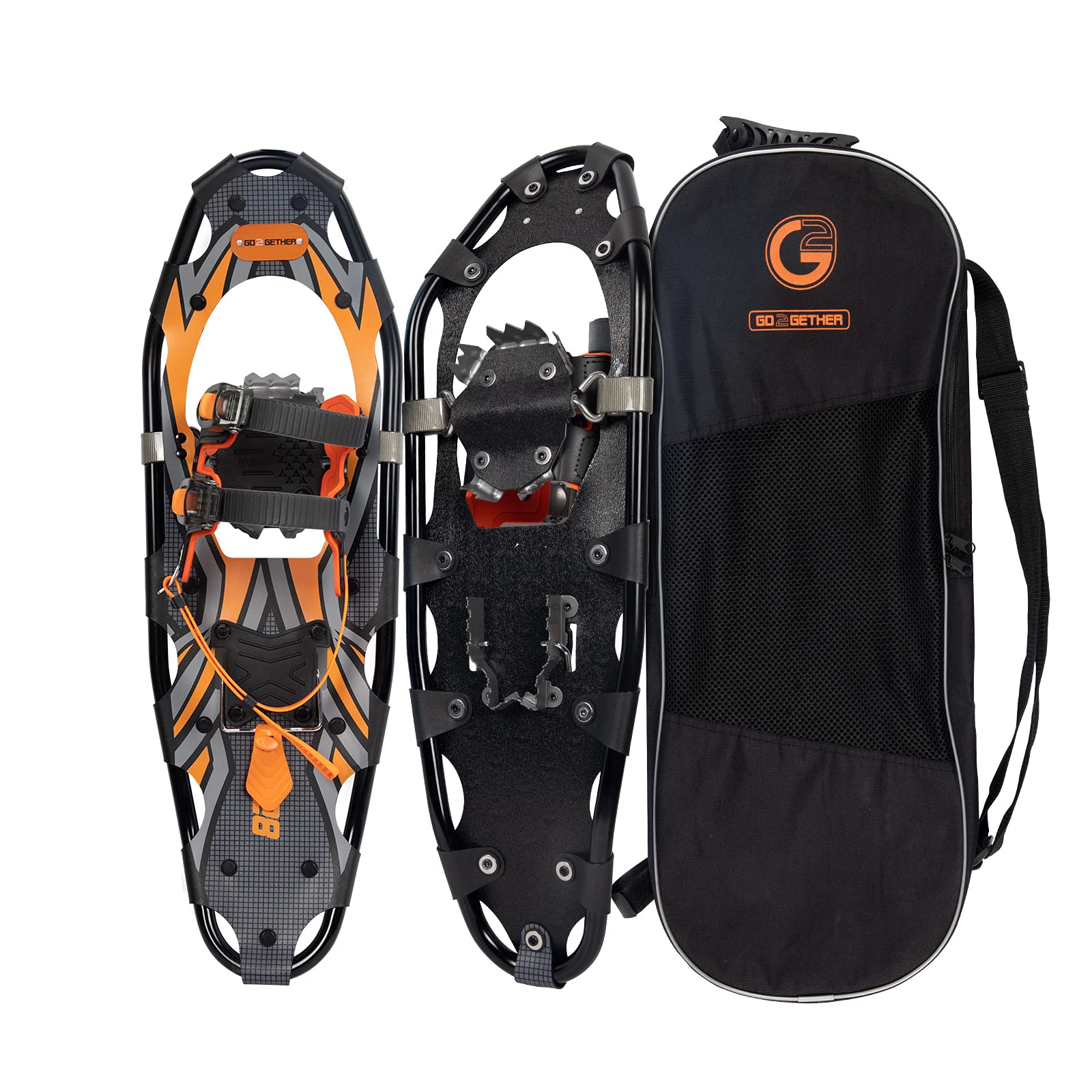
3. G2 Light Weight Snowshoes
Serious floatation for bigger beginners, rated to carry up to 250 pounds without sinking.
The high-density polyethylene deck gives you real buoyancy, which is why this pair stands out for heavier hikers who worry about post-holing. The max load here is 250 pounds, a 56% bigger gap than the Retrospec Drifter’s 160-pound limit—so if you are a larger adult, this is the budget-friendly pair that actually fits your needs.
At 25″L x 8″W, it is on the longer side, and customers note that even over 200 pounds they did not sink in the snow. The fast ratchet binding is designed for low temperatures, letting you lift the one-pull buckle with a single finger even when your hands are frozen stiff.
Sharp aluminum crampons give grip in snow and ice, and the soft EVA foam padding inside keeps your feet warm and comfortable. The flex pivot bar and heel lift make flat walking and uphill climbs feel more natural. The main complaint is that trekking poles are not included, which some first-timers expect at this price.
Standout Strengths
- 250-pound capacity fits bigger beginners
- One-finger ratchet binding works when frozen
- EVA foam padding adds warmth and comfort
Keep In Mind
- No trekking poles included in the box
- Longer deck takes more effort to turn on tight trails
Reach for these if: Your weight or winter gear pushes you past the 160-200 pound range and you want reliable floatation without a premium price tag.
Pass if: You prefer a short, agile shoe for winding single-track trails where a 25-inch deck feels clumsy.
4. Yukon Charlie’s Advanced Snowshoe Kit

A complete snowshoeing starter bundle with poles and bag so you leave the store trail-ready.
Everything you need arrives in the box: snowshoes, trekking poles with both trekking and snow baskets, and a travel bag. Weighing 4.2 pounds with an 8×25-inch frame, it is built for users from 151 to 200 pounds, making it a solid middle-ground choice for average-sized adults.
The Fast Fit II “Easy-Pull” binding system gets you in and out with one pull of the strap, which owners confirm is genuinely easy on and easy off. The Advanced series uses the brand’s lightest and strongest aluminum frame, designed for less aggressive users who want the confidence to expand their snowshoeing.
The main fit note is the straps—some owners find they are not long enough for very large boots, so check your footwear before committing. First-time users also mention that no instructions are included, so expect to watch a quick video to master the adjustment the first time.
Complete package: Poles, baskets, and bag included means no extra shopping before your first outing.
Fit check: Strap length is the recurring gripe—measure your boot size against the binding range before buying.
Choose this kit if: You want the convenience of a single box containing shoes, poles, and storage for your first season.
Think twice if: You wear very large or bulky winter boots that may exceed the strap reach.
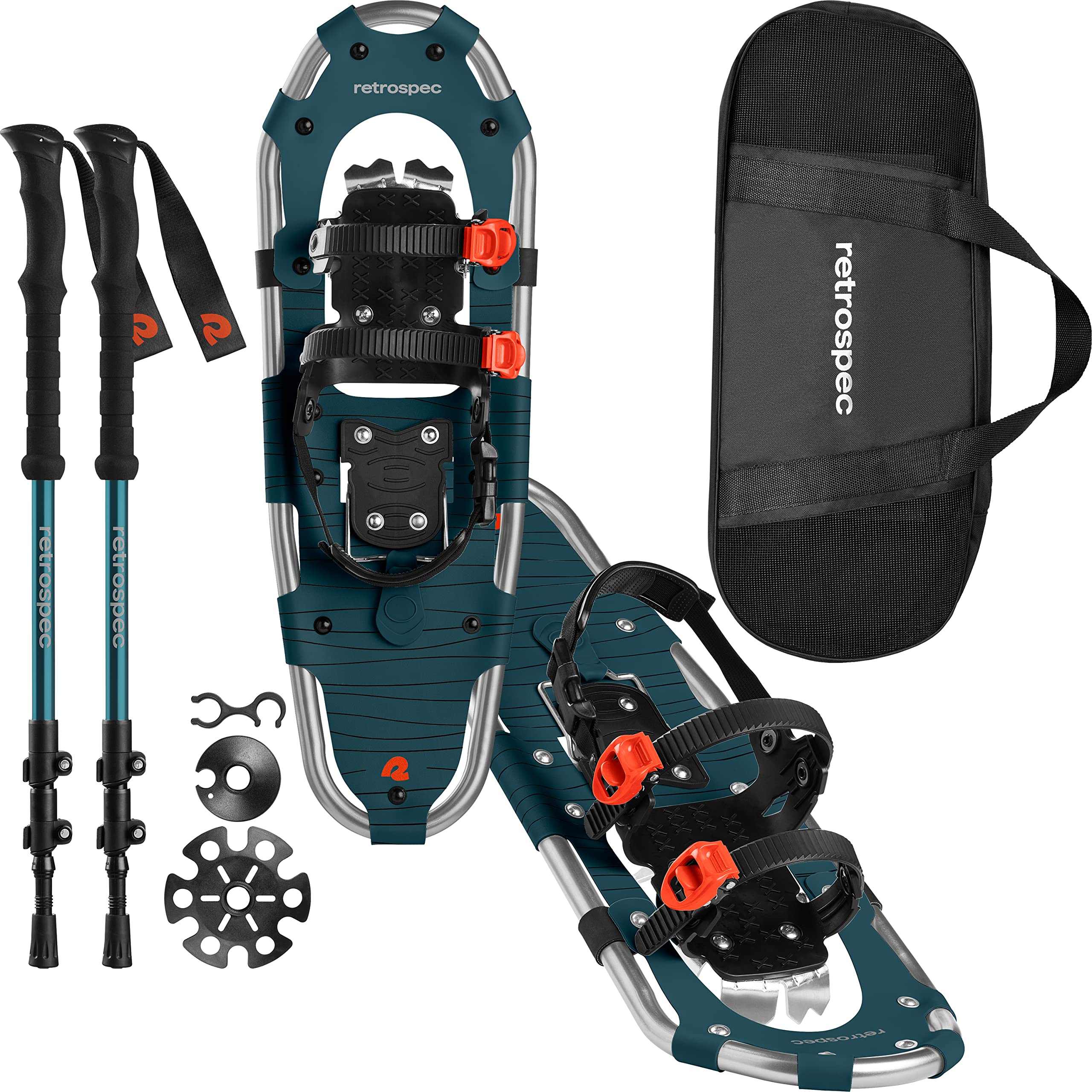
5. Retrospec Drifter Snowshoes & Trekking Poles Bundle
The beginner favorite with adjustable poles and crampons that grip icy hillside climbs.
This bundle is almost universally praised as ideal for first-timers, with one owner calling it perfect for 2-5 mile walks in deep snow. The full-floating pivot system moves naturally with your stride, and the double-ratchet bindings strap in and out easily even with gloves on—no fumbling with complicated straps.
The lightweight trekking poles feature adjustable heights and terrain-specific attachments to keep you balanced on any surface. Reviewers point out the crampons bite into hills and creeks on the first try, and the weight distribution prevents the ankle soreness that plagues cheap setups.
Aircraft-grade alloy frames paired with rugged polyethylene decks handle whatever winter brings, with a 200-pound max load and 25″L x 8″W footprint. There is a learning curve on the strap closures if you’ve never used ski or cycling shoes, and one reviewer noted deep powder can kick snow onto your legs.
Beginner-ready: Adjustable poles and easy ratchet bindings remove the two biggest frustrations for new snowshoers.
Honest note: Strap functionality gets mixed feedback—practice the closures at home before your first trail.
Best suited for: The casual hiker planning regular 2-5 mile winter outings who wants poles included without a premium price.
Skip if: You plan to tackle deep backcountry powder where the 200-pound rating and standard deck will struggle.
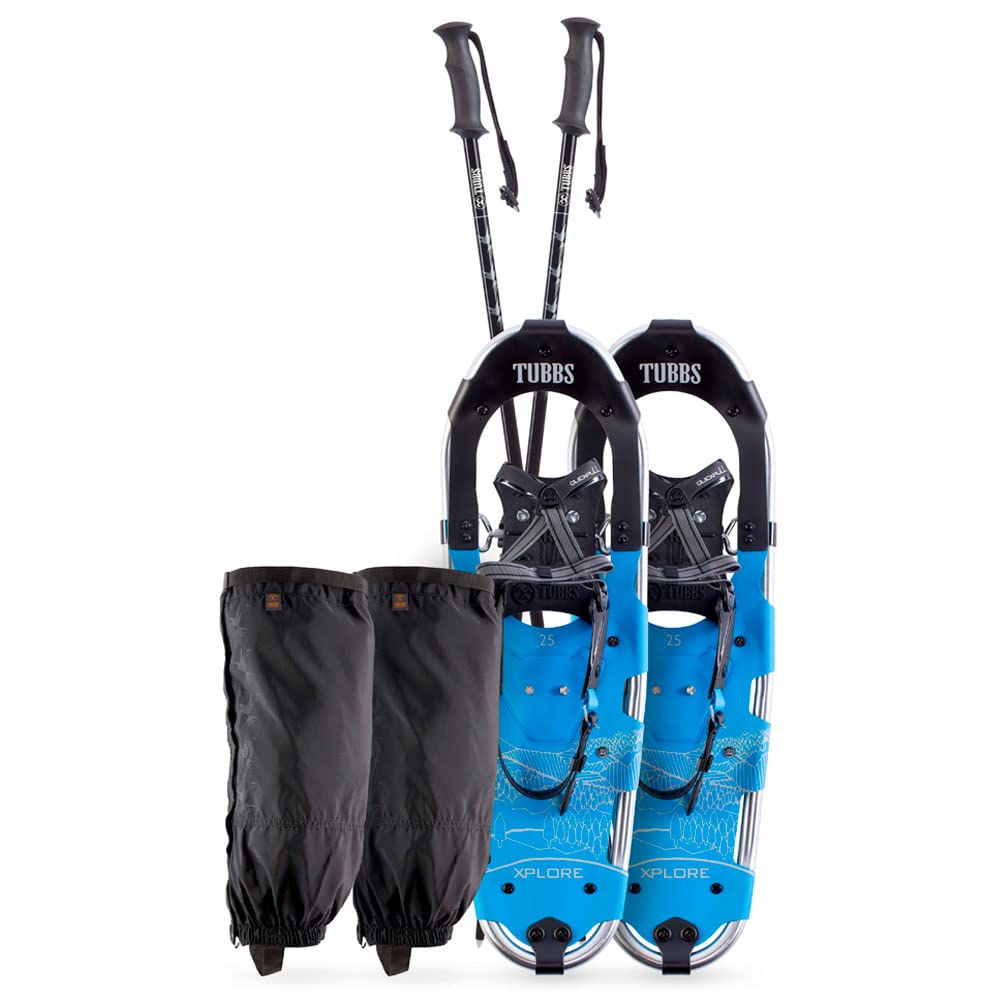
6. Tubbs Xplore Kit Trail Walking Snowshoes
A reputable brand starter kit that throws in poles and gaiters for a complete first season.
For beginners who want a known name in snowshoeing, Tubbs delivers a kit that includes one pair of snowshoes, one pair of 2-part adjustable poles, and one pair of gaiters. At 6.5 pounds for the pair with a 220-pound max load, it sits on the heavier side, but owners say it doesn’t feel heavy on the feet.
The hook-and-loop closure is simple to take off and on, and beginners report the bindings stayed secure through a 3-mile session without coming loose. One owner described it as a nice starter kit that was liked so much it was recommended for anyone looking to begin the sport.
At 32″L x 10.5″W, this is the longest deck on the list, giving excellent floatation in soft snow but trading away some agility on tight trails. The honest feedback notes that in softer deep snow in the woods, some sinking still occurs, and the strap behind the heel is the one piece owners would redesign.
Complete value: Poles and gaiters are an added bonus that saves you separate purchases.
Size caution: The long 32-inch deck floats great but feels less nimble on winding single-track.
Ideal for: Beginners who want a trusted brand name and a full kit with all accessories included.
Reconsider if: You mostly walk narrow, tree-lined trails where a shorter 22-25 inch deck maneuvers more easily.
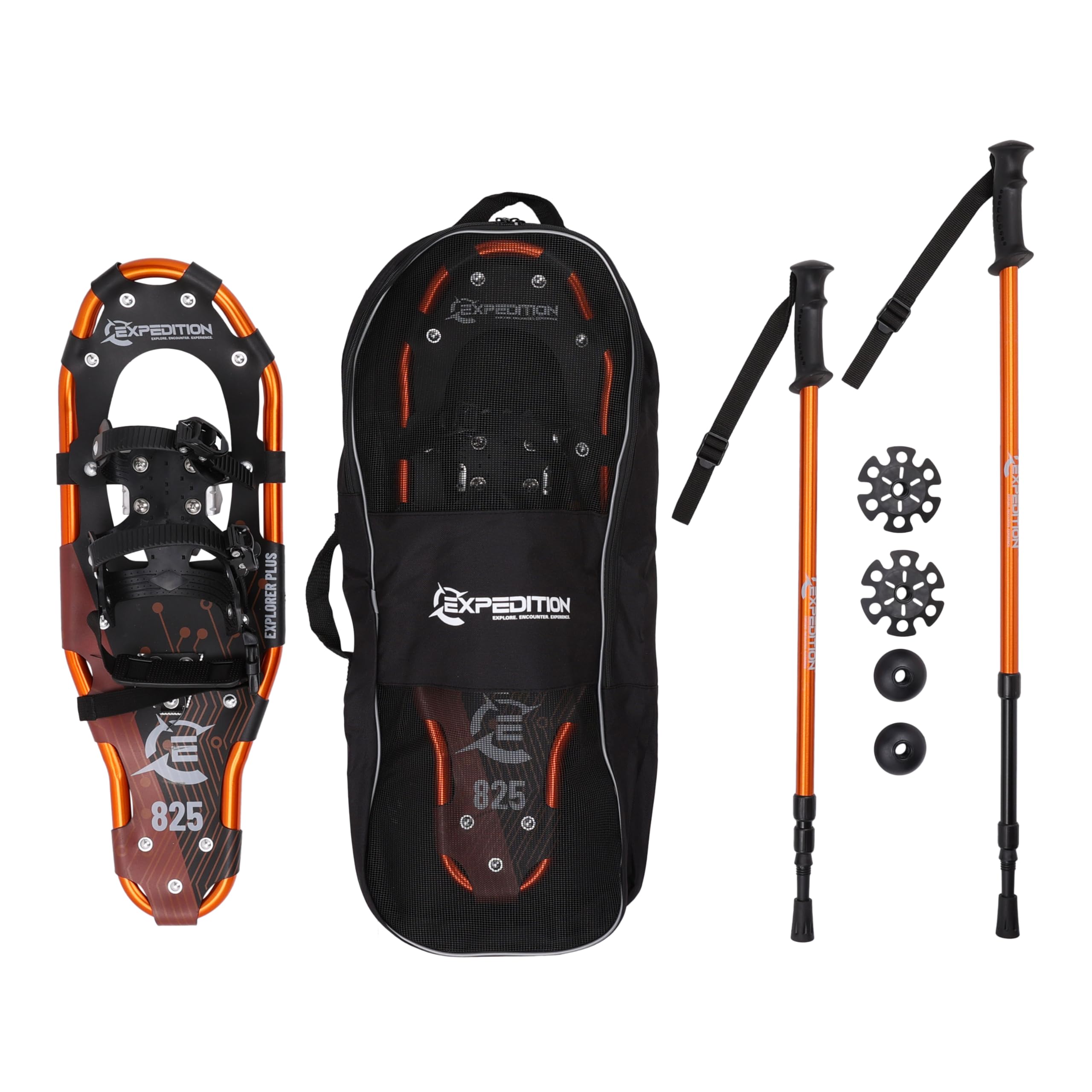
7. Cascade Mountain Tech Snowshoe Set
A premium Explorer Plus kit with anodized aluminum poles and a frame rated up to 250 pounds.
This kit is built for the beginner who wants quality gear from day one. The strong 6063 aluminum frame is lightweight and durable, with an anodized finish for lasting wear. The Explorer Flex decking holds up in the coldest conditions, and the articulating toe band keeps binding movement fluid.
Dual ratchet bindings use stainless steel springs for a secure fit that owners say held tight even while pulling a 100-lb sled on a 3-night camping trip. Front and rear cleat crampons grip deep snow, ice, rocks, and wood. The included twist-lock trekking poles, snow baskets, rubber tips, and Cordura travel bag complete the package.
At 30″L x 9″W, the size 30 model carries up to 250 pounds, putting it in the heavy-duty category. The main drawbacks are minor: the front strap can run long and overlap, and the poles’ screw-on adapters can come loose during use. Owners still call it an ideal entry-level choice that kept them dry and above deep snow.
Premium Value
- 6063 aluminum frame is light yet rugged
- Stainless steel spring ratchets hold firm
- Complete kit with poles, baskets, and bag
Minor Quirks
- Front binding strap can be overly long
- Pole adapters may loosen with heavy use
Worth the step up if: You want a premium-feeling kit with a 250-pound rating and quality poles for years of casual-to-serious use.
Look elsewhere if: You are a lighter hiker under 150 pounds who would prefer a shorter, lighter 21-inch model.
8. Yukon Charlie’s Sherpa Snowshoe

A 9×30-inch deck built specifically for heavier hikers from 201 to 250 pounds.
This Sherpa model is explicitly designed for the bigger beginner. The 9×30-inch frame carries users from 201 to 250 pounds, and the HDPE (high-density polyethylene) material stiffens the snowshoe for maximum power through deep snow. Owners confirm the sizing works, with one 6’3″ 230-pound buyer wearing size 14 boots reporting zero strap issues.
The Quick Click II ratcheting binding and Rapid-Lite Flex heel strap get you in and out in seconds, though ease of use gets mixed feedback—some find the heel strap fiddly at first. The unisex design works for both men and women, and the aluminum frame keeps the whole pair at a manageable 4.8 pounds.
For the larger hiker carrying gear, this is a standout. One avid hunter reported hauling his 260-pound body plus 50 pounds of gear through deep upstate New York woodland snow with confidence. The trade-offs are the higher price point and a learning curve on the heel strap mechanism.
Heavy-Duty Float
- 9×30-inch deck handles 201-250 pound users
- Stiff HDPE deck powers through deep snow
- Room for size 14 boots without strap issues
Consider First
- Heel strap takes practice to master
- Premium price for a beginner model
Built for you if: You are a larger adult near or over 200 pounds who needs real floatation and boot room that smaller shoes lack.
Not ideal if: You are under 200 pounds and would pay less for a shorter deck that is easier to maneuver.
9. MSR Evo Trail Snowshoes

A featherlight 16-ounce pair that glides on packed trails and cuts through fresh snow.
At just 16 ounces for the pair, these are the lightest shoes on the list by a wide margin, which makes them a joy for long days on packed trails. The injection-molded UniBody deck provides just the right amount of flex and holds up incredibly well, while steel crampons and traction rails deliver reliable grip on icy patches.
The Paraglide binding stretch mesh hugs your feet securely and works with nearly any footwear, from light hikers to snowboard boots. Glove-friendly straps and buckle tabs make getting in and out quick. Owners note they are a daily-winter favorite, with some preferring them over heavier premium models for packed trail use.
Like the larger MSR Hiking model, this 22-inch pair carries a 180-pound load and has attachment points for 6-inch modular floatation tails, sold separately, for deep powder days. The plastic shell is noisy on hard snow, and buyers near 200 pounds should plan on the extra-wide attachment to avoid sinking.
Trail specialist: Light weight and excellent traction make this the pick for groomed and packed trail walkers.
Powder limits: Fresh deep snow demands the optional tails; this is not a deep-backcountry shoe from the start.
Choose these if: You want the lightest possible shoe for frequent packed-trail walking and value easy on-off above all else.
Pass if: You are over 180 pounds or primarily breaking trail in deep powder without buying the extra tails.
Understanding the Specs
Max Load & Deck Size
The maximum weight recommendation tells you the heaviest total load the shoe is designed to float. A 180-pound rating means you plus your gear should stay at or under that number. Longer decks like 30 or 32 inches create more surface area, which keeps heavier hikers on top of powder rather than sinking in.
Bindings & Traction
Bindings are the straps that lock your boot to the deck—ratchet systems are the easiest to tighten with gloves, while hook-and-loop is simpler but less secure. Crampons are the metal spikes under the toe that bite into ice and hard snow. A heel lift is a bar that flips down to support your heel on steep climbs, reducing calf strain.
FAQ
How do I know what size snowshoes to buy for my weight?
Will these snowshoes fit my regular winter boots?
What is the difference between a 22-inch and a 30-inch snowshoe?
Do beginner snowshoes come with trekking poles?
What are crampons and why do I need them on snowshoes?
Why do some snowshoes have a heel lift bar?
Are heavier snowshoes better for deep snow?
Can I use beginner snowshoes for hiking on icy trails?
Is it worth buying a snowshoe kit with poles for a beginner?
How much weight can beginner snowshoes typically carry?
Final Thoughts: The Verdict
For the majority of shoppers, the beginner snowshoes winner is the MSR Hiking Snowshoes because its steel traction rails and lightweight 3.6-pound build deliver dependable all-condition grip that beginners can trust immediately. If you want the best value with heel lifters and easy ratchet bindings, grab the Retrospec Drifter. And for larger beginners needing real floatation, the G2 Light Weight Snowshoes is the one to reach for with its 250-pound capacity.
How We Picked
We do not accept paid placement. Every pick is matched to a real buyer and a real use-case; we do not hands-on test units.
Sources & Methodology
Specifications: manufacturer listings and product documentation. Review insights: verified customer reviews, as of September 2026. Pricing: not shown on this page (it changes often); check the current price via the retailer link.
As an Amazon Associate, Gadgets Feed earns from qualifying purchases. This does not affect which products we feature.