
Our readers keep the lights on and my morning glass full of iced black tea. As an Amazon Associate, I earn from qualifying purchases.
Specs are compiled from manufacturer listings and verified buyer reviews and can change over time — please confirm the key details on the product page before buying.
Heading to the court for your first serve or a casual pickleball game? Your biggest risk isn’t your backhand — it’s picking a shoe that feels fine in the store but wrecks your feet and falls apart within weeks. Beginner tennis shoes need three things above all: a stable base for side-to-side lunges, enough cushioning for hard landings, and a durable toe area, because that’s where every beginner drags their foot. This guide breaks down the best options by what actually matters on the court, not what looks flashy on the shelf.
I’m Min — the founder and writer behind Gadgets Feed. This guide is built by comparing the manufacturers’ published specifications and the patterns across verified customer reviews, so you get each pick’s real strengths and trade-offs instead of marketing spin.
Whether you’re shopping for yourself or a young player, finding the right pair starts here. The beginner tennis shoes that protect your feet and survive your learning curve are the ones worth your money.
Our Picks at a Glance
How To Choose The Best Beginner Tennis Shoes
Buying your first court shoe is different from picking a running shoe. You move sideways, you start and stop hard, and you drag your toes when you’re learning. Here’s what separates a good first pair from a painful mistake.
Start with lateral stability, not ankle support
Beginners think they need high-top basketball-style support, but tennis is all about side-to-side lunges. Look for a shoe with a support unit in the midfoot or a chassis that keeps your foot planted during those quick cuts. This prevents rolled ankles and builds confidence on wide shots.
Check the toe box and the toe cap
Your toes will get jammed on hard stops, and your front foot will drag on serves. A roomy toe box prevents blisters and black toenails, while a reinforced toe overlay (often called a toe cap or Adituff-style wrap) stops the upper from tearing where you drag it. If a shoe feels tight across your toes in the store, it will only feel worse by game three.
Match the outsole to your court
Most beginners play on hard courts, so you want a durable rubber outsole designed for that surface. A herringbone tread pattern gives you the grip you need to push off, while a high-density rubber compound means the sole won’t wear smooth after a season. If you’re splitting time between pickleball and tennis, look for a shoe that advertises both.
Quick Comparison
| Model | Best For | Weight | Key Support | Toe Protection | Amazon |
|---|---|---|---|---|---|
| ASICS Gel-Dedicate 8 GS★ Best Overall | Young players & small feet | 1.44 pounds | TRUSSTIC unit | Wrap-around sole | Amazon |
| adidas Courtjam Control 3Best Value | Aggressive movers on a budget | 2.43 pounds | Lightweight Bounce | Adituff toe wrap | Amazon |
| K-Swiss Court Express 2 | Support-seeking players | 1 pound | Performance support | — | Amazon |
| WILSON Rush Pro Ace | Wide feet & pickleball | — | 4D Support Chassis | Breathable mesh | Amazon |
| WILSON Rush Pro Lite | Featherlight comfort | — | Arch technologies | Breathable mesh | Amazon |
| ASICS Game FlyteFoam | All-court versatility | 1.44 pounds | TRUSSTIC midsole | Open mesh design | Amazon |
| Reebok Nano Court Sport | Multi-sport versatility | — | Floatride Energy Foam | Flexweave upper | Amazon |
In‑Depth Reviews
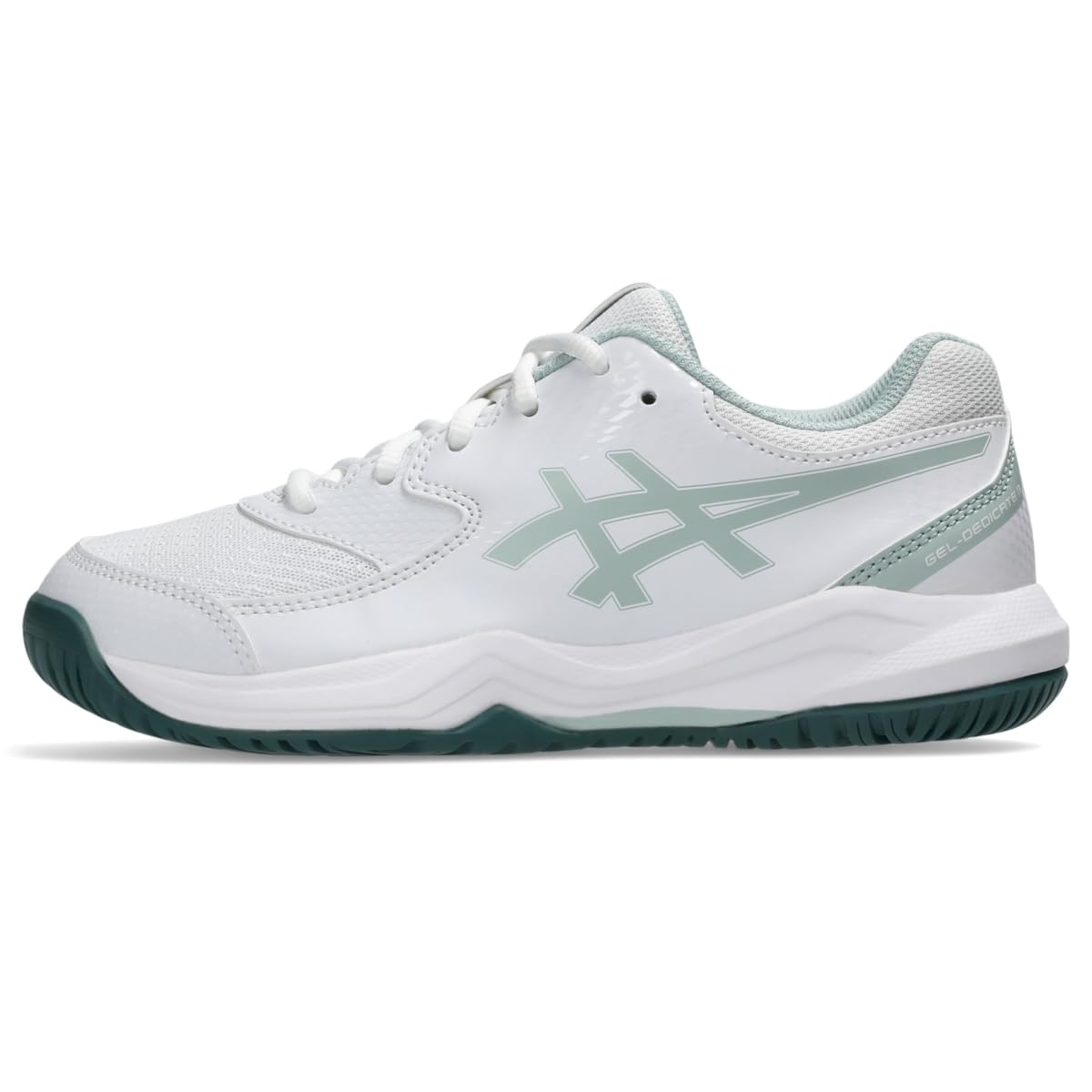
1. ASICS Kid’s Gel-Dedicate 8 GS Tennis Shoes
Our pick — over 4.5★ from 200+ verified ratings; the strongest balance of quality and price.
The pint-sized pick whose stability keeps young feet locked in during every lateral lunge.
For a young player just starting out, the defining feature here is the TRUSSTIC support unit — a plastic bridge in the midsole that keeps the shoe from twisting during side-to-side movements. Young feet are still developing, and this unit, paired with a wrap-around sole, helps them change direction without rolling over the edge of the shoe. The synthetic leather overlays across the upper add another layer of support, holding the foot firmly in place as a beginner chases down shots.
Quality is the most-praised aspect, holding up to four sessions a week without toe tearing. Buyers report these surviving tennis four times a week with no side tearing at the toes, which is the exact failure point that kills regular sneakers on court. The arch support also gets consistent praise, making them comfortable for volleyball, fencing, or any sport that involves quick stops. The durability feedback is mixed rather than glowing, so a very heavy junior player may get a shorter lifespan, but for most kids these outlast a full season.
Buyers like that these fit true to size, which removes the guesswork of ordering kids’ shoes online. The breathable build and light feel are also frequent compliments. The crowd favorite sits at 4.6 stars across hundreds of owners, making this the most reassuring first pair for a junior athlete.
Young Player Wins
- Genuine lateral stability from the TRUSSTIC unit — ideal for learning side-to-side footwork
- True-to-size fit that parents can order with confidence
- Strong toe durability that survives four sessions a week
Before You Buy
- Durability feedback is mixed — heavier or very frequent play may wear them faster
- Grade-school sizing only, so bigger teens and adults should look elsewhere
The junior-level go-to: reach for these if you’re buying for a grade-school player who needs real court support, not a gym sneaker.
Consider the size first: once your child outgrows grade-school sizing, the adult options below take over.
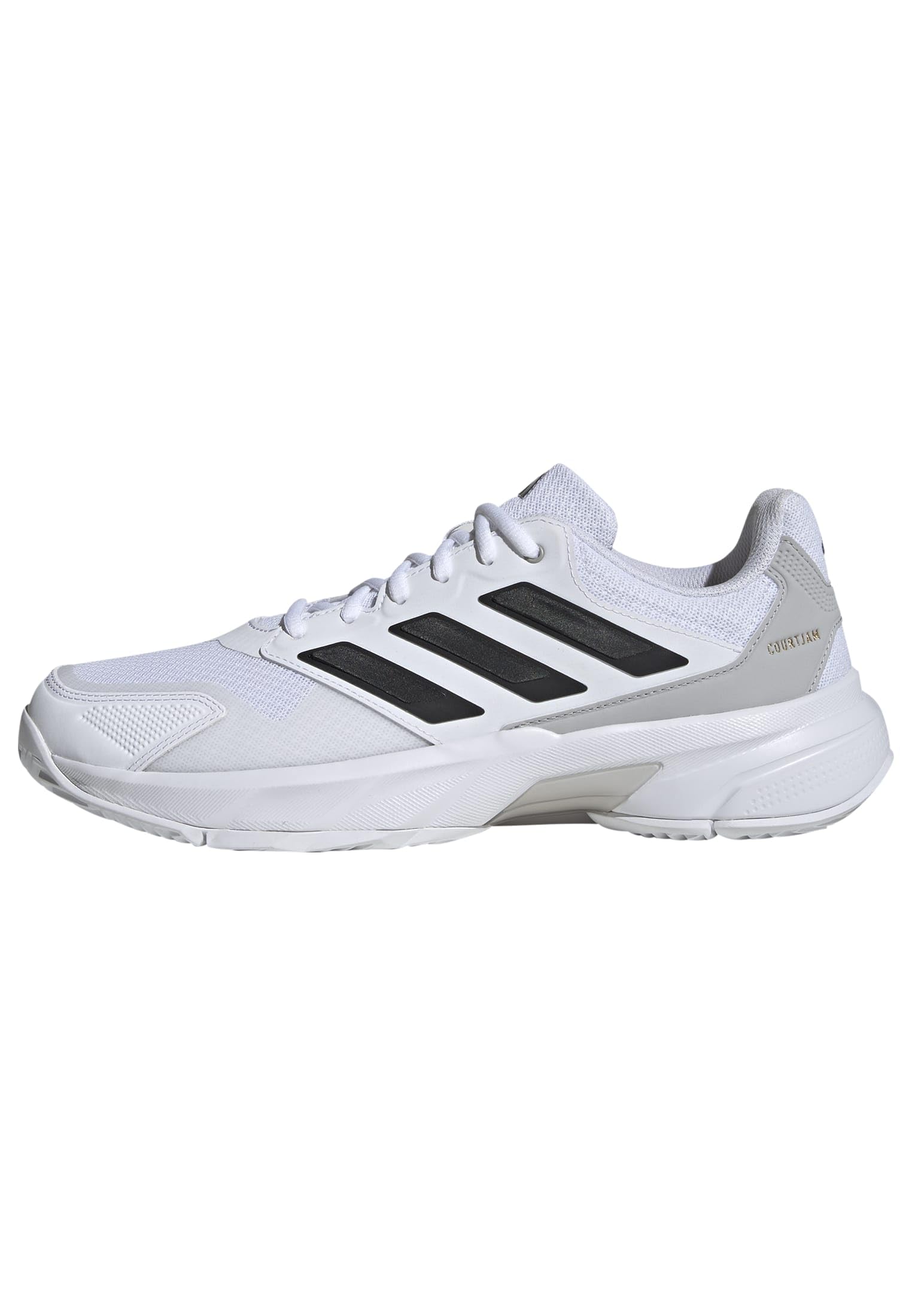
2. adidas Mens Courtjam Control 3 Tennis Sneakers
A springy everyday trainer that drags its feet — literally protected where it counts.
The hook here is the Adituff wrap around the toe area, a reinforced strip built specifically to survive foot drag. That’s the #1 beginner habit on a serve, and this shoe is engineered for it. The mesh upper keeps the shoe light and airy, while the Bounce cushioning rides the line between soft and responsive so you can make sharp cuts without sinking into the sole. An Adiwear outsole is tuned for hard surfaces, which is where most beginners play.
While the ASICS above wins on stability for kids, this adidas beats it on serving durability for adults — the toe protection is the reason buyers can push a pair hard. One player reporting a 10 to 11-month lifespan playing three times a week for two to three hours per session, which is excellent value for the entry tier. The stability also earns frequent praise, giving beginners a planted feel during side-to-side movement. Quality is the most-mentioned positive, confirming this shoe punches above its price point.
The honest trade-off is the fit, which buyers are split on. Some find it true to size, but others report it feeling half a size small with a narrow toe area. At 2.43 pounds, it’s also the heaviest option here — noticeably denser than the K-Swiss at 1 pound — so it’s not the featherweight choice. Owners mention the cushioning can feel minimal for some, so if you need plush comfort over responsiveness, read the fit notes carefully.
Why It’s a Steal
- Adituff toe wrap absorbs the drag that destroys beginners’ shoes
- Bounce cushioning supports sharp cuts and quick direction changes
- Quality praised most — consistent performance for the price
The Fit Caveat
- Fit runs mixed — some buyers size up half a size for the toe area
- Heaviest of the lineup at 2.43 pounds
Built for the foot-dragger: the reinforced toe makes this the smart budget buy for adult beginners who serve hard.
Order carefully: if you’re between sizes or have wide feet, go up half a size to avoid a cramped fit.
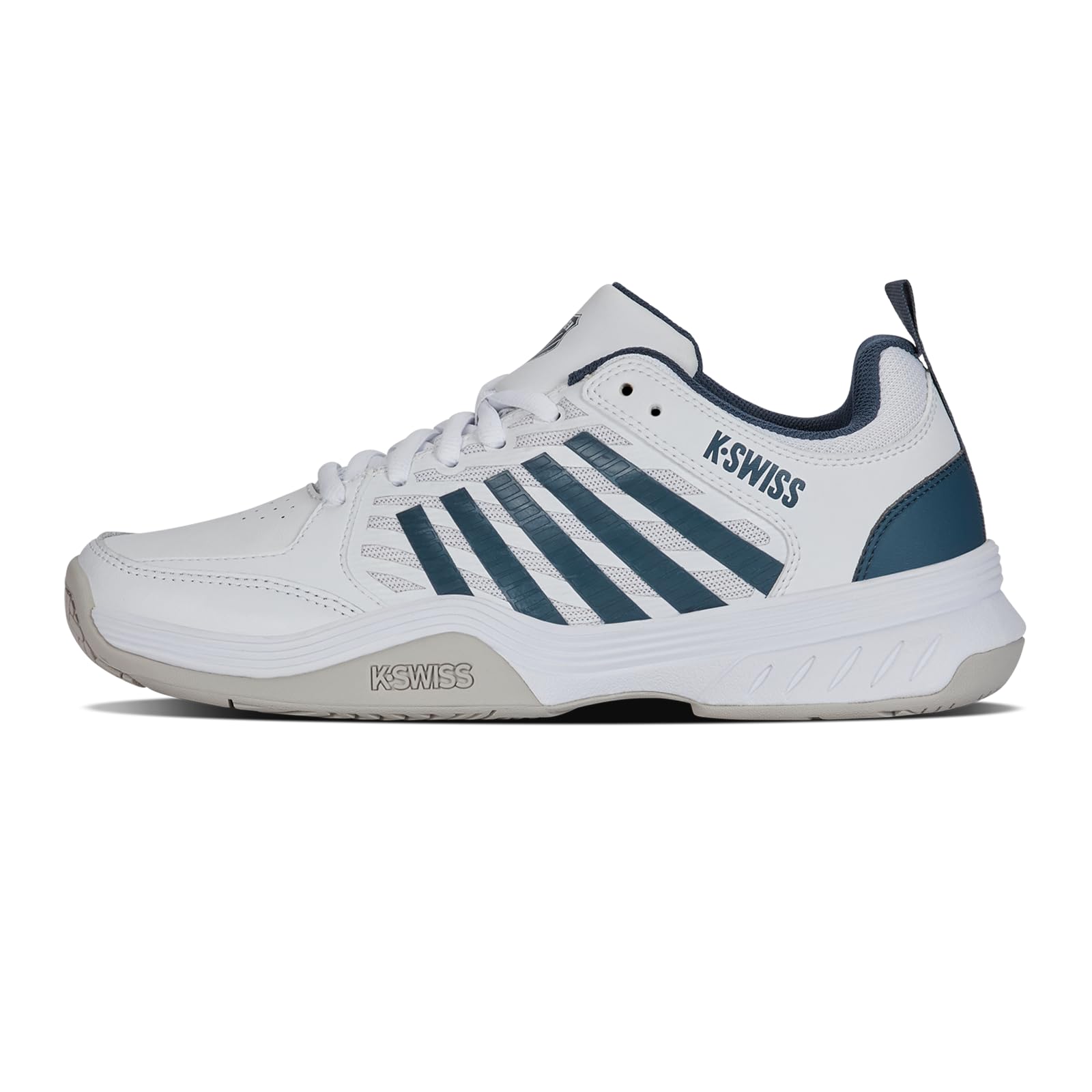
3. K-Swiss Men’s Court Express 2 Tennis Shoe
The featherweight workhorse that trades plushness for a planted, performance-focused feel.
At just 1 pound, this is the lightest shoe in the lineup — under half the weight of the adidas Courtjam Control 3’s 2.43 pounds. That featherweight build makes it an easy choice for a beginner who wants to feel fast on their feet without lugging around heavy trainers. The AOSTA II high-density rubber outsole is built for durability on hard courts, giving you reliable grip during regular training sessions.
Players with knee pain report genuine relief, with one lighter player noting no pain after long pickleball sessions. The support here is performance-focused rather than plush, which is exactly what keeps your foot stable during lateral movement. Quality is the top praise, with the AOSTA II sole delivering confident, non-slip grip.
The honest catches are the fit and the break-in period. K-Swiss explicitly recommends sizing up one full size for optimal comfort, especially if you want extra toe room — the toe box runs snug and stiff for some. Customers note the shoe is stiff initially and can rub the Achilles before it breaks in. There’s also an occasional durability complaint, so treat these as a support-focused option rather than a long-haul beater.
Support Highlights
- Featherlight 1-pound build — half the heft of the adidas
- AOSTA II outsole delivers strong grip that never slips
- Quality is the top praise — supportive build helps knee pain
Fit Notes
- Runs small — the maker itself recommends sizing up a full size
- Stiff at first; needs a break-in period before it feels right
The one you’ll forget you’re wearing: if avoiding heavy shoes and protecting your knees matters most, this featherweight support shoe delivers.
Size up or skip: if you won’t order a size larger than usual, the snug toe box will likely disappoint.
4. WILSON Men’s Rush Pro Ace Tennis Shoes

The roomy-toe-box court shoe that pickleball players swear by for all-day comfort.
Comfort is the runaway winner here — it’s the single most-praised feature by a huge margin, and the reason is the spacious toe box. Wilson built this “Ace” version specifically with a more generous toe area than its Rush Pro 4.0 sibling, which makes it a godsend for wide feet. The breathable mesh upper balances airflow with support, and the 4D Support Chassis — an asymmetrical heel-to-toe frame — limits twisting and keeps your foot planted during pivots. The R-DST + EVA construction cushions and protects the heel on hard landings.
Buyers consistently call this the best court shoe they’ve owned, comparing it favorably against Asics, Skechers, and K-Swiss. The cushioning and arch support earn their own praise, and the Duralast outsole provides the grip you need for hard court play. It’s designed explicitly for recreational players — the exact audience this guide targets. The grip is strong and the fit runs true to size for most.
The trade-off is durability, which earns mixed feedback. A high school player’s pair can wear out before the season ends, and the thin stock insoles are a common complaint — most buyers swap them for their own. If you play multiple times a week, the outsole may develop flat spots within a few months. For a beginner who plays a couple of times a week, though, the comfort and support justify the price.
Comfort Wins
- Spacious toe box is the most-praised feature — a rare relief for wide feet
- 4D Support Chassis locks down lateral stability
- Arch support earns frequent praise from players
Durability Reality
- Outsole wear is the recurring gripe for hard hitters
- Thin stock insoles — most owners replace them immediately
Made for wide feet and long matches: if toe room and cushioning are your priority, this is the most comfortable pick on the list.
Expect to swap insoles: budget for a pair of aftermarket insoles to get the cushioning you’re paying for.
5. WILSON Men’s Rush Pro Lite Tennis Shoes

The breezy cousin of the Ace that speeds up your first steps without weighing you down.
Where the Ace focuses on comfort and room, the Rush Pro Lite leans into a featherlight, flexible feel. The lightweight design is one of its most-praised qualities, making it a great pick for a beginner who wants to feel nimble on the court. The curved sole supports all three phases of your stride — heel strike, mid-step, and toe-off — which helps smooth out that herky-jerky footwork every new player has. The wide toe box carries over from the Ace, so wide-footed players get the same relief here.
Quality and fit are praised, with the wide toe box drawing specific mentions. It’s a solid choice for pickleball and padel players too, not just tennis — buyers describe it as a genuinely good court shoe. The design is sleek and clean, so it looks good walking off the court as well as on it.
The honest catch is the sole. Feedback on durability is mixed, with some finding it durable while others report the sole is hard and the cushioning fades. Owners playing recreational tennis report it lasting two to three months, which is shorter than the adidas’s 10-11 month span. The support also gets mixed marks — this is best for a player who wants light and flexible, not maximum ankle protection.
Lightness Wins
- Featherlight build is a top-praised feature — easy to move in
- Curved sole smooths the heel-to-toe transition for beginners
- Sleek clean design that works on and off the court
Where It Fades
- Durability mixed — recreational play lasts around 2-3 months
- Support is minimal; not ideal if you need maximum stability
For the light-on-your-feet player: if you value speed and flexibility over heavy-duty support, this is the one.
Heavier hitters, look away: if you play more than a few hours a week, the outsole will wear before you’re ready.
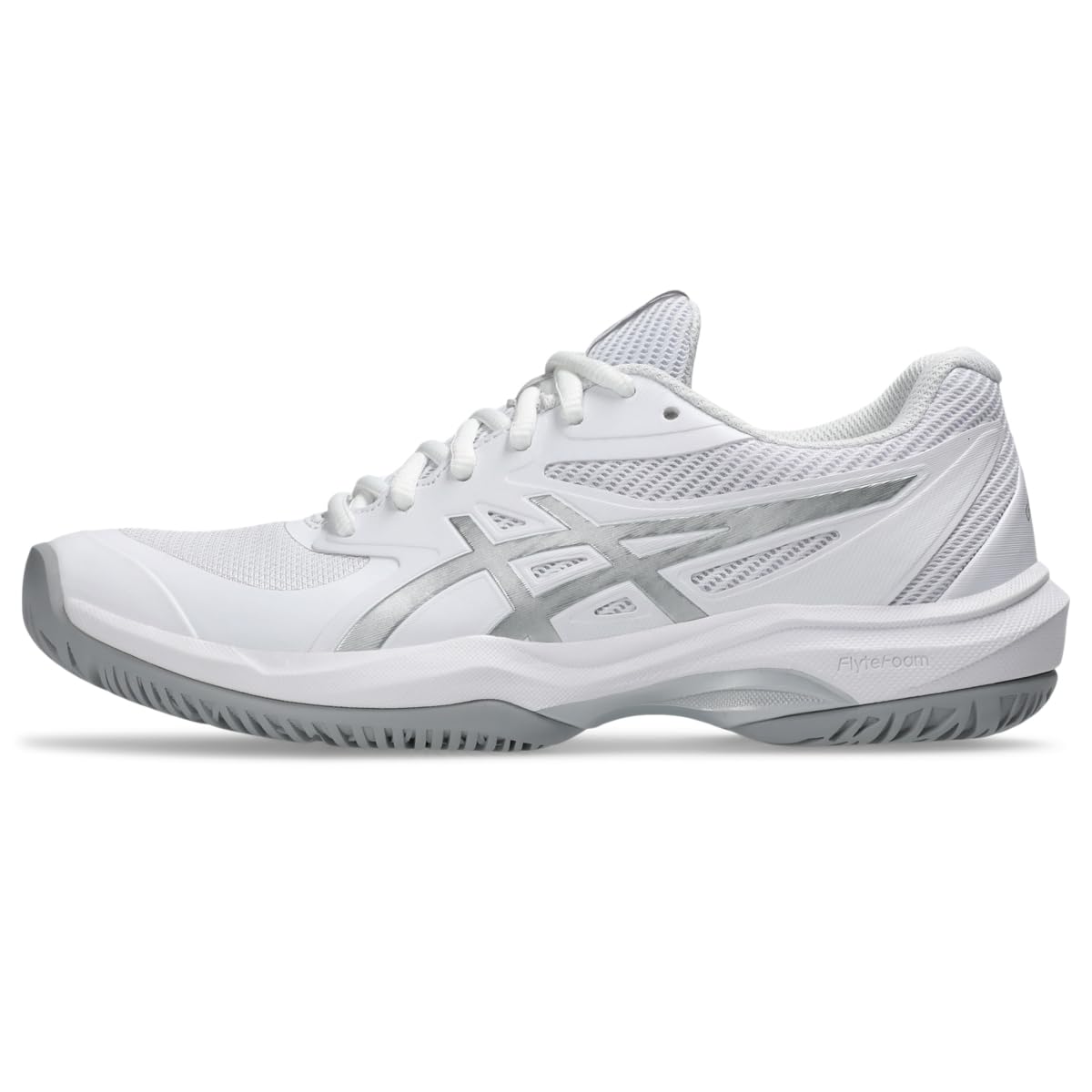
6. ASICS Women’s Game FlyteFoam Tennis Shoes
The ventilated all-courter that keeps your feet cool while you learn to move.
This is the shoe ASICS built for players who split time across surfaces, and the standout feature is the open mesh upper designed to improve airflow and keep feet cool. The FlyteFoam midsole delivers lightweight cushioning, while the TRUSSTIC technology in the sole plate adds the court stability you need for abrupt transitions. A PU film and synthetic leather overlays round out the support package.
Quality and comfort are top praises, with buyers noting the true-to-size fit and lightweight design. One owner reports their pair lasted seven years of tennis, which is an extraordinary lifespan for any court shoe. The style also earns consistent praise, with the colorway holding up well against dirt and scuffs.
The fit has a real split, though. Some find it perfect and true to size, but others report the toe box running tight for medium-width feet, with break-in stiffness that causes some discomfort at first. The support also draws mixed feedback — some call it excellent, others find little support at all. If you have wider feet, this one may not be forgiving enough.
Daily Comfort
- Open mesh upper keeps feet cool during long matches
- Quality and comfort are the two most-praised aspects
- True-to-size fit for most buyers
Fit Watch
- Toe box runs tight for medium-width feet
- Support feedback is mixed — break-in stiffness reported
Cool-headed all-courter: if breathability and all-day wear matter most, this is the one.
Wider feet should pass: the snug toe box is a real fit risk if you’re not narrow-to-medium.
7. Reebok Nano Court Sport Men’s Tennis Shoes

One versatile bootie that hops between tennis, pickleball, and gym workouts without missing a beat.
This is the multi-sport option for the beginner who isn’t sure they’re a tennis-only player yet. Reebok built the Nano Court to handle tennis, pickleball, padel, racquetball, badminton, or volleyball — and the herringbone Griptonite rubber outsole wraps up the sides to keep you planted during sharp cuts. The floatride Energy Foam midsole cushions every step, while the Flexweave upper adds support where you need it most. It’s a gym-to-court shoe that won’t force you to buy a second pair for CrossFit days.
Comfort is the most-praised aspect, with owners describing the fit as a “hug” for the foot, and traction and stability earn strong positive feedback. The versatile design is a specific highlight for pickleball players, and the no-tongue bootie-style entry is a feature some absolutely love for the snug, secure feel. Appearance also draws praise, with a sharp design that stands out on court.
The fit is the biggest conversation here — and it’s a real split. Reviewers point out the shoe runs notably narrow, and the bootie entry can be stiff and tough to get your foot into, especially if you have wide feet. Some recommend ordering half a size up, while others find even that insufficient. The cushioning is also described as average by some, so if you need plush support, this may not be the one. It’s clearly best for narrow-to-average feet.
Versatility Wins
- True multi-sport shoe — court, gym, and everything between
- Griptonite outsole delivers top-tier traction that wraps the sides
- Comfort is the top praise — the “hug” fit wins fans
Fit Warning
- Narrow fit is the most-discussed issue — wide feet should skip
- Stiff bootie entry makes it hard to get your foot in
For the undecided beginner: if you’re still exploring tennis vs. pickleball vs. gym, this covers every base.
Narrow feet only: if you have wide or even average-width feet, the snug fit will likely be a dealbreaker.
Understanding the Specs
Lateral Stability Systems
When you lunge to return a wide shot, your foot slides sideways inside the shoe unless something holds it back. Brands use different names — ASICS calls it TRUSSTIC, Wilson calls it the 4D Support Chassis — but the job is the same: a plastic or reinforced frame in the midsole that stops the shoe from twisting and your ankle from rolling. For a beginner, this matters more than any other spec because your footwork isn’t smooth yet, and you’ll be reaching and recovering constantly.
Outsole Grip and Toe Protection
The bottom of the shoe uses a rubber compound — K-Swiss names its version AOSTA II, Reebok calls its tread herringbone Griptonite — that grips hard courts so you can push off without slipping. But beginners also drag their front foot on serves, which scuffs the toe area. A reinforced toe overlay, like the Adituff wrap on the adidas, protects that spot so the shoe’s upper doesn’t tear. If you know you drag your toes, this is the spec to check before buying.
FAQ
Should I buy tennis shoes or can I just use running shoes?
Do beginner tennis shoes run small, and should I size up?
How long should a beginner’s first pair of tennis shoes last?
Can I wear these tennis shoes for pickleball or padel?
What is the difference between the Wilson Rush Pro Ace and the Rush Pro Lite?
My child just started tennis lessons. What should I look for in their first pair?
Why do my toes hurt after playing tennis, and will a different shoe help?
Are heavier or lighter tennis shoes better for a beginner?
Final Thoughts: The Verdict
For most parents of young players, the beginner tennis shoes winner is the ASICS Gel-Dedicate 8 GS because its TRUSSTIC support and true-to-size fit make it the safest, most supportive first pair — the crowd favorite at 4.6 stars across a large owner base. If you want a durable adult option that survives toe drag, grab the adidas Courtjam Control 3. And for wide feet that need room to breathe, the Wilson Rush Pro Ace is the one to reach for.
How We Picked
We do not accept paid placement. Every pick is matched to a real buyer and a real use-case; we do not hands-on test units.
Sources & Methodology
Specifications: manufacturer listings and product documentation. Review insights: verified customer reviews, as of August 2026. Pricing: not shown on this page (it changes often); check the current price via the retailer link.
As an Amazon Associate, Gadgets Feed earns from qualifying purchases. This does not affect which products we feature.