
That first zip-up into a cold-water wetsuit locks a thin layer of water against your skin, and your body heat turns that film into a warm barrier. The wrong beginner suit makes every paddle a fight against stiffness or a flush of freezing water.
I’m Min — the co-founder and writer behind Gadgets Feed. I track neoprene thickness grades, flatlock versus glued-blindstitch seam construction, and YKK zipper reliability across dozens of entry-level models to cut through marketing noise for real-world first-time buyers.
This guide ranks seven suits that balance warmth, stretch, and durability. Read on for the definitive best beginner wetsuit picks built for surfers, divers, and snorkelers who are just getting started.
How To Choose The Best Beginner Wetsuit
A first wetsuit sits tight, traps warmth, and lets you move freely. Understanding three core specs will prevent a costly mismatch — thickness, seam type, and closure style determine whether you stay warm or shiver after ten minutes in the water.
Neoprene Thickness and Water Temperature
The 3mm full suit covers water from roughly 55°F to 68°F — the range most beginners encounter during spring, fall, and moderate summer sessions. Suits labeled 3/2mm use a thicker 3mm panel across the chest and 2mm sleeves for better arm mobility. A 2mm suit is best for warm-water snorkeling above 72°F and offers less insulation for surfers on cooler mornings.
Seam Construction: Flatlock Versus Glued-Blindstitch
Flatlock stitching lies flush against the skin for comfort and stays durable, but each stitch is a tiny puncture that lets a small amount of water pass through. Glued-blindstitch (GBS) seams are sealed, block more water, and cost more. Beginners on a budget should choose flatlock for its comfort and repairability; the warmth trade-off is minor in moderate water.
Front Zipper Versus Back Zipper
Back zippers are the classic entry-level design — simple, cheap to manufacture, and easy to tug on alone if the pull cord is long enough. Front zippers allow quicker removal but can bunch under a chin or restrict neck rotation during paddling. Both work well; the deciding factor is whether you plan to layer a rash guard underneath.
Quick Comparison
On smaller screens, swipe sideways to see the full table.
| Model | Category | Best For | Key Spec | Amazon |
|---|---|---|---|---|
| Hyperflex Access 3mm | Premium | Surfing in moderate cold | 3/2mm flex neoprene, flatlock, Flex Cuffs | Amazon |
| Cressi Skin Full Suit | Premium | Sun protection and layering | 1mm nylon/elastane, front zip | Amazon |
| Seaskin 3mm Front Zip | Mid-Range | Versatile cold-water diving | 3mm front-zip, 90% neoprene, flatlock | Amazon |
| ZCCO 3mm Full Suit | Mid-Range | Budget spearfishing and diving | 3mm CR neoprene, YKK back zip, smooth skin cuffs | Amazon |
| OMGear 3mm Full Body | Mid-Range | Bright visibility for safety | 3mm neoprene, back zip, reinforced knees | Amazon |
| Lemorecn 3mm Full Wetsuit | Budget | Budget-friendly cold water use | 3mm neoprene, back zip, flatlock, knee pads | Amazon |
| REALON 2mm Full Suit | Budget | Warm-water swimming and paddle | 2mm neoprene, back zip, sealed wrists/ankles | Amazon |
In‑Depth Reviews
1. Hyperflex Access Men’s and Women’s Full Body 3mm Backzip Wetsuit
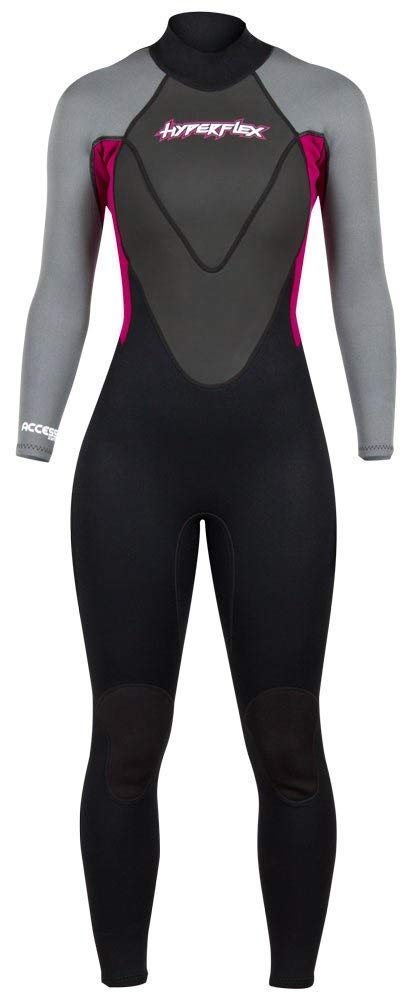
The Hyperflex Access uses 3/2mm variable-thickness neoprene — a 3mm chest panel locks in core warmth while 2mm arms preserve paddling flexibility. Flatlock seams prevent chafing during long sessions, and the Chill Breaker mesh inner panels reduce cold water flushing at your lower back. Storm Force knee pads resist abrasion from surfboard wax and rocky exits, and the Flex Cuff design prevents gaping at the wrists.
Testers at 6’1″ and 185 pounds found the XL fit perfectly without bagginess at the lower back, and the heavy-duty YKK zipper paired with a sticky Velcro neck seal kept water exchange minimal in 65°F to 70°F surf. The seamless underarm gussets allow full shoulder rotation for paddling — a feature usually reserved for suits costing twice as much.
At 3.05 pounds, this suit runs heavier than budget 2mm alternatives, but the trade-off is bomb-proof flatlock construction and a zip that lasts multiple seasons. The neckline shows wear after heavy use, and the short Velcro tab can be hard to grip with wet hands. For the beginner surfer or warm-water diver who wants a single suit to grow into, the Hyperflex Access is the top-tier starting point.
Why it’s great
- 3/2mm variable neoprene keeps core warm without sacrificing arm mobility
- Seamless underarm gussets allow full range of motion for paddling
- Storm Force knee pads add real abrasion resistance for surfboard use
Good to know
- Neckline shows wear after two seasons of regular use
- Velcro zipper tab is short and hard to grip when wet
- Water exchange is noticeable at lower water temperatures below 60°F
2. Cressi Skin Adult Full Suit
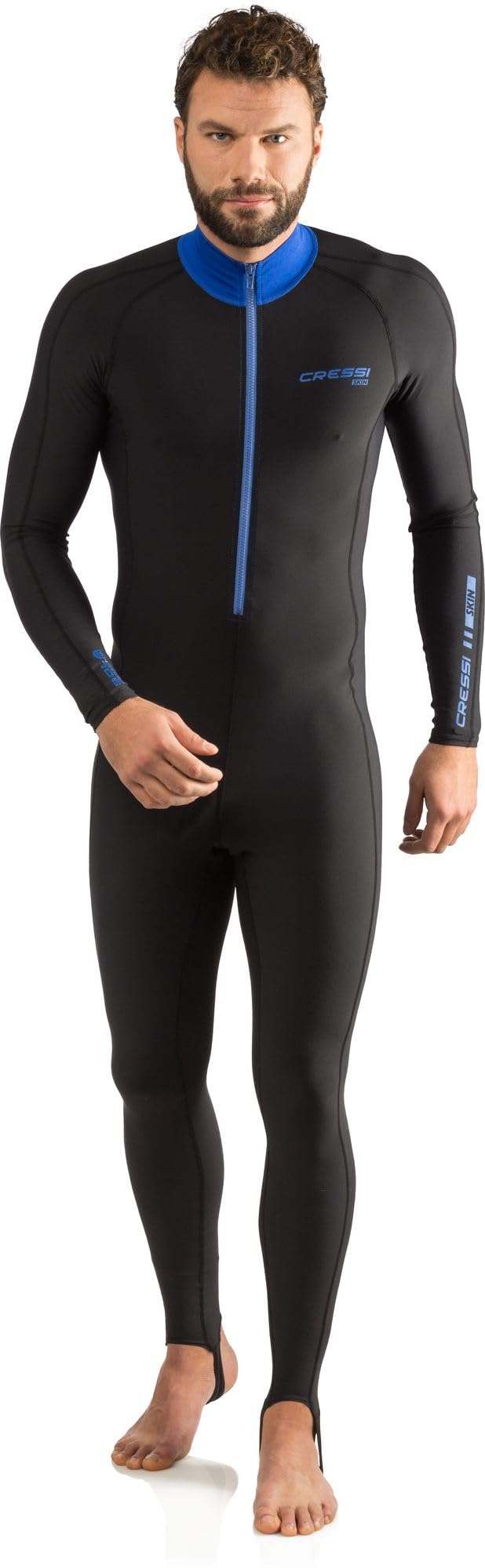
The Cressi Skin is not a neoprene wetsuit — it is a full-body 1mm nylon and elastane rash guard that protects against UV rays, jellyfish stings, and sea lice. At just 0.2 pounds, it layers under a thicker wetsuit for extra warmth or stands alone for warm-water snorkeling above 75°F. The front zip makes donning and doffing fast, though the zipper stops about five inches above the waistline.
Buyers at 5’10” and 180 pounds reported a size L fit perfectly snug without restricting breathing for long-distance ocean swimming. The fabric is machine-washable in a mesh bag, which keeps it fresh after saltwater sessions. Stirrups at the ankles keep the legs tucked into booties, preventing the suit from riding up during active swimming.
This suit provides zero thermal insulation — it is strictly sun and biological protection for warm water. The front zip design means you must remove both shoulders to use the bathroom, which is inconvenient on a dive boat. For beginners who plan to snorkel in tropical waters or need a base layer under a 3mm suit, the Cressi Skin fills a unique role no other product in this list covers.
Why it’s great
- Ultra-light 0.2-pound design packs small for travel
- Front zip allows fast removal compared to back-zip suits
- Machine washable — easy to clean after every saltwater use
Good to know
- Provides zero thermal warmth — not a substitute for a neoprene suit
- Zipper stops too high — removing the suit to use the bathroom requires full shoulder removal
- Only 1mm fabric — offers limited abrasion protection against rocks or reef
3. Seaskin 3mm Front Zip Full Wetsuit

The Seaskin 3mm front-zip suit uses a three-layer fabric — an outer nylon face for durability, a middle neoprene core for heat retention, and a soft inner layer that sits close to the skin without irritation. The front zipper reduces the struggle of removing the suit after a cold session, and the flatlock stitching runs smooth along high-friction areas like the underarms and inner thighs.
A 5’7″, 140-pound tester found the size small fit perfectly with no bagging at the knees or lower back. The wrist and ankle zippers make it easy to pull on gloves or booties, and the neck seal tightens via a Velcro closure that blocks most flushing. The 3mm thickness rated for water temperatures from 60°F upwards suits spring surf and moderate diving.
Some buyers with a 42-inch chest reported that the XXL felt snug across the bust but baggy in the legs. The wrist zipper on one unit would not fully close, though the cuff still sealed snugly against water entry. For the beginner who wants front-zipper convenience without paying premium money, the Seaskin delivers reliable insulation and a comfortable flatlock build.
Why it’s great
- Front zipper speeds up entry and exit compared to back zip alternatives
- Three-layer fabric provides balanced warmth and stretch for a mid-range suit
- Wrist and ankle zippers simplify layering with accessories
Good to know
- Wrist zipper may not close fully on some units — check before use
- Upper body fit varies — baggy legs reported on shorter torsos
- Initial chemical smell from new neoprene — aired out on the line for a day
4. ZCCO 3mm Premium Neoprene Full Sleeve Dive Skin

The ZCCO 3mm dive skin is built from 90% CR neoprene — a denser, more resilient foam than standard SBR neoprene, which resists compression after repeated dives. Smooth-skin seals at the collar, arms, and legs reduce water entry by sticking tightly to the skin. The YKK 10# back zipper handles rough use, and the suit runs up to 4XL to accommodate larger frames.
Buyers at 6’4″ and 280 pounds found the 4XL comfortable and warm for spearfishing and free diving, though the added buoyancy from 3mm neoprene required extra lead weights for staying submerged. A 5’4″, 117-pound diver needed a size medium after the small felt too restrictive — the sizing runs small in the lower sizes and should be chosen primarily by weight, not height.
The flatlock stitching keeps costs low but is not heat-sealed, meaning a small amount of water will pass through each seam — a non-issue for recreational divers but worth noting for those seeking maximum warmth. The smooth-skin cuffs make layering with gloves and booties easy. For beginners with a larger build who want a durable 3mm suit without paying big-brand premiums, the ZCCO is a reliable choice.
Why it’s great
- CR neoprene resists compression better than standard SBR foam
- 4XL size option accommodates larger body types that other brands skip
- Smooth-skin cuffs at collar, arms, and legs reduce water flushing
Good to know
- Flatlock stitching not heat-sealed — water passes through seams
- Sizing runs small in lower sizes — check weight-based chart carefully
- Added buoyancy makes free diving harder without ankle weights
5. OMGear 3mm Neoprene Full Body Wetsuit

The OMGear 3mm suit stands out visually with bright orange accents on the sleeves and collar that remain visible at 40 feet in murky lake water — a real safety advantage for divers and open-water swimmers. The 90% neoprene, 10% stretch nylon blend offers a balance of warmth and flexibility rated for water temperatures at 60°F and above. A reinforced knee panel resists wear from surfboards and rocky shore exits.
Buyers at 6 feet and 220 pounds sized up to 3XL based on reviews and found the suit comfortable even with a 46-inch chest, though the neck closure sat tight initially and loosened after about an hour of wear. The back zipper uses a long pull cord for easy solo operation, and the hook-and-loop flap prevents water from entering at the spine.
The initial chemical smell from the neoprene glue is stronger than some competitors — buyers recommend hanging it outside for 24 hours before the first use. The size chart confusion (two different charts for different colors) is a minor nuisance. For beginners who prioritize safety visibility during diving or surf sessions, the OMGear delivers peace of mind without sacrificing warmth or flexibility.
Why it’s great
- Bright orange accents are visible at depth — improves safety for open water
- Reinforced knee pad withstands abrasion from rocks and surfboard wax
- Long back-zip pull cord makes solo entry easy for beginners
Good to know
- Strong chemical smell from neoprene glue — needs 24-hour airing
- Size chart varies by color — check the correct one before ordering
- Neck closure feels tight for the first hour of wear
6. Lemorecn Men’s Wetsuit 3/2mm Full Wetsuit

The Lemorecn 3/2mm suit uses a 3mm chest panel for core warmth paired with 2mm sleeves for flexibility, making it a strong entry-level pick for water temperatures at 55°F and above. Flatlock seams run along the arms and torso to prevent chafing during prolonged surfing or paddle sessions, and anti-abrasion knee pads protect against surfboard decks and rocky shore entries.
A buyer at 5’11” and 240 pounds with a 42-inch waist and 46-inch chest found the 3XL fit perfectly — a rare achievement for plus-sized beginners. The neck Velcro felt tight initially but loosened after an hour of wear. The YKK 10# back zipper operated smoothly with the long pull cord, and the adjustable Velcro collar kept water entry to a minimum.
Some users noted that the Velcro stitching at the neck began to fray after a few uses — reinforcing the closure with a few hand stitches early may extend the suit’s life. The 80% neoprene, 20% nylon blend has less stretch than higher-end suits but is adequate for the price. For the budget-conscious beginner who needs a functional 3mm suit for cold water, the Lemorecn is the cheapest workable option in this list.
Why it’s great
- 3mm chest and 2mm sleeve design balances warmth with arm mobility
- 3XL fits larger body types well — rare at this entry-level price
- Anti-abrasion knee pads protect against surfboard and rock wear
Good to know
- Neck Velcro stitching frays after a few uses — reinforce early
- 80% neoprene blend has less stretch than premium CR neoprene suits
- Neck feels tight during the first hour of wear
7. REALON Women’s and Men’s 2mm Full Wetsuit

The REALON 2mm suit targets warm-water use — pool swimming in October, lake sessions above 72°F, and paddle boarding where abrasion protection is more important than insulation. The 2mm neoprene provides enough buoyancy to help beginners float easier, and the sealed wrists and ankles prevent cold spots where water might otherwise flush in.
A female buyer at 5’5″ and 135 pounds found the size small fit perfectly for chilly lake swimming, and the tail on the back zipper made solo operation simple. The 2mm material dries faster than thicker suits, which helps when packing up after a session. At just 1.5 pounds, it packs down small for travel.
The suit is not suitable for water below 68°F — the 2mm thickness cannot trap enough body heat in genuinely cold conditions. Some buyers with a 42-inch chest reported the 3XL felt loose in the legs and the zipper bound when pulling up. This suit is explicitly for warm-water beginners; for anyone facing cooler surf or spring diving, the thicker 3mm options above are a better choice.
Why it’s great
- 2mm neoprene dries fast and packs small for travel
- Sealed wrists and ankles minimize cold water entry at openings
- Provides gentle buoyancy that helps beginners float easier
Good to know
- Only suitable for water temperatures above 68°F — insufficient for cold
- Zipper may bind on larger chest sizes during operation
- Thin neoprene offers limited abrasion protection against rocks or reef
FAQ
Should a beginner wetsuit fit tight or loose?
What water temperature is a 3mm beginner wetsuit good for?
Should I size up or down for a beginner wetsuit?
Final Thoughts: The Verdict
For most users, the best beginner wetsuit winner is the Hyperflex Access 3mm because its 3/2mm variable neoprene, flatlock seams, and Storm Force knee pads deliver a durable, comfortable experience across surf and dive use. If you want front-zipper convenience for cold-water diving, grab the Seaskin 3mm Front Zip. And for warm-water snorkeling and sun protection, nothing beats the Cressi Skin Full Suit.