
Our readers keep the lights on and my morning glass full of iced black tea. As an Amazon Associate, I earn from qualifying purchases.
Specs are compiled from manufacturer listings and verified buyer reviews and can change over time — please confirm the key details on the product page before buying.
If you camp or hunt through real winter, the one thing that decides whether you sleep or shiver is a temperature rating at or below zero — and the nine bags here all clear that bar. The catch nobody tells beginners is that a below-zero rating and light weight almost never live in the same bag. Most of what you will read below is about choosing the trade: how much warmth you need versus how far you have to carry it.
I’m Min — the founder and writer behind Gadgets Feed. This guide is built by comparing the manufacturers’ published specifications and the patterns across verified customer reviews, so you get each pick’s real strengths and trade-offs instead of marketing spin.
Below-zero bags split into two clear families — packable mummy-style bags you carry in, and heavy canvas rectangles that live in a truck. This guide sorts every pick by which one you actually are. If you want the warmth without the guesswork, this breakdown of a below zero sleeping bag maps it out.
Our Picks at a Glance


How To Choose The Best Below Zero Sleeping Bag
The quickest way to buy the wrong below-zero bag is to chase the coldest number on the tag. A bag rated far colder than your trip runs hot, heavy, and bulky — and you will end up sleeping on top of it instead of inside it. Match the rating to your real conditions first, then let the rest of the specs follow.
Temperature ratings and what they really mean
A bag’s rating is the temperature at which it keeps an average sleeper alive, not necessarily comfortable. “Comfort” ratings are the number to trust for sleeping; the colder “extreme” number is a survival limit. If you plan to camp in the teens, a bag rated a bit colder than that gives you margin for wind and a cold snap.
Fill: down versus synthetic
Down fill packs down small for the warmth it delivers, which makes it the choice for backpackers. Synthetic fill keeps insulating even if it gets damp, and it typically costs less and takes more abuse. For truck and cabin camping, synthetic is usually the smarter buy; for long distances on foot, down earns its place.
Shape, shell, and weight
Mummy bags hug the body and shed heat efficiently, while rectangular bags give you room to roll and often zip together. Canvas-shell rectangles shrug off abuse and last for years, but they are heavy and bulky to carry. Choose the shape and shell around how you travel, not the other way round.
Quick Comparison
| Model | Best For | Temp Rating | Weight | Shell / Fill | Amazon |
|---|---|---|---|---|---|
| ALPS OutdoorZ Redwood -25★ Best Overall | Car campers and hunters wanting maximum room and warmth | -25°F | 13 lb | Cotton canvas / polyester TechLoft | Amazon |
| Guide Gear Canvas -30Best for Tall Sleepers | Tall sleepers and late-season hunters | -30°F | 12.7 lb | Cotton duck canvas / fiberfill | Amazon |
| Kelty Cosmic Synthetic 0Best for Backpacking | Backpackers who want a packable sub-freezing bag | 0°F | 5.5 lb | Recycled nylon / Cirroloft synthetic | Amazon |
| ALPS OutdoorZ Redwood -10 | Couples and families wanting a spacious flannel-lined bag | -10°F | 11.5 lb | Cotton canvas / polyester fill | Amazon |
| Browning McKinley 0 | Car campers who want a roomy bag that still packs down | 0°F | 8.8 lb | Nylon ripstop / polyester TechLoft | Amazon |
| Naturehike 650 Fill Down | Backpackers wanting down warmth at the lightest carry | -2°F extreme / 18°F extreme | 2.9 lb | 20D ripstop nylon / RDS down | Amazon |
| TETON Sports Deer Hunter | Hunters wanting a wide canvas bag for truck and RV | Cold weather (canvas) | 17.5 lb | Canvas / hollow fiber fill | Amazon |
| TETON Sports Outfitter -35 | Deep-winter hunters and cold-weather car campers | -35°F | 20 lb | Canvas / hollow fiber fill | Amazon |
| Big Agnes Echo Park | Side sleepers and larger campers wanting a bed-like bag | 0°F | 16 oz | 40D nylon ripstop / recycled polyester | Amazon |
In-Depth Reviews
1. ALPS OutdoorZ Sleeping-Bags Redwood -25
Our pick — over 4.5★ from 900+ verified ratings; the strongest balance of quality and price.
A canvas cave rated to -25°F that everyone wants to sleep in — just not carry far.
The Redwood -25 earns the top spot because it delivers the two things an extreme-cold sleeper wants most: room and warmth. It is rated to -25 degrees Fahrenheit, a rating meant for deep winter, and its 80-inch by 38-inch rectangle gives you genuine space to turn over instead of fighting a tight cocoon. The polyester TechLoft Silver insulation uses multi-hole fibers with a siliconized finish, which is the reason it lofts back up for consistent warmth rather than flattening into a cold strip under your back.
What wins owners over is the everyday livability. The 100% cotton flannel liner stays soft against your skin, the two-layer offset construction is built to eliminate cold spots, and the outer shell is cotton canvas that shrugs off rough use. Buyers report it sleeps comfortable around 20°F and holds warmth well below that with layers. This is the clear pick if you camp from a vehicle — at 13 pounds, it runs about 0.3 pounds heavier than the Guide Gear below, and neither belongs on a long hike.
The trade-off is honest: this bag does not pack down small. Owners who want to hike in will find it too bulky, and plenty of them say it is simply too warm to use above freezing. Value for money is the thing it is praised most for, and that tracks — a bag this heavy and this warm is a lot of shelter for the money.
Why Owners Keep It
- -25°F rating handles real deep winter
- 80″ x 38″ oversized rectangle with flannel liner
- Two-layer offset design to kill cold spots
- Priced well for the warmth it delivers
What To Weigh
- 13 lb — a car-camping bag, not a backpacking one
- Too warm to zip up above freezing
- Large rolled size eats trunk space
Reach for this if: you camp from a truck, cabin, or base camp and want maximum room and warmth with zero fuss.
Leave it home if: you are covering trail miles — the 13-pound weight and bulky roll will slow you down every step.
2. Guide Gear Sleeping Bag for Adults, Cold Weather, Winter, Hiking, Camping, Hunter, Canvas, -30 Degrees
The bag for hunters who measure themselves past the six-foot line and need headroom, literally.
If you have ever spent a cold night with your shoulders jammed into a too-short bag, the Guide Gear -30 fixes exactly that. It is rated to -30 degrees Fahrenheit — the coldest rating in this lineup — and built on a roomy 39-inch-wide by 90-inch-long rectangle with a cotton duck canvas shell. That length is the headline: a 6-foot-8-inch sleeper reports fitting perfectly, while another says it suits his 5-foot-10 frame with room to spare. The attached hood with a drawstring is meant to keep heat from escaping off your head.
Warmth is what owners praise most, and the 9 pounds of fiberfill backs that up — many call it warm to the point of unzipping midway through the night. It sheds a little weight versus the Redwood, tipping the scales at 12.7 pounds. The 2-way zipper lets you vent from either end without crawling out.
Here is the catch several owners flag: that hood opening is wide, and without a snug drawstring you can lose heat around your head in serious cold. The zipper can also work itself open, so zip it deliberately before you drift off. Like every canvas bag here, it stays parked in a vehicle — hiking with it is out of the question.
Sizing wins out: the 39″ x 90″ canvas rectangle is the roomiest place to be for anyone north of six feet, and the -30°F rating backs the brand’s extreme-cold claim.
The honest limits: a loose hood and a zipper that can creep open mean you should dial in both before lights out, and the 12.7-pound pack weight keeps it a truck-and-cabin bag.
Built for: tall hunters and cold-weather car campers who want the coldest rating on the list without spending premium money.
Look past it if: you need a snug mummy fit or plan to shoulder the load — this is a wide, heavy rectangle.
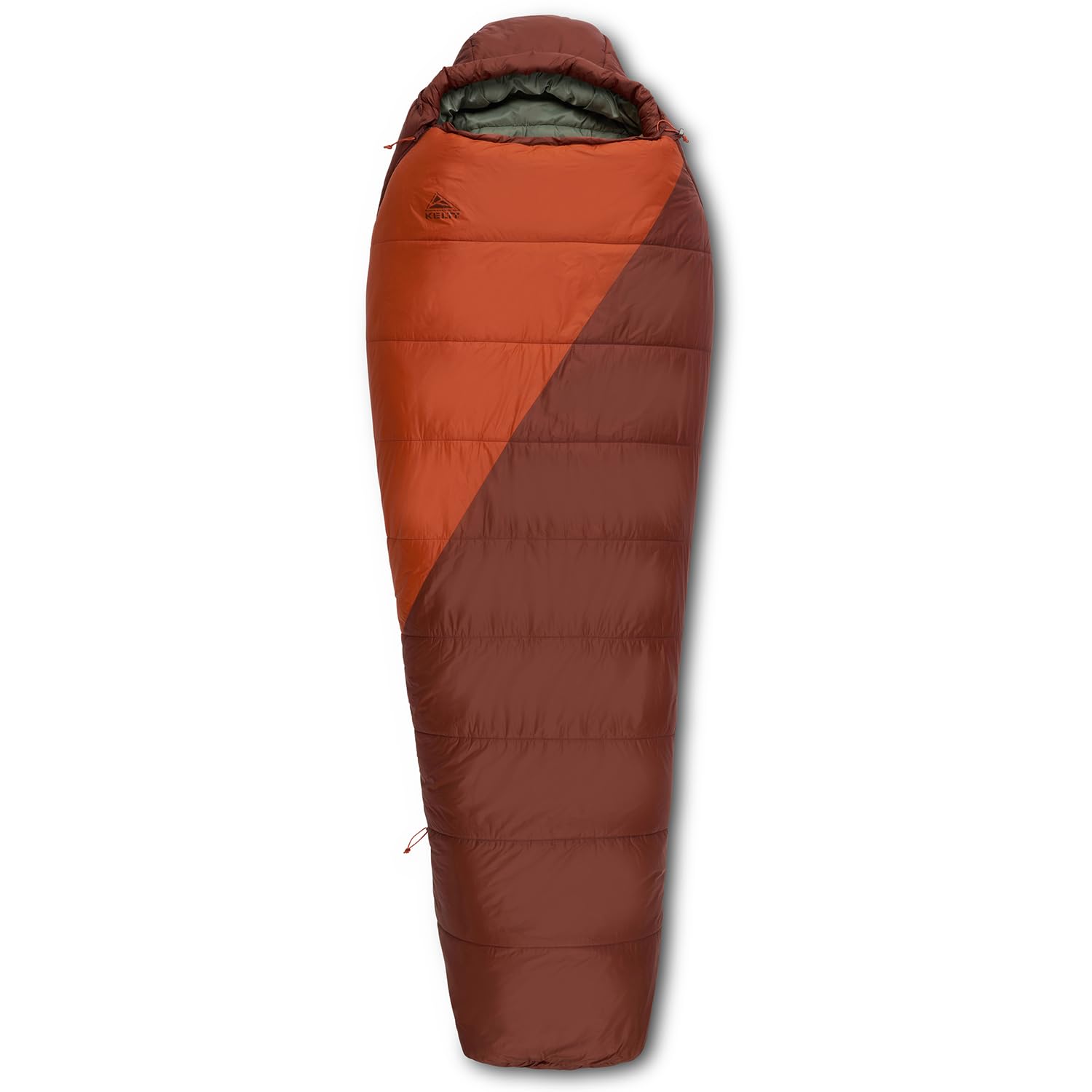
3. Kelty Cosmic Synthetic Fill 0 Degree Backpacking Sleeping Bag, Regular
The one bag here that is actually built to be carried, not hauled.
You can carry this one on your back, unlike every other pick here that stays in the car. The Kelty Cosmic Synthetic 0 is built for the trail, with a 0-degree-Fahrenheit rating (cold enough for freezing nights), room for sleepers up to six feet, and an integrated compression stuff sack (a built-in bag you cinch down to shrink it). Its Cirroloft synthetic insulation keeps you warm even when it gets wet, so a rainy night does not turn into a cold one — that damp-proof warmth is why it beats a down bag on wet, cold trips.
What owners love is the temperature versatility. One says it kept them perfectly warm camping in the snow, and another calls it toasty warm in sub-freezing temps. It weighs 5.5 pounds, roughly a third of the heavy canvas bags here, and the spacious footbox gives your toes room to wiggle. Kelty backs it with a Limited Lifetime Warranty.
The trade-off worth knowing up front is fit. One buyer found it too narrow across the shoulders, so if you are broad-chested consider sizing up or trying before you commit. And while it is far lighter than the canvas options, it still is not a featherweight for longer treks.
The Trail Case
- 0°F rating built for backpacking
- Integrated compression stuff sack included
- Synthetic fill keeps loft when damp
- Limited Lifetime Warranty
The Fine Print
- Shoulders can feel narrow for larger frames
- Still not ultra-light for long expeditions
- Smaller review pool than the canvas staples
Your pick if: you actually carry your bag on your back and want a legitimate sub-freezing trail bag that survives damp conditions.
skip it if: you are a broader-bodied sleeper who needs a wide rectangle — this one hugs close.
4. ALPS OutdoorZ Redwood -10°F Flannel-Lined Sleeping Bag with Cotton Canvas Shell
The Redwood’s calm, sensible sibling — ten degrees less extreme and noticeably friendlier to couples.
If your winters get cold but not brutal, this -10 version is the one to buy — the -25 Redwood is overkill unless you camp in serious deep freeze. It is rated to -10 degrees Fahrenheit and built on the same 80-inch by 38-inch oversized rectangle as the Redwood, so you get the same roomy fit with a milder temperature limit. That milder rating is why it works across three seasons instead of just deep winter: owners say it sleeps comfortable down to around 10°F with layers, and it handles fall and spring camping that the colder bag would roast you in.
The heavy-duty #8 zippers are the standout engineering here: they are rated tough enough to withstand rugged use, and two identical bags can zip together for shared warmth, which makes this a favorite for couples and families. Warmth is what it is praised for above all, and the tough cotton canvas exterior speaks to buyers who want a bag that lasts years, not one season.
The flip side is the same as every canvas rectangle: it does not shrink small. At 11.5 pounds it is slightly lighter than the -25 model, but still a haul and not a carry. Roll it into a trunk, not a backpack.
Built to share: the zip-together #8 zippers and 38-inch width make it one of the few below-zero picks that actually fits two people, and the -10°F rating keeps it usable well past the snow-in date.
Heavy by nature: the flannel-lined canvas construction that makes it durable is also what pushes it to 11.5 pounds — great for a cot, wrong for a trail.
Choose it if: you camp as a couple or in shoulder-season cold and want a flannel-lined canvas bag you can zip to a partner’s.
Pass if: you are chasing the deepest cold — the -25 Redwood goes colder — or need to carry your gear in on foot.
5. Browning McKinley 0° Sleeping Bag – Oversize Insulated Hooded Rectangle

A roomy 0°F rectangle that still packs down — an unusual combination in cold-weather gear.
You get room to roll around without giving up a compact pack. The Browning McKinley uses two layers of offset construction (staggered seams that block cold spots) and a 90-inch by 36-inch rectangle, so you can stretch out instead of fighting a tight mummy shape. The 210T nylon diamond ripstop shell (a tough, tear-resistant fabric) and brushed polyester liner round out a bag for campers who want comfort, and it still compresses into an included stuff sack.
What buyers like most is how livable it feels: generously wide inside, warm enough that one owner slept all night in it without socks. The insulated chest and zipper baffle trap heat where a basic bag leaks it, and a full hood plus a zippered pocket let you tuck a phone or a small flashlight. It presses the scales at 8.8 pounds — noticeably heavier than the Naturehike’s 2.9 pounds, but a world lighter than the canvas bags.
Plan for the packing routine: it packs down neatly when you stuff it in by hand rather than rolling, and like all synthetic bags it will not cinch down as small as a down bag. Not every version has a full-length zipper, so check before you buy if you like to open a bag flat.
Why It Stands Out
- 0°F rating with roomy 90″ x 36″ build
- Two-layer offset construction kills cold spots
- Packs into a compression stuff sack
- Liner warm enough to sleep without socks
Worth Knowing
- 8.8 lb is heavy for a mummy-style carry
- Not suitable for backpacking
- Packs best when stuffed, not rolled
Right for you if: you want cold-weather warmth with room to move and a bag that still squeezes into a car trunk with gear to spare.
Not your bag if: you need something for a long trail — 8.8 pounds is comfortable in camp but cruel on your back.
6. Naturehike 0 Degree Ultralight Down Sleeping Bag, 650 Fill Power
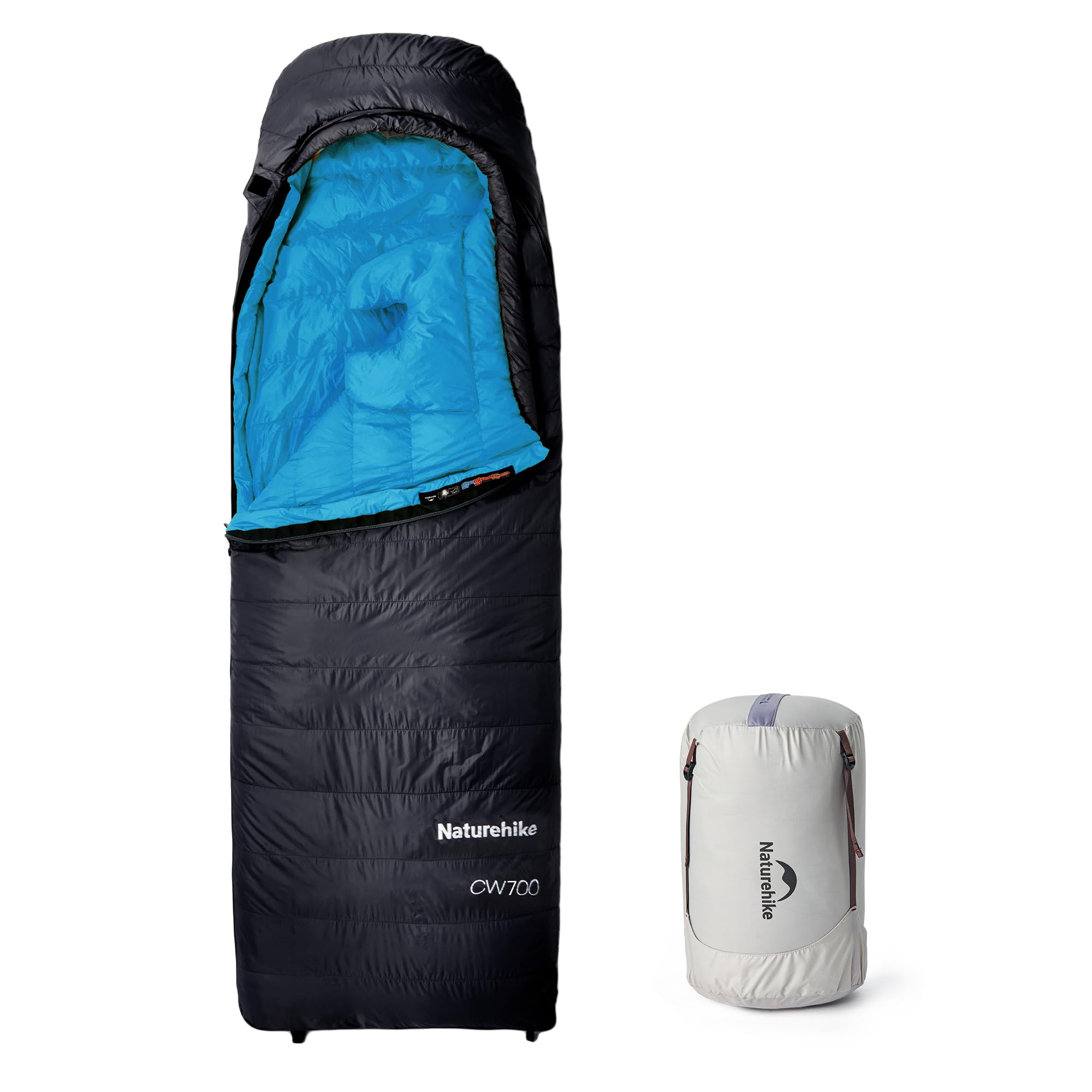
Down insulation at a featherweight 2.9 pounds — the trail bag that barely registers on your back.
At 2.9 pounds, the Naturehike is the lightest bag on this list — easy to carry on any trip. It gets that low weight from 650 fill power duck down (a measure of how much warmth each ounce of down traps) with a 700-gram fill weight. The CW1000 model carries a -2°F extreme rating, the survival floor for an average sleeper. The down is RDS certified and traceable (you can scan the label to follow it back to its source), and the U-neck collar and twin wind bars shut out cold air at your neck and along the sides.
Owners who want to travel light appreciate the two available sizes and the way it stuffs down to a compact bundle you can fold into a stuff sack easily. The 400T 20D ripstop nylon keeps the weight low, the YKK zipper is a recognized durability mark, and the whole bag can be fully unzipped and used as a down blanket when you want less coverage.
The catch is the zipper work. Several owners find zipping it up takes patience because the lightweight liner sweeps into the teeth unless you hold it back. And while the -2°F extreme figure is real, most buyers treat it as a strong three-season bag comfortable in the high 20s rather than a deep-winter one.
The traveling case: 650 fill power down at 2.9 pounds is the reason thru-hikers and weight-conscious campers reach for this one over any canvas bag here — it packs to a fraction of the size.
The patience tax: the liner snags the zipper if you rush, so budget a few extra seconds when closing up, and do not expect full deep-winter performance from the comfort rating.
Made for you if: every ounce counts and you want genuine down warmth that stows smaller than anything else on this page.
Think twice if: you want a no-fuss zip or plan to sit below zero for real — a heavier canvas bag holds up better there.
7. TETON Sports Deer Hunter Sleeping Bag, Teton Tough Canvas Shell
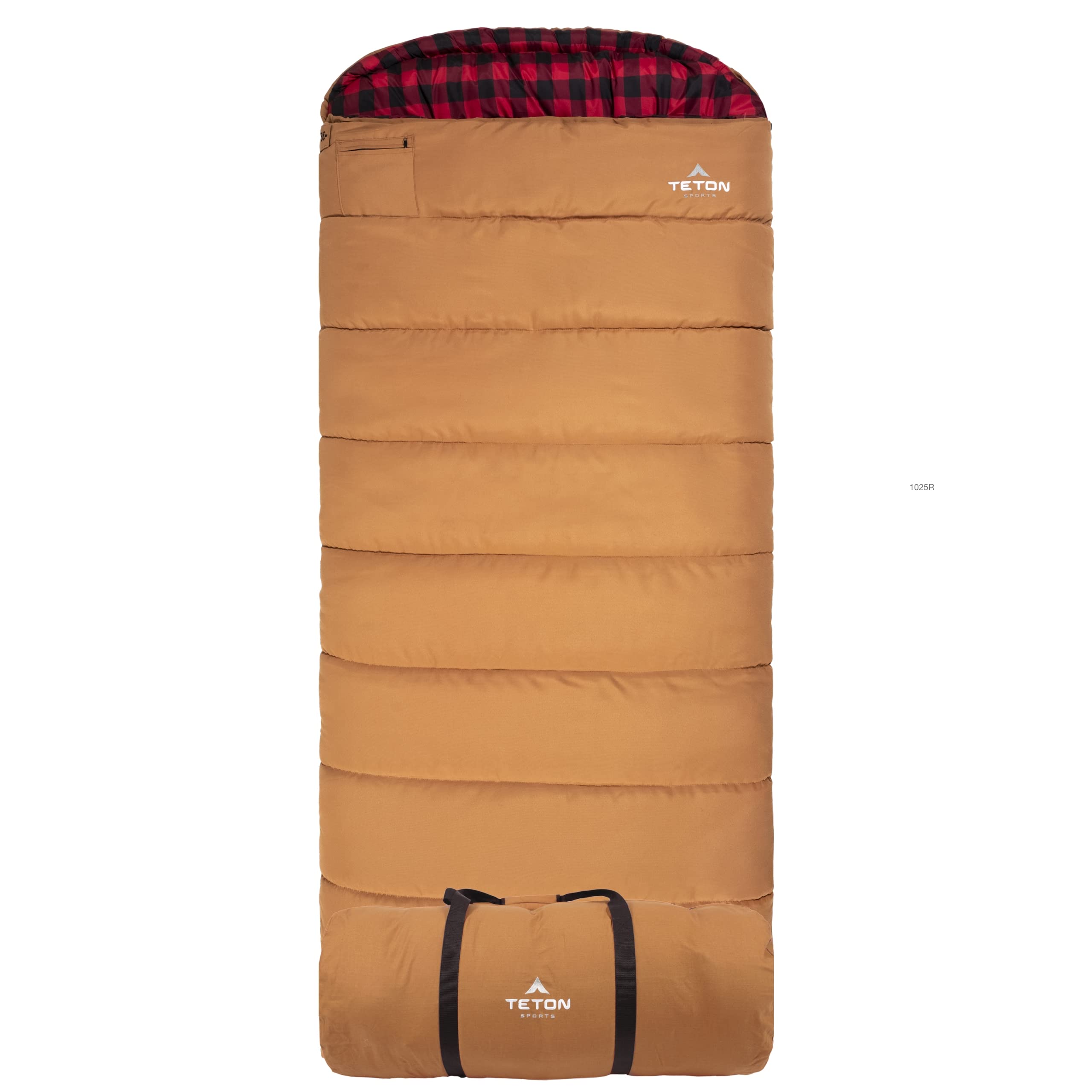
A canvas bag so wide two can share it, and so warm no one wants to give it up.
The Deer Hunter is built for hunters and RV campers who value sprawl over carry weight. Its 90-inch by 39-inch rectangle is the roomiest on this list, and owners confirm it fits two people snugly while still covering a six-foot sleeper with room to spare. The poly-flannel lining and half-circle mummy hood are the cozy touches, and double-layer construction with zipper and shoulder draft tubes seals warmth where it counts. There is even a small pocket sized to keep a phone warm.
What owners rave about is that it flat-out performs in cold — one says it stays warm even with the window open all night, and another reports sleeping warm in a snowstorm under a tarp. The tough, water-resistant canvas shell is made to stand up to years of rigorous use. Zippers on each side give you temperature control and let a pair of these zip together. Heads up: it weighs 17.5 pounds, the heaviest of the Teton pair before you reach the Outfitter.
The one thing to watch is the zipper — it can bind and snag if you pull it at an angle, so take it slow. And this is a bag for base camp, an RV, or a truck, never for a long walk in.
The Big-Bag Case
- 90″ x 39″ — roomy enough for two
- Double-layer build with draft tubes
- Two-way zippers for venting control
- Water-resistant canvas shell for years of use
The Honest Notes
- 17.5 lb — a firm no for backpacking
- Zipper can snag if pulled off-angle
- Massive rolled size dominates any trunk
Pick it if: you hunt or camp from a truck or RV and want a wide canvas bag rugged enough to outlast a decade of seasons.
Look elsewhere if: you need portability — at 17.5 pounds this one stays where you park.
8. TETON Sports Outfitter -35F Sleeping Bag for Adults, Canvas Shell
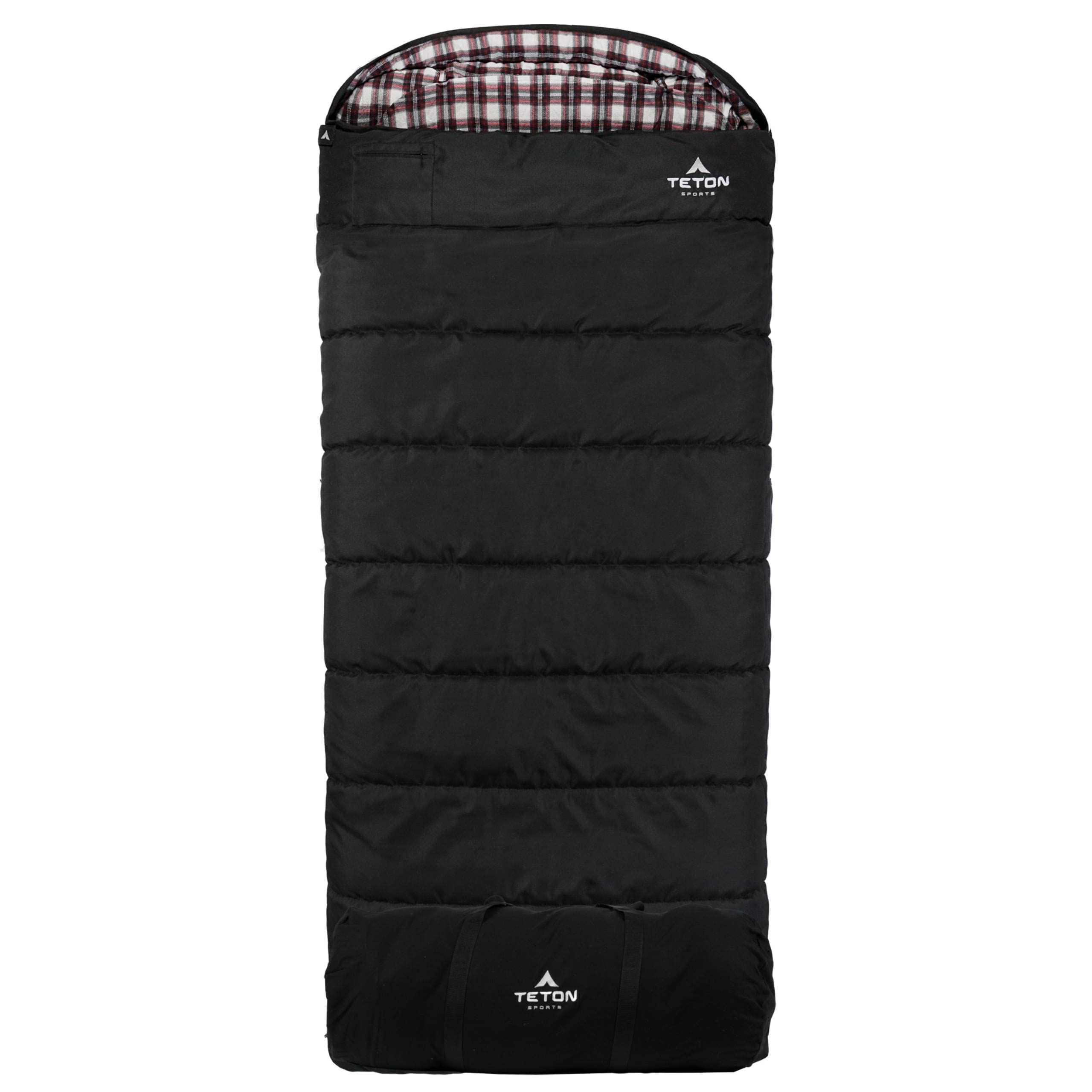
Rated to -35°F — the deepest-cold bag here, and the heaviest place to sleep warm.
When the mercury drops hardest, this is the one. The Outfitter carries a -35-degree-Fahrenheit rating, and one owner tested it during a Northwest Colorado hunt at -3°F and single digits, staying warm in just underwear while their water bottles froze solid. That is the level of cold this bag is built for. Its 92-inch by 39-inch rectangle is topped with a soft cotton flannel liner and wrapped in a rugged, water-resistant canvas shell. Double-layer construction and draft tubes are there to keep warmth in.
The flannel liner is a big part of the comfort story — buyers describe it as soft and quiet, unlike crinkly synthetic mummy bags, and less constraining than a tight-fitting bag. Owners living in cold states call these the only bags they will buy. It comes with a stuff sack and hang loops for long-term storage to protect the loft. One honest note: at 20 pounds, it is the heaviest bag on this list by a clear margin — 2.5 pounds heavier than the Teton Deer Hunter above.
There is a design quirk to know before you buy. The bottom does not unzip, so you cannot lay it out flat like a blanket, which some owners miss on milder nights. Otherwise it is a straight-ahead deep-winter machine for a cot or a truck bed.
Made for the deep freeze: a -35°F rating with flannel softness and a canvas shell puts it in a different league than the three-season bags, and owners mention it holds up when it counts.
The weight to accept: 20 pounds is the price of this much insulation, and the non-opening bottom means no flat-blanket mode — a small compromise for genuine deep-winter warmth.
The right call for: serious cold-weather hunters and winter campers who want the warmest rating available with flannel comfort.
Wrong fit if: you need anything portable or want a bag that unzips flat — the bottom stays closed.
9. Big Agnes Echo Park – Camping Sleeping Bag
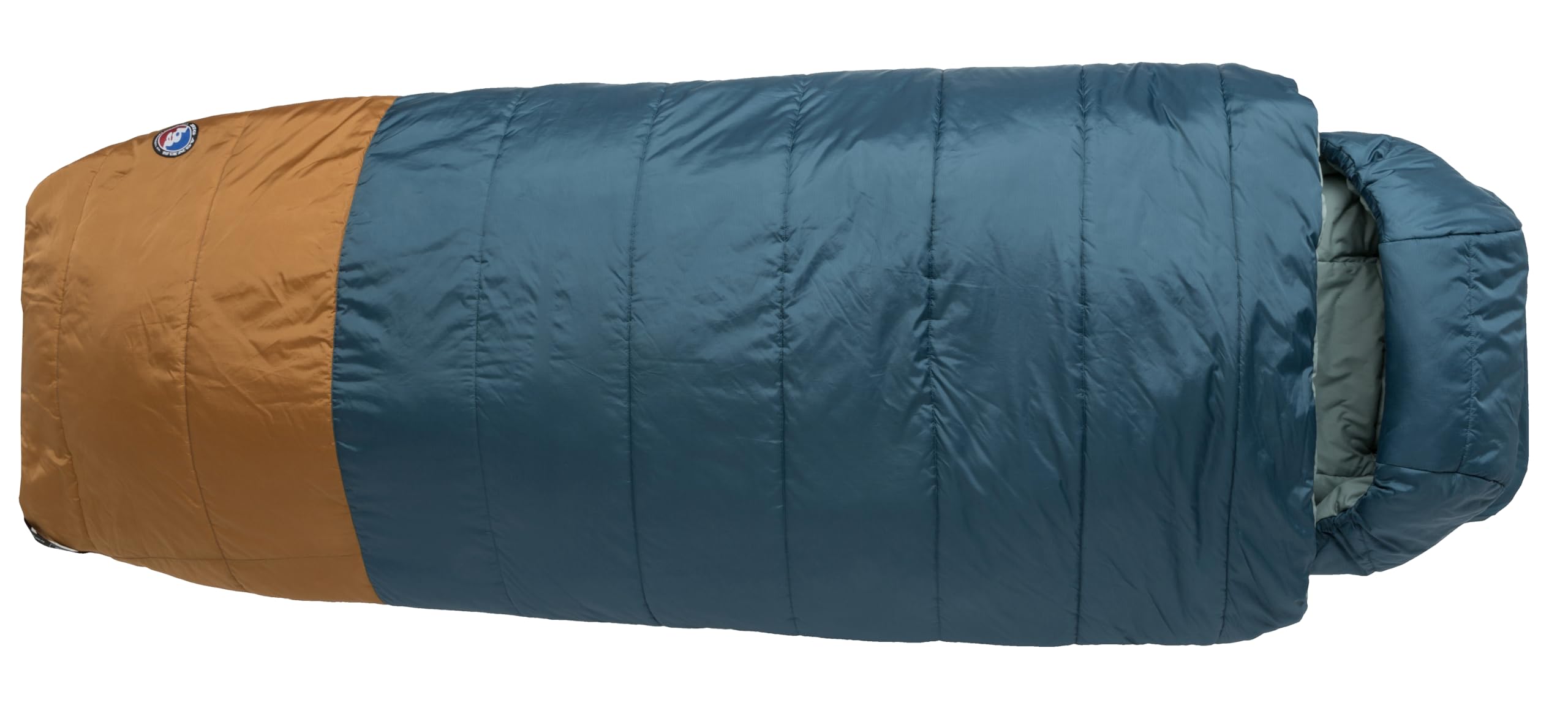
A bag that locks to your sleeping pad and holds a king pillow — comfort you can feel at 20 degrees.
If you hate feeling trapped in a sleeping bag, the Echo Park is for you. Its Padlok design clips the bag to your sleeping pad so you will not roll off in the night, and the Cinch Pad Sleeve adjusts to a range of pad sizes — just note the pad is sold separately. That locked-down setup, plus the oversized draft collar and zipper draft tube (fabric flaps that seal out cold air), is what lets it sleep comfortably: owners happily use it into the 20s even though it is rated for 0 degrees.
The little details are where it wins people over. A Pillow Barn sleeve tucks your pillow in tight all night, a free-range hood lets you lift your head inside, and top-corner hand pockets let you wrap the bag around your shoulders like your comforter at home. The lining is a quiet cotton-poly blend that feels like a bedsheet, and the mesh storage sack helps keep the loft (the fluffiness that traps warmth) intact between trips.
The catch is pack size. This is a long, wide bag, and one buyer returned theirs because the packed volume was too big for a backpack — it is a car-camping and guest-bed bag, not a trail bag. For throwing in the truck, though, it is among the most comfortable cold-weather bags you can buy.
Comfort You Can Set Up
- Padlok system keeps you on your pad
- Pillow Barn holds a pillow in place
- Quiet cotton-poly lining, bed-like feel
- Hand pockets wrap it around your shoulders
Before You Commit
- Packed size is large — not built for a backpack
- Sleeping pad required and sold separately
- Small owner pool so far
Set on this if: you are a side sleeper or a larger camper who wants your bag locked to the pad with pillow space built in.
Not for you if: you are packing into a backpack — the packed volume is the limiter here, not the warmth.
Understanding the Specs
Temperature rating (and comfort vs. extreme)
A bag’s rating is the coldest temperature it is built to handle, but one number hides a range. The “comfort” rating is the temperature you can actually sleep at; the “extreme” rating is a survival floor. When two bags here share a 0°F rating, the one with a lower-comfort build or draft tubes generally sleeps warmer. As a rule, buy a bag comfort-rated at or below the coldest night you expect, not just the survival number.
Fill power and fill weight in down bags
Fill power measures how much space one ounce of down fluffs into — higher fill power means more warmth per ounce, which is why the 650 fill power Naturehike stays so light. Fill weight is the actual amount of down used; a 700-gram fill weight tells you how much insulation is inside. Together, they explain the power-to-weight gap between a 2.9-pound down bag and a 20-pound canvas one.
Shell material and weight
Cotton canvas shells like the Teton and ALPS bags are tough and water-resistant, which makes them last for years — and the reason they typically weigh from around 11.5 pounds up to 20 pounds. Lighter shells such as the 20D and 40D nylon ripstop used on the backpacking picks keep weight and stuff size down, at the cost of some abrasion resistance. Pick the shell your trip demands.
Hood, draft tubes, and zippers
Heat escapes fastest around your head and up the zipper line, which is why the better cold-weather bags here add hoods, neck collars, and draft tubes. A hood with a snug drawstring holds warmth in, while a wide, loose opening lets it out. A two-way or dual-side zipper lets you vent without fully escaping. The keyword to watch is the zipper quality rating — a smooth, no-snag zipper keeps you from waking at 3 a.m.
FAQ
What does a below zero sleeping bag rating actually mean?
Is a -25°F bag good for regular winter camping?
Down or synthetic fill for a below zero bag?
How much does a below zero sleeping bag weigh?
Can two people zip two sleeping bags together?
Do I need a sleeping pad under a below zero sleeping bag?
What is fill power in a down sleeping bag?
How do I keep a below zero bag warm overnight in a tent?
Can I use a below zero sleeping bag as a comforter at home?
Final Thoughts: The Verdict
For the majority of shoppers, the below zero sleeping bag winner is the ALPS OutdoorZ Redwood -25 because it combines a real -25°F rating with a genuinely roomy 80″ x 38″ rectangle and soft flannel comfort — and owners rate the value so highly that it is the most-praised quality of the bag. If you need something you can carry on your back, grab the Kelty Cosmic Synthetic 0 for its packable 0°F build and included compression sack. And for the coldest hunts where you camp from a truck, the TETON Sports Outfitter -35 is the one to reach for, with the deepest -35°F rating on this list.
How We Picked
We do not accept paid placement. Every pick is matched to a real buyer and a real use-case; we do not hands-on test units.
Sources & Methodology
Specifications: manufacturer listings and product documentation. Review insights: verified customer reviews, as of September 2026. Pricing: not shown on this page (it changes often); check the current price via the retailer link.
As an Amazon Associate, Gadgets Feed earns from qualifying purchases. This does not affect which products we feature.