
Our readers keep the lights on and my morning glass full of iced black tea. As an Amazon Associate, I earn from qualifying purchases.
Specs are compiled from manufacturer listings and verified buyer reviews and can change over time — please confirm the key details on the product page before buying.
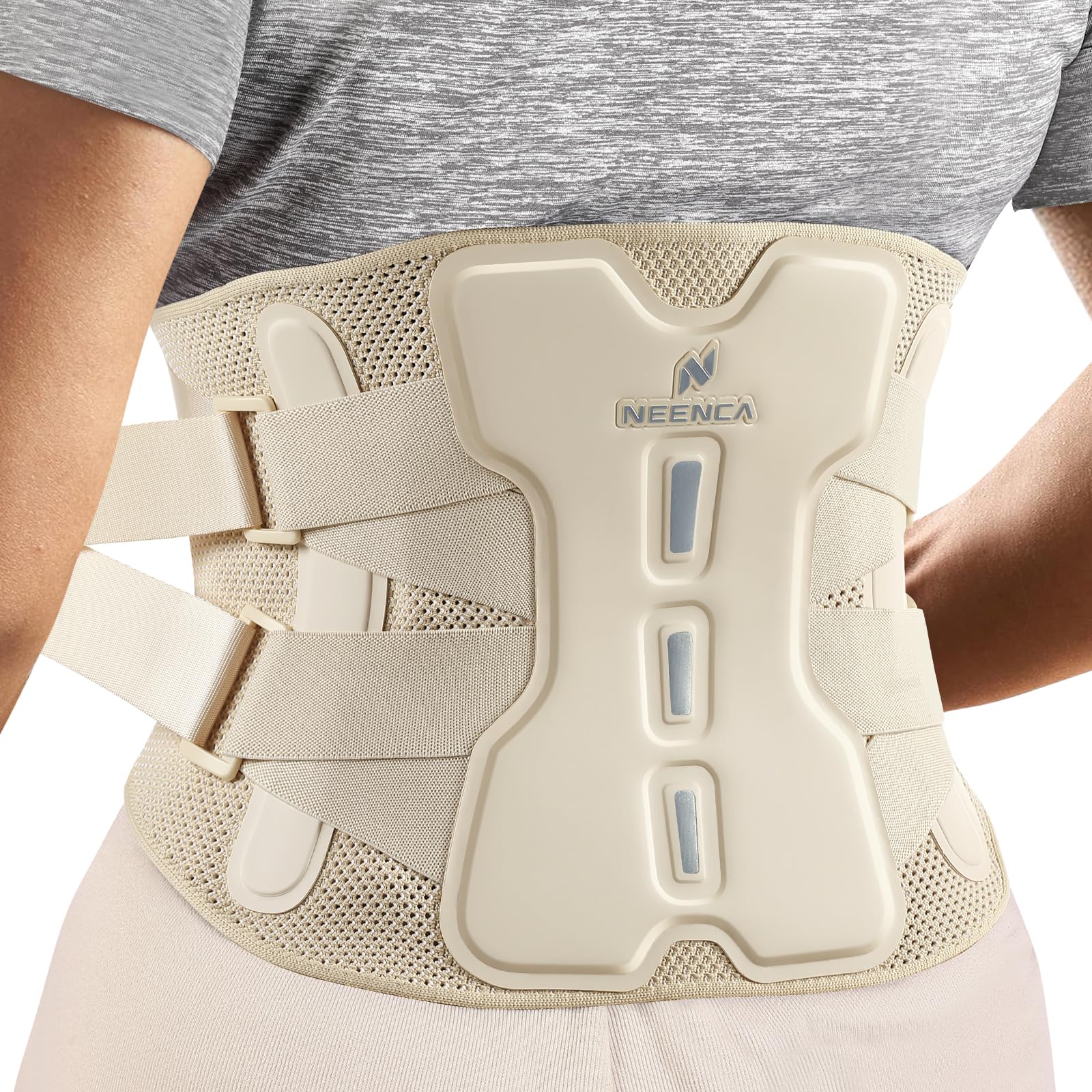
If sciatica is what brought you here, the short answer is this: a good lower-back belt does its best work when the padding and the stays press around your lumbar spine and hip line, not across your belly. The NEENCA Back Brace takes the top spot because it combines a pulley system (two straps you pull to tighten evenly), 2 metal lumbar pads, and 4 spring stays (flexible bars that hold the back straight) in a breathable 3D knit, and it is the pick I would point most sciatica buyers toward first. Below you will find nine belts sorted by what each one actually does well, from a budget wrap to a premium pulley brace.
I’m Min — the founder and writer behind Gadgets Feed. This guide is built by comparing the manufacturers’ published specifications and the patterns across verified customer reviews, so you get each pick’s real strengths and trade-offs instead of marketing spin.
Most people get the fit wrong before they ever get the belt on, so I have split the guide into sizing, support style, and wearability. The honest answer to which belt for sciatica pain earns your money starts with measuring your waist at the navel, not your pants size.
Our Picks at a Glance

How To Choose The Best Belt For Sciatica Pain
Sciatica pain travels down the leg, but the belt sits on your lower back and hips. That mismatch is why so many people buy the wrong brace. You want a belt that wraps the lumbar region firmly and stays there when you sit, bend, or walk, not one that squeezes your stomach and slides up your ribs.
Measure at the navel, never the pants size
The single most common ordering mistake is guessing your size from your trousers. Almost every brand here asks for a waist measurement taken at the navel. The NEENCA size chart, for example, runs from a Small at 25.9″-30.7″ up to an XX-Large at 51.2″-65.0″. If you land between two sizes, size up and use the straps to tighten — a belt that is too small cannot be loosened past its own strap length.
Decide between a lumbar wrap and a hip belt
Most of the belts in this guide are lumbar wraps that circle the waist and support the lower spine. One is different: the Apecore Sacroiliac Hip Belt sits lower, across the hips, for pain rooted in the SI joint (the joint where your pelvis meets your tailbone). If your pain sits deep in one buttock and spreads down the leg, that hip-belt shape is worth a look. If it is a broad lower-back ache, a lumbar wrap is the more familiar fit.
Match the support hardware to your day
Steel springs and memory-aluminum stays give firm vertical support for lifting and long shifts. A pulley system gives you dial-style tightening that you can adjust one-handed. Softer knit braces bend more easily under clothing for desk work. No single hardware type wins — pick the one you will actually keep on for eight hours.
Quick Comparison
| Model | Best For | Support Hardware | Size Range | Weight | Amazon |
|---|---|---|---|---|---|
| NEENCA Back Brace★ Best Overall | Best overall for sciatica | 2 metal pads + 4 spring stays | 25.9″-65.0″ waist | 1.4 lb | Amazon |
| TESETON WT-03Budget Champion | Budget full-coverage wrap | 8 reinforced bones | 10 in wide belt | 13.4 oz | Amazon |
| Mueller Lumbar BraceWidest Size Range | Widest size range | 4 steel springs | 22″-70″ waist | 16 oz | Amazon |
| Sparthos Back Brace | Most-reviewed starter brace | Vertical support stays + lumbar pad | Black-L | 408 g | Amazon |
| BraceUP Back Support | Low-profile under clothes | Dual adjustable straps | 28″-53″ waist | 9.74 oz | Amazon |
| Apecore SI Hip Belt | SI joint and pelvic pain | Dual elastic tension straps | 32″-56″ hips | 0.29 kg | Amazon |
| Rakiie Women’s Brace | Women’s ergonomic fit | 4 aluminum bars + 2 springs + 2 PP strips + 1 spine bar | Purple M | 0.49 kg | Amazon |
| FREETOO Back Brace | Anti-skid work wear | 4 aluminum stays + 2 steel springs | M | 13.05 oz | Amazon |
| Aspen Lumbar Brace | Dial-in compression | Patented 4:1 pulley | 36″-42″ waist | 12.32 oz | Amazon |
In‑Depth Reviews
1. NEENCA Back Brace For Lower Back Pain Relief
Our pick — 4.5+★ from 900+ verified ratings; the strongest balance of quality and price.
The one brace here that blends a pulley dial, metal pads, and knit breathability into a single all-day wear.
Sciatica relief depends on where the brace puts its pressure. NEENCA puts it exactly on the lumbar curve with 2 metal lumbar pads and 4 spring stays, and the whole thing is strapped on with a pulley system so you can tighten it evenly rather than yanking one strap harder than the other. The shell is a soft breathable 3D knit with a 16-hole air mesh fabric (a woven panel with 16 vents that lets air through), and the inner face uses a velvet layer so it can sit against skin without the itch you get from stiff nylon.
Pain relief is the most-praised trait in this brace’s reviews by a wide margin, with firm support right behind it. It is registered as a Class 2 medical device, so it is labelled for clinical-style support rather than gym use. It is sized by waist at the navel across five ranges from 25.9″-30.7″ up to 51.2″-65.0″, and the 8 straps give you enough tail to fine-tune the fit once you have the range right.
The catch is honest: the fit, comfort, and stability all draw mixed opinions. Some wearers love the compression, others find the knit takes a day or two to settle into shape. It is also the bulkiest option here at 1.4 lb, so if you want something you forget you are wearing under a t-shirt, a slim wrap will suit you better. If your sciatica flares when you lift or stand for long stretches, that extra structure is what you are paying for.
Where it pulls ahead
- Pulley tightening spreads compression evenly across the lumbar region
- 2 metal pads plus 4 spring stays give firm, targeted vertical support
- 3D knit with a 16-hole air mesh keeps it breathable for long wear
- Five waist sizes from 25.9″ to 65.0″ cover most body types
Where to look closer
- At 1.4 lb it is the heftiest brace on this list
- Fit, comfort, and stability feedback splits both ways
- Navel-level measuring is essential — pants size will trip you up
Reach for this if: your sciatica flares with lifting, standing, or long work days and you want the most structured support in one package.
Think twice if: you need something near-invisible under a fitted shirt — the 1.4 lb build shows more than a slim wrap.
2. TESETON Back Brace Support Belt WT-03
A wide, full-coverage wrap that puts eight bones behind your lumbar spine for entry-level money.
Coverage is the reason to look here. The TESETON belt is 10 inches wide, so it wraps the stomach and lower back in one broad band rather than a narrow strip. Behind the fabric sit 8 built-in reinforced bones that run vertically for 360° support, that vertical bracing keeps your muscles from rolling and limits the unwanted movement that sets off a sciatic flare.
For the outlay it punches hard. Support is the most-praised trait in this brace’s feedback, with quality right behind it, and both are strong for the price tier. The material is stretch neoprene with cooling mesh panels and four adjustable straps, so you can dial compression per side. That same neoprene construction is why it weighs 13.4 oz versus the BraceUP at 9.74 oz, but the extra fabric is what buys you that 10-inch full coverage.
Two things to plan around. The manufacturer itself suggests a thin camisole underneath, and the fit feedback splits between wearers who find it just right and others who find it too big — so measure the navel circumference carefully and size down if you are between. The Velcro and long-term durability also draw some mixed notes, so keep the hook-and-loop clean of lint and it will hold its grip longer.
Best reason to buy: it is the widest band and the lowest-priced meaningful support here, and the 8-bone vertical structure is real, not decorative.
What you trade: a broader, warmer wrap with less breathability than a slim knit — the cooling panels help, but it is still neoprene.
Suited to: first-time brace buyers on a tight budget who want maximum coverage for lifting and yard work.
Less suited to: hot climates or anyone who wants a near-weightless band for hours of desk sitting.
3. Mueller Sports Medicine Lumbar Back Brace
A steel-spring brace from a sports-medicine brand, sized from a 22-inch waist up to 70 inches.
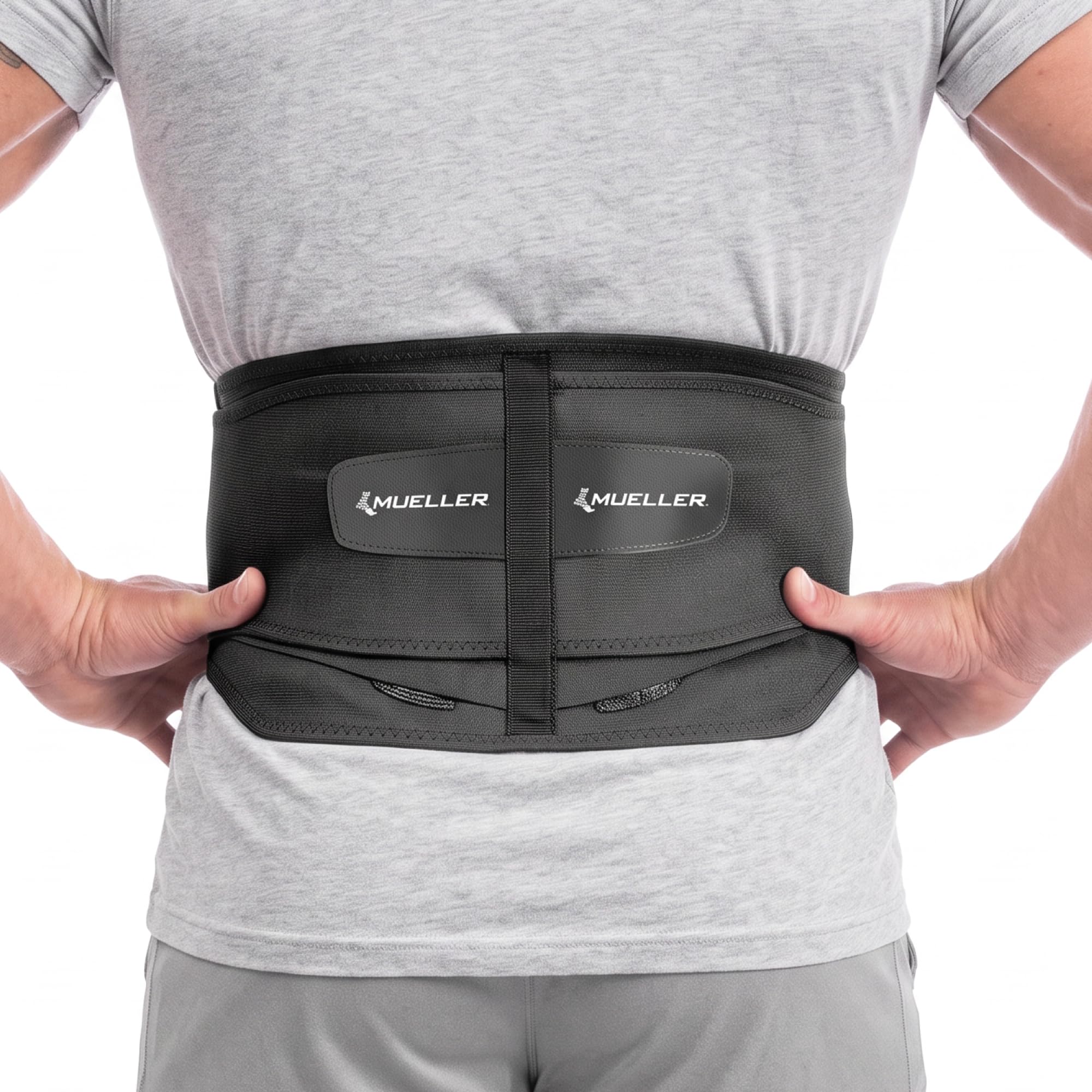
If you have struggled to find a brace that actually reaches around you, start here. The Mueller runs across three fit ranges — Small at 22″-30″, Regular at 28″-50″, and Plus at 50″-70″ — which is the broadest span on this list. It uses 4 steel springs for firm, targeted compression and pairs them with a removable lumbar pad, so you can shift the pressure point or take the pad out for a flatter feel under clothes.
Build quality is the headline. Quality is what people praise most about this brace, with support close behind, and the stitching holds up over the long run — which is why it has one of the largest owner bases here. The mesh fabric is treated to resist odour for all-day wear. A small note that matters: the data lists it at 16 oz and 7.88 x 2.88 x 9.88 inches versus the TESETON belt at 39.37 inches and 13.4 oz — a trade of coverage for a wrap that folds down smaller.
The honest wrinkle is sizing. Alongside the praise sits a clear strand of feedback that the brace does not always stay in place and that sizing can run off, so the measure-around-the-widest-part-of-your-waist instruction is not optional here. Get the size right and the removable pad gives you a customisable pressure point that most budget braces lack.
Worth choosing if: you sit outside the usual size bands and want a brand with a long sports-medicine track record behind the springs.
Skip past if: you want a set-and-forget fit with no measuring risk — the sizing ratings here are mixed enough to warrant care.
4. Sparthos Back Brace for Women & Men
The brace with the biggest owner base in this lineup — and the fit praise to justify it.
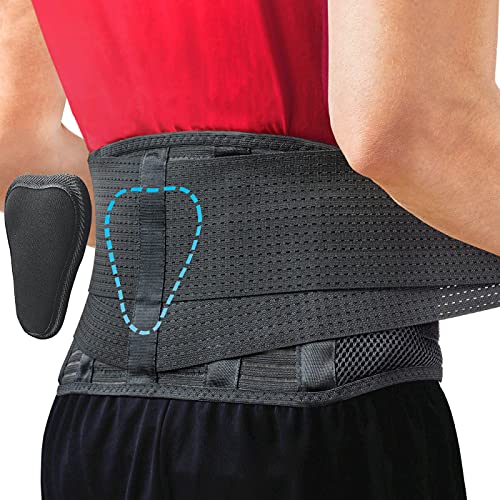
This is the one most sciatica buyers will have already seen in search results, and the numbers explain why. Thousands of owners back it, and quality is the trait they praise most, with support and real-world effectiveness right on its heels. The design pairs an adjustable lumbar pad for extra compression with vertical support stays that stop the brace rolling as you move, all wrapped in breathable fabric meant to sit under clothing without looking like a medical device.
What genuinely separates it is fit confidence. Fit is one of the few aspects here that reads positive across the board rather than split, which is rare in a category where sizing is the usual complaint. At 408 g and 0.15 inches thick, it is a middle-weight brace (the NEENCA is listed at 1.4 lb and the Mueller at 16 oz), so it bends with you on a walk or a stretch without digging in.
The one caution is the same one that bites every brace: some sizes still run large for some wearers. Order the size your navel measurement points to, not the one your instinct picks, and the adjustable pad lets you tune the feel. For a first brace that has to earn trust fast, the huge owner base and consistent quality praise make this the safest bet on the list.
The value read: you are buying into a design that thousands have already stress-tested — quality and support are the two most-praised traits, and both hold up.
The trade-off: it is a general-purpose brace rather than a pulley or hip-specific design, so the most stubborn sciatica cases may want more targeted hardware.
Pick this when: you want a dependable, well-reviewed brace that is comfortable under clothes and easy to trust as a first purchase.
Look elsewhere if: you need dial-style fine-tuning or an SI-joint-specific shape — this is a classic lumbar wrap.
5. BraceUP Back Support Belt with Dual Adjustable Straps
A lean 9.74 oz band that hides under a shirt and grips with four anti-slip silicone straps.
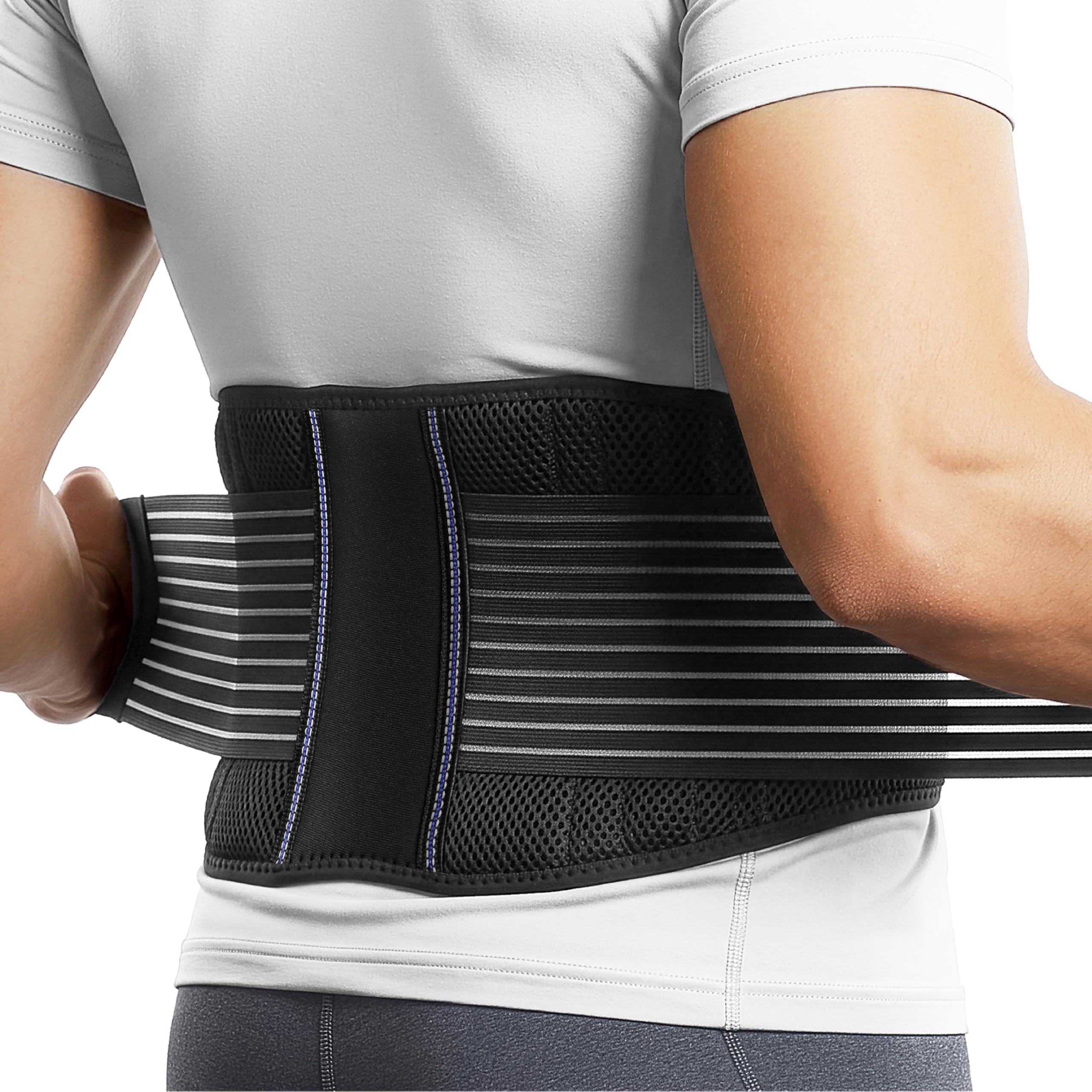
If your sciatica flares at a desk rather than a loading dock, the BraceUP is built for you. At 9.74 oz it is the lightest brace in this guide, and the whole point is that you forget it is there. The mesh panel releases heat and moisture so you do not feel heavily wrapped, and four anti-slip silicone straps (grippy strips that hold the brace in place) keep it from migrating up your ribs during long sits or light movement.
Support and effectiveness are the two things owners praise most here, and both come tied to the dual adjustment straps — they let you set compression per side for a customised fit. It is also one of the easier braces to size correctly, with three clear bands at S/M 28-35 inches, L/XL 35-43 inches, and XXL 43-53 inches, measured around the navel rather than from your pant size. That simple guidance saves a lot of returns.
The trade is durability. Some buyers report the brace holding up well over time, others mention it falling apart after a while — the long-term wear is the one mixed part of an otherwise strong picture. Treat the straps and stitching with a little care, wash it gently, and it should serve you through plenty of work days. For a warm, low-bulk brace under office clothes, though, it is tough to beat at this level.
What earns its keep
- Lightest brace here at 9.74 oz, so it hides under clothing
- Four anti-slip silicone straps keep it from riding up
- Dual straps let you tune compression to each side
- Simple three-band sizing makes the order easy
What to keep in mind
- Long-term durability feedback is mixed
- Softer support than the heavy steel-spring braces
- Wash gently to protect the silicone grip
Ideal for: desk workers and drivers who want a discreet brace that stays put and lets them move freely.
Not ideal for: heavy lifting or days that demand maximum stiffness — a firmer brace will serve better.
6. Apecore Sacroiliac SI Hip Belt
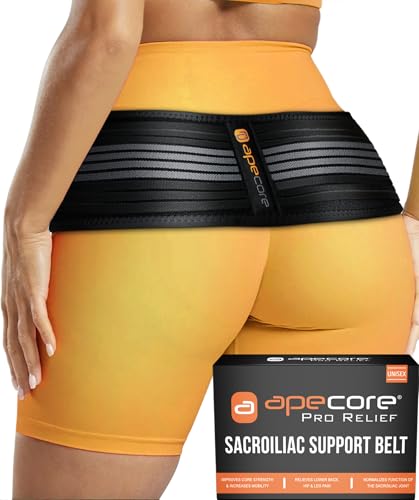
Not a waist wrap at all — this one sits across your hips to stabilise the sacroiliac joint.
Sciatica has more than one source, and if yours traces to the SI joint the shape of the brace matters as much as the compression. This is a hip belt, not a lumbar wrap — it wraps around the hips at 32-47 inches for the Regular size, or 47-56 inches for the XL/XXL. Getting that measurement right is the whole game here: you measure the hips, not the waist, and the belt can go under or over clothing.
The Velcro and comfort are the two traits owners praise most, and the anti-slip material stops the band from riding up as you move around the house, exercise, or even sleep. Weight sits at 0.29 kg with a neoprene build, and it ships with clear instructions and a travel pouch — small touches that make it easy to take with you. The material is neoprene, so hand-wash only.
The honest caveat is fit. Some wearers find the width just right, while others find it too small, and it is the one part of this brace that splits between owners. Order carefully from the hip measurement and it should land well. For SI-joint-rooted pain that a standard lumbar wrap never quite reaches, this belt reaches the spot.
Why it stands apart: it targets the hips and sacroiliac joint directly, a different job from the lumbar wraps above, and it ships with instructions and a travel pouch.
Where to be careful: the fit feedback is mixed, so the hip-circumference measurement is the make-or-break step.
Worth it for: deep one-sided pain that a waist belt never touched, especially if you want to wear support at night.
Wrong choice if: your pain is a broad lower-back ache — a lumbar wrap will wrap the right area.
7. Rakiie Lower Back Brace for Women
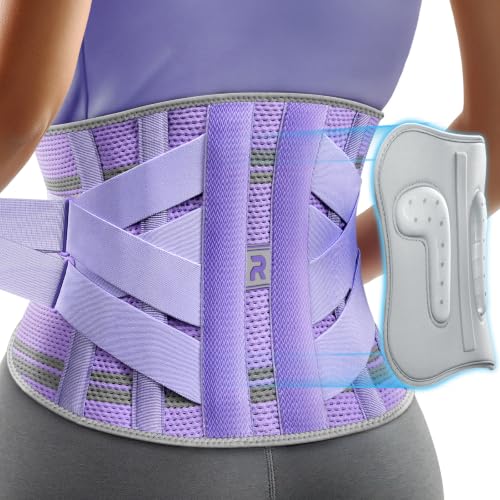
Nine support components built around the female lumbar curve, in a softer knit than the steel-spring crowd.
Most braces are one shape for everyone. The Rakiie is shaped to the lumbar curve with a 9X support system made of 4 memory-aluminum bars (metal strips that bend to your shape), 2 elastic springs, 2 PP strips (polypropylene plastic strips), and 1 spine-guiding bar — a mix that gives firm support without the rigid feel of a pure steel frame. A 3D contouring gel pad sits against the back, and the dual straps plus four compression bands let you tune pressure left and right.
Back support and fit are the two most-praised things about this brace, and both are strong for the smaller owner base it has built so far. It is a 0.49 kg knit with a 3 cm thickness, so it stays light and breathable under clothing, and it comes in a purple colour that some wearers specifically like. The reinforced hook-and-loop fasteners are listed as tested to withstand over 3,000 uses, which matters if you adjust it many times a day.
Two honest notes. Comfort and durability feedback are mixed — a few people find the knit takes getting used to, and a few question how long it lasts under daily wear. And it is one colour and close to one size, though the included detachable extension strap widens the fit range and helps if you sit between sizes.
Built for: women who want a brace matched to the lumbar curve with a soft gel pad and adjustments that hold.
Consider the fit risk: a single colour and a narrow size range — the extension strap is your adjuster if the standard fit is close but not exact.
8. FREETOO Back Brace with 6 Stays

Built to keep your lower back steady through a full shift — stays, springs, and anti-skid silicone.
For work days that put load on your spine, the FREETOO is a serious option. It carries 4 memory-aluminum stays listed as quadruple harder than the usual PP strips, plus 2 steel springs down the waist sides for 360° vertical support that limits muscle rolling and lowers disc pressure. Two elastic straps add extra compression around the lower back, which is the part that helps on long standing or lifting shifts.
What earns its keep is staying put. Two silicone anti-skid bands sit on either side of the waist so the brace resists rolling up when you sit, bend, or climb, and the fasteners use a PVC material usually seen in baby clothes — soft enough not to scratch skin or snag clothes. The shell is a 4-way stretch (fabric that gives in all directions) with 3D knitting in different compression zones, and the inner velvet face keeps it comfortable against skin. Support and quality are the two traits owners praise most, and both are strong for a work brace.
The honest trade is stability and staying in place, which split between wearers — some find it locks down beautifully, others find it rolls up on them. Ordering the right size (it is a Medium in this listing) and using the anti-skid bands correctly is what keeps it anchored. It is also a heavier build at 13.05 oz, which buys you that braced feel through a full shift.
Why workers like it
- 4 hardened aluminum stays plus 2 steel springs for firm vertical support
- Two silicone anti-skid bands resist rolling up
- Soft PVC fasteners protect skin and clothes
- 16-hole mesh knit keeps airflow going
What the data flags
- Stability and staying in place split between wearers
- 13.05 oz is on the heavier side for all-day wear
- Listed in Medium only — check the size before ordering
A smart buy for: warehouse, trades, and lifting work where the brace has to stay anchored through movement.
Weigh the risk if: you sit all day and want a soft, barely-there band — this is built to work hard, not disappear.
9. Aspen Lumbar Support Back Brace

A medical-grade inelastic brace with a dial-style pulley that tightens top and bottom separately.
The distinguishing feature here is control. Aspen’s patented 4:1 tightening system uses a pulley mechanism that lets you set the top and bottom of the brace independently, so you can put localised compression exactly where the flare is sitting. It is an inelastic brace, meaning the fabric does not stretch with you — that is what holds firm compression steady instead of letting it loosen through the day. For acute flare-ups, spasms, or fatigued muscles, that non-stretching hold keeps compression from loosening through the day.
Owner feedback lands on support. Back support is the most-praised trait, with quality close behind, and it is built from nylon, polyester, HDPE, PVC, polyurethane, and UHMWPE for a durable inelastic shell. At 12.32 oz and 7 x 10.15 x 2.65 inches, it is a compact brace that folds down small, and it is designed to be comfortable enough for extended wear under clothing. It comes in six sizes.
Here is the one thing to plan for: Aspen states its sizes run small, so size up if you are on a boundary, and this listing is the Large at 36″-42″. Durability, fit, and ease of use also draw mixed notes — the mechanism takes a little learning, and an inelastic brace feels stiffer to get on than a stretchy wrap. Adjustability is worth the small learning curve for pain that needs precise, repeatable compression.
The differentiator: independent top and bottom tightening on a 4:1 pulley is a level of precision none of the strap-only braces here offer.
Where it costs you: sizes run small, the fit feedback is mixed, and an inelastic brace needs more care to get on than a simple wrap.
Choose it if: you want repeatable, targeted compression and are happy to size up and learn the pulley mechanism.
Pass if: you want a supple, throw-it-on brace — the inelastic hold is firmer and fussier to wear.
Understanding the Specs
Waist vs Hip Measurement
Almost every brace here is sized by the measurement around your navel or hips, taken with a soft tape, not by your trousers. A belt that wraps the waist needs your navel circumference; a hip belt like the Apecore needs your hip circumference. Getting this single number right prevents the most common brace problem — a band that is too tight at the front or gaps at the back. If you land between two sizes, size up and tighten the straps.
Stays, Springs, and Pulleys
The hardware behind the fabric is what gives a brace its support. Memory-aluminum stays and steel springs run vertically to brace the spine, so the brace holds firm rather than folding over. PP strips are the softer, common alternative that some braces use inside the same panel. A pulley system like the Aspen’s 4:1 mechanism lets you tighten top and bottom separately, which is useful when the pain is localised. More hardware usually means firmer support and a little more bulk.
FAQ
How do I measure my waist for a sciatica belt?
Can I wear a back brace for sciatica all day?
What is the difference between a lumbar brace and an SI hip belt?
Will a back brace fit under my clothes?
How should I wash my sciatica belt?
Do the metal stays make the brace uncomfortable?
Is a pulley brace better than a strap brace?
How long will a back brace last?
Can I wear a back brace at night?
What if my brace does not stay in place?
Final Thoughts: The Verdict
For most people chasing the best belt for sciatica pain, the NEENCA Back Brace is the pick to start with — its pulley system, 2 metal lumbar pads, 4 spring stays, and breathable 3D knit combine the most support and the most adjustability in one brace. If you want the widest size range and a sports-medicine name, reach for the Mueller Lumbar Brace with its 4 steel springs and fit bands up to 70 inches. And if your pain sits in the hip or SI joint rather than the lower back, the Apecore SI Hip Belt is the one to pick — it wraps the hips at a lower line a lumbar brace simply cannot reach.
How We Picked
We do not accept paid placement. Every pick is matched to a real buyer and a real use-case; we do not hands-on test units.
Sources & Methodology
Specifications: manufacturer listings and product documentation. Review insights: verified customer reviews, as of November 2026. Pricing: not shown on this page (it changes often); check the current price via the retailer link.
As an Amazon Associate, Gadgets Feed earns from qualifying purchases. This does not affect which products we feature.