
Setting the correct tension on a serpentine, timing, or drive belt isn’t just about eliminating a squeak—it’s about preventing premature bearing failure, belt throw, and costly downtime. Guessing by feel often leads to a belt that’s either too loose (slipping) or too tight (overloading the alternator and water pump bearings). A dedicated tensioner tool removes this variable, giving you a repeatable, manufacturer-specified setting every time.
I’m Min — the co-founder and writer behind Gadgets Feed. My research for this guide involved cross-referencing torque and deflection specs across dozens of vehicle service manuals and analyzing hundreds of user reports to identify which tools consistently deliver accurate readings without breaking the bank.
Whether you’re a professional mechanic or a weekend DIYer, investing in a precision instrument saves time and protects your engine’s accessories. This guide breaks down the top contenders for the best belt tensioner tool on the market right now.
How To Choose The Best Belt Tensioner Tool
Before you buy, understand the two distinct categories: a tension gauge measures static belt tightness after installation, while a tensioner compressor tool (or socket kit) physically releases the spring-loaded tensioner to allow belt removal. Some jobs require both; others only one. Your choice depends on whether you need diagnostic accuracy or serviceability.
Gauge vs. Tool: Which do you actually need?
A gauge like the Gates Krikit is for post-install verification—you slip it onto the belt span, press until it clicks, and read the pounds of tension. A compressor tool (like the CTA 2670 or the OTC 7654A) is for service—it compresses the tensioner piston so you can slide the belt off the pulleys. Many DIYers benefit from owning one of each, but if you only service one vehicle, match the tool to your engine’s tensioner type (automatic spring-loaded vs. manual adjust).
Socket size and reach matters
Serpentine belt tensioners typically use a 15 mm, 16 mm, or 18 mm bolt head, often recessed deep in the engine bay. The OEMTOOLS 27115 kit covers all three with thin-wall sockets, while the Powerbuilt 648451 adds crowfoot wrenches for even tighter spaces. A long handle (20+ inches) is mandatory for trucks and vans where the tensioner sits behind the fan shroud.
Quick Comparison
On smaller screens, swipe sideways to see the full table.
| Model | Category | Best For | Key Spec | Amazon |
|---|---|---|---|---|
| ARES 15033 | Tension Gauge | Motorcycle/ATV belt deflection | 10-lb spring; reads in 64ths of an inch | Amazon |
| CTA Tools 2670 | Compressor Tool | Toyota 3.4L/5VZ-FE timing belt service | Internal nut expands; 1.6 oz weight | Amazon |
| OEMTOOLS 24687 | Serpentine Tool Set | General serpentine belt replacement | 3/8″ drive handle; 4 shallow sockets | Amazon |
| Powerbuilt 648451 | Serpentine Tool Set | Tight engine bays with deep tensioners | 24-inch long handle; 8-position adapter | Amazon |
| Gates 91107 Krikit | Tension Gauge | Accurate 30-160 lb tension reading | Die-cast aluminum; pocket clip | Amazon |
| OTC 7654A | Installation Tool | Routing belts in cramped engine bays | 25″ long; 3-pin design for V/timing belts | Amazon |
| OEMTOOLS 27115 | Serpentine Kit | Complete all-in-one service kit | 7-piece; includes crowfoot + sockets | Amazon |
In‑Depth Reviews
1. OEMTOOLS 27115 Serpentine Belt Tool Kit
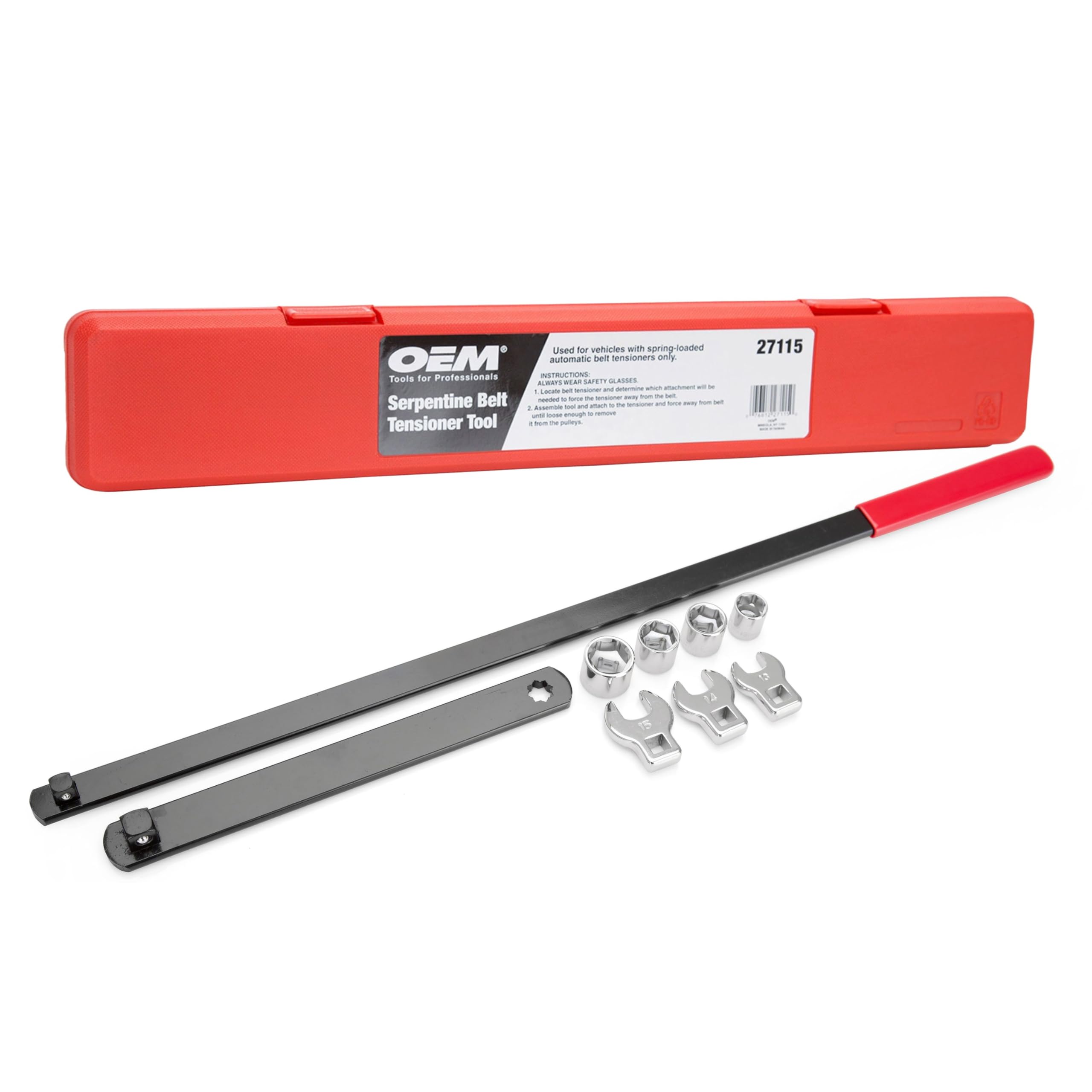
The OEMTOOLS 27115 is the closest thing to a complete solution for serpentine belt service. It packs four shallow sockets (13, 15, 16, 18 mm), three crowfoot wrenches (13, 14, 15 mm), a 3/8″ drive handle, and a 1/2″ drive adapter—all tucked into a molded plastic case. That means you can handle both the tensioner release and the pulley bolt removal without reaching for a second set. The handle length is enough to reach recessed tensioners on most front-wheel-drive vans and sedans.
The crowfoot wrenches are especially valuable on engines where a direct socket angle is blocked by the frame rail or strut tower. Users on a 1998 Chevrolet Malibu and a 2003 Dodge Caravan reported that the 15 mm crowfoot allowed them to load the tensioner from above, clearing obstacles. The alloy steel construction feels solid for the torque range of a typical tensioner bolt (around 35-50 ft-lbs), though you should avoid using the handle as a breaker bar—the welded socket holder can snap under excessive force.
For home gamers who service multiple vehicles or help friends with their belts, this kit eliminates the “wrong size” frustration. It’s also the kit that travels best thanks to the compact case. The only real nitpick is that the 3/8″ stub isn’t ratchetable, so you may need to swing the handle in tight arcs—but for belt tension work, that’s rarely a problem.
Why it’s great
- Covers 7 socket/crowfoot sizes in one packaged kit
- Sturdy molded case keeps everything organized
- Handle length sufficient for deep-set tensioners
Good to know
- 3/8” stub is not ratchetable
- Not designed for high-torque breaker bar use
2. Gates 91107 Krikit V-Belt Tension Gauge

The Gates Krikit is the gold standard for static belt tension measurement. Unlike the ARES gauge which is limited to a 10-lb specification, the Krikit reads from 30 to 160 pounds (15-75 kg), covering everything from a Miata alternator belt to a heavy-duty V-belt on a lawn tractor. The die-cast aluminum body and nylon indicator arm feel precision-machined, and the stainless steel pocket clip means it lives in your tool apron or pocket, ready for a quick check.
Operation is dead simple: place the rubber foot on the belt span, press the top down with one finger until you hear a click, then read the measurement at the indicator. Users who previously “eyeballed” or used the twist method reported that after using the Krikit, their belts ran quieter and accessories spun smoother. On a 2000 Toyota 4Runner, one owner noted that OEM-specified tension was finally achievable without the trial-and-error cycle.
One caveat: the Krikit is not designed for timing belts (as Gates explicitly states). It also requires about an inch of clearance above the belt span to operate, which can be tight on compact Japanese engines from the early 2000s. But as a diagnostic and verification tool for accessory belts, it’s unmatched in its price tier.
Why it’s great
- Accurate measurement from 30 to 160 lb of tension
- Compact pocket-friendly design with clip
- One-hand operation, clear scale
Good to know
- Not for use on timing belts
- Requires overhead clearance for the press
3. OEMTOOLS 24687 Serpentine Belt Tool Set

If your budget is tight but you still want a purpose-built serpentine tool, the OEMTOOLS 24687 is a solid compromise. It includes a 3/8″ drive steel handle, 1/2″ and 3/8″ square drive adapters, and four shallow sockets (13, 15, 16, 18 mm). The black oxide finish resists rust better than raw steel, and the neon green rubberized handle is easy to spot in a cluttered toolbox. The thinner socket walls are crucial for slipping onto tensioner pulleys that barely clear the fan shroud.
Real-world users praised it for tackling serpentine jobs on a variety of makes—several noted that they had attempted the work with a standard ratchet and failing, then finished the job in under 20 minutes with this dedicated set. The handle provides enough leverage to compress even a stiff spring-loaded tensioner without needing a cheater pipe. At this price point, the value proposition is strong: you get the right tool for the job without the premium markup of truck-brand equivalents.
The main caveat is that it lacks crowfoot wrenches, so if your tensioner bolt is oriented at an awkward angle, you may still need a separate crowfoot set. Also, a few customers received units that appeared to be returns with missing pieces—always inspect the package on delivery. That said, for the majority of DIY belt changes, this set will handle the task.
Why it’s great
- Covers the 4 most common tensioner socket sizes
- Thin socket walls fit tight clearance areas
- Lifetime warranty from OEMTOOLS
Good to know
- No crowfoot wrenches included
- Check package for missing pieces on delivery
4. Powerbuilt Serpentine Belt Tool Set 648451
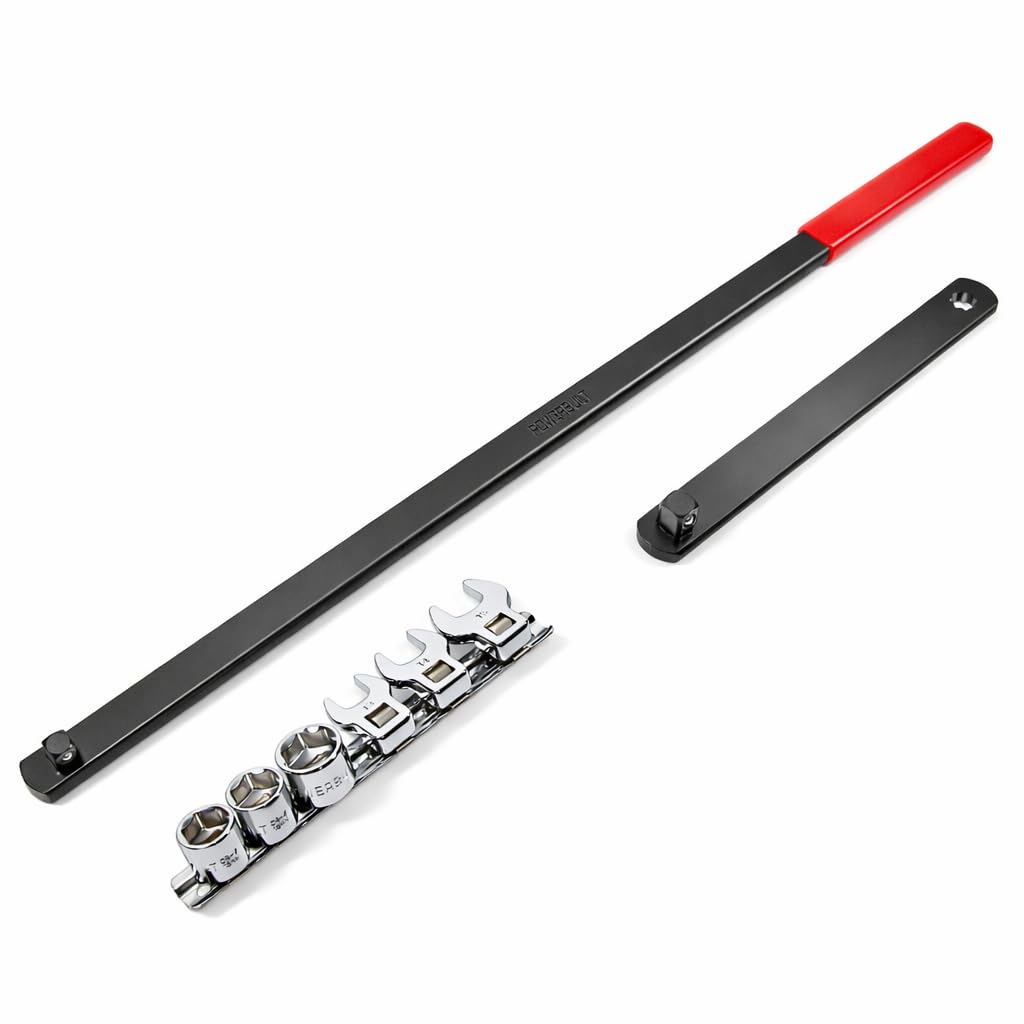
The Powerbuilt 648451 is specifically engineered for the worst-case access scenario: a serpentine tensioner buried behind the intake manifold or tucked between the frame rail and the power steering pump. Its two-piece handle breaks down into a 24-inch main bar and a 9.25-inch extension that can be locked into eight different angles via a clever adapter. This articulation makes it possible to apply torque from almost any direction—a lifesaver on transverse engines.
The kit comes with three shallow sockets (15, 16, 18 mm) and three crowfoot wrenches (13, 14, 15 mm) mounted on a socket rail. The crowfoots are the star here—they allow you to reach bolts that a socket simply cannot align with. Owners of 2017 Ram 1500s and Toyota Avalons specifically noted that the crowfoots freed them from bloody-knuckle contortions. The handle’s 3/8″ square drive is narrow enough to fit between radiator hoses, and the 1/2″ adapter provides extra torque when needed.
Durability is adequate for weekend and occasional commercial use, but the attachment heads are not as hard as professional truck tools—they can round off if you apply excessive force. One user custom-cut the handle with a hacksaw to shorten it for a compact car, which the tool’s design facilitates. For deep, obstructed tensioners, this is the most versatile reach tool in the lineup.
Why it’s great
- Articulating handle accesses impossible angles
- Crowfoot wrenches included for tight bolt orientations
- Long 24-inch handle provides excellent leverage
Good to know
- Attachment heads can round under extreme torque
- Case is a simple plastic tray, no secure lock
5. CTA Tools 2670 Timing Belt Tensioner Compressor
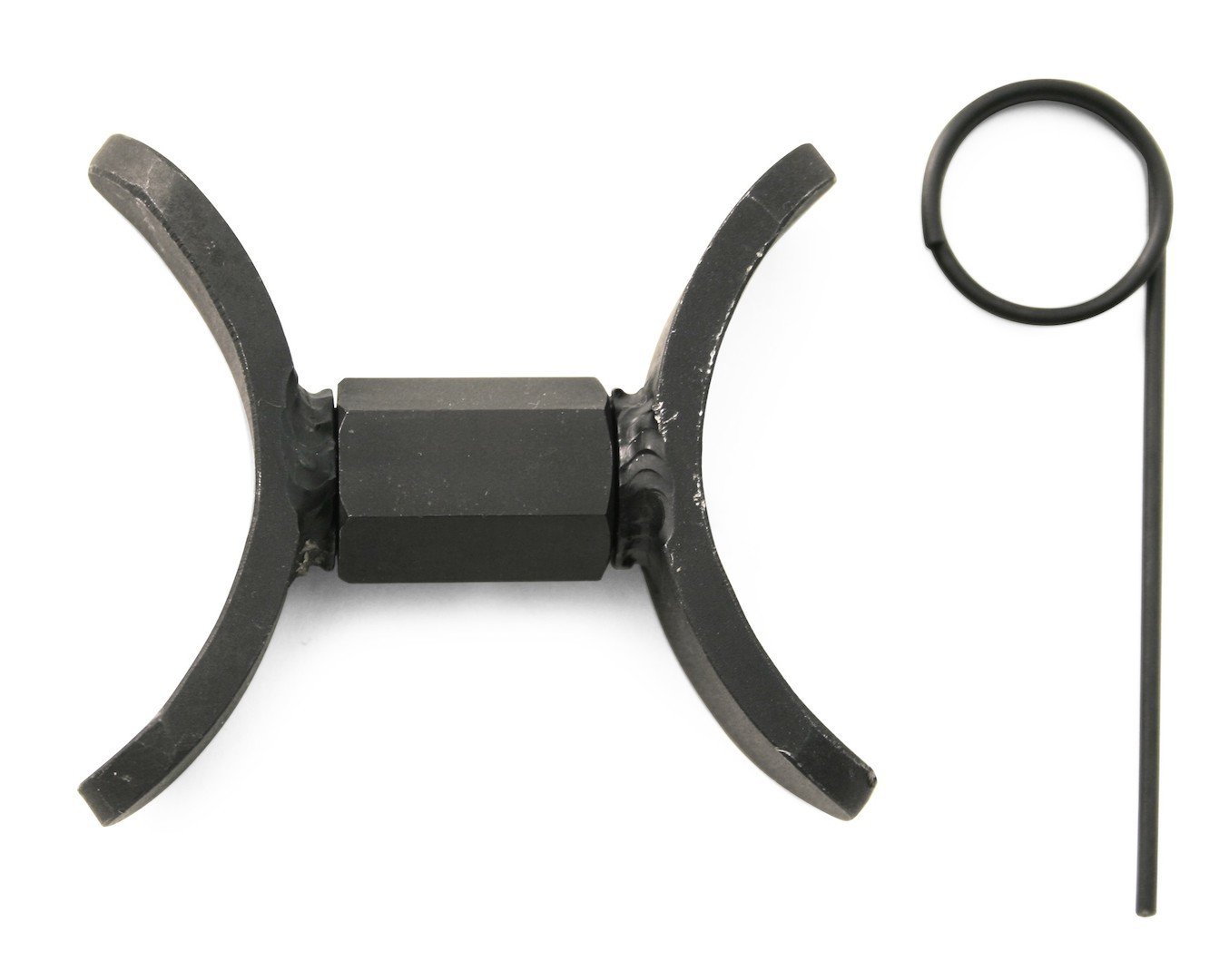
The CTA Tools 2670 is a niche specialist that should be in the drawer of every Toyota owner with a 5VZ-FE or similar 1990s-2000s V6. This tool is designed specifically to compress the hydraulic timing belt tensioner on T100, Tacoma, and 4Runner trucks without removing the tensioner from the engine. It uses an internal nut that expands the tool’s length, pushing against the tensioner plunger until a locking pin can be inserted into the hydraulic piston push rod.
Users consistently praise it for turning a “most painful event during the timing belt job” into a 30-second operation. Without this tool, the standard method involves removing the tensioner, which risks dirt ingress and complicates reinstallation. The construction is lightweight (1.6 oz) but plenty strong for the force required—the critical instruction is to turn the expander nut VERY SLOWLY with a wrench to prevent snapping the internal threads. A few early reviewers expanded the tool too far and broke it; go just enough to slide the pin in.
Pin removal can be tricky because the tensioner applies constant pressure. Several owners found that using a hammer handle to gently separate the idler pulley while pulling the pin works best.
Why it’s great
- Eliminates tensioner removal on 5VZ-FE engines
- Lightweight and easy to store
- Time-saver—less than 1 minute to compress
Good to know
- Toyota-specific; not universal
- Expand very slowly to avoid thread breakage
6. OTC 7654A Serpentine Belt Installation Tool

The OTC 7654A is deceptively simple: a 25-inch long rod with three flexible pins at one end and an ergonomic handle at the other. Its purpose is to guide a serpentine, V-belt, or timing belt over and around pulleys in engine bays so cramped that you physically cannot fit your hands or arms near the idler pulleys. The three-pin design wraps around the belt ribs without damaging them, giving you the pulling and pushing control that fingers lack.
Made in the USA, the OTC 7654A has a cult following among professional mechanics. One reviewer described it as a “mechanic’s back scratcher”—and the humor lands because after using it, you realize how much skin and knuckle damage it prevents. It works especially well on transverse engines where belt routing involves snaking the belt behind the engine mount. The ergonomic handle allows twisting control, so you can rotate the belt onto a pulley while applying tension from the opposite side.
The tool is not for compressing a tensioner—it’s purely for installation routing. If your belt already has a tensioner release tool (like the OEMTOOLS 24687), this is the perfect complement. The only downside is its single-purpose nature: once the belt is on, the tool goes back in the drawer until the next belt job. But for that 15-minute frustration it eliminates, it’s well worth the drawer space.
Why it’s great
- Prevents scraped knuckles in tight engine bays
- Works on serpentine, V-belts, and timing belts
- Made in the USA with durable construction
Good to know
- Single-purpose: belt installation only
- Requires some learning to master the twist technique
7. ARES 15033 Belt Tension Gauge
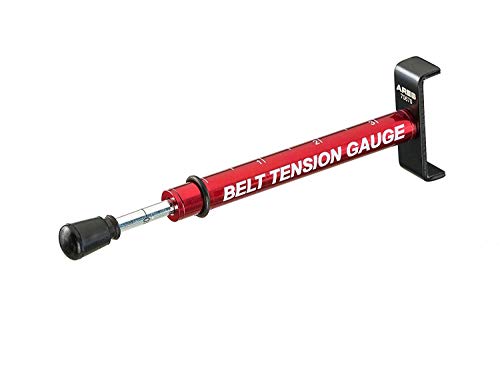
The ARES 15033 is purpose-built for a very specific task: setting the belt tension on motorcycles, ATVs, and other vehicles that specify a 10-lb deflection. The gauge works by pushing the rubber foot against the belt until the small o-ring on the shaft meets the body—that’s your 10-lb mark. At that point, you measure the belt deflection in 64ths of an inch using the large o-ring on the body. It’s a simple, analog system that eliminates guesswork.
Owners of Harley-Davidson and other belt-driven cruisers praise it for taking the mystery out of final-drive belt adjustment. Without this tool, riders often over-tighten the belt, which accelerates sprocket bearing wear, or under-tighten it, causing belt slap. The universal L-pad sits securely on the belt so you can apply consistent pressure. The 10-lb rating aligns with most manufacturer specs for secondary drive belts.
The downsides: the marking system (64ths of an inch) can be confusing if you’re used to millimeters, and the instructions are sparse—reviewers had to figure out the o-ring method through trial and error. Also, the 10-lb fixed spring is a limitation: it only works for vehicles that call for that specific tension. For a universal motorcycle/ATV gauge, it’s a great entry-level buy. For car serpentine belts, you’ll need the Gates Krikit instead.
Why it’s great
- Simple analog operation with clear deflection marking
- Fits Harley and many ATV/motorcycle final drives
- Backed by ARES lifetime warranty
Good to know
- Fixed 10-lb spring limits compatibility
- Instructions could be clearer on measurement technique
FAQ
Can I use a belt tension gauge on a timing belt?
What size socket do most serpentine belt tensioners use?
Final Thoughts: The Verdict
For most users, the best belt tensioner tool winner is the OEMTOOLS 27115 because its all-in-one kit of sockets and crowfoot wrenches prepares you for almost any serpentine service scenario without needing a second trip to the toolbox. If you want precise static belt tension measurement, grab the Gates Krikit. And for accessing a deeply buried tensioner, nothing beats the Powerbuilt 648451 with its articulating handle.