
Our readers keep the lights on and my morning glass full of iced black tea. As an Amazon Associate, I earn from qualifying purchases.
Specs are compiled from manufacturer listings and verified buyer reviews and can change over time — please confirm the key details on the product page before buying.
Georgia summers hit hard, and a lawn that goes crispy by July is a daily reminder that not all grass seed is built for the South. The real question is which Bermuda blend can handle the clay, the heat, and the kids running across it — and still bounce back. This guide sorts through five warm-season options, focusing on germination speed, drought tolerance, and how each one actually behaves in your yard.
I’m Min — the founder and writer behind Gadgets Feed. This guide is built by comparing the manufacturers’ published specifications and the patterns across verified customer reviews, so you get each pick’s real strengths and trade-offs instead of marketing spin.
Your Georgia lawn will stay thick and green through hot summers if you pick a bermuda grass seed for georgia that fits your yard’s sunlight, foot traffic, and watering routine—so match those habits to a coated or unhulled variety.
Quick Picks
- X-Seed Moisture Boost Plus Bermuda Grass Seed — Best Overall
- Pennington Bermudagrass Grass Seeds for Lawn — Best Value
- Outsidepride Oasis Bermuda Grass Seed — Top Performer
- Barenbrug Bermudagrass Grass Seed — Humid Climate
- Hancock Seed Co. Common Bermuda Grass Seed — Budget Champion
How To Choose The Best Bermuda Grass Seed For Georgia
Bermuda thrives in the South’s full sun and heat that would kill other grasses. But the variety matters: some are bred to spread aggressively, while others are engineered to use less water or tolerate cooler nights. Your choice should match how you plan to use your yard.
Sunlight and Shade Reality
Bermuda is a full-sun grass through and through. If your yard has heavy shade from pines or large oaks, it will struggle no matter which brand you pick. Walk your lawn at noon and note which spots get less than six hours of direct sun — those areas will likely need a different grass type or a shade-tolerant companion.
Coated vs Unhulled Seed
Coated seed (like the 4Most technology) carries a polymer shell that holds moisture against the seed, which helps germination in dry springs. Unhulled seed is the raw seed, cheaper and faster to sprout when soil contact and moisture are consistent. For Georgia’s unpredictable spring rains, coatings give you a buffer.
Watering Commitment
New Bermuda needs consistent moisture for the first two to three weeks. If you can’t commit to watering twice a day until sprouts establish, look for blends marketed as drought-tolerant or low-moisture. Once established, Bermuda is tough, but the first few weeks of watering are critical.
Quick Comparison
| Model | Best For | Weight | Coverage | Coating | Amazon |
|---|---|---|---|---|---|
| X-Seed Moisture Boost Plus | Heat & drought stress | 3 lbs | 1,000 sq ft | 4Most Polymer | Amazon |
| Pennington Bermudagrass | Cold tolerance & fewer clippings | 5 lbs | — | Penkoted | Amazon |
| Outsidepride Oasis | High traffic & large areas | 5 lbs | — | — | Amazon |
| Barenbrug Bermudagrass | Humid southern climates | 5 lbs | — | — | Amazon |
| Hancock Seed Common Bermuda | Pasture & large acreage | 25 lbs | — | Coated & Unhulled | Amazon |
In-depth Reviews
1. X-Seed Moisture Boost Plus Bermuda Grass Seed
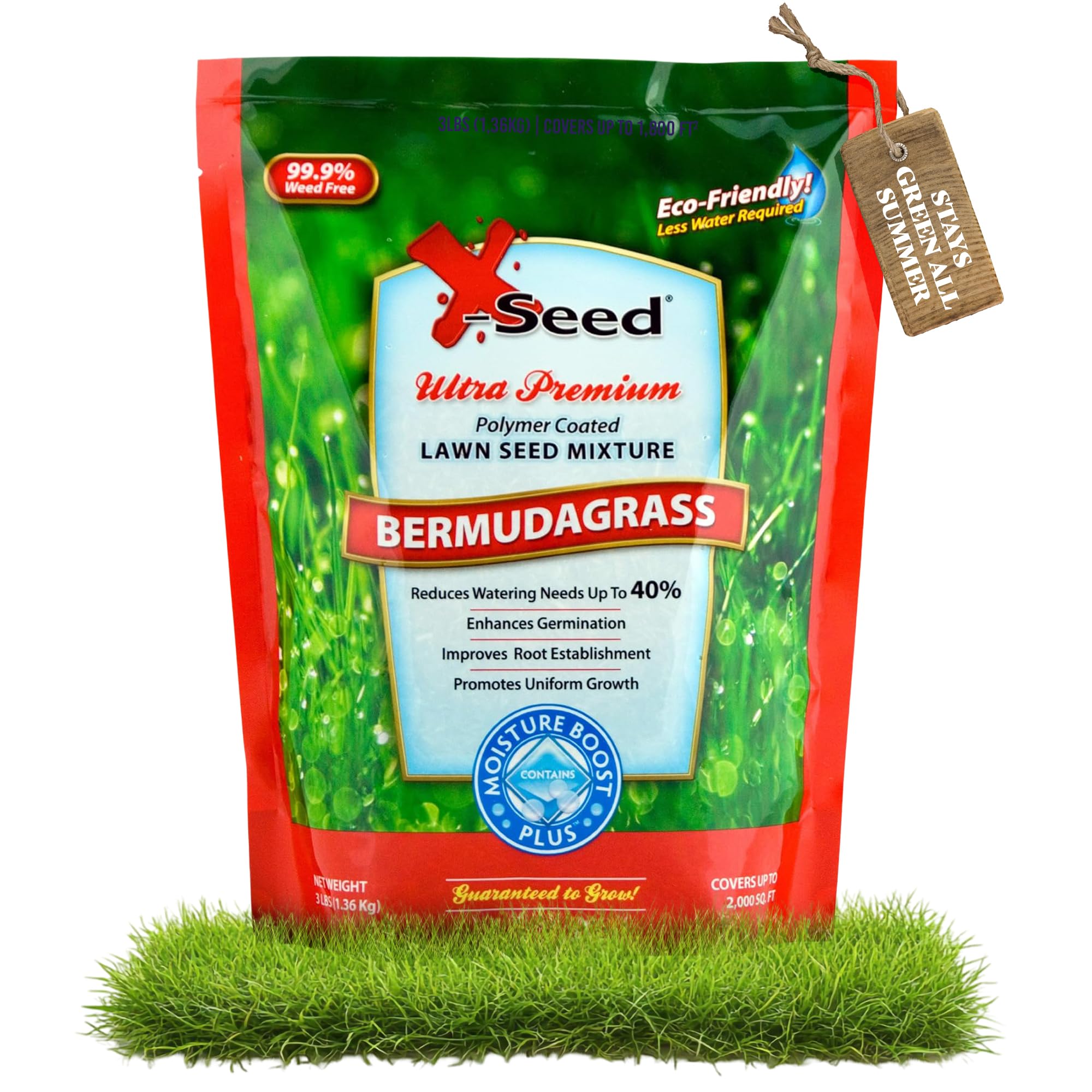
The moisture-hugging coat that gets a lawn going in brutal heat
Each seed here wears a 4Most polymer coating, a thin shell that holds water against the seed so it can germinate even when Georgia’s spring rains are stingy. Buyers report germination in 6-7 days even in 100°F heat, a window that typically kills uncoated seed. It thrives in full sun and needs less water than other grasses once established.
One 3-pound bag covers 1,000 square feet for a new lawn or up to 2,000 square feet when overseeding. That flexibility makes it a smart buy whether you’re starting bare dirt or thickening a thinning yard. The blend is built for the deep south, pairing well with the heat and humidity you get east of Atlanta and down toward the coast.
The honest caveat is germination consistency: for every fast-sprouting success, there’s a report of a patch that never came up. Some owners noted it grew as single blades without the runners that spread standard Bermuda, so it may not match an existing lawn’s texture. It is a fine choice if you’re planting a fresh area and want the best shot at beating the heat.
Why it leads: The 4Most coating is a real edge in Georgia’s dry springs, and the 3-pound bag covers up to 2,000 square feet for overseeding.
The trade-off: Seed germination varies by batch and conditions, so wetting the soil consistently for the first two weeks is non-negotiable.
Reach for this if: you want a heat-tolerant seed with a moisture-boosting coat for sunny Georgia lawns.
Look elsewhere if: you need a fast-spreading variety that sends out runners to knit together a large bare patch.
2. Pennington Bermudagrass Grass Seeds for Lawn

The 5-pound workhorse that stands up to cooler nights and heavy foot traffic
This Pennington blend is bred with improved cold-tolerant varieties, a real perk for north Georgia where spring nights can dip into the 40s. The result is a lawn that greens up earlier in spring and keeps its color deeper into fall. It also grows low, which means fewer grass clippings to bag — a small daily win for anyone tired of mowing every weekend.
At 5 pounds, you get twice the seed of the X-Seed bag for a similar investment, making it the smarter choice for repairing larger patches. Its aggressive spreading and deep roots stand up to kids, dogs, and backyard gatherings. It wears the special Penkoted coating to protect the seed in the soil.
The realistic downside is that it goes dormant and turns brown in winter, which is normal for warm-season Bermuda. Germination also takes patience — some owners saw it come in slow before thickening, while others report great results after a soil test and starter fertilizer. The grass seed pages stress that success depends on loose soil and consistent watering for the first three weeks.
Strong Suits
- Cold-tolerant varieties spread earlier in a north Georgia spring
- Low-growing blend means noticeably fewer clippings
- 5-pound bag offers solid value for medium lawns
Fair Warnings
- Goes dormant and brown in winter months
- Needs loose soil and starter fertilizer for best germination
Pick this if: you want cold tolerance and a low-clipping lawn from a 5-pound bag.
Think twice if: you expect seed to sprout without preparing the soil and watering on schedule.
3. Outsidepride Oasis Bermuda Grass Seed

A fast-growing hybrid blend that crowds out weeds on sunny sports turf
This Oasis mix combines three top-performing Bermuda grasses into one bag, giving you a lawn that establishes quickly and thickens into dense coverage. Its aggressive growth crowds out weeds naturally, reducing the need for herbicides. Owners mention it spreading well in lower spots of a yard even without constant watering.
The recommended planting rate is 2-3 pounds per 1,000 square feet once soil temperatures pass 65°F. That’s a precise, practical guideline for Georgia’s late spring. It’s aimed at homeowners, groundskeepers, and even sports field managers, so it’s built for areas that take a beating. Heat and drought resistance keep it green through relentless summer sun.
The downside is honesty about coverage: one owner found the coverage statement overstated. Germination is mixed, with some seeing sprouting within a week and others reporting nothing despite daily watering. It is best for sunny sites with prepared soil, so skip it if your yard is shady or the ground is hard-packed clay.
Built for abuse: The hybrid blend is explicitly designed for sports fields and high-traffic lawns, so it recovers fast.
Know the limit: Coverage claims can run optimistic, and bare patches need patient watering to fill.
Go with this: if you want a weed-suppressing, full-sun grass that stands up to heavy use.
Choose differently: if you need reliable germination on unprepared or partially shaded ground.
4. Barenbrug Bermudagrass Grass Seed
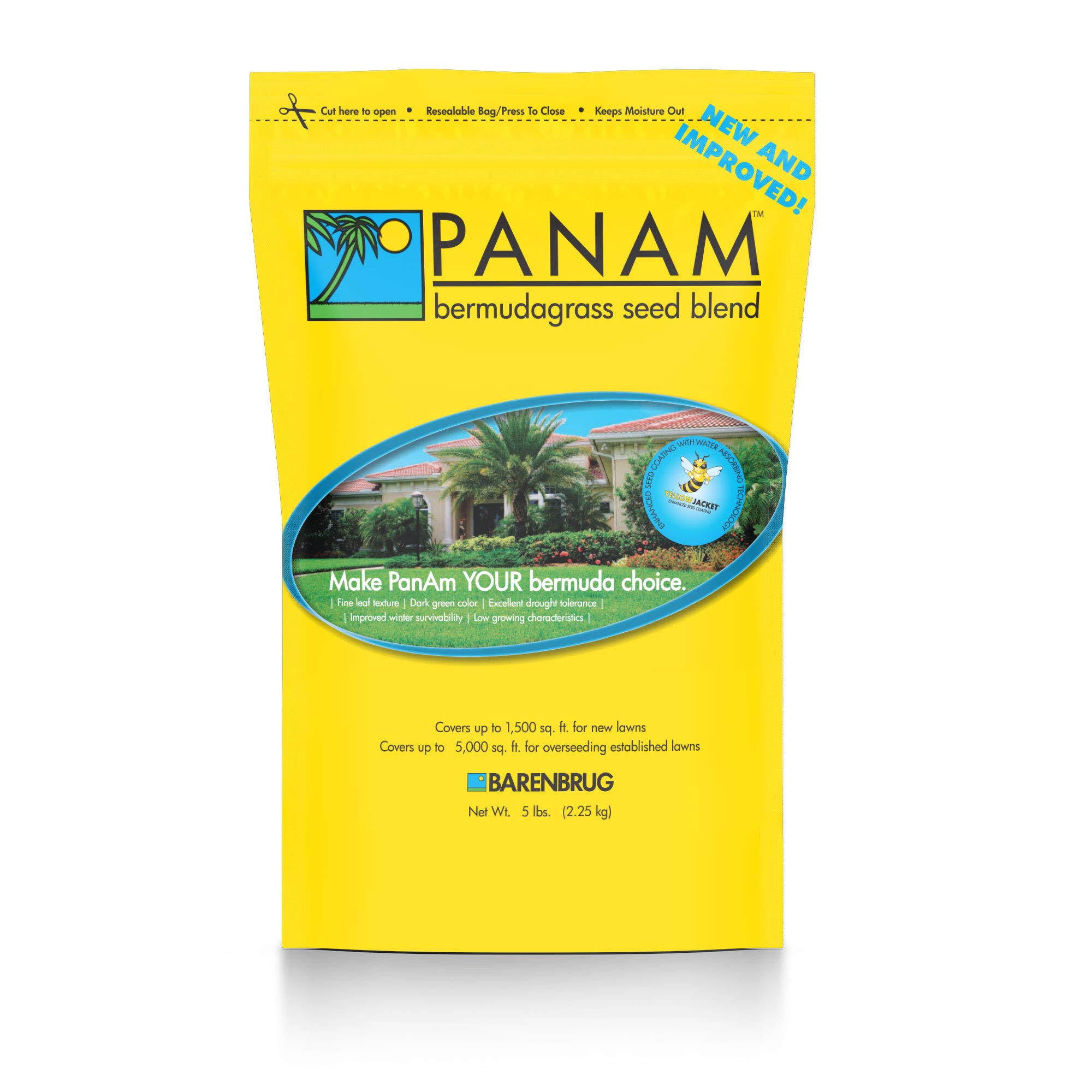
The 5-pound pick bred specifically for sticky southern humidity
Barenbrug developed this Bermudagrass for sunny areas and humid climates — a direct match for Georgia’s muggy summer air. It prefers sandy soil and full sun, which suits coastal regions like Savannah or Brunswick better than heavy clay. The manufacturer notes it grows best in the southern regions of the U.S., so it’s a natural fit for most of the state.
Germination stories are genuinely split. One owner saw sprouts in a week once the soil dried, while another report describes zero germination after 14 days of meticulous prep. The success accounts share a pattern: keep the soil lightly moist, don’t drown it, and give it strong sun. That’s the difference between a full lawn and a patchy one with this blend.
Unlike the X-Seed bag above, this variety offers no polymer coating, so moisture management is entirely on you. It is a solid mid-range option if you have the sandy soil it craves and the patience to dial in your watering. For heavy-clay Georgia yards, consider incorporating organic matter first.
Where It Shines
- Developed for humid, sunny southern climates
- Fills in quickly once established in sandy soil
- 5-pound bag priced as an accessible mid-range option
Where It Struggles
- No polymer coat means precise watering is critical
- Heavy clay soil requires amending first
Best fit for: coastal Georgia yards with sandy, fast-draining soil and full sun.
Not ideal for: clay-heavy inland lawns without serious soil prep.
5. Hancock Seed Co. Common Bermuda Grass Seed

The 25-pound bulk bag that turns a pasture or big yard into turf
This bag is the acreage option. At 25 pounds, it is built for lawn, pasture, livestock grazing, erosion control, and cover crop use — not just a front yard. It tolerates extreme drought and heavy traffic, and handles poor soils reasonably well. For a big Georgia property, this is the practical economic choice per pound of seed.
Timing is everything here. The company recommends planting in spring and summer when nighttime temperatures stay consistently at 65+ degrees, and at least 3 months before the first frost. Follow that window and germination is strong, as one owner who switched from another brand found. The coated and unhulled mix gives you flexibility across different soil conditions.
The catch is scale: you do not buy this to patch a bald spot. It takes patience and serious acreage to justify. Some users who planted too early or into cold nights saw no growth at all, then gave up. Match the planting window and this seed rewards you with solid, far-reaching coverage.
For the big picture: This is priced per-pound for large areas, plus it doubles as pasture forage and erosion control.
Scale matters: The 65-degree night rule is not a suggestion — ignore it and you will waste the season.
Choose this for: acreage, pastures, or erosion control where cost per pound is the priority.
Skip it for: small lawns where a 25-pound bag is an awkward overspend.
Understanding the Specs
Polymer Coating
A polymer coat (like 4Most or Penkoted) wraps each seed in a moisture-holding shell. It protects the seed from drying out between waterings, which is a real advantage in Georgia’s windy, dry springs. Uncoated seed needs more consistent moisture.
Coverage Rate
Coverage tells you how much ground a bag will seed. The X-Seed bag covers 1,000 square feet for new lawns and up to 2,000 for overseeding. Always buy a little extra to reseed thin patches after the first germination wave.
FAQ
When is the best time to plant Bermuda grass seed in Georgia?
Will Bermuda grass seed grow in shady areas of my yard?
How long does Bermuda grass take to germinate?
What is the difference between hulled and unhulled Bermuda seed?
Why is my Bermuda seed not germinating after a week?
Does Bermuda grass seed go dormant in winter?
How often should I water new Bermuda seed?
Can I plant Bermuda seed on hard clay soil in Georgia?
Final Thoughts: The Verdict
For most Georgia yards, the bermuda grass seed for georgia winner is the X-Seed Moisture Boost Plus because its polymer coating directly addresses the state’s biggest challenge: dry springs and brutal heat. If you want a cold-tolerant low-clipping lawn for north Georgia, grab the Pennington Bermudagrass. And for a sunny, high-traffic yard that needs to crowd out weeds, the Outsidepride Oasis is the one to reach for.
How We Picked
We do not accept paid placement. Every pick is matched to a real buyer and a real use-case; we do not hands-on test units.
Sources & Methodology
Specifications: manufacturer listings and product documentation. Review insights: verified customer reviews, as of August 2026. Pricing: not shown on this page (it changes often); check the current price via the retailer link.
As an Amazon Associate, Gadgets Feed earns from qualifying purchases. This does not affect which products we feature.