
Getting plump, sweet blueberries, strawberries, or raspberries from your garden starts below the surface. The right plant nutrition delivers bigger fruit and healthier bushes, but the wrong choice can lock away nutrients and stunt growth entirely. This guide cuts through the confusion with direct data on formulations, application methods, and the specific pH requirements berry plants demand.
I’m Min — the co-founder and writer behind Gadgets Feed. After hours of analyzing hundreds of technical specifications, customer performance reports, and formulation breakdowns for acid-loving fruit plants, I’ve built this practical comparison to simplify your next purchase.
best berry fertilizer depends entirely on whether you prioritize immediate liquid absorption, slow-release granular feeding, or soil acidification — each serves a distinct growing strategy.
How To Choose The Best Berry Fertilizer
Selecting the right berry fertilizer goes beyond grabbing the first bag off the shelf. Berry plants are acid-loving and require a specific pH range between 4.5 and 5.5 to absorb iron and magnesium effectively. If the soil is too alkaline, nutrients become inaccessible regardless of how much you feed. Prioritize formulations that either maintain this acidity or help lower the pH directly.
NPK Ratio and Plant Lifecycle
The three numbers on any fertilizer label represent nitrogen (N), phosphorus (P), and potassium (K). For berry bushes, a balanced ratio like 4-3-4 or 5-4-4 supports steady foliage growth, flowering, and fruit development without overstimulating leaves at the expense of berries. High-nitrogen formulas encourage leafy growth but can reduce fruit set, so stick to lower first numbers designed for fruiting plants.
Liquid Concentrate vs. Slow-Release Granules
Liquid fertilizers deliver nutrients immediately to the root zone, making them ideal for quick correction of deficiencies or giving potted berries a weekly boost. Granular formulas release nutrients gradually over weeks, requiring fewer applications — typically two per growing season — and suit established garden beds. Your choice depends on how much hands-on maintenance your schedule allows.
Organic Certification and Soil Microbes
Organic berry fertilizers rely on natural inputs like seabird guano, bone meal, or shrimp shell meal to feed both the plant and the beneficial microbes in the soil. These microbes break down organic matter into usable nutrients while improving soil structure. If you prioritize long-term soil health and want to avoid synthetic chemicals, look for OMRI-listed organic options that also contain sulfur to gently acidify the soil over time.
Quick Comparison
On smaller screens, swipe sideways to see the full table.
| Model | Category | Best For | Key Spec | Amazon |
|---|---|---|---|---|
| Espoma Berry Tone | Granular | Long-term garden beds | NPK 4-3-4 with Bio-tone | Amazon |
| Big A Berries Fertilizer | Powder | Fruit size and sweetness | Organic mineral blend | Amazon |
| GARDENWISE 8-4-8 | Granular | Soil acidification | NPK 8-4-8 with iron | Amazon |
| True Organic Berry Food | Granular | Organic soil health | NPK 5-4-4 with sulfur | Amazon |
| Bloom City Acid-Loving | Liquid | Reviving established bushes | Acidifier + nutrients | Amazon |
| TPS Nutrients Blueberry | Liquid | Container and indoor pots | 32 oz liquid concentrate | Amazon |
| Bloom City Organic Berry | Liquid | Strawberries and blueberries | Organic liquid 32 oz | Amazon |
In‑Depth Reviews
1. Espoma Berry Tone Plant Food, 4-3-4
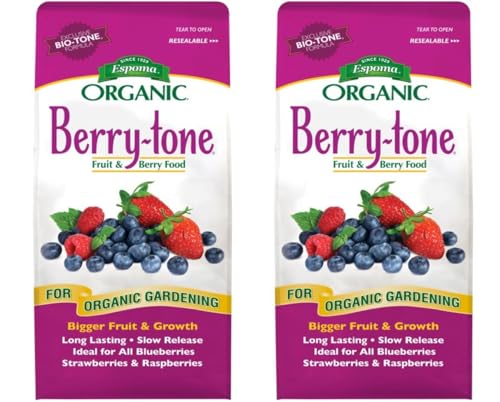
The Espoma Berry Tone delivers a granular 4-3-4 NPK analysis enhanced with their exclusive Bio-tone formula, making it a reliable choice for established garden beds. Its slow-release design feeds blueberry, strawberry, raspberry, and blackberry plants over several weeks with just two applications per season — early and late spring. The inclusion of 5% sulfur helps maintain the acidic soil environment these plants require without the risk of over-acidification.
Users consistently report dramatic boosts in yield across multiple berry types. One reviewer noted that skipping the second application led to significantly fewer flowers and fruit the following season, confirming the product’s direct impact on fruiting. The granules require no mixing, which simplifies the feeding routine for anyone managing multiple bushes in a backyard patch or raised bed.
The 4-pound bag covers a substantial area, and the organic input certification makes it suitable for organic gardening practices. While granular formulas work slower than liquids for immediate correction, the consistency and long-term soil conditioning make this the most versatile option for gardeners who want a set-it-and-forget-it approach to berry nutrition.
Why it’s great
- Slow-release granules feed for weeks
- Approved for organic gardening
- Works on all major berry types
- No mixing required
Good to know
- Requires planning for two seasonal applications
- Not ideal for instant nutrient correction
2. Big A Berries Fertilizer Nutrients

The Big A Berries Fertilizer comes in a 13.5-ounce resealable pouch and is formulated as an organic mineral supplement for indoor and outdoor berry plants. Its powder form dissolves quickly in water, providing fast-acting nutrition that translates into noticeably larger and sweeter fruit within days of application. The blend targets multiple berries including strawberries, blueberries, raspberries, and blackberries.
Growers in challenging climates have seen exceptional results — one high-elevation Rocky Mountain gardener reported that after two applications in late May and again one month later, raspberry size and quantity increased so dramatically they appeared synthetic. Another reviewer described strawberry size jumping from “backyard” to “farm stand” quality within a single week. The feedback consistently highlights rapid visual improvement in plant vigor.
The main trade-off is availability: the product is frequently out of stock due to demand. The resealable pouch is practical for storage, especially for those who use the powder only every two weeks. This fertilizer offers some of the fastest visible results in this category, making it a strong choice for gardeners who want to maximize fruit quality in a short growing window.
Why it’s great
- Rapid fruit size increase
- Organic mineral blend
- Works on multiple berry types
- Convenient resealable pouch
Good to know
- Frequently goes out of stock
- Requires mixing before each use
3. GARDENWISE 8-4-8 Acidic Fertilizer
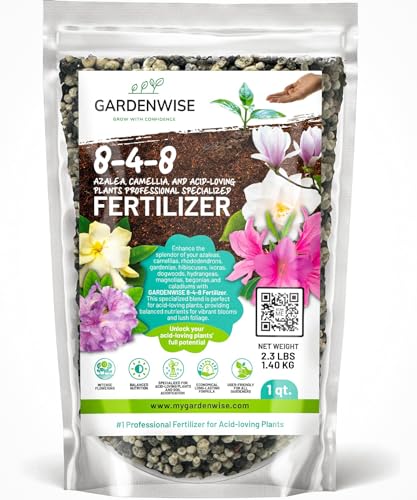
The GARDENWISE 8-4-8 formula delivers a higher potassium ratio compared to standard berry fertilizers, and it functions as a soil acidifier for plants like blueberries, azaleas, and hydrangeas. Packed with magnesium, iron, and manganese, it specifically targets chlorosis prevention — the yellowing leaves caused by iron deficiency in alkaline soils. The slow-release granules require only three feedings per year.
One reviewer observed that their magnolia tree produced twice the leaves within a week and a blossom for the first time after application, while a rhododendron doubled in size. The long-lasting formula means a single bag stretches across many plants, especially when used as directed for acid-loving species. Users with blueberries have reported deeper green foliage and consistent berry production after incorporating this into their feeding schedule.
The higher nitrogen content at 8-4-8 means you should be careful not to overapply on established berry bushes, as excessive nitrogen can reduce fruit set. It is best suited for gardeners who also grow other acid-loving ornamentals and want a single product for their entire acidic-soil bed. The granular format makes distribution straightforward, and the cost per feed is very low.
Why it’s great
- Acts as effective soil acidifier
- Only three applications per year
- High iron content prevents chlorosis
- Suitable for multiple acid-loving plants
Good to know
- Higher nitrogen may reduce berry set if overused
- Not specifically formulated for berries alone
4. True Organic Berry Food, 5-4-4

True Organic Berry Food uses a nutrient-rich blend of seabird guano, shrimp and crab shell meal, and sulfur to feed berry plants while naturally lowering soil pH. The 5-4-4 NPK analysis is well-calibrated for fruiting plants, supporting steady growth without pushing excessive leafy vegetation. The 4-pound bag covers up to 58 square feet, with a monthly application schedule during the growing season.
Gardeners using this on rejuvenated raspberry patches reported that neglected bushes began producing beautiful berries again, while new plants grew vigorously. One user highlighted that the formula’s natural ingredients improved soil biology visibly — the earthy smell confirms its organic origin. It works equally well for in-ground beds and container setups, giving flexibility depending on your garden layout.
The sulfur content is a key differentiator for those dealing with alkaline tap water or soil that drifts above the ideal pH range for berries. Compared to liquid acidifiers that provide immediate drops, the granular release is gentler and more sustainable over the season. The main drawback is the slightly higher price per pound relative to non-organic granular options, but the input quality justifies the cost for dedicated organic growers.
Why it’s great
- Naturally adjusts soil pH with sulfur
- High-quality organic ingredient list
- Monthly application is manageable
- Suitable for containers and beds
Good to know
- Premium price per pound
- Odor may be noticeable during application
5. Bloom City Acid-Loving Plant Fertilizer

Bloom City’s Acid-Loving Plant Fertilizer is a liquid concentrate that combines both nutrition and soil acidification in one bottle. It targets plants that thrive in lower pH conditions, including blueberries, hydrangeas, azaleas, and raspberries. The liquid form allows for rapid absorption, making it suitable for correcting deficiencies or giving struggling plants a direct boost.
One reviewer described how it brought 8-year-old blueberry bushes back from poor health, with dramatic improvements in leaf quality, vigor, and fruit production after consistent use. Another user with azaleas saw visible improvement within days. The mixing ratio is simple — a few teaspoons per gallon of water — making it easy to incorporate into a weekly watering routine without guesswork.
Because this product actively lowers pH, it is best used when you have confirmed your soil is too alkaline for your berries. It does not provide the long-term soil conditioning of granular organics, but it excels as a rescue treatment for plants showing signs of nutrient lockout. The 32-ounce bottle lasts multiple seasons if used on a single plant, making it a cost-efficient option for targeted feeding.
Why it’s great
- Immediate pH adjustment and feeding
- Revived 8-year-old bushes successfully
- Simple measuring and mixing
- Long-lasting bottle for targeted use
Good to know
- Requires pH testing for best results
- Not a full-season slow-release solution
6. TPS Nutrients Blueberry Fertilizer, 32 oz
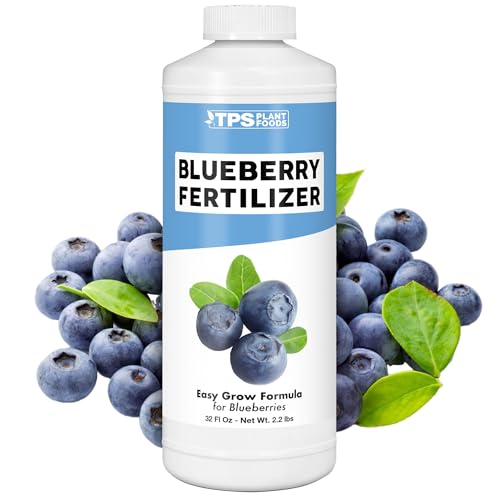
The TPS Nutrients Blueberry Fertilizer is a liquid concentrate engineered specifically for blueberry plants, though it works well on other acid-loving fruiting plants. With a 32-ounce bottle and a mixing ratio of a few tablespoons per gallon of water, it provides concentrated nutrition that supports fruit set, root strength, and overall plant vitality. It is made in the USA and designed for garden beds, raised beds, and containers.
Users have reported remarkable results with small starter plants — one shopper purchased a bare-root blueberry stem and watched it grow into multiple thriving bushes within weeks of consistent feeding. Another reviewer noted their pink lemonade blueberry plant produced four berries while still in its early growth phase. The liquid formula is especially effective for container-grown blueberries, where nutrients leach out faster than in ground soil.
The product does not claim to lower pH, which is an important distinction. If your soil is already within the acidic range, this fertilizer provides balanced nutrition without over-complicating your regimen. However, growers dealing with high-pH soil may need a separate acidifier. The liquid format makes it ideal for those who prefer weekly feeding and precise control over nutrient delivery.
Why it’s great
- Designed specifically for blueberries
- Works great in containers and raised beds
- Quick results for small starter plants
- Made in the USA
Good to know
- Does not actively lower soil pH
- Requires weekly mixing and application
7. Bloom City Organic Berry Fertilizer, 32 oz

Bloom City’s Organic Berry Fertilizer is an entry-level liquid concentrate formulated for blueberries, strawberries, and other berry-producing plants. At 32 ounces with a mixing ratio of 3 tablespoons per gallon, it provides an affordable organic option for gardeners looking to maintain healthy plants without a large investment. The formula supports fruit development and root strength in both garden beds and containers.
Multiple users confirm excellent results on strawberries, with one reviewer noting that potted blueberry bushes treated with this product thrived for over three weeks, producing new growth and successive berries. The organic certification means it is safe for edible gardens and gentle on beneficial soil organisms. It mixes easily with water and does not leave residue on foliage.
The main trade-off is the product’s mild odor, which several reviewers described as unpleasant but tolerable. One user noted they could not perceive a difference in their plants after application, suggesting results may vary depending on existing soil fertility. For those starting organic berry gardening or caring for a small number of plants, this represents the most cost-effective liquid entry point in the category.
Why it’s great
- Organic certified for edible gardens
- Easy mixing with clear measurement
- Good results on strawberries and blueberries
- Budget-friendly entry option
Good to know
- Some users report mild unpleasant odor
- Results may be subtle on already healthy soil
FAQ
How often should I fertilize my blueberry bushes?
Will regular all-purpose fertilizer work on berry plants?
Do I need a separate soil acidifier for my blueberries?
Final Thoughts: The Verdict
For most users, the best berry fertilizer winner is the Espoma Berry Tone because its slow-release granular format, organic certification, and proven yield increases across all berry types make it the most versatile and reliable choice. If you want rapid fruit size and sweetness, grab the Big A Berries Fertilizer. And for targeted soil acidification combined with feeding, nothing beats the GARDENWISE 8-4-8.