
Teaching a three-year-old to ride means navigating a world of tiny inseams, wobbly steering, and short attention spans. The wrong bike frustrates everyone — the wrong frame geometry leaves a child stranded, while the right balance of weight, seat height range, and tire type turns a hesitant toddler into a confident glider within days.
I’m Rikta — the co-founder and writer behind Gadgets Feed. I’ve spent months cross-referencing frame materials, seat adjustment spans, and tire compositions across dozens of toddler bike models to identify which sub- designs actually solve the balance challenge for children aged 18 months to 4 years. (And Homer 🐱 supervised assembly, vetoing any box he couldn’t sit inside.)
Every bike here is evaluated for its real-world fit range, weight, and safety features, not marketing copy. This guide breaks down the seven best contenders to help you pick the right bicycle for 3 year old that matches your child’s height, confidence level, and riding style.
How To Choose The Best Bicycle For 3 Year Old
A three-year-old’s bike is less about drivetrain complexity and more about geometry, weight, and safety margins. The biggest mistake parents make is buying a bike the child will “grow into” — a too-tall frame forces a child to ride on tiptoes, destroying balance confidence. Focus on three specific dimensions before any marketing feature.
Seat Height Range And Inseam Fit
This is the single most critical spec. A three-year-old typically has an inseam between 14 and 18 inches. The bike’s minimum seat height must allow the child to place both feet flat on the ground with slightly bent knees. For balance bikes, look for a seat range starting at 11 inches. For pedal bikes with training wheels, the minimum seat height should not exceed 17 inches. Never size up “for next year” — a proper fit from day one builds far more skill than an adjustable seat that starts too high.
Balance Bike Vs. Pedal Bike With Training Wheels
Balance bikes teach gliding, steering, and weight shifting before pedaling enters the equation. Most children transition from a balance bike to a standard pedal bike in under an hour because they already understand dynamic balance. Training wheels, by contrast, teach a tilted riding posture and delayed steering correction. For a three-year-old with no previous bike experience, a balance bike is almost always the faster path to independent riding. If the child already glides confidently, a 12-inch pedal bike with removable training wheels offers the next logical step.
Tire Type And Weight
Tires fall into three categories for this age group: air-filled (pneumatic), flat-free foam, and puncture-proof solid rubber. Air-filled tires offer the most shock absorption on uneven terrain but require occasional inflation. Foam tires never deflate but are heavier. Puncture-proof solid tires balance weight and maintenance — they grip well on pavement and grass without the flat risk. Bike weight matters enormously at this age: a bike heavier than 12 pounds becomes a chore for a three-year-old to maneuver, lift, or steer. Lightweight alloy steel or aluminum frames below 10 pounds are ideal for balance bikes.
Quick Comparison
On smaller screens, swipe sideways to see the full table.
| Model | Category | Best For | Key Spec | Amazon |
|---|---|---|---|---|
| Strider 12 Pro | Balance Bike | Pure lightweight balance training | 5.6 lbs / Aluminum frame | Amazon |
| Retrospec Baby Beaumont | Balance Bike | Cushioned ride on mixed terrain | 9.3 lbs / Air-filled tires | Amazon |
| XJD Girls Bike | Pedal Bike | Imaginative play with doll seat | Handbrake / Adjustable seat | Amazon |
| cubsala BMX Style | Pedal Bike | Sturdy BMX build for rougher play | Carbon steel frame / 20-min assembly | Amazon |
| BODIOO 12 Inch | Pedal Bike | Dual brakes for confident stopping | Hand + coaster brake / Saddle holder | Amazon |
| Retrospec Cub Balance | Balance Bike | Puncture-proof tires, low frame | 10 lbs / Puncture-proof tires | Amazon |
| Nickelodeon Blue’s Clues | Pedal Bike | Character-themed fun for fans | Mailbox storage / Coaster brake | Amazon |
In‑Depth Reviews
1. Strider 12” Pro Balance Bike
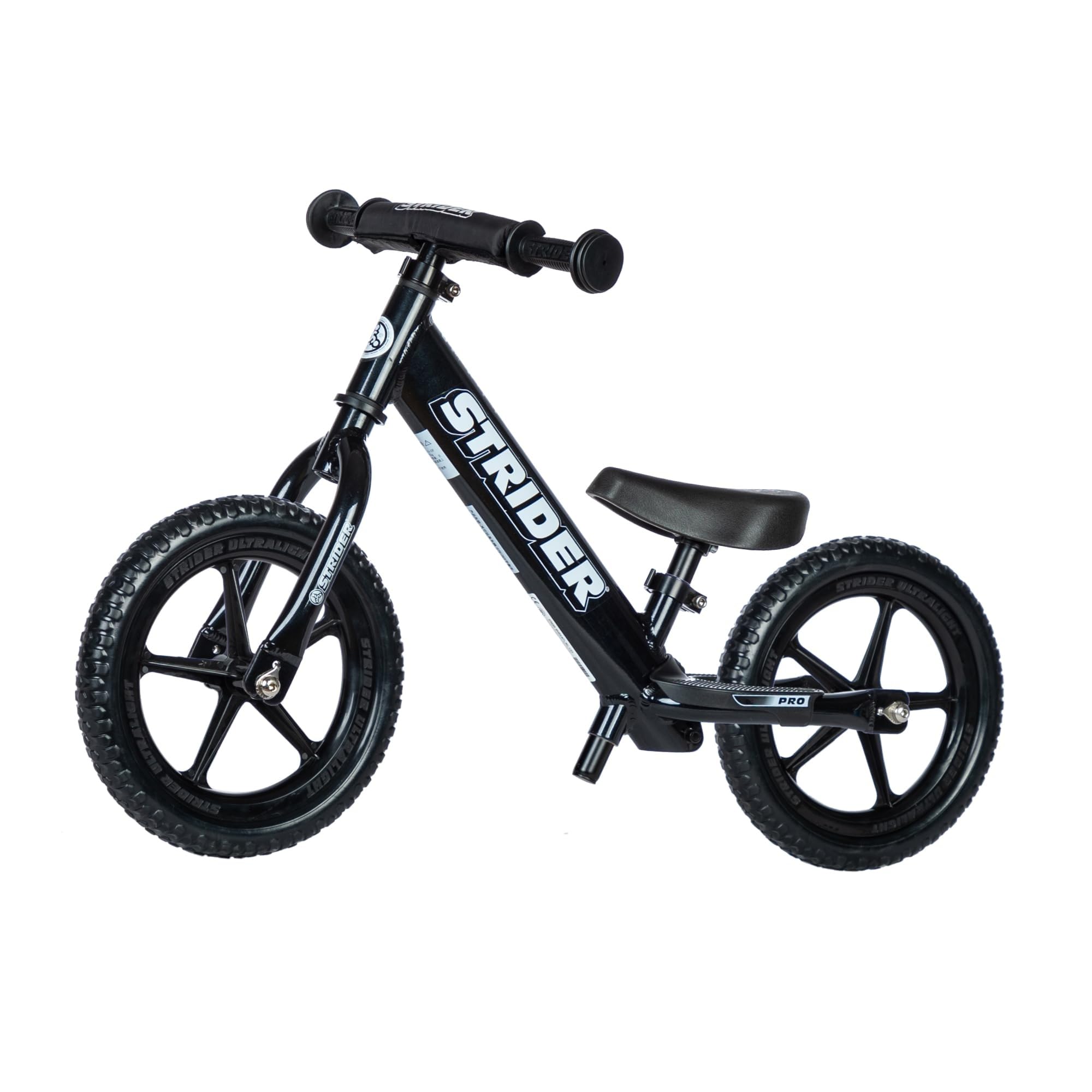
The Strider 12 Pro weighs just 5.6 pounds, making it the lightest bike in this roundup by a significant margin. That weight difference matters enormously when a three-year-old must lift, turn, and carry the bike independently. The aluminum frame resists rust and dents, and the flat-free foam rubber tires eliminate the flat-tire headache entirely — no pump needed, ever.
The seat height adjusts from 11 to 17 inches using the regular seat post, plus an included XL post extends the range to 19 inches, accommodating inseams from 12 to 20 inches. This single bike can serve a child from age 1 to 4 without any part swaps beyond the post. The footrests integrated into the frame help toddlers learn the tuck-and-glide motion that builds proper balance instincts.
Assembly requires no tools — the handlebar and seat clamp tighten by hand. The safety pad covers the top tube, protecting against straddle impacts during early wobbly rides. Customer reports show children transitioning to pedal bikes in under one hour after mastering the Strider’s gliding motion. The maximum rider weight of 60 pounds provides a generous safety margin through age 5.
Why it’s great
- Extremely light 5.6 lb frame, easy for toddlers to handle
- XL seat post included extends use from 1 to 4 years
- No-tool assembly and flat-free foam tires
- Proven transition speed to pedal bikes
Good to know
- No braking system — child must use feet to stop
- Foam tires offer less shock absorption than air-filled tires on bumpy grass
- Premium price point compared to steel-frame alternatives
2. Retrospec Baby Beaumont Balance Bike

The Retrospec Baby Beaumont fills the gap between featherweight aluminum bikes and budget steel models by offering air-filled tires at a 9.3-pound total weight. The pneumatic tires with wide, grippy treads absorb bumps on grass, mulch, and uneven pavement far better than foam or solid rubber alternatives, making this the smoothest-riding balance bike for mixed-terrain play.
The seat adjusts between 13 and 14.5 inches, with quick-release handlebar height adjustments that require no tools. The low step-through frame lets a toddler mount and dismount without assistance — a key confidence builder. The integrated footrest is positioned low enough that even children with short legs can find it while gliding. The frame uses alloy steel, which adds durability over pure aluminum but keeps the total weight manageable for parent carries.
Customer feedback consistently highlights the bike’s durability beyond age 3 — multiple reviews note continued use at age 4. The included faux-leather basket adds a charming element that encourages carrying toys or treasures. Assembly is minimal, though the handlebar clamp requires a hex key. The bike’s weight distribution is balanced enough that children under 30 pounds can steer without tipping.
Why it’s great
- Air-filled tires provide superior shock absorption on bumpy terrain
- Low step-through frame enables independent mounting
- Adjustable seat and handlebar grow with the child
- Integrated footrest aids gliding posture
Good to know
- Air tires require periodic inflation
- Faux leather basket straps may wear over time
- Not as light as aluminum-frame alternatives
3. XJD Girls Bike with Training Wheels
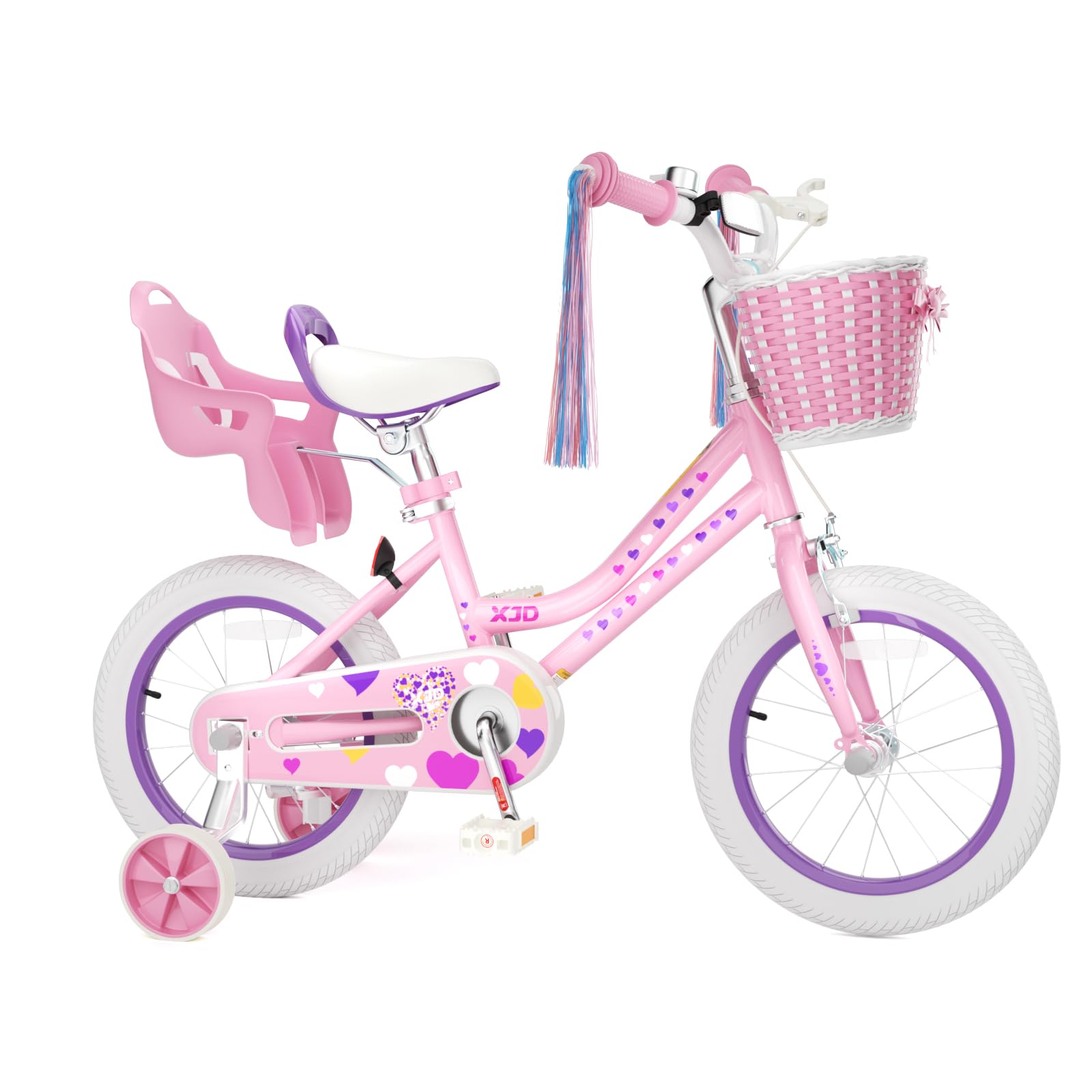
The XJD Girls Bike packs an unusual amount of accessories into a single affordable package: a front basket, handlebar streamers, and a rear doll seat with a safety belt. For a three-year-old who wants to bring a stuffed animal on rides, this turns a standard pedal bike into an imaginative-play vehicle. It is available in 12-inch (32–38 inch height range), 14-inch, and 16-inch sizes, so sizing up later is straightforward within the same model family.
The Hi-Ten steel frame is heavier than alloy alternatives, but the trade-off is durability at a lower price point. The handbrake provides meaningful stopping power independent of the coaster brake, an important safety margin for children whose legs may not be long enough to reverse-pedal consistently. The enclosed chain guard prevents clothing or fingers from catching. The single-speed drivetrain keeps things simple — no gear confusion for a first-time pedal rider.
The bike ships 85% pre-assembled. The included tools and gloves make final assembly manageable in about 20 minutes, though some customers note the instruction manual could be clearer for the handbrake cable routing. The training wheels are removable, allowing a graduated transition once the child’s balance improves. The adjustable seat accommodates growth within each wheel size, and the soft saddle reduces chafing during longer rides.
Why it’s great
- Includes basket, streamers, and doll seat for imaginative play
- Handbrake offers additional stopping control
- Available in multiple sizes for growing children
- 85% pre-assembled with included tools
Good to know
- Carbon steel frame is heavier than alloy alternatives
- Assembly instructions could be clearer for brake routing
- Doll seat and basket may reduce weight capacity for taller children
4. cubsala 12 Inch Kids Bike BMX Style

The cubsala BMX-style bike distinguishes itself with a high-tensile carbon steel frame that feels noticeably more rigid than standard kids’ bikes. For parents who anticipate rough handling — drops, scrapes, the occasional tumble down a driveway — this frame resists flex and cracking better than lightweight steel alternatives. The BMX geometry includes a top tube that sits lower than traditional BMX bikes, making it accessible for short inseams while preserving the sporty look.
The single-speed drivetrain paired with a coaster brake eliminates hand-strength requirements for stopping, but the bike also includes a front caliper brake for redundancy. The wide tires provide slip-resistant traction on pavement and packed dirt. The training wheels use a robust bracket design that doesn’t bend under the bike’s 17-pound weight. The seat and handlebar both adjust without tools, using quick-release levers. Customer assembly times average 20 minutes with the included hex keys and wrench.
The bike comes in 12-inch, 14-inch, 16-inch, and 18-inch wheel sizes, with age and height charts printed on the box. The 12-inch version fits children ages 2 to 4 with a 33–37 inch height range. The chain guard fully encloses the drivetrain, preventing injury and keeping oil off clothing. A limited lifetime warranty on the frame backs the build quality, though the coaster brake design makes it less suitable for skatepark-style riding if the child progresses to ramps.
Why it’s great
- Carbon steel frame withstands heavy impact and rough handling
- Tool-free seat and handlebar adjustments
- Dual braking system (coaster + front caliper)
- Limited lifetime warranty on frame
Good to know
- Heavier than alloy and aluminum alternatives at 17+ pounds
- Coaster brake limits performance on steep or skatepark terrain
- Some customers report missing nuts or bolts in the box
5. BODIOO 12 Inch Kids Bike
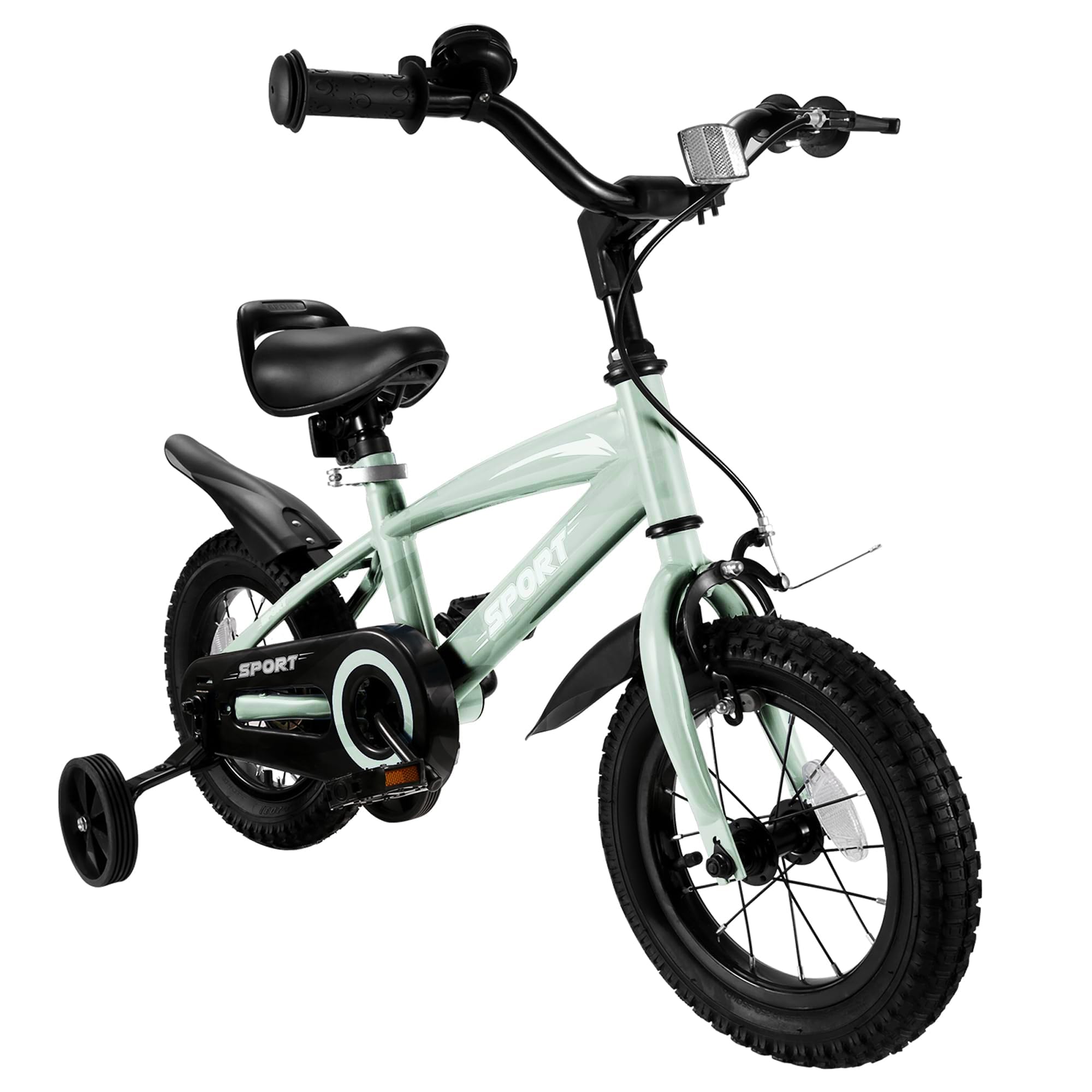
The BODIOO 12 Inch bike addresses one of the most common frustration points for three-year-old riders: stopping. It combines a front handbrake with a rear coaster brake, using child-specific brake levers that require less hand strength to engage. The shorter lever reach means small hands can squeeze without over-extending, an ergonomic detail many budget bikes overlook. The narrower pedal positions mimic the natural leg-angle of a child, reducing fatigue during longer rides.
The seat adjusts from 17 to 22 inches, which is relatively high for a 12-inch bike — this makes it better suited for three-year-olds at the taller end of the inseam range (17+ inches). A built-in saddle holder at the rear allows a parent to grab and guide the bike without stooping, a useful feature for teaching balance on the first few rides. The alloy steel frame balances weight and durability at 17.2 pounds, though that total is on the heavier side for the age group.
The bike includes a bell, pump, reflectors, and training wheels — accessories that add value without inflating the core price. The Mint Gray color option avoids overly gendered styling, and the wider rubber pneumatic tires handle grass and light gravel adequately. Customer feedback praises the frame stiffness and the responsiveness of the handbrake, though assembly instructions are sparse enough that some parents resort to YouTube tutorials. The training wheels use a sturdy bracket that resists bending under load.
Why it’s great
- Child-specific brake levers with short reach for small hands
- Dual braking system provides redundant stopping
- Rear saddle holder lets parents guide the bike comfortably
- Includes bell, pump, and reflectors as standard accessories
Good to know
- Heavier than balance bike alternatives at 17.2 lbs
- Minimum seat height of 17 inches may be too tall for shorter three-year-olds
- Assembly instructions are minimal, requiring external resources
6. Retrospec Cub Toddler Balance Bike

The Retrospec Cub balances affordability with features that actually matter for a first-time rider. The puncture-proof, airless tires eliminate the single biggest maintenance headache of toddler bikes — no flats, no pumps, no roadside frustration. These solid tires ride smoothly on pavement and packed trails, though they transmit more vibration than air-filled alternatives on bumpy grass. The 10-pound weight is manageable for a three-year-old to steer and carry short distances.
The low frame design sits close to the ground, minimizing fall distance and making self-mounting achievable for most three-year-olds with a 14-inch inseam or higher. The seat adjusts from 11 to 14.5 inches using a quick-release clamp, and the handlebars adjust without tools via a similar mechanism. The alloy steel frame has rounded edges and a non-slip grip surface, reducing the risk of scrapes during dismounts. The coaster brake engages only when the child pushes the pedals backward, but since this is a balance bike, braking comes mainly from foot contact with the ground.
Customer reviews consistently note the bike’s lightweight feel and easy 15-minute assembly. The included stickers let the child personalize the frame, which builds ownership and pride. After one year of daily use, the frame shows minimal wear — no rust or loose bolts. The 10-pound weight is ideal for a 30-pound child but may feel slightly heavy for smaller toddlers under 25 pounds. The seat post maximum height limits use to approximately age 3.5 before the child outgrows the adjustment range.
Why it’s great
- Puncture-proof tires require zero maintenance
- Lightweight 10 lb frame that toddlers can maneuver
- Low step-through frame reduces fall height and enables self-mounting
- Quick-release seat and handlebar adjustments
Good to know
- Solid tires transmit more vibration on uneven terrain
- Maximum seat height limits use to around age 3.5
- No included basket or accessories for imaginative play
7. Nickelodeon Blue’s Clues & You Kids Bike

The Nickelodeon Blue’s Clues bike is the most visually engaging option for a three-year-old who already loves the show. The handlebar includes a mail-slot storage compartment — a functional, character-integrated feature that toddlers enjoy using for small toys or snacks. The bike is designed for children ages 2 to 4 with heights between 28 and 38 inches, and the 12-inch wheels match inseams typical for the younger end of that range.
The single-speed drivetrain and rear coaster brake keep operation simple: pedal forward to go, pedal backward to stop. The alloy steel frame feels solid, though at 17.4 pounds, it is one of the heavier bikes in this guide. The removable training wheels provide the standard learning progression — the brackets are sturdy enough to withstand wobble forces during early rides. The bike ships 80% pre-assembled, with final assembly requiring a wrench and Phillips screwdriver for the training wheels, handlebar, and seat post.
The decorative elements — a character plate on the handlebar and themed graphics — are the main draw, but they are also the bike’s weak point. Several customers report that the front picture frame attachment does not stay secured without zip ties. The bike’s utility is limited to paved surfaces and smooth sidewalks due to the standard rubber tires. The limited lifetime warranty on the frame provides some peace of mind, though the non-replaceable character graphics may fade with outdoor exposure.
Why it’s great
- Highly engaging character design for Blue’s Clues fans
- Functional handlebar mail-slot storage compartment
- Coaster brake is intuitive for first-time pedal bike riders
- Removable training wheels with sturdy brackets
Good to know
- Heavier than alternatives at 17.4 lbs
- Decorative front picture frame attachment is poorly secured
- Character graphics may fade with outdoor use
- Limited to smooth, paved surfaces
FAQ
Should I buy a balance bike or a pedal bike with training wheels for my 3-year-old?
What size bike should I buy for a 3-year-old with a 15-inch inseam?
How do I know if my 3-year-old has outgrown their balance bike?
Final Thoughts: The Verdict
For most families, the bicycle for 3 year old winner is the Strider 12 Pro because its 5.6-pound aluminum frame, flat-free foam tires, and dual seat post system deliver the lightest, most durable balance training platform available for the age group. If your child needs air-filled tires for cushioned rides across grass and gravel, grab the Retrospec Baby Beaumont. And for imaginative play with a doll seat, basket, and handbrake control, nothing beats the XJD Girls Bike.