
Our readers keep the lights on and my morning glass full of iced black tea. As an Amazon Associate, I earn from qualifying purchases.
Specs are compiled from manufacturer listings and verified buyer reviews and can change over time — please confirm the key details on the product page before buying.
Bikepacking is where the road ends and the real ride begins, and the bike you choose decides whether that first loaded climb feels like a slog or a second wind. The perfect rig balances a lightweight frame you can throw around with the stability to carry your camp without wobbling. This guide breaks down three gravel-focused machines that handle pavement, packed dirt, and everything between.
I’m Min — the founder and writer behind Gadgets Feed. This guide is built by comparing the manufacturers’ published specifications and the patterns across verified customer reviews, so you get each pick’s real strengths and trade-offs instead of marketing spin.
Frame material, drivetrain range, and braking power determine how your bicycle for bikepacking handles a fully loaded frame on steep, loose descents.
Our Picks at a Glance
How To Choose The Best Bicycle For Bikepacking
A bikepacking rig is a touring bike that gave up its racks in favor of frame bags, so every spec needs to serve that mission. You are carrying weight on the frame, riding long hours, and rolling over surfaces that punish the wrong choice.
Frame Material: Carbon Versus Aluminum
On rough gravel, carbon fiber absorbs the constant vibration, so your hands and seat stay comfortable over a full day, and a quality layup keeps the bike light for quick handling. Aluminum is tougher against rock strikes and much easier to repair, but it transfers more buzz to you. If you want the lightest possible build, carbon wins; if you want confidence on sketchy descents, aluminum is the pragmatic pick.
Drivetrain Range And Gearing
More gears do not automatically mean better bikepacking, but a wide range absolutely does. You need a low enough gear to spin up a steep dirt climb with bags hanging off the frame, and a high enough gear to hold speed on pavement. A compact crankset paired with a wide-range cassette covers both extremes better than a road-racing setup.
Quick Comparison
| Model | Best For | Frame Material | Drivetrain | Brakes | Amazon |
|---|---|---|---|---|---|
| SAVADECK GRX400★ Best Overall | Best Overall | T800 Carbon | Shimano GRX400 20-Speed | Hydraulic Disc | Amazon |
| Tommaso Sterrata | Value Pick | Aluminum | Shimano Claris 24-Speed | Mechanical Disc | Amazon |
| SAVADECK U6000 | Simple & Smooth | T800 Carbon | Shimano U6000 11-Speed | Hydraulic Disc | Amazon |
In‑Depth Reviews
1. SAVADECK Carbon Gravel Bike (Shimano GRX400)
Our pick — 4.5★ from 20+ verified ratings; the strongest balance of quality and price.
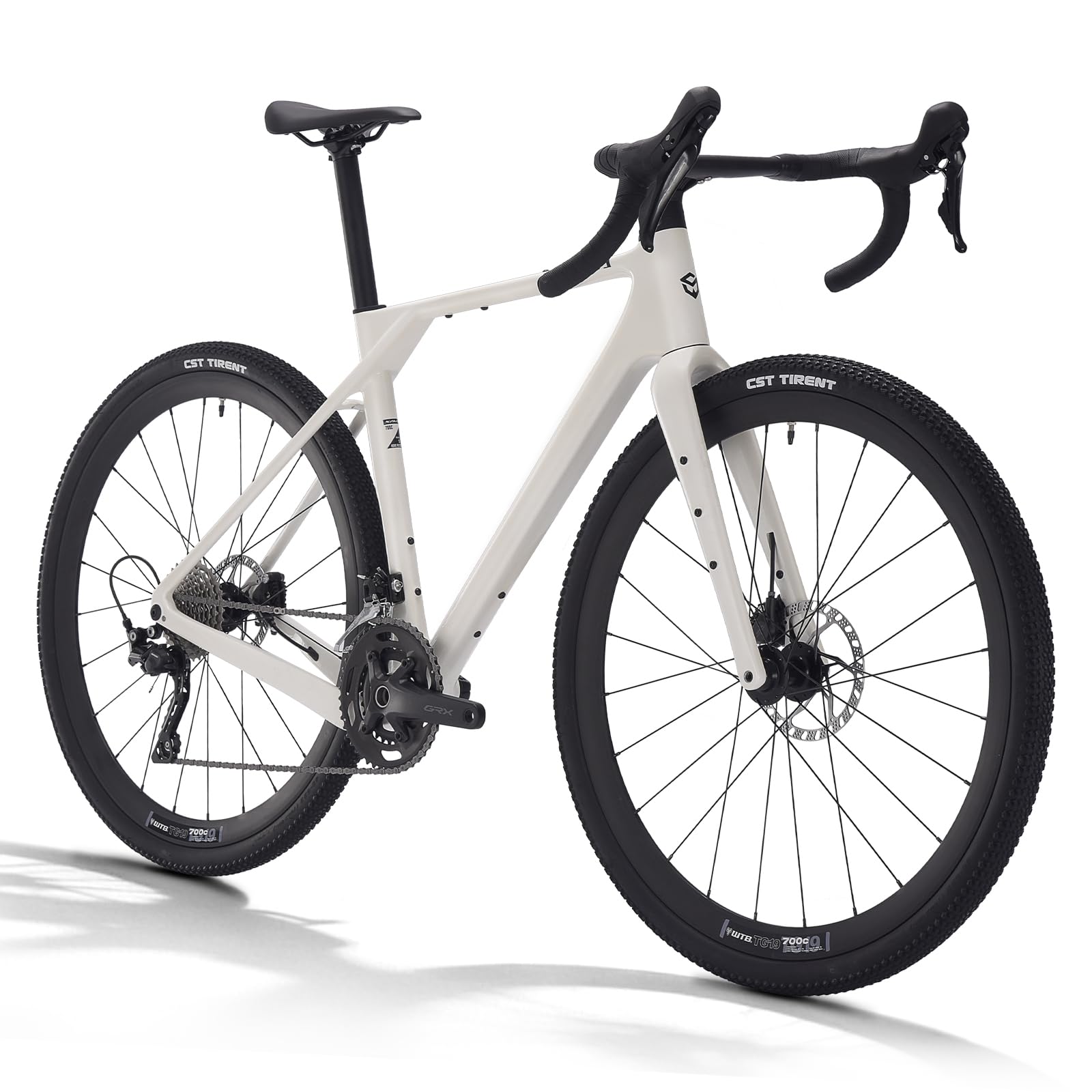
The 22.92-pound full-carbon rig that makes a loaded gravel climb feel almost unfair.
The first thing you notice is the weight: a T800 carbon frame and fork bring the whole build to just 10.4kg (22.92 lbs), which is feathery for a machine with all-terrain ambitions. That translates directly to effort saved on every pedal stroke, and it is the single biggest reason this bike disappears beneath you when you are grinding up a loose hill carrying camp gear.
Shifting comes from the Shimano GRX400 groupset, which pairs GRX400 shift levers with RX400 front and rear derailleurs for smooth, precise changes under load. Buyers report 100+ miles of flawless riding on the full carbon frame., and the hydraulic RX400 disc brakes deliver the stopping power you want when the bike is heavy and the descent is steep. The 700x40c tires and RX600 crankset round out a package that handles paved roads and unpaved trails with equal composure.
The catch is assembly. If you are not comfortable tuning derailleurs (the gears that shift the chain) and cable tension, plan on a shop trip — one owner handed it straight to a local bike shop rather than risk it, and another needed a quick rear-derailleur realignment from the start. It is a minor beat on an otherwise exceptional value, especially given that buyers consistently call out the quality, the lightweight feel, and the price-to-performance ratio as its standout traits.
What wins riders over
- Full carbon frame and fork at 22.92 lbs
- Shimano GRX400 20-speed with hydraulic disc brakes
- Internal cable routing and 700x40c tires for mixed terrain
Where to be patient
- Needs a confident hand or a shop visit for setup
- Shipping tracking was slow and hard to plan around for some
Reach for this if: you want a lightweight carbon gravel bike with a wide 20-speed range and hydraulic stopping power for multi-day trips.
Look elsewhere if: you have zero tolerance for post-purchase tuning and prefer a shop-assembled experience.
2. SAVADECK Carbon Gravel Bike (Shimano U6000)

A gravel bike that arrives 90% assembled and shifts so crisply it feels race-ready.
This sibling to the GRX400 model shares the same T800 R21 carbon frame and fork at 10.4kg (22.92 lbs), so you keep the feathery weight advantage. Where it differs is the drivetrain: the Shimano U6000 groupset with a U6000 rear derailleur and LG400 cassette trades the wider 20-speed range for a cleaner 11-speed setup that owners describe as smooth, light, and fast.
Setup is the real differentiator here. The bike arrives 90% pre-assembled with tools included, and riders report it coming ready to ride from the start — One owner assembled it with zero adjustment beyond the seat, with brakes and gears spot on.. That is a huge relief for a first-time gravel buyer who would rather ride than wrench. Hydraulic disc brakes and internal cable routing keep the look clean and the stopping power consistent in all conditions.
The honest limit: 11 speeds give you fewer climbing options on extreme grades than the 20-speed GRX400, and owners note the carbon frame is happiest on road and gravel rather than rough mountain trails. If your bikepacking stays on fire roads and smooth singletrack, this is the more polished, lower-maintenance pick.
Why it stands out
- Ships 90% assembled with brakes and gears dialed
- T800 carbon frame at 22.92 lbs for quick handling
- Hydraulic disc brakes with internal cable routing
Know before you buy
- 11-speed range is narrower than the 20-speed GRX400
- Not built for rough mountain trail abuse
Grab it if: you value a bike that is ready to ride almost immediately and you stick to gravel and pavement.
Think twice if: you plan to tackle technical mountain singletrack or need the widest possible gear range.
3. Tommaso Sterrata Sport Performance Gravel Bike

The budget-friendly aluminum workhorse with a full Shimano groupset and a proven 1,000-mile record.
At a friendlier entry point, this aluminum gravel bike with a carbon fork punches well above its tier. The Shimano Claris drivetrain runs 24 speeds in a 3×8 configuration, and the triple front ring is a genuine asset for bikepacking — it gives you the low gears to haul panniers up hills without grinding. The 40mm tires soak up gravel chatter while the carbon fork keeps the front end composed.
Owners are emphatic about the long-term story: “After 1,000 miles, one owner remains impressed with no replacements needed, citing solid stock components.” That is the kind of durability that matters on a machine meant for multi-day trips. Size L fits riders up to around 6’3″ comfortably., the matte black and gold styling turns heads, and the overall ride is described as smooth, solid, and quiet.
The honest trade-off is that the Sterrata uses mechanical disc brakes (cable-actuated, not fluid-powered like hydraulic), and factory assembly has been hit-or-miss — anyone not handy with a wrench should budget for a professional setup, and a few owners dealt with misaligned parts or brake calipers needing attention. The 40mm tire width and all-terrain use case are right on target; just be ready to do a little dialing-in before your first big ride.
The strong points
- Proven 1,000+ mile durability on stock components.
- Triple front ring for loaded hill climbing
- Great value with a full Shimano drivetrain at this tier
The trade-offs
- Mechanical disc brakes, not hydraulic
- Factory setup can be sloppy; budget for shop tuning
Pick this when: you want a proven, durable aluminum gravel bike at a lower price and do not mind a professional tune-up.
skip it if: you want hydraulic braking or a bike that is ready to ride straight from the start.
Understanding the Specs
Carbon Versus Aluminum Frames
Carbon fiber absorbs road vibration and keeps weight down — the SAVADECK builds tip the scales at just 10.4kg (22.92 lbs). Aluminum is tougher and cheaper to repair but transfers more buzz to your body on long days.
Drivetrain Speeds And Range
More speeds mean more options for finding a comfortable gear. A 20-speed GRX400 gives you the widest range for mixed terrain, while an 11-speed U6000 keeps things simpler and lighter. The Tommaso’s triple front ring offers low gears ideal for climbing with bags loaded.
FAQ
Is a carbon frame worth it for bikepacking?
How many speeds do I need for bikepacking?
Will a road bike work for bikepacking?
How long does a bikepacking bike last?
Are hydraulic disc brakes better than mechanical?
How hard is assembly on a mail-order bike?
What size bike do I need?
Can I use these bikes for daily commuting too?
Final Thoughts: The Verdict
For most buyers, the bicycle for bikepacking winner is the SAVADECK GRX400 because it pairs a feathery T800 carbon frame with the widest 20-speed range and hydraulic brakes. If you want the simplest setup and a bike that is ready to ride fast, grab the SAVADECK U6000. And for a durable, budget-friendly aluminum option with proven mileage, the Tommaso Sterrata is the one to reach for.
How We Picked
We do not accept paid placement. Every pick is matched to a real buyer and a real use-case; we do not hands-on test units.
Sources & Methodology
Specifications: manufacturer listings and product documentation. Review insights: verified customer reviews, as of August 2026. Pricing: not shown on this page (it changes often); check the current price via the retailer link.
As an Amazon Associate, Gadgets Feed earns from qualifying purchases. This does not affect which products we feature.