
The bike that lives in a single world — smooth pavement or loose gravel — leaves half the adventure behind. A true dual-purpose machine asks your legs to climb the asphalt and then descends into the dirt, handling both with equal composure. Finding that balance means ignoring marketing labels and focusing on frame geometry, tire volume, and drivetrain range that actually bridges two disciplines.
I’m Min — the co-founder and writer behind Gadgets Feed. I’ve spent hundreds of hours analyzing frame material stiffness, gear ratios designed for mixed-terrain cadence, and braking systems that maintain modulation from dry pavement to wet root sections.
A dedicated buyer researching the best bicycle for road and trail needs a machine that accelerates on tarmac without washing out the moment the surface turns to hardpack gravel or singletrack.
How To Choose The Best Bicycle For Road And Trail
A road-and-trail bike is a compromise by design, but a smart compromise. The wrong spec turns every dirt section into a fishtailing battle and every road climb into a cog-spinning nightmare. Three areas define whether a bike actually works on both surfaces.
Frame Geometry and Fork Design
A slack head tube angle (70 degrees or less) gives stability on loose descents but dulls steering response on pavement. A steeper angle (72 degrees or more) snaps into corners on tarmac but feels twitchy on gravel. Look for a frame that splits the difference at roughly 71 degrees, paired with a carbon fork that absorbs high-frequency road vibrations without adding the weight penalty of a suspension fork. The fork’s axle-to-crown height also determines how tall the front end sits — taller forks raise the handlebar, giving a more upright position that helps control on uneven trail surfaces.
Tire Width and Tread Pattern
The single most impactful change you can make is tire selection. A 28c slick rolls fast on pavement but provides zero bite when the road turns to loose over hardpack. A 40c knobby tire grips the trail corner but hums like a buzzsaw on asphalt. The ideal road-and-trail tire sits between 35c and 42c with a center ridge strip for low rolling resistance and small side knobs for edge grip in turns. Check frame clearance — many entry-level road frames max out at 28c, while gravel and hybrid frames accept 40c or wider.
Drivetrain Range and Braking
Road-only gearing (50/34 chainring with an 11-28 cassette) leaves you spinning furiously on a gravel climb. Mountain gearing (32 tooth chainring with a 11-46 cassette) tops out early on a descent, forcing ghost pedaling. A 46/30 or 48/32 sub-compact crankset paired with an 11-34 or 11-36 cassette delivers both a tall enough gear for pavement cruising and a low enough bailout for steep trail sections. Rim brakes cannot deliver consistent modulation when wet or dusty — mechanical disc brakes are the baseline, hydraulic disc brakes offer superior modulation and require less hand strength over long mixed terrain rides.
Quick Comparison
On smaller screens, swipe sideways to see the full table.
| Model | Category | Best For | Key Spec | Amazon |
|---|---|---|---|---|
| SAVADECK Carbon Fiber Road Bike R7120 | Premium Road | Racers seeking trail capability | 8.8 kg / Shimano 105 24S | Amazon |
| Wallke H7 Ultra Ebike | Electric All-Terrain | Long-range mixed terrain with power | 4000W peak / 2640Wh battery | Amazon |
| SAVADECK Carbon Disc SORA | Entry-Level Race | Lightweight road with disc confidence | 9.6 kg / SORA R3000 18S | Amazon |
| Tommaso Siena Sport Gravel | Performance Gravel | Versatile pavement-to-dirt riding | Shimano Tourney 21S | Amazon |
| Mongoose Elroy Adventure | Adventure Touring | Touring with integrated frame bag | 2×7 drivetrain / Mechanical disc | Amazon |
| Schwinn Phocus 1.6 Disc | Entry Road | Budget-friendly road with disc brakes | 16-speed / Aluminum frame | Amazon |
| Tommaso La Forma Hybrid | Hybrid Commuter | Urban commute with occasional trail | 21-speed / Aluminum frame | Amazon |
| Schwinn Network 3.5 Hybrid | Hybrid | Comfort-first mixed surface riding | 21-speed / Twist shifters | Amazon |
| VEVOR Road Bike 700C | Budget Road | Entry-level pavement commuter | 21-speed / Disc brakes | Amazon |
| Jasion EB5 MAX Electric | Electric Fat Tire | Power-assisted off-road exploration | 2000W peak / 48V 15Ah | Amazon |
| Mongoose Argus Fat Tire | Fat Tire Mountain | Snow, sand, loose gravel | 26×4″ tires / 7-speed | Amazon |
In‑Depth Reviews
1. SAVADECK Carbon Fiber Road Bike, Full Carbon 105 24S
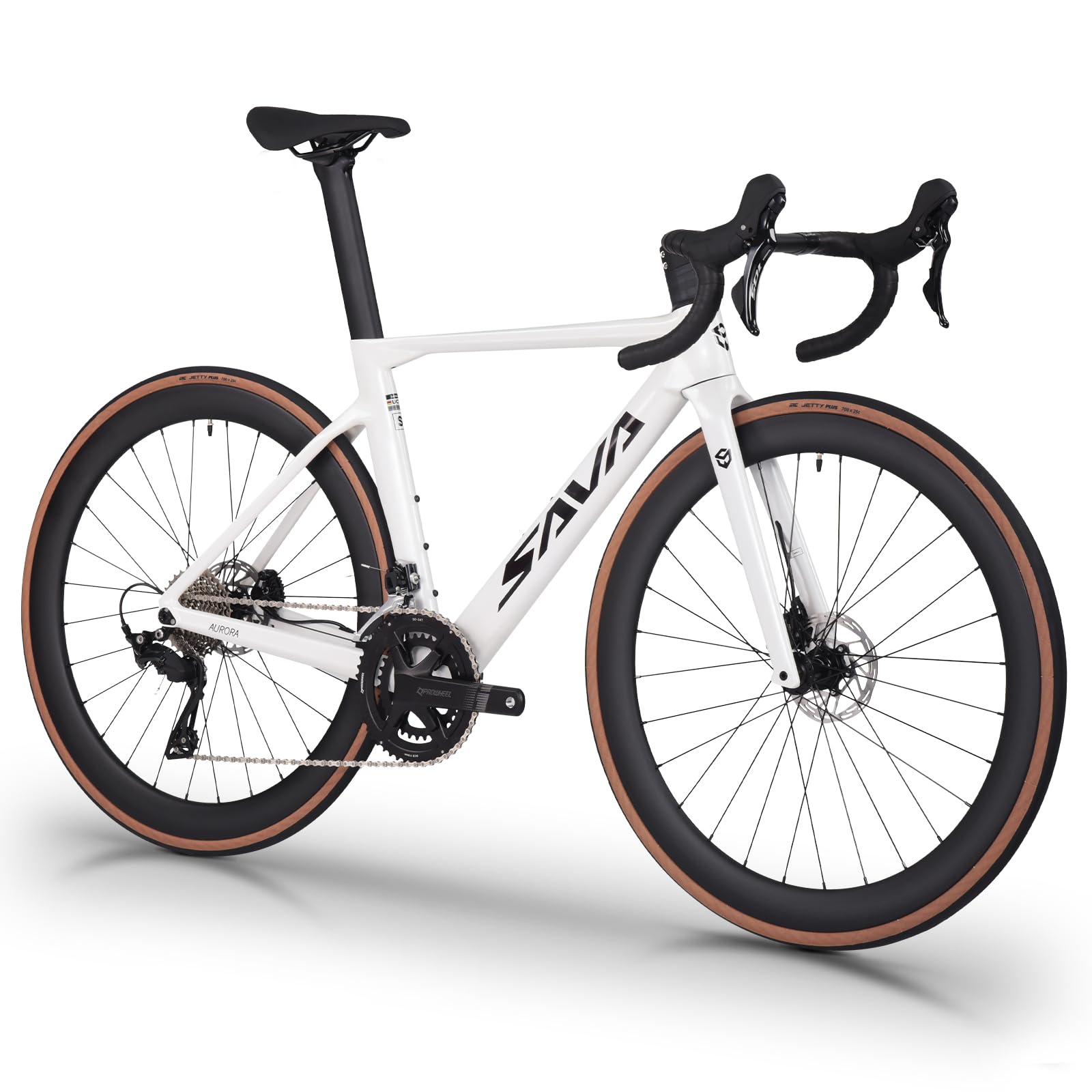
The full T800 carbon frame and wheelset bring the total bike weight to 8.8 kg, a number that dictates how this bike climbs asphalt and darts through gravel transitions. At that weight, the frame stiffness-to-weight ratio rivals bikes costing multiples more, meaning every pedal stroke transfers directly into forward motion rather than frame flex. The hydraulic disc brakes (R7120 levers, R7170 calipers) maintain consistent modulation across wet pavement and dusty trail sections, eliminating the hand fatigue that mechanical discs induce over a long mixed-surface ride.
The Shimano 105 2×12 drivetrain delivers 24 gears with a range that covers a 48/35 crankset and an 11-34 cassette, giving you a 1.03-to-1 low gear for climbing loose fire roads and a high gear tall enough to hold 28 mph on a paved descent without spinning out. The fully internal cable routing reduces wind resistance and keeps grit out of the cable housings when you hit muddy trail sections. The carbon wheelset with 700x25C tires rolls fast on pavement, though swapping to 28c or 30c rubber would add more trail confidence without a noticeable speed penalty.
Assembly requires about 10 minutes: install the handlebars, front wheel, seatpost, and pedals. The gears and brakes arrive pre-tuned, a rare advantage at this price point that eliminates the typical post-build trip to a shop. The included clipless pedals are basic and best upgraded immediately. For riders who want a single bike that delivers genuine race-day speed on pavement and enough compliance to handle hardpack gravel, this frame set delivers an unusual combination of low weight and disc-brake confidence.
Why it’s great
- Full carbon frame and wheelset at 8.8 kg delivers race-ready weight without the five-figure price tag
- Hydraulic disc brakes provide consistent stopping power on wet pavement and loose gravel
- Shimano 105 24-speed drivetrain offers a wide enough gear range for trail climbs and asphalt descents
Good to know
- Limited tire clearance maxes out around 28-30c, restricting deep gravel or loose-over-hardpack use
- Included clipless pedals are entry-level and should be replaced for serious riding
- Standard round spokes require truing if the bike sees heavy off-road abuse
2. Wallke H7 Ultra 4000W Electric Bike
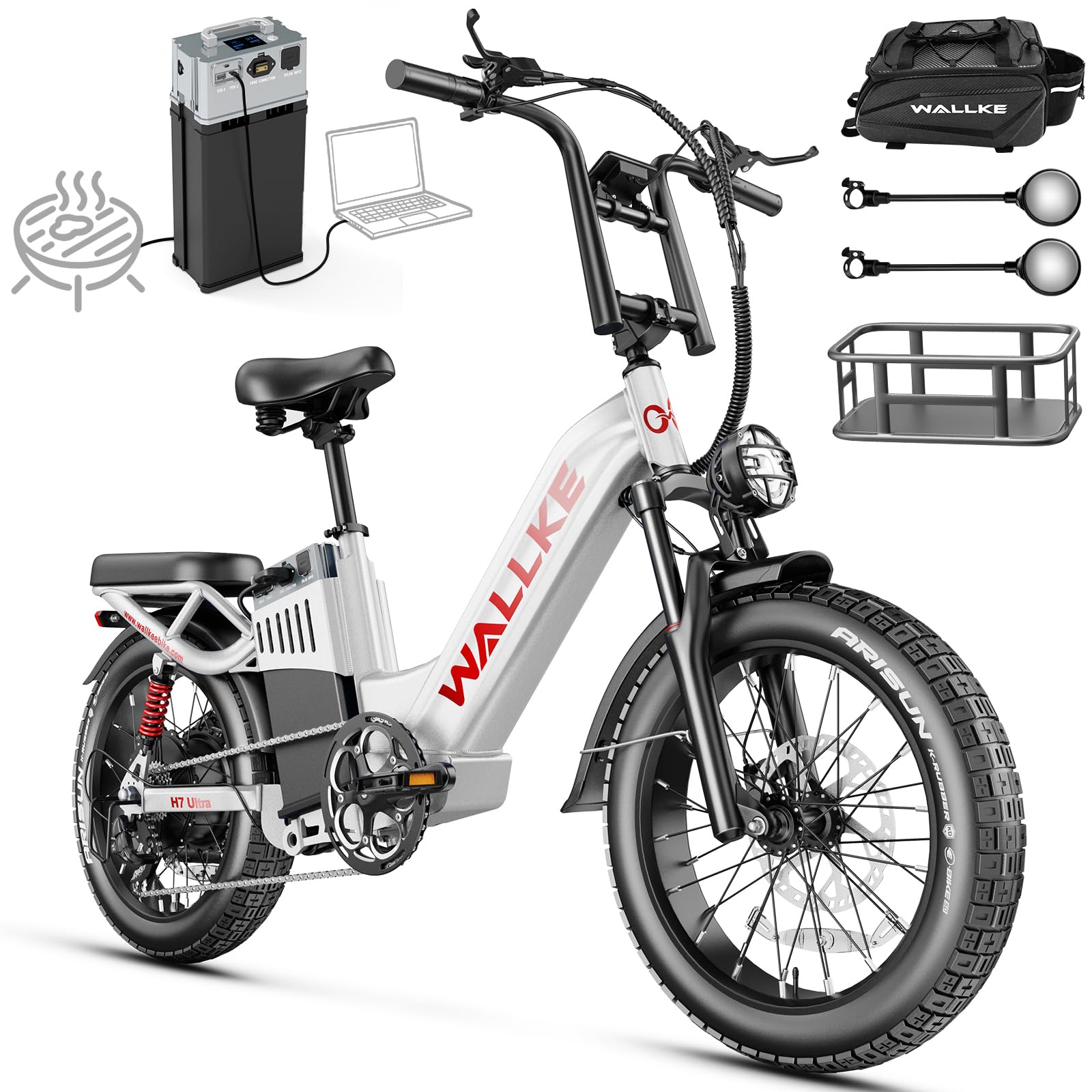
The Wallke H7 Ultra redefines what a dual-purpose electric bike can do by packing a 2640Wh battery into the frame. That capacity translates to 60–120 miles per charge depending on assist level, enough to run a full day of mixed pavement and trail without hunting for an outlet. The battery also doubles as a 600W AC power station, letting you charge a phone, mini-fridge, or camping gear directly from the bike — a feature no other e-bike in this list offers. The peak 4000W brushless hub motor produces 105 Nm of torque and can climb a 40-degree incline at over 28 mph.
The geometry leans heavily into stability with 20×4.0-inch fat tires and an aluminum alloy spring suspension fork paired with a rear air shock. That setup absorbs washboard gravel and root-studded singletrack while maintaining enough rigidity for pavement cruising at speed. The four-piston hydraulic disc brakes with 203mm rotors provide the stopping power needed for a bike that weighs 118 pounds fully assembled — weaker brakes would be dangerous at 38 mph. The step-through frame design aids mounting and dismounting when the bike is loaded with gear.
The removable battery supports solar charging, reaching full capacity in 6–8 hours with a 200W panel, making this bike viable for multi-day bikepacking trips without grid access. Assembly takes roughly an hour, and the bike arrives 85% pre-assembled. The main trade-off is weight: 118 pounds makes the H7 Ultra impractical to lift onto a car rack or carry up stairs. The suspension also feels under-damped for aggressive trail riding at speed, though the seat post shock helps. For anyone who needs a single bike that commutes, camps, and climbs fire roads without range anxiety, this is the most capable option on the market.
Why it’s great
- 2640Wh battery delivers 60–120 mile range, far exceeding typical e-bike capacity
- Onboard 600W AC power station charges external devices, enabling camping and emergency use
- Four-piston hydraulic brakes with 203mm rotors stop the 118-pound bike reliably at speed
Good to know
- Bike weighs 118 pounds, making transport and stairs extremely difficult
- Suspension feels under-damped for aggressive singletrack at high speed
- Battery replacement costs – and the pack is very heavy to remove and carry
3. SAVADECK Carbon Disc Road Bike SORA R3000

The SAVADECK Carbon Disc SORA delivers a T800 carbon frame, carbon fork, carbon seatpost, and carbon rims for a total weight of 9.6 kg — remarkable for a bike that includes disc brakes at this price tier. The carbon layup provides vibration damping that aluminum frames cannot match, reducing hand and arm fatigue on long stretches of chip-seal pavement leading up to trailheads. The Shimano SORA R3000 18-speed drivetrain is entry-level by racing standards, but the 9-speed cassette offers a wide enough spread for moderate gravel climbing when paired with the 50/34 compact crankset.
The fully internal cable routing keeps the lines clean and reduces wind resistance, a feature usually reserved for bikes costing significantly more. The Continental 700x25C tires are a solid choice for pavement but limit trail capability — replacing them with 28c gravel tires would unlock the bike’s true dual-purpose potential within the frame’s clearance limits. The disc brakes use bilateral oil-pull actuation that delivers linear feel and requires less maintenance than cable-actuated mechanical discs, though they lack the modulation of full hydraulic systems.
Assembly takes under 20 minutes because the bike ships nearly fully assembled — install the front wheel, handlebars, seatpost, and pedals. SAVADECK proactively contacts buyers to confirm frame size, reducing the risk of ordering the wrong geometry. The included tool kit covers basic adjustments, but the instructions are sparse, so first-time carbon bike owners should budget for a professional tune. This bike suits riders who want a lightweight, disc-brake road platform that can handle occasional hardpack gravel, but it is not designed for deep loose surfaces or technical singletrack.
Why it’s great
- Full T800 carbon frame and rims at 9.6 kg deliver lightweight performance at a fraction of typical carbon prices
- Internal cable routing reduces drag and protects cables from trail grit
- Continental tires provide reliable grip on pavement and hardpack surfaces
Good to know
- Limited tire clearance restricts trail capability beyond hardpack and light gravel
- Assembly instructions lack detail, requiring mechanical experience or a shop visit
- Some units arrive with minor alignment issues (brake rub, derailleur adjustment)
4. Tommaso Siena Sport Performance Aluminum Gravel Bike

The Tommaso Siena Sport is built around gravel-specific geometry that strikes a balance between road efficiency and off-road stability. The 71-degree head tube angle keeps the front end planted on loose descents while still allowing sharp pavement turns. The aluminum frame is paired with a carbon fork, a combination that keeps the overall weight manageable while the carbon fork absorbs high-frequency road buzz that would otherwise travel into the handlebars. The Shimano Tourney 21-speed groupset is not the lightest or fastest-shifting option, but it is durable and serviceable with widely available parts — an advantage when you are miles from a shop on a gravel road.
The bike arrives well-packed with no defects reported in the majority of customer reviews, which speaks to Tommaso’s quality control at this price point. The integrated shifters and brake levers take a few rides to get used to, especially for riders accustomed to separate controls, but once adapted, the setup allows quick gear changes without moving your hands from the brake position. The geometry runs slightly long in the reach for shorter riders — a 53cm frame has a top tube length closer to a 56cm, so verifying the sizing chart before ordering is essential.
Some riders have reported a front derailleur that fails to reach the top gear and a pedal that sheared off after 20 miles, though these appear to be isolated manufacturing defects. Tommaso’s customer service response in those cases has been inconsistent, so purchasing from a retailer with a good return policy adds a safety net. For the price, the Siena Sport offers a genuine gravel frame with a carbon fork and mounting points for racks and fenders, making it a strong contender for someone who wants a dedicated mixed-surface bike without stepping up to premium price brackets.
Why it’s great
- Gravel-specific geometry with a 71-degree head tube angle balances pavement handling and trail stability
- Carbon fork reduces road vibration significantly compared to a full alloy fork
- Shimano Tourney groupset uses widely available parts that are easy to service yourself
Good to know
- Frame reach runs long for its labeled size, so verify measurements before ordering
- Stock saddle is narrow and uncomfortable for longer rides on rough surfaces
- Customer service response quality is inconsistent for defect claims
5. Mongoose Elroy Adventure Bike 700C

The Mongoose Elroy is designed around the concept of self-supported touring on mixed surfaces. The aluminum frame includes mounting bosses for three water bottle cages on the frame and two more on the fork, plus a large front rack with an integrated bottle opener that carries two panniers and a rear rack mount. The 2×7 drivetrain with Shimano Tourney derailleurs delivers 14 gears — not a wide range by modern standards, but the 2x layout gives you a small granny gear for loaded climbing on gravel roads while keeping a tall gear for pavement cruising on the return leg.
The integrated frame bag with an embroidered patch provides a dedicated space for tools, snacks, or a phone, eliminating the need for a separate handlebar bag. The bike ships with 40mm stock tires that are basic but functional for light gravel and pavement — upgrading to a set of 45c gravel tires transforms the bike’s trail capability. The mechanical disc brakes are functional but represent the weakest component on the bike; multiple owners report that the front disc brake requires frequent adjustment to maintain consistent stopping power, especially after muddy rides.
Internal cable routing keeps the shift and brake lines protected from trail debris and gives the bike a cleaner look. The geometry accommodates 45c tires and possibly larger, giving you room to experiment with tire width. Some units have quality control issues, including poorly welded front racks and misaligned rear rack mounts, so inspecting the frame carefully upon arrival is advisable. For the price, the Elroy offers the most comprehensive touring-ready feature set — racks, bags, bottle mounts — of any bike in this list, making it a strong foundation for a bikepacking build.
Why it’s great
- Integrated front rack, frame bag, and multiple bottle mounts make it ready for self-supported touring out of the box
- Aluminum frame with internal cable routing keeps the bike clean and protects cables from trail debris
- 2×7 drivetrain provides a usable gear range for loaded climbing on mixed surfaces
Good to know
- Mechanical disc brakes require frequent adjustment, especially after wet or muddy rides
- Quality control issues with welds and frame alignment have been reported by multiple buyers
- Stock 40mm tires are basic; upgrading to 45c gravel tires significantly improves trail performance
6. Schwinn Phocus 1.6 Disc Road Bike

The Schwinn Phocus 1.6 is a traditional road bike with disc brakes, a combination that makes it suitable for riders who spend most of their time on pavement but want the extra control of disc brakes when the road gets wet or debris-strewn. The lightweight aluminum frame paired with a steel fork keeps the bike responsive on climbs, and the 700x28C tires provide a fast rolling platform for paved surfaces. The 14-speed drivetrain uses a Shimano rear derailleur with Microshift integrated shifters, giving you 14 gears across a compact 50/34 crankset and an 11-28 cassette.
The alloy caliper disc brakes offer better modulation than traditional rim brakes in wet conditions, though they require a firmer hand squeeze than hydraulic systems. The bike fits riders from 5’4″ to 6’2″, and the geometry prioritizes an aerodynamic riding position that works well for speed but can feel aggressive for trail sections. Assembly takes 30-45 minutes for an experienced builder, and the bike ships with most components pre-installed — install the front wheel, handlebars, seatpost, and pedals, then adjust the derailleurs and brakes.
Several long-term owners have reported exceeding 15,000 miles on the Phocus 1.6 as a daily commuter, highlighting the frame’s durability when components are upgraded over time. The stock saddle is uncomfortable for rides longer than an hour, and the caliper brakes develop a squeal that requires bedding in or pad replacement. The Phocus 1.6 is not a gravel bike — it cannot clear tires wider than 28c — but for the rider who wants a reliable, lightweight road bike with the safety margin of disc brakes, this is the best entry-level option in this roundup.
Why it’s great
- Lightweight aluminum frame with disc brakes offers better wet-weather control than traditional rim brakes
- Long-term durability proven by owners logging over 15,000 miles of daily commuting
- Shimano drivetrain with Microshift shifters provides smooth, reliable gear changes for the price
Good to know
- Tire clearance is limited to 28c, making this a pavement-only platform unsuitable for trails
- Caliper disc brakes require firm hand pressure and may develop squeal without proper bedding
- Some units arrive with missing hardware or parts, requiring immediate inspection upon delivery
7. Tommaso La Forma Aluminum & Carbon Hybrid Bike

The Tommaso La Forma bridges the gap between a pure road bike and a trail-capable hybrid by combining an aluminum frame with a carbon fork. The carbon fork absorbs road chatter and light trail vibration without adding the weight of a suspension fork, keeping the bike nimble in urban traffic and responsive on hardpack paths. The 21-speed drivetrain provides enough gear range for moderate hills and paved cruising, and the bike includes mounting points for water bottles and a rear rack, making it practical for grocery runs or light touring.
The bike arrives nearly fully assembled — install the front wheel, handlebars, seatpost, and pedals, and the gears and brakes are typically pre-tuned. Multiple owners have chosen this bike over shop models priced higher, citing the same feature set (aluminum frame, carbon fork, disc brakes) at a lower cost. The ride is described as smooth and clean, with gear changes that feel crisp for a hybrid at this price tier. The bike does not include a kickstand, but a Greenfield 285mm unit fits the frame without modification.
Quality control is a recurring concern. Some units arrive with damaged front wheels (broken spokes, warped rims), and there have been reports of chain slippage and breakage within the first few weeks. Tommaso ships touch-up paint for minor cosmetic damage, but mechanical defects require more effort to resolve. The bike suits riders who need a single machine for commuting and light off-pavement paths, but the variability in build quality makes it essential to inspect and test-ride immediately upon assembly. For a more consistent experience, upgrading to the Siena Sport or Elroy adds reliability.
Why it’s great
- Aluminum frame with carbon fork provides a smooth ride without the weight of a suspension fork
- 21-speed drivetrain with mounting points for racks makes it practical for commuting and light touring
- Priced competitively against shop hybrids with similar component specifications
Good to know
- Inconsistent quality control — some units arrive with wheel damage or drivetrain defects
- Chain slippage and breakage reported within the first few weeks of ownership
- No kickstand included; aftermarket mounting requires specific measurements
8. Schwinn Network 3.5 Hybrid Bike

The Schwinn Network 3.5 is a classic hybrid bike designed for riders who split their time between paved paths and unpaved trails. The aluminum frame keeps the weight manageable at 35 pounds, and the 700C wheels with 21-speed twist shifters provide a simple, reliable drivetrain for casual riders. The suspension fork adds comfort on bumpy dirt paths, though it does not have lockout, so it bobs slightly on pavement climbs. The alloy linear pull brakes are adequate for dry conditions but lose stopping power quickly in wet or muddy environments.
The high-rise stem and swept-back handlebars create an upright riding position that reduces lower back strain, making this a good choice for riders with limited flexibility or those new to cycling. The bike fits riders from 5’5″ to 6’0″, and the blue grey color scheme is understated and attractive. Assembly is straightforward — install the seat, handlebar, pedals, and front wheel — but the included instructions are minimal, and the brakes and derailleur almost always require adjustment before the first ride.
Long-term reliability is mixed. Some owners report the bike still riding well after years of daily use, while others experience gear slipping in the 4th and 5th gears after only 20 miles. The twist shifters are prone to accidental shifts when riding over bumps, and the suspension fork adds weight without providing meaningful trail performance. The Network 3.5 is best viewed as an entry-level cruiser for paved bike paths and very light gravel, not a serious road-and-trail machine. At this price, it is functional and comfortable for casual riders, but it will not satisfy someone pushing into more technical terrain.
Why it’s great
- Upright geometry with swept-back handlebars reduces back strain for casual riders
- Aluminum frame keeps the bike lightweight and rust-resistant for all-weather use
- Includes a kickstand and reflectors, reducing the need for immediate aftermarket purchases
Good to know
- Linear pull brakes lose substantial stopping power in wet conditions compared to disc brakes
- Twist shifters are prone to accidental gear changes on bumpy surfaces
- Suspension fork lacks lockout, causing bobbing on paved climbs
9. VEVOR Road Bike 700C Racing Bike

The VEVOR Road Bike delivers a drop-bar road bike experience at an entry-level price point. The carbon steel frame provides a compliant ride that absorbs road vibration better than budget aluminum, but it adds significant weight — 35.9 pounds, making this one of the heaviest bikes in the roundup. The Shimano 21-speed drivetrain with 3×7 gearing offers a wide range suitable for climbing moderate hills and maintaining speed on flats, though the indexed shifting requires precise adjustment to avoid chain rub.
The disc brakes are a standout feature at this price, providing reliable stopping power in wet conditions where rim brakes would struggle. The drop-bar design allows an aerodynamic riding position that reduces wind resistance on pavement, though the carbon steel frame’s weight offsets some of that advantage when climbing. The internal cable routing is a surprising inclusion at this tier — it keeps cables clean and protected from trail debris, and it gives the bike a polished appearance that belies its price.
Assembly is straightforward with 85% pre-assembly, but the front wheel assembly has been a recurring pain point. Multiple owners report that the thin bolt and plastic nut combination causes wobble during braking, and over-tightening leads to frame rub. The quality control is inconsistent — some bikes arrive in perfect working order and deliver a smooth ride, while others develop squealing noises after a few rides. The VEVOR fits best as a budget commuter for paved roads only; the 700x28C tires and carbon steel frame cannot handle off-pavement terrain with any confidence.
Why it’s great
- Disc brakes provide reliable stopping power in wet conditions at an entry-level price
- Internal cable routing keeps the drivetrain clean and gives the bike a premium appearance
- Shimano 21-speed drivetrain offers a wide gear range for hills and flat terrain
Good to know
- Carbon steel frame weighs 35.9 pounds, making climbs and acceleration feel sluggish
- Front wheel assembly hardware is prone to wobble and brake rub during installation
- Inconsistent quality control — some units develop drivetrain noise after a few rides
10. Jasion EB5 MAX Electric Bike
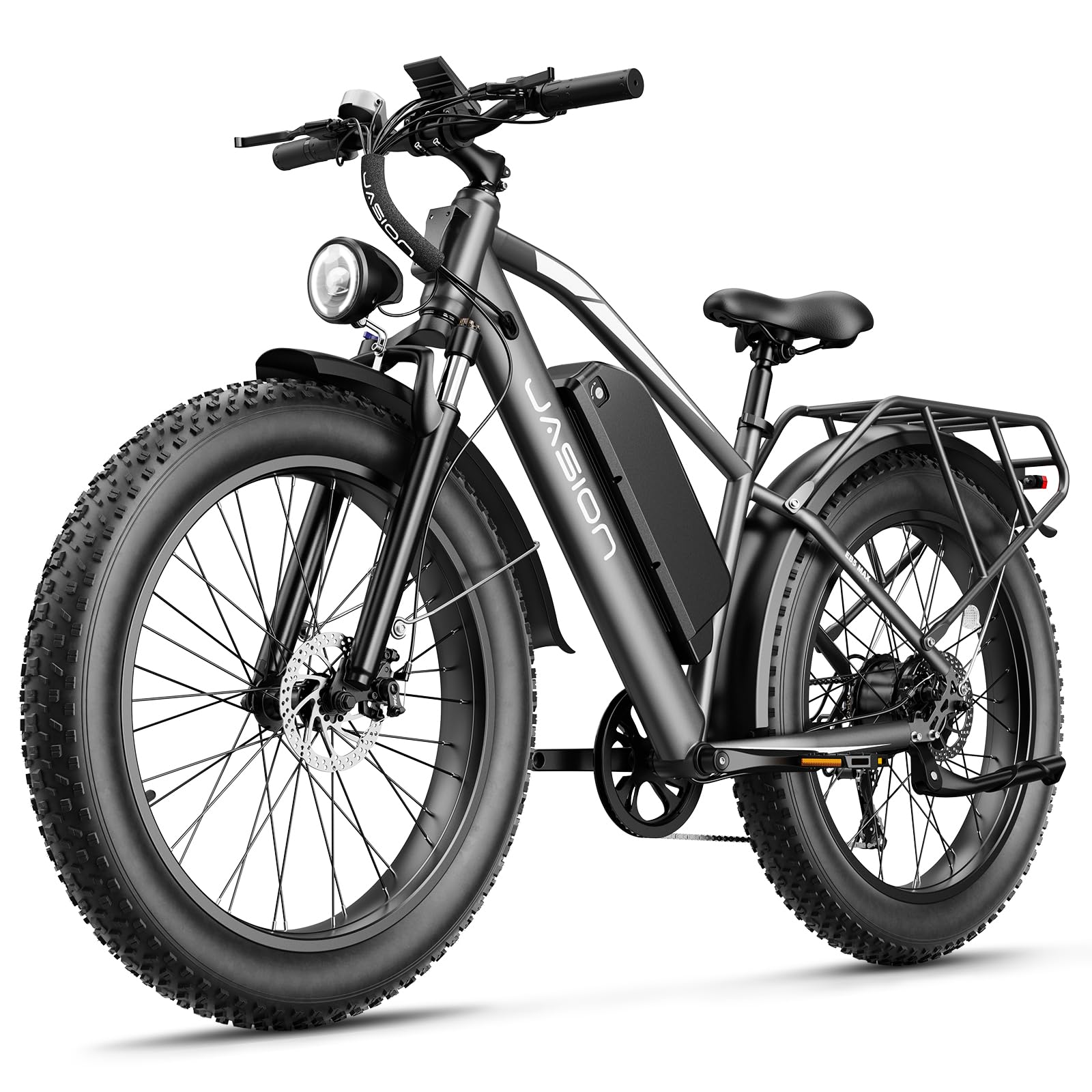
The Jasion EB5 MAX delivers a 2000W peak motor that pushes the bike past 28 mph, with a 48V 15Ah removable battery that provides up to 65 miles in pedal-assist mode or 35 miles on throttle. The 26×4-inch puncture-resistant fat tires provide massive grip on sand, mud, gravel, and wet pavement, making this bike genuinely capable on loose surfaces that would stop a standard hybrid. The lockable suspension fork absorbs medium hits, and the 180mm dual disc brakes provide the stopping power needed for a bike that weighs this much at speed.
The color LCD display shows real-time speed, mileage, battery level, and assist mode, and the built-in cruise control maintains speed on long straight sections. The front and rear lights are brighter than typical e-bike lights, improving visibility in low-light conditions. Pre-installed fenders keep mud and water off the rider on wet trails, and the rear rack can carry a pannier or cargo box. Assembly takes about 45 minutes, and the bike comes 85% pre-assembled — install the front wheel, handlebars, seatpost, pedals, and fenders.
Several issues affect long-term reliability. The LCD mount uses cheap plastic that can crack, and the pedal-assist system at level 3 delivers jerky engagement that makes technical trail riding difficult. The tires lose air pressure overnight in some units, and the front wheel can develop vibration at speeds above 15 mph. The battery management system has been defective in some shipments, with the seller offering only troubleshooting steps rather than a replacement. For the price, the EB5 MAX offers impressive specs on paper, but the component quality and customer support do not match the premium features listed.
Why it’s great
- 2000W peak motor and 48V 15Ah battery deliver speeds over 28 mph with up to 65 miles of assisted range
- 26×4-inch puncture-resistant fat tires provide exceptional grip on sand, mud, and loose gravel
- Pre-installed fenders, rear rack, and bright lights make it practical for commuting and trail riding
Good to know
- Battery management system has been defective in some units, with poor seller support for replacements
- LCD display mount uses cheap plastic that can crack during normal use
- Pedal-assist engagement is jerky at level 3, making technical trail riding difficult
11. Mongoose Argus Trail Fat Tire Mountain Bike

The Mongoose Argus is the most affordable entry point into fat tire riding, using 26×4-inch knobby tires that deliver massive flotation on snow, sand, and loose gravel. The steel hardtail frame and rigid fork are built to take abuse, and the 7-speed Shimano drivetrain with twist shifters provides enough gear range for moderate terrain. The mechanical disc brakes offer reliable stopping power in conditions where rim brakes would fail, though the pads require adjustment out of the box.
The bike fits riders from 5’7″ to 6’1″ with the 17-inch frame, and the fat tires provide a surprisingly smooth ride on pavement despite their aggressive tread. The bike rides well on roads and paths, with owners reporting a stable, comfortable feel at moderate speeds. The 7-speed drivetrain limits gear range — the Argus struggles on steep pavement climbs and tops out quickly on descents — but for flat mixed-terrain riding, the simplicity is an advantage. Assembly is moderate in difficulty; novices will need to adjust the disc brakes and shifters, which can be finicky without experience.
The stock tires have shallow tread that provides limited grip on packed snow and ice, requiring an upgrade to more aggressive rubber for winter riding. The bike is heavy, which affects climbing performance and makes transport difficult. The saddle is consistently reported as uncomfortable, causing soreness after any ride longer than 30 minutes — plan to replace it immediately. The Argus is best understood as a cheap introduction to fat tire riding on sand and snow. It will not keep up on pavement group rides or handle technical singletrack, but it will roll over surfaces that stop any standard road or hybrid bike.
Why it’s great
- 26×4-inch fat tires provide exceptional flotation on snow, sand, and loose gravel at an entry-level price
- Steel hardtail frame is durable and can withstand years of abuse on rough terrain
- Mechanical disc brakes deliver reliable stopping power in wet and loose conditions
Good to know
- Stock tires have shallow tread that provides limited grip on packed snow and ice
- 7-speed drivetrain limits gear range, making pavement climbing difficult and top speed low
- Saddle is universally reported as uncomfortable and should be replaced immediately
FAQ
Can a road bike with 28c tires handle gravel trails?
Is suspension necessary for mixed road and trail riding?
What gear range do I need to climb gravel roads and descend on pavement?
Final Thoughts: The Verdict
For most users, the best bicycle for road and trail winner is the Tommaso Siena Sport Gravel Bike because its gravel-specific geometry, carbon fork, and 21-speed drivetrain deliver genuine competence on both pavement and dirt without demanding a premium price. If you want the lightweight acceleration of a carbon road bike with disc brake confidence, grab the SAVADECK Carbon 105. And for all-day adventures where range and power matter most, nothing beats the Wallke H7 Ultra with its 2640Wh battery and onboard power station.