
Choosing a bicycle helmet often feels like a trade-off: you want the rotational-impact protection of MIPS or KinetiCore, but a sub- budget suggests you might have to settle for a heavy, poorly ventilated shell. That doesn’t have to be the case. The market now packs serious safety engineering into affordable price tiers, delivering multi-directional protection systems, integrated tail lights, and low-profile designs without pushing past that crucial spending ceiling.
I’m Min — the co-founder and writer behind Gadgets Feed. I’ve spent countless hours dissecting EPS foam densities, polycarbonate shell bonding processes, and rotational-impact test results to separate real safety innovations from marketing fluff in this specific price bracket.
Whether you’re a daily commuter fighting traffic or a weekend road cyclist chasing personal bests, finding a reliable, well-ventilated lid with genuine protection is the goal. This guide breaks down the top contenders to help you pick the best bicycle helmet under 100 that actually fits your head shape and riding style.
How To Choose The Best Bicycle Helmet Under 100
At this price cap, every dollar counts toward real safety features. You want to prioritize rotational-impact management above all else, then fit precision, then ventilation. Ignore flashy gimmicks — a helmet’s job is to save your brain, not just look fast on the shelf.
Rotational Impact Protection: MIPS vs. KinetiCore vs. Spherical
The single most important differentiator at this price level is whether the helmet includes a dedicated slip-plane system. MIPS (Multi-directional Impact Protection System) uses a low-friction layer between the EPS liner and the shell to allow the head to rotate relative to the helmet during angled impacts. LAZER’s KinetiCore goes a step further by integrating crumple zones directly into the EPS foam, reducing weight and eliminating the need for a separate plastic liner. Both are proven effective, but KinetiCore often shaves 20–30 grams off the total weight while offering similar protection. If you see neither MIPS nor KinetiCore listed, the helmet is relying solely on straight-line impact absorption — fine for a gentle fall, but insufficient for the oblique impacts common in road crashes.
Fit Systems and Retention: Roc Loc, Float Fit, and TurnSys
A perfectly snug fit is non-negotiable for safety — a loose helmet can rotate on the head during impact, negating the foam’s coverage. Giro’s Roc Loc and Bell’s Float Fit systems both use a rear dial that micro-adjusts the cradle around the occipital bone. Float Fit boasts a rubber overmolded dial for easier grip with gloves, while Roc Loc Sport provides a wider range of tilt adjustment for compatibility with ponytails and sunglasses. LAZER’s TurnSys is simpler but equally effective, offering one-handed tightening even while riding. Test the dial mechanism before buying: if it feels flimsy or grinds under tension, that dial is likely to fail within two seasons of regular use.
Ventilation and Eyewear Integration
Vent count alone is a poor indicator of cooling performance — what matters is the channeling of the internal airflow path. Look for helmets with at least 12 vents arranged in a front-to-back channel system that draws hot air out the rear. Smith’s AirEvac system integrates directly with their eyewear to prevent fogging, a feature worth the premium if you ride in humid conditions or switch between sunglasses and clear lenses frequently. Helmets with a fixed visor (like the Smith Persist or Bell 4Forty) double as sun shields and help route airflow over the top of the head, reducing sweat accumulation on the forehead.
Quick Comparison
On smaller screens, swipe sideways to see the full table.
| Model | Category | Best For | Key Spec | Amazon |
|---|---|---|---|---|
| Smith Persist MIPS | MIPS Road | Long road rides with eyewear | MIPS + Zonal Koroyd | Amazon |
| Giro Register II MIPS | MIPS All-Around | Versatile road & trail | Roc Loc Sport dial | Amazon |
| LAZER Tempo KinetiCore | KinetiCore Entry | Budget-conscious roadies | 320g / TurnSys fit | Amazon |
| Bell 4Forty MIPS | MIPS Trail | Aggressive trail / mountain | GoggleGuide visor | Amazon |
| Giro Verce MIPS (Women) | MIPS Women’s | Women with smaller head circumferences | Roc Loc Sport / 50-57cm | Amazon |
| Thousand Heritage 2.0 | Retro Commuter | Urban / skate / low-profile | PopLock anti-theft | Amazon |
| SLANIGIRO Urban | Urban Commuter | City commuters with rear light | USB-C rechargeable light | Amazon |
In‑Depth Reviews
1. Smith Persist Cycling Helmet – Adult Road Bike Helmet with MIPS Technology + Zonal Koroyd Coverage
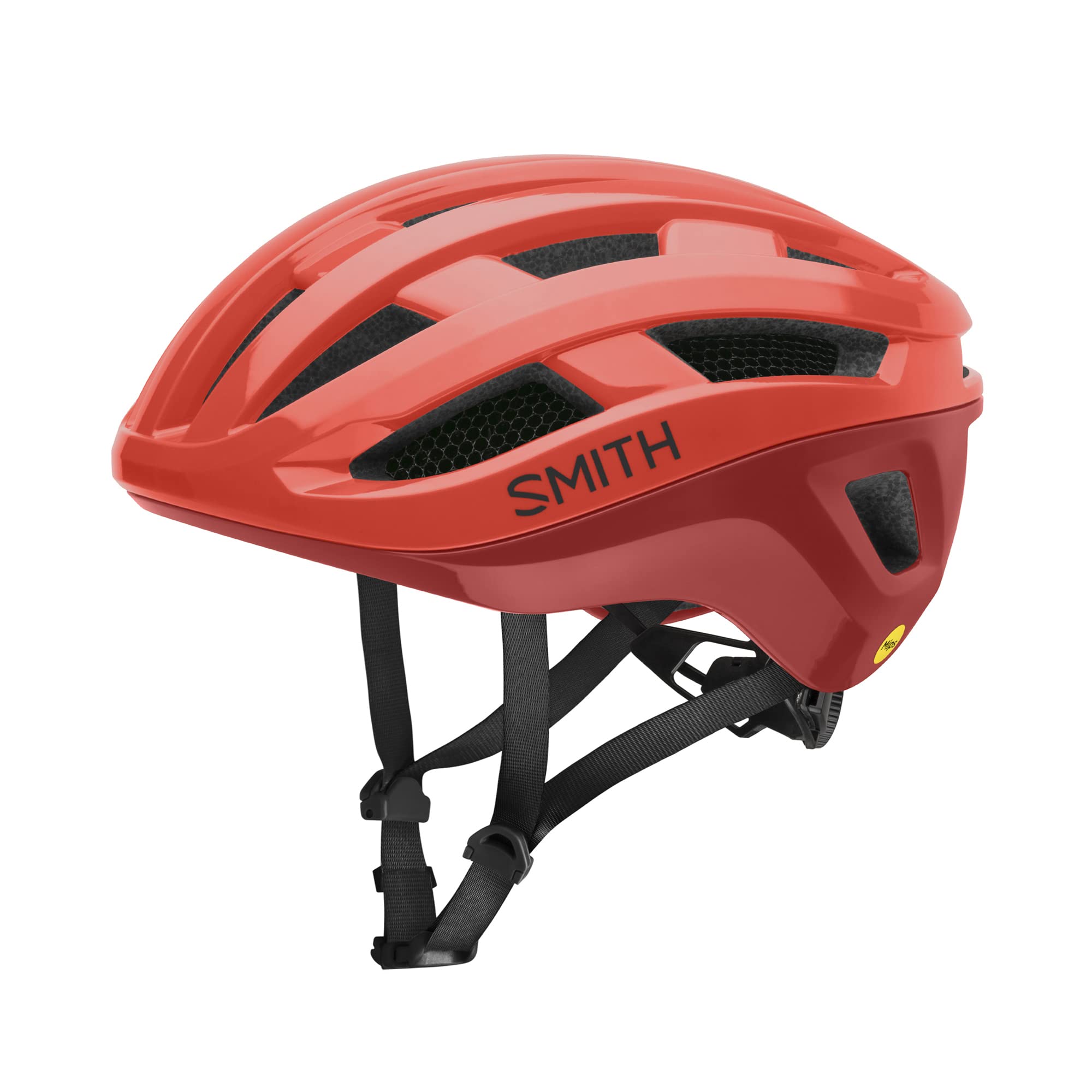
The Smith Persist combines MIPS with Zonal Koroyd — a honeycomb-like material that crushes on impact to absorb energy while leaving the rest of the foam intact for subsequent hits. Weighing only 11 ounces for a medium shell, it’s among the lightest options in this price tier. The 21 fixed vents are arranged in a front-to-back channel system that pairs with Smith’s AirEvac eyewear integration, directing exhaled moisture away from your lenses so you never have to pause a climb to wipe fog.
Testers consistently note the “forgettable” feel while wearing it — a hallmark of proper weight distribution. The adjustable rear dial fine-tunes the cradle height and tension, accommodating both bare heads and thin winter beanies. The fixed visor keeps sun glare off the brow without adding appreciable drag at speed. For riders logging 60+ mile weekend routes in variable light, the Persist’s combination of low mass and robust ventilation justifies the premium within the under- bracket.
One trade-off: the MIPS slip-plane adds a slight rotational freedom that some first-time users notice as a subtle “click” when turning their head — this is normal and indicates the system is functioning. Also, the lack of dedicated sunglass ports means you’ll need to tuck arms under the strap, which can be fiddly with chunky frames. Overall, the Persist is the most complete road lid at this price point.
Why it’s great
- Zonal Koroyd provides lightweight, ventilated impact protection beyond standard EPS foam.
- AirEvac system works seamlessly with Smith eyewear to prevent lens fogging.
- 21 fixed vents channel airflow efficiently even at lower urban speeds.
Good to know
- Lacks dedicated sunglass retention ports — strap routing required for non-Smith glasses.
- Visor is non-adjustable; some mountain bikers may prefer the Bell’s GoggleGuide system.
2. Giro Register II MIPS
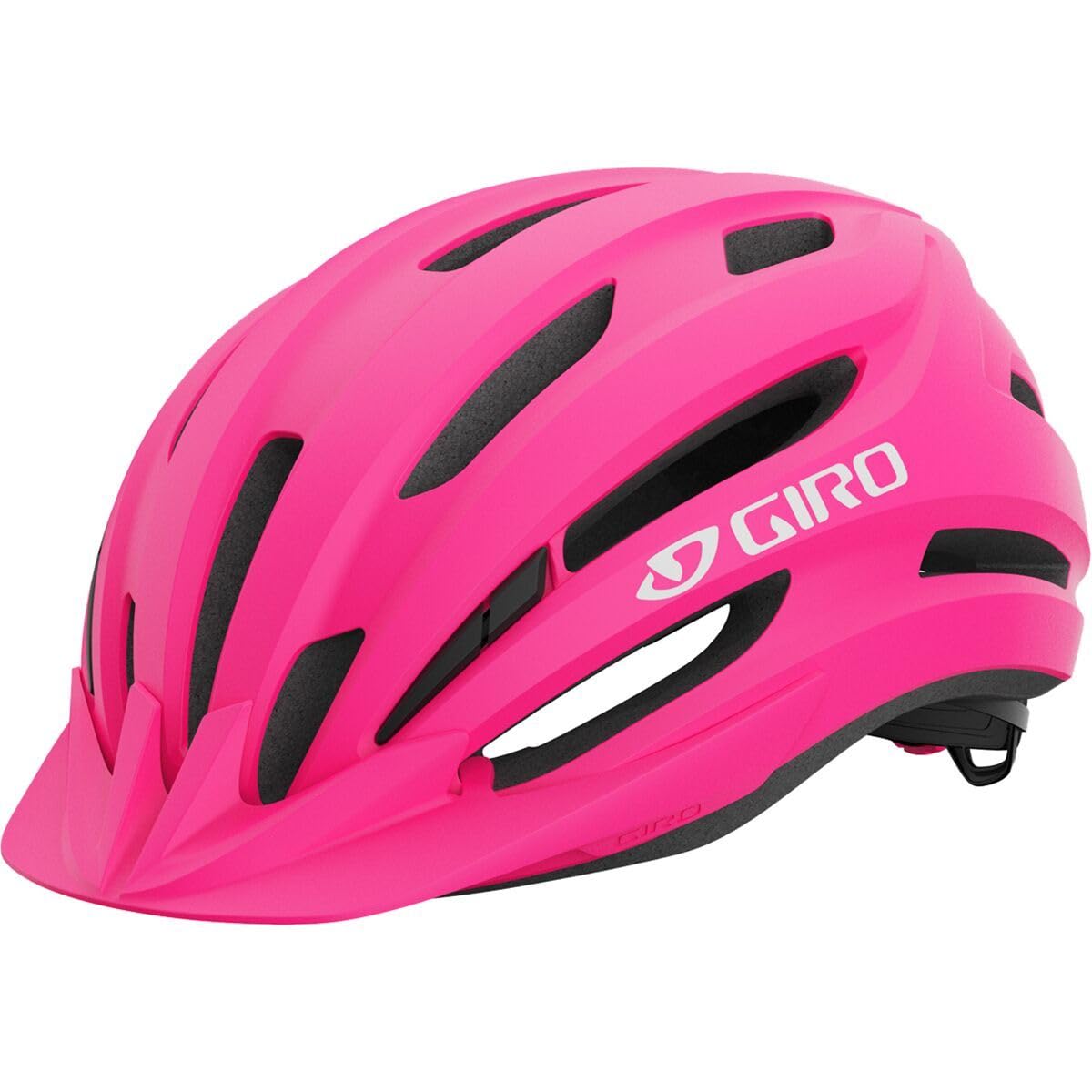
The Giro Register II MIPS brings the brand’s trusted Hardshell with In-Mold Hardbody Lower Wrap construction — a two-piece shell that fuses a tough polycarbonate lower section to the EPS liner without adding excess weight. This yields a helmet that feels sturdier than many one-piece competitors, particularly around the temples where low-side impacts are most common. The Roc Loc Sport fit system offers vertical and circumferential adjustment with a single dial, a convenience that testers with larger head shapes (up to 61cm) consistently praise for its “barely there” feel.
At just under 300 grams for a medium, it’s light enough for all-day road use but robust enough for light trail riding. The bright white color option improves visibility in traffic without requiring a separate reflective accessory. Multiple reviewers note that the MIPS layer integrates so seamlessly they forget the helmet is on — a testament to Giro’s experience refining the slip-plane interface over multiple generations. The open vent layout provides good airflow, especially when paired with a cycling cap on cool mornings.
Potential downsides include a somewhat fragile Roc Loc dial — a few long-term users report the plastic mechanism cracking after 3–4 years of frequent adjustment. The visor attachment lacks the positive locking pins found on pricier Giro models, so it can pop off if you hang the helmet by it. For the price, however, the Register II delivers MIPS-level protection in a package that rivals helmets costing twice as much.
Why it’s great
- Hardshell with In-Mold Hardbody Lower wrap boosts durability around the temple region without significant weight gain.
- Roc Loc Sport dial provides both vertical and circumferential fit adjustments — great for oval-shaped heads.
- Excellent value for a MIPS-equipped helmet from a brand with decades of cycling safety engineering.
Good to know
- Visor attachment lacks positive locking pins — can detach if snagged on gear.
- Dial mechanism feels slightly plasticky; heavy adjusters may want to treat it gently.
3. LAZER Tempo KinetiCore Bike Helmet

LAZER’s Tempo KinetiCore distinguishes itself by integrating rotational-impact protection directly into the EPS foam rather than layering a separate plastic membrane over it. The result is a helmet that weighs around 320 grams — competitive with many standard helmets — while offering certified protection from oblique impacts. The one-size-fits-most design (53–61 cm) uses the TurnSys dial system, which adjusts in quarter-turn increments for ultra-fine tuning mid-ride. Testers with head circumferences around 59 cm report a perfect, pressure-free fit straight out of the box.
Ventilation is a standout feature: the deep internal channels scoop air from the brow and eject it through rear exhaust ports, keeping the scalp dry even during extended climbs in 90°F heat. Consumer Reports flagged this model as a top recommendation for its combination of low price and high safety score. The rear mount is compatible with LAZER’s universal LED light, a cheap add-on if you ride after dusk. For entry-level road cyclists who want the latest rotational-impact tech without the MIPS premium, the Tempo KinetiCore is the smartest buy.
On the minus side, the one-size fit won’t work for heads below 53 cm or above 61 cm — extra-small or extra-large craniums will need to look at sized models like the Giro Register II. The visor is fixed, not adjustable, so if your typical ride involves steep downhill descents with variable sun angles, a movable visor (like Bell’s GoggleGuide) might serve you better. Still, for pure budget-friendly rotational protection, this is category-leading.
Why it’s great
- KinetiCore integrated foam design eliminates the rotational liner, reducing weight to ~320g while maintaining protection.
- TurnSys dial offers precise quarter-turn adjustments for a customized fit even with gloved hands.
- Backed by Consumer Reports testing — a rare independent safety seal at this price point.
Good to know
- One-size design excludes head circumferences under 53 cm or over 61 cm — check sizing before buying.
- Visor is fixed; riders who adjust for sun angle may prefer an adjustable visor model.
4. Bell Bike 4Forty MIPS Bicycle Helmet
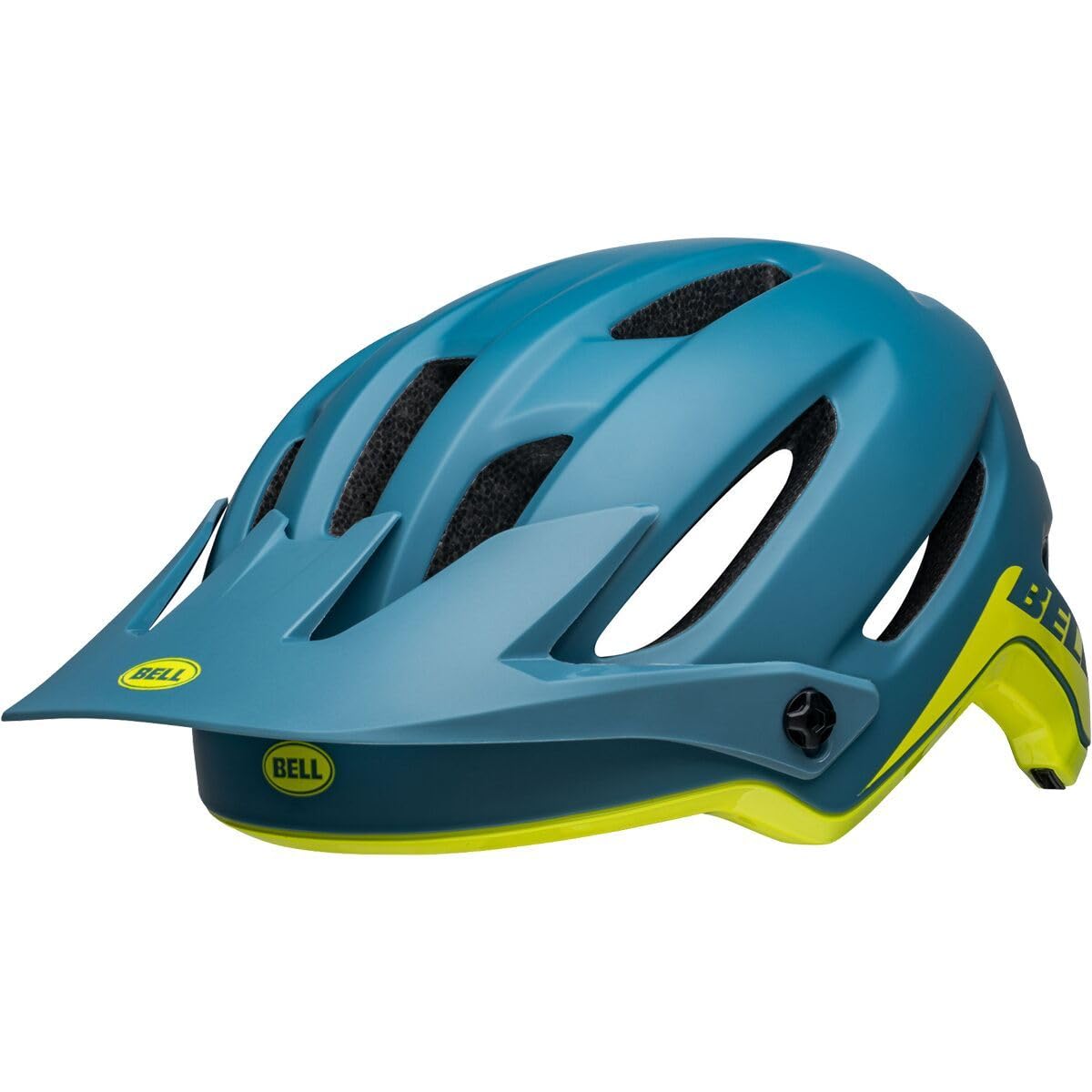
Bell’s 4Forty MIPS is built for riders who split time between paved fire roads and technical single-track. The Float Fit system (integrated with MIPS) uses a rubber overmolded dial that provides a secure, rattle-free hold even during bumpy descents. The GoggleGuide Adjustable Visor System is the star feature here — it flips up to accommodate goggles, slides down to shield glasses from mud, or removes entirely if you want a clean look. Fusion In-Molding bonds the polycarbonate shell to the EPS liner, creating a helmet that’s noticeably stiffer torsionally than cheaper competitors.
Weight comes in around 0.78 kg (about 1.7 lbs) for a medium — heavier than the Smith Persist but justified by the additional coverage around the occipital base and temples. The Sweat Guide pad design pulls moisture away from the brow pad before it can drip onto eyewear, a small but appreciated detail on humid trail days. Multiple riders report that the MIPS layer integrated into Float Fit feels unobtrusive — you don’t notice the slip-plane action until you deliberately twist your head.
The main drawback is the strap system: the No-Twist Tri-Glides keep straps flat but require deliberate threading to get right — first-time setup can take a few minutes. The visor adjustment detents could be more positive; the visor tends to drift down after repeated bump hits on rough terrain. For the price, however, the 4Forty delivers trail-ready features (MIPS, adjustable visor, moisture management) that usually require a + budget.
Why it’s great
- GoggleGuide visor flips up for goggles and down for sun/mud protection — true trail versatility.
- Float Fit system with rubber dial stays secure through aggressive descents without pressure points.
- Fusion In-Molding creates a torsionally stiff shell that doesn’t flex during side impacts.
Good to know
- Visor detents could be more positive — can drift down on repeated heavy bumps.
- Strap adjustment is less intuitive than Giro’s Roc Loc; allow 5–10 minutes for initial setup.
5. Giro Verce MIPS Womens Matte Midnight

The Giro Verce MIPS is purpose-built for women with head circumferences between 50 and 57 cm — a range often poorly served by unisex “one-size” helmets that compromise on brow fit and temple pressure. The Roc Loc Sport system here is identical to the Register II’s but tuned for a shallower cradle depth that accommodates ponytails without shifting the helmet forward. The In-Mold construction with a full hardbody shell fuses the polycarbonate outer layer directly to the EPS liner, eliminating the weight penalty of a separate shell while maintaining impact resistance.
At around 1.2 pounds, the Verce isn’t the lightest in this price range, but the weight is evenly distributed — no front-heavy sag that causes neck strain on long rides. The removable visor is a nice touch, letting you switch from trail to urban mode quickly. Reviewers with smaller head circumferences (around 52 cm) report that the dial range accommodates them without causing painful pressure on the occipital ridge, a common complaint with scaled-down unisex models.
Potential issues include a lack of a dedicated goggle mount — if you ride mountain trails with goggles, the Bell 4Forty’s GoggleGuide is a better fit. The matte finish is prone to showing scuff marks from normal handling, though a quick wipe with a damp cloth restores the appearance. For women cyclists who’ve struggled to find a MIPS helmet that actually fits well, the Verce is the most natural choice at this budget.
Why it’s great
- Specifically shaped for 50–57 cm head circumferences — solves the “too big” issue plaguing many unisex helmets.
- Roc Loc Sport system accommodates ponytails without shifting helmet position.
- Full hardbody In-Mold construction provides impact resistance without added shell weight.
Good to know
- No dedicated goggle mount — trail riders may prefer Bell’s GoggleGuide visor system.
- Matte finish shows scuffs easily; must be cleaned with a damp cloth to restore appearance.
6. Thousand Heritage 2.0 Adult Bike Helmet

The Thousand Heritage 2.0 is the rare helmet that prioritizes aesthetics without sacrificing safety — it meets CPSC and EN 1078 standards while looking more like vintage leather headgear than a cycling appliance. The PopLock feature is genuinely innovative: a hidden channel behind the front logo lets you thread a U-lock or chain lock through, securing the helmet to your bike rack while you run errands. This eliminates the “carry a sweaty helmet around the store” dilemma that every urban commuter knows. The magnetic Fidlock-style buckle clicks shut one-handed — a small but daily convenience.
Weight hovers around 500 grams (1.1 lbs) — heavier than the minimalist Smith Persist but justified by the thicker leather liner and more robust polycarbonate shell. The Dial Fit System at the rear adjusts in 1/8-turn increments, and multiple testers with oval-shaped heads report zero rocking motion after dialing it in. The brim (visor) provides actual sun shading for riders in recumbent or upright cycling positions, though it may catch wind on high-speed descents. Thousand also offers free replacement if the helmet is stolen while locked up or damaged in a crash — a generous peace-of-mind policy.
The main compromises are ventilation and weight: the 4 vents and leather liner run hotter than mesh-heavy competitors, making this a poor choice for long summer climbs. The magnetic buckle requires practice to avoid pinching skin — a non-issue once muscle memory sets in. If your commute is under 30 minutes and you value leaving the helmet on your bike, the Heritage 2.0 is the most practical choice under .
Why it’s great
- PopLock channel integrates with any U-lock — no more carrying a helmet around the grocery store.
- Magnetic Fidlock-style buckle enables one-handed fastening, a daily convenience for commuters.
- Accident and theft replacement guarantee adds long-term value beyond typical helmet warranties.
Good to know
- Limited ventilation — 4 fixed vents and a leather liner trap heat on rides over 30 minutes.
- Heavier than most road helmets at ~500g; noticeable on long climbs.
7. SLANIGIRO Adult Urban Bike Helmet

The SLANIGIRO Urban Helmet proves that sub- helmets can still deliver genuine safety and useful features. Dual-certified to CPSC and EU EN 1078 standards, it uses an integrated polycarbonate shell fused to an EPS liner — the same construction method used by helmets costing three times as much. The rear USB-C rechargeable taillight is the standout feature: three lighting modes (steady, flash, rapid strobe) with a 6–8 hour battery life on a single two-hour charge. For city riders who navigate evening traffic, this built-in visibility upgrade is a smarter investment than a separate clip-on light that can be forgotten at home.
At just 11.5 ounces, it’s among the lightest helmets here, thanks to the integrated shell reducing excess material. The 8 large vents provide adequate airflow for urban commutes under 45 minutes, though the positioning focuses on forehead cooling rather than full-head channeling — expect some sweat accumulation on the back of a longer ride. The dial-based fit system adjusts in M (55–58 cm) and L (59–61 cm) sizes, accommodating a range of head shapes with the included extra comfort pads. Multiple real-world users report that the helmet saved them from concussion or worse after hard impacts — a powerful recommendation at any price.
The main shortcomings are the lack of MIPS or equivalent rotational-impact protection and the lower number of vents compared to road-focused models. The gradient color finish may not appeal to riders who prefer a matte monochrome look. For the price, however, the SLANIGIRO Urban delivers a solid blend of safety, lightweight build, and integrated lighting that entry-level commuters will genuinely appreciate.
Why it’s great
- Built-in USB-C rechargeable rear light with 6–8 hour runtime eliminates the need for a separate bike lamp.
- Dual CPSC and EN 1078 certification at a price point where many competitors offer only single-standard compliance.
- Weighs just 11.5 oz — lighter than many helmets that cost three times as much.
Good to know
- Lacks MIPS or an equivalent rotational-impact protection system — fine for casual urban riding, not for high-speed road cycling.
- 8 vents are sufficient for short commutes but insufficient for extended summer rides over 1 hour.
FAQ
Do I need MIPS on a sub- bicycle helmet?
How do I measure my head for a correct bicycle helmet fit?
Can I use a bicycle helmet for skateboarding or roller skating?
Final Thoughts: The Verdict
For most users, the bicycle helmet under 100 winner is the Smith Persist MIPS because it combines Zonal Koroyd impact protection with the lightest weight (11 oz) and best eyewear-integration in this budget tier. If you want a versatile trail helmet with an adjustable visor, grab the Bell 4Forty MIPS. And for the best pure rotational-protection value, nothing beats the LAZER Tempo KinetiCore.