
Choosing tires that have to split time between smooth asphalt and loose gravel is a compromise between rolling speed and puncture protection. The wrong choice leaves you either sliding through corners on the dirt or fighting slow, buzzy tread on the road.
I’m Min — the co-founder and writer behind Gadgets Feed. I’ve spent countless hours cross-referencing tread compound data, casing thread counts (TPI), bead construction, and real-world user reports to isolate which models actually deliver that elusive balance of low rolling resistance and reliable grip on mixed surfaces.
These aren’t just generic tires; they are engineered compromises where bead material, tread pattern, and rubber compound define your ride quality. This guide distills the data to help you find the true best bicycle tires for road and gravel for your specific bike and riding style.
How To Choose The Best Bicycle Tires For Road And Gravel
The ideal road and gravel tire must roll fast on pavement while offering enough edge traction to keep you upright when the surface turns loose. The trade-off lives in three variables: tread pattern, casing construction, and rubber compound.
Tread Pattern: The Center vs. The Shoulder
A slick or near-slick center strip reduces rolling resistance on pavement, while small side knobs provide bite during cornering on gravel. Avoid aggressive center knobs if you spend most of your time on asphalt, as they will buzz loudly and slow you down significantly.
Casing and Puncture Protection
A higher thread-per-inch (TPI) casing (120 TPI or more) offers a more supple ride but less flat protection. Lower TPI casings (like 60 TPI) are tougher but stiffer. Many premium tires add a dedicated puncture breaker layer — look for Vectran, Kevlar (Aramid), or Silkworm layers if you ride sharp gravel.
Tubeless vs. Clincher
Tubeless-ready tires allow you to run lower pressures without pinch-flatting, which dramatically improves grip on loose gravel and comfort on rough roads. Clincher tires with tubes are simpler to set up and repair on the roadside but require higher pressures to prevent pinch flats. For mixed road and gravel, tubeless is the recommended choice.
Quick Comparison
On smaller screens, swipe sideways to see the full table.
| Model | Category | Best For | Key Spec | Amazon |
|---|---|---|---|---|
| Continental Grand Prix 5000 S TR | Premium | High-speed road with occasional light gravel | 700x32c, Vectran Breaker, BlackChili Compound | Amazon |
| Pirelli CINTURATO GRAVEL H | Premium | Hard-pack gravel and fast commuting | 700x40c, Tubeless Ready, Speedgrip Compound | Amazon |
| MAXXIS Rambler | Mid-Range | Do-it-all gravel racing and mixed terrain | 700x40c, EXO/SilkShield, Dual Compound | Amazon |
| Continental Terra Trail | Mid-Range | Aggressive gravel with confident cornering | 700x40c, BlackChili, Tubeless Ready, 60 TPI | Amazon |
| Panaracer GravelKing SK TLR | Mid-Range | Loose gravel, dirt roads, and packed trails | 700x38c, TuffTex Casing, ZSG Natural Compound | Amazon |
| Panaracer GravelKing Slick | Mid-Range | Pavement-heavy riding with light gravel sections | 700x28c, Aramid Folding Bead, 280 grams | Amazon |
| YUNSCM 700C Bike Tires | Budget | Entry-level hybrid or commuter use | 700x38c, Butyl Rubber, 40-65 PSI | Amazon |
In‑Depth Reviews
1. Continental Grand Prix 5000 S TR

The Continental Grand Prix 5000 S TR sets the benchmark for high-performance road tires that can handle light gravel sections. It uses a 3-ply 180 TPI casing with a Vectran Breaker layer — a liquid crystal polymer that is lighter and more cut-resistant than standard nylon. The BlackChili compound blends synthetic and natural rubber, giving it a rolling resistance coefficient of around 9.5 watts per tire at 80 PSI, which is class-leading. The LazerGrip micro-profile on the shoulder adds cornering confidence when pavement gets damp.
This tire is tubeless-ready, and users consistently report easy seating and excellent pressure retention. At 700x32c, it runs slightly narrower than labeled (about 30mm on a 21mm internal rim), which is a known quirk. The Active Comfort Technology (ACT) layer has noticeably reduced high-frequency road vibration compared to the previous GP 5000 TL. Many riders report exceeding 3,000 miles per set with no punctures, which is exceptional for a tire in this speed tier.
The biggest demerit is the incredibly tight bead — installing these on some rims can break standard tire levers. You’ll need a sturdy set of metal-core levers or a bead jack. The price is also significant, landing in the premium range. For riders who prioritize pure rolling speed and want a tire durable enough for the occasional gravel connector, this is the undisputed top pick. The value becomes clear when you factor in the 2-pack pricing and the mileage these tires deliver.
Why it’s great
- Best-in-class rolling resistance with excellent wet grip.
- Vectran Breaker offers superior cut protection for a road tire.
- Light enough for racing while lasting 3,000+ miles per set.
Good to know
- Extremely tight fit on many rims; installation is difficult.
- Runs slightly narrower than the labeled width (32c ~30mm).
- Not suitable for loose or deep gravel due to minimal tread.
2. Pirelli CINTURATO GRAVEL H
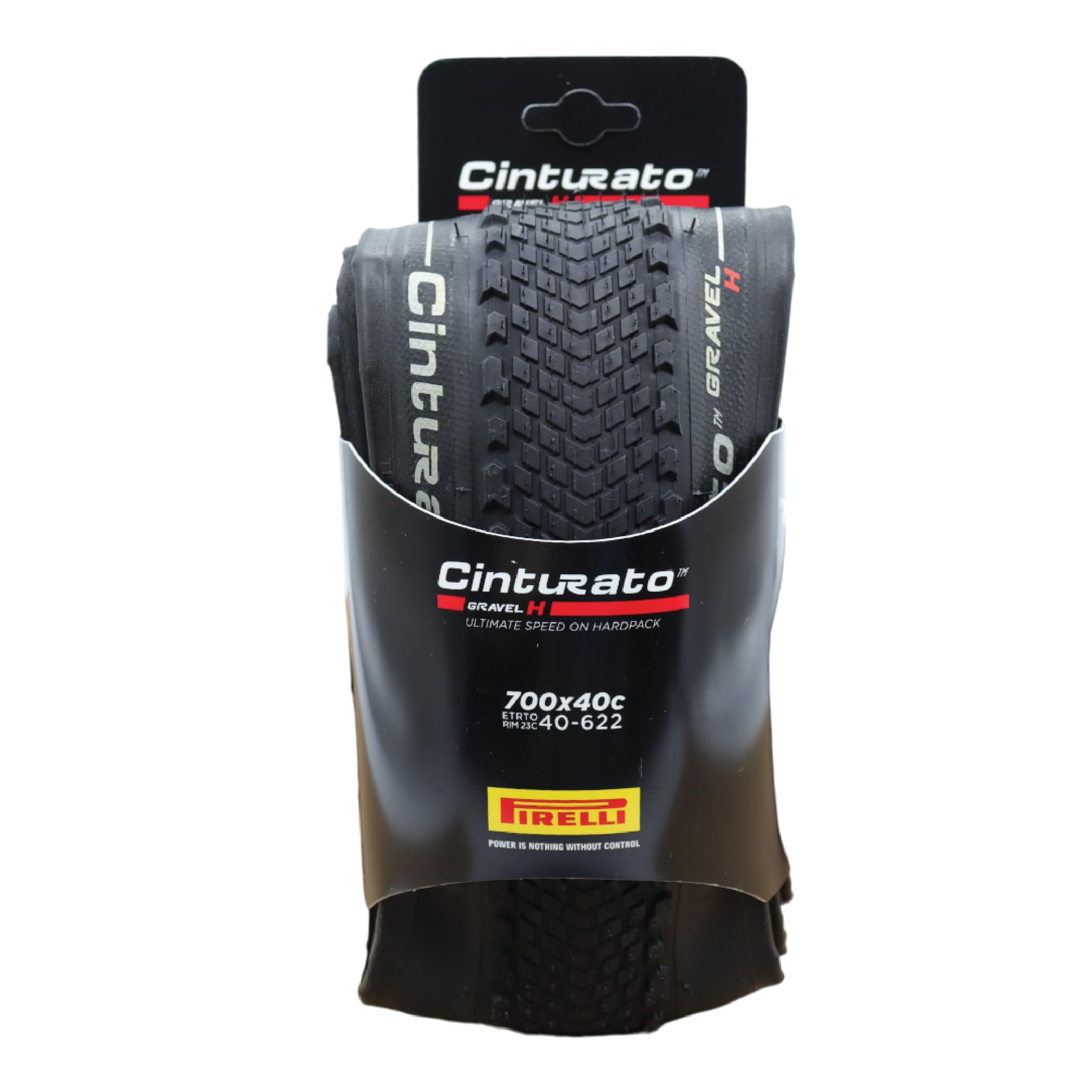
The Pirelli CINTURATO GRAVEL H is engineered specifically for hard-packed gravel and mixed-surface commuting, where its semi-slick center tread keeps rolling resistance low while shoulder knobs provide predictable cornering bite. The Speedgrip compound is the same silica-rich formulation Pirelli uses in its Scorpion MTB line, optimized for wet grip on loose surfaces. The casing uses a 127 TPI nylon construction that is supple enough to run at lower pressures (35-45 PSI) without feeling vague on pavement.
In real-world riding, this tire has demonstrated exceptional puncture resistance — one reviewer reported dropping from one flat per month to one flat in five months after switching from a WTB Riddler. The rear tire on that same bike lasted over 1,600 miles before a deep sidewall cut ended it, with the front tire still looking fresh enough to exceed 3,000 miles. The tread is also remarkably quiet on pavement, a detail that matters for long commutes or multi-surface group rides.
The Pirelli H is harder to mount than the Cinturato M but typically seats easily with a floor pump or compressor. A known complaint is that these tires lose air faster than average — some users report dropping 5-10 PSI overnight, requiring a top-off before every ride. They also lose grip on wet paved corners at speed due to the harder center compound. If your gravel routes are mostly hardpack with pavement connectors, this is a top-tier choice that balances speed and protection better than most.
Why it’s great
- Excellent puncture resistance — drastically reduces flat frequency.
- Fast rolling on pavement with predictable grip on hardpack gravel.
- Quiet and comfortable ride on rough roads at lower PSI.
Good to know
- Significant air loss overnight; sealant may help but not always.
- Loses grip in wet conditions on pavement at high speeds.
- Difficult to mount without a compressor or tire jack.
3. MAXXIS Rambler

The Maxxis Rambler is a do-it-all gravel tire that punches above its weight in versatility. It features tightly packed center knobs that roll fast on pavement while ample side knobs provide secure bite when leaning into loose corners. The EXO protection layer uses a dense fabric beneath the tread to resist cuts and punctures, while the SilkShield variant adds an additional bead-to-bead layer for maximum flat resistance. The dual compound uses a harder 60a durometer base with a softer 50a shoulder for cornering grip.
Riders consistently praise the Rambler for its predictable handling across a wide range of surfaces — from smooth asphalt to chunky gravel and even mild single track. One reviewer noted zero flats in over 1,000 miles on a mix of rough gravel races and rocky terrain. The tubeless setup is straightforward with a standard floor pump, and the tire seals quickly with standard sealant. At 40mm width, it offers a generous air volume that allows for comfortable low PSI (30-40) without feeling squirmy.
The main trade-off is durability — several users report that the center tread wears down after about 1,500 miles, especially on pavement-heavy routes. The EXO sidewall is also relatively thin and can be cut on sharp rocks if you ride aggressively. The Rambler is not ideal for deep mud or soft terrain, as the tread pattern packs up quickly. For the price, it is one of the best-balanced gravel tires available, offering genuine performance at a mid-range cost.
Why it’s great
- Versatile tread that rolls fast on pavement and grips well on gravel.
- Excellent value — good performance at a mid-range price.
- Predictable handling across varied terrain and conditions.
Good to know
- Center tread wears relatively quickly on pavement-heavy rides.
- EXO sidewall can cut on sharp rocks in aggressive riding.
- Not suitable for deep mud or soft, loose terrain.
4. Continental Terra Trail
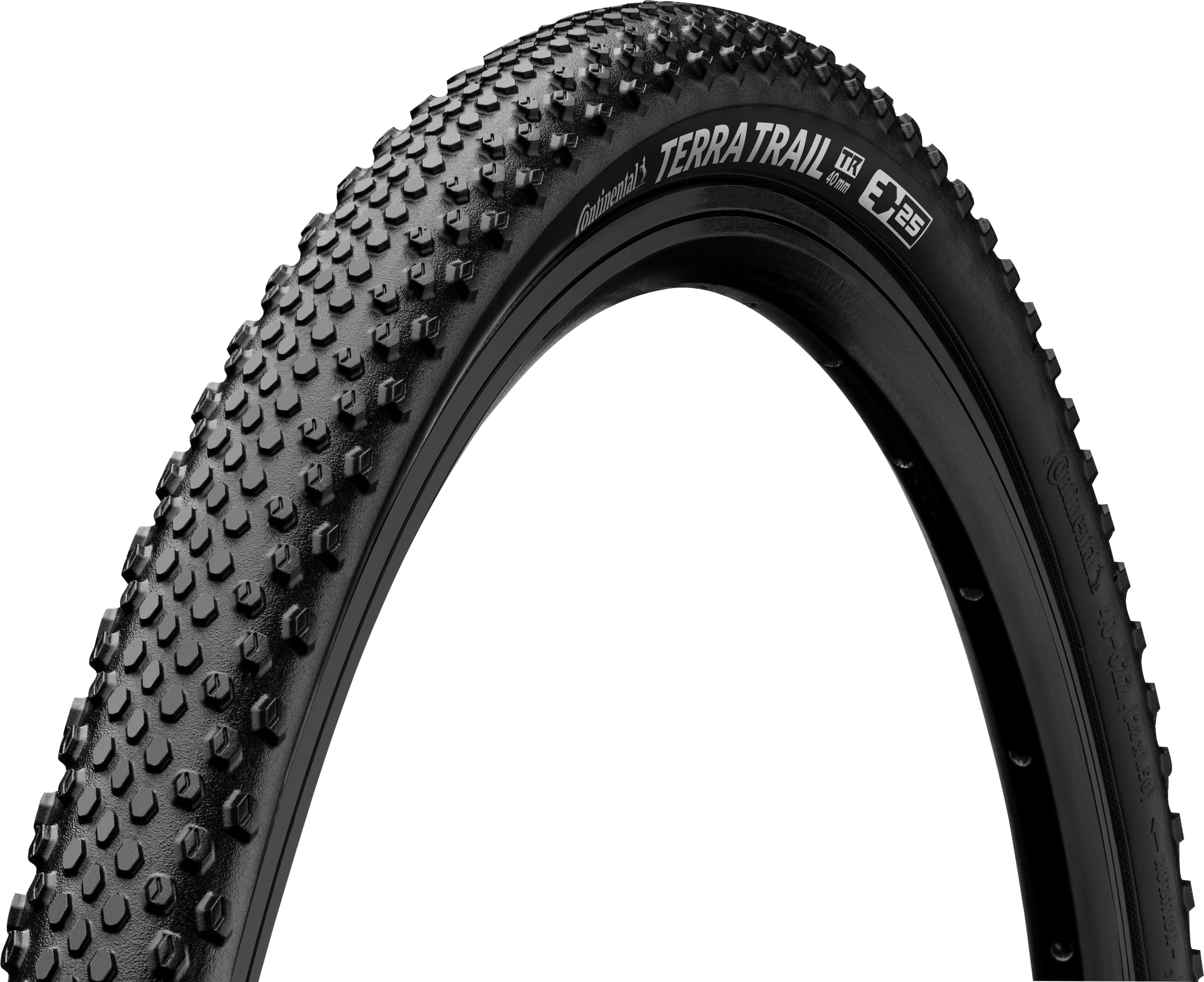
The Continental Terra Trail is designed for riders who encounter more aggressive gravel sections than smooth dirt. Its tread uses a directional center ridge for fast rolling with transitional knobs that ramp up shoulder grip during cornering. The casing uses a 60 TPI construction with a puncture protection layer that wraps from bead to bead — making it exceptionally resistant to sidewall cuts. The BlackChili compound is the same one used in the GP 5000, offering a balance of low rolling resistance and high treadwear longevity.
User feedback highlights the tire’s ability to handle loose, chunky gravel where competitors like the GravelKing Slick would slide out. One reviewer noted that the Terra Trail climbs confidently on loose surfaces and corners predictably, even at lower pressures of 30-35 PSI. The tubeless setup is straightforward, and the bead seats with a standard floor pump on most rims. The true-to-size width (40c on a 23mm internal rim) means you can trust the clearance measurements for tight frames.
The biggest downside is the very tight bead — several users report that installation is extremely difficult, sometimes requiring a bead jack. The rolling resistance is noticeably higher than a semi-slick tire like the GP 5000 S TR, but this is the expected trade-off for cornering grip on loose terrain. Some users also note that the tire feels less supple than higher-TPI casings. For mixed-surface riders who regularly hit gravel roads with loose corners, this is a premium choice that delivers confidence.
Why it’s great
- Excellent cornering grip on loose and chunky gravel surfaces.
- True-to-size width fits frames with tight clearance.
- Bead-to-bead protection layer resists sidewall cuts.
Good to know
- Extremely tight bead makes installation very difficult.
- Higher rolling resistance than semi-slick or road-focused tires.
- Lower 60 TPI casing feels less supple than premium competitors.
5. Panaracer GravelKing SK TLR
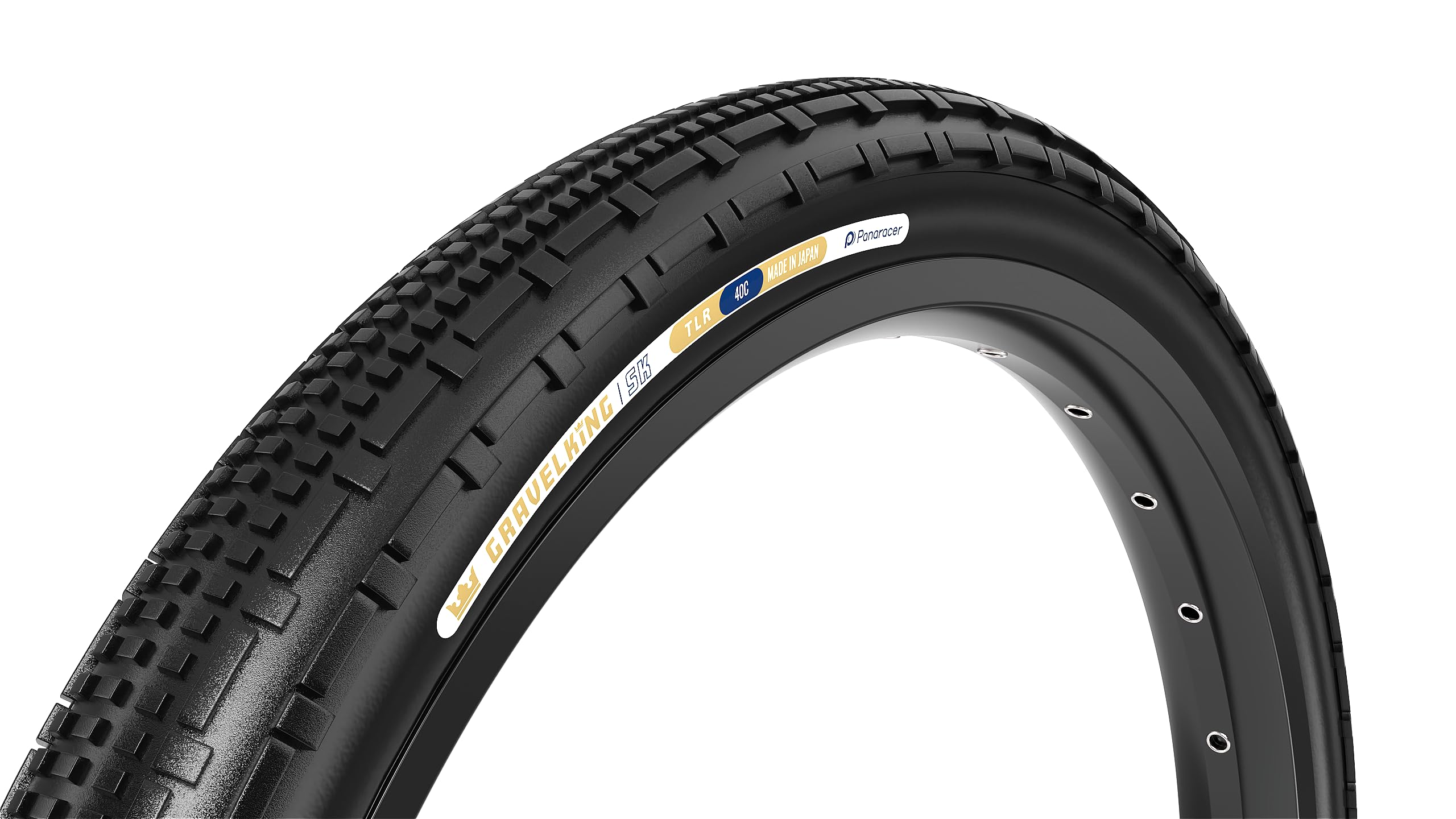
The Panaracer GravelKing SK (Semi-Knob) TLR is the small-block tread option in the GravelKing family, designed for riders who split time between paved roads and loose gravel. The center uses tightly spaced diamond knobs that roll faster than a full knobby tire while the shoulder lugs provide reliable bite when you lean into a loose corner. The ZSG (Zero Slip Grip) Natural Compound uses silica and natural rubber to maintain grip consistency across varying temperatures, from cold morning starts to hot afternoon gravel.
The TuffTex Casing is a 120 TPI nylon layer that strikes an impressive balance between suppleness and puncture protection. One reviewer noted that the tire set up tubeless easily on a Stan’s rim with Muc-Off sealant and held pressure without any leaks. The rolling resistance is noticeably low for a treaded tire — comparable to file-tread options — and the grip on hardpack dirt and packed gravel is excellent. Users report zero punctures across hundreds of miles on mixed terrain.
The main drawbacks are that the tire is not suitable for deep mud or loose, sandy conditions, as the tread pattern packs up quickly. It also tends to be expensive if you don’t find a sale, and the 120 TPI casing, while supple, is less durable against sidewall cuts than lower-TPI options. The GravelKing SK is the top pick for riders who want a predictable, fast-rolling tire for loose gravel roads with occasional pavement sections.
Why it’s great
- Low rolling resistance with surprisingly good cornering grip on loose gravel.
- Supple 120 TPI casing improves road feel and comfort.
- Easy tubeless setup with good bead retention and air seal.
Good to know
- Not suitable for deep mud, sand, or wet, loose conditions.
- 120 TPI casing is less durable against sidewall cuts.
- Premium pricing — often goes on sale to hit mid-range territory.
6. Panaracer GravelKing Slick

The Panaracer GravelKing Slick is specifically designed for riders who spend 80% or more of their time on pavement but need a tire capable of handling well-maintained gravel paths. It features a completely smooth center tread that minimizes rolling resistance, with no shoulder knobs — which means it offers limited edge grip on loose surfaces. The Aramid (Kevlar) folding bead keeps weight down to just 280 grams per tire in the 700x28c size, making it a light choice for road-oriented riders who want to drop rotational weight.
User reviews consistently highlight the GravelKing Slick’s fast feel and durability — one reviewer reported over 1,400 miles on a 27×1″ size with no punctures and only moderate rear wear. The tire mounts easily on single-wall rims and holds pressure well, even up to 100 PSI. For riders with vintage road bikes or those seeking a period-correct look, the amber sidewall version is particularly popular. The tire is available in 700c and 26-inch diameters, covering a broad range of bikes.
The significant limitation is traction on loose gravel. Without side knobs, the slick will slide out if you try to corner hard on unpacked or loose surfaces. The puncture protection is basic — there is no dedicated breaker layer under the tread, so sharp rocks can penetrate more easily than with the SK or SS models. The GravelKing Slick is best as a dedicated road tire that can handle the occasional smooth gravel connector, not a true mixed-surface performer.
Why it’s great
- Extremely low rolling resistance — one of the fastest slick gravel tires.
- Very lightweight (280g for 28c), reducing rotational mass.
- Available in classic amber sidewall option for vintage builds.
Good to know
- No cornering knobs — slides out on loose gravel.
- Basic puncture protection, limited penetration resistance.
- Best for pavement-heavy riders, not true mixed-surface use.
7. YUNSCM 700C Bike Tires
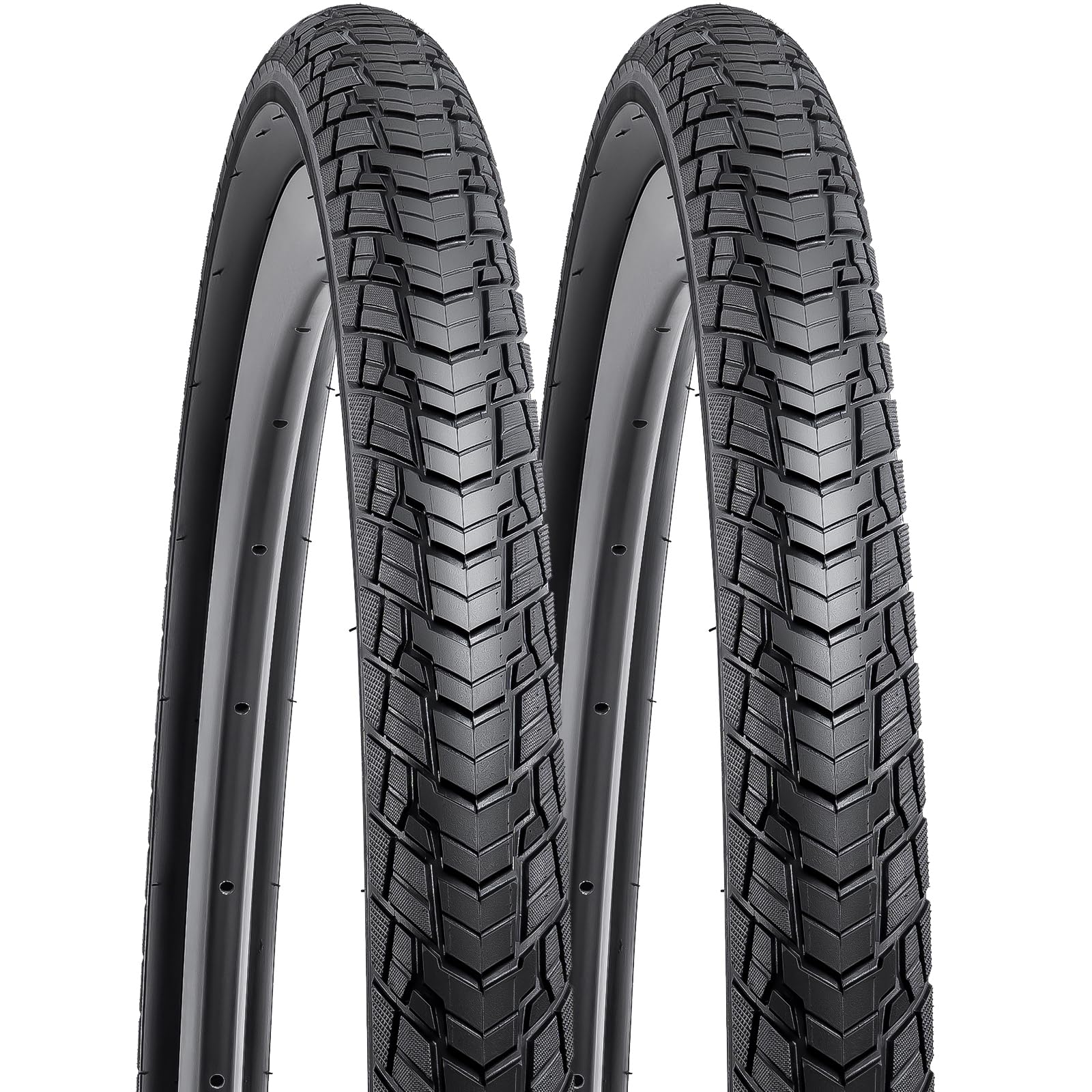
The YUNSCM 700C tires are a budget-friendly entry point for hybrid or commuter bikes that need a durable, all-purpose tire with a directional tread pattern. They are made from butyl rubber with a nylon cord layer for reinforcement and feature a wire bead (non-folding). The 700x38c size falls in the sweet spot for road and light gravel, providing enough volume to run lower pressures (40-65 PSI) for comfort on less-than-perfect roads. The tightly spaced block tread pattern is designed to offer grip on both paved and packed dirt surfaces.
Real-world feedback is positive for the price point. One reviewer, a first-time tire installer, reported an easy installation process and good performance after a week of riding at 62 PSI, noting the tires “grab like they’re on rails when bombing hills” on pavement. Another commuter using them on a Giant Cypress DX found them to be slightly narrower than the stock 700x40c tires, which improved rolling resistance without sacrificing comfort. The included mounting tools are a helpful addition for newbies.
The notable downsides are thin sidewalls and steel wire beads that can be unforgiving if bent during shipping or installation. Several users caution that the max pressure of 65 PSI limits speed potential for heavier riders, and the budget rubber compound wears faster than premium options. The tires are also labeled for “regular road riding” only, with the manufacturer explicitly excluding damage from extreme off-road use. For budget-conscious riders or those setting up a commuter bike, these are a solid, functional choice.
Why it’s great
- Excellent value — 2-pack at a budget-friendly price.
- Directional block tread offers decent grip on pavement and packed gravel.
- Easy installation with included mounting tools; good for beginners.
Good to know
- Thin sidewalls prone to damage from sharp objects or curb strikes.
- Max 65 PSI limits speed and performance for heavier riders.
- Wire bead (non-folding) makes storage and shipping more difficult.
FAQ
Can I use road bike tires on gravel?
What tire width is best for mixed road and gravel?
How much does tubeless sealant matter for gravel riding?
Final Thoughts: The Verdict
For most users, the best bicycle tires for road and gravel winner is the Maxxis Rambler because it delivers a genuine do-it-all balance of low rolling resistance on pavement and confident grip on loose gravel at a mid-range price. If you want the fastest possible road feel with occasional gravel capability, grab the Continental Grand Prix 5000 S TR. And for loose, aggressive gravel where cornering grip matters most, nothing beats the Continental Terra Trail.