
Buying a bicycle isn’t a simple trip to the sporting goods aisle anymore. Between frame materials, wheel diameters, drivetrain speeds, suspension types, and riding disciplines, the sheer number of choices can stall a purchase before it starts. You need a machine that fits your body, your terrain, and your budget — and getting that wrong means a bike that sits in the garage collecting dust.
I’m Min — the co-founder and writer behind Gadgets Feed. I’ve spent years analyzing consumer bike spec sheets, cross-referencing Shimano groupsets against real-world durability data, and studying how frame geometry changes the riding experience for different body types and terrains. (And Homer 🐱 personally inspected each bike’s seat, tail-flicked the front wheel, and approved only the smoothest rides.)
Whether you’re commuting on pavement, tackling MTB singletrack, or hunting for your first electric upgrade, the right bike changes how you move through the world. This guide breaks down every spec and trade-off so you can confidently choose your next bicycle without second-guessing yourself.
How To Choose The Best Bicycle
Every bicycle is a compromise between weight, durability, comfort, and cost. Understanding where you’ll ride most (pavement, gravel, mountain trails, snow, or all of the above) and how far you plan to go in a single session will narrow your search from hundreds of models to a handful of perfect fits. Focus on three things: frame material, wheel size, and drivetrain.
Frame Material: Weight vs. Comfort vs. Budget
Aluminum frames dominate the entry-level to mid-range market for good reason — they’re light, stiff, and won’t rust. High-carbon steel offers a smoother, more forgiving ride and is easier to repair, but it adds weight. Carbon fiber is the premium choice: ultra-light and vibration-dampening, but expensive and less tolerant of hard impacts. If you’re carrying the bike up stairs or storing it in a small apartment, aluminum or carbon is better. If you value a cushioned ride on rough roads and plan to keep the bike for ten years, steel won’t let you down.
Wheel Size: The Rollover Rule
Wheel diameter directly determines how easily the bike rolls over obstacles. 29-inch wheels (common on modern mountain and hybrid bikes) roll over rocks and roots with less effort, making them ideal for taller riders and rough terrain. 27.5-inch wheels are more nimble and accelerate faster, suiting technical trails and shorter riders. 26-inch wheels are fading but still found on budget models and kids’ bikes — they’re maneuverable but struggle on larger debris. Fat tires (4 inches wide) on 20-inch or 26-inch rims provide floatation on sand and snow, but they add rolling resistance on pavement.
Drivetrain Gears: Matching Range to Terrain
More gears don’t automatically mean a better bike — but a wider gear range does. A 21-speed drivetrain (3 front chainrings x 7 rear sprockets) covers most recreational riding on mixed terrain. A 24-speed or 12-speed setup (common on higher-end mountain bikes) offers finer increments for steep climbs and fast descents. If you live in a flat city, a single-speed or 7-speed hub is simpler, lighter, and cheaper to maintain. Steep hills demand lower gear ratios, so check the lowest gear tooth count (e.g., a 32-tooth or 34-tooth rear sprocket) if climbing is part of your daily ride.
Quick Comparison
On smaller screens, swipe sideways to see the full table.
| Model | Category | Best For | Key Spec | Amazon |
|---|---|---|---|---|
| SAVADECK Titan 612 | Mountain | Aggressive trail & enduro | Carbon frame / 12-speed / Hydraulic disc | Amazon |
| Aipas M1 Pro | Electric | Long-range commuting & hills | 1800W peak / 48V 17.5Ah / 85 mi range | Amazon |
| Heybike Ranger 2.0 | Electric | Urban commute & storage | 20″ fat tire / Foldable / 600Wh | Amazon |
| Schwinn Traxion | Mountain | Entry-level off-road | Full suspension / 24-speed / 29″ wheels | Amazon |
| Mongoose Argus | Fat Tire | Sand, snow & loose terrain | 4″ knobby tires / 16-speed / T2 aluminum | Amazon |
| Mongoose Flatrock | Mountain | Versatile hardtail riding | 29″ wheels / 21-speed / Disc brakes | Amazon |
| Schwinn Network 3.5 | Hybrid | Pavement & light trails | Aluminum frame / 21-speed / Suspension fork | Amazon |
| Huffy Mountain | Mountain | Tame off-road & paved paths | Aluminum frame / 21-speed / Knobby tires | Amazon |
| WEIZE Beach Cruiser | Cruiser | Flat urban & leisure cruising | Carbon steel / Single-speed / Rear rack & basket | Amazon |
In‑Depth Reviews
1. SAVADECK Titan 612 Carbon Fiber Soft Tail Mountain Bike
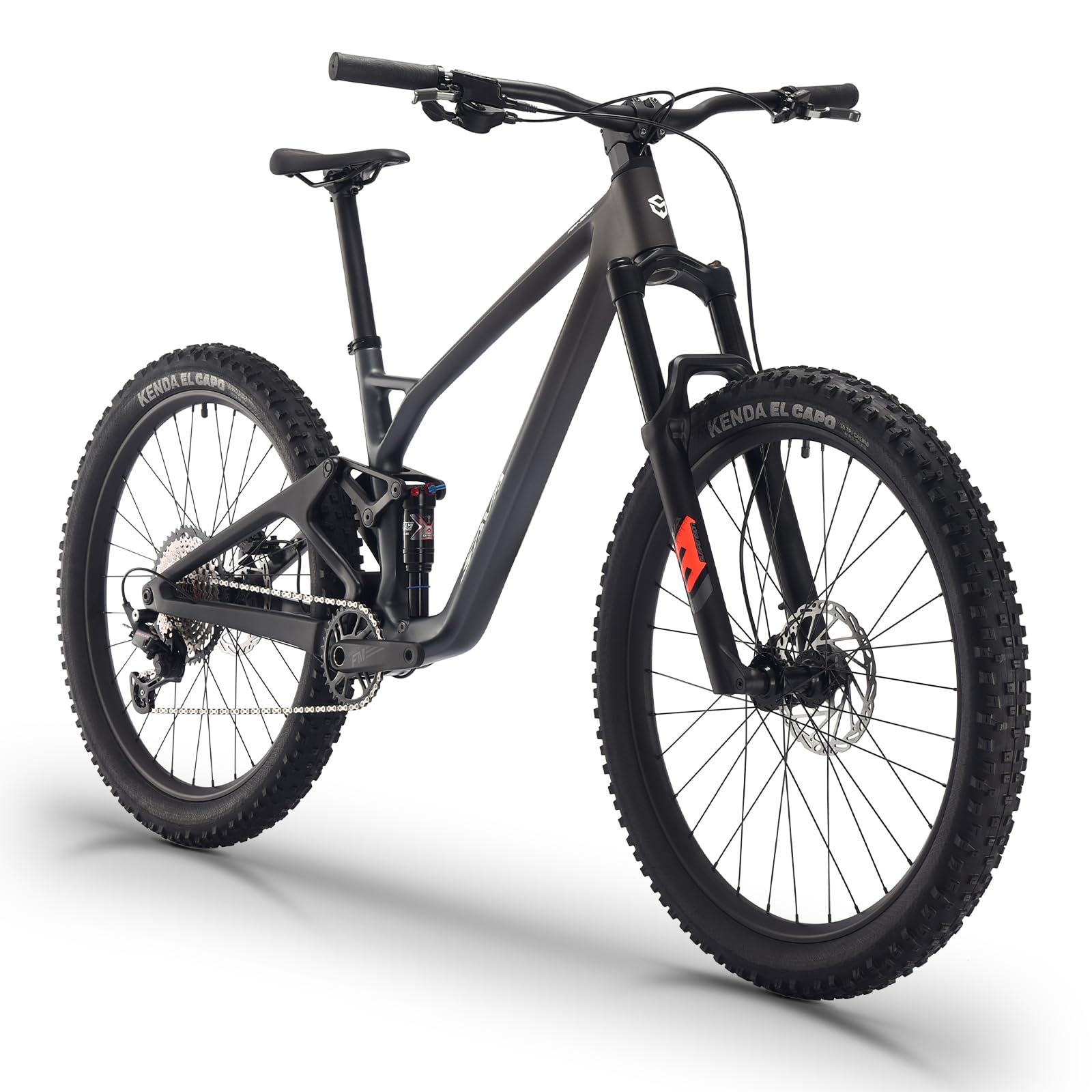
The Titan 612 is the clear standout for riders who demand trail performance without the boutique-shop markup. Its full carbon fiber frame keeps the weight impressively low (around 27.5 pounds in the 15-inch size), which translates to effortless climbing and nimble maneuvering through technical singletrack. The internal cable routing not only looks clean but protects cables from mud and debris during aggressive off-road sessions.
The Shimano DEORE M6100 12-speed groupset is a significant step up from entry-level drivetrains. The 1×12 setup eliminates the front derailleur complexity while offering a wide gear range that handles steep ascents and fast flats with crisp, positive shifts. The dual-link suspension with a DNM air shock gives you three-stage lockout and rebound adjustment, so you can tune the ride for climbing efficiency or descending plushness.
Four-piston hydraulic disc brakes deliver serious stopping power on long descents, resisting fade even after repeated hard braking. The 2.4-inch Continental tires provide excellent grip on mud, gravel, and loose rocks, with frame clearance to upgrade to 2.6-inch tires for even more stability. This is a genuine performance mountain bike that competes with models costing twice as much.
Why it’s great
- Ultra-light carbon frame with full suspension saves effort on climbs
- Shimano DEORE M6100 12-speed shifts smoothly under load
- Four-piston hydraulic disc brakes provide fade-resistant stopping power
Good to know
- Sizing runs large; shorter riders may find the 17-inch frame too big
- Not ideal for pure road commuting — suspension adds weight for pavement
2. Aipas M1 Pro Electric Bike
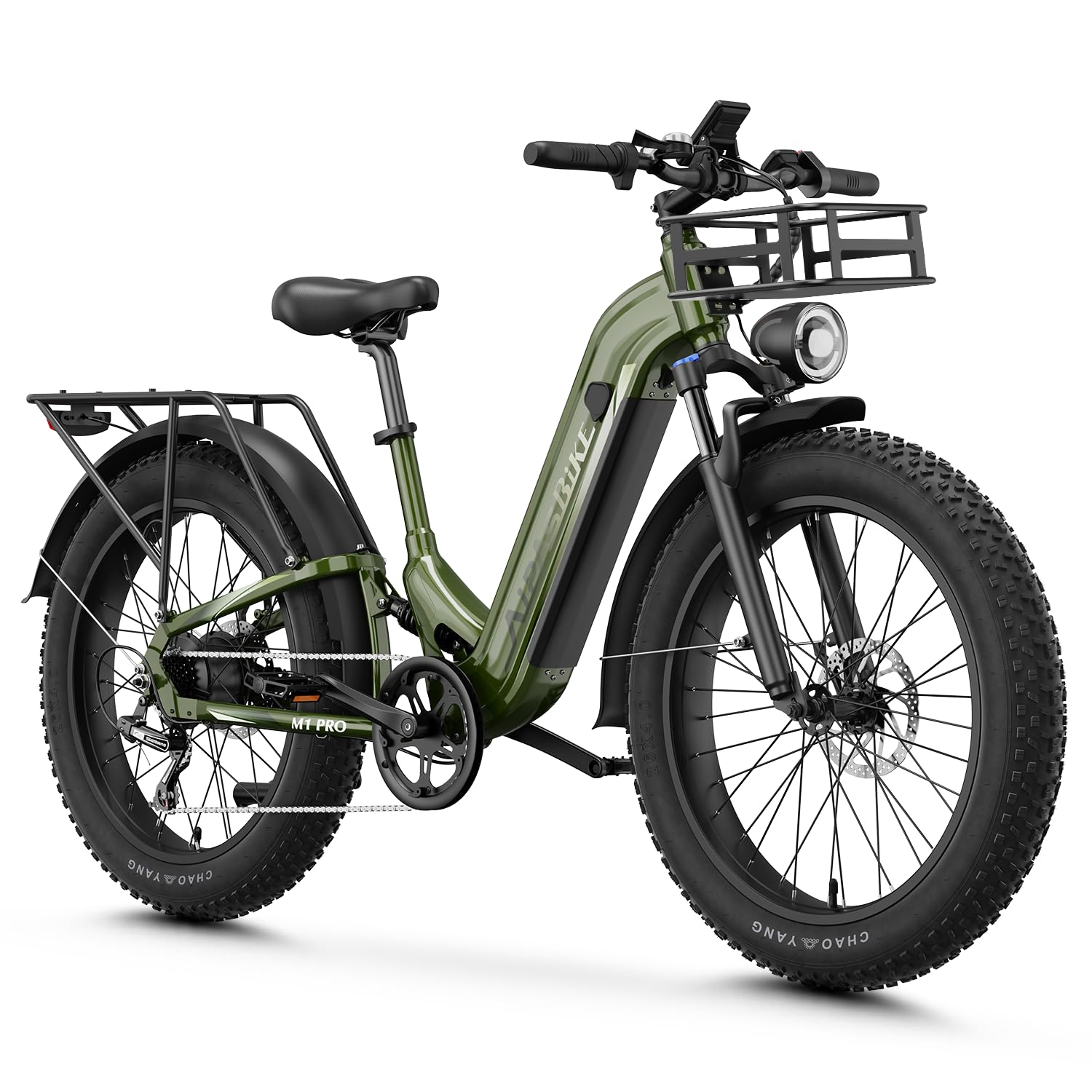
The Aipas M1 Pro throws a massive power punch for its price tier. The 1800-watt peak motor generates 110Nm of torque, pushing the bike to 36 mph on throttle alone and tackling grades up to 23 degrees without bogging down. The 48V 17.5Ah removable battery delivers a claimed 25 to 85 miles depending on assist level and terrain, which puts it among the highest range figures in the sub-thousand-dollar e-bike category.
The full-suspension setup — lockable front fork plus rear shock — smooths out rocky trails and potholed city streets alike. The 26 x 4.0-inch fat tires provide massive contact patch for sand, snow, gravel, and pavement stability. Riders from 5’5” to 7’2” will find the step-through frame welcoming, and the ergonomic adjustable saddle helps dial in comfort for longer rides.
The smart LCD display keeps speed, distance, and battery level visible, while the built-in USB port lets you charge your phone on the go. Five riding modes (Throttle, Pedal Assist, Cruise, Normal, Walk) plus 7-speed gearing give you full control over how much effort you want to exert. The 180mm mechanical disc brakes provide the stopping force needed for a bike this fast and heavy.
Why it’s great
- High torque motor and 36 mph top speed make steep hills effortless
- Full suspension and fat tires deliver a plush ride on any surface
- Removable 48V 17.5Ah battery supports long-distance commuting
Good to know
- Heavy build (~70 lb+) makes lifting and carrying a chore
- Riders under 5’5” may find the step-through height still challenging
3. Heybike Ranger 2.0 Foldable Electric Bike
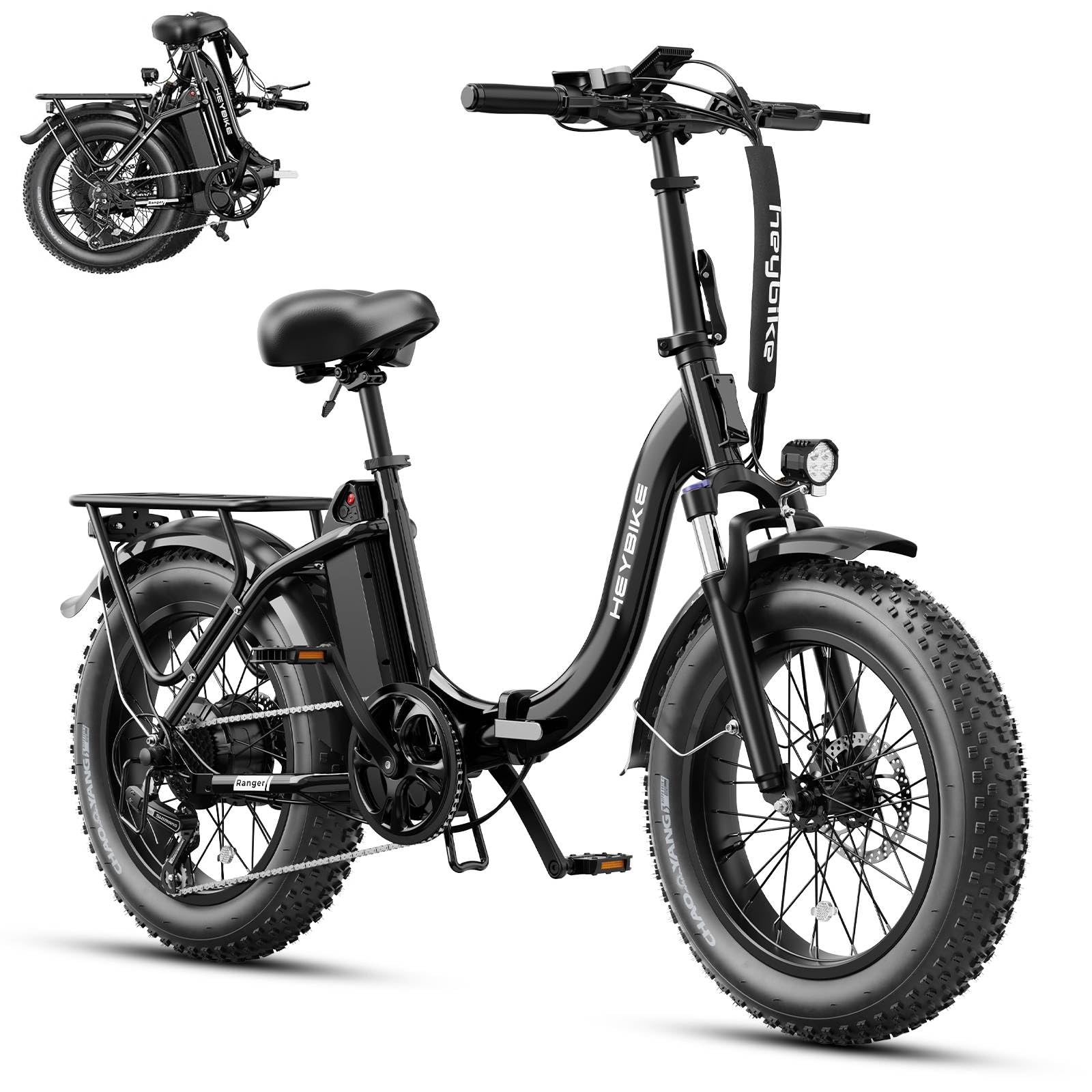
The Ranger 2.0 solves an age-old e-bike problem: storage. Its foldable frame collapses to a compact footprint, making it practical for apartment dwellers, RV travelers, or anyone who needs to stash a bike in a car trunk. The step-through design lowers the barrier for hopping on and off, which is a genuine comfort boost for older riders or those with limited mobility.
The motor has been upgraded from the original Ranger — peak output hits 1400W, pushing the bike to 28 mph with brisk acceleration. The 600Wh removable battery claims up to 65 miles of range at lower assist levels, though real-world mixed riding typically lands closer to 35 to 45 miles. The 20 x 4-inch fat tires provide excellent grip on loose surfaces while maintaining a stable footprint on pavement.
Assembly is straightforward, with most components pre-installed. The oversized saddle and front suspension fork work together to absorb bumps, and the integrated front and rear lights improve visibility during low-light commutes. The rear rack is sturdy enough for panniers or a basket, and the 7-speed gearing lets you tackle moderate hills when the battery runs low.
Why it’s great
- Foldable design fits in small apartments and car trunks
- Upgraded 1400W peak motor provides strong climbing ability
- Step-through frame makes mounting and dismounting easy
Good to know
- Folding mechanism is stiff and requires effort to close
- Heavier than non-folding e-bikes, making it awkward to carry folded
4. Schwinn Traxion Mountain Bike

The Traxion brings full-suspension capability to an entry-level price point, something most brands reserve for the mid-range tier. The 29-inch wheels roll over roots and rocks with less resistance, and the extra-wide double-wall alloy rims keep the wheels true even after hard landings. The 24-speed Shimano drivetrain with trigger shifters provides reliable gear changes across a wide range of inclines.
The front suspension fork plus rear shock wicks up vibration and bigger hits, but this is not a plush downhill rig — the suspension components are basic and non-adjustable on the fork. Riders between 5’8” and 6’2” will find the 18-inch aluminum frame geometry comfortable, though the seat may need swapping for longer rides. Mechanical disc brakes offer consistent stopping power in wet or muddy conditions.
Assembly runs about an hour for an experienced cyclist, with the usual need to tweak brake caliper alignment and derailleur indexing. Several owners reported that the front derailleur needed careful setup to avoid rubbing. Despite some minor fit-and-finish compromises, the Traxion is a solid gateway to off-road riding that won’t break the bank.
Why it’s great
- Full suspension at a near-entry-level price smooths rough trails
- 24-speed drivetrain with trigger shifters handles varied terrain
- 29-inch wheels provide great rollover capability on obstacles
Good to know
- Non-adjustable suspension fork limits tuning for aggressive riding
- Seat is uncomfortable for longer sessions; consider replacing it
5. Mongoose Argus Fat Tire Mountain Bike

The Argus proves fat-tire bikes don’t have to weigh a ton. The Tectonic T2 aluminum frame keeps the chassis light, and the rigid fork (no suspension) saves weight and maintenance while still floating over soft surfaces. The 4-inch-wide knobby tires provide massive flotation on loose sand, deep snow, and gravel where narrower tires would simply dig in and stall.
The Shimano 2×8 drivetrain gives you 16 speeds with a gear range wide enough to handle the extra rolling resistance of fat tires on pavement climbs. Trigger shifters are a welcome upgrade over twist grips, providing tactile feedback for each gear change. Mechanical disc brakes offer reliable modulation, though some owners noted they require occasional adjustment to maintain consistent bite.
The frame fits riders from 5’7” to 5’10” in the 17-inch model. Assembly is mostly straightforward — the bike arrives partially assembled with the fork, handlebars, and wheels needing attachment. Several users reported the stock seat is uncomfortable enough to warrant an immediate swap. Overall, the Argus is an affordable entry into fat biking for anyone who rides seasonally or explores soft terrain.
Why it’s great
- 4-inch knobby tires float over sand, snow, and loose gravel
- Lightweight T2 aluminum frame keeps the bike manageable off-road
- Shimano 2×8 drivetrain provides reliable gearing for varied conditions
Good to know
- Rigid fork transmits trail buzz directly to the rider’s hands
- Stock seat is notoriously uncomfortable for longer rides
6. Mongoose Flatrock Mountain Bike

The Flatrock is a straightforward hardtail mountain bike built for riders who want the stability of 29-inch wheels without a complex suspension system. The 6061 aluminum frame keeps the weight manageable, while the suspension fork provides enough travel to absorb smaller bumps and roots on easy to moderate trails. The 21-speed twist shifters are basic but functional for recreational off-road use.
Mechanical disc brakes mark a step up from rim brakes, offering more consistent stopping power in wet conditions. The knobby mountain tires and double-wall alloy rims provide durable traction on rocky and uneven surfaces. Assembly typically takes under an hour but expect to fine-tune the brake calipers and derailleur alignment — several owners reported needing adjustment straight out of the box.
Riders from 5’4” to 6’2” will fit the recommended size range. Some taller users disliked the narrow grip area, finding it cramped and causing accidental gear shifts. The pedal/crank set has been reported to develop play over time in a few cases. For casual trail riding and commuting on mixed surfaces, the Flatrock is a solid, affordable hardtail.
Why it’s great
- 29-inch wheels roll easily over obstacles and provide stable handling
- Mechanical disc brakes perform better than rim brakes in wet weather
- 6061 aluminum frame is lightweight yet durable for trail riding
Good to know
- Narrow grips and cramped shifter position may bother larger hands
- Some units need significant brake and derailleur adjustment out of box
7. Schwinn Network 3.5 Hybrid Bike

The Network 3.5 is the epitome of a do-it-all hybrid — confident on paved roads, comfortable on light gravel paths, and sensible enough for daily commuting. The 700c wheels roll fast and efficiently on asphalt, while the suspension fork and swept-back handlebars promote an upright riding position that reduces lower back strain over long distances. The 21-speed drivetrain offers enough gear range for moderate hills.
Schwinn’s high-rise stem and swept-back handlebars create a relaxed geometry that suits casual riders, older cyclists, and anyone recovering from a back injury. The aluminum frame keeps weight low enough to carry up a flight of stairs. Assembly is straightforward but the included instructions are vague — experienced cyclists will have it together in 30 minutes, while novices may spend a few hours and need to tweak brake alignment.
A few owners reported gear slipping in the 4th and 5th gears after about 20 miles, requiring derailleur adjustment or a return. The stock seat is a common complaint, with many riders swapping to a wider memory-foam saddle. For the rider who wants one bike that does pavement, park paths, and occasional trails, the Network 3.5 is a proven, comfortable choice.
Why it’s great
- Suspension fork and upright geometry reduce back strain on long rides
- 700c wheels deliver efficient rolling on paved and gravel surfaces
- Lightweight aluminum frame is easy to carry and maneuver
Good to know
- Gear skipping in mid-range reported on some units after initial break-in
- Stock seat is uncomfortable for longer sessions; plan to upgrade
8. Huffy Mountain Bike (26/27.5-Inch)

The Huffy Mountain Bike is designed for the budget-conscious rider who wants a mountain-bike aesthetic for paved paths, dirt roads, and light trails. The 17-inch aluminum frame keeps the weight under control, and the 21-speed twist-grip shifters provide basic gear range for moderate hills. The knobby tires grip well on gravel and packed dirt, and the front suspension fork takes the edge off small bumps.
Assembly is manageable in under an hour, but many owners noted that the brakes and derailleurs needed significant adjustment. Some units arrived with the front tire failing to seat properly on the rim, causing tube ruptures below 45 PSI. Huffy’s customer service has been responsive in shipping replacement parts, but the inconsistency in quality control is a genuine concern for first-time buyers.
The seat is uniformly described as too hard, causing discomfort within 15 minutes for many riders. The twist-grip shifters are prone to accidental shifts if you grip tightly. For the price, this bike delivers acceptable performance for casual joy-riding and short neighborhood trips — but it’s not built for serious trail use or long-distance commuting.
Why it’s great
- Lightweight aluminum frame makes the bike easy to maneuver
- 21-speed drivetrain offers enough range for moderate hills
- Shock fork and fat tires provide decent comfort on packed dirt
Good to know
- Tire/rim fitment issues reported on some units; check immediately
- Seat is extremely hard and grips are minimalist for an uncomfortable ride
9. WEIZE Beach Cruiser Bike
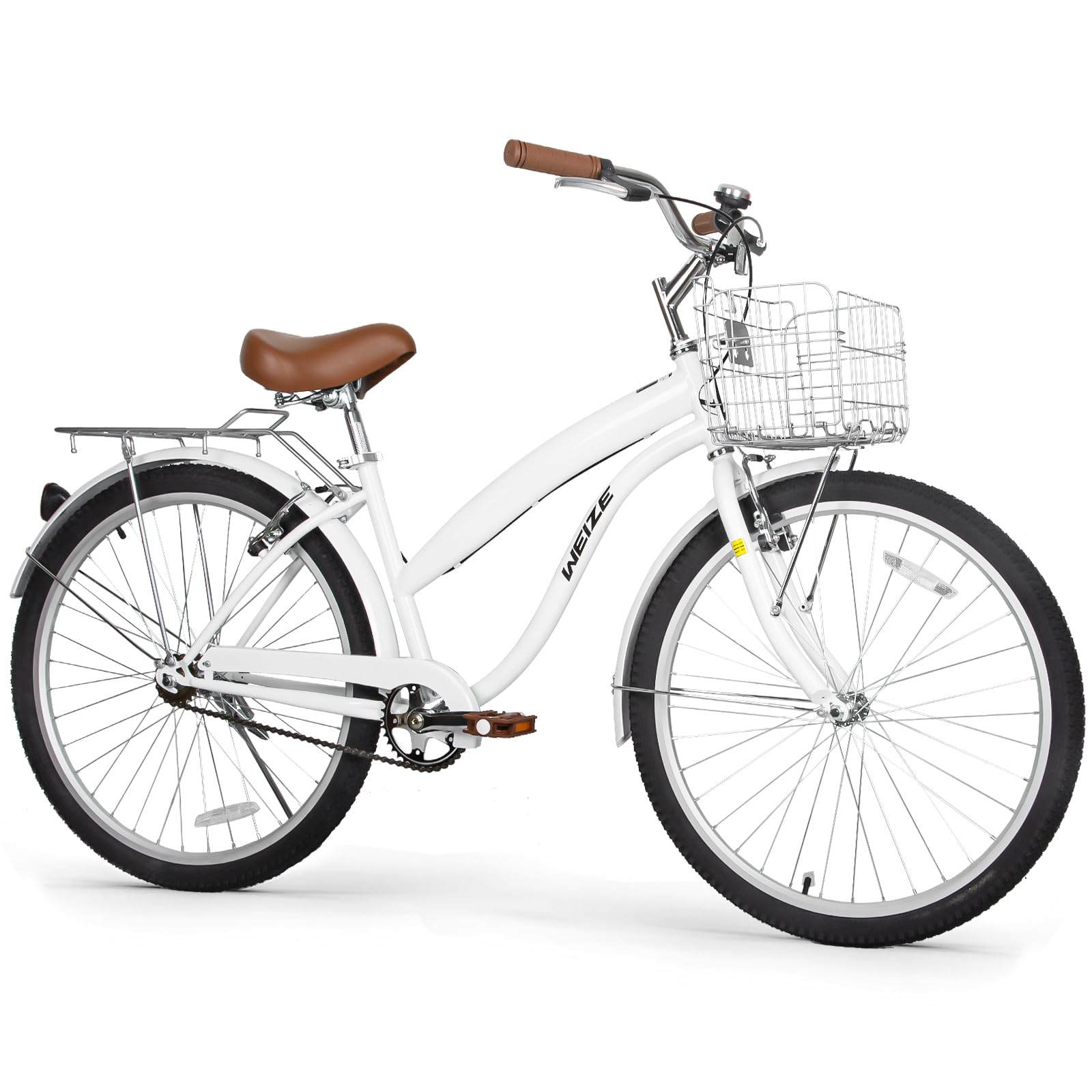
The WEIZE Beach Cruiser is built for one specific purpose: relaxed, upright riding on flat roads, boardwalks, and neighborhood streets. Its high-carbon steel frame delivers a smooth, vibration-free ride, and the single-speed drivetrain eliminates the complexity and maintenance of derailleurs and shifters. The low step-through frame makes mounting easy, and the upright riding position keeps your back and shoulders comfortable.
The front basket and rear rack add genuine utility for grocery runs or carrying a bag to the park. The foam saddle and ergonomic grips are comfortable out of the box for casual cruising distances. The 24- or 26-inch wheel options let you size the bike to your height — the 26-inch version fits riders from 5’1” to 6’1”. The fenders keep road spray off your clothes on damp pavement.
Assembly is straightforward with the included tools, though the brakes may arrive loud and require alignment. This is not a bike for hills — the single-speed gear makes any incline a leg-burning workout. For flat urban cruising and leisurely weekend rides, the WEIZE Beach Cruiser delivers charming style and practical comfort at an entry-level price.
Why it’s great
- Comfortable upright geometry with foam saddle and ergonomic grips
- Front basket and rear rack add cargo capacity for errands
- Low step-through frame makes access easy for all ages
Good to know
- Single-speed drivetrain is impractical for any significant hill
- Brakes can be loud out of the box and need adjustment
FAQ
What size bike frame do I need based on my height?
Is a single-speed bicycle good for hilly terrain?
Final Thoughts: The Verdict
For most riders seeking performance and value, the bicycle winner is the SAVADECK Titan 612 because its carbon frame and 12-speed Shimano drivetrain deliver genuine trail performance at a fraction of the boutique-brand price. If you want maximum electric range and hill-climbing torque, grab the Aipas M1 Pro. And for compact urban storage that still handles snow and sand, nothing beats the Heybike Ranger 2.0.