
Our readers keep the lights on and my morning glass full of iced black tea. As an Amazon Associate, I earn from qualifying purchases.
Specs are compiled from manufacturer listings and verified buyer reviews and can change over time — please confirm the key details on the product page before buying.
You need a winter coat that lets you move, bend, and reach without the hem riding up or the shoulders pinching. Most coats labeled “big and tall” just stretch the chest wider — they do not add real length in the torso or sleeves. The right one uses proper insulation and a cut designed for larger frames, not just an oversized copy of a regular coat.
I’m Min — the founder and writer behind Gadgets Feed. This guide is built by comparing the manufacturers’ published specifications and the patterns across verified customer reviews, so you get each pick’s real strengths and trade-offs instead of marketing spin.
Every coat here is rated for genuine winter weather, and each one comes in extended sizing so you do not have to choose between staying warm and moving freely — these are the big and tall winter coats that deliver on both fit and warmth.
Our Picks at a Glance

How To Choose The Best Big And Tall Winter Coats
Not all winter coats labeled “big and tall” are created equal—some just add length to a standard cut, while others actually widen the shoulders and deepen the armholes. The three things that matter most are the type and weight of insulation, the shell’s weather resistance, and the specific fit dimensions for your body.
Insulation: Down vs. Synthetic
Down insulation (like 600-fill waterfowl down) packs a lot of warmth into a lightweight package and compresses well for storage, but it loses its heat-trapping ability when wet. Synthetic insulation (like 150g 3M Thinsulate) keeps you warm even if the coat gets damp, dries faster, and usually costs less—so it gets the edge for wet or sweaty conditions.
Shell Durability and Weather Protection
A coat’s outer fabric determines how long it lasts and how well it blocks wind and moisture. Look for nylon or polyester shells with a durable water repellent (DWR) finish for light rain and snow. For tougher jobs or extreme wind, materials like 500-denier Cordura nylon or flame-resistant duck cotton are built to take abuse without tearing.
Fit Details for Big and Tall Builds
A genuine tall coat adds length in the torso and sleeves, not just the waist. “Loose fit” gives you room for heavy layering underneath, while “relaxed fit” is slightly trimmer through the chest and shoulders. Pay attention to the cuff design—rib-knit storm cuffs seal out drafts better than open elastic bands.
Quick Comparison
| Model | Best For | Insulation | Shell Material | Fit Style | Amazon |
|---|---|---|---|---|---|
| Carhartt Yukon Extremes★ Best Overall | Extreme cold / work | 150g Thinsulate | 500-denier Cordura nylon | Loose Fit | Amazon |
| Pioneer Camp Long PufferBest Value | Value + waterproofing | Down alternative | Waterproof polyester + TPU coating | Standard | Amazon |
| Levi’s Arctic Cloth Parka | Style + warmth | Faux down insulation | Arctic cloth | Standard / Long length | Amazon |
| Men’s Long Puffer (Generic) | Budget-friendly | Down alternative | Polyester + TPU coating | Standard | Amazon |
| The North Face Aconcagua 3 (No Hood) | Lightweight warmth | 600-fill down | DWR-treated nylon | Standard | Amazon |
| The North Face Aconcagua 3 Hooded | Premium insulated jacket | 600-fill down | DWR-treated nylon | Standard | Amazon |
| Carhartt FR Full Swing | Work / flame resistance | Insulated (not specified) | Flame-resistant duck cotton | Relaxed Fit | Amazon |
In‑Depth Reviews
1. Carhartt Men’s Yukon Extremes Loose Fit Insulated Coat
Our pick — 4.5★ from 900+ verified ratings; the strongest balance of quality and price.
The construction-site legend that shrugs off subzero temps without a second thought.
You stay warm in dangerous wind chills because this coat blocks gusts and traps heat. Its shell is 6.5-ounce, 500-denier Cordura nylon (a thick, tough nylon fabric also used on heavy-duty luggage), and it includes Wind Fighter technology — Carhartt’s own windproof liner inside the coat — so icy air does not cut through. Inside, 150g of 3M Thinsulate (a synthetic insulation, where 150g means the weight of fibers per square meter) retains your body heat without adding puffer bulk. The Rain Defender DWR (Durable Water Repellent) coating makes water bead up and roll off, so you stay dry in light snow or freezing drizzle during a commute.
The loose fit gives you room for a thick hoodie underneath without binding at the shoulders, unlike many other big and tall winter coats. One Colorado reviewer reported that “temps down to 25 below zero” with wind were manageable for hours when they wore this coat with matching bibs. The trade-off is the shell’s stiffness — it can ride up when you sit in a truck, so you might need to unzip it a bit. It does not include a hood, which some prefer so they can wear their own hoodie, but you will want a beanie or separate hood for full head coverage.
Triple-stitched main seams and 3M Scotchlite reflective taping across the back and front pockets make this a durable, safety-minded coat for outdoor work after dark. Rib-knit storm cuffs seal your wrists, and the droptail hem adds lower-back coverage when you bend or reach.
Built for the worst weather
- 150g Thinsulate handles well below zero
- 500-denier Cordura shell resists snags and tears
- Triple-stitched seams for long-term durability
- Reflective taping for low-light visibility
A couple of real-world notes
- Shell is stiff — may ride up when seated
- No hood; must be worn with a hoodie or hat
- Buyers report sleeves can feel tight in the armpits at first
Reach for this if: you work or spend extended time outdoors in subzero conditions and need a coat that can take abuse and keep you warm for hours.
Look elsewhere if: you want a hood, a trimmer silhouette, or a coat that feels flexible enough to drive in without unzipping.
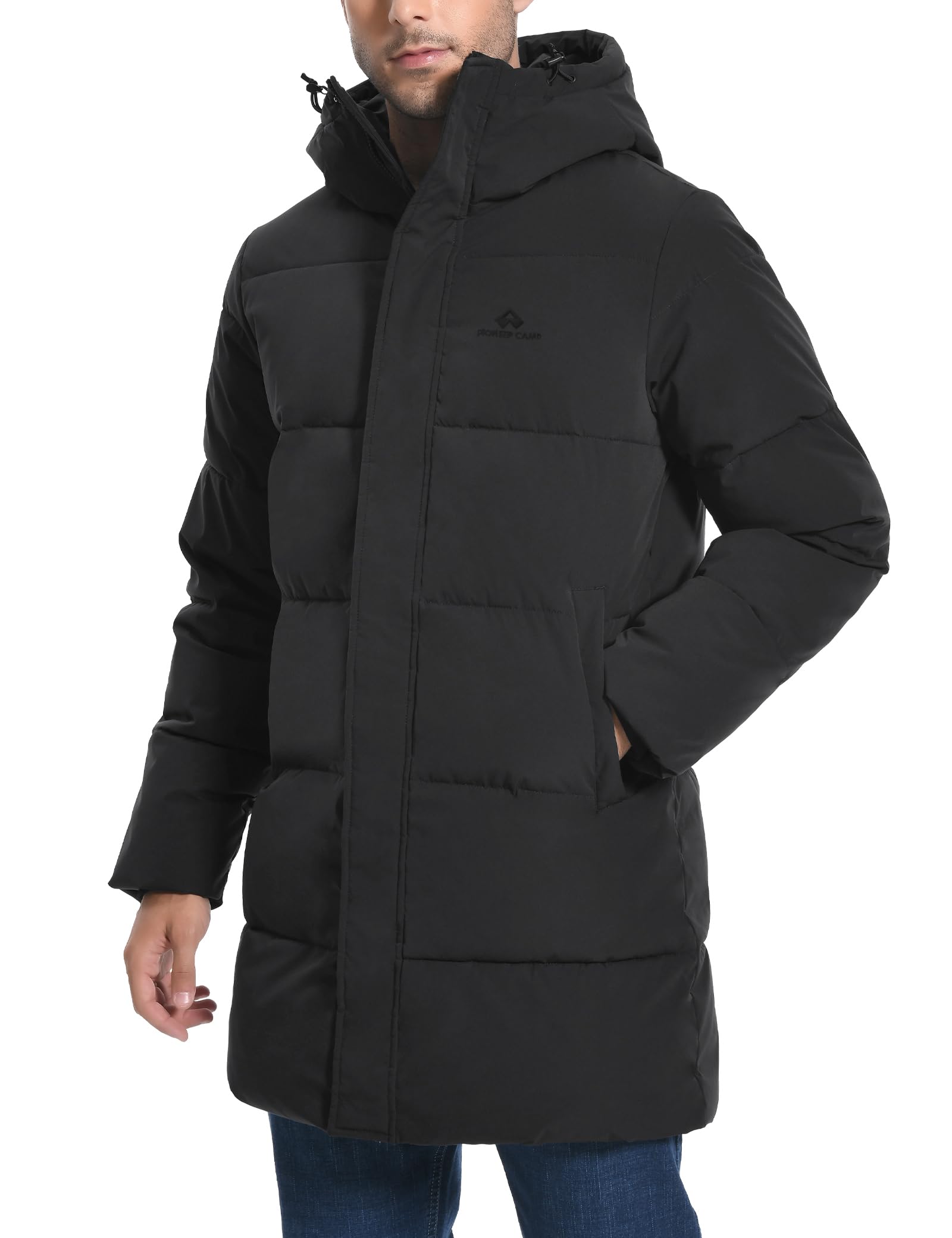
2. Pioneer Camp Mens Long Winter Coat Hooded Waterproof Insulated Puffer
The down-alternative puffer that looks like a premium brand for a fraction of the money.
One reviewer compared this jacket “side-by-side with a Helly Hansen jacket” and said the “style and overall look were nearly identical.” That is the headline here — you get a long, waterproof parka with a 3000mm waterproof TPU coating (thermoplastic polyurethane, a fully waterproof layer that blocks rain and snow completely), a hood, and thick down-alternative insulation (synthetic fibers that mimic down) for a price that undercuts big-name competitors by a wide margin. Buyers consistently call it “surprisingly great quality,” and the fleece-lined zippered outer pockets are a detail that several noted as better than premium brands that offer only button closures.
The cut runs true to size for most, but a few taller buyers noted the chest can feel slightly snug when worn over a hoodie. The coat uses a windproof polyester shell with high-loft synthetic padding in quilted compartments that trap heat without the weight of real down. It also has a double-layer front zip for extra wind blocking, and the removable hood adjusts with a cinch cord.
On the downsides, the top snap button sits at face level and, when fully fastened, touches the skin — one reviewer noted it is metal and “feels cold against the face.” The inner storage is limited to one chest pocket, and the hood is not detachable. Still, for the price, the warmth-to-dollar ratio is tough to top.
Why it punches above its weight
- Waterproof TPU coating handles rain and snow
- Fleece-lined, zippered pockets are a premium touch
- Lighter and less bulky than many competitors
Where it cuts corners
- Snap button at the neck sits cold against the face
- Only one inner pocket
- Chest may feel snug over thick layers
Ideal for: anyone who wants a long, waterproof winter puffer that looks and feels like a premium jacket without the premium price.
Not for: you if you need lots of internal pockets or prefer real down insulation over synthetic.
3. Levi’s Men’s Arctic Cloth Extra Long Parka Jacket
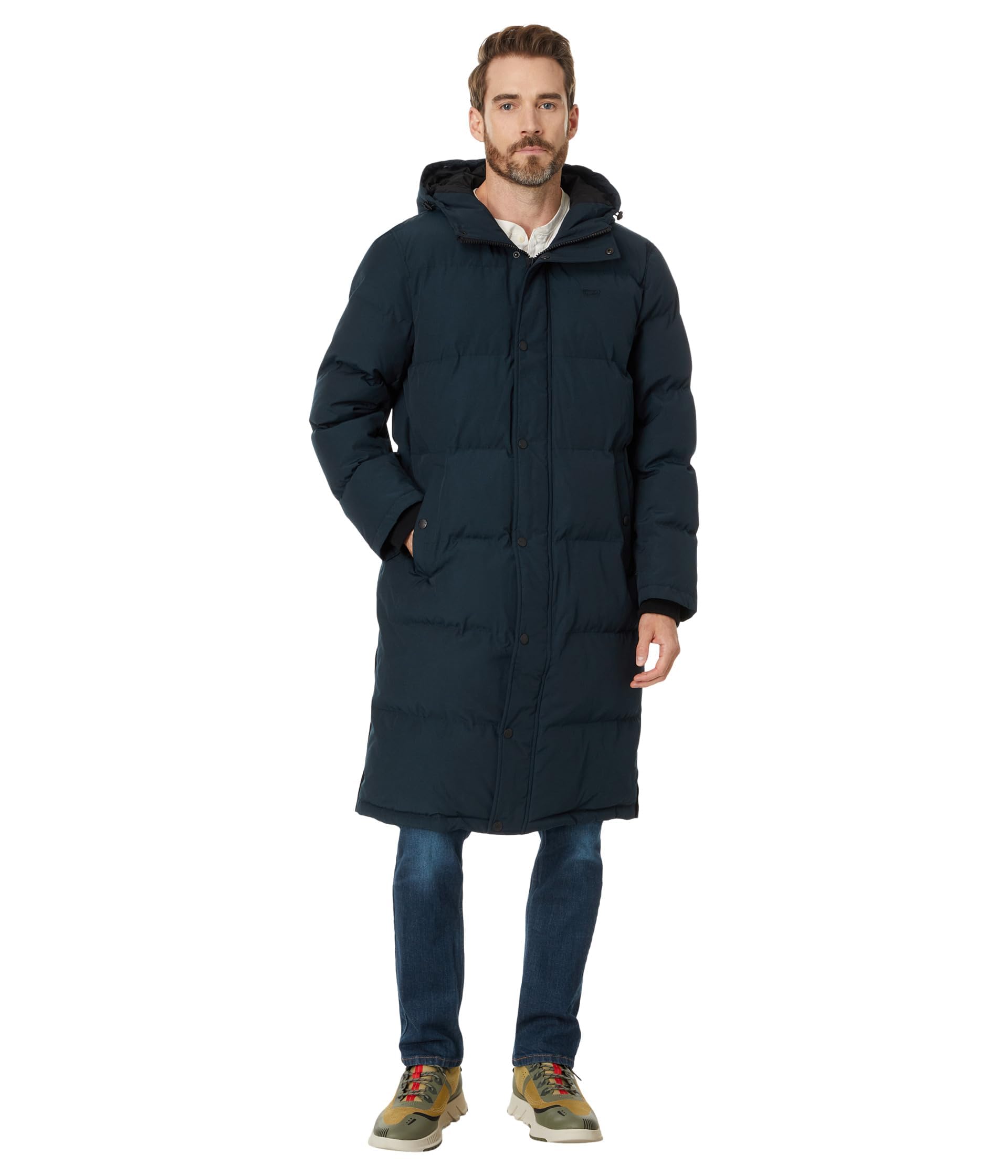
The longline parka that looks sharp in town and still locks out the cold.
You get warmth and style with this extra-long coat that covers your upper legs, so no cold air sneaks up your back when you bend or sit. Levi’s uses a water-repellent Arctic Cloth shell and interior faux down insulation (synthetic fibers that mimic down’s loft). The center front zipper has a snap-button overlay that blocks wind from sneaking through the zipper track, and the attached hood provides full coverage without feeling like a snorkel. Owners mention the horizontal quilted panels and chest logo give it a clean, modern look, though one owner noted a pocket seam ripped after use and required a simple stitch fix.
It is noticeably heavier than a lightweight puffer, so expect some weight on your shoulders, but that heft translates to real warmth down to single-digit temps. Several customers note it works well for both casual everyday wear and more rugged commutes in frigid climates. Compared to the Pioneer Camp Long Puffer, this coat is less weather-sealed — the Arctic Cloth sheds light rain and snow but is not fully waterproof, and its insulation is less dense than the high-loft synthetic in the Pioneer. It is also not designed for heavy physical labor; the material and stitching are more lifestyle than worksite.
What makes it stand out
- Extra-long cut covers upper legs and keeps in heat
- Quilted panels and logo give it a stylish, recognizable look
- Snap-button overlay over zipper blocks wind
What to watch for
- Pocket seams can rip — one buyer fixed theirs with a needle and thread
- Not fully waterproof; handles light precipitation only
- Heavier than synthetic puffer jackets of similar warmth
Pick this for: a stylish, extra-long parka that works for daily commutes and city wear without looking like a work coat.
Skip it for: heavy rain, subzero worksite conditions, or if you need a coat that packs down small for travel.
4. Men’s Winter Coat Long Puffer Jacket Waterproof Ski Parka (Generic)
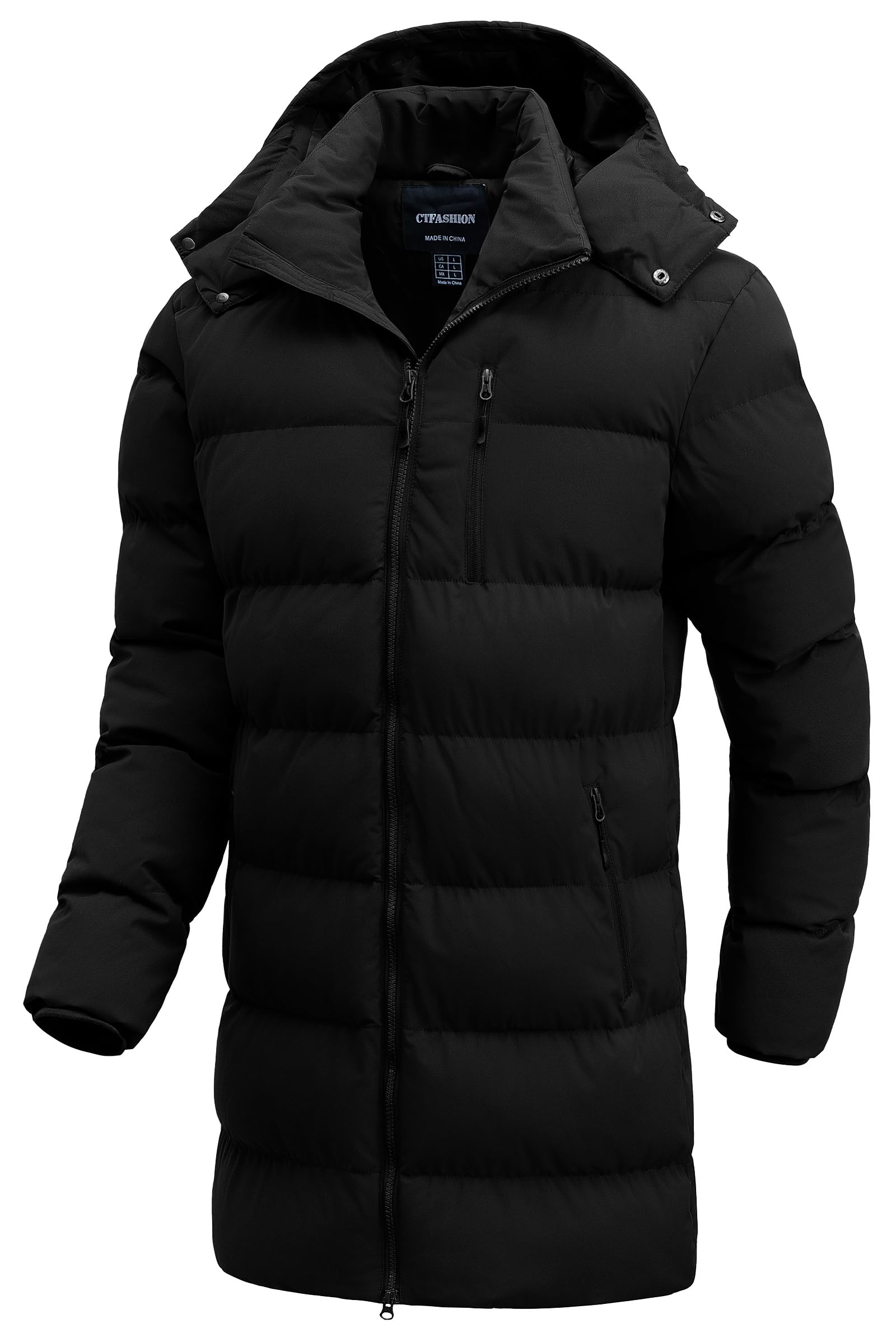
An entry-level puffer that meets the warm-and-dry bar without emptying your wallet.
You stay warm and dry in a steady snowfall or light rain thanks to the water-resistant polyester shell with a 3000mm waterproof TPU coating (thermoplastic polyurethane, a fully waterproof layer). Inside, quilted compartments hold a high-loft down-alternative synthetic fill (man-made fibers that trap air like down), and reviewers point out it keeps them warm even in subzero temperatures. One reviewer called it “surprising good quality” and noted it held up in zero-degree weather, while another appreciated that it came down to just above the knee for extra leg coverage.
The hood is attached and adjustable, and the cuffs are soft ribbed to seal out drafts. At only 1.1 pounds in package weight, it is notably lighter than the Levi’s parka (which is heavier due to its dense Arctic Cloth shell) or the Carhartt work coats, making it a better choice for travelers or casual wearers who do not need bombproof durability. It is also machine washable, which is a plus for keeping it fresh through the season.
The trade-off is that this is an entry-level coat — the shell fabric is lighter weight and less abrasion-resistant than the Cordura on the Carhartt Yukon Extremes or the duck cotton on the Carhartt FR. It also lacks the premium pocket setup of the Pioneer Camp jacket (no fleece lining, only two zippered hand pockets and one internal chest pocket). Buyers who ordered charcoal gray sometimes received black instead, so check the size and color carefully.
Strong points for the price
- Waterproof TPU coating handles wet snow and rain
- Surprisingly warm for the weight — verified in subzero temps
- Machine washable and lightweight at just over a pound
Where it shows its price
- Shell is not as durable as heavy work coats
- Limited pockets — only two hand pockets and one interior chest pocket
- Color accuracy can be off; a buyer received black instead of charcoal gray
This is the coat for the budget-minded buyer who needs warm, waterproof winter wear for casual use and light snow, not for heavy labor or extreme cold. If you plan to wear it for tough outdoor work, the Carhartt Yukon Extremes will last longer thanks to its 500-denier Cordura shell, which is far more abrasion-resistant than this coat’s thinner polyester.
5. THE NORTH FACE Men’s Aconcagua 3 Hooded Jacket

A lightweight hooded down jacket that packs real warmth without the weight of a traditional parka.
You get excellent warmth without bulk because this jacket uses 600-fill waterfowl down (where 600-fill means the down’s loft, or fluffiness, per ounce — higher numbers trap more air and provide more warmth for the weight). The shell has a non-PFC Durable Water-Repellent (DWR) finish that beads off light rain and snow, so you stay dry in a flurry without a heavy rain shell. Buyers describe it as “super lightweight and warm” and note that it fits true to size for a tall male. The attached 3-piece hood adjusts with a cinch cord and follows head movement naturally without blocking peripheral vision.
The downside — and it is a real one — is feather leakage. Multiple verified reviews mention down feathers poking through the shell fabric, and one buyer mentioned “every time I wash it, it gets worse.” This is a known quirk of down jackets with lightweight shell fabrics, but it can be annoying when dark feathers show on a light-colored coat or poke through a shirt underneath. The jacket is also on the slimmer side compared to the loose fit of the Carhartt Yukon Extremes, so if you plan on heavy layering, consider sizing up.
Comparing it to the non-hooded Aconcagua 3, this version adds the hood. The overall quality and warmth are identical — you are paying for the convenience of an integrated hood. The DWR coating works well for light precipitation, but this is not a fully waterproof coat for sustained heavy rain.
Why it is a top contender
- 600-fill down provides excellent warmth-to-weight ratio
- Attached 3-piece hood with cinch cord for full coverage
- DWR finish sheds light rain and snow
- Compressible and packable for travel
The honest drawbacks
- Feathers can poke through the shell — a common down-jacket issue
- Slimmer cut; may not fit over bulky layers
- Not fully waterproof; avoid heavy, sustained rain
Grab this if: you want a lightweight, packable down jacket with a hood for daily winter wear, commuting, and light outdoor activity down to about freezing.
Look elsewhere if: you hate the idea of feathers poking through or need a coat for heavy rain or subzero stationary use.
6. THE NORTH FACE Men’s Aconcagua 3 Jacket (No Hood)
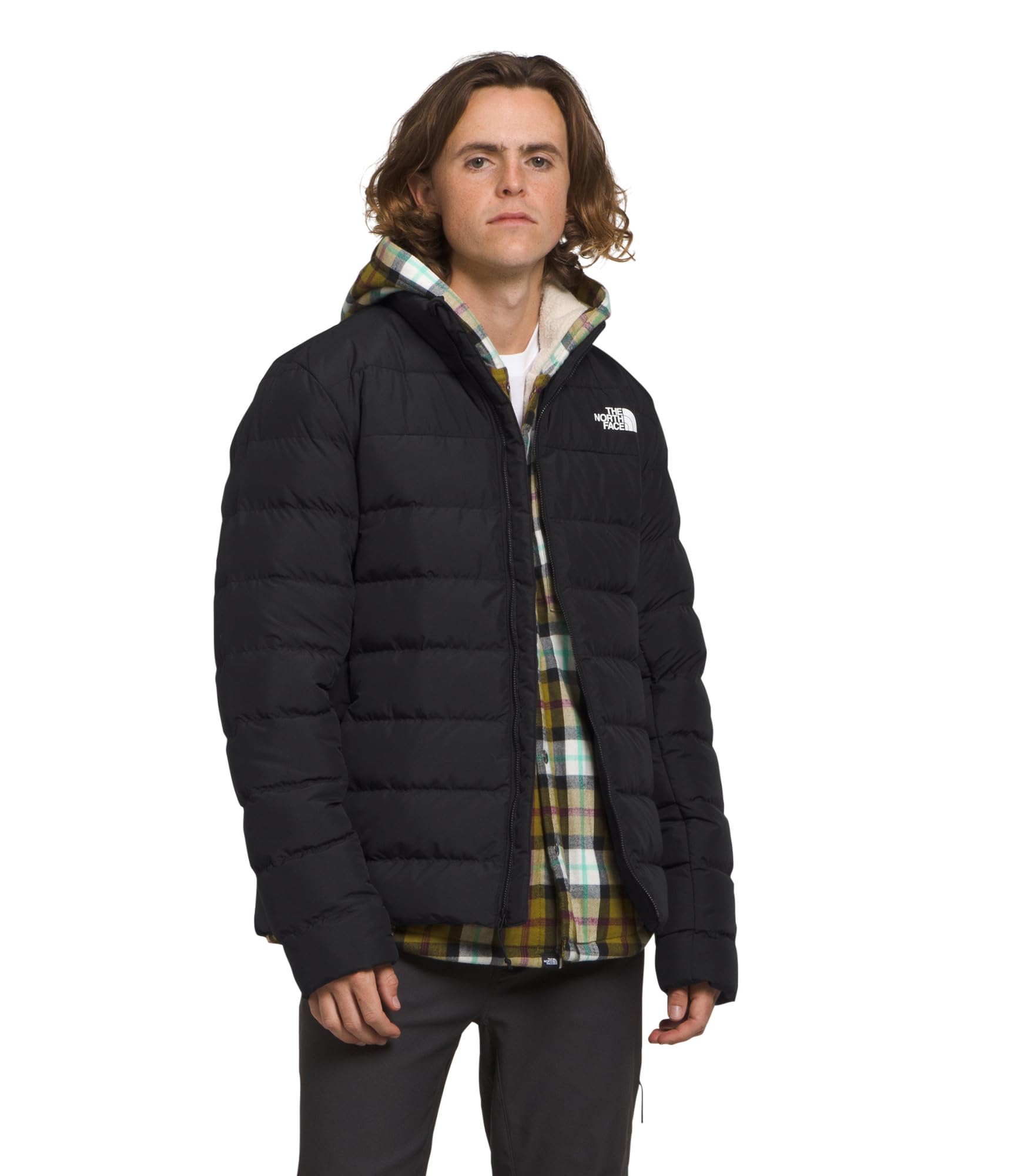
A straightforward down jacket that does one thing beautifully — keeps you warm without weighing you down.
You get the same 600-fill waterfowl down insulation and DWR-treated nylon shell as the hooded version, but without the attached hood. At 1.5 pounds, it is light enough to layer under a rain shell or wear as a standalone coat for winter walks. Shoppers say it is “warm without feeling bulky” and fits true to size, making it a reliable choice for anyone who prefers to pair their coat with a separate hat or hoodie rather than an attached hood.
The same feather-leakage issue appears here — one long-time North Face owner noted “feathers poking through coat fabric,” especially after washing. The down insulation loses loft when wet despite the DWR treatment, so this jacket is best for dry cold rather than wet snow or rain. Compared to the Hooded version, you save a bit of money and lose the hood; if you already own a good beanie or wear hoodies, this is the smarter buy.
It falls short of the Carhartt Yukon Extremes in extreme wind and wet conditions, but for a lightweight daily winter coat that packs into a small bundle, it is tough to top. The teal color option received particular praise from buyers for its vibrant, accurate-on-screen look.
Why it stands out
- Lightweight 600-fill down with excellent warmth-to-weight
- Non-PFC DWR finish beads off light moisture
- True-to-size fit for tall builds
The catches
- Down feathers can poke through after washing
- Loses insulating power when wet — not for rain
- No hood; requires separate headwear
If you already own a good hat or hoodie and want a lightweight down jacket that packs small, this is your best everyday cold-weather layer. For wet winter climates or heavy rain, the Pioneer Camp Long Puffer is a better choice because its 3000mm waterproof TPU coating blocks water completely, whereas this coat’s DWR finish beads only light moisture.
7. Carhartt Men’s Flame Resistant Full Swing Relaxed Fit Quick Duck Insulated Coat
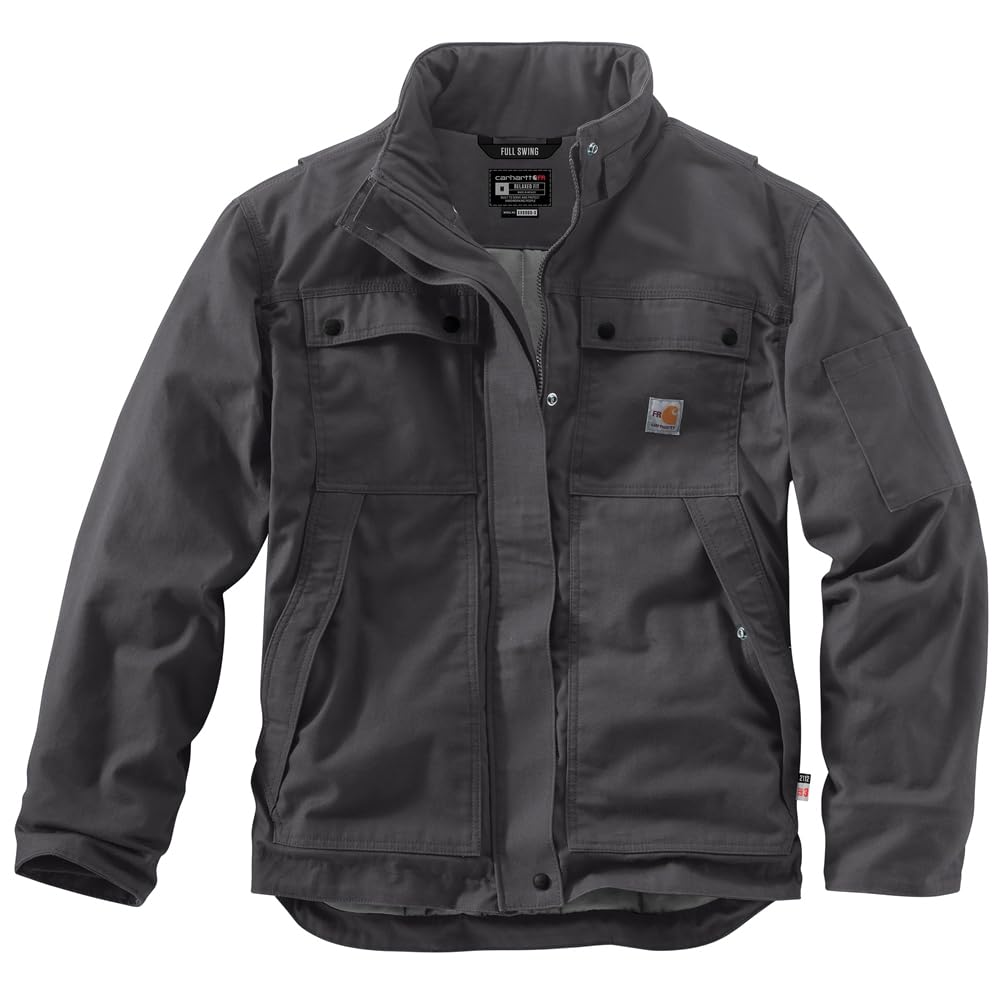
The flame-resistant work coat that moves with you rather than locking you in place.
You get protection from sparks and a full range of motion in this coat, thanks to its flame-resistant duck cotton shell (a heavy cotton fabric treated so it resists ignition) and the “Full Swing” design, which adds stretch panels across the back and shoulders so you can lift, reach, and crouch without binding. Buyers report it fits properly for men’s frames (“shoulders fit a mans shoulders proper” one noted) and that the relaxed cut allows for a sweatshirt underneath without looking oversized.
The insulation keeps you warm in frigid conditions, and the relaxed fit through the body means you can add a heavy mid-layer without feeling cramped. However, multiple buyers flagged the zipper as the weakest point — one called it “cheap” compared to the rest of the coat, and another said it feels questionable. Given Carhartt’s usual overbuilt construction, a flimsy zipper is a real disappointment on an otherwise premium work coat. The coat also runs large: one buyer who normally wears a large/XL sized down to a medium and said it fits perfectly.
Compared to the Carhartt Yukon Extremes, this coat trades some cold-weather insulating power (the Yukon has 150g Thinsulate) for flame resistance and superior range of motion. It is also heavier and stiffer than the Yukon due to the duck cotton shell, so it is best suited for work environments rather than casual wear.
The work-ready strengths
- Flame-resistant duck cotton shell for spark and weld protection
- Full Swing stretch panels allow full range of motion
- Relaxed fit layers easily over heavy clothing
- Very warm; buyers wear it for outdoor work in winter
Where it disappoints
- Zipper quality is below Carhartt’s usual standard — several buyers complained
- Runs large; check sizing carefully and consider sizing down
- Heavy and stiff — not an everyday casual coat
Choose this for: a flame-resistant work coat that lets you move freely and stays warm on outdoor job sites in winter.
Skip it for: casual daily wear or anyone who wants a lighter, more flexible coat for non-work activities.
Understanding the Specs
Insulation Weight and Type
The number you see before the insulation type — like 150g Thinsulate or 600-fill down — tells you how much warmth the coat holds. In synthetic insulation, a higher gram weight (like 150g vs 100g) means more heat-trapping fibers packed into each panel. For down, a higher fill power (like 600 vs 800) means the down clusters trap more air per ounce, giving you more loft and warmth for the same weight. Down loses its insulating properties when wet; synthetic does not.
Water Repellency vs. Waterproofing
A DWR (Durable Water Repellent) coating makes water bead up and roll off the shell surface, but it is not waterproof — in steady rain, the coat will eventually wet through. A TPU (thermoplastic polyurethane) coating or a fully waterproof membrane like the 3000mm rating on the generic long puffer actually blocks water from penetrating, making it suitable for wet snow or rain. For most winter wear, DWR is enough, but if you live in a wet climate, look for a waterproof coating or a dedicated rain shell over your insulation.
FAQ
How do I know if a winter coat is actually big and tall or just oversized?
What does 150g Thinsulate mean in real terms?
Is 600-fill down warmer than 150g Thinsulate?
Will a loose-fit coat still look good or will it just look baggy?
How do I wash a down coat without ruining the insulation?
Can I wear a big and tall winter coat for outdoor work like construction?
What does Wind Fighter technology do?
Is a longer parka better for tall guys, or does it just get in the way?
How do I get feathers to stop poking out of my down jacket?
Is a waterproof coating better than DWR for wet snow?
Final Thoughts: The Verdict
Across the board, the big and tall winter coats winner is the Carhartt Yukon Extremes because it combines extreme cold protection, a genuinely durable shell, and a loose fit that accommodates both big and tall builds without binding. If you want a long, waterproof parka that looks premium without the premium price, grab the Pioneer Camp Long Puffer. And for a lightweight, packable down jacket for everyday winter wear, the standout is the The North Face Aconcagua 3 Hooded.
How We Picked
We do not accept paid placement. Every pick is matched to a real buyer and a real use-case; we do not hands-on test units.
Sources & Methodology
Specifications: manufacturer listings and product documentation. Review insights: verified customer reviews, as of July 2026. Pricing: not shown on this page (it changes often); check the current price via the retailer link.
As an Amazon Associate, Gadgets Feed earns from qualifying purchases. This does not affect which products we feature.