
A big mountain snowboard needs to do one thing above all else: hold an edge at speed across variable, unforgiving terrain. Whether you’re charging down a couloir, linking high-speed turns across a wind-scoured face, or navigating mixed snow conditions on an alpine descent, the board beneath your feet is the single most critical tool for control and confidence. Choosing the wrong profile or flex pattern can turn an epic line into a white-knuckle fight for survival.
I’m Min — the co-founder and writer behind Gadgets Feed. I’ve spent countless hours analyzing sidewall construction, camber profiles, and sintered base densities to separate genuine alpine performers from marketing claims that fall apart under real mountain pressure.
This guide cuts through the noise to deliver the definitive list of the best big mountain snowboards available right now, ranked by their ability to deliver stable, predictable performance when the slope tilts steep and the consequences of a blown edge are serious.
How To Choose The Best Big Mountain Snowboards
Big mountain snowboards are a specific breed. They prioritize directional stability, dampening, and edge hold over park tricks or forgiving flex. The wrong choice here can make a steep descent feel unstable or leave you fighting the board at every turn. Focus on three key pillars: camber profile, flex pattern, and base material.
Camber Profile: Traditional vs. Hybrid vs. Rocker
For big mountain riding, traditional camber reigns supreme. A full camber profile provides maximum edge contact and predictable snap out of turns, which is essential on hardpack and ice. Hybrid profiles like camber-rocker-camber (CRCX) offer some float in powder while maintaining edge hold, but pure rocker boards tend to wash out at speed on firm snow. Beginners often overvalue rocker for easy turning, but that forgiveness comes at the cost of high-speed stability.
Flex Pattern and Sidecut Radius
A stiff flex (8-10 out of 10 on most brands’ scales) provides the torsional rigidity needed to hold a carve at speed without the board chattering or folding. A longer sidecut radius, typically 8 meters or more, matches the wide, sweeping turns common on alpine terrain. Shorter radii are better for tight trees or moguls, but for open face carving, longer is more stable. Serious buyers check the flex rating first — anything below 7 is not a true big mountain board.
Base Material: Sintered vs. Extruded
A sintered polyethylene base is non-negotiable for big mountain riding. It absorbs wax better, glides faster on long traverses, and is far more durable against rocks and debris than an extruded base. Extruded bases are cheaper and require less maintenance, but they are slower and wear out quickly. If you plan to ride in variable conditions or at high altitude, a sintered base will pay for itself in performance over its lifespan.
Quick Comparison
On smaller screens, swipe sideways to see the full table.
| Model | Category | Best For | Key Spec | Amazon |
|---|---|---|---|---|
| System MTN & APX Package | Package | Alpine charging & powder | CRCX camber profile / 3D wood core | Amazon |
| Camp Seven Valdez Package | Package | Intermediate to advanced progression | CRCX rocker-camber / DD2 core with Edgelock | Amazon |
| Camp Seven Redwood Package | Package | All-mountain versatility | RCRX rocker-camber-rocker / EVA binding pads | Amazon |
| Nidecker Supermatic Bindings | Bindings | Quick entry/exit for mixed terrain | Automatic drop-in / glass-filled nylon baseplate | Amazon |
| Burton Photon BOA Boots | Boots | Responsive fit for aggressive riding | Dual-Zone BOA / 1:1 firm flex PowerUp tongue | Amazon |
| Drifter & APX Package | Package | Beginner to intermediate all-mountain | CRCX camber-rocker-camber / poplar wood core | Amazon |
| Snowfeet Skiboards | Skiboards | Park tricks and short runs | 65 cm length / cap construction with wood core | Amazon |
In-Depth Reviews
1. System MTN & APX Complete Men’s Snowboard Package
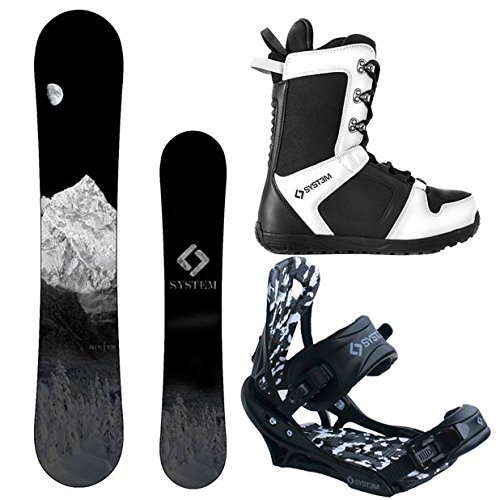
The System MTN is built around a CRCX camber-rocker-camber profile that prioritizes high-speed edge hold while offering the rocker in the tip and tail for catch-free powder float. The 3D poplar wood core, reinforced with two high-density stringers and an artisan-grade heartwood stringer down the center, delivers explosive pop for ollies and jumps without sacrificing torsional stiffness. At a flex rating suitable for advanced riders, this board demands a confident stance — beginners will find it unforgiving, but experienced big mountain riders will appreciate the stability when pushing through variable snow.
The APX bindings included in the package are among the lightest in this class, with 15% fiber inclusion in both the baseplate and highback for durability. The full-length EVA base pad dampens chatter on hardpack, while the aluminum 4-tooth ratchets ensure reliable engagement. Paired with the APX boots featuring Thermofit heat-moldable liners, the whole system feels cohesive rather than cobbled together — a rare quality at this price point.
Customer feedback consistently praises the board’s ability to handle everything from groomers to deep powder, with users reporting two seasons of heavy use without degradation. The twin shape also allows switch riding when the terrain demands it, making this a truly versatile alpine weapon. For riders ready to commit to aggressive, directional riding, this package represents outstanding value.
Why it’s great
- 3D poplar core with heartwood stringer provides exceptional pop and edge hold at speed.
- CRCX profile balances powder float with reliable camber engagement for carving.
Good to know
- Not suitable for beginners — stiff flex requires advanced technique to control effectively.
- Some users report docked tips/tails may need detuning to prevent edge catches in softer snow.
2. Camp Seven Valdez Snowboard Summit Bindings & APX Boots Package

The Valdez uses a CRCX full rocker center paired with mild camber in the tip and tail, creating a profile that floats effortlessly in powder while retaining enough edge engagement for hardpack carving. The DD2 core with Edgelock technology runs high-density poplar stringers along each side of the board, increasing edge-to-edge response and grip on icy conditions. This construction makes the Valdez a strong contender for riders transitioning from intermediate to advanced terrain who need a board that doesn’t punish small mistakes but rewards proper technique.
The Summit bindings feature a full-length EVA base pad that absorbs vibration on choppy terrain, and the either-or toe strap allows customization between toe cap and over-forefoot riding. While the bindings are not as premium as standalone high-end models, they perform adequately for the board’s intended skill range. The APX boots include Thermofit heat-moldable liners, though users with half-size feet should note that boot sizing jumps whole sizes — a size 11 may feel roomy for size 10.5 feet.
Reviews highlight that the board looks fantastic and rides well right out of the box, though some experienced riders note the CRCX profile’s rocker dominance can feel washy at extreme speeds on bulletproof snow. For the price, this package offers a solid foundation for aggressive all-mountain riding without requiring an immediate binding or boot upgrade.
Why it’s great
- Edgelock high-density stringers improve grip on icy terrain without adding significant weight.
- CRCX profile balances powder float with camber-driven pop for versatile use.
Good to know
- Boots lack half sizes, which can affect fit for riders between full sizes.
- Bindings are adequate but will be the first upgrade needed for aggressive big mountain riding.
3. Camp Seven Redwood and Summit Men’s Complete Snowboard Package
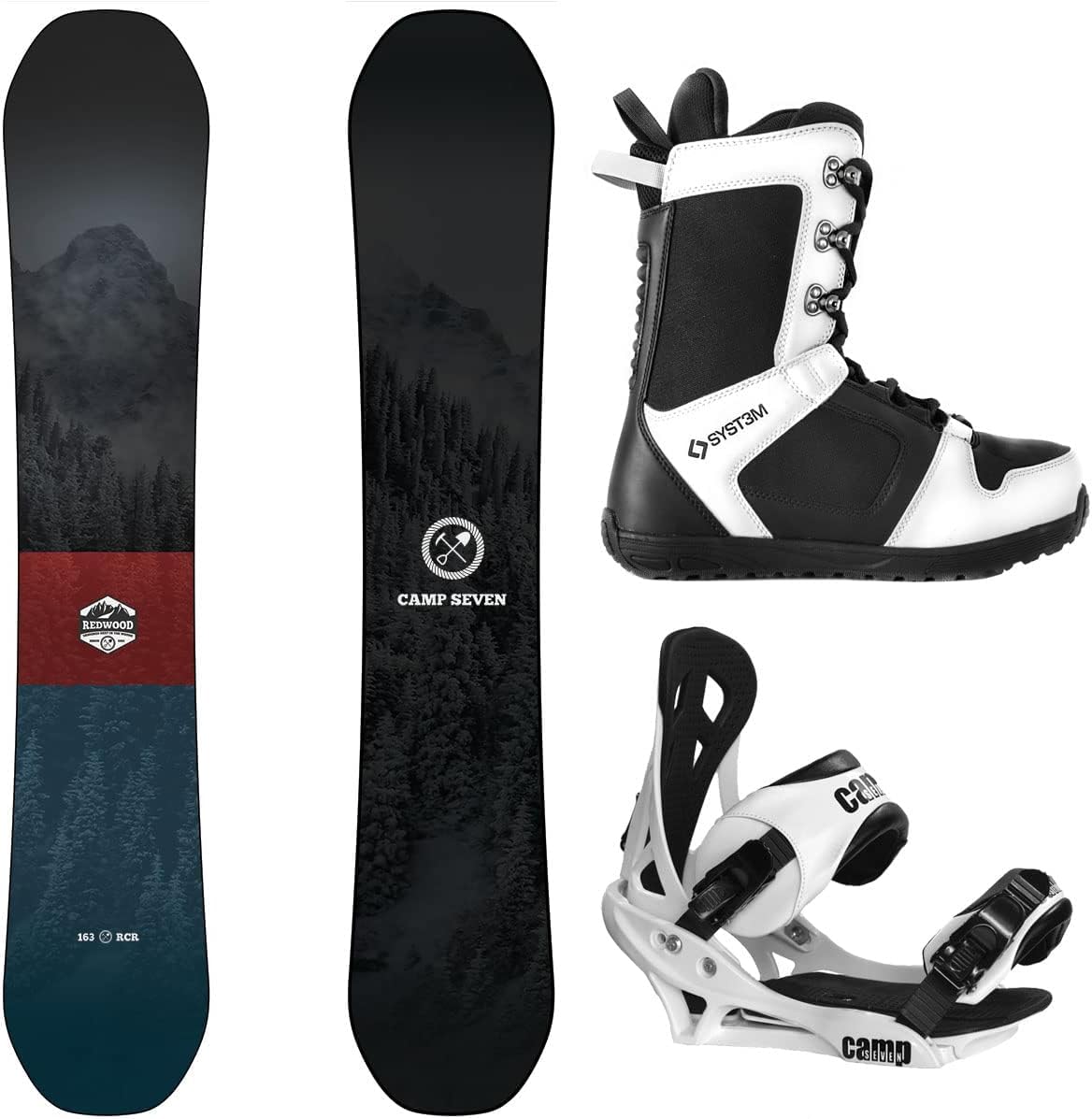
The Redwood features an RCRX rocker-camber-rocker profile with an elongated camber section underfoot that provides intuitive responsiveness and maximum edge hold on icy days. The rocker zones in the tip and tail prevent edge catches during flat-base riding, making this a more forgiving option for intermediates who still want big mountain stability. The poplar wood core construction keeps weight manageable without sacrificing the torsional stiffness needed for carves at moderate speeds.
The included Summit bindings are the same full-length EVA base pad design as the Valdez package, with contoured gel straps and aluminum ratchets. While functional, some users report the bindings and boots degrade faster than the board itself, with one review noting a decline after just four runs. For riders planning heavy use, budgeting for a binding and boot upgrade later is a realistic expectation. The APX boots with Thermofit liners remain comfortable and warm across a full day on the mountain.
The board itself is the star here — it requires no wax out of the box and holds up well across multiple seasons. Intermediate riders transitioning from park to all-mountain will find the Redwood’s balance of forgiveness and performance ideal. Advanced big mountain riders may outgrow its flex profile quickly, but for the price, the board alone is a solid foundation.
Why it’s great
- Elongated camber underfoot provides excellent edge hold for hardpack and icy conditions.
- Sturdy poplar core construction that resists chatter at moderate speeds.
Good to know
- Bindings and boots may degrade faster than the board, requiring future upgrades.
- Best suited for intermediate riders — advanced big mountain enthusiasts may want a stiffer flex.
4. Nidecker Supermatic Snowboard First Universal Bindings
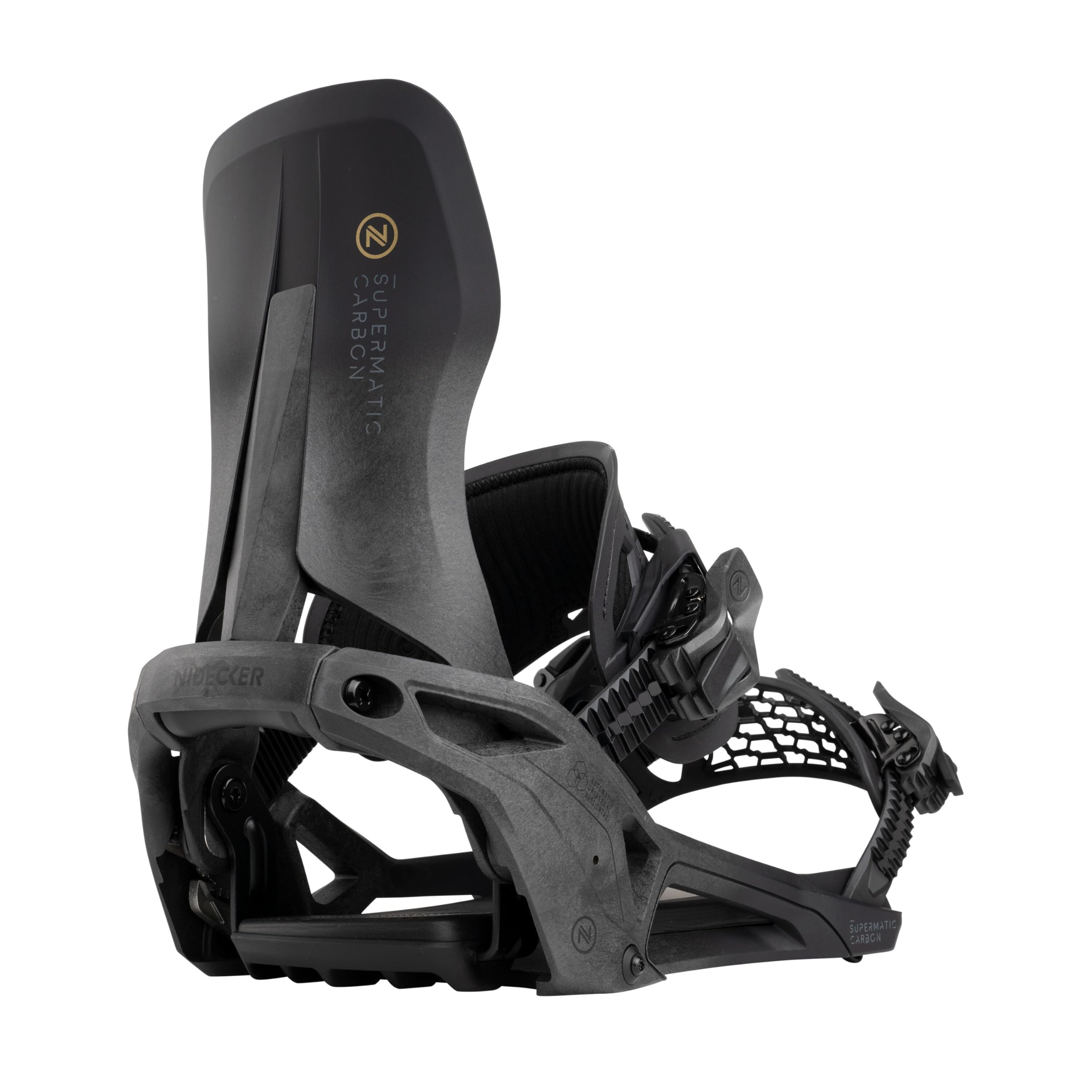
The Nidecker Supermatic represents a genuine step forward in binding technology for big mountain riders who value efficiency. Its automatic drop-in mechanism allows you to step into the binding and press the heel pedal to engage the hiback — no bending over, no fumbling with straps. For long traverses or multiple chairlift runs, this saves significant energy and time. The glass-filled nylon baseplate is the same material used in Nidecker’s traditional binding line, ensuring durability under aggressive use.
The Supermatic rides like a classic two-strap binding, with AuxTech straps that conform around any boot from any brand. This universality means you can upgrade your boots independently without being locked into a proprietary system. The release lever is simple and mechanical — no complicated mechanisms to fail. However, some users report a known issue where the binding mechanism can jam if snow or debris gets lodged in the hinge, which is a concern for deep powder conditions where crust or ice can accumulate.
Customer reviews highlight the convenience factor as the primary draw, with experienced users comparing it favorably to Flow bindings for ease of use. The sizing runs small, so referencing the size chart is essential before purchasing. For big mountain riders who spend long days on the mountain and hate stopping to adjust gear, the Supermatic is a worthwhile investment.
Why it’s great
- Automatic drop-in mechanism saves significant time and effort over traditional strap bindings.
- Works with any boot brand, offering maximum flexibility for gear upgrades.
Good to know
- Known jamming issue with snow ingress in the hinge mechanism — requires careful maintenance.
- Sizing runs small; must verify size chart before purchase to avoid fit issues.
5. Burton Men’s Photon BOA Snowboard Boots
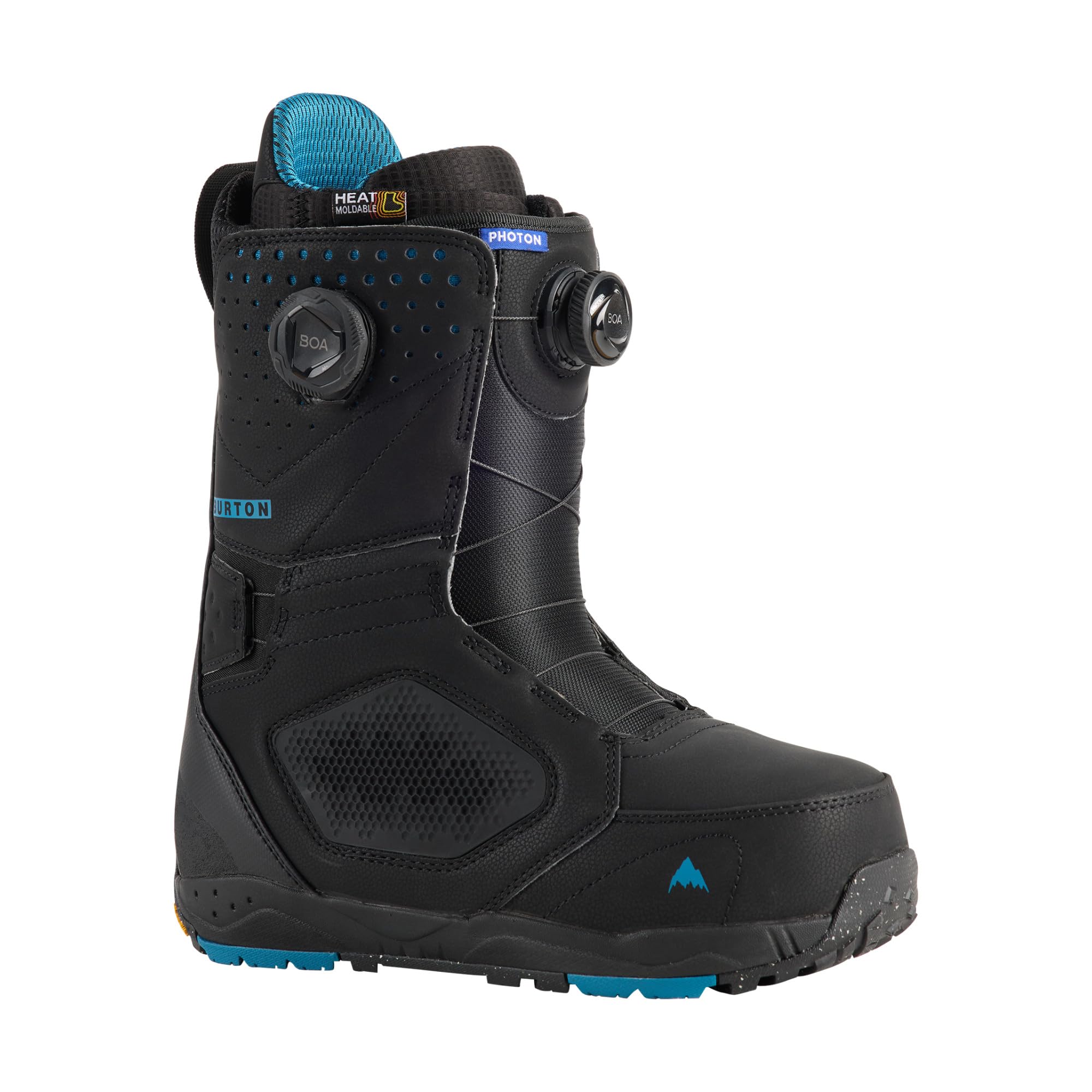
The Burton Photon BOA is a direct competitor to the premium Ion model but at a more accessible price point. Its Dual-Zone BOA Fit System allows independent adjustment of the lower and upper zones, delivering a locked-in heel hold without pressure points on the shin. The 1:1 firm flex PowerUp tongue ensures direct energy transfer to the board, which is critical for aggressive carving where micro-movements need immediate response. The Imprint 3 heat-moldable liner conforms to the foot’s shape over time, and the sleeping bag reflective foil underfoot improves warmth during long, stationary moments on chairlifts.
The Vibram Traction Lug outsole with EcoStep rubber offers exceptional grip on icy boot packs and around the lodge, while the EST-optimized midsole lowers the rider’s center of gravity for better board feel. At 6 pounds per pair, these boots are notably light for their stiffness level. However, Burton sizing is notoriously small — most users recommend sizing up a full size from street shoe size. A 255mm foot fits a size 8.5 according to one review, contradicting standard length charts.
Reviews consistently praise the Photon’s responsiveness and warmth, with riders reporting comfort at temperatures as low as -25°F. The Dual-Zone BOA system is easy to use but can be overtightened, so dialing in the fit takes a few runs. For big mountain riders who prioritize boot-to-board connection, the Photon offers premium performance without the Ion’s price tag.
Why it’s great
- Dual-Zone BOA provides independent fit adjustment for precise heel hold and shin comfort.
- Imprint 3 heat-moldable liner and reflective foil insulation for warmth and customized fit.
Good to know
- Burton sizing runs small — size up a full size from your street shoe measurement.
- Easy to overtighten BOA dials, leading to discomfort until you find the sweet spot.
6. Drifter and APX Men’s Complete Snowboard Package

This package from Camp Seven pairs the Drifter snowboard with System APX bindings and boots, creating a full setup aimed squarely at beginners and intermediates. The Drifter’s CRCX camber-rocker-camber profile is rocker-dominant, which greatly increases float in powder and reduces catch risk — ideal for riders learning to link turns across the mountain. The poplar wood core provides a forgiving flex that won’t punish small stance errors, though it lacks the torsional rigidity needed for high-speed carving on hardpack.
The APX bindings and boots are functional but entry-level. The bindings feature full-length EVA base pads and aluminum ratchets, but reviews note they are the weakest link in the package — one user reported the bindings degrading after three seasons of casual use. The boots are lace-up only, which keeps cost down but means longer setup time compared to BOA systems. The boots run true to size and keep feet warm and dry, but the lacing system can be annoying to adjust on the mountain.
For the price, this package is a smart starting point for riders who want to own their gear rather than rent. It allows beginners to learn what they prefer in stiffness, bindings, and boot lacing before investing in a more serious setup. Resale value is decent, as the components can be upgraded piecemeal. Not a big mountain board in the truest sense, but an affordable entry into all-mountain riding.
Why it’s great
- CRCX rocker-dominant profile reduces edge catch risk for beginners learning all-mountain carving.
- Poplar wood core provides forgiving flex that accommodates stance and technique errors.
Good to know
- Bindings are the weakest component and will likely need upgrading within a few seasons.
- Lace-up boots are functional but slower to adjust than BOA systems on the mountain.
7. Snowfeet Skiboards | Snowblades
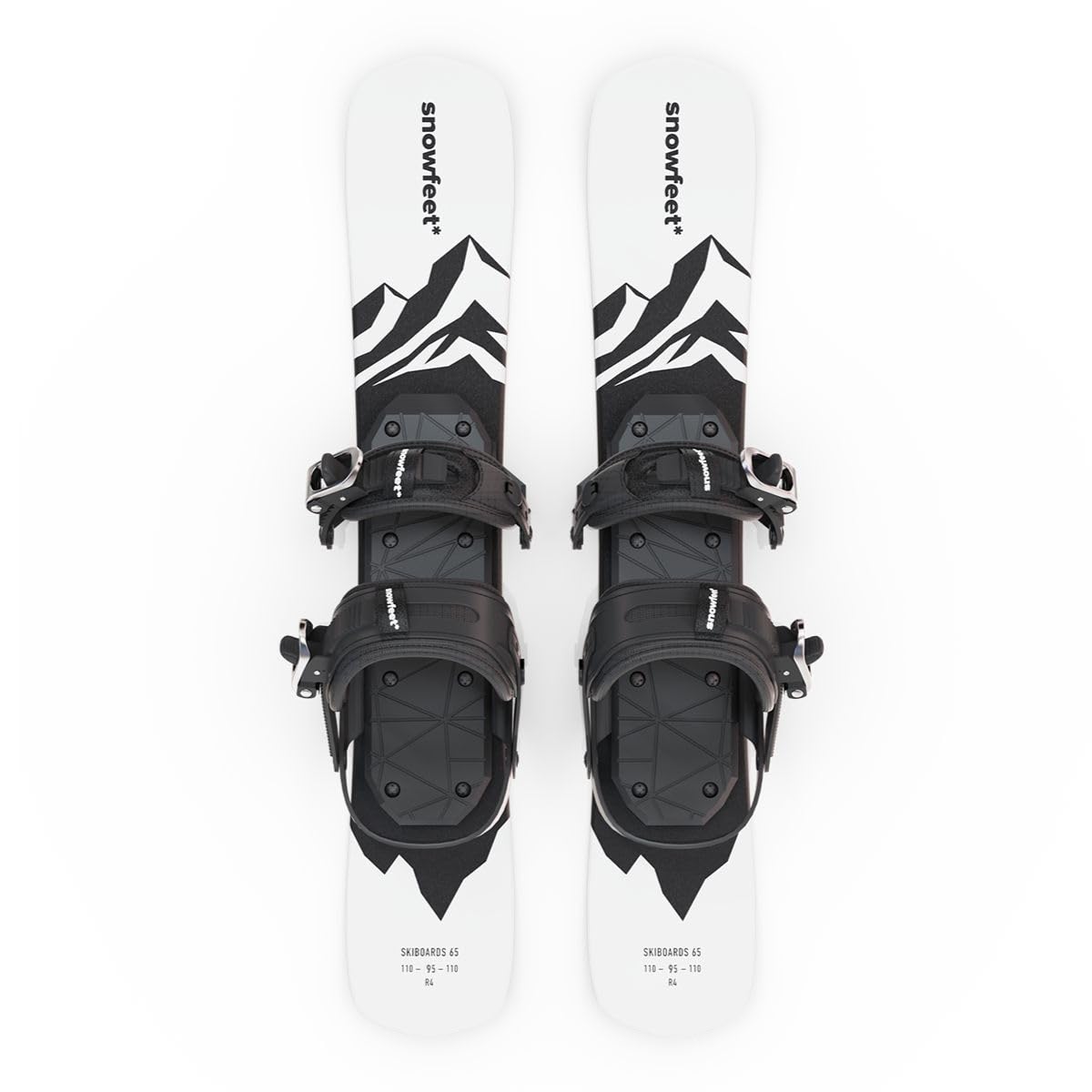
The Snowfeet skiboards are a unique entry in this guide, but they are categorically not big mountain snowboards. At 65 cm in length with a cap construction wood core, these are short skis designed for quick turns, park tricks, and groomer cruising — not alpine charging. Their tool-free non-release bindings fit any ski boot from EU 36 to 49, and the included safety leashes meet basic resort requirements. The wood core provides surprising stiffness for the size, but the short effective edge makes high-speed carving on big terrain unstable and potentially dangerous.
Customer reviews are mixed: some users love the maneuverability for low-energy days and the ability to use snowboard boots with them, while others report that major East Coast resorts have banned them for safety concerns. The return policy is also a significant risk — return shipping from the US to Europe costs around , which buyers must cover. The lack of edge-to-board control compared to a traditional snowboard binding setup means responsiveness is compromised on advanced terrain.
For big mountain riding, these skiboards are not a viable option. They work for casual ski slope cruising, terrain parks, and narrow hiking trails, but they lack the edge hold, stability, and control required for steep alpine descents. If you’re looking for a true big mountain board, skip this product entirely. It earns a mention here only because it appears in the keyword’s search results.
Why it’s great
- Very short learning curve for riders wanting a fun, maneuverable alternative on groomers.
- Tool-free binding adjustment fits a wide range of boot sizes without tools.
Good to know
- Cannot safely handle high-speed big mountain terrain due to short effective edge and lack of control.
- Banned at many US resorts; return shipping to Europe is prohibitively expensive (+).
FAQ
What camber profile is best for big mountain riding?
How stiff should a big mountain snowboard be?
Is a sintered base worth the extra cost for big mountain boards?
Final Thoughts: The Verdict
For most riders, the best big mountain snowboards winner is the System MTN & APX Package because its CRCX camber profile, 3D poplar core, and cohesive binding/boot system deliver exceptional stability and pop for aggressive alpine charging without requiring immediate gear upgrades. If you want a more forgiving entry point that still holds an edge, grab the Camp Seven Valdez Package. And for the best binding upgrade to pair with any big mountain board, nothing beats the Nidecker Supermatic for saving time and energy on the mountain.