
Our readers keep the lights on and my morning glass full of iced black tea. As an Amazon Associate, I earn from qualifying purchases.
Specs are compiled from manufacturer listings and verified buyer reviews and can change over time — please confirm the key details on the product page before buying.
If you want a big phone, the real question is not which screen is biggest — it is which big screen you can actually live with. A 6.9-inch display fits a full map, readable subtitles, and two apps side by side without shrinking either one. It also makes a phone harder to pocket and heavier in the hand. The picks below range from a 6.7-inch pOLED puncher with a built-in stylus to a foldable with a 7.95-inch inner screen, and each one makes a different compromise to get there. Decide which trade-off you can live with, then match it to a pick below.
I’m Min — the founder and writer behind Gadgets Feed. This guide is built by comparing the manufacturers’ published specifications and the patterns across verified customer reviews, so you get each pick’s real strengths and trade-offs instead of marketing spin.
Screen size drives everything else in this category — battery, weight, camera bracing, even how you grip the phone one-handed. The list below ranks each pick by the spec that decides whether it fits your hand. Here is your shortlist for the best big phones.
Our Picks at a Glance

How To Choose The Best Big Phones
The tricky part of shopping big phones is that the screen size you want is often the thing that makes the phone awkward everywhere else. A bigger panel needs more battery to light it, more chassis to hold it, and a wider body that changes how you hold it one-handed. Decide which trade-off you can accept before you compare models.
Screen size and refresh rate are separate decisions
A 6.9-inch screen tells you how much information fits on the page. A 120Hz refresh rate tells you how smooth the page moves when you scroll it. Both matter for a big phone, because on a large panel every animation covers more pixels and any stutter shows up faster. A 60Hz panel on a 6.88-inch screen is fine for reading and video, but it will not feel as fluid as a 120Hz panel on a 6.9-inch display. Decide which one you notice more.
Battery capacity is a spec; battery life is a review pattern
Battery capacity is measured in mAh — milliamp-hours, or how much charge the cell holds. It is a real starting point, not a forecast. A 7,300 mAh cell is much larger than a 5,000 mAh cell, and a 5,000 mAh phone can still disappoint if the screen and processor are thirsty. Read the buyer patterns on charging and drain for each model rather than trusting the capacity number alone.
Carrier compatibility can rule out a phone outright
An open up phone is only open up for the networks it supports. Some models are built for T-Mobile and do not work on AT&T, Verizon, Cricket, or CDMA carriers at all. Others cover the major US networks but skip CDMA. Confirm your own carrier and your local coverage before you commit — this is the single specification that cannot be negotiated after purchase.
One-handed grip is a physics problem
A slim, rounded body helps a big phone sit in your hand, but the width of the panel is what decides whether your thumb reaches the far side of the keyboard. Body weight in grams is the second half of that equation. A 215g phone at 8.5mm reads comfortably for many hands; a heavier or wider phone pushes you to two-handed use more often. Hold a display model in a store before you commit.
Quick Comparison
| Model | Best For | Display | Battery | Storage | Amazon |
|---|---|---|---|---|---|
| Samsung Galaxy S26 Ultra★ Best Overall | All-round flagship | AMOLED | 5000 mAh | 512GB | Amazon |
| Blackview Wave 10CBudget Champion | Budget big screen | 6.88″ HD+ IPS, 60Hz | 5000 mAh | 128GB | Amazon |
| Motorola Moto G Stylus 5GStylus Standout | Stylus and notes | 6.7″ pOLED | 5000 mAh | 128GB | Amazon |
| FOSSiBOT S7 | Dual screens | 6.9″ FHD+, 120Hz | 5000 mAh | 256GB | Amazon |
| Huness 17 PM | Huge battery | 6.99″ HD, OLED | 7000 mAh | 1TB | Amazon |
| TCL NXTPAPER 70 Pro | Eye comfort reading | 6.9″ FHD+, 120Hz | 5200 mAh | 512GB | Amazon |
| Nothing Phone (4a) Pro | Design and zoom | AMOLED, 7.9mm body | 5080 mAh | 128GB | Amazon |
| Samsung Galaxy S25 Ultra | Maximum storage | 6.9″ Dynamic AMOLED 2X, 120Hz | 5000 mAh | 1TB | Amazon |
| OnePlus 15 | Battery king | 6.78″ AMOLED, 165Hz | 7300 mAh | 512GB | Amazon |
| Google Pixel 10 Pro XL | Camera and AI | 6.8″ Super Actua, 3300-nit | 5200 mAh | 256GB | Amazon |
| HONOR Magic V5 | Foldable display | 7.95″ foldable OLED inner | 5820 mAh | 512GB | Amazon |
In‑Depth Reviews
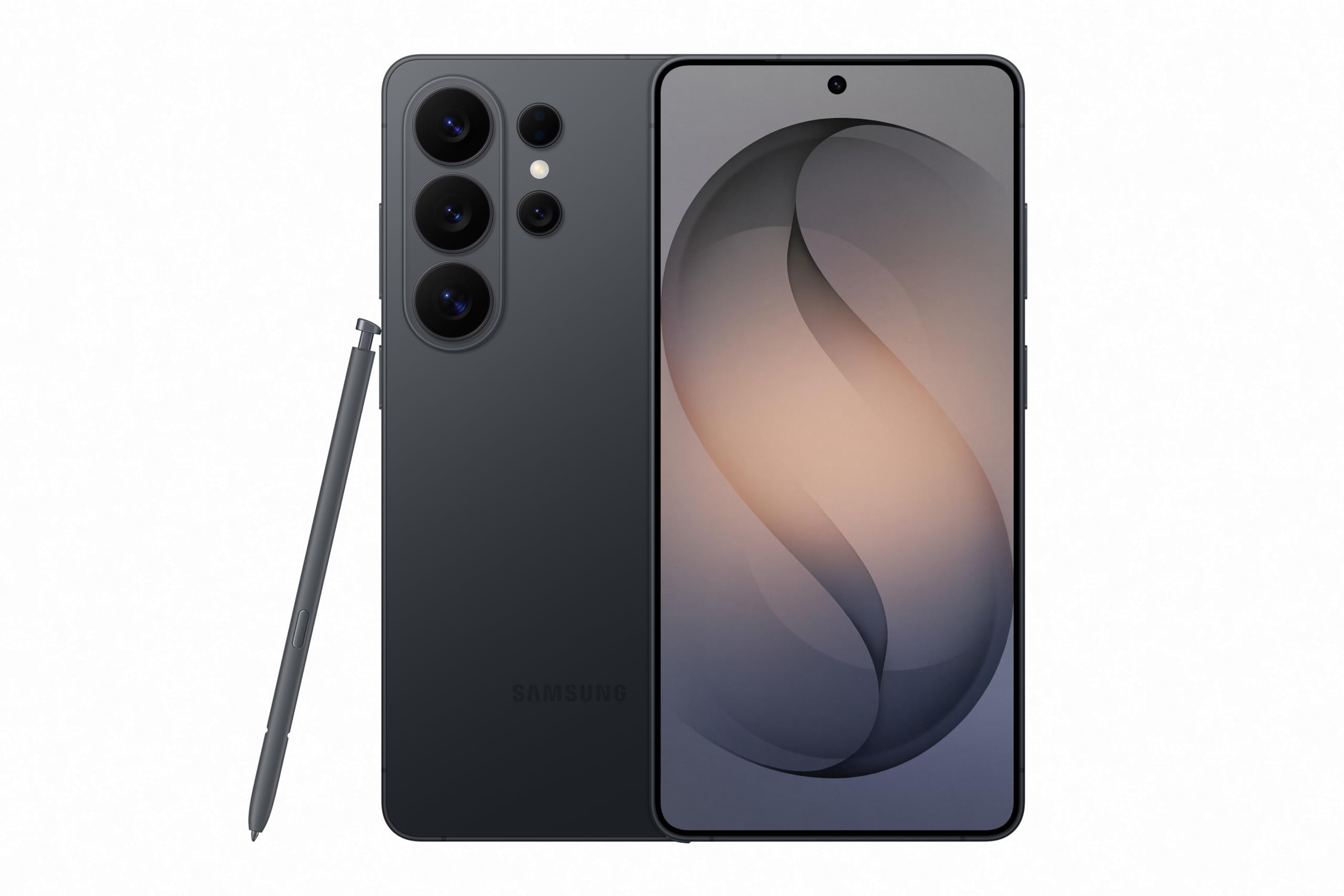
1. Samsung Galaxy S26 Ultra, open up Android Smartphone, 512GB, Black
Our pick — 4.5+★ from 2,000+ verified ratings; the strongest balance of quality and price.
The big phone that hides your screen from the stranger reading over your shoulder.
The defining feature here is not the size — it is the privacy display, a built-in layer that can be preset to dim the panel for anyone viewing it from an angle. It switches on automatically when notifications arrive, when you type a password, or when you open specific apps. On a train or in a café, that means your bank balance and your boarding pass stay yours. For a phone this large — which naturally draws a second glance — it is a genuinely useful reason to pick this model over the OnePlus 15 or the Pixel 10 Pro XL.
Everything else is flagship-grade in the ways big-phone buyers actually notice. The 5000 mAh battery (milliamp-hours, the stored charge) pairs with Super Fast Charging 3.0 support, and the AMOLED panel keeps contrast high when you stream. Storage runs to 512GB, which holds years of photos and video without a microSD card. The Photo Assist tools with Galaxy AI let you add objects, restore details, or restyle a shot by typing, and the wider front camera is built to fit more people into a group selfie. There is also a stylus in the box, alongside the phone, a quick start guide, a SIM ejector, and a USB cable.
What wins people over, overwhelmingly, is the overall quality of the build and the device itself — that is the thing the review pages keep returning to, well ahead of anything else. Camera quality and speed come up next, and the design gets its share of praise too. The honest catch is battery life, which draws genuinely split opinions: plenty of people get days between charges, and a meaningful group find it drains faster than they expected. The display also collects mixed notes. Treat the battery as a real question mark if you are a heavy user, not a given.
Why it takes the top slot
- Privacy display dims the screen at an angle, on a preset you control
- 512GB of storage and a stylus included in the box
- Photo Assist and Nightography tools for low-light shots
- Reverse wireless charging, so earbuds top up off the phone
Where it asks you to compromise
- Battery feedback splits between multi-day and fast drain
- Display quality draws mixed notes rather than uniform praise
- The privacy layer is a feature you pay flagship money for
Right call for: anyone who handles sensitive info in public and wants the biggest, most complete Samsung slab.
Think twice if: you are a heavy all-day user who needs predictable battery above everything else.
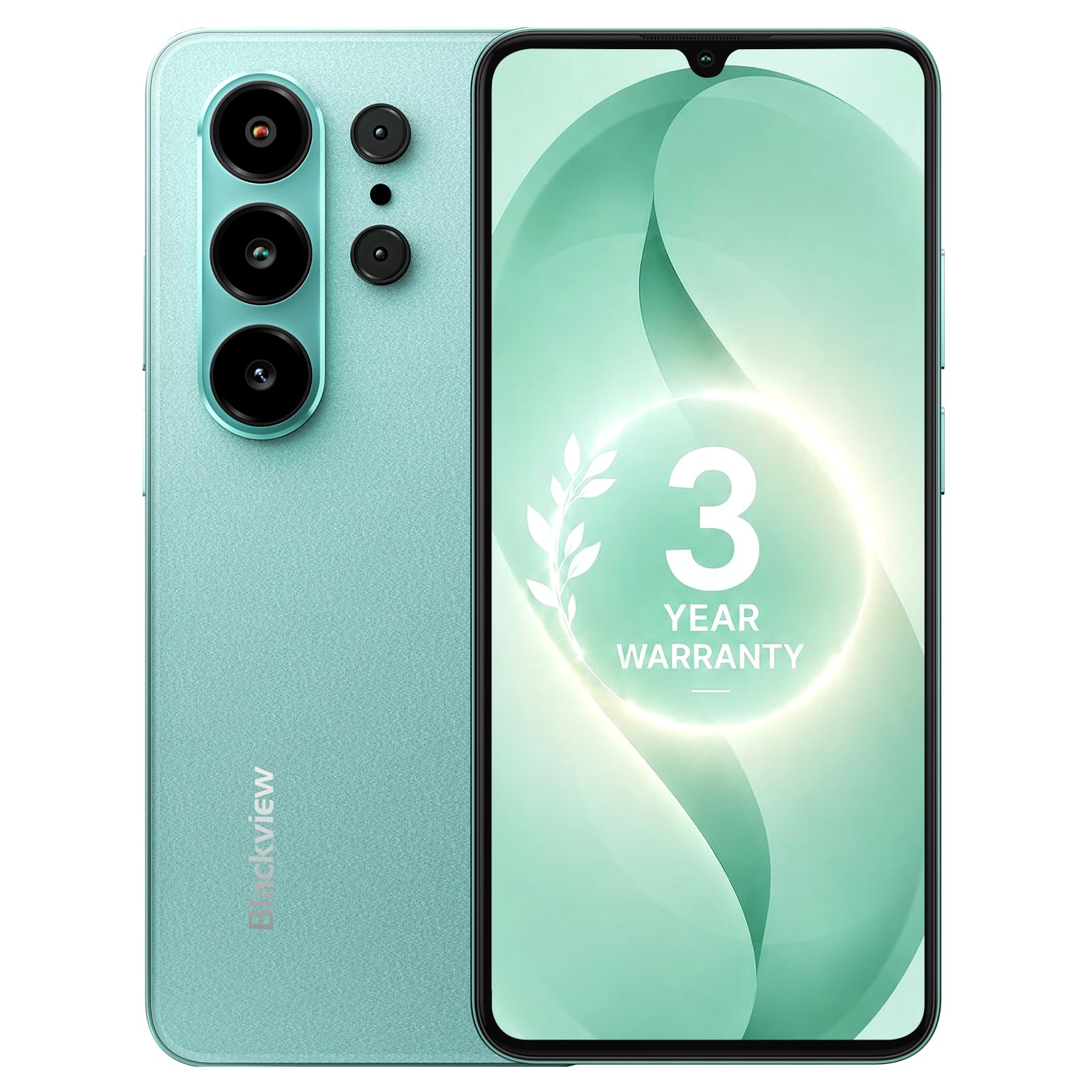
2. Blackview Wave 10C Android Phone open up 6.88″ Large Screen
A 6.88-inch screen for entry-level money — as long as you are on T-Mobile.
The panel is the story: a 6.88-inch HD+ IPS display with 178° viewing angles, so the picture stays true from the side of the couch and does not wash out. Refresh runs at 60Hz, which is fine for reading, video, and social scrolling but will not feel as fluid as the 120Hz panels on the FOSSiBOT S7 or the TCL NXTPAPER 70 Pro. A high-brightness mode keeps the screen legible in direct sun, which matters more than refresh rate on a commute.
Battery is a 5000 mAh cell, and the maker claims up to 1.5 days of heavy use. OTG reverse charging turns the phone into a power bank for a friend’s dead earbuds or phone. Storage is 128GB built in, expandable up to 1TB with a microSD card, and the memory setup is 4GB physical RAM plus 12GB virtual expansion for a total of 16GB. Cameras run 32MP on the back and 13MP up front, with HDR and night mode for dim shots. The body is 9mm thin at 205g, and the maker backs it with a 3-year warranty.
The carrier lock is the fact that decides this phone. It is built for T-Mobile only and will not work on AT&T, Verizon, Cricket, or CDMA carriers — confirm your network before you order. Performance feedback is genuinely split, with some finding it quick and others noting apps respond slowly. The screen, though, is what you came for, and it is the part that delivers.
Value read: For a big screen on a tight budget, the 6.88-inch panel and 5000 mAh cell do the job, and expandable storage up to 1TB keeps it useful for years.
Check first: confirm your SIM is T-Mobile — the network lock is a hard limit, not a setting.
Reach for this if: you are on T-Mobile and want the biggest screen for the least money.
Look elsewhere if: your carrier is AT&T, Verizon, Cricket, or a CDMA network.
3. Motorola Moto G Stylus 5G | 2024 | open up | Made for US 8/128GB
The stylus lives inside the phone, so jotting a note never means hunting for a pen.
Start with the 6.7-inch pOLED display, which pairs with Dolby Atmos sound for a cinema feel on a screen that still reads as pocketable next to the 6.9-inch crowd. The pOLED panel shows over a billion shades of color, so photos and video get depth that a plain LCD struggles to match. Then there is the built-in stylus: it slots into the body and works with updated software for notes, photo edits, and sketches. That is a genuinely different way to use a big screen, and no other pick here includes one.
Battery is a 5000 mAh cell, and the maker puts talk time at 30 hours for median users under a mixed-use profile. Charging runs at 30W TurboPower, so minutes on the plug buy hours of use. The 50MP main camera adds OIS — optical image stabilization, a physical steadier for the lens — which sharpens low-light shots and smooths handheld video. Storage is 128GB with RAM Boost using spare capacity as virtual memory, and the body has a soft vegan leather finish in Caramel Latte.
The pattern in the reviews is unusually consistent: phone quality leads by a wide margin, with value for money a clear second. Battery life, camera, speed, screen quality, the stylus, and storage all draw steady positive notes too. That is a consistent record across every category that matters on a mid-range big phone. The one spec to weigh honestly is the screen size — at 6.7 inches it is the smallest panel on this list, so if you want maximum canvas rather than stylus convenience, look elsewhere.
What the stylus buys you
- Built-in stylus for notes, photo edits, and sketches
- 6.7″ pOLED with over a billion shades and Dolby Atmos
- OIS on the 50MP camera for steadier low-light shots
- 30W TurboPower charging with 30 hours of rated talk time
The honest limits
- Smallest display here at 6.7 inches
- Storage tops out at the built-in 128GB unless you add a card
- RAM Boost borrows from storage, so it is not free memory
Buy this one if: you take notes or sketch and want a big screen that still fits a normal pocket.
skip it if: raw screen size is your only priority.
4. FOSSIBOT S7-32GB+256GB+2TB open up Phones, 6.9″ FHD+ 120Hz Dual-Screen
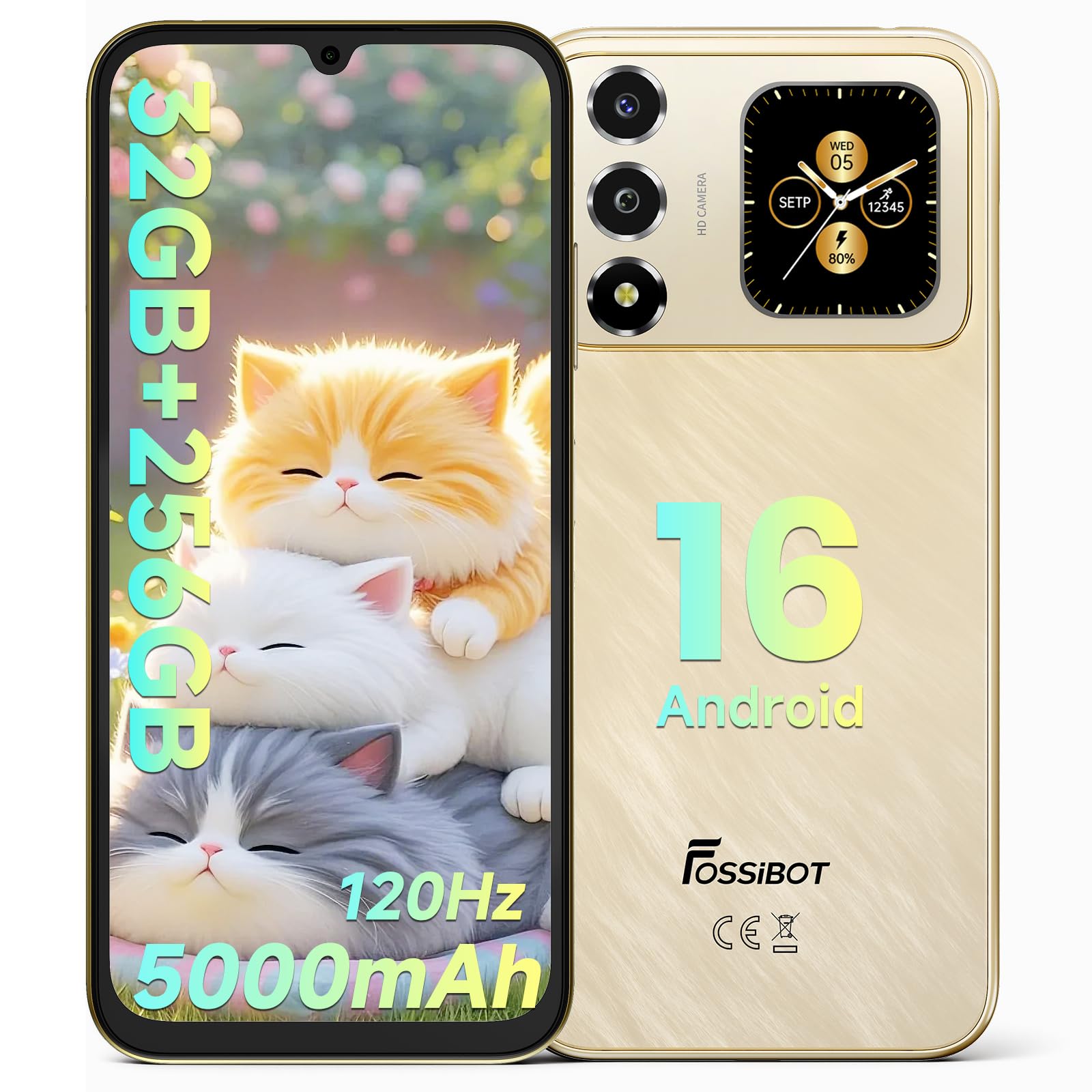
Two screens on one phone — a 6.9-inch main panel and a 1.8-inch smart rear display.
Dual screens are the reason to look here. The main display is a 6.9-inch FHD+ panel at 120Hz, which makes gaming and scrolling feel fluid. The 1.8-inch smart rear screen shows notifications, the time, and music controls without flipping the phone over — handy when it is face-down on a desk. That second screen is a neat solve for a common big-phone annoyance: checking a message and being pulled all the way into the phone.
Storage is where this pick punches above its price tier. You get 256GB built in plus support for a TF card up to 2TB, and 8GB physical RAM plus 24GB virtual for a total of 32GB. The 5000 mAh battery is rated for up to 670 hours of standby, 28 hours of calling, and 22 hours of gaming on one charge. The octa-core processor runs Android 16, and the body comes in at 8.5mm thin and 215g. Fingerprint and face open up are both on board.
Two limitations decide fit. There is no NFC, so tap-to-pay is off the table. And the phone is built for T-Mobile, not compatible with AT&T, Cricket, Verizon, or Xfinity Mobile. Those two facts are worth knowing before you fall for the dual-screen design.
The dual-screen case: Notifications and music controls on the back panel mean fewer full open up on a phone with a genuinely big canvas.
Deal-shaping gaps: No NFC and T-Mobile-only bands — both hard limits rather than preferences.
Match made for: T-Mobile users who want a huge 120Hz screen and a second display for quick glances.
Wrong fit for: anyone who uses tap-to-pay daily or is on a non-T-Mobile carrier.
5. Huness 17 PM 16+1TB open up Cell Phone, 6.9″ HD Screen
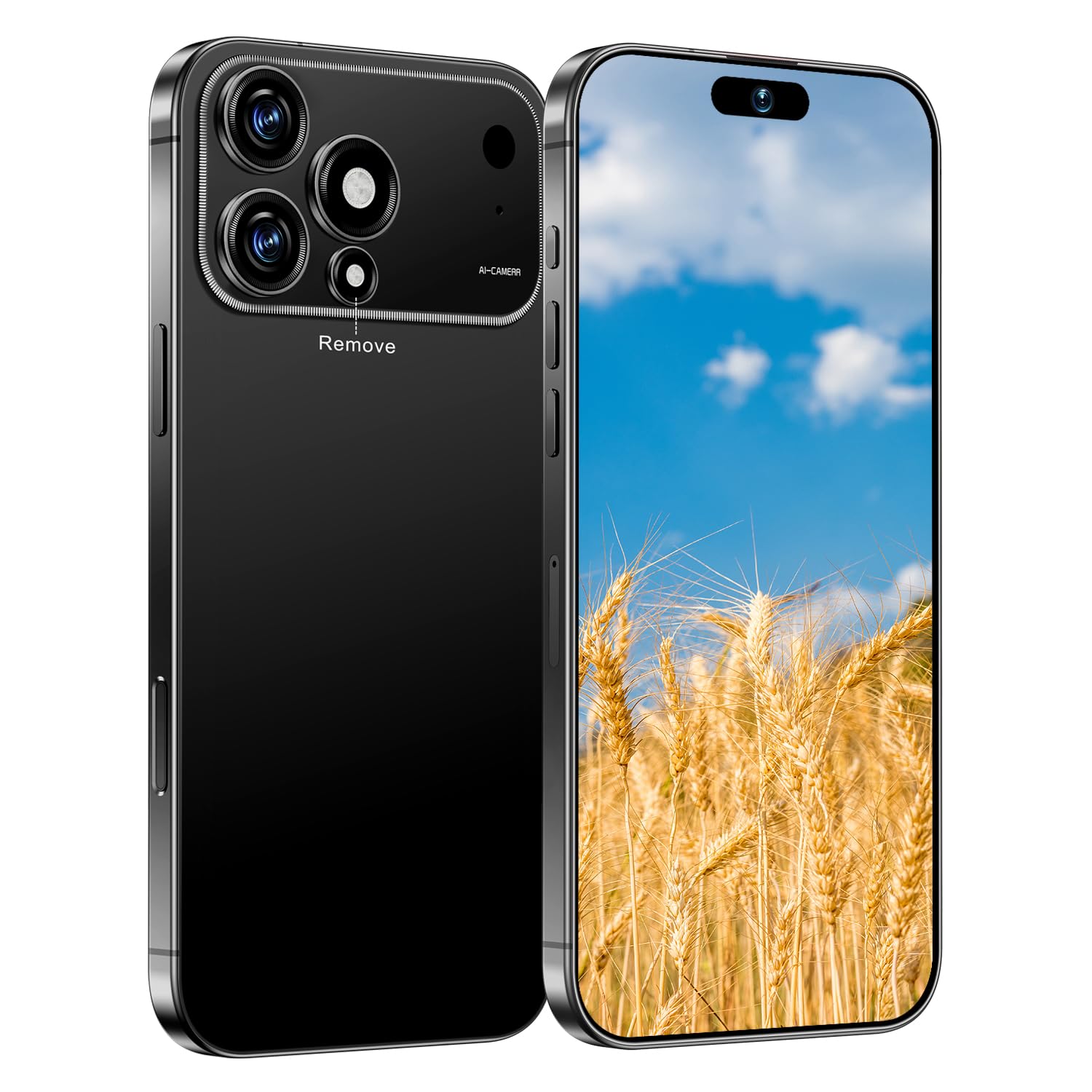
A 7000 mAh cell under a 6.99-inch screen — the endurance play of this list.
Battery capacity is the headline: 7000 mAh, which the maker pitches as enough power for a full day of free use. That is a far larger cell than the 5000 mAh pack in the Samsung Galaxy S26 Ultra and the Moto G Stylus. For anyone who leaves the charger at home, that gap is the whole argument. The screen is a 6.99-inch OLED panel — the largest flat slab display here — so you get the canvas and the endurance in one body.
Storage reaches 1TB, matching the Samsung Galaxy S25 Ultra on paper and far beyond the 128GB base models. Memory runs 16GB with the 1TB configuration. The phone adopts a dual-SIM design with two card slots, where the SIM and TF card holder share a tray, and it supports two 5G SIM cards so you can run a second number without a second phone. Face ID and a fingerprint button both open up it, and the box includes a screen protector, case, earphones, a power adapter, a pen, and a SIM clip pin.
Build quality is what the review pages lead with, and the fit of the included case gets its own share of approval. Durability is the split note — some find the phone sturdy, while others report cracked screens, which is the kind of thing screen protectors and a good case help with. At this price tier, that durability split is a fair trade, not a dealbreaker.
Why endurance buyers look here
- 7000 mAh battery — the largest cell in this roundup
- 6.99″ OLED screen, the biggest flat panel on the list
- 1TB of storage and 16GB of memory
- Two 5G SIM slots for a work and personal number
What to keep in mind
- Durability feedback splits between sturdy and screen cracks
- The OLED panel is described as HD rather than a higher resolution tier
- Dual-SIM and TF card share the same tray
Best suited to: heavy users who want the largest battery and the largest flat screen together.
Not the pick if: you want a proven track record on drop durability above all else.
6. TCL NXTPAPER 70 Pro open up Android Phone, 6.9″ 120Hz

The big screen built for people who read on their phone until the lights go out.
The 6.9-inch FHD+ NXTPAPER 4.0 panel is the entire reason this phone exists. It is anti-glare and flicker-free, with natural light simulation and hardware-level blue light reduced to 3.41%. For late-night readers, that is a different experience from a standard glossy panel. The NXTPAPER Key flips between four modes: Standard for daily apps, Color Paper for illustrations, Ink Paper for ebooks, and Max Ink for focused reading with longer battery life. A 120Hz refresh rate keeps scrolling smooth in every mode.
Battery is a 5200 mAh cell with supported 33W fast charging, and the maker says charging reaches 50% from 0% in about 38 minutes — enough for a top-up before a flight. Reverse charging shares power with compatible devices. Cameras are a 50MP main, an 8MP ultra-wide, and a 32MP front, with OIS for steadier handheld shots and a Super Night Mode for dim light. The phone adds 5G, WiFi 6E, dual speakers, and IP68 water and dust resistance, and it accepts an optional T-Pen for writing in text fields.
Owners are clearly here for the screen. Quality leads the review pages and screen quality sits right behind it, with performance and value close behind those. The recurring honest note is battery life, which some find fantastic and others find drains quickly — the same split you see in other big-screen phones, where the display does most of the draining. The screen size itself gets mixed notes too, which is worth reading as a fit question rather than a flaw.
Reader’s case: Anti-glare, flicker-free, and blue light cut to 3.41% — this is the most eye-comfort-focused panel in the roundup.
Realistic caveat: Battery life draws split verdicts, so heavy users should plan on a mid-day top-up.
Built for: students, commuters, and anyone who reads long-form on a phone screen.
Pass if: you want a gaming-first or maximum-brightness panel instead of a paper-like one.
7. Nothing Phone (4a) Pro Cell Phone, Android 16 Smartphone (Black, 8+128GB)
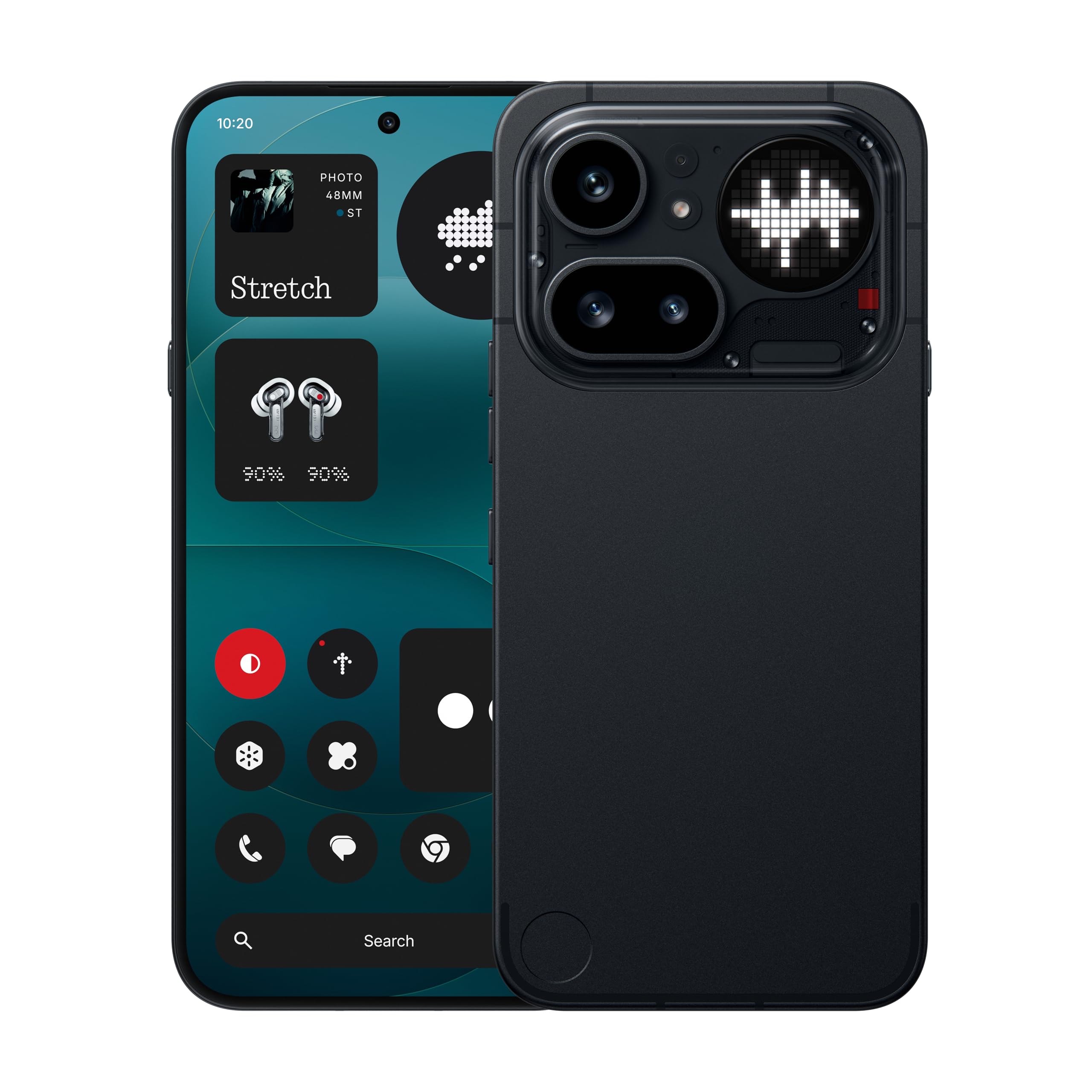
137 tiny LEDs on the back make this the big phone that refuses to look like the others.
The Glyph Matrix is the hook: 137 individually controllable mini-LEDs acting as a secondary display for notifications, timers, and battery status. Combined with the 7.9mm aluminum unibody and a transparent camera module, it is the only phone here you would recognize face-down on a table. The body is also IP65-rated for dust and water resistance, so the looks come with some protection.
Camera reach is where it separates from the pack. The triple system pairs a 50MP Sony main sensor with OIS, a 50MP periscope telephoto lens with 3.5x optical zoom and up to 140x ultra zoom, and an 8MP ultra-wide. That periscope lens means distant subjects — a stage, a skyline, a kid on a field — stay sharp in a way the 50MP cameras on the Moto G Stylus and TCL NXTPAPER cannot manage. Battery is a 5080 mAh cell with 50W fast charging, rated to hit 60% in 30 minutes and a full charge in 64 minutes, and rated for 45 hours of average battery life. Nothing OS 4.1 runs on Android 16 with no bloatware.
Owners treat it as a flagship, and quality is the theme that leads the feedback, with design and value both drawing steady praise. Connectivity is the mixed note — worth checking your bands before you buy, because the Verizon listing here is explicitly limited. It is not recommended for that network, and you must contact Verizon support to add the IMEI before use. AT&T and T-Mobile are covered, though not all 5G bands on either.
Pick it for: a standout design and real telephoto reach on a big AMOLED screen.
Cross it off if: you are on Verizon or need every 5G band on your carrier.
8. Samsung Galaxy S25 Ultra 5G (International Version) | 1TB Storage + 12GB RAM

A 6.9-inch Quad HD+ panel and 1TB of UFS 4.0 storage for people who never want to delete a photo.
Resolution is the differentiator. The 6.9-inch Dynamic AMOLED 2X panel runs 3120 x 1440 (Quad HD+) at 120Hz with a 450 pixels-per-inch density, protected by Corning Glass Victus 2. Side by side with the FHD+ panels on the FOSSiBOT and TCL, text and fine detail simply carry more pixels. The 1TB of UFS 4.0 storage is fast flash memory, so large video files load quickly as well as fit, and 12GB of RAM keeps big apps from reloading when you switch.
The camera array is the longest here: a 200MP main sensor plus 50MP, 50MP, and 10MP lenses, with a 12MP front camera. The Qualcomm Snapdragon 8 Elite chip handles the processing, and connectivity includes Wi-Fi 802.11be, Bluetooth v5.4, and NFC. Battery is 5000 mAh. It runs Android 15 and supports dual-SIM with two nano-SIMs, or a nano-SIM plus eSIM, or dual eSIM.
Buyers of this version need to read one line carefully: it is a GSM international model, open up for carriers like T-Mobile, and it will not work on Verizon, Sprint, or US Cellular or any CDMA network. Samsung’s regional lock gets removed before shipping, which requires the unit to be unsealed first. That is normal for this version — just know it is not a factory-sealed retail box.
The resolution argument: 3120 x 1440 on a 6.9-inch panel is the sharpest display in this roundup, and 1TB of UFS 4.0 storage is the most spacious.
Two things to confirm: your carrier is GSM-only, and you are fine with an unsealed international unit.
Worth it for: GSM-carrier users who want maximum storage and a Quad HD+ big screen.
Not for you if: you are on Verizon, Sprint, or US Cellular.
9. OnePlus 15, 16GB RAM + 512GB Storage, Snapdragon 8 Elite Gen 5
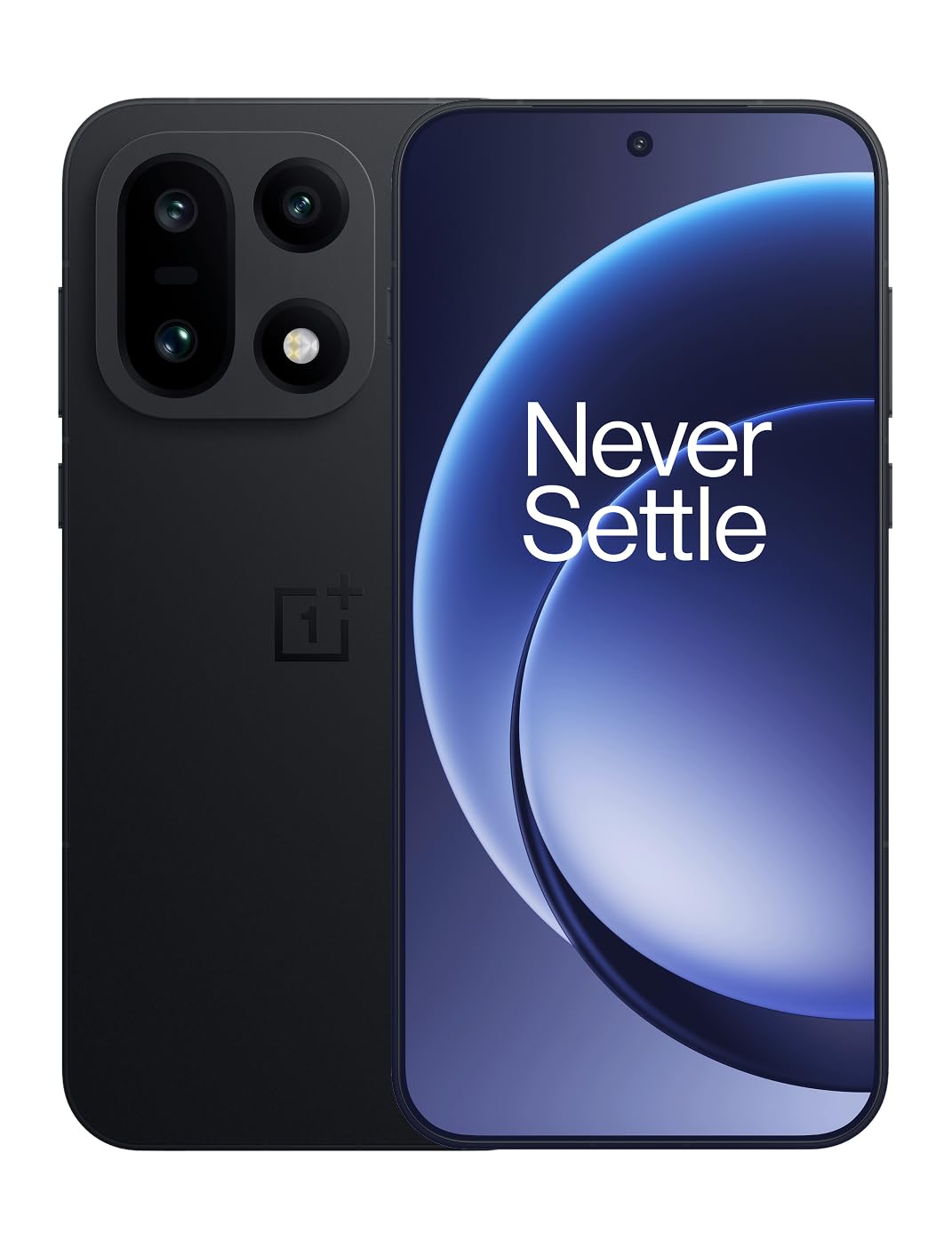
A 7300 mAh battery and a 165Hz panel — the numbers most big-screen phones cannot touch.
Endurance is the pitch here. The 7300 mAh battery is the largest cell in this entire roundup, comfortably ahead of the 7000 mAh Huness and the 5000 mAh Galaxy S26 Ultra. Owners routinely describe a full charge taking 30 minutes from 10% to 100%, and the battery is the second most-praised quality on the review pages after the phone overall. On a long day away from a plug, that 7300 mAh cell is the one you stop checking.
The 6.78-inch AMOLED display runs at 165Hz — faster than any other panel here — so motion in games and fast scrolling is the smoothest on the list. A tri-chip system pairs the Snapdragon 8 Elite Gen 5 with a dedicated Wi-Fi chip and a CPU scheduler for steadier performance and connectivity. The triple 50MP camera system covers wide, ultra-wide, and telephoto, with 16GB of RAM and 512GB of storage to back it up.
Performance and camera quality draw split notes, so some find it flawless and others hit rough edges in daily use. That is the honest picture on a phone this loaded, and it is worth knowing before you assume every app flows. The display, battery, and speed, though, are consistently the parts people rave about.
What it leads on
- 7300 mAh battery — the largest in this roundup
- 6.78″ AMOLED at 165Hz, the fastest panel here
- Charges from 10% to 100% in 30 minutes
- Triple 50MP cameras with 16GB RAM and 512GB storage
What you should weigh
- Performance feedback splits between flawless and buggy
- Camera quality also draws mixed notes
- The biggest battery comes with the heaviest body
Made for: all-day power users who want the biggest battery and fastest screen refresh together.
Look elsewhere if: you want the most consistent, tested camera and app behavior.
10. Google Pixel 10 Pro XL – open up Smartphone with Gemini – Obsidian 256 GB

A 6.8-inch Super Actua display bright enough to read at noon, wrapped around the best camera software in Android.
The screen number that matters is 3,300-nit peak brightness. That is what keeps the 6.8-inch Super Actua display easy to read in direct sunlight, which is the exact condition where most big phones become a mirror. It is built with durable aluminum and Corning Gorilla Glass Victus 2 for scratch and drop resistance, and the display runs at 486 pixels per inch, so text stays crisp at arm’s length.
The camera system is where the Pixel earns its place. Google’s AI models drive a 100x Pro Res Zoom, 50MP images, and super steady video at 8K, plus low-light shots that the software handles well. The Google Tensor G5 chip runs the AI features, including Gemini, and the open up build works with Google Fi, Verizon, T-Mobile, AT&T, and other major carriers — the widest carrier spread in this roundup. Battery is 5200 mAh, and talk time is rated at 21 hours.
Owners describe it as the best Android phone outright, with the camera and picture quality the thing they praise most, followed by screen quality and speed. The AI tools and customization options get their share of appreciation too. The catch is battery life, which draws mixed notes — plan on a charger nearby if you shoot a lot of video. Connectivity also collects mixed feedback, so verify your carrier’s bands in advance.
Shooting-first strengths
- 100x Pro Res Zoom with 50MP images and 8K video
- 3,300-nit peak brightness for reading in direct sun
- Works with Google Fi, Verizon, T-Mobile, and AT&T
- Gemini and Google AI features built in
What takes adjusting
- Battery life draws split verdicts
- Connectivity feedback is mixed, so check your bands
- Storage tops out at 256GB in this version
Go for it if: the camera and the brightest screen are what you use a big phone for.
Hold off if: you need a big battery above all or 512GB+ of internal storage.
11. HONOR Magic V5 5G Folding Screen | 512GB Storage 16GB RAM

Not a big phone at all — a tablet that folds down to a 6.43-inch phone.
The inner screen is a 7.95-inch foldable OLED at 2352×2172 pixels with 1.07 billion colors and a 120Hz refresh rate. That is a tablet-class canvas for split-screen work, video, and reading, and it is the largest display here by a wide margin. When you close it, the external 6.43-inch OLED at 2376×1060 pixels becomes the everyday screen. That dual nature is the entire reason to spend on a foldable rather than a slab.
Internals are flagship all the way: the Qualcomm Snapdragon 8 Elite platform with Adreno 830 graphics, 16GB of RAM, and 512GB of storage. The rear setup is a 50MP + 50MP + 64MP triple camera with 100x digital zoom, and the front uses twin 20MP cameras. The 5820 mAh battery is larger than the 5000 mAh cells in the Samsung Galaxy S26 Ultra and Galaxy S25Ultra, and Wi-Fi 802.11be with Bluetooth 6.0 rounds out connectivity. It runs Android 15 with MagicOS 9.0.1.
Two limits shape who this suits. It is a GSM international version built for carriers like T-Mobile, and it will not work on Verizon, Sprint, or US Cellular. And a foldable inner screen is a different kind of daily care commitment than a solid slab. If you want the biggest screen in this list, this is it — just pair it with a carrier it supports.
The foldable case: A 7.95-inch inner OLED with 512GB and 16GB of RAM covers tablet work and phone duty in one pocketable body.
Know before you buy: T-Mobile-class GSM carriers only, and the folding screen asks for gentler handling than a slab.
Choose this if: you want the largest screen on this list and are on a GSM carrier.
Rule it out if: you are on Verizon, Sprint, or US Cellular, or want a slab phone with no folding care needed.
Understanding the Specs
Screen size and refresh rate
Screen size is measured diagonally in inches, and in this category everything sits between 6.7 and 7.95 inches. Bigger means more content on screen — more map, more video, more split-screen — and generally harder one-handed use. Refresh rate in Hz is how many times per second the panel redraws. A 60Hz screen updates 60 times a second, which reads fine for text and video. A 120Hz or 165Hz panel redraws more often, so scrolling and games look smoother, at some cost in power. Both numbers matter independently: a 6.88-inch screen at 60Hz and a 6.9-inch screen at 120Hz feel very different in motion.
Battery capacity and charging
Battery capacity is stated in mAh, which measures how much charge the cell holds. A 5000 mAh phone and a 7300 mAh phone are built for different days, though a bigger panel and faster chip can eat the difference. Charging is the other half. A 30W or 33W charger brings a phone back faster than a standard charger, and reverse or OTG charging lets the phone top up earbuds or another device. Peak brightness in nits tells you how readable the panel stays in sunlight — 3,300 nits is the highest figure in this roundup.
RAM, storage, and virtual memory
RAM is the short-term working memory that holds open apps; storage is the long-term space for photos, video, and files. Some phones list a combined RAM figure that mixes physical RAM with virtual expansion borrowed from storage — a 16GB total may be 4GB physical plus 12GB virtual. That borrowing ties up storage while it is in use, so read the physical number if you care about real headroom. Storage ranges here from 128GB up to 1TB, and several models accept a microSD or TF card for more.
Carrier bands and network support
An open up phone still only works on the networks its bands support. Some models here are built for T-Mobile specifically and will not register on AT&T, Verizon, Cricket, or CDMA networks at all. Others cover the major US carriers but skip CDMA, or cover AT&T and T-Mobile while limiting Verizon bands. Before you buy, match your carrier and local coverage against the listed bands — this is the one specification that cannot be changed with a setting or an update.
FAQ
Will a big phone this size still fit in my pocket?
Is a 120Hz screen worth it on a big phone?
How much battery capacity do I need for a big screen?
Will an open up big phone work on my carrier?
What does virtual RAM mean on these phones?
Do I need a stylus with a big phone?
Is a foldable better than a big slab phone?
How sharp is a Quad HD+ screen compared with FHD+?
Will a 7000 mAh battery last longer than a 5000 mAh one?
Does a foldable or big phone need a case?
Final Thoughts: The Verdict
The winner for most people is the Samsung Galaxy S26 Ultra. It pairs the privacy display — a preset that dims your screen at an angle — with a 5000 mAh battery, 512GB of storage, and a stylus in the box, and it is the big phone that keeps your data yours in public. If endurance is your real test, the OnePlus 15 runs the largest cell here at 7300 mAh under the fastest 165Hz panel. And if you want a tablet that folds into a phone, the HONOR Magic V5 gives you a 7.95-inch inner screen and a 6.43-inch cover screen in one body.
One more thing worth checking before you commit: your carrier bands matter more than any spec on this page. A phone with a 6.9-inch 120Hz screen is useless to you if it will not register on your network. Confirm that first, then let the screen, battery, and camera decide the rest.
How We Picked
We do not accept paid placement. Every pick is matched to a real buyer and a real use-case; we do not hands-on test units.
Sources & Methodology
Specifications: manufacturer listings and product documentation. Review insights: verified customer reviews, as of November 2026. Pricing: not shown on this page (it changes often); check the current price via the retailer link.
As an Amazon Associate, Gadgets Feed earns from qualifying purchases. This does not affect which products we feature.