
Our readers keep the lights on and my morning glass full of iced black tea. As an Amazon Associate, I earn from qualifying purchases.
Every pedal stroke you take holds data you are currently ignoring, and ignoring it means you are leaving efficiency, endurance, and speed on the road. A reliable cadence sensor closes that gap by giving you real-time pedaling revolutions per minute, the single most actionable metric for improving your cycling output on any bike, indoors or out.
I’m Min — the co-founder and writer behind Gadgets Feed. I have spent hundreds of hours poring over wireless protocol stacks, battery life reports, and cross-app compatibility tables to separate the sensors that actually deliver stable data from those that introduce frustrating dropouts mid-ride.
After working through dozens of spec sheets and rider feedback reports, I have narrowed the market to the seven units that deserve your attention. This guide covers the best bike cadence sensor options, from dual-protocol value bundles to premium Garmin and Polar sets that integrate seamlessly with existing cycling ecosystems.
How To Choose The Best Bike Cadence Sensor
A cadence sensor is a small but critical component of any cyclist’s data setup, yet most buyers overlook the wireless protocol, battery longevity, and mounting method until after a frustrating ride. Focus on these three factors to avoid wasted money and missed data.
Bluetooth vs ANT+: The Dual-Protocol Decision
Your cadence sensor must speak the same language as your head unit or phone. Bluetooth Smart is standard for smartphone apps like Zwift, Peloton, and Wahoo. ANT+ is the protocol used by dedicated cycling computers from Garmin, Wahoo, and iGPSPORT. A sensor that supports both protocols gives you the flexibility to switch between devices without buying a second unit.
Mounting Philosophy: Magnets vs Magnet-Free
Older sensor designs rely on a spoke magnet and a pickup arm that must be painstakingly aligned within a few millimeters. Modern sensors use accelerometer-based detection that requires no magnets at all. Magnet-free units install in seconds, transfer between bikes without re-calibration, and are less prone to position shifts during rough rides.
Battery Life and Replacement Ease
Typical sensors run on a single CR2032 coin cell for 300 to 500 hours of active use. Choose a unit with a user-replaceable battery rather than a sealed design, or you will be discarding the whole sensor when the cell dies. The difference between 300 and 500 hours is approximately one extra replacement per year for a regular rider.
Quick Comparison
On smaller screens, swipe sideways to see the full table.
| Model | Category | Best For | Key Spec | Amazon |
|---|---|---|---|---|
| Garmin Speed & Cadence 2 Bundle | Premium | Garmin ecosystem riders | ANT+/Bluetooth, no magnet, tool-free install | Amazon |
| Wahoo RPM Cycling Cadence Sensor | Premium | Spin bike & Zwift users | ±1% accuracy, 40-120 RPM range | Amazon |
| Polar Speed and Cadence Set | Premium | Polar watch owners | 3000-hour battery life | Amazon |
| iGPSPORT CAD70 & SPD70 Combo | Mid-Range | Budget dual-sensor buyers | 300-hour battery, IPX7, 7.8g weight | Amazon |
| CYCPLUS C3 Speed & Cadence (2-pack) | Mid-Range | Dual-sensor value pack | 9.2g per sensor, 300-hour life | Amazon |
| COOSPO BK805 2-in-1 Sensor | Budget-Friendly | Entry-level value seekers | IP67, 500-hour battery, 2-in-1 mode | Amazon |
| COOSPO BC107 GPS Computer | Budget-Friendly | All-in-one head unit | GPS/BeiDou, ANT+ sensor hub | Amazon |
In‑Depth Reviews
1. Garmin Speed Sensor 2 and Cadence Sensor 2 Bundle
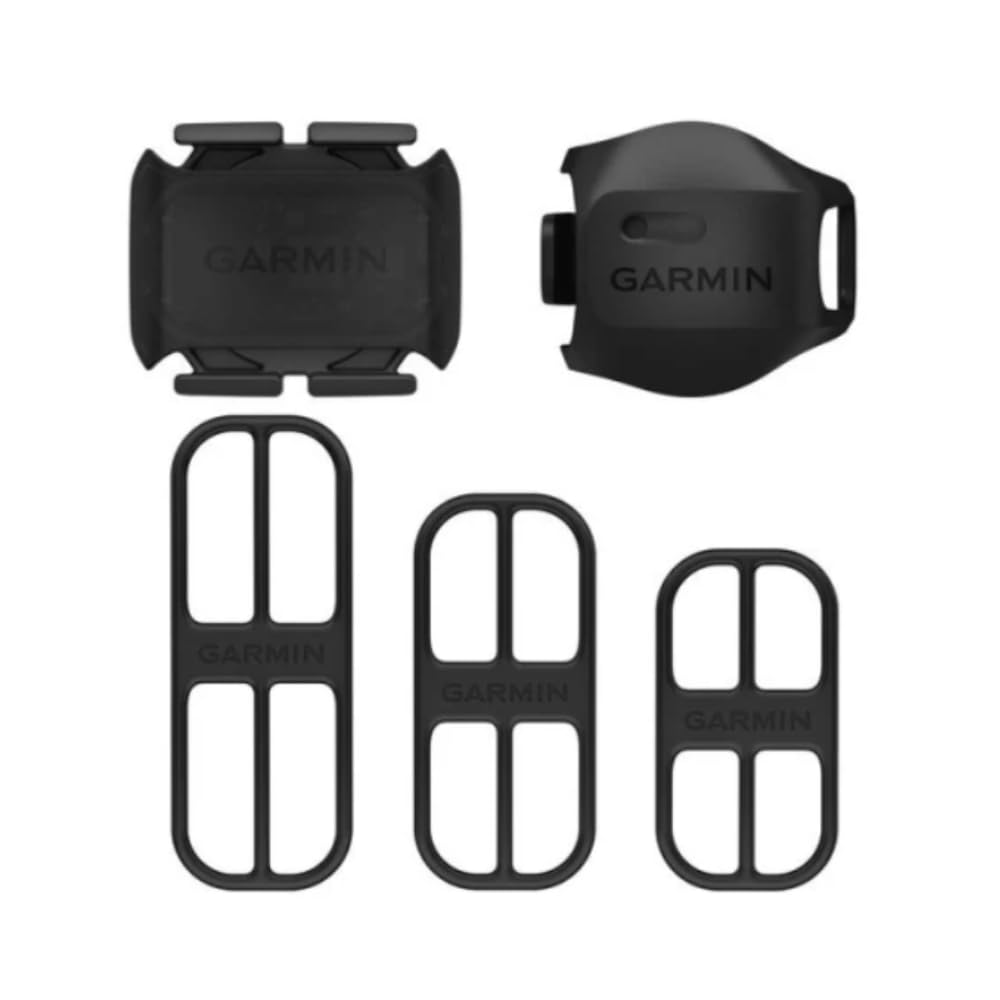
Garmin’s second-generation bundle sets the benchmark for hassle-free installation and rock-solid connectivity. Both sensors attach without tools or magnets — the cadence unit fastens to any crank arm with a twist-lock mount, while the speed sensor self-calibrates on the wheel hub using Garmin’s Edge series. The improved water sealing over the previous generation means you can ride through heavy rain without worrying about data dropouts.
Pairing is instantaneous with any modern Garmin head unit, and the sensors also broadcast via Bluetooth for smartphone apps. Reviewers consistently praise the absence of dropped signals even during long rides in variable weather. The 99-gram total weight is negligible on the bike, and battery changes require no special tools.
For cyclists already invested in Garmin’s ecosystem, this bundle delivers the most polished experience available. The premium price reflects the engineering quality, but the reliability justifies the investment for riders who depend on accurate data for structured training.
Why it’s great
- Tool-free, magnet-free installation in seconds
- Instant ANT+ and Bluetooth pairing with Garmin devices
- Improved water sealing prevents corrosion and dropouts
Good to know
- Premium pricing compared to entry-level alternatives
- Requires a compatible Garmin head unit for full self-calibration
2. Wahoo RPM Cycling Cadence Sensor
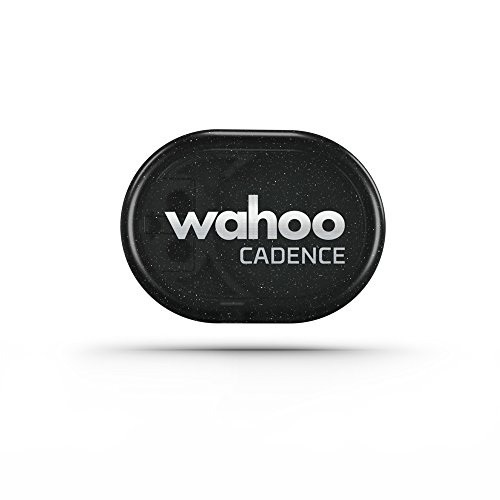
The Wahoo RPM stands out for its ±1 percent measurement accuracy and a measuring range of 40 to 120 RPM, which covers virtually every rider from casual cruise to competitive cadence drills. It ships with both a crank arm mount and a shoe mount, giving you the flexibility to use one sensor across multiple bikes by attaching it to your cycling shoes instead.
Dual-band Bluetooth and ANT+ compatibility means it pairs with everything from an iPhone running Zwift to a Wahoo ELEMNT computer. The dual LED system provides immediate visual feedback — blue confirms device connection, and a red blink per crank revolution confirms RPM detection. At roughly 40 grams, it is lightweight enough for even the most weight-conscious cyclists.
Riders using Peloton Digital and SYSTM apps report seamless integration, though a slight one-to-two-second cadence lag is noted during rapid accelerations. For most users, this delay is negligible and does not affect training data quality.
Why it’s great
- Exceptional ±1% accuracy for structured training
- Dual mount option (crank arm or shoe) for multi-bike setups
- Visible LED indicators confirm pairing and RPM detection instantly
Good to know
- Minor cadence delay of 1-2 seconds during rapid accelerations
- Peloton app on Android does not display cadence from external sensors
3. POLAR 91047327 Speed and Cadence Sensor Set

Polar’s sensor set is built for longevity, advertising an extraordinary 3000-hour battery life — roughly ten times longer than most competitors. The set includes a dedicated speed sensor and a dedicated cadence sensor, both using Bluetooth Smart wireless technology. This makes them ideal for Polar watch owners using models like the V800 or Vantage M, where native integration eliminates pairing headaches.
The small and light design attaches firmly to the bike and works with the iPhone 4S and later as well as select Android devices running 4.3 or newer. Reviewers on non-standard bikes, such as tadpole trikes, report creative mounting solutions that still yield accurate readings. The sensors support wheel size entry for precise distance calibration.
The primary drawback is the non-replaceable battery. Once those 3000 hours are used, the entire sensor must be replaced. At this premium price point, the sealed design is a notable limitation for riders who prefer maintainable hardware.
Why it’s great
- Industry-leading 3000-hour battery life minimizes replacements
- Seamless native pairing with Polar V800 and Vantage M watches
- Dedicated speed and cadence sensors for independent data streams
Good to know
- Batteries are non-replaceable by the user
- Premium price does not include ANT+ support, only Bluetooth
4. iGPSPORT Speed and Cadence Sensor Set
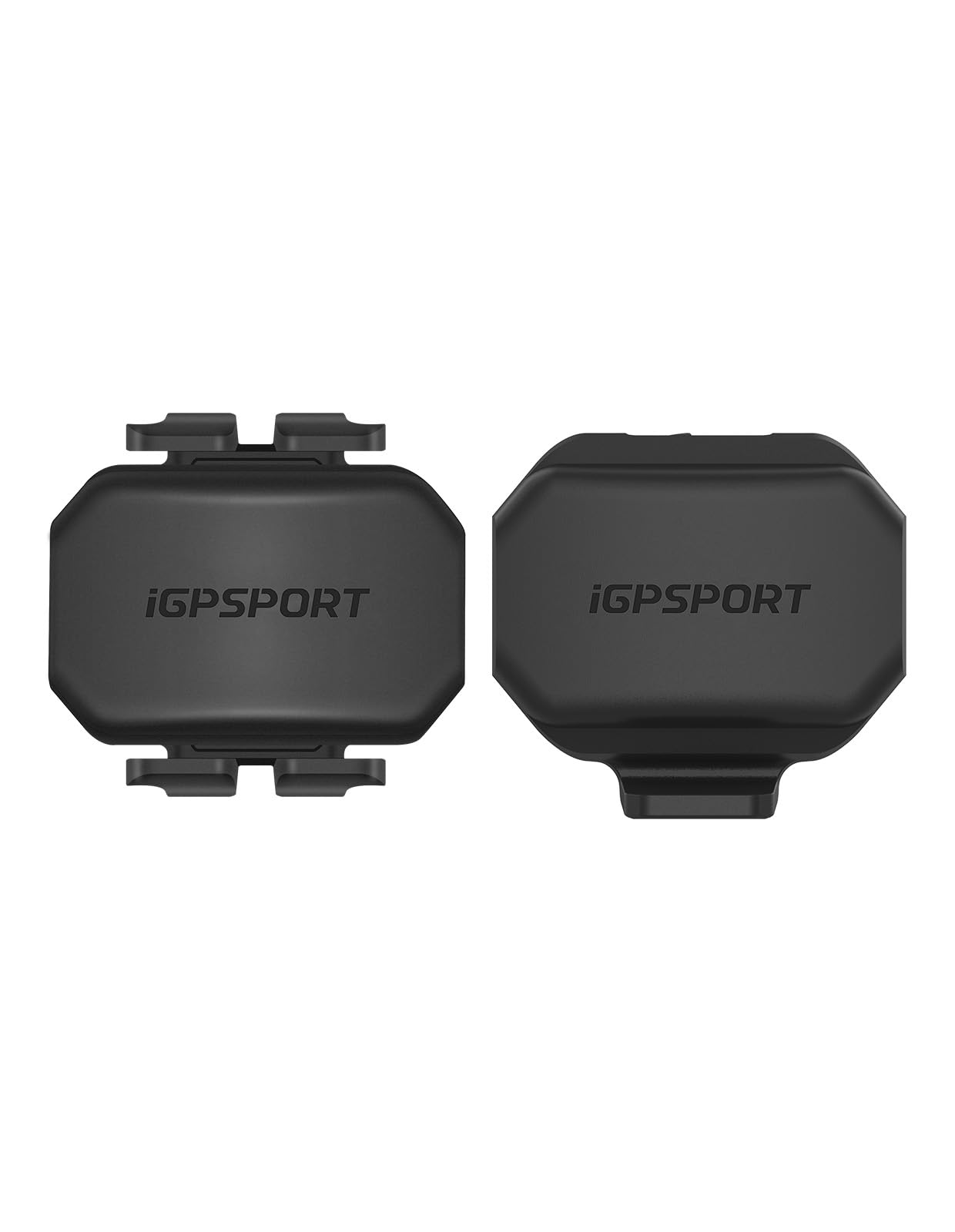
The iGPSPORT CAD70 and SPD70 combo offers the lightest dual-sensor setup in this lineup at just 7.8 grams per unit. Each sensor integrates Bluetooth 5.0 and ANT+, ensuring compatibility with virtually any bike computer or training app. The ultra-thin 0.3-inch profile sits flush against the crank arm and wheel hub, protecting your bike’s finish from scratches.
Battery life is rated at 300 hours per sensor, which is standard for this class, and the IPX7 waterproof rating means the sensors survive heavy downpours without issue. Reviewers highlight the instant connection to iGPSPORT head units and Garmin computers alike, and the independent algorithm claims higher accuracy than older firmware-based sensors.
The set includes both a cadence and a speed sensor, making it a complete package out of the box. One reviewer noted the importance of removing the battery between rides to prevent unintended drain, a minor maintenance habit for an otherwise excellent value proposition.
Why it’s great
- Extremely lightweight at 7.8g per sensor, barely noticeable on the bike
- Bluetooth 5.0 offers stronger signal stability than older versions
- IPX7 rating provides reliable performance in wet conditions
Good to know
- Battery should be removed between rides to avoid premature drain
- Some users report occasional pairing delays with non-iGPSPORT computers
5. CYCPLUS C3 Cycling Speed and Cadence Sensor (2-Pack)

CYCPLUS delivers a two-pack of sensors that can each be toggled between speed and cadence mode using a physical switch, giving you the flexibility to configure the setup exactly as you need. At just 38mm by 29.5mm by 9.5mm and weighing only 9.2 grams, these are among the most compact sensors available, and they attach via elastic bands and double-sided tape with no magnets required.
Battery life is rated at 300 hours of active use with a 300-day standby time, and the sleep mode activates automatically when motion stops. The sensors support both Bluetooth and ANT+, so they pair with Garmin Edge computers, Wahoo apps, and even under-desk exercise bikes. Reviewers praise the long battery stint, with some reporting over 1.5 years without a replacement.
Installation is unconventional — the battery compartment opens by turning the mode dial and pulling — but once set up, the sensors deliver stable, accurate readings. The included rubber bands can fail on gravel bikes, so some riders recommend adding self-fusing silicone tape for extra security on rough terrain.
Why it’s great
- Two sensors included for the price of one premium unit
- Dual-mode switch lets each sensor operate as speed or cadence
- Excellent battery longevity with automatic sleep mode
Good to know
- Battery compartment design is fiddly to open and close
- Stock rubber bands may be insufficient for off-road use
6. COOSPO BK805 2-in-1 Cadence and Speed Sensor

The COOSPO BK805 is the most affordable entry point into accurate cadence tracking without sacrificing essential features. It supports both Bluetooth and ANT+, runs on a replaceable CR2032 battery rated for up to 500 hours, and carries an IP67 dust and water resistance rating that exceeds many more expensive competitors. The 2-in-1 design tracks both cadence and speed, eliminating the need to buy two separate sensors.
Installation uses a spoke magnet and pedal magnet setup — a more traditional approach — but the included bendable sensor arm makes alignment straightforward. Reviewers report that it pairs instantly with the Polar M460 and Cyclemeter app, and one rider logged over three years of reliable use on a Specialized Tarmac. The bundle includes multiple rubber bands and zip ties for a secure mount.
The only limitation is compatibility: the sensor is not recommended for indoor spinning bikes and may show speed reading errors above 35 mph on velomobiles. For standard road and mountain bikes at normal speeds, this sensor delivers outstanding value.
Why it’s great
- Exceptionally long 500-hour battery life on one CR2032 cell
- IP67 rating protects against dust and water immersion
- 2-in-1 design measures both cadence and speed simultaneously
Good to know
- Uses traditional magnet-based installation, not magnet-free
- Not recommended for indoor spinning bikes or very high-speed velomobiles
7. COOSPO BC107 GPS Bike Computer

The COOSPO BC107 is not a standalone cadence sensor but a full GPS bike computer that serves as the display hub for ANT+ cadence sensors. It uses both GPS and BeiDou satellite positioning for accurate speed and distance tracking, and its 2.4-inch LCD display shows cadence, heart rate, power, and speed when paired with compatible ANT+ sensors. This makes it an ideal upgrade path for riders who currently use a phone app but want a dedicated cycling head unit.
Setup is handled through the CoospoRide app, which also syncs activity files to Strava. The BC107 features an auto-backlight and IP67 waterproofing, so it performs well in low-light and rainy conditions. Reviewers report accurate GPS lock within seconds and battery endurance that lasted 500 miles across 10 days while still showing 75 percent remaining.
One limitation is that the BC107 uses ANT+ exclusively for sensor connections — it does not support Bluetooth sensors. If your cadence sensor is Bluetooth-only, it will not pair with this computer. Additionally, the app has had intermittent Strava auto-sync issues that require manual uploads.
Why it’s great
- GPS and BeiDou dual-satellite positioning for accurate location data
- ANT+ hub integrates cadence, speed, heart rate, and power sensors
- Exceptional battery longevity reported in real-world riding conditions
Good to know
- Does not support Bluetooth sensors, only ANT+
- App has had occasional Strava auto-sync stability issues
FAQ
Can I use a Bluetooth cadence sensor with a Garmin Edge computer?
How do I know if a sensor works with my indoor spin bike?
What is the difference between a 2-in-1 sensor and separate speed and cadence sensors?
Final Thoughts: The Verdict
For most users, the best bike cadence sensor winner is the Garmin Speed Sensor 2 and Cadence Sensor 2 Bundle because it delivers tool-free, magnet-free installation with rock-solid ANT+ connectivity within the Garmin ecosystem. If you want a high-accuracy standalone cadence sensor for use across multiple bikes and apps, grab the Wahoo RPM Cycling Cadence Sensor. And for the best value complete setup that includes both speed and cadence tracking at a fraction of the price, nothing beats the iGPSPORT CAD70 and SPD70 Combo.