
Our readers keep the lights on and my morning glass full of iced black tea. As an Amazon Associate, I earn from qualifying purchases.
Specs are compiled from manufacturer listings and verified buyer reviews and can change over time — please confirm the key details on the product page before buying.
When you’re picking a bike for a 3 year old, the make-or-break detail isn’t the color or the basket — it’s whether your child can sit on the seat with both feet flat on the ground. A 3 year old who can touch the pavement feels safe and will actually try to ride. A child whose toes dangle gets scared and quits. That’s the whole game at this age, and every pick below is sized around it.
I’m Min — the founder and writer behind Gadgets Feed. This guide is built by comparing the manufacturers’ published specifications and the patterns across verified customer reviews, so you get each pick’s real strengths and trade-offs instead of marketing spin.
Below you will find the strongest bike for 3 year old options, sorted by what actually helps a toddler learn.
Our Picks at a Glance


How To Choose The Best Bike For 3 Year Old
Most parents walk into this purchase thinking about the picture on the box. What matters is whether your specific child, with their specific leg length, can sit on the saddle and touch the ground with flat feet while the training wheels are still attached.
Measure the inseam first, ignore the age label
Stand your child against a wall in the shoes they will ride in. Measure from the floor up to their crotch — that is the inseam. Now compare it to the saddle height range on the listing. If the saddle cannot drop low enough for their inseam, the bike is too big no matter what age range the box claims. A three year old who can plant both feet flat gains confidence fast; one who has to tip-toe will refuse to ride.
Coaster brake or hand brake?
A coaster brake (you pedal backwards to stop) uses the instinctive motion a toddler already understands. A hand brake needs a squeeze strong enough to pull a lever, and small hands often can’t manage it — which is why several picks here pair a short-reach hand lever with a coaster brake so your child has two ways to stop. For a first bike, the coaster brake is the one that actually gets used.
Training wheels and how they attach
Training wheels keep the bike upright while your child learns to pedal and steer at the same time. The thing to check is how solidly they bolt on — training wheels that work loose over a few weeks make the bike wobble and scare the rider. Removable training wheels are the better buy, because you can take them off the day your child is ready to balance on their own rather than buying a second bike.
Quick Comparison
| Model | Best For | Wheel Sizes | Weight Limit | Minimum Height | Amazon |
|---|---|---|---|---|---|
| Glerc Fantacy Kids Bike★ Best Overall | First-time riders just learning | 12–20 inch | 120 pounds | 33 inches | Amazon |
| BABY JOY Kids BikeBest Value | Parents who want extras included | 12–20 inch | 99 pounds | 31 inches | Amazon |
| COSTWAY Kids BikeCertified Safe Pick | Families wanting certified safety | 12–18 inch | — | 31.5 inches | Amazon |
| Glerc Maggie Girls Bike | Little girls who want the cute factor | 12–20 inch | 150 pounds | 32 inches | Amazon |
| cubsala Kids Bike | Kids who ride on rougher pavement | 12–18 inch | 60 pounds | 35 inches | Amazon |
| JOYSTAR New Berry Kids Bike | Buying for growth over several years | 12–20 inch | 50 pounds | 86 centimeters | Amazon |
| Huffy Illuminate Girls Bike | Fastest possible setup on day one | 12/16/20 inch | 65 pounds | 37 inches | Amazon |
| OHIIK Balance Bike 2 in 1 | Learning balance before pedals | 12–16 inch | 75 pounds | — | Amazon |
In‑Depth Reviews
1. Glerc Fantacy Kids Bike, 12-20 Inch Children Bicycle for 2-13 Years Old
Our pick — over 4.5★ from 300+ verified ratings; the strongest balance of quality and price.
Built for a 3 year old’s first wobbly push down the driveway — and sturdy enough to survive it.
The 12-inch Fantacy is the toddler size of a bike that runs from 12 up to 20 inches, and it is aimed squarely at children ages 2 to 4 who stand 33 to 37 inches tall. For a 3 year old, that 33-inch minimum is the number to check first, because a child who can plant both feet on the pavement learns far faster than one who has to stretch. The bike carries a 120-pound maximum weight recommendation, which is the highest in this lineup — so a sibling can hand it down and it still holds.
Two brakes, deliberately. There is a coaster brake (pedal backwards to stop) and a handbrake on the bars. The coaster side is the one a 3 year old will master first, and the hand brake quietly teaches the next skill without forcing it. The saddle and handlebars both adjust, so the same bike that fits now still fits after a growth spurt — worth knowing when the alternative is buying again next spring. The frame arrives 85% pre-assembled and the company says the last 15% takes about 20 minutes with basic tools.
Parents keep coming back to the build, and it shows in how long these get handed down rather than replaced. What’s worth flagging honestly is the training wheels: a few families found the mounting fiddly and one reviewer noted adding them was “definitely having an issue.” That’s a setup snag, not a riding failure — plan an extra ten minutes on that step. It weighs 24.2 pounds, which is real heft when you’re the one carrying it up the porch steps at the end of the day.
Where It Wins
- Both a coaster brake and a handbrake, so a 3 year old gets the easy stop first
- 120-pound weight limit is the highest here — real hand-me-down value
- Adjustable saddle and bars grow with the child
- 85% pre-assembled, about 20 minutes to finish
Where It Costs You
- Training-wheel mounting takes patience on some units
- 24.2 pounds is heavy to cart up stairs
- Stability and ride quality split opinion in owner feedback
Buy this if: your 3 year old is around 33 inches or taller and you want one bike that carries them from first wobble to real pedaling.
Think twice if: you only ever ride on grass or gravel — the intended terrain here is paved roads.
2. BABY JOY Kids Bike, 12 14 16 18 20 Inch Boys Girls Bike w/Removable Basket
The one that turns sidewalk rides into treasure hunts, thanks to a basket small riders claim as their own.
Start with the fit, because this is the reachable option for a smaller 3 year old. The BABY JOY sits at a 31-inch minimum user height against the 33-inch Glerc Fantacy above it, and its maximum weight recommendation is 99 pounds versus that bike’s 120. If your child is on the shorter side of three, those two numbers are the whole reason to pick this one. The 12-inch size is listed for ages 3 to 4 at heights of 31.5 to 41.5 inches — and the instructions tell you plainly to measure inseam against saddle height rather than buy by age.
What is in the box is generous. A removable basket, a bell, and a full tool kit come included, and the frame is carbon steel with pneumatic tires built from layered rubber over cord ply and an inner tube. There is a hand brake sized for small hands plus a coaster brake for pedaling backwards to stop. The chain is fully enclosed, so no small fingers or pant cuffs get near it.
The basket isn’t a gimmick — it’s what gets kids asking to ride. Buyers describe children loading rocks and toys into it every single trip, and one parent summed up the first week by saying their three year old “want to ride it every single day.” Assembly is the honest sticking point: most finishes land around 30 minutes, and a few owners found the wheel bearings tight enough to add rolling resistance. It’s a first bike, and it behaves like one.
What buyers rave about: the build quality — it is the single most praised thing about this bike, with owners describing it as sturdy and solid for the money.
The honest catch: durability gets a rough ride in some longer-term feedback, and a tight-bearing unit will feel like it drags. Neither shows up in week one, so set expectations for a first-learner bike rather than a forever bike.
Reach for this if: your 3 year old is closer to 31 inches tall and the basket will seal the deal on getting them outside.
Look elsewhere if: you want a coaster brake only — this one gives your child a handbrake to learn on as well.
3. COSTWAY Kids Bike, 12 14 16 18 20 Inch Toddler Bike for Boys & Girls
For the parent who reads the safety paperwork before anything else — this one carries certified testing labels.
Two certification marks stand out here that none of the other picks in this lineup list: ASTM and CPSIA. If you want documented third-party testing rather than a marketing badge, that is the differentiator. The 12-inch size is listed for ages 3 to 4 at a 31.5-inch minimum height, with an inseam range of 16 to 20.5 inches, and the bike comes in four wheel sizes running 12 through 18 inches. The frame is high-strength carbon steel with anti-skid pneumatic tires built from five layers, so it holds a line on asphalt, brick, boardwalk, and grass.
The braking story is the same two-brake setup that works at this age — a short-reach hand brake designed for small hands plus a coaster brake for pedaling backwards. The chain guard is fully enclosed. Parents consistently describe this as landing in the balance for beginners, and several specifically call it fantastic for three year olds.
Now the part worth knowing before you buy. Reliability splits owner opinion, and quality control is where the gripes land rather than the design — an occasional shipment arrives missing small fixtures like axle nuts or a positioning washer, and a rare unit shows up with tubes that won’t hold air. Support tends to resolve those quickly when you contact them. It’s a genuinely good first bike; just open the box and check the hardware bag before assembly day.
The value read: functional extras are included rather than sold separately — a bell, a removable front basket, anti-slip pedals, and reflectors on the 16 and 18-inch versions.
One to verify on arrival: the small fasteners. A quick parts count before you start saves a return trip.
This is your pick if: certified testing and a low 31.5-inch entry height top your checklist for a three year old.
Skip the upsell if: you want the reflectors — those only come on the 16 and 18-inch builds, not the 12-inch toddler size.
4. Glerc Maggie Girls Bike, 12-20 Inch Kids Bike for 2-13 Years Old Children
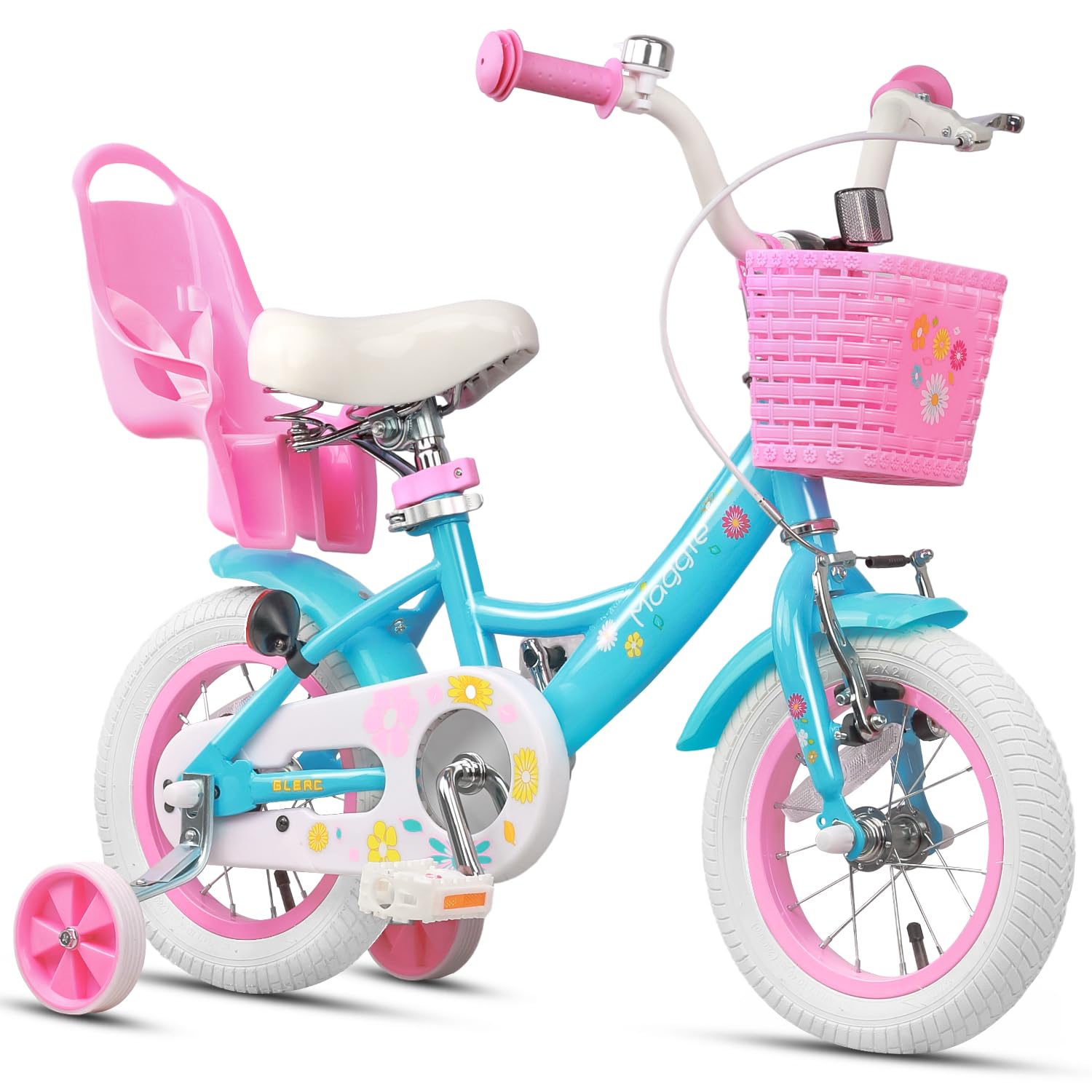
A princess-styled 12-incher with a doll seat that gets a three year old asking to go outside again.
If the bike needs to be a gift that lands hard on a birthday morning, this is the one that does it. The Glerc Maggie adds a doll seat, a basket, a bell, reflectors, and a sheet of stickers to the same toddler formula as the Fantacy — and the princess theme plus doll seat is doing the emotional work no spec can match. At 12 inches it’s sized for ages 2 to 4, standing 35 to 39 inches, with an inseam of 15 to 18 inches. Check that 35-inch minimum before you commit, because it’s the tallest entry height among the Glerc pair here.
Build details are sound for the price. The frame is high-carbon steel, braking is a front hand brake paired with a coaster brake, and the chain sits behind a closed cover so nothing gets pinched. The saddle and handlebars both adjust for growth, and the bike weighs 20 pounds — 4.2 pounds lighter than its Fantacy sibling, which you notice on the carry to the park. The 150-pound maximum weight recommendation is the highest single number in this entire list, so handing it down to a smaller cousin later is realistic.
Owners describe the finish as prettier than expected, and the design generally matches the photos rather than overselling them. The trade-off is long-term toughness: sturdiness draws mixed views, with some parents finding it solid and others describing it as flimsy, and durability feedback is the softer side of the picture. For a first bike your three year old will ride for a couple of seasons on the sidewalk, that is a fair trade for the style and the doll seat.
What Earns The Price
- Doll seat, basket, bell, reflectors, and stickers all included
- 20 pounds — lighter than the Fantacy’s 24.2
- 150-pound limit is the highest here
- Assembles in about 25 minutes from 85% pre-built
Worth Knowing First
- 35-inch minimum height rules out smaller three year olds
- Long-term durability is the soft spot in owner feedback
- Braking earns mixed notes across longer reviews
The gift verdict: if your three year old already carries a doll everywhere, this bike turns the driveway into a parade route.
The measurement check: confirm the 35-inch minimum height fits before ordering — it is the tallest starting point among the Glerc bikes.
5. cubsala 12 14 16 18 Inch Kids Bike BMX Style Bicycle with Training Wheels
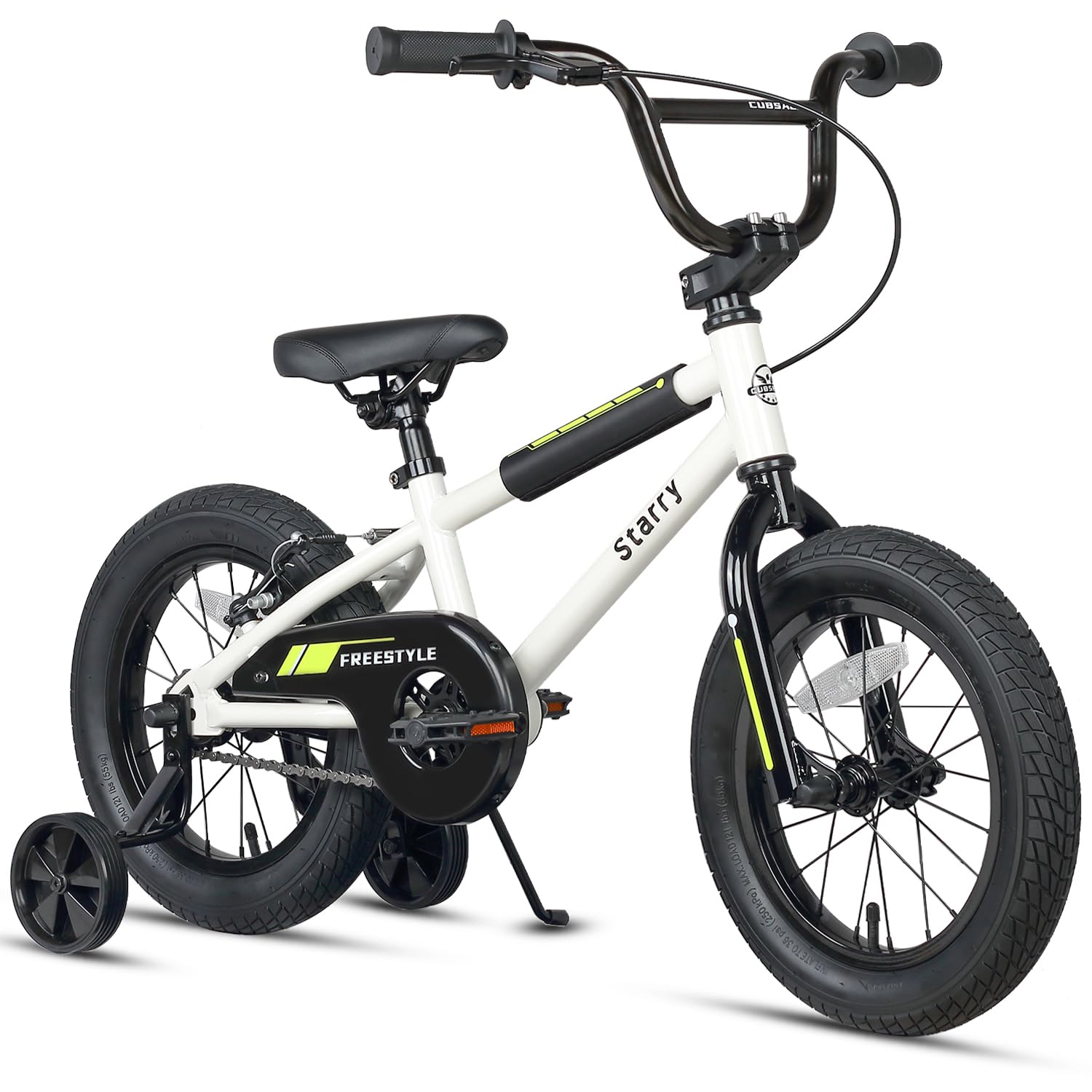
A BMX-styled toddler bike built around thick, grippy tires and a frame that shrugs off scrapes.
Most 12-inch kids’ bikes handle smooth sidewalks and little else. This one is the exception in this list: wide, slip-resistant tires and a high tensile carbon steel frame, both aimed at rougher surfaces. Braking is a coaster plus a rear v-brake, so your child stops by pedaling backwards or by squeezing the lever, whichever comes first. Training wheels and an adjustable seat are standard, and the bike ships 85% pre-assembled — most families report finishing in about 20 minutes with the included tools.
Sizing starts at 12 inches for ages 2 to 4 at heights of 33 to 37 inches, with a 35-inch minimum user height. If your 3 year old is on the taller side, that fits comfortably. There is also a limited lifetime warranty on the frame, and the paint holds up unusually well — long-term owners describe bikes that still look new after close to two years of hard use.
Two things to weigh. The maximum weight recommendation is 60 pounds, the lowest ceiling of any pick here, so this is strictly a little-kid bike. And it is heavy, which shows up in owner feedback as one of the few consistent complaints — pairing a heavy frame with a 60-pound limit means there is not much margin for a growing rider. That is the trade for the durability and the tire grip.
The standout number: a limited lifetime frame warranty is the longest coverage in this lineup, which matters if you plan to hand the bike down.
The one to watch: the training wheels can work loose over time, so check the bolts every few weeks.
Pick this one if: the pavement on your street is cracked, sloped, or rough, and you want tires that grip regardless.
Move past it if: your child is already near 60 pounds — that is the weight ceiling on the frame.
6. JOYSTAR New Berry Kids Bike for Boys and Girls Ages 3-10Y

A hi-ten steel frame with a lifetime warranty, built to be handed down rather than replaced.
What separates the JOYSTAR New Berry is coverage. It carries a limited lifetime warranty on the hi-ten steel frame, and the frame is built from the same steel tubing used across the brand’s kids line. The 12-inch size is aimed at ages 3 to 4 at 32 to 41 inches tall, with a minimum user height of 86 centimeters. Adjustable bars and an adjustable seat mean it is genuinely usable from age three into the later years, and the color range plus DIY decals let your child put their own stamp on it.
The ride quality notes are what you would want for a beginner: a soft handle grip, a soft saddle, removable training wheels, and a mostly enclosed chain guard. Dual braking comes as a front hand caliper plus a rear coaster, so there are two ways to stop. Assembly lands around 25 minutes from 85% pre-built with tools included, and the bike also arrives with fenders, a bell, and a manual.
The caution here is real but narrow. Durability comes up as a concern, with one recurring report of a tube wearing out within roughly three months of use. Assembly instructions also draw mixed marks, and a few owners found the brake system finicky to dial in. The frame warranty covers you, and support is responsive when you reach out — but this is not the pick to choose if you want a build-it-and-forget-it experience.
The long game: a 12 through 20-inch size range plus a lifetime frame warranty means this bike can serve your child for years, not one season.
Where owners push back: the brake system is the fiddly part during assembly. Plan to budget extra time on that step.
Consider this if: you want a bike that stretches across several birthdays and comes with a frame warranty behind it.
Look past it if: you want zero-fuss assembly — the brake adjustment here is the part that trips people up.
7. Huffy Illuminate 12/16/20 Inch Girls Bike, Multiple Color Options

Turns a birthday morning into a ride in minutes — EZ Build means less wrench time, more sidewalk time.
The standout feature here is the assembly, and it is genuine. Huffy’s EZ Build system has you insert the handlebar, fold the pedals into place, and ride — no lengthy build session. For a parent who has been dreading a two-hour instruction sheet, that is the entire pitch, and it is backed by a glittery amethyst frame with streamers and sparkle accents that gets noticed on the block. The bike sits in the 3-5 age band, and the 12-inch model has a minimum user height of 37 inches, so measure first — this is the tallest starting point in this lineup.
Specs are simple but complete. Alloy steel frame, rear coaster brake that stops when the child pedals backwards, wide white tires, a padded seat, and a full chainguard. Training wheels are removable and snap on without tools. The maximum weight recommendation is 65 pounds. There is no hand brake here, so a coaster-only approach — which suits a beginner perfectly, because backward pedaling is the motion they already understand.
Reliability is the honest mention. Some buyers report durability trouble over the long haul, including components loosening and tire issues. That sits alongside generally positive impressions of how the bike looks and how quickly it comes together. Handled normally on a sidewalk, this is a solid, well-finished first bike — just be aware that the streamers and glitter are cosmetic and the long-term robustness isn’t the headline.
Why Parents Choose It
- EZ Build — basically insert the bar, fold the pedals, ride
- Amethyst frame with glitter and streamers kids gravitate to
- Training wheels snap on tool-free, removed just as fast
- Coaster brake only — the simplest stop for a beginner
Trade-Offs To Weigh
- 37-inch minimum height is the tallest here — rule out smaller three year olds
- 65-pound weight limit and no hand brake
- Long-term durability is the recurring note in owner feedback
The right buy when: your 3 year old is at or near 37 inches and you want the bike ready to ride on the day it arrives.
Skip it for now if: your child is on the shorter side — the 37-inch minimum will leave their feet dangling.
8. Balance Bike 2 in 1 for Kids 2 3 4 5 6 7 Years Old, Balance to Pedals Bike

Starts as a balance bike, becomes a pedal bike in about a minute — two stages from one purchase.
The pitch is straightforward: your child rides it as a balance bike first, learning to coast and steer without pedals, then you bolt the pedals on and it becomes a pedal bike. The conversion is genuinely quick — the maker lists about 60 seconds — and older kids can handle the swap themselves. The 12-inch size fits ages 2 to 3, which puts it right in the 3-year-old zone, and the seat and handlebars adjust without tools. Included in every box: the pedal kit, training wheels, a kickstand, a non-slip footrest, assembly tools, and even a small tire pump.
Construction is high carbon steel with a lightweight build, wide pneumatic rubber tires, a 360-degree steering handlebar, and a rear holding brake that lets a child slow down without scraping their shoes. The maximum weight recommendation is 75 pounds. Buyers consistently describe kids making the jump to pedaling within a single afternoon of getting on it, and one parent summed it up by noting that their three and a half year old went from a strider straight to pedaling and braking with no training wheels at all.
Two things to know. The bike tends to tip over when parked, which is a stability quirk rather than a riding problem — a kickstand helps. And long-term durability is the softer side of the reviews, with occasional reports of rust after rain and pedals that skip under heavy force. For a first two-stage learner that gets your child balancing fast, the value is there.
What it replaces: buying a balance bike and then a separate pedal bike. This one covers both stages with one purchase.
What to know going in: the bike tips when parked, and wet-weather storage matters — rust shows up after a soaking, so keep it under cover.
Go with this if: you want your three year old to learn balance first and pedal later, without buying two bikes.
Not for every family: the tipping-when-parked quirk and the rust sensitivity mean it wants a bit more care than a plain coaster-brake kids’ bike.
Understanding the Specs
Wheel Size And What It Means
A 12-inch wheel is the toddler size, and it is the right starting point for most three year olds. The number refers to the wheel diameter, not the whole bike. Bigger numbers — 14, 16, 18, 20 inches — suit taller children, which is why these bikes list a size range rather than one fixed wheel. Buying the smallest size that fits correctly beats buying one to grow into, because a too-large bike teaches bad habits and scares beginners off.
Inseam And Saddle Height
The measurement that decides everything is inseam — the distance from the floor to your child’s crotch. Compare it to the saddle height range in the listing. If the saddle cannot drop low enough for their inseam, they will not be able to plant both feet on the ground, and a three year old who cannot touch down safely will refuse to ride. Ignore the age on the box and trust the inseam.
Minimum User Height And Weight Limits
Each bike here lists a minimum user height — the shortest a child can be and still ride safely. These run from 31 inches on up to 37 inches, so the difference between two picks can be six full inches, which is enormous at age three. The maximum weight recommendation tells you the ceiling for the frame and components; a bike rated to 60 pounds is a toddler-only machine, while one rated to 120 or 150 can carry much more.
Brake Types Explained
A coaster brake stops the bike when your child pedals backwards — the motion they already understand. A hand brake stops the bike when the lever is squeezed, which requires grip strength and coordination small hands do not fully have yet. Bikes that carry both give your child the easy coaster stop now and a path toward the hand brake later, without forcing it on day one.
Training Wheels And Their Role
Training wheels keep the bike upright while your child practices pedaling and steering simultaneously. The key detail is whether they bolt on solidly — wheels that work loose over weeks make the bike wobble and unsettle the rider. Removable training wheels are the better buy, since you can detach them the moment your child is ready to balance unassisted instead of buying a whole new bike.
Why Weight Matters
The bike weight is the number you notice most at the end of the day, because you are usually the one carrying it. A lighter frame is easier for a small rider to move and easier for you to hoist into a trunk. A heavier frame can feel more planted and durable, but it costs you when the child has to push it up a slope or when you are carting it home from the park.
FAQ
What size bike fits a 3 year old?
Should a 3 year old have a balance bike or a pedal bike?
What is the difference between a coaster brake and a hand brake?
How long does a 12-inch toddler bike last?
How much assembly does a toddler bike need from the start?
How do I know when to take the training wheels off?
Is a heavier bike better for a 3 year old?
Are toddler bikes with baskets and doll seats worth it?
What safety features should a bike for a 3 year old have?
Can a 3 year old ride a 14-inch bike?
Final Thoughts: The Verdict
The strongest pick overall for a three year old is the bike for 3 year old winner, the Glerc Fantacy Kids Bike, because its 33-inch minimum height fits a 3 year old, its 120-pound limit survives hand-me-downs, and its coaster brake plus hand brake covers both first stops and later skills. If your three year old is closer to 31 inches and a basket will seal the deal, grab the BABY JOY Kids Bike. And if you want the bike to teach balance first before pedals ever appear, the OHIIK Balance Bike 2 in 1 is the one to reach for. Any of these will get your child riding; the one that fits them today is the one that will actually get used.
How We Picked
We do not accept paid placement. Every pick is matched to a real buyer and a real use-case; we do not hands-on test units.
Sources & Methodology
Specifications: manufacturer listings and product documentation. Review insights: verified customer reviews, as of September 2026. Pricing: not shown on this page (it changes often); check the current price via the retailer link.
As an Amazon Associate, Gadgets Feed earns from qualifying purchases. This does not affect which products we feature.