
Our readers keep the lights on and my morning glass full of iced black tea. As an Amazon Associate, I earn from qualifying purchases.
Specs are compiled from manufacturer listings and verified buyer reviews and can change over time — please confirm the key details on the product page before buying.
Jumping into your first triathlon is thrilling until you realize your “trusty” hybrid bike weighs more than your ambition. Your legs and lungs will do the heavy lifting, but the bike you pick decides how much of that power actually turns into speed rather than wasted energy fighting wind and gravity. For a beginner, the right road bike makes you faster without demanding more fitness.
I’m Min — the founder and writer behind Gadgets Feed. This guide is built by comparing the manufacturers’ published specifications and the patterns across verified customer reviews, so you get each pick’s real strengths and trade-offs instead of marketing spin.
You want a bike that gives you real speed on race day without emptying your wallet. This guide covers three road bikes that deliver the most speed and comfort for an entry-level budget — the honest way to find your first real bike for a beginner triathlete.
Our Picks at a Glance

How To Choose The Best Bike For A Beginner Triathlete
Your first triathlon bike is a long-term purchase, not a weekend rental. A few key specs will determine whether your bike feels like a rocket or a rock on race day.
Frame material: aluminum vs. carbon fiber
The frame is the bike’s skeleton, and its material controls the weight and how much road vibration reaches your body. Aluminum frames are durable and affordable but tend to be heavier and transmit more buzz from the pavement. Carbon fiber frames are much lighter (a huge advantage on climbs) and do a better job of dampening road chatter, so you feel fresher going into the run. For a beginner balancing cost and performance, a bike with an aluminum frame and a carbon fork offers a balance — you get weight savings up front where it matters for steering precision.
Groupset and gear range
The groupset is the collection of components that control shifting and braking. Shimano groupsets like Claris, Sora, and Tiagra are the most common at the entry level, with each step up offering slightly lighter weight and smoother shifts. You do not need a 22-speed racing setup for your first tri. A reliable 16 or 18-speed drivetrain gives you enough range to spin up a hill and push hard on the flats. The number of speeds matters less than the quality of the derailleurs and shifters — a well-tuned entry-level groupset outperforms a sloppy mid-range one.
Braking: rim brakes vs. disc brakes
Rim brakes are the classic road-bike stopper — light and simple, but their stopping power drops dramatically in wet conditions because the brake pads clamp the wheel rim. Disc brakes use a rotor mounted at the wheel hub, giving you consistent stopping power in rain and on descents. For a beginner triathlete riding in varied weather, disc brakes are a genuine safety advantage. The trade-off is a small weight penalty and slightly more complex maintenance.
Quick Comparison
| Model | Best For | Frame Material | Speed Count | Brake Style | Amazon |
|---|---|---|---|---|---|
| Tommaso Imola★ Best Overall | Reliable groupset & value | Aluminum | 24 (3×8) | Rim | Amazon |
| SAVADECK Carbon Disc Road Bike | Weight & aero-conscious beginners | Carbon Fiber | 18 | Disc | Amazon |
| Schwinn Phocus 1.6 | Budget-friendly road entry | Aluminum | 16 | Rim | Amazon |
In‑Depth Reviews
1. Tommaso Imola
Our pick — over 4★ from 250+ verified ratings; the strongest balance of quality and price.
A workhorse aluminum road bike that packs 24 speeds and a brand-name groupset at a very fair price.
If you want a bike that focuses on reliable, every-day usability without the premium price tag of a carbon frame, the Tommaso Imola is the logical choice. It uses an aluminum frame with a steel fork — a durable combination that can handle training miles and the occasional bump from a pothole. The standout feature here is the Shimano Claris 3×8 drivetrain, which gives you 24 total speeds. That extra gear range compared to the 18-speed SAVADECK or the 16-speed Schwinn Phocus means you have more options to find a comfortable cadence on steep hills or against a headwind.
The trade-off is the braking. The Imola uses traditional rim brakes, not discs. On a dry race day that is perfectly fine, but if you train or race in wet conditions, the stopping power will not match the disc brakes on the SAVADECK or the Schwinn Phocus. The bike rolls on 700x25c tires, the standard road width that balances speed and comfort. Tommaso also includes pedals in the box, a small but welcome convenience for a first-time buyer.
Reviewers rate this bike 4.4 out of 5 stars across 299 ratings, praising the smooth shifting from the start and the overall build quality. Many note that the steel fork adds a bit of weight compared to a carbon fork, but it also makes for a slightly more comfortable ride on rough pavement. For a beginner triathlete focused on building fitness over raw speed, this is a very smart place to start.
Gearing Advantage
- 24-speed Shimano Claris groupset offers the widest gear range in this lineup for tackling varied terrain
- High customer satisfaction with 4.4 stars out of nearly 300 ratings
- Pedals are included, saving a first-time buyer an extra purchase
Stopping Limitation
- Rim brakes lose stopping power in wet conditions compared to the disc brakes on the other two picks
- Steel fork adds noticeable weight versus a carbon fork, making it less ideal for steep climbs
Great for the fitness-focused beginner: The 24-speed Claris drivetrain is a reliable partner for building endurance on hills and flats alike.
Not the pick if: You plan to race in rainy or wet conditions. Rim brakes simply cannot match the wet-weather stopping power of the disc brakes on the other bikes here.
2. SAVADECK Carbon Disc Road Bike
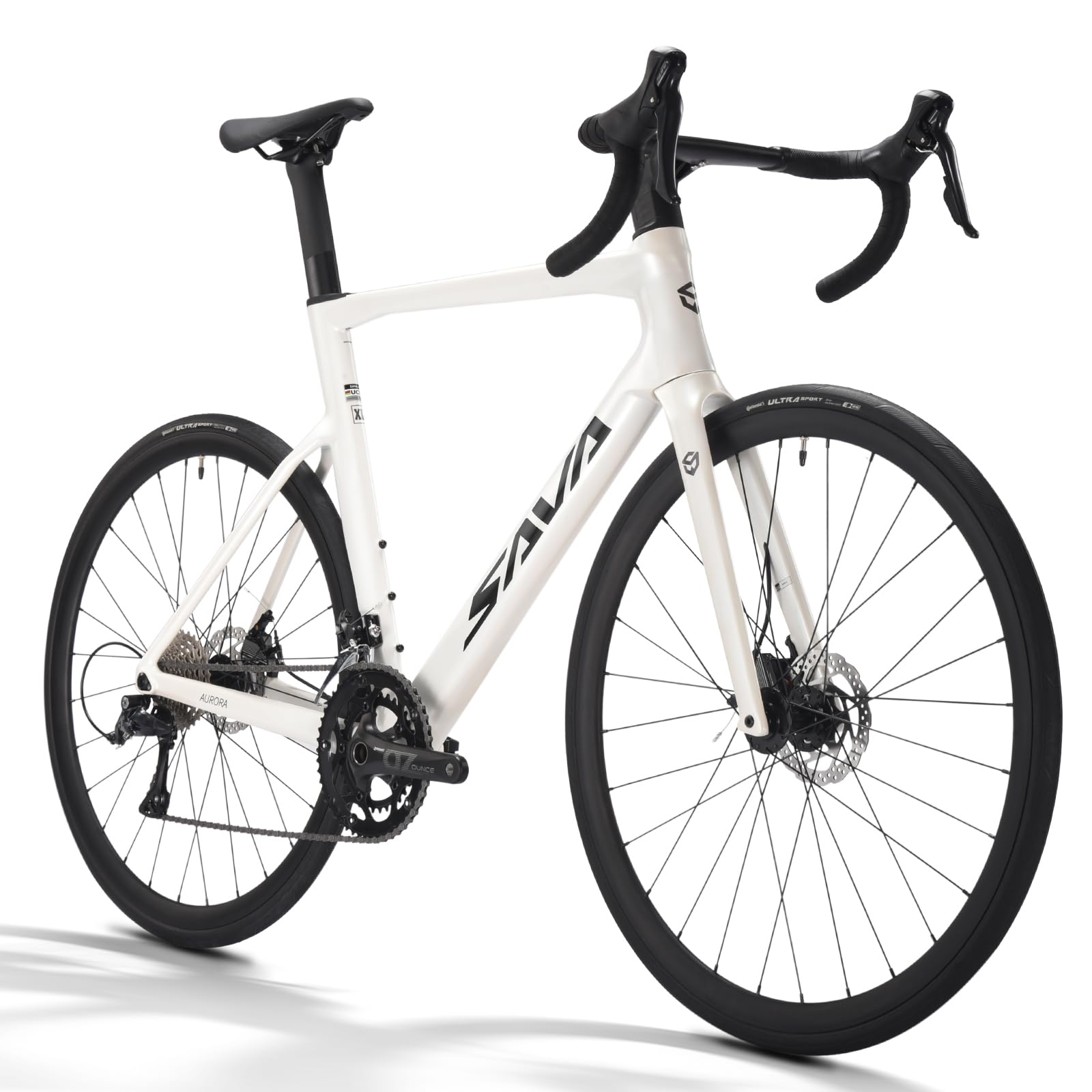
A pure carbon frame at an entry-level price that rewrites what a beginner can expect from a first tri bike.
The SAVADECK is the standout pick because it delivers the two things that matter most for race day speed: a very light frame and a stiff, aero-efficient design. It uses Toray T800 carbon fiber (high-quality Japanese carbon) for the frame, fork, rims, and seat post, bringing the whole bike to 21.1 pounds (9.6kg). That is a massive weight advantage compared to the Schwinn Phocus below, which relies on a heavier aluminum frame, meaning you climb faster and accelerate harder for the same pedal stroke.
The drivetrain is a Shimano SORA R3000 18-speed system, a proven entry-level groupset known for smooth, reliable shifting. The bike also rolls on 700x25C Continental tires, which give you low rolling resistance on paved roads. The dual disc brakes offer confident stopping power in any weather, a clear safety edge over the rim brakes on the Tommaso Imola. The full internal cable routing (cables hidden inside the frame) cuts wind resistance and gives the bike a clean, race-ready look.
Buyers report that the bike arrives almost fully assembled, requiring just the front wheel, seat post, and handlebar attachment. Some owners mention that the geometry is more aggressive (lower, more stretched out) than a casual fitness bike — it is built for speed, not upright cruising. That is exactly what you want during a triathlon leg to cut drag and save energy for the run.
Race-Day Ready: At 21.1 pounds with a full carbon frame and fork, this bike sheds serious weight without asking for a pro-level budget. The Shimano SORA shifting is crisp enough for a beginner to trust on race morning.
One Trade-Off: The aggressive aero position takes a few rides to feel natural. If you prefer a very upright posture, this might feel too stretched out until you adjust.
Reach for this if: You want a genuine lightweight carbon road bike with disc brakes and reliable Shimano SORA shifting — the best combination of speed and safety for your first triathlon.
Look elsewhere if: You are not comfortable with a more aggressive, forward-leaning riding position and want a taller, more relaxed geometry.
3. Schwinn Phocus 1.6 Road Bike

A wallet-friendly road bike that brings rim brakes and a carbon fork to beginners on a tight budget.
It pairs an aluminum frame with a carbon fiber fork, giving you weight savings at the front of the bike where steering precision matters. The 16-speed drivetrain uses Shimano derailleurs with Micro-shift integrated shifters and brake levers — a combo that works smoothly once adjusted. The alloy crank provides a broad enough gear range for a novice triathlete to tackle a sprint-distance course without constantly spinning out or grinding up hills.
The high-profile alloy double-wall rims with paired spokes are a nice detail at this price point — they are lightweight and stiff, which helps with acceleration. The rim brakes are a real advantage here. The bike fits riders from 5’4″ to 6’2″, a generous size range that accommodates most adults.
With 179 ratings and 4.2 stars, buyers consistently mention that the bike needs a thorough tune-up after assembly — the derailleurs often arrive slightly out of alignment. That is not unusual at this price tier, and a local bike shop can fix it in minutes. One reviewer noted that the stock saddle is uncomfortable for longer rides, something to budget for if you plan to train for Olympic-distance events.
Smart Budget Move: Rim brakes and a carbon fork on a sub-premium bike — this gets you the most critical safety and weight features without spending mid-range money.
Expect Some Assembly Work: Buyers consistently report that a professional tune-up is needed from the start for the shifting to be crisp, which is common at this price.
Pick this if: Your budget is tight but you refuse to compromise on rim brakes for safety. The carbon fork is a genuine bonus at this price.
skip it if: You want a bike that is race-ready straight from the start without needing a post-purchase tune-up. The Tommaso or SAVADECK will require less initial adjustment.
Understanding the Specs
Frame material: carbon fiber vs. aluminum
Carbon fiber is lighter and absorbs road vibration better than aluminum, meaning less fatigue on the run leg. Aluminum is heavier but stronger for the same stiffness, making it a durable choice for training. For a beginner, a full carbon frame is a treat (like on the SAVADECK), while an aluminum frame with a carbon fork (like the Schwinn Phocus) is a smart compromise.
Brake style: disc vs. rim
Disc brakes use a rotor at the wheel hub and provide consistent stopping power in rain, mud, or on long descents. Rim brakes clamp the wheel rim and are lighter but lose grip when wet. If you plan to race in any weather other than bone-dry sunshine, disc brakes are a genuine safety upgrade.
FAQ
How many gears do I need for a beginner triathlon?
Is a carbon frame worth it for a first triathlon bike?
Can I use a road bike with rim brakes for a triathlon?
Do I need clip-on aero bars for my first triathlon?
Will a beginner fit on a small-frame road bike?
How difficult is assembly for these bikes?
What is the difference between Shimano Claris and SORA groupsets?
What size tires should a beginner triathlon bike have?
Final Thoughts: The Verdict
Across the board, the bike for a beginner triathlete winner is the SAVADECK Carbon Disc Road Bike because its full carbon frame and disc brakes offer genuine race-day performance at a price that undercuts most other carbon bikes. If you want a reliable workhorse with the widest gear range for hilly training routes, grab the Tommaso Imola. And for the budget-conscious beginner who refuses to skip disc brakes, the Schwinn Phocus 1.6 delivers the best value.
How We Picked
We do not accept paid placement. Every pick is matched to a real buyer and a real use-case; we do not hands-on test units.
Sources & Methodology
Specifications: manufacturer listings and product documentation. Review insights: verified customer reviews, as of July 2026. Pricing: not shown on this page (it changes often); check the current price via the retailer link.
As an Amazon Associate, Gadgets Feed earns from qualifying purchases. This does not affect which products we feature.