
Finding a bike that doesn’t punish your knees every time you push a pedal is the difference between consistent rehab and a piece of equipment that gathers dust. The right recumbent geometry, generous seat padding, and low starting resistance let you build mobility without loading the patella or grinding the joint space. Every bike on this list was selected specifically for its ability to reduce the shearing force across the anterior knee and support a pain-free range of motion.
I’m Min — the co-founder and writer behind Gadgets Feed. I’ve spent hundreds of hours cross-referencing seat back angles, inseam accommodation ranges, resistance curve linearity, and flywheel inertia weights to isolate the models that genuinely protect arthritic knee joints rather than just claiming to.
The mechanical advantage of a recumbent setup shifts load off the quadriceps tendon and into the glutes, which is why this lineup focuses almost entirely on that riding posture. If you have been searching for a bike for arthritic knees, the core spec to chase is a low step-through height combined with a seat that slides far enough forward to prevent you from overreaching at the bottom of the pedal stroke.
How To Choose The Best Bike For Arthritic Knees
The single most common mistake buyers with arthritic knees make is buying an upright stationary bike because it looks more familiar. An upright posture forces the quadriceps to pull the knee through a deeper bend angle, increasing retropatellar pressure. A recumbent bike with a low seat height and a reclined backrest drops the hip angle below 90 degrees, which allows the hamstring and glute to share the load. The three factors below matter more than brand name or screen size.
Seat Inseam Range And Backrest Angle
If the seat cannot slide forward enough to keep your heel directly below your knee at pedal bottom dead center, you will either hyperextend your knee or feel a sharp catch at the top of every revolution. Look for a seat rail that accommodates an inseam as short as 28 inches. A backrest that tilts rearward by at least 10 degrees further unloads the patellar tendon by rotating the pelvis backward.
Resistance Start Point And Magnetic Smoothness
Entry-level bikes often use felt pads that grab unevenly on the first two resistance levels, sending a sudden torque spike into the knee joint during warm-up. A magnetic braking system with at least eight levels of resistance and a linear curve from the lowest setting allows you to start pedaling with almost zero friction, then increase load in fractions without a jolt. Sixteen levels is better but only if the first two are genuinely light.
Step-Through Height And Frame Stability
Arthritic knees often lose the flexion needed to swing a leg over a high top tube. A step-through frame with a crossbar height under 12 inches lets you sit down first and then extend your legs to the pedals. The frame must also stay rigid under a rider over 250 pounds — a wobbling frame forces micro-corrections from the knee stabilizers, which accelerates fatigue in the medial collateral ligament.
Quick Comparison
On smaller screens, swipe sideways to see the full table.
| Model | Category | Best For | Key Spec | Amazon |
|---|---|---|---|---|
| 3G Cardio Elite RB X | Premium Recumbent | Commercial-grade knee rehab | 25-position seat slide, 5-tilt backrest | Amazon |
| Teeter FreeStep LT7 | Recumbent Stepper | Zero-impact PT stride | 11-inch natural stride, 20 magnetic levels | Amazon |
| Horizon Fitness 5.0R | Recumbent Bike | Lumbar support and Bluetooth apps | 100 resistance levels, 15.4 lb flywheel | Amazon |
| JOROTO JH50 | Magnetic Recumbent | Pre-assembled convenience and app support | 95% pre-assembled, 16 magnetic levels | Amazon |
| LFEYYD W215 | Recumbent + Elliptical | Full-body motion with arm exerciser | 450 lb capacity, 2-in-1 motion | Amazon |
| Niceday RC88 | Magnetic Recumbent | Physical therapy after knee surgery | 15 lb flywheel, 16 resistance levels | Amazon |
| XVGVSV W241 | 2-in-1 Recumbent/Elliptical | Versatile motion for multiple muscle groups | 16 magnetic levels, 400 lb capacity | Amazon |
| MERACH S19 | Mid-Range Recumbent | Compact footprint, simple operation | 8-position seat, 6.6 lb flywheel | Amazon |
| VANSWE RB405 | Heavy-Duty Recumbent | Extra weight capacity and infinite slider | 400 lb capacity, infinite slider seat | Amazon |
| Sunny Health & Fitness SF-RB424006 | Smart Recumbent | Budget-friendly with app connectivity | 16 magnetic levels, resistance bands | Amazon |
| Schwinn 130 Upright | Upright Bike | App-connected upright training | 16 magnetic levels, 5.5-inch LCD | Amazon |
In‑Depth Reviews
1. 3G Cardio Elite RB X

The 3G Cardio Elite RB X is the single most accommodating bike we tested for a wide range of arthritic knee presentations. The seat slides through 25 positions fore and aft and tilts through 5 angles, which means you can dial in a hip angle that keeps the quadriceps tendon from engaging too early in the pedal stroke. The Airflow Mesh Flex backrest conforms without digging into the lumbar spine, and the compact 49-inch length fits into tight home gym corners without sacrificing stride room.
This bike uses a 16-level magnetic resistance system with a smooth curve at the low end — there is no grab or sticking when you start pedaling from a dead stop, which matters when the first five revolutions are the most painful on a stiff joint. The FTMS Bluetooth connectivity lets you pair with Zwift or Kinomap for structured recovery rides, and the included wireless heart rate strap gives real-time data without fumbling for grip sensors. The frame weighs 115 pounds, so it stays planted even during high-cadence sessions.
The narrow Q-factor (the distance between the pedals) keeps the hips and knees in a neutral track, reducing lateral shear on the medial compartment. Owners consistently report using this bike for pre- and post-surgical knee rehab with zero clicking or grinding under load. The lifetime frame warranty and 7-year parts coverage remove the risk of a costly breakdown after the first year.
Why it’s great
- 25-position seat slide lets you fine-tune knee alignment to avoid overextension
- Narrow Q-factor keeps the pedal track aligned with natural hip rotation
- Lifetime frame warranty and 7-year parts coverage
Good to know
- 115-pound weight makes it hard to reposition without the transport wheels
- Premium price tier puts it out of reach for casual users
2. Teeter FreeStep LT7

The Teeter FreeStep LT7 is not a recumbent bike in the traditional sense — it is a recumbent stepper that replaces the circular pedal path with a licensed physical therapy stride pattern. The pedals move in a short 11-inch linear arc that mimics the natural flexion-extension of walking, which eliminates the top-dead-center grinding that classic crank motion causes in arthritic knees. The seat reclines fully, keeping the hip angle open so the glutes and hamstrings take most of the load.
Twenty magnetic resistance levels range from essentially zero friction (useful for morning stiffness) up to 105 pounds of resistance for intermediate conditioning. The 9-inch color LCD tracks seven metrics and includes 21 pre-programmed workouts designed by physical therapists. The dual-action handlebars move in sync with the stride, distributing effort across the upper body and unloading the legs further — a meaningful benefit when one knee is weaker than the other.
Assembly is manageable with the BILT app, and the frame supports riders from 4-foot-11 up to 6-foot-6. The Electronic Step Lock makes entry and exit safe for anyone with limited knee flexion. Multiple customer reviews highlight successful recoveries from total knee replacement using this machine as the primary rehab tool, backing up the claim that the natural stride reduces peak patellofemoral stress.
Why it’s great
- Patented physical therapy stride eliminates the grinding top-dead-center point of a crank
- 20 resistance levels include a genuinely zero-friction starting level
- Dual-action handles offload leg work onto the upper body
Good to know
- Footprint is larger than a standard recumbent bike
- Non-swivel seat requires more hip mobility to get in and out
3. Horizon Fitness 5.0R

The Horizon 5.0R distinguishes itself with an extra-large seat that includes dedicated lumbar support, which is a direct benefit for riders whose arthritic knee pain is compounded by lower back stiffness. The step-through frame design keeps the crossbar height under 12 inches, letting you sit down without the painful single-leg hop that aggravates the patellar tendon. The seat glides on an aluminum rail for precise positioning, and the large backrest wraps around the lower ribs to stabilize the torso.
The magnetic resistance system offers 100 levels — an absurdly fine granularity that lets you increase load in fractions of a turn rather than the typical jumps between levels 1 and 3. The 15.4-pound aluminum flywheel provides enough inertia to smooth out the pedal stroke at low cadences, preventing the stuttering motion that can irritate a swollen knee. The console integrates Bluetooth FTMS for app connectivity and includes a cooling fan, which keeps skin temperature down during longer recovery sessions.
Assembly runs about an hour with two people, and the built-in transport handle makes room-to-room movement manageable. Some users find the seat too firm for sessions exceeding 45 minutes, but a gel pad resolves that cheaply. The 350-pound weight capacity paired with a rigid steel frame ensures no lateral flex during hard pushes.
Why it’s great
- 100-level magnetic resistance allows micro-adjustments ideal for gradual knee rehab
- Large seat with dedicated lumbar support stabilizes the pelvis during pedaling
- Low step-through height protects the patellar tendon during mount and dismount
Good to know
- Seat padding is firm; a gel cushion is a common add-on for longer sessions
- Assembly instructions skip a few minor wiring details
4. JOROTO JH50
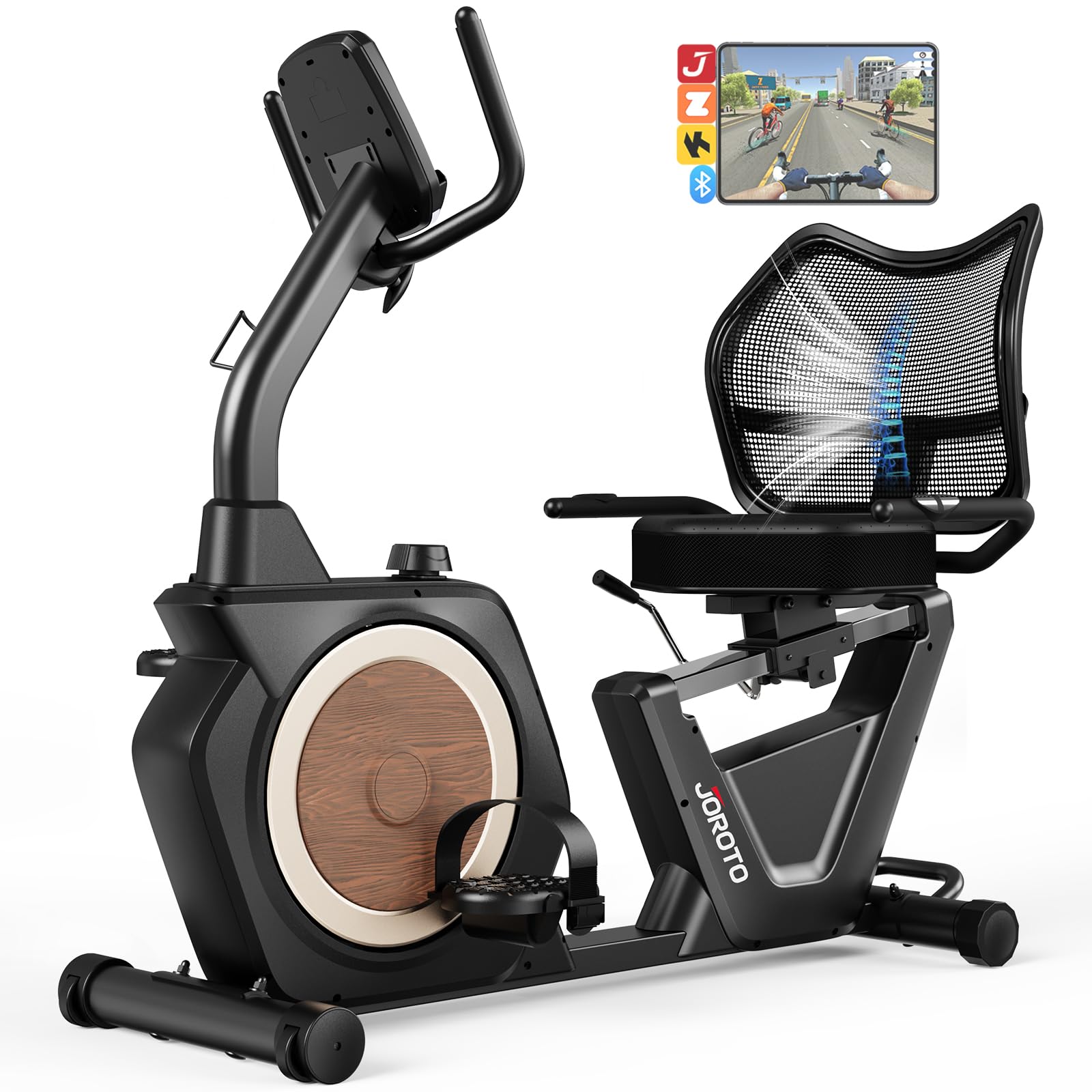
The JOROTO JH50 arrives 95 percent pre-assembled — you install the seat, handles, and footrests, and you are riding within 20 minutes. For someone with arthritic knees who cannot stand for long assembly sessions, that matters. The step-through spacing is wider than average, and the lockable armrests provide extra stability while lowering yourself into the seat. The thick padded seat and ergonomic backrest are designed to offload the ischial tuberosities and reduce pressure on the lower back.
The 16-level magnetic flywheel generates minimal noise, which is critical for early-morning or late-night rehab rides. The backlit LCD monitor is legible in dim rooms, displaying time, speed, distance, calories, and pulse from the grip sensors. Bluetooth compatibility with the JOROTO app, Kinomap, and Zwift adds structured workout options, though most arthritic users will stick to manual resistance for the first few weeks to control range of motion.
Customer feedback highlights smooth pedal rotation and a quiet drivetrain, but a small number of units have shipped with missing bolt holes on the backrest mount. The 2-year warranty and US-based customer service are responsive, and replacement parts ship quickly. The frame supports 400 pounds, making it one of the more inclusive options in this price tier.
Why it’s great
- 95% pre-assembled saves setup time for users with limited standing endurance
- Wide step-through spacing and lockable armrests improve safety during mounting
- Backlit LCD remains readable without harsh overhead lights
Good to know
- Quality control gaps in backrest drilling have been reported
- Heavy at 83 pounds; moving it requires the transport wheels
5. LFEYYD W215
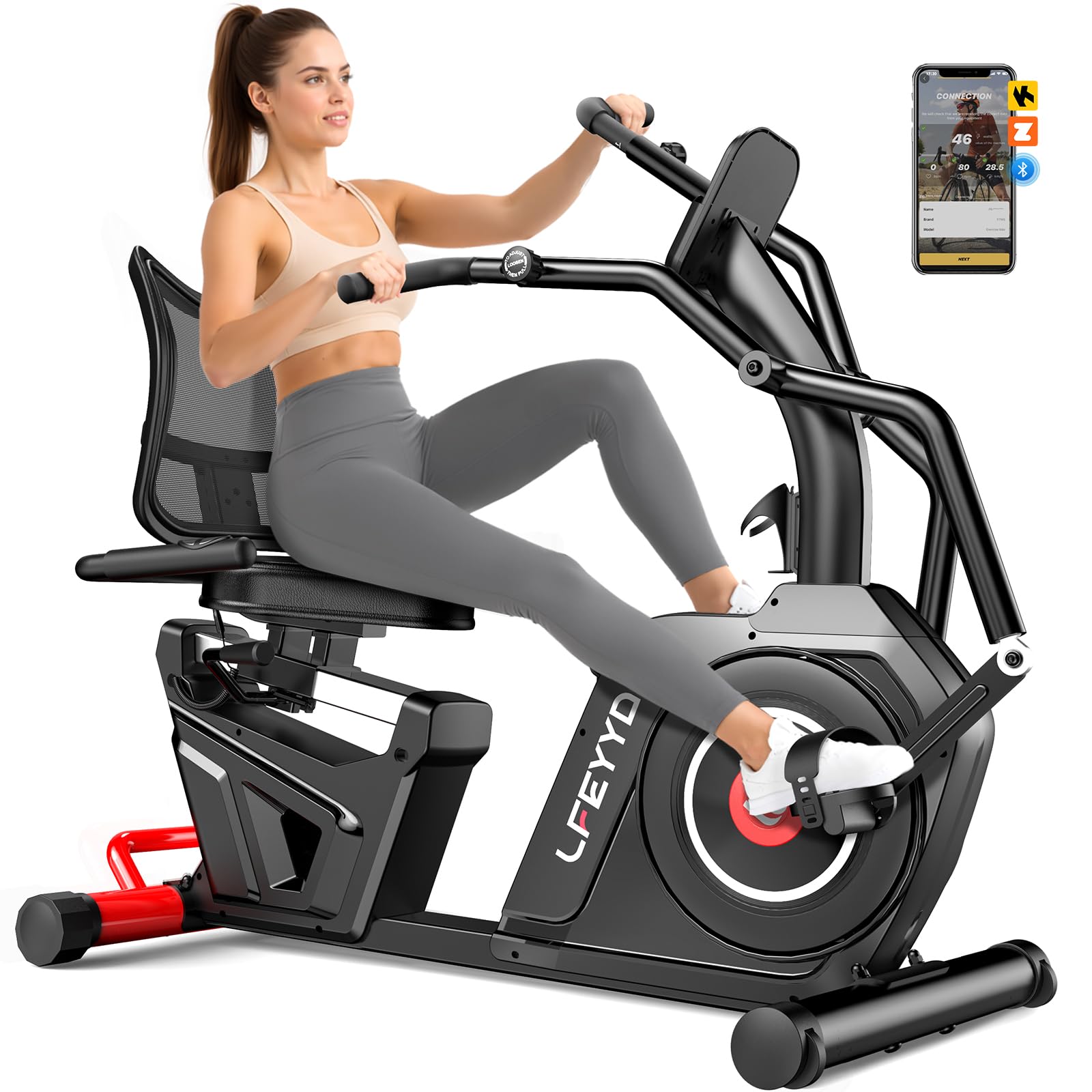
The LFEYYD W215 combines a recumbent seated posture with an elliptical stride, effectively turning the pedal arc into a gliding motion that eliminates the dead spot at the top of a traditional crank cycle. This design is specifically beneficial for arthritic knees because it maintains constant tension through the full 360-degree rotation, reducing the need for the quadriceps to explosively re-engage at every top-dead-center transition. The built-in arm exerciser moves in sync with the legs, distributing the workload across the upper body.
Sixteen magnetic resistance levels start light enough for post-operative range-of-motion work and scale up to moderate cardio intensity. The oversized padded seat uses high-density foam with a breathable surface to prevent sweat buildup during longer sessions. The press-lever seat adjustment tool moves the seat forward and backward in small increments, accommodating inseams from 28 to 40 inches and heights from 4-foot-8 to 6-foot-4.
The frame is built from thickened steel tubing with anti-slip foot pads, and the 450-pound weight capacity is the highest in this lineup. Assembly runs about 30 minutes with 80 percent pre-assembly, and the transport wheels make room-to-room relocation manageable. Multiple verified buyers specifically mention using this machine for knee rehab and noting that the combined arm motion reduces perceived leg fatigue.
Why it’s great
- Elliptical stride eliminates top-dead-center grinding that irritates arthritic knees
- Arm exerciser offloads the legs and distributes effort across the upper body
- 450-pound weight capacity suits heavier riders without frame flex
Good to know
- Combined motion requires some coordination if you are not used to elliptical pedaling
- Footprint is 52.5 inches long; make sure you have floor space
6. Niceday RC88
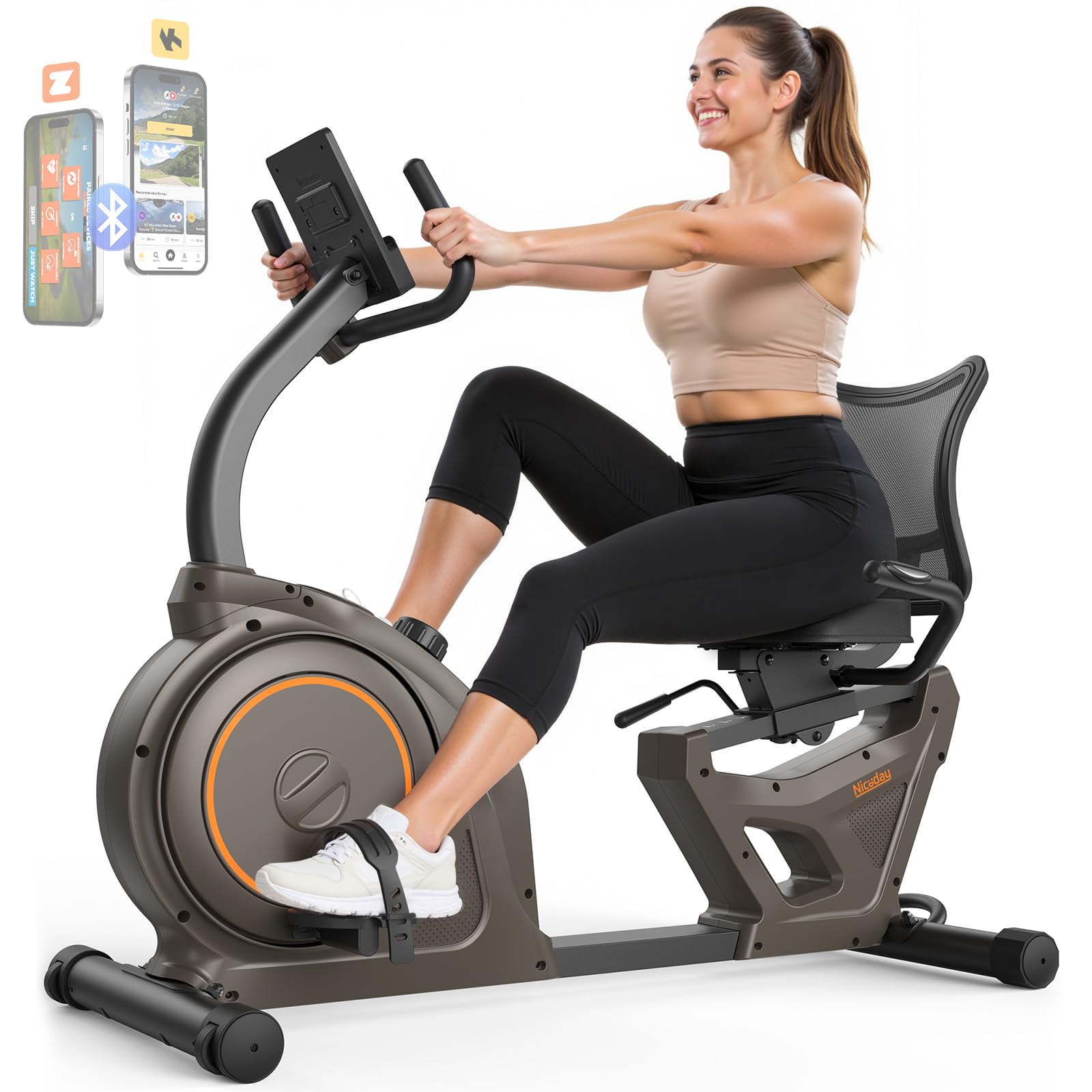
The Niceday RC88 is explicitly marketed for physical therapy recovery, and the design choices back that claim. The 15-pound flywheel provides enough rotational inertia to keep the pedals spinning smoothly even when a painful knee forces an uneven push-pull pattern — the mass dampens the jerkiness that a lighter flywheel cannot mask. The mechanical knob controls 16 progressive magnetic resistance levels, and the transition between levels is linear without a hard step between 1 and 2.
The ergonomic high-density foam seat paired with a breathable mesh backrest keeps the lower back ventilated and the sit bones supported. The eight-position seat adjustment provides ample leg room for users up to 6-foot-3, and the step-through height is low enough that you can sit down without flexing the knee past 60 degrees. The included pulse grip handles on the stationary bars give heart rate readings without requiring a chest strap.
Bluetooth connectivity links to Kinomap and Zwift for virtual rides, though the LED display functions independently if you prefer to watch television. Multiple customer reviews mention using this bike within weeks of knee replacement surgery and reporting zero pain during pedaling. The 400-pound weight capacity and heavy-duty steel frame keep the ride stable at higher cadences, and the 90 percent pre-assembly reduces setup pain.
Why it’s great
- 15-pound flywheel smooths out uneven pedal strokes from a stiff knee
- Breathable mesh backrest prevents sweat buildup during longer PT sessions
- Mechanical knob provides tactile resistance control without electronic lag
Good to know
- Seat padding is average; users who need extra cushion may add a gel cover
- LED display is dark in bright rooms and lacks an RPM readout
7. XVGVSV W241
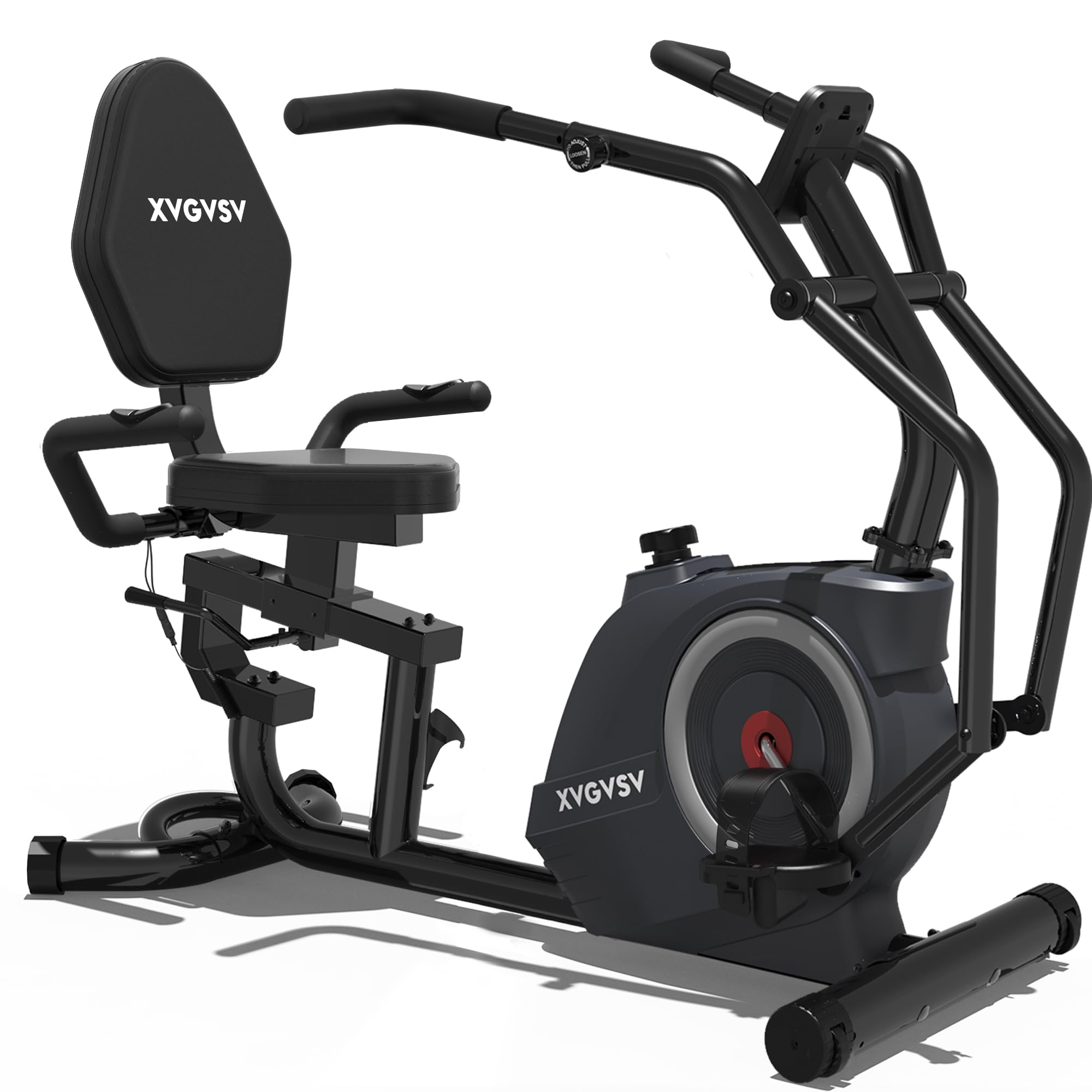
The XVGVSV W241 brings a 2-in-1 design that switches between recumbent cycling and elliptical stepping, giving users two distinct motion patterns without buying separate machines. The elliptical mode is particularly relevant for arthritic knees because the gliding pathway removes the top-dead-center resistance spike. The recumbent seat and backrest remain padded and adjustable, so the sitting position stays supportive regardless of the motion mode you select.
The 16-level magnetic resistance system is quiet enough for shared-wall apartments, and the heavy-duty steel frame holds up to 400 pounds without wobble. The LCD monitor tracks time, speed, distance, calories, odometer, and heart rate through the grip pulse sensors. The lever-based seat adjustment allows quick changes between users of different heights, making this a viable family machine where multiple members have varying knee conditions.
Assembly is rated at roughly 30 minutes with 85 percent pre-assembly, and the front transport wheels allow one-person relocation. Verified senior buyers in their 70s report completing the setup independently. The included arm exerciser bars move with the stride, providing upper-body engagement that takes load off the knees during longer sessions.
Why it’s great
- Switchable recumbent and elliptical modes target different knee stress patterns
- Step-through frame and lever-based seat adjustment suit multiple family members
- Quiet magnetic operation allows early-morning use without disturbing others
Good to know
- Elliptical mode takes up more floor space than standard recumbent bikes
- Pulse sensors on the stationary handles only; moving handles do not have them
8. MERACH S19
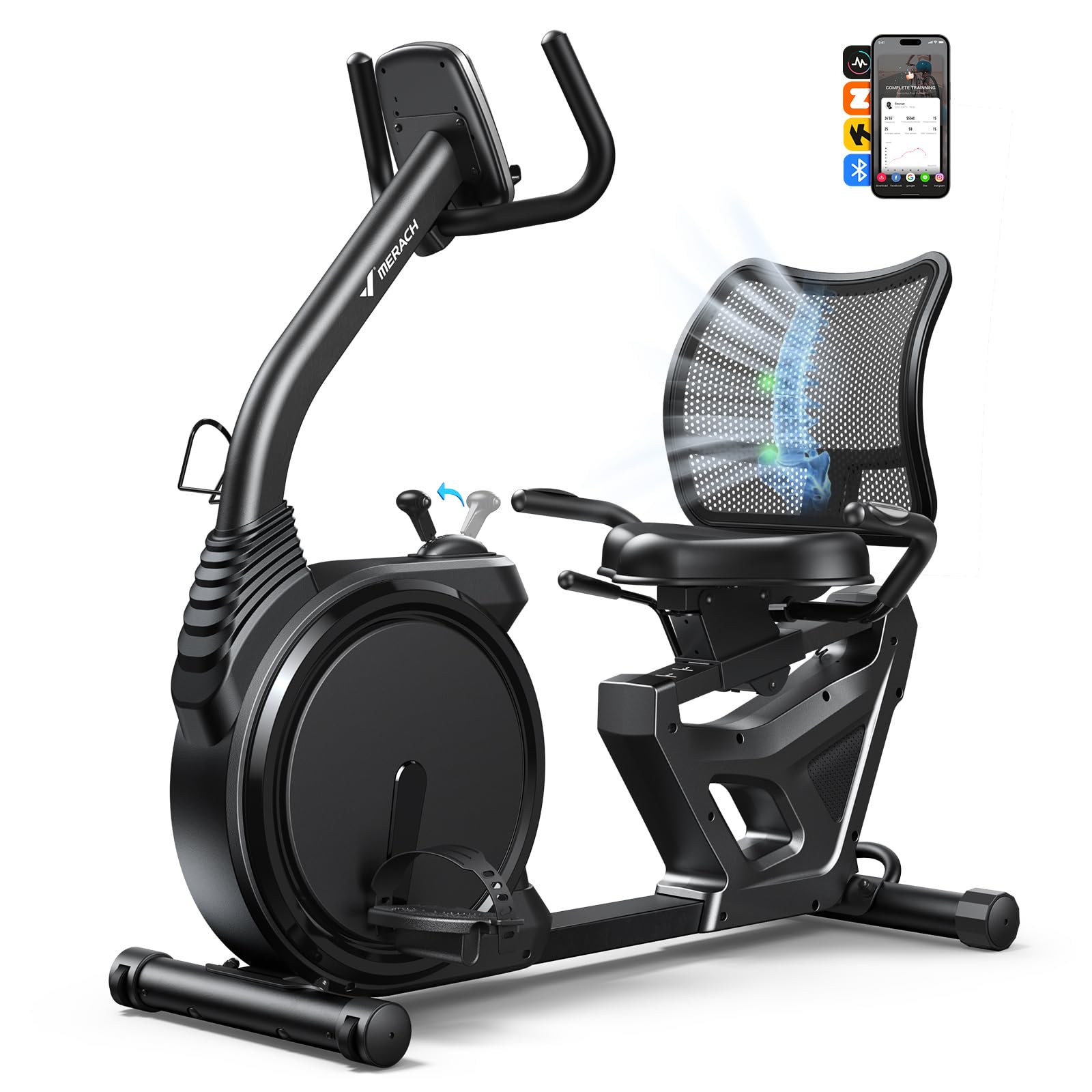
The MERACH S19 packs a recumbent riding position into a compact frame that measures only 48 inches long, making it one of the more space-efficient options for apartment dwellers with arthritic knees. The eight-position seat slide allows inseam adjustment for riders between 5-foot-2 and 5-foot-10, and the breathable mesh backrest keeps air circulating against the spine. The frosted handlebars resist sweat buildup and provide a non-slip grip for users who need to brace themselves during the first painful rotations.
The car-style lever for resistance adjustment provides eight magnetic levels that are easy to click through without bending forward. The 6.6-pound perimeter-weighted flywheel is on the lighter side, but the dual-belt drive system keeps the pedal stroke smooth at moderate cadences. The LCD display shows time, distance, speed, calories, and heart rate, and the included MERACH app syncs via Bluetooth for basic data tracking and gamified rides through the FantomFite platform.
Assembly is rated at under 30 minutes with an installation video, and the bike weighs 84.9 pounds with transport wheels for repositioning. Customer reviews consistently note the quiet operation and the comfortable mesh backrest, though some users with back surgery reported that the C-curve backrest created an uncomfortable recline angle. The 330-pound weight capacity is adequate for most users but lower than the 400-pound standard among the competition.
Why it’s great
- Compact footprint fits small apartments without sacrificing recumbent geometry
- Breathable mesh backrest prevents overheating during longer rehab sessions
- Car-style lever is intuitive for quick resistance changes mid-ride
Good to know
- C-curve backrest may not suit users with lumbar fusion or disc issues
- 330-pound weight capacity is lower than most competitors in this group
9. VANSWE RB405
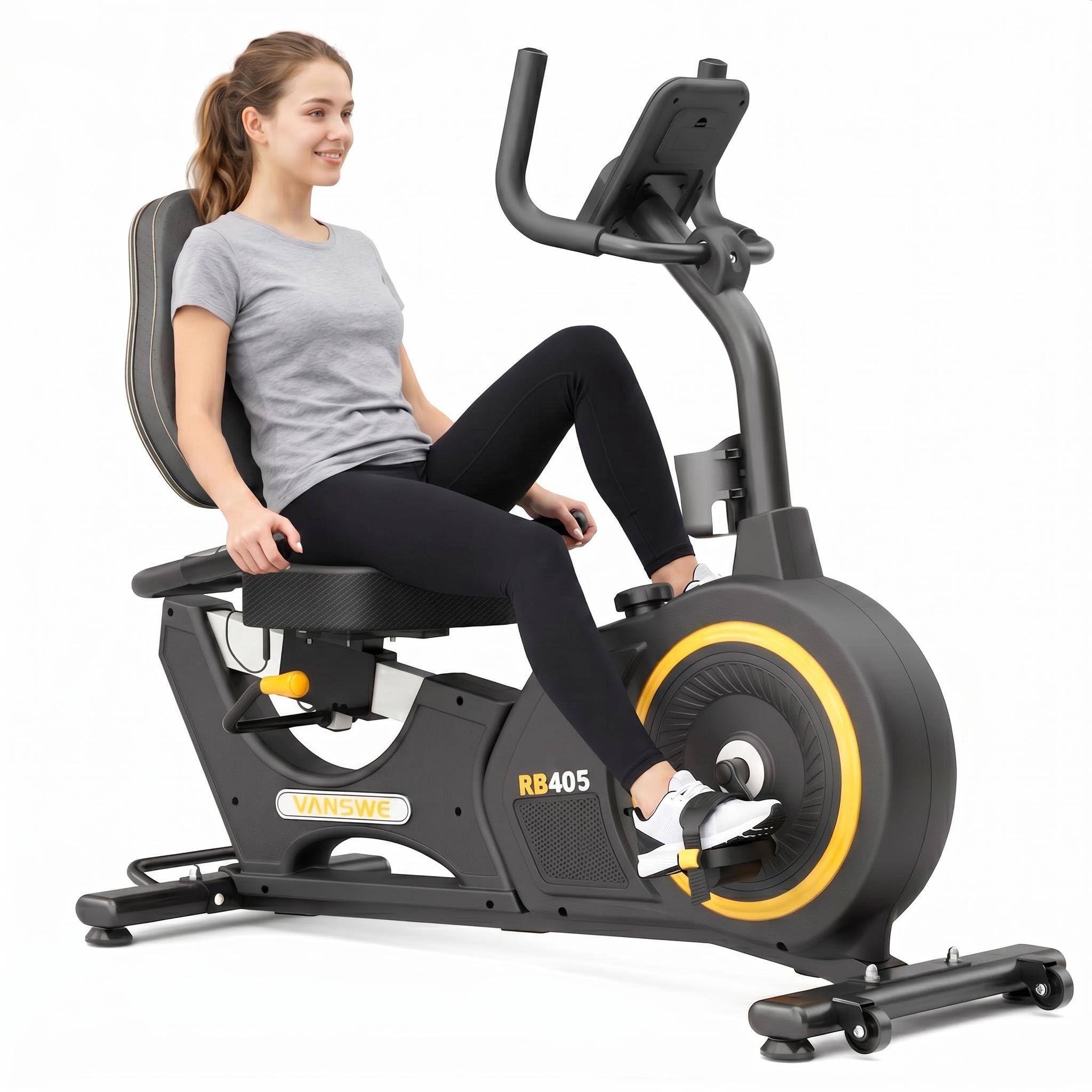
The VANSWE RB405 solves the most common seat-adjustment frustration for arthritic buyers: pre-drilled holes that never line up with your exact leg length. The Infinite Slider Seat System lets you position the seat continuously along the rail in millimeter increments, so you can set the exact distance that keeps your knee from locking at the bottom of the stroke. The 3.4-inch extra-thick padded cushion and contoured backrest provide spinal support that reduces the tendency to slide forward during pedaling.
The 11-pound precision flywheel paired with eight levels of magnetic resistance delivers a quiet, virtually silent ride — useful for anyone who needs to exercise at odd hours when knee stiffness is worst. The Bluetooth connectivity works with Kinomap and Zwift for interactive training, and the backlit LED display remains readable in dim settings. The frame is built from commercial-grade steel and supports 400 pounds, with a low step-through design that makes mounting safe for users with limited knee flexion.
The bike arrives 90 percent pre-assembled, and the transport wheels let one person roll it across hardwood or tile. Customer reviews from users over 70 years old mention that the seat and backrest are comfortable enough for daily use and that the heavy construction does not wobble during pedaling. Some users note that the pedal clips run small for larger feet and that the grip bars sit slightly too close to the seat for taller riders.
Why it’s great
- Infinite slider seat adjusts to the millimeter for precise knee alignment
- 3.4-inch thick cushion supports longer rehab sessions without numbness
- Commercial-grade steel frame handles 400 pounds without wobble
Good to know
- Pedal clips are too small for larger shoe sizes
- Grip bars may feel close to the seat for riders over 6-foot-4
10. Sunny Health & Fitness SF-RB424006
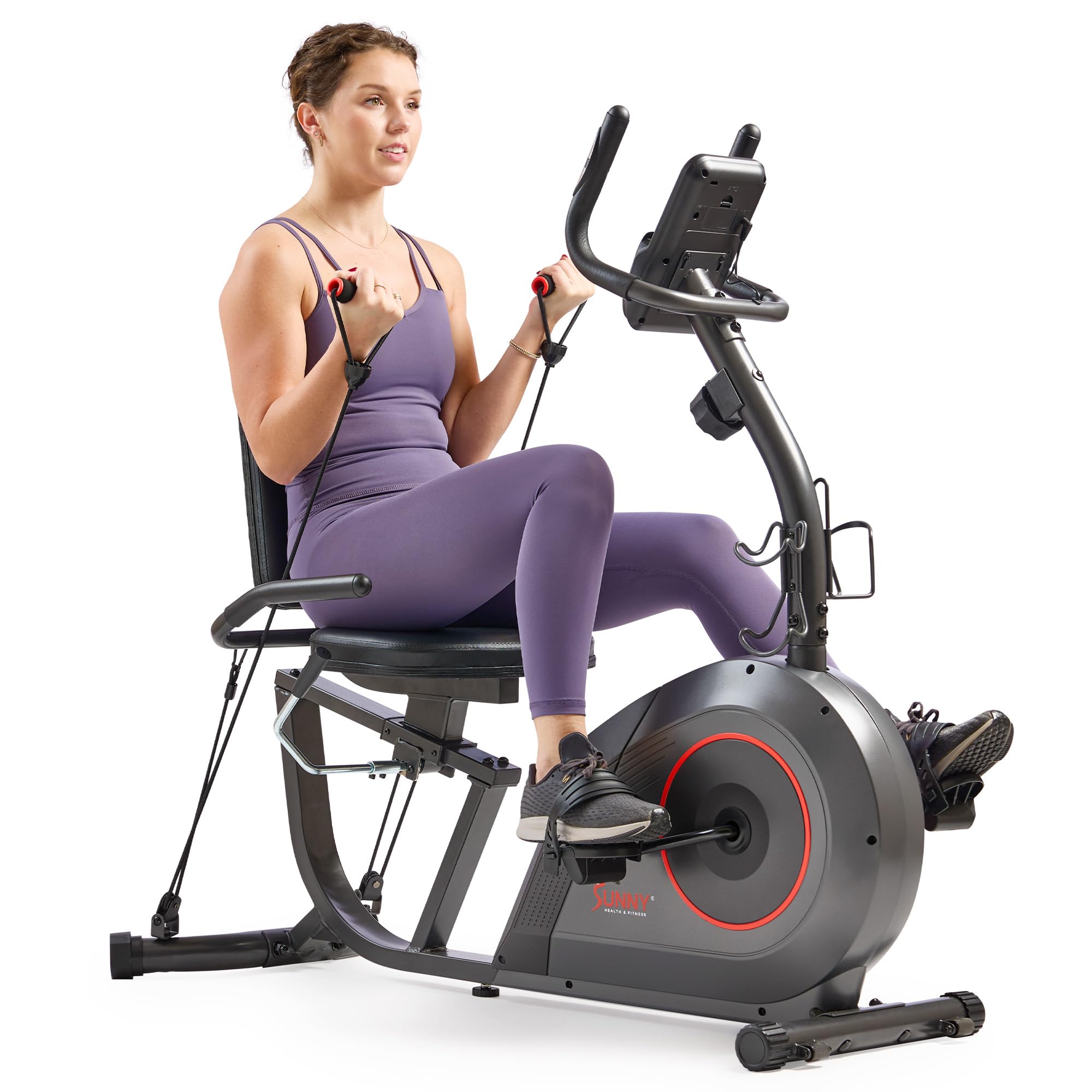
The Sunny Health & Fitness SF-RB424006 is the most affordable recumbent bike in this lineup that still includes a wide cushioned seat, adjustable backrest, and smart app connectivity. The step-through design features a flip-able side handle that makes it easier to lower yourself into the seat without twisting the knee. The 16-level magnetic resistance system is belt-driven and nearly silent, and the included 20-pound resistance bands with a pulley-and-swivel system add an upper-body component that offloads the lower body during recovery days.
The free SunnyFit app provides over 1,000 trainer-led workouts and 10,000 virtual scenic tours, which adds motivation without an ongoing subscription fee. The seat cushion is wide enough to support the ischial bones without pressure points, and the padded backrest extends high enough to stabilize the thoracic spine. The long inseam accommodates users up to approximately 6 feet, though shorter riders will appreciate the ability to slide the seat fully forward.
Some users note that the resistance does not get as heavy as higher-end models, which is actually an advantage for early-stage rehab where excessive load can flare inflammation. The 300-pound weight capacity is lower than the 400-pound standard but adequate for most seniors.
Why it’s great
- Free SunnyFit app with no membership fee adds virtual coaching and scenic rides
- Flip-able side handle simplifies mounting for users with limited knee flexion
- Included resistance bands enable upper-body movement to reduce leg strain
Good to know
- 300-pound capacity is lower than the heavy-duty alternatives
- Maximum resistance is moderate; not suitable for intense cardio training
11. Schwinn 130 Upright
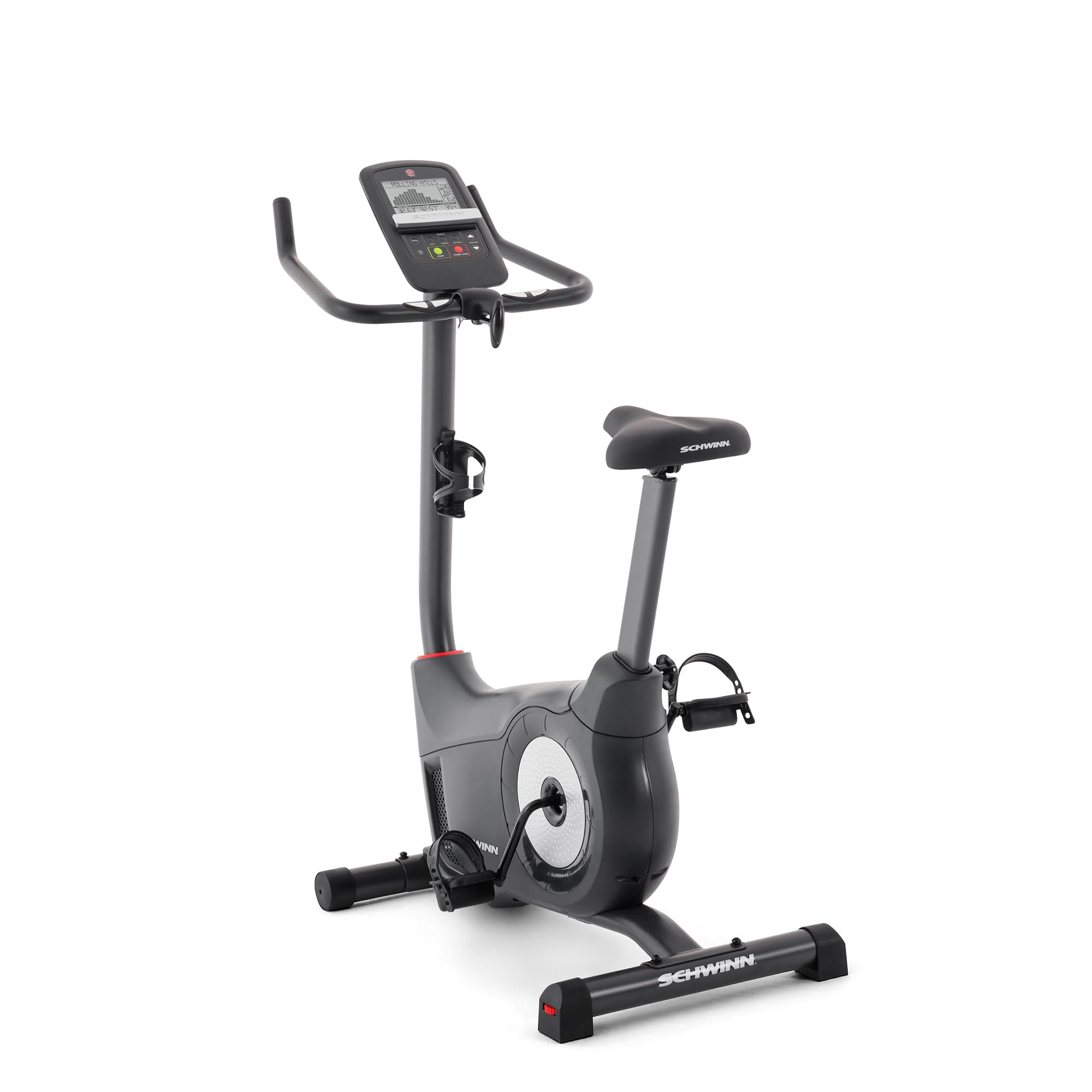
The Schwinn 130 is the only upright bike included here, and it earns its place for a specific subgroup: riders whose arthritic knees are mild and who already own a recumbent bike but want a second machine for variety. The upright posture engages the quadriceps more directly than a recumbent, so this bike is not suitable for acute knee inflammation. However, the 16-level magnetic resistance, 5.5-inch LCD with 13 workout programs, and Bluetooth connectivity to Zwift make it a solid choice for building quad strength once the knee is stable.
The high-speed, high-inertia perimeter-weighted flywheel provides a smooth and quiet ride, and the ergonomic grip heart rate sensors allow real-time zone tracking without a chest strap. The adjustable handlebars and foam comfort seat offer some ergonomic flexibility, though the seat is smaller than recumbent options and may require a gel cover for comfort beyond 20 minutes. The bike weighs 57 pounds and includes transport wheels for easy relocation.
Customers praise the Zwift integration and the quiet belt drive, but the display is powered by an AC adapter rather than batteries, which limits placement near outlets. The 300-pound weight capacity is standard for upright bikes but lower than the heavy-duty recumbent alternatives in this guide. This bike is best reserved as a secondary machine for riders whose arthritic knees are already managed with a primary recumbent option.
Why it’s great
- Bluetooth FTMS integrates reliably with Zwift and Fulgaz for structured training
- Perimeter-weighted flywheel delivers a smooth, quiet pedal stroke
- 13 pre-programmed workouts add variety without manual resistance changes
Good to know
- Upright posture increases patellofemoral load; not for acute knee pain
- Display requires a nearby outlet; battery operation is not an option
FAQ
Is a recumbent bike better than an upright bike for arthritic knees?
What seat adjustment range do I need to protect my knees?
How many magnetic resistance levels should I prioritize?
Can I use a bike for knee rehabilitation after surgery?
Why do some recumbent bikes have resistance bands or arm exercisers?
Final Thoughts: The Verdict
For most users, the bike for arthritic knees winner is the 3G Cardio Elite RB X because its 25-position seat slide and narrow Q-factor let you dial in a precise riding geometry that keeps the patella tracking cleanly through every revolution without lateral shear or hyperextension at the bottom of the stroke. If you want a recumbent stepper that eliminates the crank circle entirely for a zero-impact PT stride, grab the Teeter FreeStep LT7. And for a mid-range recumbent bike with outstanding lumbar support and 100-level resistance granularity, nothing beats the Horizon Fitness 5.0R.