
Our readers keep the lights on and my morning glass full of iced black tea. As an Amazon Associate, I earn from qualifying purchases.
Specs are compiled from manufacturer listings and verified buyer reviews and can change over time — please confirm the key details on the product page before buying.
Finding a bike that doesn’t groan under a heavier rider is the real challenge. Most standard bikes top out around 250 to 275 pounds, leaving bigger riders with frames that flex, spokes that snap, and seats that collapse. The bikes on this list are chosen because they state a weight capacity of at least 300 pounds — and several go well beyond that. You’ll see cruisers for relaxed rides, fat-tire mountain bikes for trails, and even a tricycle for maximum stability.
I’m Min — the founder and writer behind Gadgets Feed. This guide is built by comparing the manufacturers’ published specifications and the patterns across verified customer reviews, so you get each pick’s real strengths and trade-offs instead of marketing spin.
If you carry serious weight, your bike needs to handle your size without wobbling or breaking. The right bike for big guys depends on your riding style, terrain, and how much stability you need. Here are six of the strongest options available right now.
Our Picks at a Glance
How To Choose The Best Bike For Big Guys
Weight capacity is the first number to check, but it is not the only one. A bike rated for 300 pounds will feel different from one rated for 440 pounds, even if you weigh less than both limits. The extra margin built into a 400-pound-rated frame means sturdier components all around — stronger wheels, thicker tires, and a frame that won’t flex under torque. Give yourself a comfortable buffer rather than buying a bike rated right at your exact weight.
Frame material and geometry
Steel is your friend here. High-carbon steel and alloy steel frames absorb road vibration and resist flexing under heavier loads, which is why nearly every bike on this list uses one. The frame geometry also matters — an upright riding position keeps your back and shoulders comfortable on longer rides, while a foot-forward design can change how your weight is distributed. If you are over 6 feet tall, check the frame size and the recommended height range carefully, since some bikes fit taller frames better than others.
Brakes stop a lot of weight
Stopping power gets more important as rider weight goes up. The three brake types you will see are coaster brakes (you pedal backward to stop), V-brakes or linear pull brakes (pads squeeze the rim), and disc brakes (pads squeeze a rotor). Disc brakes generally offer the strongest, most reliable stopping in wet or muddy conditions. Coaster brakes are simple and low-maintenance but can overheat on long downhill stretches. Match the brake type to your terrain.
Tires and wheels carry the load
Wider tires spread your weight over a larger surface area, which means better traction and a more cushioned ride. Fat tires around 4 inches wide handle loose terrain like sand, gravel, and mud far better than narrow commuter tires. Smaller 26-inch wheels are common on these heavier-duty bikes because they put less stress on the spokes and rims. If your main roads are smooth pavement, a semi-slick tire rolls more efficiently than a knobby trail tire.
Quick Comparison
| Model | Best For | Weight Capacity | Speeds | Frame Material | Amazon |
|---|---|---|---|---|---|
| Firmstrong Urban Man★ Best Overall | Leisurely cruises and flat commutes | 300 lb | 3 | Alloy Steel | Amazon |
| VIRIBUS 7 Speed TricycleStability Pick | Stability and cargo hauling | 400 lb | 7 | High Carbon Steel | Amazon |
| Max4out 26″ Fat Tire MTB | Off-road trails and rugged terrain | 400 lb | 21 | High Carbon Steel | Amazon |
| MarKnig 26″ Fat Tire MTB | Tall riders on mixed terrain | 440 lb | 21 | High Carbon Steel | Amazon |
| Firmstrong Bruiser Man | Flat-terrain cruising with a classic look | 300 lb | 1 | Alloy Steel | Amazon |
| sixthreezero EVRYjourney | Commuting with cargo and fenders | 300 lb | 7 | Alloy Steel | Amazon |
In-Depth Reviews
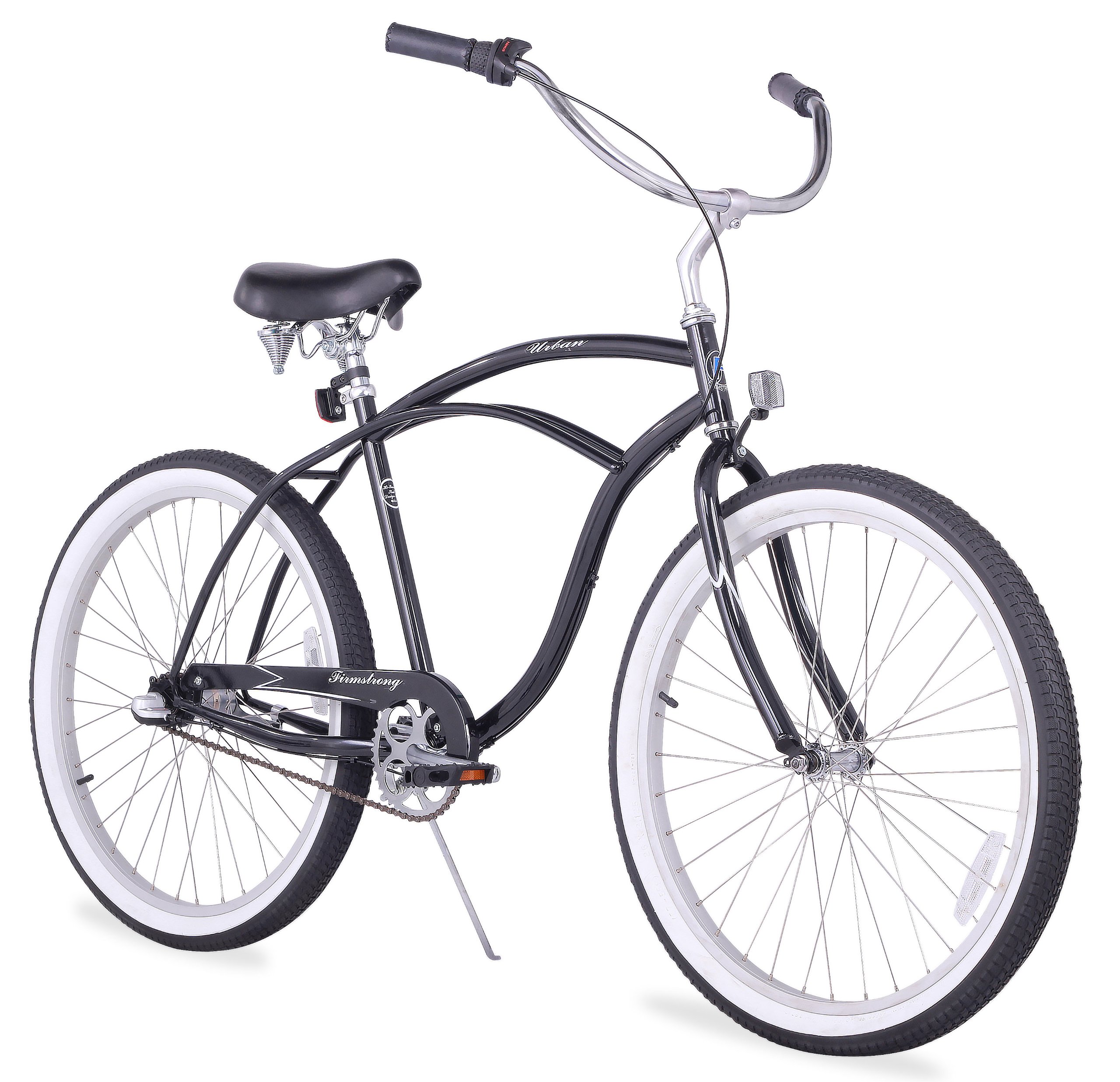
1. Firmstrong Urban Man
Our pick — 4.5★ from 100+ verified ratings; the strongest balance of quality and price.
The 3-speed cruiser that a 290-pound rider happily pedaled for over a thousand miles.
When a bike is rated for riders up to 300 pounds and fits heights from 5 feet 4 inches to 6 feet 3 inches, it covers a lot of real bodies. The 19-inch alloy steel frame and the 36-spoke rims are the structural details that matter here — a rider weighing 290 pounds reported riding comfortably for miles, which is exactly the real-world validation heavier cyclists need before committing.
The 3-speed internal gear system simplifies shifting with a twist-grip shifter. The twist-grip shifter is easy to use, the rear coaster brake (you pedal backward to stop) means no complex cable adjustments, and buyers report the second gear is perfect for slow, enjoyable rides. The soft foam seat and cushioned grips complete the upright riding position that keeps your back and shoulders happy.
Heavy daily use can fatigue the rear spokes over time. After about 1,000 miles in 50 days, one heavier rider found the rear spokes starting to break — a repair that. This is a leisure and casual commuter bike, not a daily heavy-duty workhorse, and the occasional owner notes the low gear isn’t enough for steep hills. Assembly takes roughly an hour, and the bike’s 17 kg heft feels solid rather than flimsy.
What wins people over
- Comfortable dual-spring oversized seat and upright posture
- Coaster brake needs no adjustment from the start
- Quality build that holds a near-300-pound rider with confidence
Who should look elsewhere
- Rear spokes can fatigue after heavy daily mileage
- Low gear struggles on steep hills
- Not built for aggressive off-road riding
Reach for this if: you want a simple, comfortable, good-looking cruiser for flat ground and casual rides, and you weigh up to around 290 pounds.
Think twice if: your commute is long, hilly, or you plan to ride hard every single day — the spokes will eventually protest.
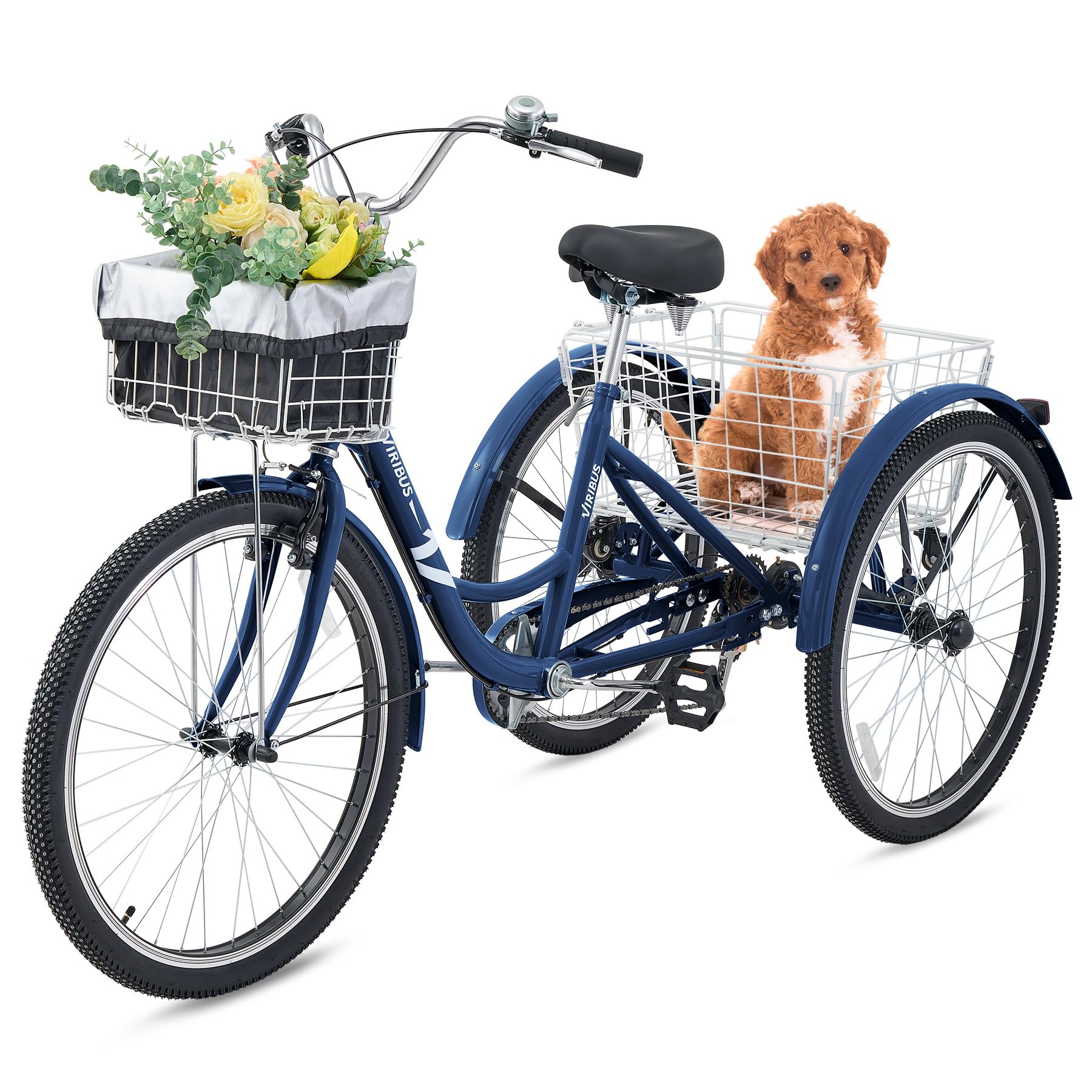
2. VIRIBUS 7 Speed Adult Tricycle
Three wheels, a 400-pound rating, and front and rear baskets that detach for errands.
Balance concerns disappear when you have three wheels instead of two. This VIRIBUS tricycle holds riders up to 400 pounds on a high-carbon steel frame, and its 24 or 26-inch rubber tires provide a stable base that doesn’t require you to put a foot down at stoplights. The wide padded faux leather saddle and shock-absorbing seat design soften road bumps before they reach your spine.
The 7-speed rear derailleur gives you real gear range — owners mention it minimizes pedaling effort on straightaways while adding traction on hills and inclines. The included front and rear detachable wheeled baskets are genuinely practical for grocery runs, and the front basket carries a removable canvas bag for smaller items. A bell, lock, mudguard, and tool kit all come in the box.
Its design wins over buyers, with one reviewer noting a child called it the prettiest bike she’d ever seen. But the assembly process is the recurring point of friction in buyer accounts. The instructions are confusing, customers note needing professional brake and gear adjustments from a bike shop, and a few found the rear basket bracket poorly made. One owner, who needed a bike shop to fix the brakes and gears, still praised the trike’s sturdy build post-setup.
The real strengths
- Ultra-stable three-wheel design for balance confidence
- 400-pound weight capacity with detachable cargo baskets
- Adjustable seat and handlebar for different rider heights
Plan for these hurdles
- Assembly is genuinely difficult with confusing instructions
- Brakes and gears often need professional tuning after setup
- Rear basket bracket quality is inconsistent
Pick this for: riders who need three-wheel stability, plan to haul groceries or pets, and don’t mind a frustrating first build.
Set expectations: budget for professional assembly and a bike shop tune-up to get it riding perfectly.
3. Max4out 26 Inch Fat Tire Mountain Bike
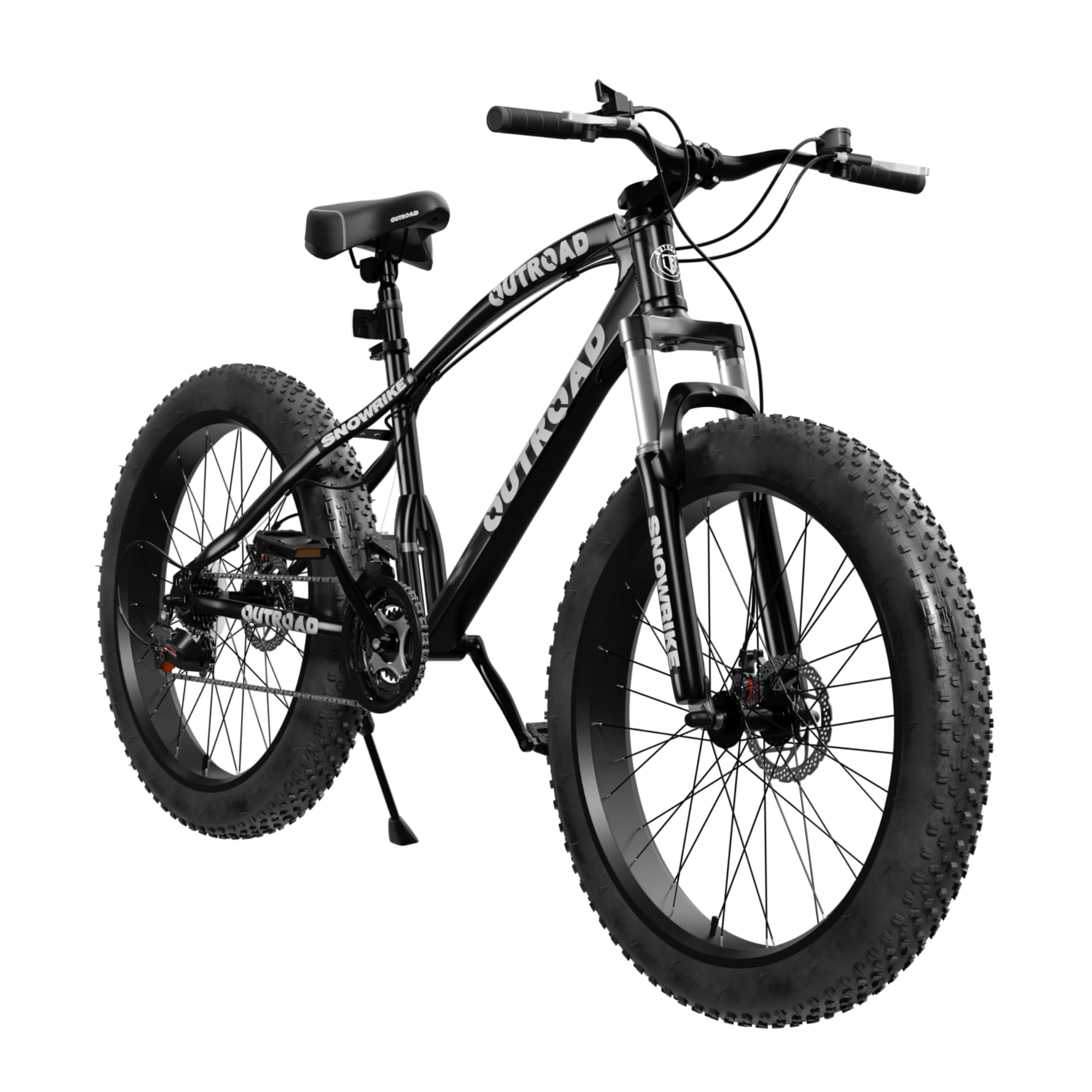
The 21-speed fat-tire mountain bike engineered specifically for riders up to 7 foot 1.
This is the pick that takes big riders off the pavement and onto the trails. The Max4out frames its pitch around rider-adaptive design — the recommended height range runs from 5 feet 5 inches up to 7 feet 1 inch, with a 400-pound weight capacity on a high-carbon steel frame. That height range is the most generous on this list for very tall riders.
The 4-inch fat tires are the standout feature, delivering traction that handles rugged trails and urban roads alike. The 21-speed drivetrain means faster acceleration and easier hill climbing than a basic 7-speed setup — on paper, a 7.0x gap in gear options versus the Firmstrong’s 3-speed. Front and rear disc brakes give you precise stopping power even when the tires are covered in mud, while the front suspension fork with reinforced walls absorbs trail impacts.
A 6-foot-6 rider found the non-adjustable handlebars too low and the seat uncomfortable, recommending a seat and stem riser upgrade. The bike is heavy — described as a one-arm lift at best — and a minority of reviewers point out gear-shifting issues and instructions that aren’t great.
Why it earns its spot
- 400-pound capacity with adjustable geometry for tall riders
- 4-inch fat tires deliver serious off-road traction
- 21 speeds with front suspension handle hills and trails
Know before you buy
- Very heavy frame makes it hard to lift or transport
- Tall riders may need an aftermarket seat and stem riser
- Minor quality-control variance on gears and instructions
Grab this when: you’re a tall or heavy rider who wants real mountain bike capability — fat tires, 21 gears, and disc brakes for trails.
skip it if: you need to lift your bike onto a car rack often or you prefer a purely paved-road ride.
4. MarKnig 26′ Fat Tire Mountain Bike

The highest capacity on this list — a 440-pound rating for the heaviest riders.
If you need the absolute maximum weight rating, this MarKnig mountain bike tops the group at 440 pounds. The high-carbon steel frame is built for riders between 5 feet 5 inches and 7 feet 3 inches tall, making it another strong option for the very tall. The 4-inch knobby tires offer the traction you want on gravel, mud, and sand, where narrower tires would sink or slip.
The 21-speed transmission with trigger shifters gives you precise gear changes across varied terrain, and the dual disc brakes deliver reliable stopping power. Setup is the most approachable of the fat-tire bikes here — it arrives 85 percent pre-installed, and the manufacturer states you can finish assembly in 20 to 40 minutes using the included tools and installation video. A buyer described it as a good, heavy-duty bicycle for larger people, praising its sturdy, well-made feel.
Long-term durability and fit receive mixed feedback from owners. While owners call the quality good, a few report bent rear frames and axles after use, and one heavier, tall rider found the bike uncomfortable with the chain falling off repeatedly. Another buyer saw the gear break after a few rides. These are the outliers, but they point to the reality that even a 440-pound-rated frame can’t guarantee every component will survive hard use indefinitely.
The standout traits
- Highest capacity on the list at 440 pounds
- 85 percent pre-assembled for a quick 20-40 minute setup
- Fat tires and 21 speeds handle varied off-road conditions
The trade-offs
- Durability reports are mixed on rear frames and axles
- Comfort for very tall, heavy riders is hit or miss
- Occasional gear or chain issues reported
Choose it for: riders who need the most generous weight rating available and want a fast, easy assembly experience.
Watch for: component durability over time — this is a capable bike, not an indestructible one.
5. Firmstrong Bruiser Man Beach Cruiser

The stripped-down single-speed that feels far lighter than its 40-pound-plus frame suggests.
The Bruiser Man’s single-speed design strips away complexity for easy flat-terrain cruising. As a single-speed beach cruiser, it has exactly one gear and one job: smooth, relaxed riding on flat terrain. The 19-inch alloy steel frame holds riders up to 300 pounds and fits heights from 5 feet 4 inches to 6 feet 4 inches. A 6-foot-1, 230-pound rider reported the bike handles the weight well and feels lighter than it is — a sentiment echoed by a 6-foot-2, 220-pound owner who called the ride smooth and Cadillac-like.
The wide cruiser handlebars with synthetic leather grips and the dual-spring oversized seat put you in a comfortable, upright posture. The rear coaster brake is all you need for easy stops on level ground. The matte black finish with contrasting red rims draws genuine compliments — buyers specifically note the rims stand out against the dark frame.
Its single gear limits it to flat terrain. With only one gear, steep hills are not this bike’s friend, and shoppers say it demands more pedaling effort than a mountain bike. The durability feedback is mixed on one specific point: rear wheel spokes. Some buyers report broken spokes after a period of use, which is the trade-off of a lighter, simpler wheel design under heavier loads. It’s also note there are no water bottle mounting holes, and the wide turning radius takes some getting used to.
What riders love
- Feels lighter than its size suggests under heavy riders
- Simple single-speed design with minimal maintenance
- Striking matte black look with red rims
Where it falls short
- Single speed struggles on any significant hill
- Rear spokes can break under heavy use over time
- No water bottle mounts and a wide turning radius
Best for: flat-weather cruisers who want a classic, good-looking bike for relaxed rides around town.
Not for: anyone with hills on their route or plans for long, strenuous daily commutes.
6. sixthreezero EVRYjourney Hybrid Bike

A 7-speed hybrid that pairs comfort-focused geometry with a rear rack for real commutes.
The sixthreezero EVRYjourney is built around a foot-forward, upright riding position — your feet reach the pedals slightly ahead of you rather than directly below, which eases pressure on your lower back. The 19-inch steel frame supports riders up to 300 pounds and fits heights from 5 feet to 6 feet 4 inches. A heavier 6-foot-2 rider called it good value, praising the solid ride and smooth shifting.
What makes it a genuine commuter rather than just a cruiser is the included rear rack and matching fenders. The rack carries baskets or panniers for groceries or a work bag, while the fenders keep road spray off your back on wet days. The 7-speed drivetrain with trigger shifters handles moderate hills, and the 26 x 1.95-inch semi-slick tires roll efficiently on paved surfaces. Owners describe comfortable rides with zero pain, making it suitable for longer outings.
Buyer feedback is mixed on function and stability. Most buyers find the assembly straightforward with an excellent manual, but a few report pre-assembly issues like a rear fender tab blocking wheel rotation, handlebars angled wrong, or a seat post that slides. The most critical reviewer described customer service as unhelpful after a fender problem. These appear to be quality-control misses on individual units rather than a pattern, but they’re worth knowing before you buy.
Reasons to choose it
- Rear rack and fenders make it a practical commuter
- Foot-forward upright geometry is kind to your back
- Easy assembly praised in most buyer accounts
Reasons to be cautious
- Individual units arrive with pre-assembly defects
- Mixed reports on front brake function and seat stability
- Customer service response is inconsistent
Pick this if: you want an all-rounder for commuting and casual fitness with built-in cargo capacity.
Inspect carefully: check the fenders, brakes, and seat post on arrival so any assembly defect goes back immediately.
Understanding the Specs
Weight Capacity vs. Your Weight
The stated weight capacity is the maximum total load the bike is designed to handle — that’s you, plus anything you carry. If you weigh 280 pounds, a bike rated for 300 pounds works, but it leaves almost no margin for cargo. A 400-pound-rated frame gives you room to add a bag or groceries without pushing the bike past its design limits. Always leave yourself a buffer of at least 20 to 30 pounds.
Speeds: What the Numbers Really Mean
More gears do not automatically mean a better bike. A 21-speed drivetrain offers a massive range of gear ratios versus a single-speed cruiser — that range shines on hills and varied terrain, where lower gears reduce pedaling effort. A 3-speed internal hub provides enough range for moderate hills but keeps maintenance simple. A single-speed bike is best only on completely flat ground. Consider your terrain before chasing the highest gear count.
Brake Types Explained
The brake style determines how you stop and how much maintenance it needs. Coaster brakes stop the bike when you pedal backward — simple, no cables, but they can strain on long descents. V-brakes, also called linear pull brakes, squeeze pads against the wheel rims and give predictable stopping power. Disc brakes squeeze a rotor instead, offering the strongest and most reliable stopping, especially in wet or muddy conditions where rim brakes lose grip.
Frame Material and Ride Feel
Nearly all big-rider bikes use steel, and there’s a reason. Steel frames are heavier than aluminum but absorb road vibration and resist flexing under heavier loads, which translates to a more stable, planted ride. High-carbon steel and alloy steel both appear on this list, with high-carbon steel generally offering a bit more strength for the same weight. This durability is exactly why it dominates heavy-duty bicycle construction.
FAQ
What is the highest weight capacity bike available on this list?
Will a bike rated for 300 pounds be safe for a 290-pound rider?
What is the difference between a fat tire bike and a regular cruiser for a big rider?
Are tricycles more stable than two-wheel bikes for heavier riders?
How important are more speeds for a heavier rider?
Do disc brakes really stop a heavy bike better than coaster brakes?
How long does assembly take for these bikes?
What should I do about a bike seat that is uncomfortable at a heavier weight?
Can I ride a fat tire mountain bike on regular pavement?
How do I know if a bike frame will fit my height?
Final Thoughts: The Verdict
For most big riders, the bike for big guys winner is the Firmstrong Urban Man because it delivers simple, comfortable cruising with a verified real-world track record at nearly 300 pounds. If you need 400 pounds of capacity and a stable platform for hauling groceries, the VIRIBUS Tricycle brings three-wheel confidence. And if trails are your destination or you top 300 pounds, the Max4out Fat Tire Mountain Bike with its 21 speeds and 4-inch tires is the one to reach for.
How We Picked
We do not accept paid placement. Every pick is matched to a real buyer and a real use-case; we do not hands-on test units.
Sources & Methodology
Specifications: manufacturer listings and product documentation. Review insights: verified customer reviews, as of September 2026. Pricing: not shown on this page (it changes often); check the current price via the retailer link.
As an Amazon Associate, Gadgets Feed earns from qualifying purchases. This does not affect which products we feature.