
Our readers keep the lights on and my morning glass full of iced black tea. As an Amazon Associate, I earn from qualifying purchases.
Specs are compiled from manufacturer listings and verified buyer reviews and can change over time — please confirm the key details on the product page before buying.
Your bike computer shows your heart rate jumping from 130 to 180 when you hit a bump, or your wrist-based optical sensor (a watch that reads blood flow with flashing green lights) lags so badly during intervals that you are guessing your effort. The real problem with most bike heart rate monitors is not features — it is trust. Pick the wrong one and you will fight constant dropouts, false spikes, or a battery that dies mid-ride. This guide looks at six proven bike heart rate monitors — from chest straps to armbands — and shows you which one actually delivers stable, real-time data for cycling.
I’m Min — the founder and writer behind Gadgets Feed. This guide is built by comparing the manufacturers’ published specifications and the patterns across verified customer reviews, so you get each pick’s real strengths and trade-offs instead of marketing spin.
Whether you train with a Garmin head unit (a bike computer screen that shows maps and stats), a Wahoo computer, or just your phone on the handlebars, finding the right bike heart rate monitor means picking between ECG chest-strap accuracy (electrical heart-signal reading) and optical armband convenience — and knowing which ecosystem each one pairs with.
Quick Picks
- Polar H10 Heart Rate Monitor Chest Strap — Pro Accuracy
- COOSPO HW9 Heart Rate Monitor Armband — Smart Trainer
- Magene H603 Chest Strap Heart Rate Monitor — Battery Beast
- CYCPLUS Heart Rate Monitor Chest Strap H2Pro — Daily Trainer
- CYCPLUS Heart Rate Monitor Armband H1 — Quick Charge
- COOSPO Heart Rate Monitor Armband HW807 — Entry Armband
How To Choose The Best Bike Heart Rate Monitor
Picking a heart rate monitor for cycling depends on three things: the sensor type (chest ECG versus armband optical), the wireless protocol it uses (ANT+ is essential for most bike computers — it lets a power meter, speed sensor, cadence sensor, and heart rate monitor all talk to the head unit at once), and how often you want to fiddle with the battery. A wrist-based fitness tracker is the least reliable option on a bike because arm movement and handlebar vibration confuse optical sensors. A dedicated chest strap or armband always wins.
ECG Chest Strap vs Optical Armband
An ECG chest strap detects the electrical signal of your heartbeat directly through electrodes (small metal sensors) against your skin. This is the gold standard for accuracy — it ignores motion, sweat, and bumps. An optical armband uses green LEDs to read blood flow under the skin. It is more comfortable to put on and take off, but can lag during rapid heart rate changes or shift on the arm during aggressive riding. Chest straps win on pure cycling accuracy, but armbands win on convenience and all-day wear.
ANT+ vs Bluetooth: The Bike Computer Factor
If you use a Garmin Edge, Wahoo ELEMNT, or any dedicated bike computer, ANT+ is the protocol you need. ANT+ lets dozens of sensors (power meter, speed, cadence, HR) talk to the head unit simultaneously without pairing headaches. Bluetooth is fine for phone-only riders, but many chest straps, especially budget ones, only broadcast via Bluetooth. Always check that your monitor transmits ANT+ if you plan to pair it with a bike computer.
Battery Life: Coin Cell vs Rechargeable
Chest straps typically use CR2032 or CR2025 coin-cell batteries (small flat disc batteries) that last hundreds of hours but require you to carry a spare. Armbands use rechargeable lithium cells that last 20-110 hours per charge but need a USB cable every few weeks. If you ride long distances or forget to charge things, the coin-cell route is less likely to leave you with a dead sensor mid-ride. The Magene H603, according to the manufacturer, has a 1000-hour battery life — that is roughly 2.5 years of regular weekend riding on one tiny battery.
Quick Comparison
| Model | Best For | Sensor Type | Battery Life | Wireless | Amazon |
|---|---|---|---|---|---|
| Polar H10 | Serious training accuracy | ECG (chest) | 400 Hours (CR2025) | Bluetooth + ANT+ | $104.95Amazon |
| COOSPO HW9 | Armband zone training | Optical (arm) | 35 Hours (rechargeable) | Bluetooth 5.0 + ANT+ | $48.99$69.99PrimeAmazon |
| Magene H603 | Ultra-long battery value | ECG (chest) | 1000 Hours (CR2032) | Bluetooth + ANT+ | $34.99Amazon |
| CYCPLUS H2Pro | Budget chest reliability | ECG (chest) | 500 Hours (CR2032) | Bluetooth + ANT+ | $29.99Amazon |
| CYCPLUS H1 Armband | Quick-charge convenience | Optical (arm) | 110 Hours (rechargeable) | Bluetooth 5.1 + ANT+ | $35.99$39.99Limited time dealAmazon |
| COOSPO HW807 | Entry-level armband | Optical (arm) | 20 Hours (rechargeable) | Bluetooth 5.0 + ANT+ | $41.99$59.99PrimeAmazon |
In-Depth Reviews
1. Polar H10 Heart Rate Monitor Chest Strap
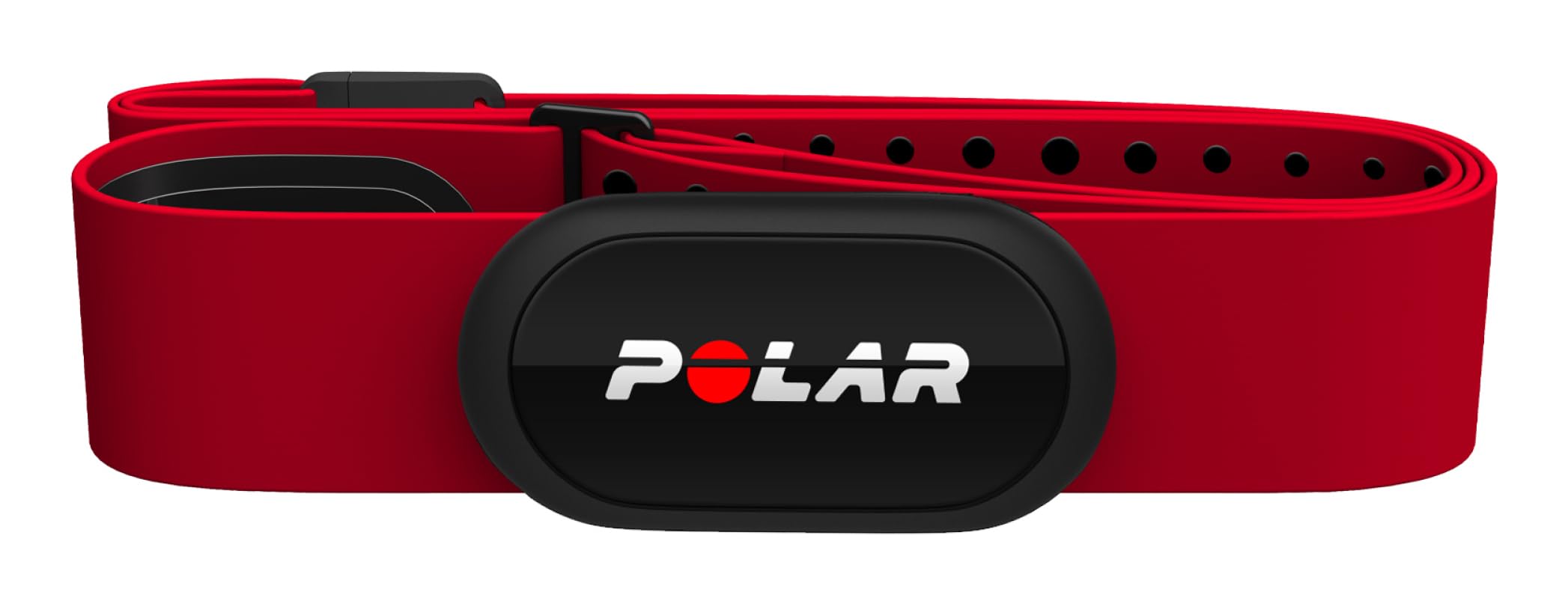
The gold-standard ECG chest strap that cyclists with a Garmin or Wahoo head unit rely on because its 99.3% cycling accuracy beats every optical armband here.
You want the most precise heart rate data your bike computer can receive — especially during intervals, sprints, or climbs — so the Polar H10 is the pick. It uses an ECG sensor and delivers 99.3% accuracy during cycling per reviewer testing. You get Bluetooth and ANT+ simultaneous connections, so it talks to your Garmin Edge while also streaming to your phone, plus a 5 kHz GymLink signal (a special radio frequency) for older gym equipment. The chest strap has silicone dots and an improved buckle so it stays in place without riding up.
It is also waterproof to 30 meters (30m depth rating) and stores one workout session on internal memory if you forget your phone. The CR2025 battery lasts a claimed 400 hours. Unlike the Magene H603 which costs less than half, the Polar H10 is the universal reference — but it weighs 60 grams, about four times the 16-gram Magene, and buyers report that the strap can degrade over time causing erratic readings. One reviewer noted that chest sizes over 42 inches need the separately sold XXXL strap, which is only available direct from Polar.
Why it earns the top spot
- Industry-leading ECG accuracy (99.3% cycling accuracy per reviewer testing)
- Simultaneous Bluetooth + ANT+ connection streams to phone and bike computer at once
- Waterproof to 30 meters and stores one workout session on internal memory
- Comfortable strap with silicone dots stays put on the chest during hard efforts
The real-world trade-offs
- Polar H10 total weight: 60 grams versus the Magene H603 chest strap’s 16 grams
- Strap may need replacing after months of use to maintain consistent readings
- Standard strap too small for chests over 42 inches; XXXL only available direct from Polar
- Battery life: Polar H10 400 hours, Magene H603 1000 hours for the same coin-cell format
The serious cyclist’s choice: This is for the rider who wants laboratory-grade heart rate accuracy above all else, especially if you train with power zones or do structured interval work where every BPM matters.
The catch: You pay for that accuracy, and you should budget for a replacement strap down the line — about a year of regular use, according to owner reports, before the strap’s electrodes can start to give sporadic readings.
2. COOSPO HW9 Heart Rate Monitor Armband

The only armband here with vibration alerts and five-color LED zone indicators — so you feel a buzz when your heart rate hits your limit and see your effort level at a glance, all without a chest strap.
The COOSPO HW9 is the mid-range balance for riders who find chest straps uncomfortable or who alternate between cycling and gym workouts. It uses optical technology (green LEDs that measure blood flow under the skin) with a claimed accuracy of ±1 BPM. You get five-color LED zone indicators (green/orange/red etc.) so you see your effort level at a glance, plus a vibration alert when your heart rate goes above your custom max, which is useful during high-intensity intervals. It connects via Bluetooth 5.0 and ANT+, so it works with Garmin, Wahoo, and CooSpo bike computers, as well as phone apps like Zwift, Strava, and DDP Yoga.
Owners mention that it matches an Apple Watch and a chest monitor for zone training, and the rechargeable battery lasts about a month of regular riding. The HW9 at 10 grams is lighter than the Polar H10 (60 grams) and easier to slip on than a chest strap. However, customers note the armband is sized for the forearm and may be too small for the bicep, and one long-term owner reported the plastic housing cracked after a year when worn too tight — there are no replacement parts available. Another reviewer said it gave false low readings (50s BPM) after five weeks, so consistency varies.
What gives it an edge
- Five-color LED zone indicators show your heart rate zone instantly without looking at a screen
- Vibration alert warns you when you exceed your max heart rate — a safety feature during hard efforts
- Only 10 grams and sits on the forearm, so you barely notice it while riding
- Bluetooth 5.0 + ANT+ works with Garmin/Wahoo bike computers and phone apps simultaneously
Where it stumbles
- Band is designed for the forearm, not the bicep — a snug fit there may be impossible for some riders
- Plastic housing has been reported to crack after about a year of wear, with no replacement parts sold separately
- Optical sensor can lag behind chest-strap ECG during rapid heart rate changes (e.g., hard interval starts)
- Some units have shown erratic readings after a few weeks of use
Best for the no-strap rider: If you hate the feeling of a chest band but still want zone-based training with ANT+ on your bike computer, this armband is your best mid-range option.
Reach for this if… You do short-to-medium rides under three hours and want a monitor you can throw on without licking electrodes or adjusting a chest strap. The 35-hour battery means one charge covers a couple of weeks of commuting.
3. Magene H603 Chest Strap Heart Rate Monitor

A split-design chest strap with 1000 hours of battery from a single CR2032 coin cell — about ten times the life of the CYCPLUS H1 armband and 150 hours more than the Polar H10’s 400-hour claim.
The Magene H603 is a chest strap for cyclists who want the accuracy of ECG (electrical heart signal via chest electrodes) without the high price of the Polar H10. Its standout spec is the battery: 1000 hours from a single CR2032 coin cell, which beats the Polar H10’s 400-hour claim and the CYCPLUS H1 armband’s 110-hour rechargeable battery. It uses a split design (the sensor module snaps off the strap), has ANT+ and Bluetooth dual transmission, and includes four colorful shells that resist fading from sweat. The front LED flashes red ten times when the sensor is active, so you know it is paired and ready before you roll out.
At 16 grams, it is much lighter than the Polar H10 (60 grams) and comfortable enough that one reviewer at 5’9″ and 220 lbs said he did not notice it on the bike. It pairs easily with Garmin Edge units (530, 830, 1030), Wahoo computers, and Zwift. The catch: one buyer mentioned the monitor stopped working after about a month, spiking 30-40 BPM high before matching his Apple Watch, then going high again — so quality control is not as consistent as Polar. It also lacks the Polar H10’s waterproof depth rating and internal memory.
What makes it a battery champion
- 1000-hour battery life from one CR2032 coin cell — ride for 2.5 years of weekend riding without changing it
- 16-gram weight is the lightest chest strap here, versus the Polar H10 at 60 grams
- ANT+ and Bluetooth simultaneous connection works with Garmin, Wahoo, Zwift, and Peloton
- Split design lets you wash the strap without soaking the sensor module
The durability question
- Reported failures after about a month in some units — inconsistent quality versus Polar’s more reliable track record
- No internal memory for workouts (unlike the Polar H10, which stores one session)
- Water resistance rated IP67 (dust tight and protected against immersion in 1m of water for 30 minutes), not fully waterproof like the Polar H10 (30m)
- Sensor may need to be removed from the strap after use to prevent battery drain, per some owner reports
For the ultra-endurance or forgetful rider: If you put in massive weekly mileage and do not want to remember to charge yet another device, the 1000-hour battery life is the single most compelling reason to pick this over any rechargeable band.
skip it if… You want a monitor with a proven long-term reliability record or you need internal memory for workouts — the Polar H10 is the safer pick if your budget allows.
4. CYCPLUS Heart Rate Monitor Chest Strap H2Pro
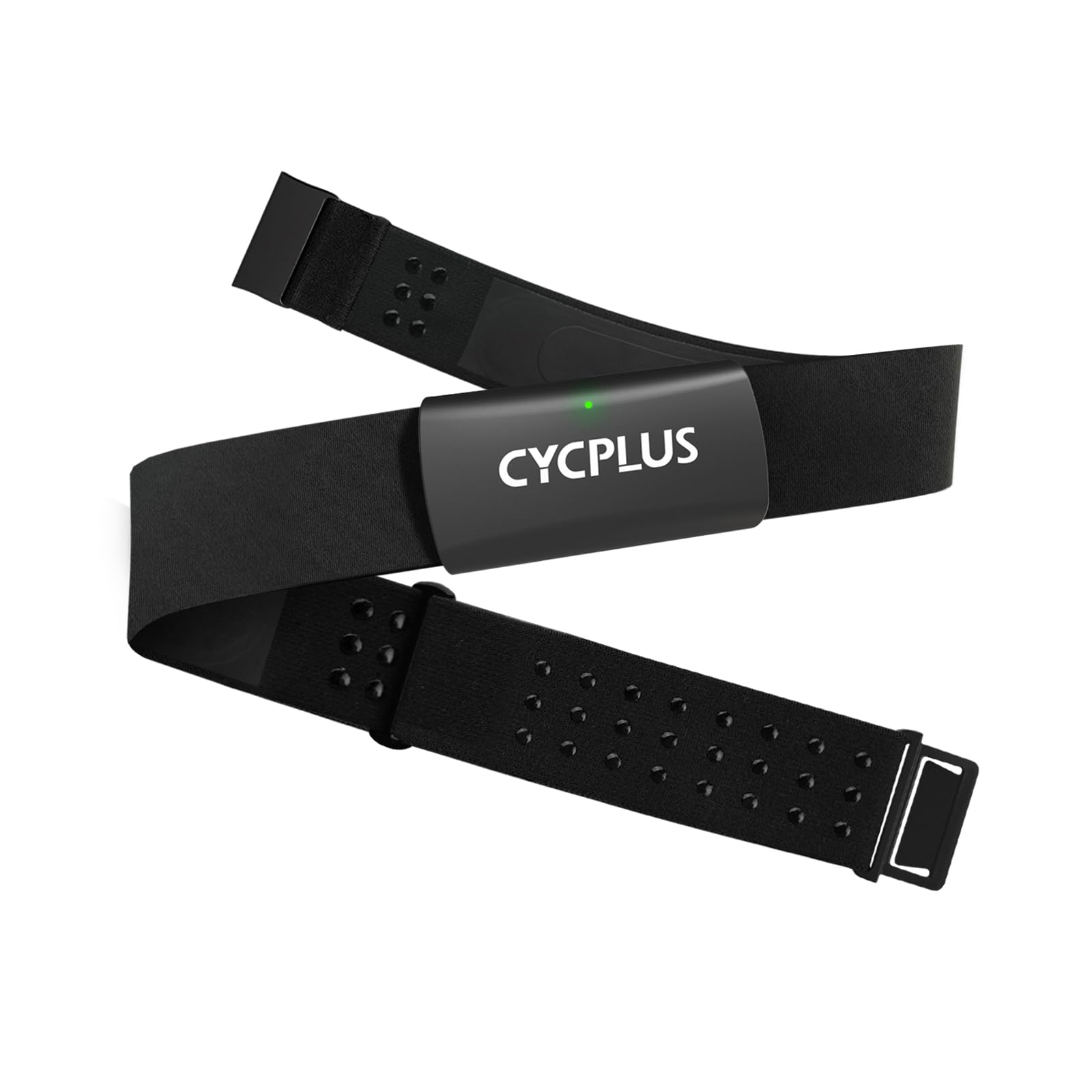
A budget-friendly chest strap that delivers ECG accuracy, a CR2032 battery, and HRV support (heart rate variability — the time gap between beats, used to track recovery) for about half the price of the Polar H10.
The CYCPLUS H2Pro is a well-rounded chest strap aimed at riders who want ECG-level accuracy (electrical heart-signal detection via the chest) without spending Polar H10 money. It uses a CR2032 coin cell for up to 500 hours of operation, which splits the difference between the Magene H603’s 1000 hours and the Polar H10’s 400 hours. It transmits on Bluetooth and ANT+, so it works with Wahoo bike computers, Garmin watches, and Zwift. The sensor also supports heart rate variability (HRV) tracking, which helps you adjust training load and avoid overtraining — a feature usually reserved for pricier monitors.
Reviewers point out the H2Pro works flawlessly after 8 months of use (3-5 hours per week), and one reviewer called it a worthy substitute for the Polar H9. The IPX7 rating (waterproof to 1 meter for 30 minutes) means sweat and rain are not a problem. The main compromise: it cannot connect directly to your phone via Bluetooth for raw data — you have to go through a compatible app like Strava, Zwift, or the CYCPLUS FIT app. The CYCPLUS app only shows real-time data and does not record or export files. Some users also reported difficulty pairing the sensor with the app.
The value case
- ECG chest-strap accuracy at a fraction of the Polar H10 price — buyers call it an effective Polar H9 replacement
- 500-hour battery from a single CR2032, backed by real-world reports of 8+ months problem-free use
- ANT+ and Bluetooth dual connection pairs with Wahoo computers, Garmin watches, gym machines, and Zwift
- Supports HRV monitoring for training load management at a low price
The app limitation
- The CYCPLUS app only shows real-time data — it does not record heart rate data or export files for analysis
- Cannot Bluetooth-pair directly with a phone; must go through a sports app (Strava, Zwift, CYCPLUS FIT)
- Some buyers could not get the sensor recognized by the CYCPLUS app, making initial setup frustrating
- IPX7 water resistance is fine for rain but not for submersion or swimming
Reach for this if… You want a chest-strap monitor that gives you the accuracy fundamentals (ECG, ANT+, HRV) at a price that lets you buy two for the cost of one Polar H10 — and you do not mind using third-party apps to view your data.
Look elsewhere if… You rely on a manufacturer’s app for post-ride analytics or you want direct Bluetooth pairing to your phone without an intermediate app. The Magene H603 gives you a better app experience for a few dollars more.
5. CYCPLUS Heart Rate Monitor Armband H1

A rechargeable optical armband that fully charges in 30 minutes and lasts 110 hours — five times the battery of the COOSPO HW807 at a similar price.
The CYCPLUS H1 armband is the quick-charge alternative for cyclists who dislike chest straps. It uses optical sensor technology (green LEDs reading blood flow) with a claimed accuracy of ±1 BPM, and it connects via Bluetooth 5.1 and ANT+. Its magnetic charging cable snaps on easily, and the single-button operation means you just slip it on your upper or lower arm and press to start. It also has color-coded LED zone indicators: green for ≤80 BPM, orange for 80-140 BPM, red for ≥140 BPM.
Shoppers say it is more accurate than a wrist-based watch and connects reliably to bike computers like the Coospo CS600 or Specialized Turbo Levo. One owner reported it is a real step up from older coin-cell monitors because you never have to buy replacement batteries. The downside: the same CYCPLUS app limitation applies — it only shows real-time data and does not record or export files. Some users also reported that the armband failed to pair via Bluetooth on the first try, though a second attempt usually worked.
Why the 30-minute charge matters
- Full charge in 30 minutes for 110 hours of runtime — you can juice up during a coffee stop before a week-long tour
- Patented optical sensor ±1 BPM accuracy, and color-coded LED zones (green/orange/red) for at-a-glance effort level
- Magnetic charging cable is included and easy to connect without fumbling with micro-USB
- Comfortable silicone armband slips onto upper or lower arm, leaving your wrist and chest free
The trade-offs
- Same app limitation as the H2Pro — the CYCPLUS app shows real-time data only, with no recording or file export
- Optical sensor can lag slightly behind ECG chest straps during rapid heart rate spikes on sprint intervals
- Some users experienced a failed Bluetooth pair on first attempt, requiring a second try to connect
- No HRV tracking, which the H2Pro chest strap offers for training load management
Best for the convenience-focused rider: If you want a monitor you can fully charge during your pre-ride routine and then not think about for weeks, this armband delivers that in a package that plays nice with ANT+ bike computers.
Who should skip it: Riders who want HRV data to track recovery or overtraining — the H2Pro chest strap gives you that feature at a similar price, and optical armbands in general cannot measure HRV as reliably as ECG straps.
6. COOSPO Heart Rate Monitor Armband HW807

The entry-level optical armband that gets you ANT+ connectivity and HRV tracking at the lowest price — but the 20-hour battery is the shortest in this roundup.
The COOSPO HW807 is the budget pick for riders who want an optical armband (green-LED blood-flow sensor) with ANT+ and Bluetooth 5.0 without spending HW9 money. It has a ±1 BPM claimed accuracy, color-coded LED zone indicators, and supports heart rate variability (HRV) tracking — a feature missing from the CYCPLUS H1 armband at a similar price. It works with over 200 apps including Peloton, Zwift, Wahoo Fitness, and Strava, plus it pairs directly with gym equipment like Concept2 rowers and NordicTrack treadmills. The included two arm straps (different sizes) help you get a secure fit on either forearm or upper arm.
Buyers report it connects smoothly to the Wahoo app and gives great pulse and calorie feedback during gym workouts. One buyer did around 4 hours of cycling without needing to recharge, and the battery can supposedly last about a week between charges with regular use. The 20-hour battery life, however, is the shortest in this roundup — the CYCPLUS H1 armband gives you 110 hours for a similar entry price. And a notable caution: one customer observed that the HW807 gave wildly inaccurate readings (175 BPM during a casual walk) while the user felt completely normal, suggesting the optical sensor can occasionally lock onto a motion artifact rather than pulse.
Where the HW807 fits
- ANT+ and Bluetooth 5.0 at a budget price — works with Garmin/Wahoo/CooSpo bike computers and gym machines
- ±1 BPM optical sensor with HRV tracking, a feature the pricier CYCPLUS H1 armband does not offer
- Two arm straps included for a better fit on different arm sizes
- Compatible with Peloton, Zwift, Wahoo, Strava, and 200+ other fitness apps
The compromises
- 20-hour battery life is the weakest of the bunch — about one-fifth of the CYCPLUS H1 armband’s 110-hour run time
- Some units have shown wildly inaccurate readings (175 BPM at a walk), which is unacceptable for serious training
- Reported trouble with the CooSpo app; some users ended up using a third-party app instead
- Only a 12-month support window for a free replacement cable, and the overall build feels less sturdy than the HW9
Reach for this if… You are new to heart rate training on a bike and want the lowest-cost entry point with ANT+ connectivity. It is fine for casual weekend rides where you do not need weeks of battery life.
Look elsewhere if… You ride multiple times per week or do long endurance events — the CYCPLUS H1 armband costs a bit more but gives you five times the battery life and faster charging, making it the better daily driver.
Understanding the Specs
ECG vs Optical Sensor
An ECG sensor, found in chest straps like the Polar H10 and Magene H603, picks up the electrical signal your heart generates. It is the most accurate method for cycling because handlebar vibration and body movement do not confuse it. An optical sensor, found in armbands like the COOSPO HW9 and CYCPLUS H1, shines green LEDs through your skin to detect blood flow. It is more comfortable and easier to put on, but during hard sprints or bumpy descents, the optical reading can lag by a few seconds or lock onto motion instead of your pulse.
ANT+ vs Bluetooth for Cycling
ANT+ is the standard for bike computers (Garmin, Wahoo, Bryton). It lets you pair multiple sensors — power meter, speed, cadence, heart rate — to one head unit without interference. Bluetooth works with phones and some gym equipment but cannot handle as many simultaneous connections. If you use a bike computer, a monitor that supports ANT+ is not optional — Bluetooth-only chest straps will not show up on your Garmin Edge. All six products here include ANT+ alongside Bluetooth, but always verify before buying a cheaper third-party strap that may omit it.
FAQ
Can I use a bike heart rate monitor with my Garmin Edge or Wahoo ELEMNT?
Which is more accurate for cycling — a chest strap or an armband?
How long does a CR2032 battery last in a chest strap?
Can I connect two devices to a bike heart rate monitor at the same time?
Are armband heart rate monitors sweat-proof or waterproof for riding in the rain?
What is HRV, and does a bike heart rate monitor need it?
Will a Polar H10 chest strap fit me if I have a large chest?
Can I use a bike heart rate monitor with Zwift or Peloton?
Why does my optical armband sometimes show a much higher heart rate than I expect?
Do I need to wet a chest strap before riding?
Final Thoughts: The Verdict
For most cyclists, the clear winner in the bike heart rate monitor category is the Magene H603 because it gives you ECG chest-strap accuracy, ANT+ and Bluetooth connectivity, and a class-leading 1000-hour battery — all at a fraction of the Polar H10’s price. If you want the absolute gold standard in accuracy and do not mind paying for it, the Polar H10 remains the most trusted sensor for serious training. And if you cannot stand chest straps, the COOSPO HW9 armband is the best balance of optical sensor performance and zone-training features when you want to ride strap-free.
How We Picked
We do not accept paid placement. Every pick is matched to a real buyer and a real use-case; we do not hands-on test units.
Sources & Methodology
Specifications: manufacturer listings and product documentation. Review insights: verified customer reviews, as of July 2026. Pricing: not shown on this page (it changes often); check the current price via the retailer link.
As an Amazon Associate, Gadgets Feed earns from qualifying purchases. This does not affect which products we feature.
Related Guides
Product prices and availability are accurate as of the date/time indicated and are subject to change. Any price and availability information displayed on Amazon at the time of purchase will apply to the purchase of this product. As an Amazon Associate I earn from qualifying purchases.
CERTAIN CONTENT THAT APPEARS ON THIS SITE COMES FROM AMAZON. THIS CONTENT IS PROVIDED "AS IS" AND IS SUBJECT TO CHANGE OR REMOVAL AT ANY TIME.
Amazon and the Amazon logo are trademarks of Amazon.com, Inc. or its affiliates.