
Our readers keep the lights on and my morning glass full of iced black tea. As an Amazon Associate, I earn from qualifying purchases.
Specs are compiled from manufacturer listings and verified buyer reviews and can change over time — please confirm the key details on the product page before buying.
A bike helmet is the one piece of gear you hope never really needs to work — but when it does, there is zero room for compromise. The challenge is that women’s heads are not simply smaller versions of men’s; the fit, the shape, the ponytail clearance, and even the style all shift the decision. This guide cuts through the glossy marketing to find the models that actually fit a woman’s head shape, pass modern safety tests, and do not make you look like a forgotten extra from a 90s action movie.
I’m Min, founder and writer at Gadgets Feed. This guide compares manufacturer specs and verified customer reviews to highlight each helmet’s real strengths and trade-offs.
Whether you are an everyday commuter, a weekend road rider, or a trail-chasing mountain biker, the best bike helmets for women balance lightweight comfort with genuine impact protection that you can trust on every ride.
Our Picks at a Glance

How To Choose The Best Bike Helmets For Women
The best helmet is the one you’ll wear every ride. Different head shapes, safety systems, and vent patterns make choosing tricky. Here’s what matters when shopping.
Fit System and Head Shape
A helmet that wobbles or pinches will end up hanging on your handlebars. Look for a rear dial adjustment — often called a fit system — that lets you dial in tension in seconds. For women, a rounder head shape is common, and some helmets (like the LAZER Tonic KinetiCore) are specifically praised by buyers for fitting round heads well. A good fit system should also let you adjust the vertical straps so the Y-joint sits right below your ear.
Rotational Impact Protection (MIPS and KinetiCore)
You will see MIPS (Multi-directional Impact Protection System) on many higher-end helmets. It is a low-friction layer inside the helmet that allows your head to slide slightly during an angled crash, reducing rotational forces on your brain. Smith adds its own Koroyd honeycomb material for extra energy absorption. LAZER uses a built-in crumple zone design called KinetiCore. Any of these systems is a meaningful upgrade over a basic foam-only helmet, especially if you ride on roads near traffic or on uneven trails.
Ventilation and Weight
More vents are better for hot summer rides, but they also make the helmet less aerodynamic and slightly heavier. A road helmet like the Smith Persist has 21 fixed vents, while a mountain helmet like the Smith Engage has 20. On long climbs, every ounce counts — an 11-ounce helmet feels nearly invisible after a few minutes. In hot climates, prioritize airflow over aero claims.
Special Features for Commuters
If you lock your bike outside a coffee shop or office, a helmet with a built-in lock channel (like the Thousand Heritage 2.0 PopLock) lets you secure the helmet to your bike. An integrated rear light, like the USB-rechargeable one on the SLANIGIRO urban helmet, adds visibility without a separate purchase. Magnetic buckles are also gaining popularity — they are easier to fasten one-handed, which matters when you are juggling gloves and a bag.
Quick Comparison
| Model | Best For | Protection System | Weight | Vents | Amazon |
|---|---|---|---|---|---|
| Smith Engage MIPS★ Best Overall | Mountain trail riding | MIPS + Koroyd | — | 20 | $150.00Amazon |
| Smith Persist MIPSRoad Ready | Road cycling & long distance | MIPS + Koroyd | 11 oz | 21 | $78.00Amazon |
| Giro Verce MIPS | Women-specific fit & everyday riding | MIPS | 1.5 lbs | — | $84.99Amazon |
| LAZER Tonic KinetiCore | Round head shapes & value | KinetiCore | 240 g | — | from $79.99Amazon |
| Thousand Heritage 2.0 | Commuting & style | Standard EPS + PC | 0.5 kg | — | $99.00Amazon |
| SLANIGIRO Urban | Budget commuter with light | Standard EPS + PC | 11.53 oz | 8 | $35.99Amazon |
In‑Depth Reviews
1. Smith Engage MIPS Cycling Helmet
Our pick — over 4.5★ from 950+ verified ratings; the strongest balance of quality and price.
This mountain helmet combines a MIPS slip plane with Koroyd honeycomb material — so you get two layers of impact protection that handle both rotational forces and direct hits without turning your skull into a sweatbox.
Built for big berms, rock gardens, and flowy rollers, the Smith Engage uses a MIPS (Multi-directional Impact Protection System) layer and Koroyd — a honeycomb-like structure made of thin-walled tubes that crush on impact to absorb energy. Together, they give you protection against both rotational forces and direct impacts. With 20 fixed vents and an Ionic+ lining that fights sweat-activated odor, you can push hard on a climb without your glasses fogging up. The visor adjusts into two positions, which is handy whether you are dropping into a descent or pedaling into a low sun.
Buyers report it is the most comfortable helmet they have owned — one rider specifically notes the deep coverage on the back of the head “without neck interference,” and another loves that it avoids the mushroom-head look. The same reviewer offers a vital reminder: “these MIPS helmets should be replaced after 3-5 years, since the foam may degrade over time due to prolonged Sun/UV exposure.” A minor drawback some mention is that the buckle can be a bit fiddly to fasten, and on very rough descents the helmet may slip forward slightly if you are not wearing glasses. Still, for mountain riders who want a premium blend of ventilation and serious protection, this is the one.
Your best trail partner: If you ride singletrack, the Engage gives you the coverage and airflow to keep pushing all afternoon, with safety tech that goes far beyond basic foam.
One honest catch: The 20 vents (just one less than the road-focused Smith Persist) mean the helmet may still feel warm on sluggish days, and the buckle can slow you down at a quick coffee stop.
Reach for this if: you spend weekends chasing dirt and want a mountain-specific fit with the highest level of rotational protection available.
Look elsewhere if: you are a pure pavement cruiser on a tight budget — the protection is excellent, but you may not use all its trail-ready features.
2. Smith Persist MIPS Cycling Helmet
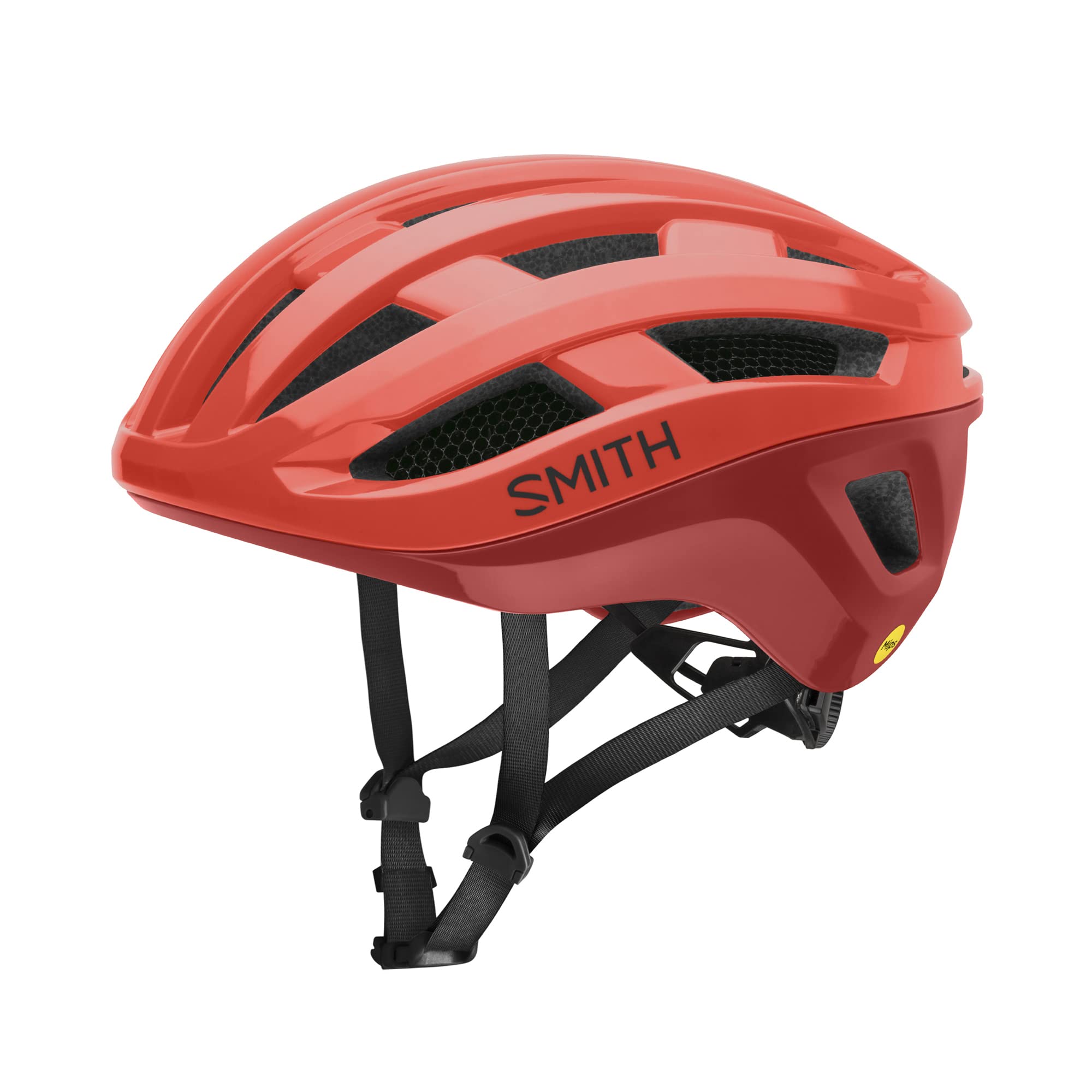
At 11 ounces and with 21 vents, this road helmet is lighter and better-ventilated than the trail-focused Smith Engage — it is built for 60-mile days when neck fatigue and foggy glasses ruin the fun.
The Smith Persist is the road specialist of the group, packing the same MIPS (Multi-directional Impact Protection System) and Koroyd (a honeycomb energy-absorber) protection as the Engage but in a sleeker, more aerodynamic shell. At 11 ounces, it is notably lighter than many alternatives — and that extra vent (21 vs 20 in the Engage) gives you a real edge on hot, long climbs. The AirEvac system works with Smith eyewear to keep your lenses clear, so no more stopping to wipe fog off your sunglasses mid-ride.
Buyers consistently use the phrase “lightweight, no neck strain,” and one reviewer shares that the helmet saved their head in a catastrophic crash. The rear dial lets you fine-tune the fit in seconds, and the MIPS system is said to be unnoticeable while you ride. A few owners mention a slight mushroom effect in the mirror, and there are no dedicated slots for stowing sunglasses. For the price, though, the Persist delivers an exceptional mix of weight, airflow, and safety technology — a smart upgrade from a basic foam helmet.
Why It Earns Its Spot
- 11 oz weight — you genuinely forget you are wearing it
- Koroyd and MIPS together offer layered impact protection that standard helmets skip
- 21 fixed vents and the AirEvac system keep glasses fog-free
What Takes the Edge Off
- No dedicated sunglass ports — you will have to tuck arms under the straps
- Some riders find the shape creates a slight mushroom silhouette
Your go-to road helmet: if you log serious miles on pavement and want a featherlight, well-ventilated lid with proven safety tech, this is the winner.
Not your pick if: you need to stow glasses in the helmet mid-ride, or you strongly prefer a rounder profile shape.
3. Giro Verce MIPS Bike Helmet
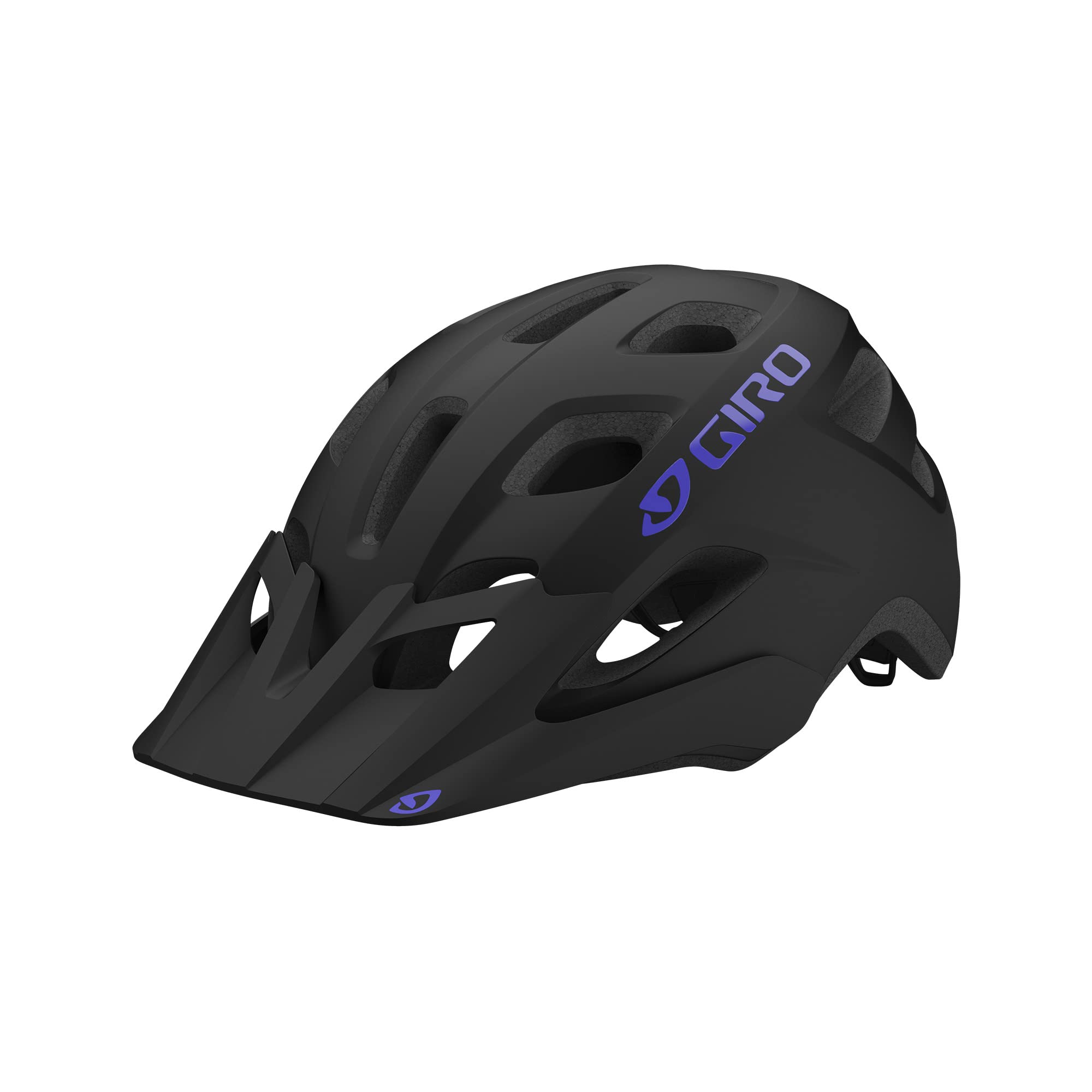
Giro built this helmet around a women’s 50–57 cm size range and paired it with a one-hand, rear-dial fit system — so it stays put without creating pressure points, unlike unisex helmets that slide or pinch.
Giro built the Verce around a women’s size range (50–57 cm) and paired it with the Roc Loc Sport fit system — a rear dial that lets you tighten or loosen the helmet with one hand while riding. The fit is the standout feature here: owners mention it is “secure and adjustable,” and many note you can “forget you have it on” even on long rides. The Matte Black/Electric Purple colorway adds a subtle pop without screaming for attention.
The helmet uses MIPS (Multi-directional Impact Protection System) for rotational impact protection, a full hardbody shell for durability, and a removable visor that helps keep sun and rain off your glasses. At 1.5 pounds it is heavier than the Smith Persist, but the comfortable padding and easy adjustment make up for it. Reviewers mention it is well-made for the price, and one notes they saved money compared to a local sporting goods store. The ventilation is good, though not as generous as a road-specific helmet, and the fit system does tend to sit lower on the back of the head, which some women prefer for a more secure feeling.
A dialed-in fit for smaller heads: The Verce is one of the few helmets on this list deliberately sized for women, so if you have found other helmets swimming on your head, this one is worth a try.
The weight trade-off: At 1.5 pounds (roughly 680 grams), it is noticeably heavier than an 11-ounce road helmet, but the comfort and safety features make it a strong everyday choice for casual to moderate riders.
Best for: women who want a true womens-size MIPS helmet with a secure, easy-to-adjust fit at a mid-range price point.
skip it if: absolute minimal weight is your top priority, or you need a very round head shape — some round-headed buyers prefer the LAZER Tonic.
4. LAZER Tonic KinetiCore Bike Helmet

At just 240 grams, it is the lightest helmet in this guide — and its KinetiCore crumple zones (built-in weak points in the foam) give you rotational protection without the extra bulk of a separate MIPS liner.
LAZER’s Tonic KinetiCore brings a different approach to safety: instead of a separate slip liner, the helmet has built-in crumple zones molded directly into the EPS (Expanded Polystyrene — the standard foam that crushes on impact) that are designed to crush on impact and redirect rotational forces. That keeps the weight down to just 240 grams — lighter than most helmets on this list — and eliminates the extra bulk some MIPS layers add. The shell is polycarbonate over foam, which is the standard durable construction for modern helmets.
Buyers rave about comfort: one reviewer with a round head shape says “This helmet will fit you great,” and another calls it “the best fitting and most comfortable helmet I have used” for a larger head. The rear dial makes fine-tuning easy, and the ventilation is good enough for hot days. It is also described as ponytail-friendly, which matters for women who ride with long hair. The main complaint is that the front vents make it awkward to store sunglasses — there are no dedicated grippy slots like on premium models. At a mid-range price, the Tonic KinetiCore delivers modern protection in a comfortable, super-light package.
What Stands Out
- 240 grams — one of the lightest helmets at this price point
- KinetiCore crumple zones offer rotational protection without a separate liner
- Ponytail-friendly design and easy rear dial adjuster
The Minor Flaw
- No built-in sunglasses storage; the front vents lack a grippy keeper
- The fit is excellent for round heads but may not suit more oval head shapes as well
Grab this if: you have a round head and want a featherlight helmet with modern crumple-zone protection at a price that leaves money for gloves and a light.
Pass if: you need a helmet that doubles as a sunglass rack, or you prefer the traditional MIPS slip-plane system over KinetiCore.
5. Thousand Heritage 2.0 Adult Bike Helmet

The PopLock channel — a hidden slot behind the front logo — lets you thread your U-lock through it, so you can leave this retro-styled helmet locked to your bike frame instead of juggling it in a coffee shop.
Thousand started with a simple idea: make a bike helmet that people actually want to wear, then add smart commuter features. The Heritage 2.0 has a low-profile retro shape that does not scream “cyclist,” and the standout feature is the PopLock — a hidden channel behind the front logo where you thread your U-lock or chain lock. You can secure the helmet to your bike frame so it does not sit on your handlebars or get stolen. The helmet weighs 0.5 kilograms (roughly 17.6 ounces), which is heavier than the Smith options, but it makes up for it with a magnetic buckle that fastens easily one-handed and a Dial Fit System for quick adjustment.
Buyers confirm it handles Florida heat and 90°F rides without overheating, and the sleek design gets frequent compliments. The magnetic clasp takes a few tries to get used to, but once you do, it is faster than a traditional buckle. The helmet is also rated for skateboarding and roller skating, so it pulls double duty if you switch activities. The biggest compromise: the Heritage 2.0 does not have MIPS (Multi-directional Impact Protection System) or a rotational impact system, relying on standard EPS (Expanded Polystyrene) foam and a polycarbonate shell. For casual urban riding at moderate speeds, that is usually fine, but aggressive riders may want more advanced protection.
The commuter’s best friend: If you ride to work, the PopLock solves the “where do I put this helmet” problem forever, and the magnetic buckle makes every stop and start a little quicker.
The safety gap: No MIPS or KinetiCore means this helmet relies on traditional impact absorption, so it is best for city cruising, not high-speed road or mountain riding.
Reach for this if: you commute daily, want a helmet you can lock to your bike, and value style and convenience over maximum technological protection.
Look elsewhere if: you ride at speed on roads or trails and want a MIPS or Koroyd system as a non-negotiable feature.
6. SLANIGIRO Adult Urban Bike Helmet

At 11.53 ounces, this budget-friendly helmet is lightweight — and its built-in USB-rechargeable rear light adds visibility after dark without asking you to buy extra gear.
At 11.53 ounces, the SLANIGIRO Urban is actually the same weight as the premium Smith Persist, which is impressive for a budget-oriented helmet. It uses an integrated polycarbonate shell over an EPS (Expanded Polystyrene — the standard foam that crushes on impact to absorb energy) liner and meets both US and EU safety standards. The big draw for city riders is the USB-rechargeable rear light with three lighting modes that charges in 2 hours and lasts 6-8 hours — so you can ride home after dark without buying extra gear. The fit system covers M size (55–58 cm) and L size (59–61 cm), and customers note it accommodates a baseball hat or thin winter beanie underneath.
One review tells the story that really matters: “I fell on my bike and smacked the back of my head HARD. No concussion. No headache.” The helmet cracked on impact, which is exactly what it was supposed to do — absorb the energy so your skull does not. Buyers also love the gradient color and unique shape that avoids the “boring dad helmet” look. The catch is there is no MIPS (Multi-directional Impact Protection System) here, and the breathable 8 large vents are fewer than on the high-end helmets, though reviewers point out airflow is still decent for casual city rides. If you are on a strict budget but refuse to ride unprotected, this is a solid, proven choice.
Why It Wins for the Money
- 11.53 oz — lightweight for its price
- Built-in USB-C rear light with 6-8 hours of run time adds safety without extra cost
- Proven crash protection from real buyer experience
What You Give Up
- No MIPS or any rotational impact system — it is basic foam-and-shell protection
- Only 8 vents, which means less airflow than road or mountain helmets
Your entry-level commuter lid: if you need a lightweight helmet with a built-in taillight and you are not pushing speeds that demand MIPS, this one delivers confidence without the premium price.
Not for you if: you plan to ride fast on open roads, want the best-possible safety tech, or need maximum ventilation for hot climbs.
Understanding the Specs
MIPS and Koroyd (Rotational Protection)
MIPS (Multi-directional Impact Protection System) is a thin, low-friction layer inside the helmet that lets your head slide a few millimeters on angled impacts. That small movement reduces the rotational force that can cause concussions or brain injuries. Koroyd is a separate honeycomb structure made of thin-walled tubes that crush on impact, absorbing energy before it reaches your head. Smith helmets combine both for dual-layer protection. LAZER’s KinetiCore uses a different approach: crumple zones molded directly into the helmet foam. Any of these systems is a meaningful upgrade over a standard foam-only helmet.
Weight and Vent Count
Every ounce matters on a long ride. A helmet near 11 ounces (about 310 grams) is generally considered lightweight and will not cause neck fatigue on a 60-mile day. Vents are measured in number and design — more vents usually mean more airflow, but they also reduce the helmet’s aerodynamic efficiency. For hot-weather riders, 15-21 vents is a good target. For commuters and casual riders, 8-12 vents are usually sufficient because your speeds are lower and airflow is not as critical. A rear dial adjustment system is the quickest way to fine-tune fit, and it is almost always worth paying a little extra for.
FAQ
How often should I replace my bike helmet?
Do I need MIPS on a bike helmet for casual city riding?
How do I measure my head for the right helmet size?
Can I wear a ponytail with these helmets?
What is the difference between a road helmet and a mountain bike helmet?
How do I know if a helmet fits properly?
Is a heavier helmet really that noticeable on a long ride?
Can I use a bike helmet for skateboarding or roller skating?
Final Thoughts: The Verdict
For most riders, the best bike helmets for women are the Smith Engage MIPS for trail riders and the Smith Persist MIPS for road cyclists — both deliver a premium combination of Koroyd, MIPS, and lightweight comfort that stands out in this category. If you want a budget-friendly commuter pack, the SLANIGIRO Urban gives you a built-in tail light and proven crash protection at a very affordable price. And if style and lockability matter most for your daily city ride, the Thousand Heritage 2.0 is the helmet you will actually want to wear and leave locked to your bike.
How We Picked
We do not accept paid placement. Every pick is matched to a real buyer and a real use-case; we do not hands-on test units.
Sources & Methodology
Specifications: manufacturer listings and product documentation. Review insights: verified customer reviews, as of July 2026. Pricing: not shown on this page (it changes often); check the current price via the retailer link.
As an Amazon Associate, Gadgets Feed earns from qualifying purchases. This does not affect which products we feature.
Related Guides
Product prices and availability are accurate as of the date/time indicated and are subject to change. Any price and availability information displayed on Amazon at the time of purchase will apply to the purchase of this product. As an Amazon Associate I earn from qualifying purchases.
CERTAIN CONTENT THAT APPEARS ON THIS SITE COMES FROM AMAZON. THIS CONTENT IS PROVIDED "AS IS" AND IS SUBJECT TO CHANGE OR REMOVAL AT ANY TIME.
Amazon and the Amazon logo are trademarks of Amazon.com, Inc. or its affiliates.