
Every cyclist reaches a point where heart rate alone feels like a half-truth. You push harder, but the climb still bites — and you have no real number to tell you if you’re actually stronger or just suffering more. A power meter cuts through that noise by measuring the actual torque you apply to the drivetrain, turning subjective effort into actionable watts you can track, analyze, and improve ride after ride.
I’m Min — the co-founder and writer behind Gadgets Feed. I’ve spent hundreds of hours cross-referencing accuracy claims, battery life tests, and compatibility matrices across crankset, spider, arm, and pedal-based power meter designs to separate real performance from marketing noise in this specific category.
Whether you’re an amateur racer targeting a higher functional threshold power or a weekend rider who wants to pace climbs smarter, this deep-dive guide cuts through the spec sheets to find the best bike power meter that fits your ride and your wallet.
How To Choose The Best Bike Power Meter
Choosing a power meter isn’t just about picking the lowest price tag. The form factor determines what bikes it fits, how easy it is to swap, and whether you get left-side-only data or true left-right balance. Accuracy matters, but so does battery life, waterproofing, and which head units it talks to.
Form Factor: Spider, Crank Arm, or Pedal?
Spider-based power meters replace the chainring spider and measure total drivetrain torque — they’re accurate and clean-looking but require crank compatibility. Left-arm meters like the 4iiii Precision 3+ replace your non-drive arm and are easy to install, but they estimate total power by doubling the left leg. Pedal-based meters such as the Favero Assioma Duo are the most transferable: just swap pedals between bikes and you get dual-sided data without special tools or bottom bracket worries.
Accuracy Ratings and What They Mean
A meter rated at ±1% accuracy means your displayed 250 watts could actually be anywhere from 247.5W to 252.5W — that’s precise enough for structured training. Meters with ±1.5% or ±2% are still useful for pacing and relative effort tracking, but the gap matters most when comparing results across different devices or tracking tiny improvements in a training plan.
Battery Life and Charging Convenience
Coin cell batteries (CR2032) can last 200 to 800 hours and are user-replaceable, but they leave you with no charge-level warning until they die mid-ride. Rechargeable lithium-ion units offer 50 to 380 hours per charge and come with magnetic or USB-C charging cables — more convenient for daily riders, but one more device to remember to charge.
Quick Comparison
On smaller screens, swipe sideways to see the full table.
| Model | Category | Best For | Key Spec | Amazon |
|---|---|---|---|---|
| Magene PES P505/P515 | Crankset | Premium Accuracy on a Budget | ±1% Accuracy / 380h Battery | Amazon |
| Favero Assioma Duo | Pedals | Best Dual-Sided Pedal System | ±1% Accuracy / 50h Battery | Amazon |
| Favero ASSIOMA PRO MX-1 | MTB Pedals | Gravel & Mountain Enthusiasts | ±1% Accuracy / IP67 | Amazon |
| Magene P715 Pedals | Pedals | Feature-Rich Road Pedaling Analysis | ±1% Accuracy / 120h Battery | Amazon |
| SRAM RED/Force AXS Spider | Spider | SRAM Ecosystem Upgrade | ±1.5% Accuracy / 200h Battery | Amazon |
| 4iiii Precision 3+ | Crank Arm | Lightest Left-Arm Upgrade | ±1% Accuracy / 800h Battery | Amazon |
| SRAM Rival D1 QUARQ Arm | Crank Arm | Entry-Level SRAM Integration | ±1.5% Accuracy / 200h Battery | Amazon |
| GEOID PM500 Crankset | Crankset | Best Budget Dual-Sided Crankset | ±1.5% Accuracy / 300h Battery | Amazon |
In‑Depth Reviews
1. Magene PES P505/P515 Power Meter Crankset

The Magene PES P505/P515 is a complete crankset that delivers dual-sided power measurement with a ±1% accuracy rating — and it does it at a weight of just 625 grams. The spider alone weighs 99 grams, CNC-machined from 7075 aircraft-grade aluminum, and the triple hollow crank design passed 100,000 pedaling cycles in lab tests without losing stiffness.
Battery life is the standout spec here: up to 380 hours per charge from the rechargeable lithium-ion cell, which means most riders will recharge only two or three times per year if they ride daily. The 110BCD four-bolt pattern fits standard Shimano 105 chainrings, and the included 24mm steel spindle ensures compatibility with most road bike frames with no adapter needed.
In real-world use, users report consistent power readings that track closely with trainer-based measurements, and the left-right balance tracking provides actionable data for pedaling efficiency work. The IPX7 rating means it handles sustained downpours without hiccups, and the optional Magene QED split chainring upgrade further reduces chain drop risks on rough terrain.
Why it’s great
- Premium ±1% accuracy at a mid-range price point
- 380-hour battery life drastically reduces charging frequency
- Fits standard Shimano 105 chainrings without modification
Good to know
- Activation code may land in spam folder
- Occasional brief connection losses reported in early sessions
2. Favero Assioma Duo Power Meter Pedal

Favero’s Assioma Duo redefined what cyclists expect from pedal-based power meters. With independent sensors in each pedal, it measures true left-right balance, torque effectiveness, and pedal smoothness — not estimated values. The titanium spindle keeps weight down while the pedal body uses a standard Look Keo-compatible cleat interface that works with road shoes.
The rechargeable battery delivers 50 hours of runtime per charge — real-world users report over 1,000 miles between charges. The magnetic charging connector clicks on securely, and the pedals automatically enter stand-by mode when not in use, waking instantly when you start pedaling. The design is low-profile enough that the pods don’t protrude past the crank arm on most frames.
Compatibility is broad: ANT+ and Bluetooth allow pairing with Garmin, Wahoo, and smartphone apps, and the data integrates with Garmin Cycling Dynamics (except Platform Center Offset). Users consistently rate accuracy within 1% of direct-drive trainers and Quarq spider meters, making the Assioma Duo a gold standard for pedal power in the mid-to-premium tier.
Why it’s great
- True dual-sided power with left-right balance and torque effectiveness
- 50-hour battery life with convenient magnetic charging
- Transferable between bikes without special tools
Good to know
- Slightly wider profile than standard Look Keo pedals
- Travel mode requires the charger to exit correctly
3. Favero ASSIOMA PRO MX-1 Power Meter Bike Pedals

The ASSIOMA PRO MX-1 is Favero’s answer to riders who need a power meter that survives gravel, mud, and mountain trails. The IP67 certification means the electronics are sealed against dust ingress and can handle submersion in up to one meter of water for 30 minutes. The aluminum 6061-T6 body and clipless system with surface hardness up to 800 HV resist impact damage from rocky terrain.
This version ships with one left pedal sensor and one right non-sensor pedal — a single-sided measurement setup that still delivers ±1% accuracy thanks to the IAV Power System that compensates for oval chainrings and irregular pedaling strokes. The included SPD cleats make it compatible with mountain bike shoes, and the 11.2 mm spindle height matches standard mountain crank interfaces.
Users consistently report power numbers within 1% of higher-end Quarq spider meters, and the connectivity via Bluetooth and ANT+ works reliably with both Garmin head units and Wahoo ELEMNT devices. The power bank bundle in some versions adds USB-C charging convenience for extended multi-day trips.
Why it’s great
- IP67 waterproofing and dust resistance for off-road riding
- SPD cleat compatibility with mountain bike shoes
- Accurate ±1% power measurement with IAV compensation
Good to know
- Single-sided measurement (left only)
- Torque spec requires a thin 15mm wrench for installation
4. Magene P715 Power Meter Pedals

The Magene P715 pedals bring dual-sided power measurement to the pedal form factor with a ±1% accuracy rating and a battery life of 120 hours per charge — more than double the Favero Assioma Duo’s 50-hour rating. Each pedal weighs 157 grams, and the clipless design is compatible with standard road cleats (Look Keo pattern).
Installation is a true one-minute process: screw the pedals on, pair via ANT+ or Bluetooth, and go. The data stream includes power phase analysis showing seated versus standing time, normalized versus average versus current power, left-right efficiency, and an output graph — all displayed on compatible head units like Garmin and Wahoo. The IPX7 waterproof rating ensures riding in heavy rain won’t corrupt the electronics.
Users report consistent power data right from the first ride, with many noting the value proposition compared to Garmin’s Rally pedals at roughly half the price. Some early units experienced calibration issues, but Magene’s customer service replaced defective pedals quickly under the two-year warranty.
Why it’s great
- Dual-sided power measurement with deep pedaling analytics
- 120-hour battery life is best-in-class for pedal meters
- Transfers between road, TT, and triathlon bikes instantly
Good to know
- Occasional hardware defects need warranty replacement
- Customer support response can be slower for international users
5. SRAM RED/Force AXS Power Meter Spider

The SRAM RED/Force AXS Power Meter Spider is an upgrade component for riders already in the SRAM ecosystem. It replaces the stock spider on RED and Force AXS cranksets, measuring total power at the drivetrain with +/-1.5% accuracy. The 107 BCD interface accepts both 1x and 2x chainring setups from 36T to 48T, making it adaptable to road, gravel, or cyclocross builds.
Wireless connectivity via Bluetooth Low Energy and ANT+ pairs instantly with the SRAM AXS app for firmware updates and with Garmin head units for real-time display. A single CR2032 coin cell provides 200 hours of runtime, and tool-free battery replacement means you can swap it mid-season without special tools. The spider weighs 0.7 pounds and adds minimal weight compared to a non-power spider.
Users who’ve ridden this spider for thousands of miles report it simply works — no dropouts, consistent data across temperature ranges, and easy pairing. It accepts aftermarket 107 BCD chainrings (like Wolf Tooth), and the dual-sided measurement from the drivetrain provides accurate total power without the left-right balance guesswork of arm-based meters.
Why it’s great
- Seamless AXS integration with OTA firmware updates
- Works with 1x and 2x drivetrains up to 48T
- Proven durability over thousands of miles
Good to know
- Requires SRAM RED or Force AXS crankset to fit
- Coin cell battery gives no charge-level warning before dying
6. 4iiii Precision 3+ Powermeter Ride Ready
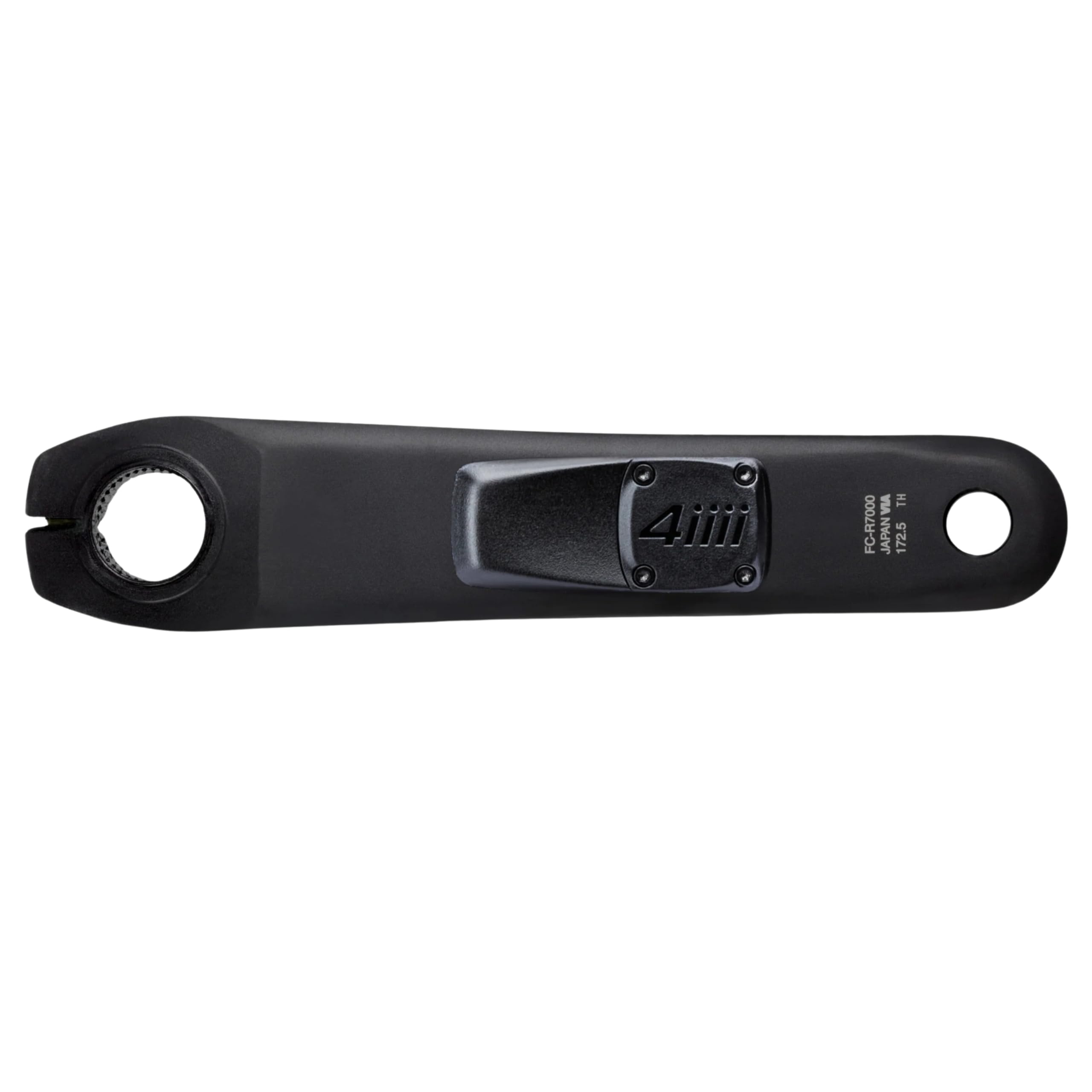
The 4iiii Precision 3+ is a left-side crank arm power meter that adds just 9 grams to your existing Shimano crankset — total system weight is barely noticeable. It clamps onto Hollowtech II splined cranks (compatible with 105 5800 and 7000 series) and delivers ±1% accuracy using three strain gauges. A single CR2032 coin cell lasts up to 800 hours, so you’ll likely change it once a year.
A unique feature is Apple Find My compatibility, which lets you locate your bike via the Find My network on iPhone, iPad, or Apple Watch. The meter automatically adjusts terrain detection and has a wide cadence range from 30 to 170 RPM. Connectivity options include both Bluetooth and ANT+, and the integrated indicator light confirms pairing status at a glance.
Real-world reviews praise the easy installation — it replaces your left crank arm in minutes — and the accurate power data straight out of the box. Some users report a finicky battery clip that risks finger injury and frustration with the Find My activation process, which requires removing the battery cover multiple times to trigger the pairing mode.
Why it’s great
- Extremely lightweight add-on (9g) for Shimano 105 cranks
- 800-hour battery on a standard CR2032 coin cell
- Apple Find My integration for bike security
Good to know
- Left-side-only measurement estimates total power
- Battery clip and Find My activation process can be finicky
7. SRAM Rival D1 QUARQ Arm Left Arm/Spindle 172.5mm
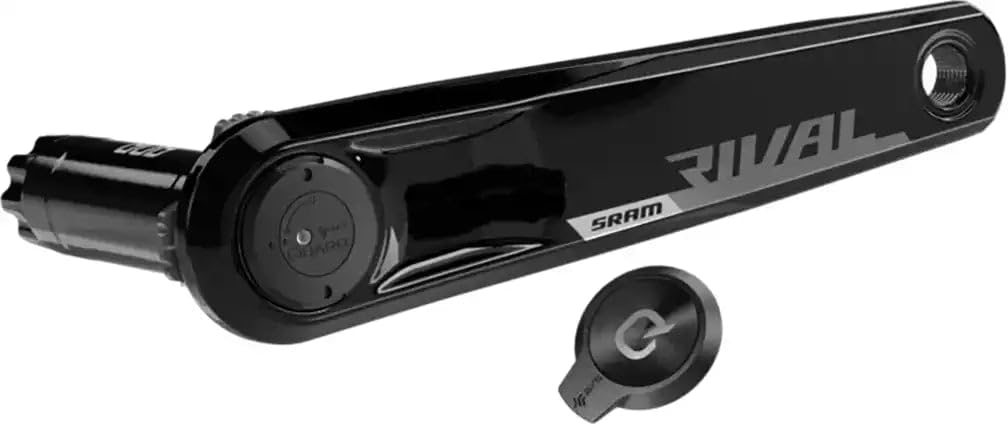
The SRAM Rival D1 QUARQ Arm is a left-arm-only power meter designed specifically for the SRAM Rival D1 crankset with DUB bottom bracket interface. At 700 grams, it’s not the lightest option, but the QUARQ integration delivers reliable +/-1.5% accuracy and a clean, integrated look that matches the SRAM aesthetic. This is an entry-level power meter in terms of form factor and data granularity, but it offers a simple and cost-effective path to power-based training for SRAM users.
Installation is straightforward for a shop or handy home mechanic — the DUB standard ensures durability and simplicity, and the left-arm design means you only need to replace one component on the non-drive side. Battery life on the CR2032 coin cell runs for several hundred hours, with users reporting no noticeable drain over months of weekend riding.
Customer feedback highlights easy connection to Garmin units and fast calibration before each ride. A few buyers received units that appeared previously opened or had visible dirt, suggesting quality control in Amazon fulfillment can vary. The single-sided measurement limitation means total power is an estimate, but for hobbyists and statistic-loving riders, it delivers enough data to track progress and pace efforts.
Why it’s great
- DUB bottom bracket standard for durability and simplicity
- Clean integration with SRAM Rival D1 crankset
- Long battery life with minimal drain
Good to know
- Single-sided measurement only
- Quality control issues reported with packaging condition
8. GEOID PM500 Bike Power Meter Crankset
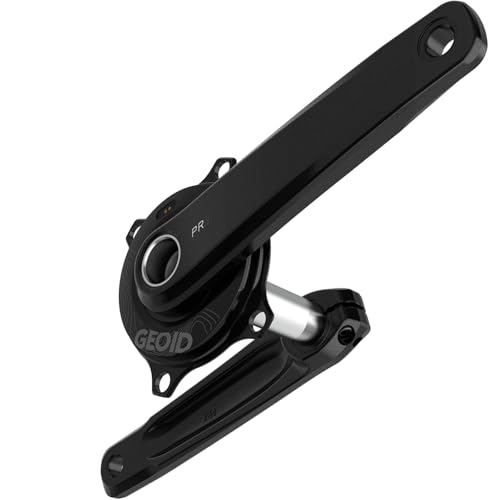
The GEOID PM500 is a complete crankset power meter that breaks the price barrier for dual-sided power measurement. It uses a 6061 aluminum crank arm and a 7075 CNC-machined spider, weighing a total of 680 grams for the 170mm version with the 100g spider. Accuracy is rated at ±1.5%, and the dual-sensor fusion algorithm integrates strain gauges with an accelerometer to dynamically compensate for temperature drift.
The rechargeable lithium-ion battery delivers up to 300 hours of ride time, and the magnetic snap-on charger makes recharging effortless. Data output includes four core metrics: power, cadence (20–240 RPM), left-right balance, and pedaling smoothness. Bluetooth and ANT+ dual protocol support ensures compatibility with Garmin, Wahoo, Magene, and GEOID head units, plus direct upload to Strava, Zwift, and TrainingPeaks.
Users report consistent power readings compared to trainer-based measurements and Giant spindle power meters. The left-right balance algorithm may show offset values (some saw 42/58 versus expected 48/52), and the spider doesn’t transition perfectly to Shimano 105 chainrings without attention to the center gap. The 110BCD 4-bolt pattern accepts standard chainrings, and the unit is compatible with Shimano’s 12-speed systems.
Why it’s great
- Complete dual-sided crankset at a budget-friendly price
- 300-hour battery with convenient magnetic charging
- IPX7 waterproof rating for all-weather riding
Good to know
- Left-right balance data can be inconsistent
- Spider transition to Shimano 105 chainrings not seamless
9. Favero Assioma Duo Pedal Based Cycling Power Meter Bundle
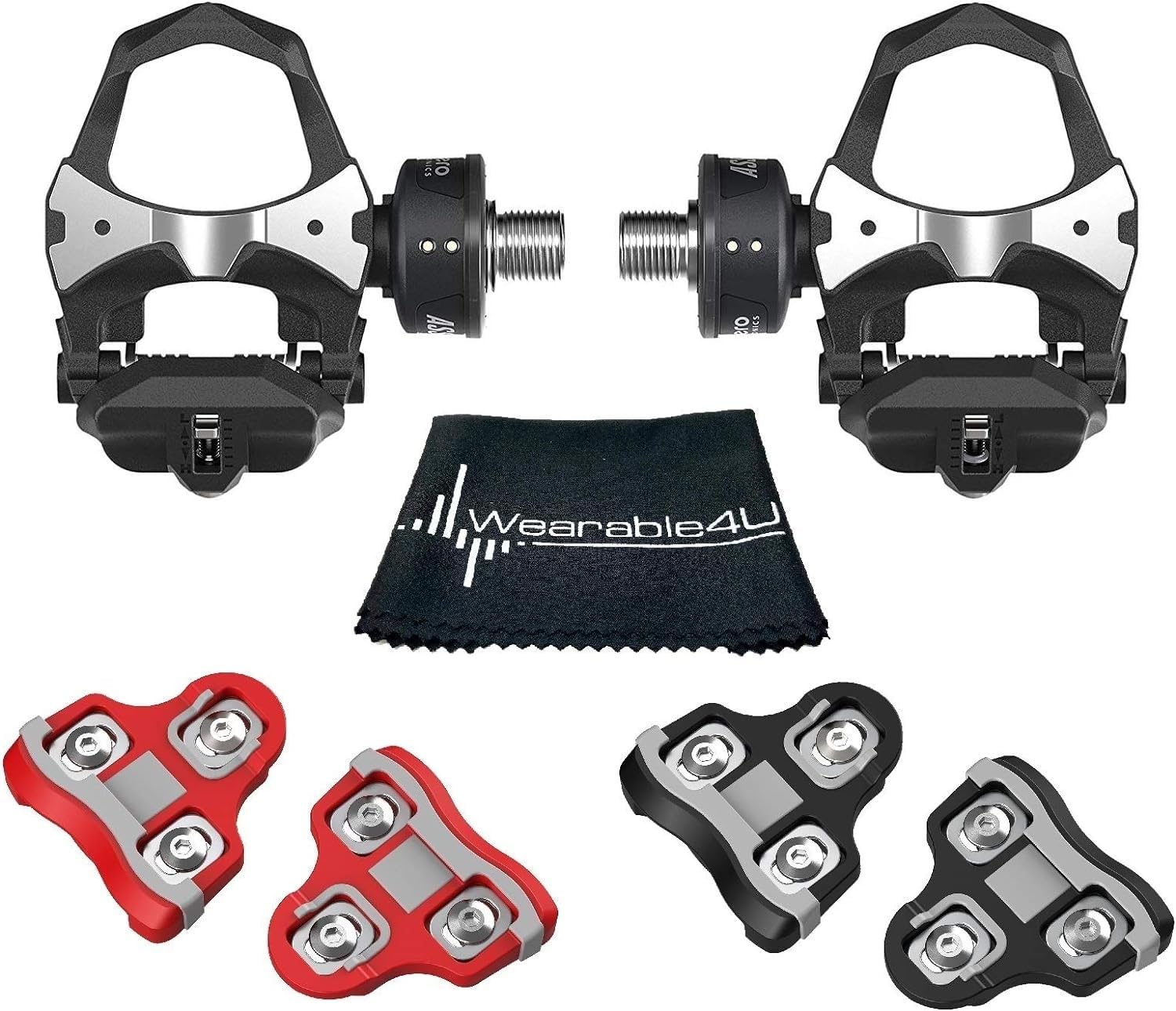
This bundle pairs the standard Favero Assioma Duo pedals with a pair of PowerTap Black Float Cleats (zero-degree float) and a Wearable4U cleaning cloth. The core pedals deliver the same proven dual-sided power measurement with ±1% accuracy and 50-hour rechargeable battery life that made the original Duo a best-seller. The extra cleats double as spares for multi-bike setups or replacements when the originals wear out.
The measurement accuracy is consistent with the standalone Duo pedals — users report error margins within 1% when compared to direct-drive trainers like the Wahoo Kickr Core. The pedals provide true left-right balance, torque efficiency, and pedal smoothness data, which integrate with Garmin Cycling Dynamics and WKO5 for advanced analysis. The magnetic charging connectors are easy to use, and auto stand-by mode ensures the battery isn’t drained when the bike is stationary.
Customer feedback across the board praises the easy installation, reliable connectivity via ANT+ and Bluetooth, and durable build quality. Some users note that zero-degree float cleats can aggravate knee issues if you’re accustomed to free-float systems, and the charging clips have a somewhat messy attachment feel. The bundle adds real value for riders who want a second set of cleats without an extra purchase.
Why it’s great
- Includes spare PowerTap cleats for multi-bike use
- Proven dual-sided accuracy within 1% of trainer-based meters
- 2-year warranty and strong customer support reputation
Good to know
- Zero-degree float cleats may cause knee strain for some riders
- Charging clips can feel messy to attach
FAQ
Should I get a left-side-only or dual-sided power meter?
Can I use a pedal power meter on both my road bike and gravel bike?
Does IPX7 waterproof rating really matter for road riding?
Final Thoughts: The Verdict
For most riders, the best bike power meter overall is the Magene PES P505/P515 Crankset because it combines premium ±1% accuracy, dual-sided measurement, and a 380-hour battery at a price that undercuts most competitors by hundreds. If you prioritize the ability to swap meters between bikes and want true left-right balance without special tools, the Favero Assioma Duo pedals are the gold standard. And for entry-level cyclists on a tighter budget who still want a complete dual-sided crankset, the GEOID PM500 delivers reliable data with IPX7 protection and 300 hours of battery life.