
The sound of a knobby tire grinding against a magnetic resistance unit at full sprint is enough to make anyone in your household reconsider your indoor cycling hobby. The real challenge for anyone looking to ride through winter, recover from an injury, or simply squeeze in a workout after dark isn’t motivation — it’s finding a trainer that doesn’t feel like a compromise. You want road-like resistance, minimal noise, rock-solid stability, and a setup that doesn’t require a mechanic’s bench.
I’m Min — the co-founder and writer behind Gadgets Feed. I’ve spent countless hours analyzing resistance mechanisms, frame geometries, noise ratings, and app compatibility across the market to separate the trainers that deliver a genuine riding experience from those that just spin a wheel.
Whether you prioritize fluid-smooth road feel or smart training features, this guide to picking the best bike trainer breaks down nine models from budget-friendly wheel-on stands to premium direct-drive units.
How To Choose The Best Bike Trainer
Picking the right indoor trainer comes down to matching your riding style with the resistance type, noise tolerance, and budget. The biggest divide is between wheel-on and direct-drive, but even within wheel-on, fluid and magnetic resistance deliver completely different experiences. Understanding these distinctions will prevent you from buying a trainer that collects dust after the first week.
Resistance Type: Fluid vs. Magnetic vs. Electromagnetic
Fluid trainers use a sealed impeller spinning inside silicone liquid — the faster you pedal, the more resistance builds. This creates a progressive curve that mimics outdoor road feel more naturally than magnetic units. Magnetic trainers use a flywheel and magnets to generate resistance, often with a manual dial offering discrete levels. They are typically louder and can feel “on-off” rather than progressive. Electromagnetic smart trainers (found in premium models) use an electromagnet to control resistance, enabling automatic adjustments from training apps and accurate power measurement.
Wheel-On vs. Direct-Drive vs. Roller
Wheel-on trainers press a resistance unit against your rear tire. They are affordable and easy to install but generate tire noise and wear. Direct-drive trainers replace the rear wheel entirely by connecting your bike’s chain directly to a cassette on the trainer. They are quieter, more accurate, and feel more realistic, but cost significantly more. Roller-style trainers (like the Wahoo KICKR ROLLR) let your bike free-roll on drums — they offer zero setup but require your own power meter for accurate data.
Smart Features and App Compatibility
Smart trainers with Bluetooth and ANT+ FE-C can adjust resistance in real time based on virtual terrain in apps like Zwift and Rouvy. This transforms indoor training from a boring grind into an interactive experience. If you plan to use training software, look for a trainer that can broadcast power, speed, and cadence data simultaneously. Some wheel-on smart trainers (like the Saris M2) offer this capability at a fraction of the cost of direct-drive units.
Quick Comparison
On smaller screens, swipe sideways to see the full table.
| Model | Category | Best For | Key Spec | Amazon |
|---|---|---|---|---|
| Saris Fluid2 | Wheel-On / Fluid | Realistic road feel on a budget | 69 dB noise level at 20 mph | Amazon |
| Alpcour Fluid | Wheel-On / Fluid | Quiet indoor training | Stainless steel frame, 29-inch wheel max | Amazon |
| Saris M2 Smart | Wheel-On / Smart | Smart training at a mid-range price | Electromagnetic, +/- 5% power accuracy | Amazon |
| Tacx Flux S | Direct-Drive / Smart | High-power sprint training | Max 1,500W, up to 10% gradient | Amazon |
| Elite Direto XR-T | Direct-Drive / Smart | Realistic flywheel momentum | <2% power accuracy, simulates 18% grade | Amazon |
| Fitvids Fluid/Magnetic Stand | Wheel-On / Hybrid | Entry-level versatility | 330 lb max load, fits 26-28 inch wheels | Amazon |
| Topeakmart Magnetic | Wheel-On / Magnetic | Budget-friendly stability | Folded size 21.5 x 7 x 17.3 inches | Amazon |
| Saris Mag | Wheel-On / Magnetic | Simple, affordable magnetic training | 5 resistance levels, 7 lb weight | Amazon |
| Wahoo KICKR ROLLR | Roller / Smart | Quick bike swaps without wheel removal | Carbon steel frame, 25 kg weight | Amazon |
In‑Depth Reviews
1. Saris Fluid2 Indoor Bike Trainer
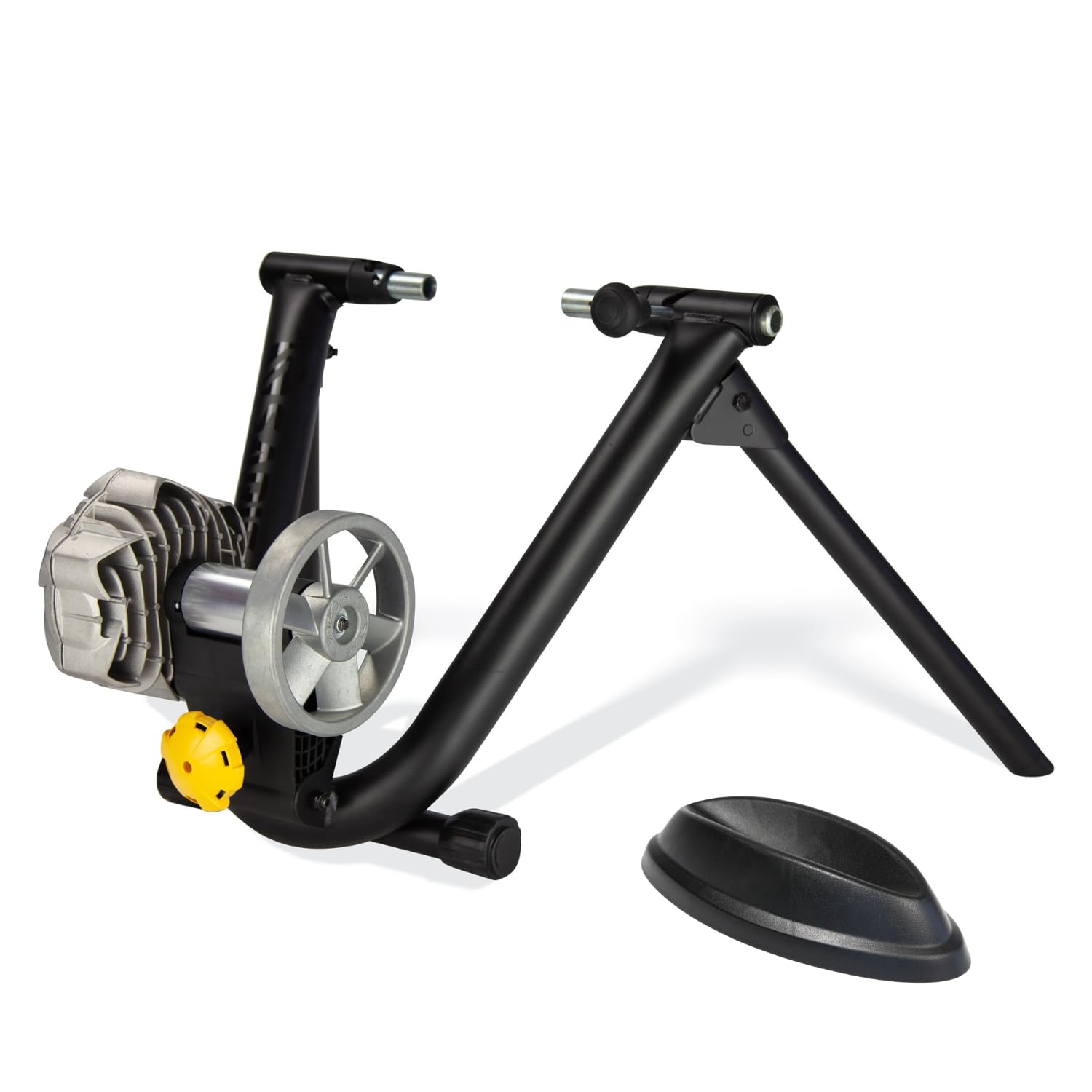
The Saris Fluid2 hits the sweet spot between road-like resistance and quiet operation. Its precision fluid unit delivers a progressive curve that mirrors outdoor climbing — the harder you push, the more resistance builds — without the stepped jump you feel from magnetic trainers. The large balanced flywheel keeps the ride smooth, and at 69 decibels, it’s quiet enough to watch television at normal volume while you ride.
The foldable aluminum frame makes storage effortless, sliding into a closet or under a bed between sessions. Setup is straightforward once you know the assembly order (the beveled tube end must slide in first), and the included quick-release skewer works with common road, hybrid, and mountain bike frames. The trainer pairs with Zwift and Rouvy when you add a separate speed sensor, giving you a smart-like experience without the premium price tag.
One consideration: the Fluid2 lacks integrated smart resistance control, so app-based gradient changes won’t automatically adjust difficulty. You control resistance entirely through your bike’s gearing. For riders who want the authentic feel of fluid resistance and don’t mind manual gear shifting, this trainer delivers exceptional value and lasting build quality.
Why it’s great
- Progressive fluid resistance mimics outdoor road feel
- Very quiet operation at 69 dB
- Lightweight aluminum frame folds for compact storage
Good to know
- No built-in smart resistance control
- Assembly instructions lack clarity
- Requires separate speed/cadence sensor for app connectivity
2. Alpcour Fluid Bike Trainer Stand

The Alpcour Fluid brings the quiet, progressive feel of fluid resistance to a price point that rivals basic magnetic trainers. Its stainless steel frame feels solid under heavy riders — several owners report stability at 270 pounds without wobble — and the included front wheel riser block and anti-slip rubber pads keep everything planted during high-cadence efforts. The dual tension knob and lock ring add security that budget trainers often lack.
Noise levels hover around 70 decibels, comparable to a television in the same room. The resistance builds naturally as the impeller heats the fluid, so you get a smooth ramp-up rather than discrete steps. For riders who find magnetic trainers too loud or jarring, the Alpcour offers a genuine road-like sensation without breaking into premium pricing territory. The foldable frame fits easily into a storage bag (included), and the trainer handles wheels up to 29 inches.
The main trade-off is that resistance can feel low at moderate speeds. Competitive cyclists pushing 20 mph or more will find enough drag for a solid workout, but casual riders may need to use lower gears to feel sufficient tension. The front riser block is foam-based and can crack under repeated use — some owners reinforce it with tape or upgrade to a rubber block.
Why it’s great
- Very quiet fluid resistance at a budget-friendly price
- Stainless steel frame supports heavier riders
- Includes carrying bag and all necessary accessories
Good to know
- Resistance may feel low for strong cyclists under 20 mph
- Foam front wheel riser can crack over time
- Not ideal for mountain bikes with knobby tires
3. Saris M2 Smart Indoor Electromagnetic Trainer

The Saris M2 is the wheel-on trainer that bridges the gap between analog simplicity and smart training. Its electromagnetic resistance unit communicates via dual ANT+ FE-C and Bluetooth, allowing Zwift, Rouvy, and TrainerRoad to adjust resistance automatically based on virtual terrain. The accuracy rating of +/- 5% is respectable for a wheel-on unit, and the 1500W max resistance at 20 mph accommodates explosive sprinters without bottoming out.
Setup is straightforward — the wheel stays on the bike, and the steel quick-release skewer works with most road and mountain bike frames. The trainer feels heavy and solid, weighing 20 pounds with a 300-pound rider capacity. Noise measures about 69 to 70 decibels at cruising speed, slightly louder than a fluid trainer but acceptable for shared living spaces. The foldable frame folds for storage when not in use.
The M2 requires proper calibration through the Saris app for accurate power data. Some users report that the tension knob should not be tightened until it clicks — just enough to create a slight tire indent. Thru-axle adapters are not included, so riders with modern thru-axle frames will need to source an aftermarket solution. Overall, this is the most affordable path to a fully interactive smart training experience without buying a direct-drive trainer.
Why it’s great
- Interactive electromagnetic resistance with app control
- ANT+ FE-C and Bluetooth dual connectivity
- Heavy-duty build supports up to 300 lbs
Good to know
- Requires calibration via Saris app
- Thru-axle adapters not included
- Moderate noise level around 70 dB
4. Tacx Flux S Smart Bike Trainer

The Tacx Flux S delivers a true direct-drive experience — remove your rear wheel, mount your cassette directly onto the trainer, and ride without tire noise or wear. The electromagnetic brake simulates gradients up to 10%, and the max sprint resistance of 1,500 watts handles even the most aggressive standing sprints. Power accuracy sits at 3%, which is competitive for this price tier.
The ride feel is a significant step up from any wheel-on trainer. The direct connection means no wheel slip, no tire friction noise, and no calibration drift. The unit works seamlessly with Zwift, Tacx, and Garmin Connect, automatically adjusting resistance as the virtual road rises and falls. Setup is straightforward for anyone comfortable installing a cassette, and the sturdy design allows standing on the pedals without worrying about the trainer tipping.
The Flux S lacks an on/off switch (you unplug it to power down), and the instructions for initial app pairing could be clearer. Some users mention that the older model simulates only up to 10% gradient — newer direct-drive trainers often hit 15% to 20%. For riders focused on base training, endurance rides, and moderate climbs, the Flux S offers excellent value in the direct-drive segment.
Why it’s great
- Next-to-silent direct-drive operation
- Realistic 10% gradient simulation
- Handles 1,500W sprints without bottoming out
Good to know
- No power switch — must unplug to turn off
- App pairing instructions are sparse
- Maximum gradient limited to 10%
5. Elite Direto XR-T Direct-Drive Trainer
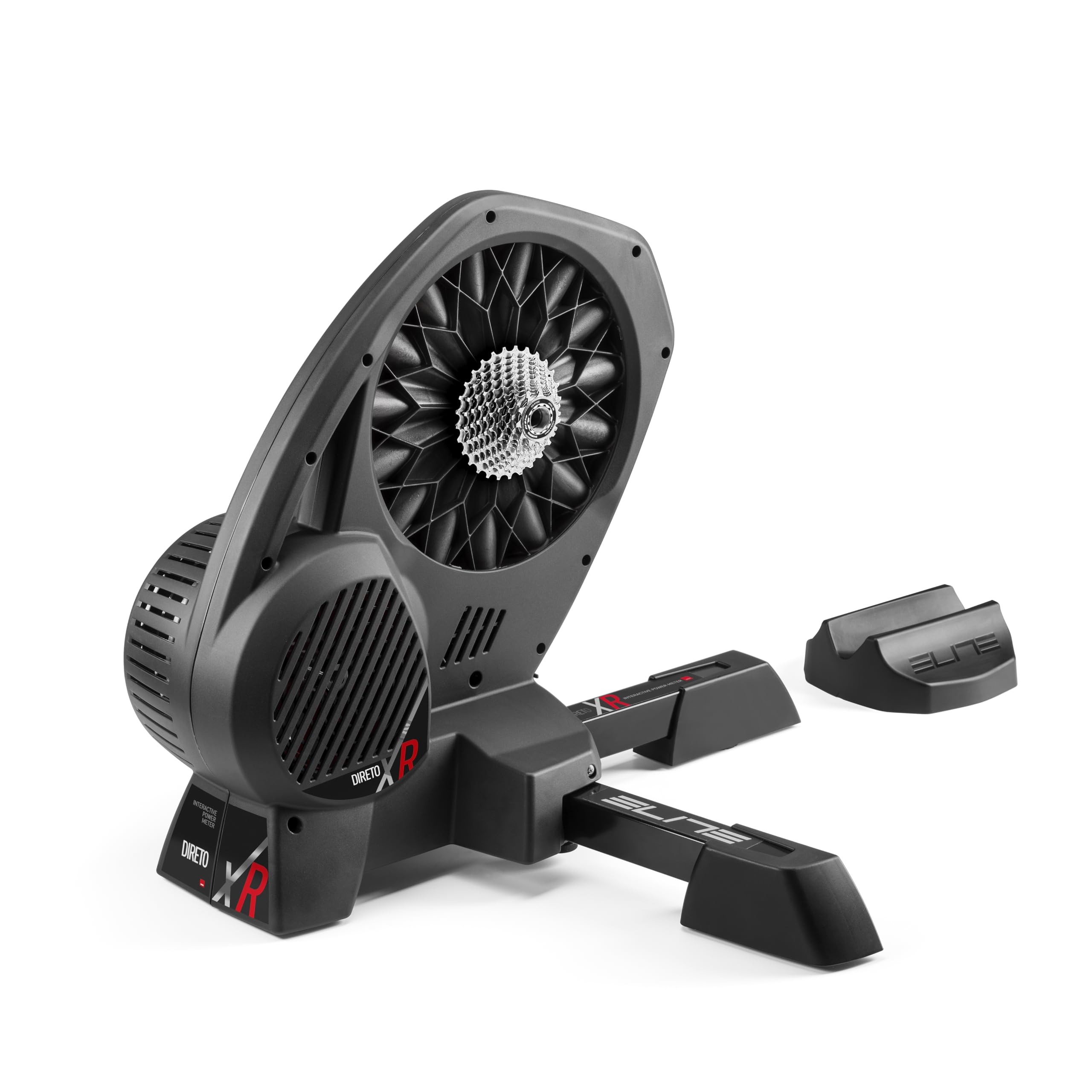
The Elite Direto XR-T is built for riders who demand the most realistic flywheel momentum available in its class. The heavy internal flywheel creates a rotation feel that closely mimics coasting on the road, making interval recovery and steady-state riding feel natural rather than artificial. Power accuracy is rated under 2%, putting it among the most precise trainers at this price level, and the electromagnetic resistance simulates gradients up to 18% for serious climbing workouts.
The XR-T version requires you to supply your own cassette, which is standard practice for high-end trainers and allows you to match your outdoor gearing exactly. Connectivity runs through ANT+ and Bluetooth, and Elite includes a one-year subscription to its native training app. The metal and composite frame feels robust under hard efforts, and the foldable legs keep the footprint manageable for apartment living. Noise levels are impressively low — the chain and drivetrain produce more sound than the brake unit itself.
A small number of units arrive with power-on issues, and Elite’s customer service response has been inconsistent based on user reports. The trainer is also heavier than some competitors at 16.3 kilograms, making it less portable if you plan to move it between rooms regularly. Despite these points, the Direto XR-T delivers flywheel feel and accuracy that rival trainers costing significantly more.
Why it’s great
- Heavy flywheel provides realistic road momentum
- Under 2% power accuracy for precise training
- Simulates up to 18% gradient for climbing workouts
Good to know
- Cassette not included — must purchase separately
- Heavy at 16.3 kg, not ideal for frequent relocation
- Occasional quality control issues reported
6. Wahoo KICKR ROLLR Indoor Trainer

The Wahoo KICKR ROLLR reimagines indoor training by combining the instant-on convenience of rollers with the stability of a traditional trainer. You roll your bike onto two drums — no skewers, no clamps, no rear wheel removal — and you’re riding in under 10 seconds. This makes it the best option for multi-bike households where swapping trainers between a road bike and hybrid would otherwise be a hassle.
The KICKR ROLLR is not a power meter. It does not measure your output directly — you need your own power meter (pedal, crank, or hub-based) if you want accurate wattage data. Resistance is controlled through the Wahoo app, but the trainer only adjusts resistance manually or through a virtual gear feel setting; it does not auto-adjust based on Zwift terrain like a smart trainer would. The ride feel is close to outdoor riding because the bike is free to sway slightly, which some riders find more engaging than a locked-in trainer.
The unit weighs 25 kilograms and is stable during moderate efforts, though heavy sprinting can create a slight bounce. Tire wear is similar to outdoor riding, and some users note a small resistance lag when the gradient changes in apps. For riders who prioritize quick bike swaps and realistic balance feel over absolute power accuracy, the KICKR ROLLR is a uniquely convenient solution.
Why it’s great
- Extremely fast bike changes — no wheel removal
- Realistic free-rolling road feel
- Quiet operation suitable for apartments
Good to know
- Requires separate power meter for accurate data
- Not suitable for high-power sprint training
- Wahoo app paywall limits some features
7. Fitvids Bike Trainer Stand
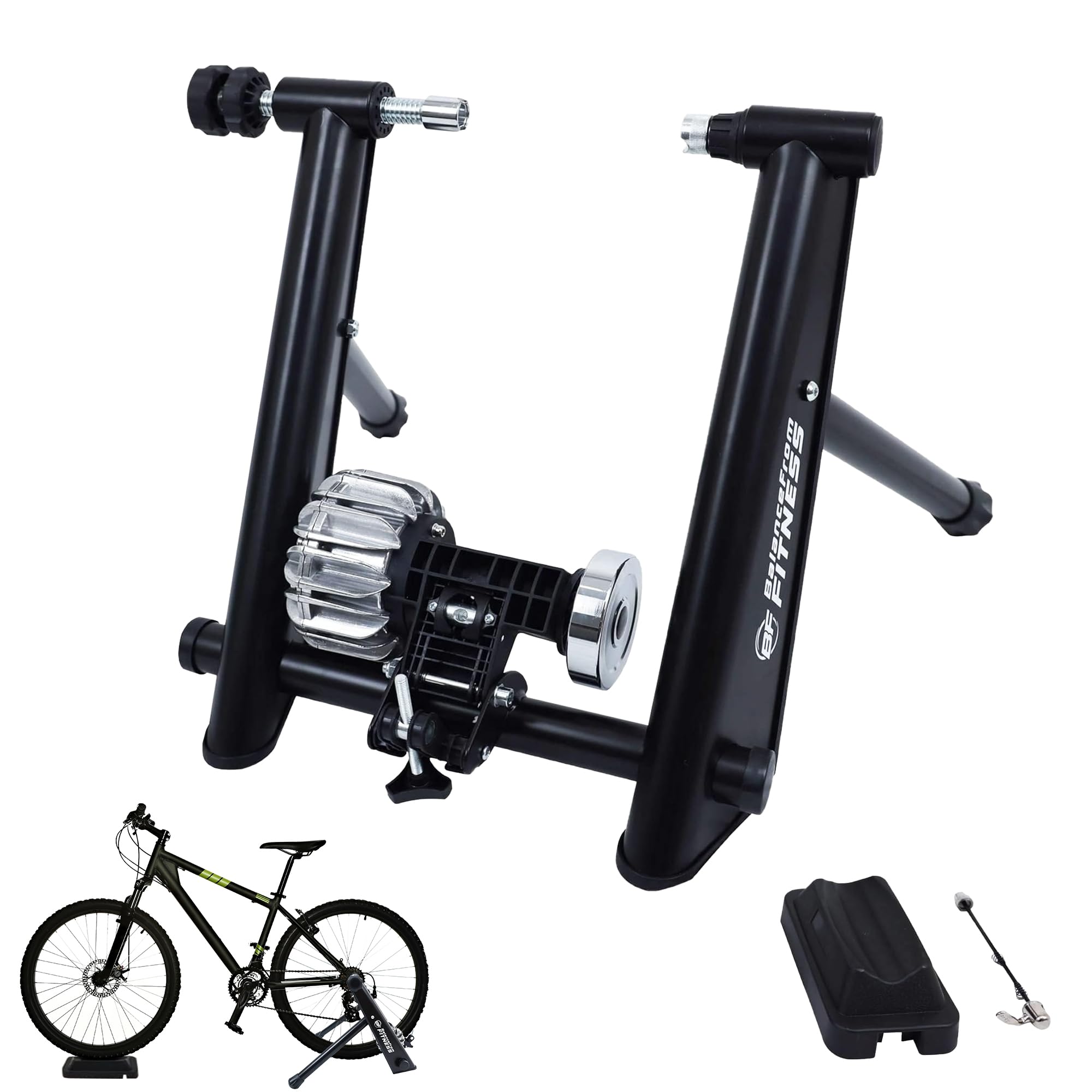
The Fitvids trainer offers a fluid resistance unit at an entry-level price point, making it an attractive option for first-time buyers who want quieter operation than pure magnetic trainers. The alloy steel frame has a wide base and low stance that feels stable, and the rubber feet protect hardwood floors from scratches. The quick-release clamp and easy fold design make setup and takedown painless.
Resistance is adjustable through a dial combined with your bike’s gearing, giving you a decent range of difficulty. The trainer fits 26- to 28-inch and 700C wheels, covering most road and mountain bikes up to a 330-pound rider limit. Unlike cheaper magnetic stands, the fluid element dampens the whirring noise somewhat, though users report that knobby mountain bike tires still generate significant sound in apartment settings.
The main drawback is the noise from knobby tires, which multiple reviews describe as loud enough to be disruptive in shared living spaces. The instructions are minimal, and some assembly steps require online video research. For riders using slick road tires in a house or ground-floor space, the Fitvids delivers fluid-assisted performance at a cost that leaves room to invest in a trainer tire or mat.
Why it’s great
- Fluid resistance at a very accessible price
- Sturdy wide base supports up to 330 lb
- Quick-release clamp for easy bike mounting
Good to know
- Loud with knobby mountain bike tires
- Assembly instructions are unclear
- Fluid resistance less progressive than premium fluid trainers
8. Topeakmart Magnetic Bike Trainer Stand

The Topeakmart Magnetic stands out for its incredibly compact folded size — just 7 inches thick — making it one of the most space-efficient trainers on the market. When you’re done riding, it slides into a narrow closet gap or under a bed without disrupting the room. The M-shaped alloy steel frame feels solid despite its lightweight 13.8-pound build, and the gear-like adjustable feet caps let you level the trainer on uneven floors.
Resistance comes from a magnetic unit that offers a reasonable range through your bike’s gears. The trainer is designed for quick-release axles — thru-axle bikes need an adapter. Noise levels are typical for a magnetic trainer: noticeable with hybrid tires, quieter with dedicated slick trainer tires. Some users report acceptable noise levels that allow TV viewing, while others find knobby tires too loud for apartment use without a rubber mat underneath.
The 120-kilogram / 265-pound weight limit is lower than some competitors, so heavier riders should verify the capacity against their weight plus bike. The trainer also lacks progressive resistance — the magnetic drag feels more stepped than a fluid unit. For riders who prioritize storage compactness and simplicity over road-like feel, the Topeakmart delivers basic indoor training functionality in the smallest possible package.
Why it’s great
- Folds to only 7 inches thick for storage
- Lightweight at 13.8 pounds
- Adjustable leveling feet for uneven floors
Good to know
- 265 lb max load is lower than many alternatives
- Noisy with knobby or hybrid tires
- Magnetic resistance feels stepped, not smooth
9. Saris Mag Indoor Bike Trainer

The Saris Mag is the entry point into the Saris family, offering the same American-made build quality as its pricier siblings in a simpler magnetic package. The trainer has five manual resistance levels controlled by a remote shifter cable, letting you change difficulty without dismounting. It fits road and mountain bikes with 120mm, 130mm, and 135mm dropout spacings, and the aluminum frame keeps weight low at just 7 pounds.
The magnetic unit is reasonably quiet for a budget trainer, though it produces the expected hum especially at higher resistance settings. Setup is simple enough that most riders can go from box to first ride in under 15 minutes. The trainer works with Zwift and other apps when paired with a speed sensor, though without electromagnetic smart features, resistance adjustments are entirely manual through the shifter or your bike’s gears.
Some customers report that the “Mag Plus” variant pictured in ads doesn’t always match the unit received — the remote shifter is sometimes missing from the standard Mag model. The trainer also lacks the progressive feel of fluid units, and serious cyclists may find the resistance range limited for high-intensity intervals. For casual riders, rehab use, or as a backup trainer, the Saris Mag offers reliable build quality at a low commitment price.
Why it’s great
- Lightweight at just 7 pounds
- Five remote-adjustable resistance levels
- American-made with durable aluminum frame
Good to know
- Standard model may lack remote shifter shown in ads
- Resistance range limited for advanced riders
- Magnetic resistance lacks road-like progression
FAQ
Should I buy a fluid or magnetic bike trainer?
Will a bike trainer damage my rear tire?
What does direct-drive mean and is it worth the extra cost?
Final Thoughts: The Verdict
For most users, the bike trainer winner is the Saris Fluid2 because its progressive fluid resistance, quiet operation at 69 dB, and foldable lightweight frame strike the best balance between road feel and value. If you want interactive smart features like automatic resistance control from Zwift without buying a direct-drive unit, grab the Saris M2 Smart. And for the most realistic flywheel momentum and highest gradient simulation at the premium tier, nothing beats the Elite Direto XR-T.