
Our readers keep the lights on and my morning glass full of iced black tea. As an Amazon Associate, I earn from qualifying purchases.
Specs are compiled from manufacturer listings and verified buyer reviews and can change over time — please confirm the key details on the product page before buying.
Cycling computers are the smart way to track speed, distance, and navigation on your handlebars without draining your phone. Your ideal model hinges on ride type: commuters need basic tracking, tourers need long battery life, and racers need power and climb data.
I’m Min — the founder and writer behind Gadgets Feed. This guide is built by comparing the manufacturers’ published specifications and the patterns across verified customer reviews, so you get each pick’s real strengths and trade-offs instead of marketing spin.
For riders who want reliable tracking and clear screens, bike watch options range from budget GPS units to premium navigation computers with coaching tools.
Our Picks at a Glance


How To Choose The Best Bike Watch / Computer
Before you buy, think about where you ride and what data you actually need. A commuter who wants distance and speed does not need a training computer, while a racer tracking power and climbing will outgrow a basic GPS unit quickly.
Battery Life: The Real Limiter
Battery life is the top deciding factor between models. If you do multi-day rides, look for 36-hour or 60-hour batteries. If you charge after every ride, a 25-hour unit is plenty. Check how long the battery lasts in real-world use, not just the claimed number.
Display and Readability
A bright, glare-free screen is essential for reading data in direct sunlight. Screens range from 2.4 to 3 inches. Some use anti-glare monochrome LCD, others use color displays. If you ride at dawn or in tunnels, auto-backlight makes a big difference.
Connectivity and Sensors
Bluetooth and ANT+ let the computer pair with heart rate straps, cadence sensors, and power meters. If you use a smart trainer for indoor rides, check that the computer connects to it. Strava sync is a must-have for riders who log and share every ride.
Quick Comparison
| Model | Best For | Battery Life | Display Size | Navigation | Amazon |
|---|---|---|---|---|---|
| iGPSPORT BSC100S★ Best Overall | Starter GPS with sensors | 40 hours | 2.6″ | No Maps | Amazon |
| COOSPO BC200Best Value | Budget value bundle | 36 hours | 2.6″ | No Maps | Amazon |
| CYCPLUS M1Battery Champion | Long battery endurance | 60 hours | 2.9″ | No Maps | Amazon |
| iGPSPORT BSC200S | Route navigation on a budget | 25 hours | 2.4″ | Turn-by-turn | Amazon |
| Magene C506SE | Fast GPS and WiFi sync | 24 hours | 2.4″ | Turn-by-turn | Amazon |
| Beeline Velo 2 | Tourers who want simple routing | 11 hours | Touch screen | Compass + Route | Amazon |
| Magene C506 | Touchscreen and smart navigation | 24 hours | 2.4″ Touch | Turn-by-turn | Amazon |
| Garmin Edge Explore 2 | Ride type-specific maps | 16 hours | 3″ Touch | Turn-by-turn | Amazon |
| Garmin Edge 540 | Training and performance tracking | 26 hours | 2.3″ | Multi-band GNSS | Amazon |
In‑Depth Reviews
1. iGPSPORT BSC100S GPS Bike Computer
Our pick — over 4★ from 750+ verified ratings; the strongest balance of quality and price.
The dependable starter unit that pairs with your sensors and outlasts your ride.
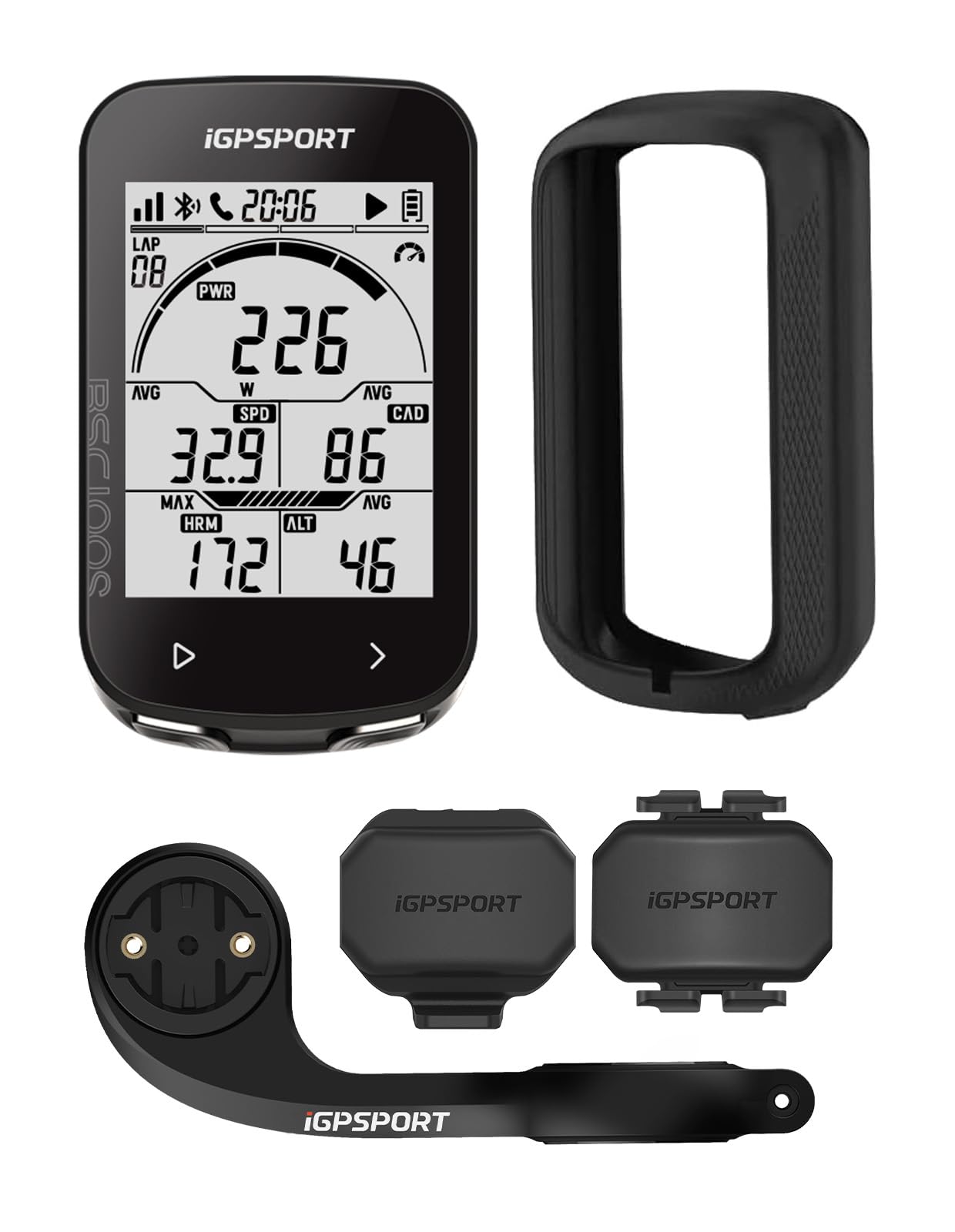
The iGPSPORT BSC100S is built around a 40-hour battery from a 600mAh pack, so you can ride for days without hunting for a charger. You get a 2.6-inch anti-glare screen that stays readable in direct sunlight, which matters when you glance down mid-sprint.
The package includes the CAD70 cadence sensor and SPD70 speed sensor, plus a mount and case, so you can start tracking your pedaling rhythm immediately. It uses five satellite systems (GPS, Beidou, GLONASS, GALILEO, QZSS) for faster, more accurate positioning, and it survives heavy rain with an IPX7 rating (meaning it can handle brief submersion).
What wins people over is the combination of a solid, reliable core and ease of setup through the iGPSPORT app. There is no turn-by-turn mapping here — you get 40+ data fields like speed, distance, grade, and cadence, not route guidance. The battery is the standout: buyers report the drain is far slower than the claimed 40 hours (~2h rides), and some note it never drops satellite signals.
budget battery king
- Massive 40-hour battery life suits multi-day rides
- Includes both cadence and speed sensors in the box
- Five-satellite GPS keeps tracking accurate
tiny monochrome screen
- No real-time maps or turn-by-turn directions
- Some units freeze mid-ride; a reset fixes it
- Instruction manual is minimal and poorly translated
budget pick: if you want a complete sensor kit with a battery that outlasts your longest ride.
screen snobs: you need on-screen maps and need to navigate unknown roads — look at a unit with navigation instead.
2. COOSPO BC200 GPS Bike Computer
A value-packed bundle with a large screen and a battery that goes 36 hours.
The COOSPO BC200 gives you a 2.6-inch LCD with auto-backlight, so data stays visible whether you are in blinding sun or a dark tunnel. It carries a 1200mAh battery rated for 36 hours — the same class of endurance as the iGPSPORT above but with a different flavor of extras.
This bundle pairs the BC200 computer with the BK467 cadence/speed sensor and two mounting brackets. You get 70+ cycling data fields including altitude, slope, temperature, atmospheric pressure, and cycling power, and each display page can show 2-9 of those data types customized to your preference.
Value for money is the top praise here, and owners note the display is clear and the navigation simple. However, the first GPS lock can take over an hour before it improves, and some units stop working after roughly 20 months of use. The screen has lower contrast than pricier models, and the buttons are firm enough to cause accidental presses.
app-first setup
- 36-hour battery rivals premium units
- Auto-backlight helps in low light
- Syncs rides to Strava easily
limited nav depth
- Initial GPS lock can exceed an hour
- Firm buttons trigger accidental presses
- Some units fail after months of use
app lovers: budget-focused riders who want a big screen and long battery without paying a premium.
route purists: if you ride in varied weather and need a rugged, reliable GPS lock every single ride.
3. CYCPLUS M1 GPS Wireless Bike Computer
The endurance king that keeps going for over 60 hours on one charge.
The CYCPLUS M1 is the battery champion here, with a 1200mAh battery rated at over 60 hours of working time. That outlasts the COOSPO BC200’s 36 hours by a wide margin, making it ideal for riders who forget to charge or do multi-day bikepacking.
It also packs the largest screen in this group at 2.9 inches, using FSTN technology (a display type that stays highly visible in sunlight) with auto-backlight that adjusts to sunrise and sunset times. The tempered glass screen resists scratches from keys or tools in your pocket.
Owners praise the ease of use, simple setup, and readable backlit display. Note the first-time setup requires setting the time zone before anything functions properly. The included speed/cadence sensor can be toggled between modes, and the mount fits 31.8mm handlebars only — so check your bar size before buying. Some users report the included sensor never worked and the trip odometer resets on power-off.
cheap entry point
- 60+ hour battery is class-leading
- 2.9-inch screen is easy to read
- Weighs only 2.73 ounces
flaky connectivity
- Mount only fits 31.8mm handlebars
- Included sensor may arrive defective
- No route mapping capability
first timer: endurance rides, touring, and anyone who hates charging gadgets.
reliability hawks: you want navigation maps or have a non-standard handlebar size.
4. iGPSPORT BSC200S GPS Bike Computer

Route navigation with a color screen at a price that undercuts Garmin.
The iGPSPORT BSC200S brings turn-by-turn navigation to the budget class with a 2.4-inch semi-transparent, semi-reflective color screen that stays visible under bright sun. You can create routes in the iGPSPORT app or import them from Strava, Ride with GPS, and Komoot.
One-touch navigation lets you save location points and send a route straight to the device to start riding. It also supports “Back to Start” navigation and riding-record navigation, plus turn reminders, yaw reminders (warnings when you drift off course), and incoming call and SMS notifications.
The 600mAh battery lasts up to 25 hours and charges via USB-C in about 1.5 hours. Owners call it a bargain compared to Garmin and Wahoo, with one noting it beats the Garmin Edge 130 for value. The 2.4-inch screen and fonts run small, and the navigation maps are low-resolution. The recurring trade-off is the Route with GPS sync — some riders cannot find where to enable it.
color touch display
- Turn-by-turn navigation for a budget price
- USB-C charges fully in 1.5 hours
- 100+ riding data fields
pricey for specs
- Small text and low-resolution maps
- No Ride with GPS integration found
- Type-C cable not included in box
midrange value: you want on-screen route guidance without paying a premium price.
premium seekers: if you need large readable fonts or expect polished, high-res map rendering.
5. Magene C506SE Wireless GPS Bike Computer

A featherweight color computer that locks GPS in five seconds flat.
The Magene C506SE locks onto GPS in about 5 seconds using an Airoha chipset and AGNSS support (a system that preloads satellite data to speed up positioning). This beats budget units that can take over an hour to lock on the first time. The unit weighs only 74g, about the same as a smartphone, and has a 2.4-inch color screen.
It uses both Bluetooth and WiFi, with WiFi transfer for uploading navigation files and ride records. It supports 108 data items across 14 categories, and connects to 9 device types including speed sensors, cadence sensors, heart rate monitors, power meters, smart trainers, radar tail lights, and electronic shifting.
New riders praise it as an affordable smartphone replacement with easy setup and customizable screens. Note that the navigation features, including off-course alerts and route re-planning, only work when connected to the OnelapFit app. The GPS navigation gets confused on laps and when doubling back on the same route.
sleek aero design
- 5-second GPS lock gets you riding fast
- WiFi uploads are much faster than Bluetooth
- Connects to 9 device types
button-only control
- Navigation features need the OnelapFit app
- GPS gets confused on laps or doubling back
- IP54 rating means limited water resistance
aero fans: if fast GPS lock and quick data uploads matter more than premium water resistance.
touchscreen fans: if you race looped circuits or ride in heavy rain frequently.
6. Beeline Velo 2 GPS Bike Computer

A minimal arrow-based navigator that keeps you oriented without a map overload.
The Beeline Velo 2 strips navigation down to its essence: a simple arrow that always points toward your destination. This is the one unit here that trades data-rich screens for simplicity, and owners who toured across France and the UK swear by its turn accuracy.
It has an 11-hour battery, a strap mount included in the box, and a touch pad control system. The device uses sensor fusion (combining GPS with motion sensors) to improve location accuracy and reduce reliance on phone signal. You plan routes in the free companion app and the unit recalculates fast if you go off course.
The big strength is anticipating turns with enough notice, and the audio cue is a smart touch. But it is not for data-hungry riders — there is no heart rate monitoring or detailed mapping here. Also, the screen can keep turning off mid-ride, and some riders find it more complicated than expected to get started.
compass simplicity
- Simple compass mode for route freedom
- Beat Wahoo on turn accuracy in testing
- Works offline without cellular signal
no mapping detail
- 11-hour battery is the shortest here
- No heart rate or detailed map support
- Screen may need constant reactivation
urban riders: tourers and explorers who value simple, confident direction over a wall of stats.
long haulers: performance cyclists tracking power, cadence, and heart rate data on every ride.
7. Magene C506 GPS Bike Computer
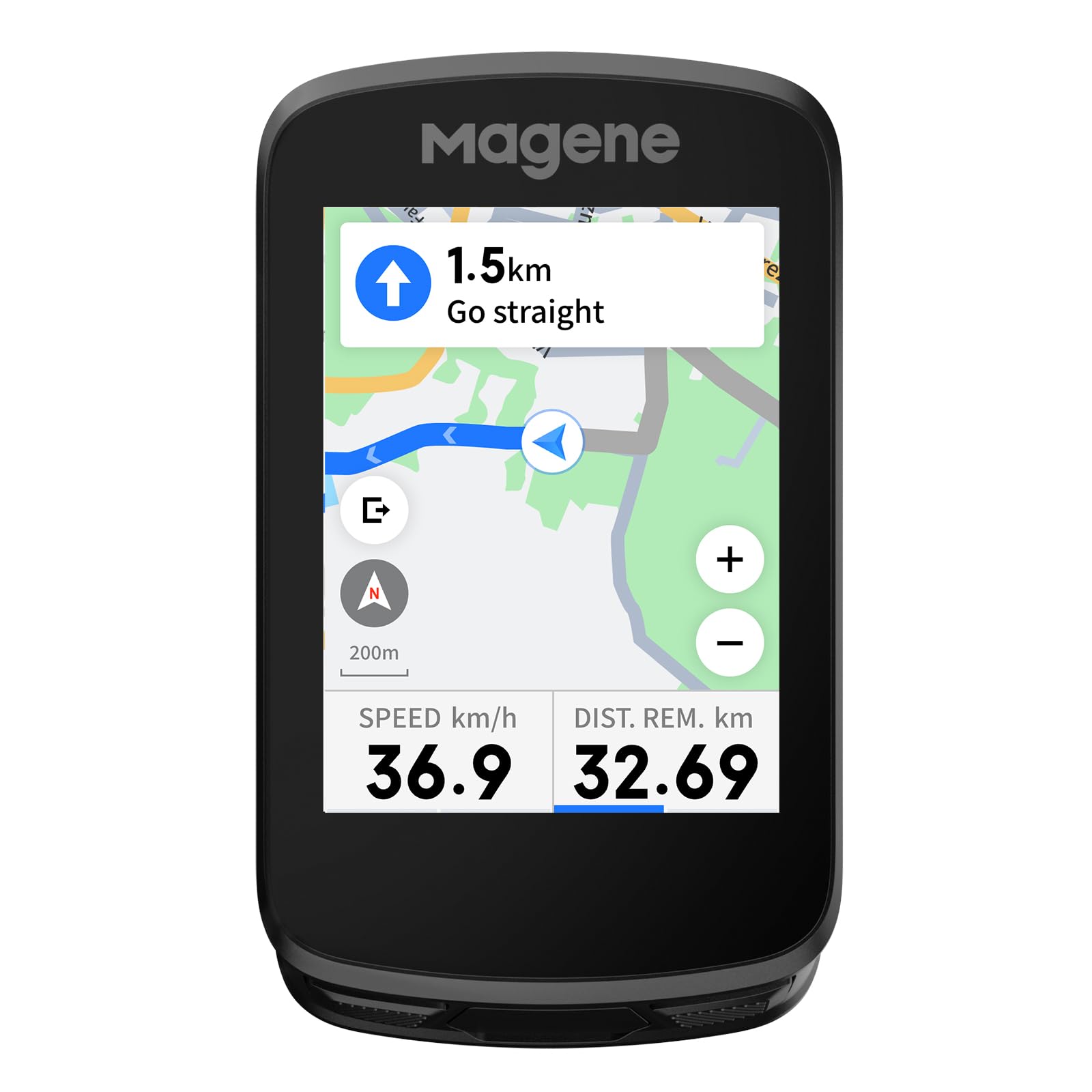
A 2.4-inch color touchscreen with smart riding assistance built in.
The Magene C506 steps up from the SE model with a full touchscreen interface plus 3 physical buttons, and a lightweight 76g build. It displays 105 data items across 14 categories with circular dials, line graphs, and bar charts for a clear glanceable view of your ride.
Smart navigation is the headline feature: download free global maps directly to the device, get turn-by-turn directions with street names, and create custom routes in the OnelapFit app or upload GPX files. It pairs with Magene L508 and L308 tail lights and can auto-activate the front light at 10km/h.
Riders call it an excellent bargain versus Garmin and Wahoo, with bold fonts readable in sunlight and reliable auto-sync to Strava and Google Health. Known quirks: the map download process is convoluted through WiFi and device settings, and the touchscreen sometimes needs multiple presses. The 24-hour battery holds up well but the touch interface is less glove-friendly than buttons.
full-color mapping
- Color touchscreen with bold, readable fonts
- Free global map downloads
- Connects to 9 device types including Di2
bulky casing
- Map download process is convoluted
- Touchscreen needs multiple presses sometimes
- No mainstream fitness or AI features
feature packed: you want a touchscreen navigation computer without the Garmin price tag.
minimalists: if you ride in heavy gloves and need button controls that work under any condition.
8. Garmin Edge Explore 2

Garmin’s easy-to-use navigator with a big 3-inch rain-friendly touchscreen.
The Garmin Edge Explore 2 centers on a 3-inch high-resolution touchscreen that works with gloves and in rain, visible even in direct sunlight. It ships with preloaded road, off-road, and indoor activity profiles ready to use immediately from the start.
Ride type-specific maps highlight popular roads and trails, offer searchable points of interest, and even support eBike routing. When connected to a compatible eBike, you get guidance and alerts based on battery status, assist level, and range. The 16-hour battery handles a full day of riding, and owners mention a 30-mile hilly ride at 8,500 feet barely dented it.
The 3-inch touchscreen earns consistent praise for its size, color, and daylight readability. It pairs with Varia cycling awareness devices including rearview radar, and works with LiveTrack so your location can be shared during outdoor rides. The navigation itself gets mixed feedback, and the original price point runs steep; owners note a sale price made it a better deal.
big easy screen
- Large 3-inch glove-friendly touchscreen
- Preloaded ride type-specific maps
- Pairs with Varia rear radar
basic training data
- 16-hour battery is shorter than others here
- Route generation favors high-speed roads
- Premium price tag for a basic unit
tourers: riders who want Garmin’s mapping and radar ecosystem in an easy-to-use package.
data nerds: if you need multi-day battery life or want to avoid paying extra for brand recognition.
9. Garmin Edge 540

Garmin’s compact button-control computer that coaches you through climbs and training.
The Garmin Edge 540 is built for performance, with up to 26 hours of battery life in demanding use and up to 42 hours in battery saver mode. Its multi-band GNSS technology (which uses multiple satellite frequency bands) provides enhanced positioning accuracy even in challenging environments like dense tree cover.
You get daily suggested workouts and on-screen training prompts that adapt to your training load and recovery, so your plan adjusts automatically as you get fitter or more tired—just pair it with a compatible power meter and heart rate monitor. The ClimbPro feature shows your remaining ascent and grade while climbing, so you know how much hill is left on any ride, even without a pre-loaded course.
Riders praise the glove-friendly buttons, clear display, and ClimbPro’s climb-pacing guidance. Multi-band GNSS delivers fast satellite locks even under dense tree cover. Some find the initial setup clunky and the value for money debatable given the premium price, but for serious cyclists it is a powerful companion.
pro-level metrics
- ClimbPro pacing on every ride, no course needed
- 26-hour battery with 42-hour saver mode
- Buttons work reliably in rain and gloves
steep learning curve
- Premium price requires serious commitment
- Initial setup feels clunky
- Button control interface takes practice
racing edge: if you train with power meters and want adaptive coaching on the handlebar.
casual riders: you just want to track distance and speed — the coaching features would go unutilized.
Understanding the Specs
Battery Life
This tells you how long the computer runs on a single charge during active riding. A 25-hour unit suits riders who charge after each outing, while 40 to 60-hour units handle multi-day tours without a charger. Some manufacturers also quote a battery saver mode that stretches runtime further.
Display Size and Technology
Larger screens show more data at a glance but add weight. Screen tech varies from anti-glare monochrome LCD to color displays. FSTN screens stay visible in bright sunlight, while semi-transparent reflective color screens balance indoor and outdoor readability.
FAQ
How long does a bike computer battery last on a single charge?
Will a bike computer work with my existing heart rate monitor?
Can I use a bike computer for indoor training on a smart trainer?
What is the difference between GPS navigation and turn-by-turn directions?
Is it better to use my phone or a dedicated bike computer?
What does IPX7 waterproof rating mean for cycling?
Can I upload routes from Strava or Komoot to these computers?
Which bike computer is best for a beginner cyclist?
Final Thoughts: The Verdict
For most people, the bike watch winner is the iGPSPORT BSC100S because it bundles a 40-hour battery, both speed and cadence sensors, and solid GPS tracking into one accessible package. If you want turn-by-turn navigation on a budget, grab the iGPSPORT BSC200S. And for serious training with adaptive coaching, the Garmin Edge 540 is the one to reach for.
How We Picked
We do not accept paid placement. Every pick is matched to a real buyer and a real use-case; we do not hands-on test units.
Sources & Methodology
Specifications: manufacturer listings and product documentation. Review insights: verified customer reviews, as of August 2026. Pricing: not shown on this page (it changes often); check the current price via the retailer link.
As an Amazon Associate, Gadgets Feed earns from qualifying purchases. This does not affect which products we feature.