
Our readers keep the lights on and my morning glass full of iced black tea. As an Amazon Associate, I earn from qualifying purchases.
Specs are compiled from manufacturer listings and verified buyer reviews and can change over time — please confirm the key details on the product page before buying.
Buying a bike for a boy is mostly about one thing: getting the size right. A frame that is too big is scary and unsafe, while one that is too small is frustrating within a year. This guide focuses on the inseam-to-wheel-size match that determines whether your child rides confidently or struggles from day one.
I’m Min — the founder and writer behind Gadgets Feed. This guide is built by comparing the manufacturers’ published specifications and the patterns across verified customer reviews, so you get each pick’s real strengths and trade-offs instead of marketing spin.
We’ve matched every option to a real rider profile, so you can skip the guesswork and find the right bikes for boys that fits both your child’s height and your yard or sidewalk plans.
Our Picks at a Glance
How To Choose The Best Bikes For Boys
A kid’s bike is a durable purchase, so getting the fit right the first time matters more than any extra feature. The single most reliable guide is the child’s inseam, not the age printed on the box. Measure from the floor to the crotch and compare that number against the saddle height range of the bike you are considering.
Wheel Size Dictates the Ride
Wheel diameter is the shorthand for the whole bike’s scale. A 12-inch wheel is for a small preschooler, while a 20-inch wheel suits a rider approaching the tween years. The right size lets your child place both feet flat on the ground when stopped, which builds confidence faster than any training wheel.
Brakes Matter More Than You Think
Small hands cannot always squeeze a hand lever hard enough to stop quickly. Coaster brakes, where the rider pedals backward to stop, are intuitive for beginners and appear on most of the early-rider models here. Once the child outgrows that, hand brakes with short-reach levers become the safer choice.
Assembly Effort Varies Widely
Most bikes arrive roughly 85% assembled, meaning you still attach the front wheel, handlebar, pedals, and often a kickstand. A few models claim a 20-minute final setup, while others leave the brake installation to you. If you dislike wrench work, look for the models that arrive with the braking system already fitted.
Quick Comparison
| Model | Best For | Wheel Size | Brake Style | Frame Weight | Amazon |
|---|---|---|---|---|---|
| Glerc Fantacy★ Best Overall | First big-kid bike with lights | 12–20 inch | Linear Pull | 29 lbs | Amazon |
| COSTWAY KidsBest Value | Beginners needing dual brakes | 12–18 inch | Caliper & Coaster | 23 lbs | Amazon |
| cubsala BMXStylish Pick | Rough-and-tumble toddlers | 12–18 inch | Coaster | 12.59 kg | Amazon |
| WEIZE Freestyle BMX | First trick attempts | 20 inch | Linear Pull | — | Amazon |
| JOYSTAR NEO MTB | Trail-ready learners | 20–24 inch | Caliper & Coaster | 26 lbs | Amazon |
| AVASTA Bilbo | Quick-adjust family growth | 18–24 inch | V Brake | 19 lbs | Amazon |
| cubsala Crossea BMX | Serious street practice | 18–20 inch | U Brake | 23.1 lbs | Amazon |
| Glerc Mountain | Off-road 21-speed needs | 20–26 inch | Disc | 30 lbs | Amazon |
| JOYSTAR Brockway BMX | Bike-park beginners | 20–24 inch | U Brake | 29 lbs | Amazon |
| Huffy 20″ | Hills with twist shifting | 20 inch | Steel Linear Pull | — | Amazon |
| RoyalBaby Freestyle | Balance-first learners | 16 inch | Caliper & Drum | — | Amazon |
In-Depth Reviews
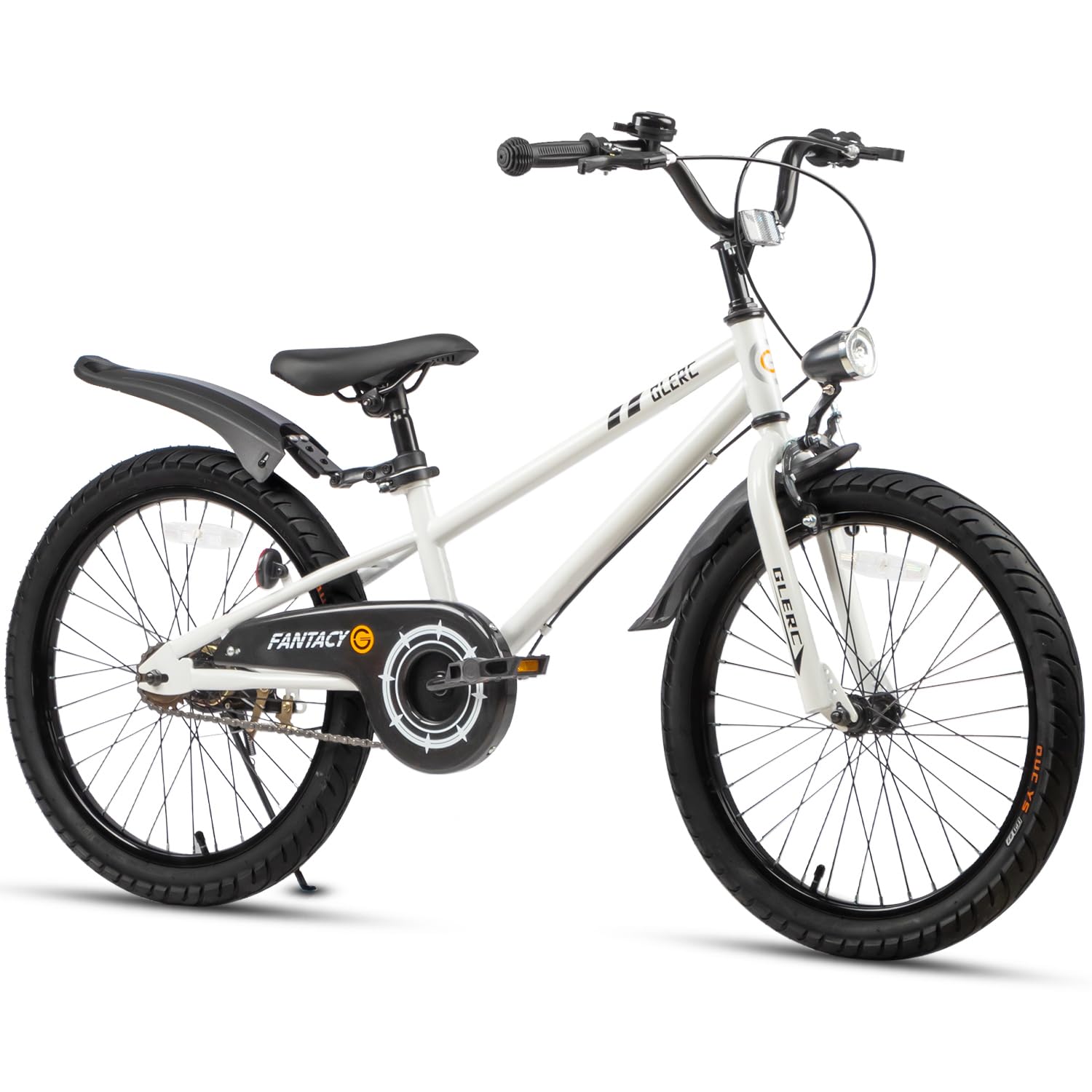
1. Glerc Fantacy Kids Bike
Our pick — over 4.5★ from 300+ verified ratings; the strongest balance of quality and price.
The adventure-ready pick that keeps a young rider visible after sunset with real LED lights.
Safety lighting is the standout reason to choose this one. It ships with fenders and safety LED lights, so a child riding a 20-inch model toward dusk stays seen by drivers. The frame is built for paved roads, unpaved trails, and urban terrain, which covers most neighborhood routes a 7-to-13-year-old will take.
Size is where this bike does its best work. The 20-inch version suits riders 46 to 60 inches tall with an inseam of 21 to 26 inches, and it weighs 29 lbs. The adjustable seat and handlebars extend its useful life as your child grows, and the front and rear handbrakes are balanced for sensitive stopping.
The main assembly job is simply bolt-on work. At 85% pre-assembled, final setup is meant to take about 20 minutes with basic tools. The build quality is the most-praised trait, and families report the parts go together without a fight, which is exactly what you want before a birthday reveal.
What wins parents over: quality is the biggest talking point by far — 45 owners single out the solid construction — and assembly is the second-most-loved trait, 15 call it easy.
The honest limit: a few say the training wheels can loosen after about 10 minutes of riding, so check those bolts before each outing.
Best if: you want a first real bike with built-in lights, a bell, and a water bottle holder that grows from age 7 into the early teens.
Think twice if: your child is still mastering balance and you plan to lean on training wheels heavily every single day.
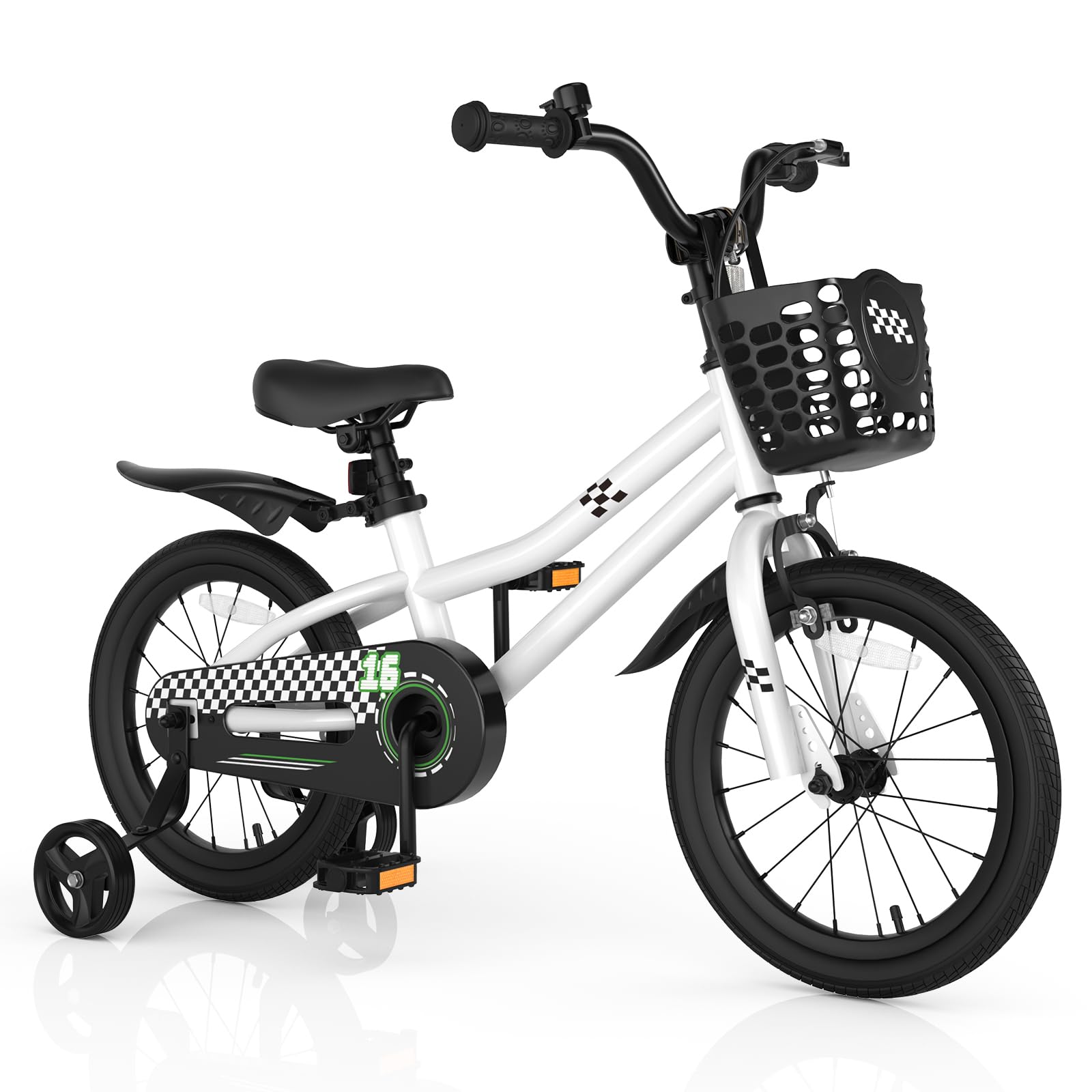
2. COSTWAY Kids Bike
A beginner bike that pairs a hand brake with a coaster brake for the safest possible learning curve.
This is the bike for a child who has never touched pedals before. The dual brake setup gives you a hand brake with a short reach for small hands plus a coaster brake for rear pedal braking, so there is always a fallback stopping method. The fully enclosed chain guard protects little legs, and the frame meets ASTM and CPSIA safety standards.
Fit is flexible across a wide span of ages. With wheel sizes from 12 to 18 inches, it covers roughly ages 3 to 8, and the recommended rider heights run from 31.5 inches up to 59 inches. The handlebar and saddle both adjust, which is how the same frame survives several growth spurts.
Owners describe assembly as about 30 minutes of straightforward work, helped by the fact that the brakes arrive pre-installed — a task most rival bikes leave to you. The carbon steel frame is lightweight yet tough, and the removable front basket and rear rack are the kind of bonuses kids actually use to haul treasures around the block.
Why it ranks so high: quality is the dominant theme — 66 buyers report a solid, scratch-resistant build — and the stability from those wide 5-layer pneumatic tires earns 23 mentions of confidence.
The trade-off: opinions split slightly on long-term reliability, so treat the moving parts gently in the first few months.
Reach for this if: you want a certified, dual-brake starter bike that skips the intimidating brake-installation step entirely.
Look elsewhere if: your child is over 8 or already tall enough that an 18-inch wheel will feel cramped.
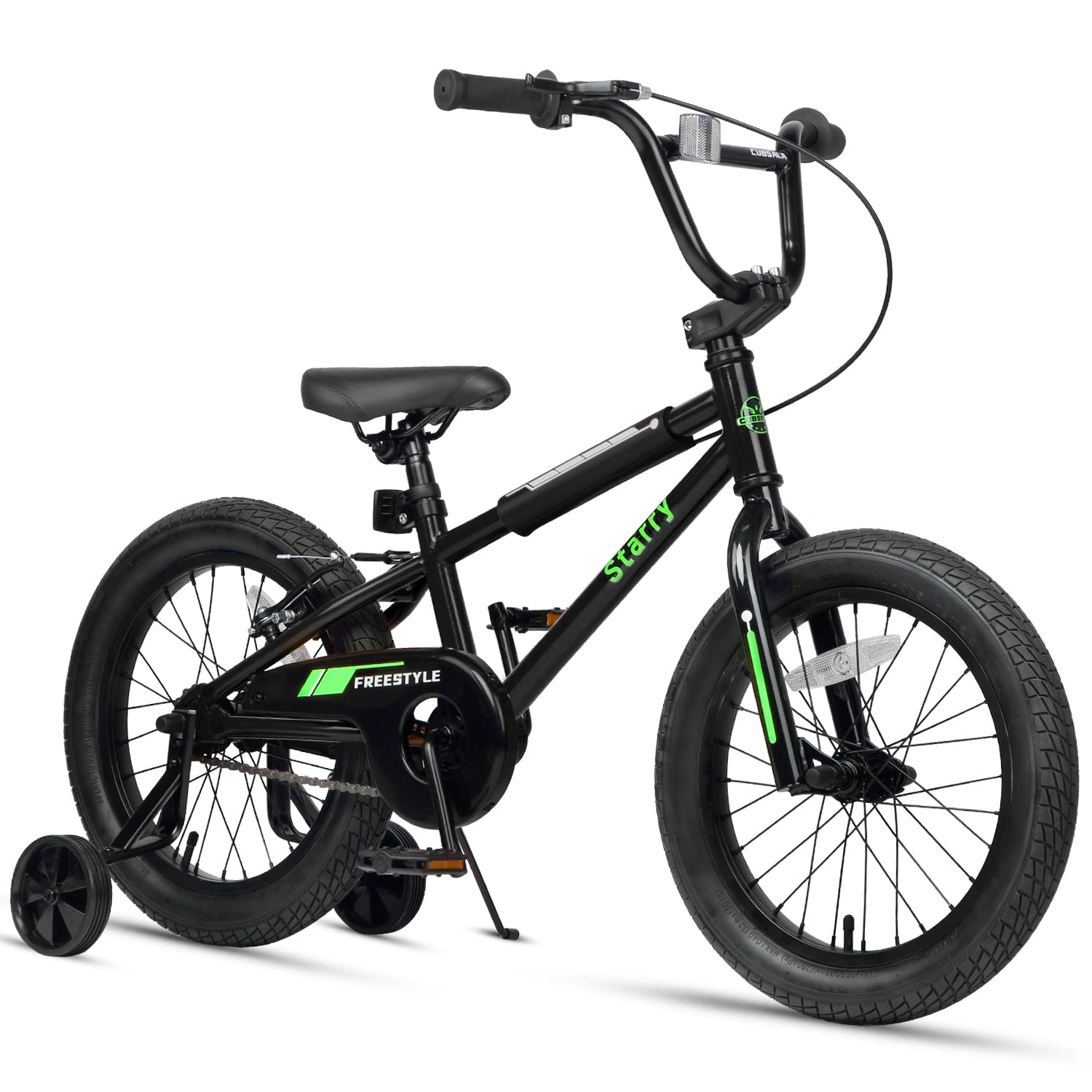
3. cubsala 12–18 Inch Kids Bike BMX Style
A beginner bike that looks like a serious BMX machine while staying forgiving for little riders.
Style is the hook here, but substance keeps it. The high-tensile carbon steel frame is built for rough surfaces and backed by a limited lifetime warranty, which is unusual at this level. The coaster brake plus a rear V-brake gives small hands an easy way to stop without squeezing hard.
You get wheel sizes from 12 to 18 inches, so the bike grows with your child from ages 2 to 10. The 14-inch version fits ages 3 to 5 best, and it suits riders 35 to 43 inches tall—families report it fits a 5-year-old perfectly. The adjustable seat lets your kid keep riding for more years before you need a bigger bike.
Assembly is genuinely quick at 85% pre-assembled with tools included — most families finish in about 20 minutes. The wide tires deliver slip-resistant traction, and the half chain guard keeps pant legs clear. Owners consistently call it a sturdy, safe first ride that looks far more expensive than it is.
The thing everyone raves about: quality is the runaway top praise — 142 owners call out the solid feel — with value for money a close second at 46 mentions.
One cosmetic catch: the paint is thin and can scratch down to metal with hard knocks, so expect some battle scars on a heavy-use bike.
Best if: your 3-to-5-year-old wants a cool-looking BMX-style bike that is safe and simple to ride.
Think twice if: you are buying for a child at the very top of the height range, since some find sizing runs slightly small.
4. WEIZE Freestyle BMX Bike

The freestyle entry point where a 360-degree rotor lets handlebars spin without tangling the brake cable.
This is the bike for the rider who wants to start learning tricks, not just cruising. The 360-degree rotor is the key feature — it lets the handlebar spin fully without twisting the brake cable, which is essential for beginner freestyle moves. Four axle pegs give extra places to practice basic tricks.
The single-speed drivetrain keeps things simple, pairing a 32T front chainring with a 16T rear sprocket for low-maintenance everyday use. Wide 20 x 2.40 inch BMX tires provide grip and cushioning on pavement and uneven ground, and the high-tensile steel frame handles daily riding.
Fit targets riders aged 7 to 13, roughly 4’0″ to 5’8″ tall. The padded adjustable saddle helps during longer sessions. Quality is the most-reported strength, and assembly is straightforward, though the braking system earns the most mixed feedback — so a quick shop tune-up on the rear V-brake is a smart move before the first session.
What stands out: quality leads with 79 positive notes, and assembly follows at 29, making it an easy build for a trick-ready frame.
The honest caveat: durability worries show up in 14 reports, and one frame failed within three days — inspect yours early while returns are easy.
Best if: your 7-to-13-year-old is serious about learning BMX tricks and wants pegs plus a rotor from day one.
Think twice if: you need a bike for heavy daily abuse, since the long-term durability reports are mixed.
5. JOYSTAR NEO 20″ 24″ Kids Mountain Bike

A first mountain bike whose wide knobby tires keep a 7-year-old stable on wet grass and gravel alike.
For a child ready to leave the sidewalk, this is the gateway to gentle trails. The wide 2.4-inch knobby tires deliver traction on wet or dry surfaces, and the Hi-Ten steel frame and fork absorb shocks on rocky or bumpy ground. It is built for neighborhood sidewalks, park paths, and gentle trails.
Stopping power comes from both a rear coaster brake and a front caliper handbrake, giving double the control in any weather. The 20-inch model fits children 44 to 52 inches tall, aimed at the 5-to-9 range. Detachable training wheels provide initial support, then the quick-adjust saddle rises as your child grows.
The frame carries a limited lifetime warranty, and the bike arrives 85% pre-assembled with tools included for a roughly 20-minute final setup. One caution: the wheel quality is the most negative aspect, with some units arriving with warped rims, so inspect the wheels carefully before the first ride.
The mixed picture: quality gets 80 mentions split between praise and disappointment, so check your unit early while the return window is open.
What owners value: assembly earns 39 mentions for overall ease, and the value-for-money debate centers on how it compares to pricier brands.
Best if: you want a trail-capable first mountain bike with training wheels that can be removed as skills improve.
Think twice if: you are not comfortable inspecting and possibly returning a bike that might have a warped wheel from the start.
6. AVASTA Bilbo 18–24 Inch Kids Bike
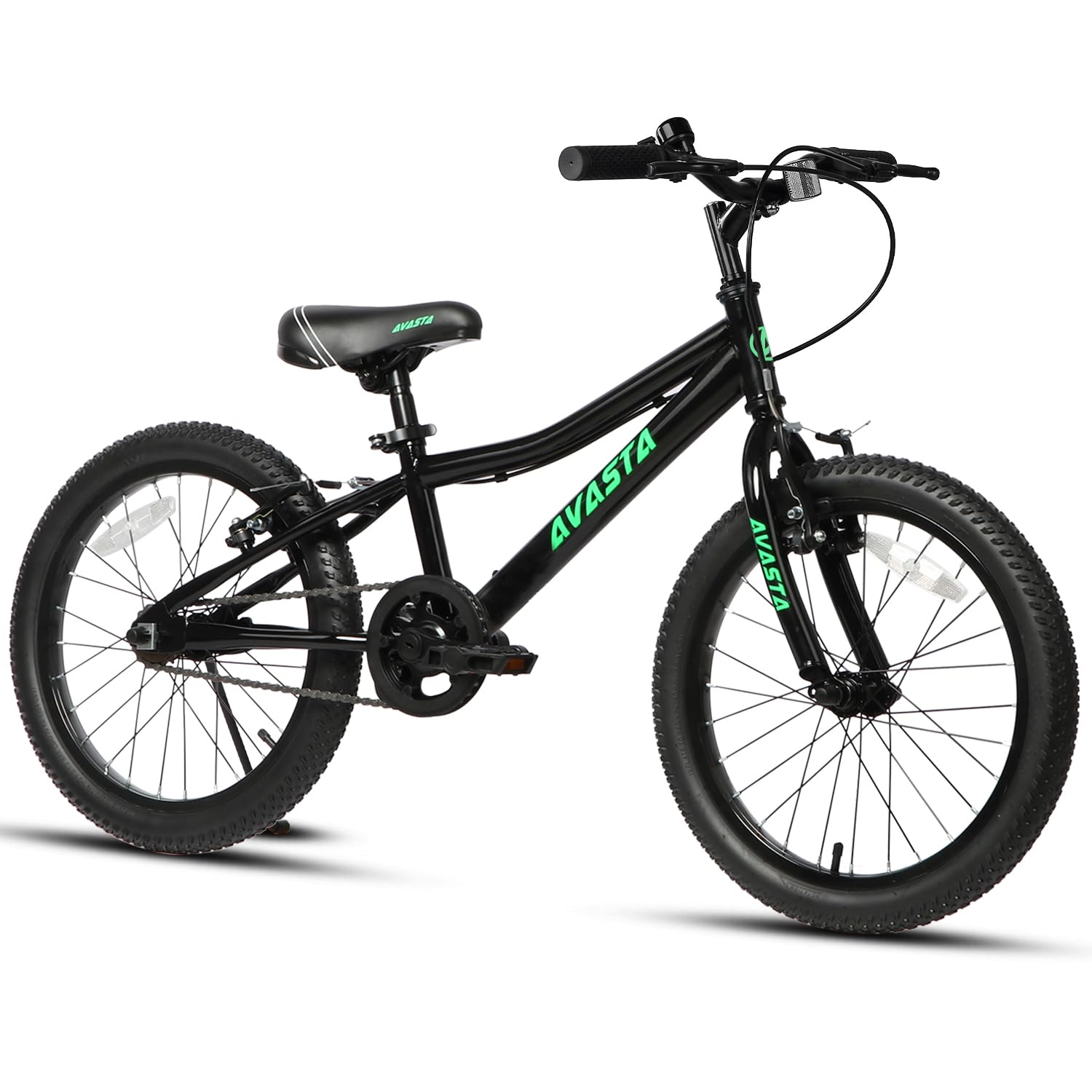
The lightest full-size option at 19 lbs, so a young rider can control the bike instead of wrestling it.
Weight is the hidden hero here. At just 19 pounds for a kids’ bike, this is noticeably easier for a 5-to-8-year-old to handle and lift. The step-over steel frame design makes mounting and dismounting simple, and the high-strength front fork handles rough roads and even some dirt.
Rubber off-road tires wrapped around steady wheels give grip in most weather. The 18-inch version includes training wheels plus a kickstand, while the 20-inch and 24-inch versions skip the training wheels and include a kickstand only. Front and rear dual aluminum V-brakes provide effective, sensitive stopping.
The quick release seat and adjustable handlebars make this a bike that genuinely grows with a child. Sizing spans 18 to 24 inches, covering ages 4 through 14. Assembly leaves only the front wheel, pedals, handlebar, kickstand, and saddle to install, with all tools included — many owners finish in under 15 minutes.
The biggest praise: quality leads with 54 positive notes, and assembly earns 25, with several owners finishing in under 15 minutes.
The size note: a few owners mention it runs slightly small for the listed age range, so size up if your child is tall for their age.
Best if: you want a lightweight bike with quick-adjust seat and handlebars that will span several years of growth.
Think twice if: your child is at the top of the height range for their age, since some report a smaller-than-expected fit.
7. cubsala Crossea 18 20 Inch Kids Freestyle BMX

The serious street machine whose sealed bearing rear hub keeps pedaling smooth through long practice sessions.
This is a step up for the rider who wants to hit the skate park for real. The 19.5-inch top tube and modern freestyle geometry suit street, park, or trails, and the frame is built from strong Hi-Ten steel for reliable support. The 165 mm one-piece crank with a 32T chainring delivers the simple, rugged drivetrain a beginner freestyle rider needs.
The wheelset is where the engineering shows. The 20 x 2.4-inch tires mount on aluminum single wall 36H rims, with a 3/8-inch female axle front hub and a 16T cog sealed bearing cassette rear hub. The aluminum U-brake and hand-brake levers provide precision speed control that responds to deliberate input.
Build quality is the overwhelming theme in owner feedback — it is the most-praised trait by a wide margin. The bike is 85% assembled with tools included, and the limited lifetime warranty backs the frame. The stock brake pads are the weak spot, so plan to swap them for better ones early.
The standout: build quality is the #1 praise at 143 mentions, and assembly earns 50 more as an easy, tool-included process.
The reality check: durability gets 38 negative notes, mostly about pedals breaking or parts loosening, so check fasteners regularly.
Best if: your 5-to-13-year-old is committed to learning real freestyle tricks and needs a geometry that supports progress.
Think twice if: you expect a maintenance-free bike — the stock brake pads and some hardware will need attention.
8. Glerc 20–26 Inch Kids Mountain Bike
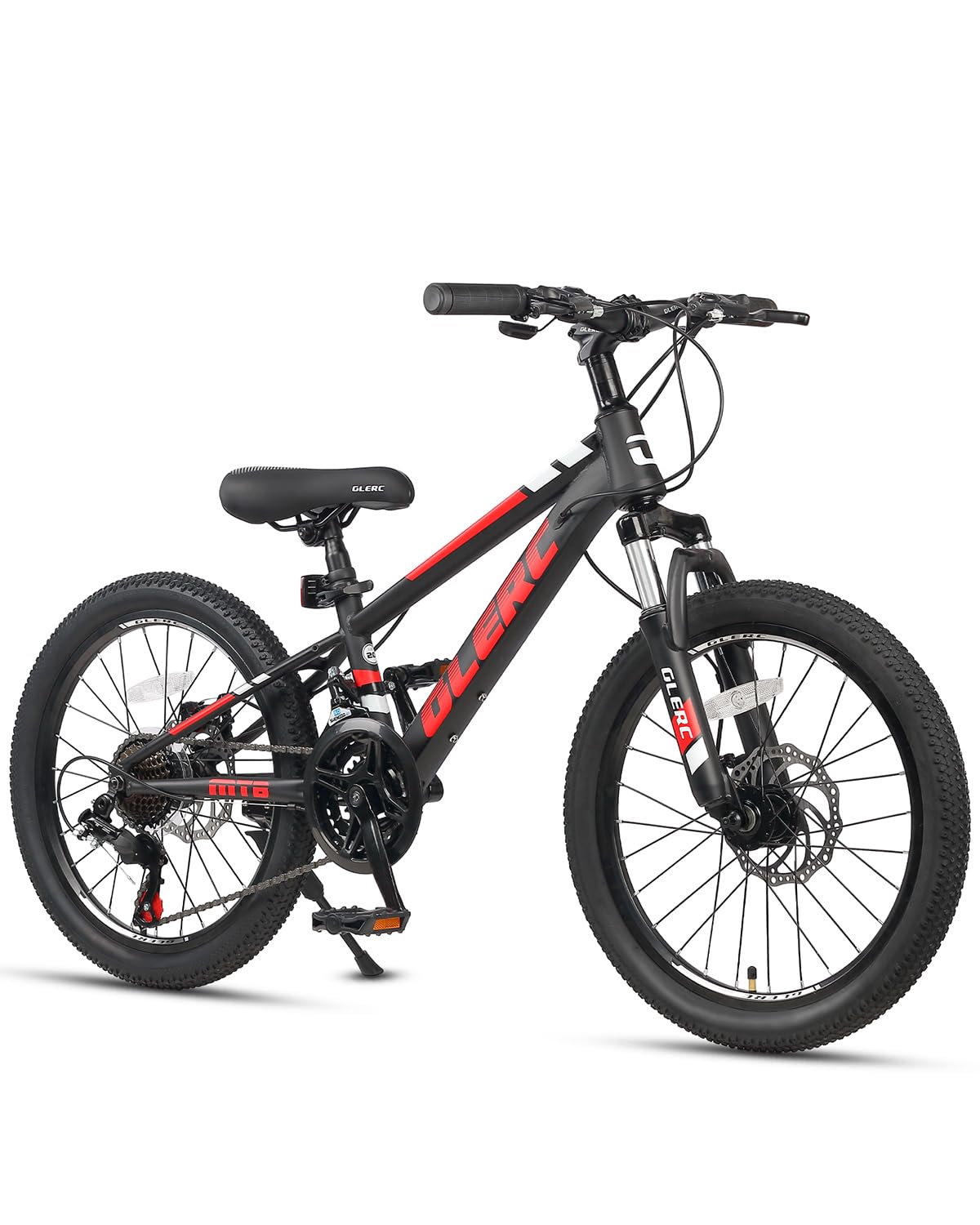
The 21-speed trail bike that gives an older kid real gears and disc brakes for confident off-road control.
When a child wants to climb real hills, gears become essential. This mountain bike carries a 21-speed drivetrain with a trigger shifter and front and rear derailleurs, so there is a gear for every incline and descent. It is the most mechanically advanced option in this lineup, built for genuine off-road adventures.
Responsive disc brakes deliver precise stopping that holds up in adverse conditions, which matters more on a 30-pound bike moving at speed on trails. The suspension fork absorbs shock and vibration from rough terrain, improving comfort and maneuverability during rides. The high carbon steel frame handles the challenges of off-road use.
The 20-inch version suits riders 45 to 55 inches tall with an inseam of 21 to 25 inches, roughly ages 6 to 12. Owners consistently praise the smooth gear shifting and the solid, quality feel of the frame. Assembly runs about 30 minutes with all tools included.
The quality read: every single review pattern points to a solid, well-built frame that shifts smoothly and rides well.
The honest note: at 30 lbs for the 20-inch model, this is a heavier bike that an 6-year-old may need help lifting onto a rack.
Best if: your 6-to-12-year-old is ready for a real mountain bike with 21 speeds, disc brakes, and a suspension fork.
Think twice if: your child needs a lightweight bike they can carry — the 30 lb frame is built for durability, not portability.
9. JOYSTAR Brockway Freestyle 20″ 24″ BMX

The 24-inch BMX with a 22-inch top tube that fits taller kids ready for real bike-park sessions.
This is the pick for the taller pre-teen who has outgrown 20-inch wheels but still wants a BMX. The 24-inch model suits a suggested rider height of 4’6″ to 5’0″, with a 22-inch top tube that gives room to grow. The hi-tensile frame is built for street, park, or trails.
The single-speed drivetrain pairs a 165 mm one-piece crank with a 40T chainring for simple, reliable power. The wheelset uses 20 x 2.125-inch tires on carbon steel single wall 36H rims, with a 3/8-inch female axle front hub and an 18T cog sealed bearing cassette rear hub. Two pegs come included for trick practice.
The aluminum U-brake provides precision stopping. A limited lifetime warranty backs the frame, and the bike arrives 85% assembled with tools. Quality is the most-praised trait, with one family noting it beats what they could find at a big-box store, though the braking system earns the most negative feedback.
The consensus: quality leads at 134 positive mentions, and assembly follows at 53, making it an easy, sturdy build for an older kid.
The recurring gripe: the brakes get 34 negative notes for weak stopping and fast-wearing pads, so budget for a brake upgrade.
Best if: your 9-to-12-year-old is tall and ready for a 24-inch BMX that can handle real park riding.
Think twice if: you want dependable brakes from the start — most customers note needing to adjust or replace the stock pads.
10. Huffy 20″ Boys 6-Speed Mountain Bike

The full-suspension cruiser whose 6-speed twist grip makes steep hills feel flat for a 5-to-9-year-old.
Hills are this bike’s specialty. The 6-speed twist grip shifter lets a young rider change gears by simply twisting the grip, which is far easier for small hands than a trigger shifter. A high-performance full suspension system absorbs shocks, bumps, and jolts for a smoother ride on rough terrain.
The rugged design is built for adventurous boys aged 5 to 9, ready to tackle trails, rugged terrain, or neighborhood rides. The alloy steel frame is solid, and the adjustable seat height ensures a proper fit as your child grows. A sturdy kickstand makes parking easy.
Assembly is generally straightforward, with most owners completing it in 20 to 30 minutes. The rear derailleur handles the gear changes. The caveat is that some units need a shop visit to properly adjust the shifter or brakes, and the adjustability of the seat is a recurring negative in feedback.
The appeal: appearance is the top positive trait with 13 mentions, and the solid build draws consistent praise from families.
The fit warning: adjustability gets 29 negative notes, so verify the seat range works for your child’s height before committing.
Best if: your 5-to-9-year-old faces steep hills and prefers an easy twist-grip shifter over trigger controls.
Think twice if: you want a bike ready to ride with zero setup — some units need a professional tune for the shifter and brakes.
11. RoyalBaby Freestyle Premium

The balance-first bike whose pedal-off mode lets a hesitant child gain confidence before the pedals even go on.
This is the smartest learning system in the lineup. The exclusive EZ geometry lets you remove the pedals so the bike works as a balance bike first, then snaps the pedals back on as the child gains confidence. The patent cranks and footrest feature a tool-less quick release design, so the conversion takes seconds, not tools.
The frame is 20% lighter than typical kids’ bikes, so small riders can steer and stop it with less effort. The lower frame position lets even young toddlers get their feet on the ground, and both the saddle and handlebar adjust. A jet engine water bottle adds a fun touch kids love.
At 98% pre-assembled, this is the easiest build in the entire guide — most families finish in about 15 minutes. The patented sealed bearing keeps pedaling smooth. The bike complies with CPSC standards and carries a lifetime warranty on the frame. Quality is the top praise, with balance a close second.
What wins people over: quality is the top trait at 36 mentions, and the balance-to-pedal feature earns 13 more for helping kids learn quickly.
The safety note: the bike uses front-only brakes, so teach your child to rely on the coaster-style drum brake for most stopping.
Best if: you have a hesitant 4-to-7-year-old who needs the balance-first approach to finally click.
Think twice if: you expect dual hand brakes — this model stops with the front caliper plus rear drum, not two hand levers.
Understanding the Specs
Wheel Size and Inseam Fit
The wheel diameter is the single most important number on a kids’ bike. A 12-inch wheel suits a toddler around 31 inches tall, while a 24-inch wheel fits a pre-teen close to 66 inches. Always measure the child’s inseam and compare it to the saddle height range, not the age on the box. A bike that lets both feet touch the ground flat builds confidence far faster than one sized purely by age.
Coaster vs. Hand Brakes
Coaster brakes stop the bike when the rider pedals backward, which is intuitive for beginners with small hands. Hand brakes, whether linear pull, V-brake, or U-brake, require grip strength that younger kids often lack. The safest beginner setups pair a rear coaster brake with a front hand brake, giving a fallback stopping method. As children grow, they transition to full hand-brake systems for better control.
Frame Material and Weight
Most kids’ bikes use carbon steel or high-tensile steel frames because they are durable and affordable. The trade-off is weight — a 20-inch steel bike can weigh 26 to 30 lbs, which is heavy for a 6-year-old to carry. Lighter frames, like the 19 lb AVASTA or the RoyalBaby with its 20% weight reduction, are easier for young riders to control. Check the weight against your child’s strength, not just the wheel size.
Pre-Assembly Level
The “85% pre-assembled” label means the frame, wheels, and drivetrain arrive ready, but you attach the front wheel, handlebar, pedals, and often the kickstand. Some bikes go further — the RoyalBaby arrives 98% assembled and the COSTWAY ships with brakes pre-installed, saving the hardest step. If you are not handy with tools, look for the highest pre-assembly percentage and clear instructions.
FAQ
How do I know which wheel size fits my son?
Are training wheels better than a balance-to-pedal conversion?
What is a coaster brake and is it safe for beginners?
How long does assembly actually take?
Is a heavier bike bad for a young child?
What is the difference between a U-brake and a V-brake?
Can a 20-inch bike fit a 10-year-old?
What does a limited lifetime warranty cover on a kids bike?
Are disc brakes worth it on a kids mountain bike?
Should I avoid bikes with mixed brake reviews?
Final Thoughts: The Verdict
For most families, the bikes for boys winner is the
How We Picked
We do not accept paid placement. Every pick is matched to a real buyer and a real use-case; we do not hands-on test units.
Sources & Methodology
Specifications: manufacturer listings and product documentation. Review insights: verified customer reviews, as of September 2026. Pricing: not shown on this page (it changes often); check the current price via the retailer link.
As an Amazon Associate, Gadgets Feed earns from qualifying purchases. This does not affect which products we feature.