
Our readers keep the lights on and my morning glass full of iced black tea. As an Amazon Associate, I earn from qualifying purchases.
Specs are compiled from manufacturer listings and verified buyer reviews and can change over time — please confirm the key details on the product page before buying.
Teaching a child to ride is mostly about balance, not pedaling. That’s why the best first step is usually a balance bike — a lightweight, no-pedal bike that lets little legs push, glide, and learn to steer before you ever add pedals. This guide breaks down the 9 best bikes for kids learning to ride, from sturdy rockers for babies to pedal bikes with training wheels for older kids.
I’m Min — the founder and writer behind Gadgets Feed. This guide is built by comparing the manufacturers’ published specifications and the patterns across verified customer reviews, so you get each pick’s real strengths and trade-offs instead of marketing spin.
You want a bike that builds your child’s confidence fast, not one that scares them. The right pick depends on your child’s age, height, and how they learn best, so here is our ranked list of the bikes for kids learning to ride that parents and their little riders actually love.
Our Picks at a Glance


How To Choose The Best Bikes For Kids Learning To Ride
The biggest mistake parents make is buying a bike that’s too big, thinking the child will “grow into it.” A bike that’s too tall makes it hard for a child to put their feet flat on the ground, which destroys their confidence. The right bike should let your child sit with both feet flat on the floor.
Start With Inseam, Not Age
Manufacturers list age ranges, but your child’s inseam — the length from their crotch to the floor — is what actually matters. The seat needs to lower enough that your child can straddle it and plant their feet firmly. Check the seat height range against your child’s inseam before you buy.
Balance Bike vs. Pedal Bike
A balance bike has no pedals, so kids push with their feet and learn to glide. This teaches balance first, which makes the jump to a pedal bike easier. A pedal bike with training wheels keeps the bike upright but doesn’t teach balance — the wheels do that job instead of the child.
Tires Tell You About Grip and Maintenance
Foam rubber tires never go flat, so they’re zero-maintenance and great for indoors or smooth pavement. Inflatable air tires have more grip and roll more smoothly over gravel and grass, but they need a pump and can puncture. Think about where your child will actually ride.
Quick Comparison
| Model | Best For | Type | Seat Height Range | Max Rider Weight | Amazon |
|---|---|---|---|---|---|
| Strider Sport 2-in-1★ Best Overall | Babies 6 months and up | Rocking Base + Balance Bike | 9 – 17 in. | 60 lbs | Amazon |
| KRIDDO 2-in-1Best Value | 2-5 year olds needing two modes | Balance Bike / Tricycle | — | — | Amazon |
| Retrospec CubTop Performer | 18 months – 3 years | Balance Bike | 11 – 14.5 in. | 50 lbs | Amazon |
| Banana Bike GT | 2-5 years with air tires | Balance Bike | — | 25 kg | Amazon |
| bicystar 14″ | 3-5 years on outdoor terrain | Balance Bike | 13″–21″ | 110 lbs | Amazon |
| Glerc Fantacy 12″ | 2-4 years, first pedal bike | Pedal Bike | — | 70 kg | Amazon |
| Glerc Little Molly 14″ | 3-5 years, retro style | Pedal Bike | — | — | Amazon |
| cubsala BMX | 2-10 years, BMX style | Pedal Bike | — | — | Amazon |
| Strider 12 Pro | 1-5 years, premium lightweight | Balance Bike | 11-17 in. | 60 lbs | Amazon |
In‑Depth Reviews
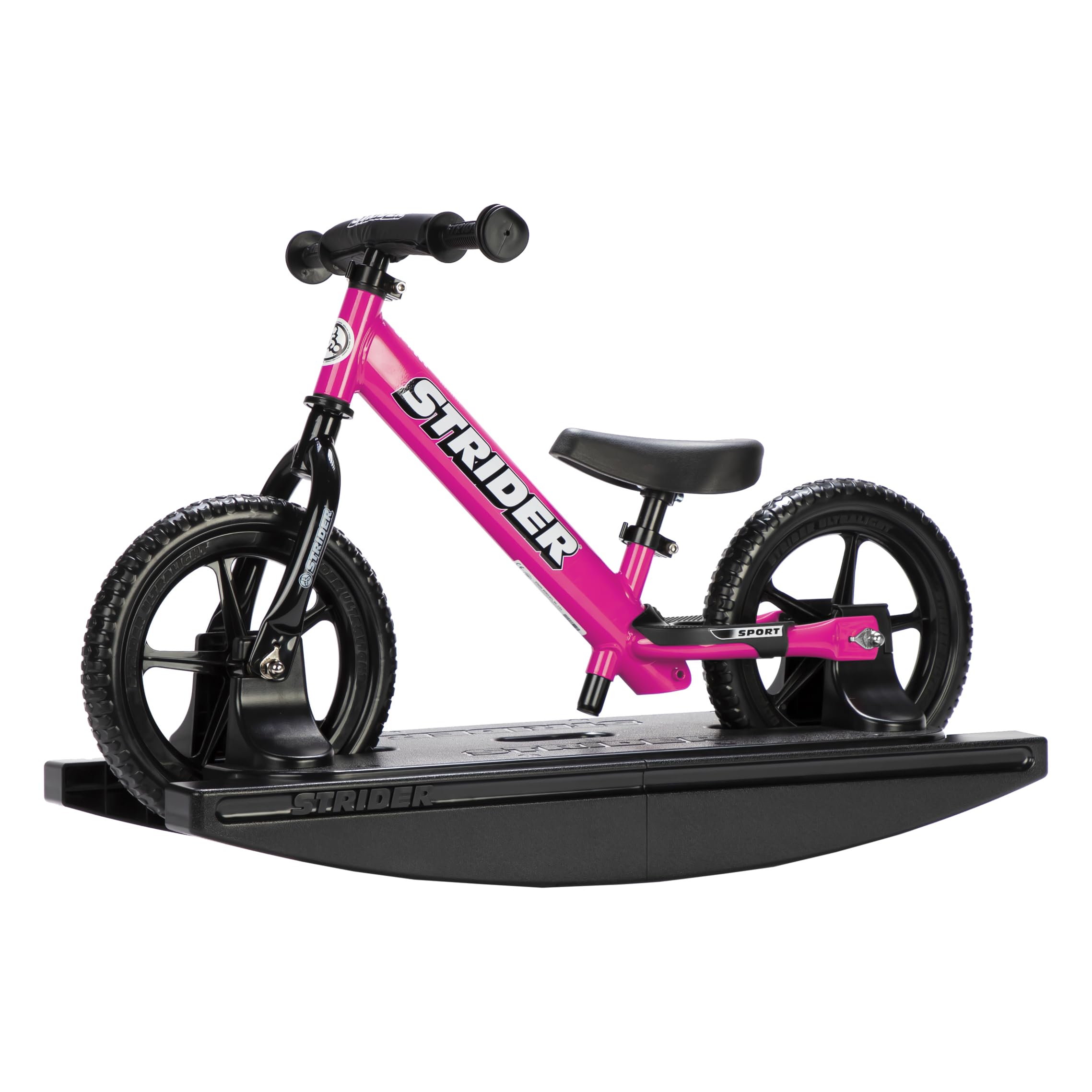
1. Strider Sport 2-in-1 Rocking Bike
Our pick — over 4.5★ from 800+ verified ratings; the strongest balance of quality and price.
The only pick that starts your child on a rocker before they can even walk.
This is the two-for-one that grows with your child from 6 months to 4 years old. The package includes both the Rocking Base and the 12″ Sport Balance Bike, so a baby can rock first, then graduate to gliding. The seat adjusts from 9 to 17 inches, fitting kids with an inseam of 10 to 18 inches — so it truly spans the entire learning journey.
The build quality is the thing everyone raves about, with over 100 owners highlighting how solid it feels. Buyers report it’s so sturdy that even a 55-70lb dog can’t knock it over while the little one rocks, and parents praise how easy it is to assemble with the included tools. The never-flat foam rubber tires mean zero maintenance, and the rubber mini grips plus handlebar safety pad add a layer of protection.
The 2-in-1 design also means you’re buying once instead of twice, which softens the premium price. The main trade-off, as owners note, is that the foam tires can slide on smooth hardwood floors, so it’s best on carpet or pavement. A few also found the rocking motion less pronounced than they expected, but for building early balance, it delivers.
What Owners Love
- Grows from a rocker (6-24 months) to a balance bike (1-4 years)
- Quality is the #1 praised feature, mentioned over 100 times
- Never-flat foam tires need no maintenance
- Easy assembly with all tools included
Before You Buy
- Foam tires can slide on slick hardwood floors
- Rocking motion is milder than some expect
- Premium price reflects the two-in-one build
The Family Pick: Best for parents who want one product to carry their child from rocking at 6 months to balancing at 4 years — the true all-in-one.
Reach for this if: your child is under 2 and you want to start early. The foam tires do slide indoors, so keep it on carpet or pavement.
2. KRIDDO 2-in-1 Foldable Balance Bike and Toddler Tricycle
The clever two-in-one that folds flat and flips from trike to balance bike.
This bike solves the “which one do I buy?” question by giving you both a tricycle and a balance bike in one. In trike mode it’s stable and safe for wobbly beginners; flip it to balance bike mode and your child works on the gliding skills that matter. The whole thing folds in just 2 steps, and the seat is easy to carry, so it’s a dream for grandparents’ houses or car trunks.
The built-in pedal mount is a clever touch — pedals store in a slot under the rear seat so they don’t get lost between modes. Owners mention assembly takes about 15 minutes with the included hand tool and clear instructions. The front headlight is a genuine safety boost for evening rides, and the adjustable seat keeps it comfy as your 2-to-5-year-old grows.
Quality is the aspect owners mention most, with 66 people highlighting it, and enjoyment is close behind at 33. The carbon steel frame feels solid, and parents love that it supports a child’s growth from beginner to pro without a second purchase. The size gets mixed feedback though — some find it perfect while others say it runs small, so measure your child’s height before ordering.
Two Bikes in One: The 2-step fold and carry seat make this the most travel-friendly pick here, and the pedal storage means nothing gets lost.
Size Check: Reviews are split on whether it fits a taller 4-5 year old, so it’s safest for younger, smaller riders.
Grab this for: families who want tricycle stability and balance-bike skill-building without buying two separate bikes — the fold makes it perfect for travel.
The trade-off: it’s best for smaller 2-3 year olds, so taller kids may outgrow it faster.
3. Retrospec Cub Toddler Balance Bike
A featherlight glider whose low frame makes first rides feel safe and easy.
The Cub is built around one idea: getting a toddler’s feet flat on the ground builds confidence fast. Its easy-mount, low-frame design means a small child can hop on and off without help, and the seat drops as low as 11 inches and rises to 14.5 inches to grow with them. The airless, puncture-proof tires are a parent’s best friend — no flats, ever, whether the ride is on pavement, grass, or a dirt path.
What wins people over here is the build. Quality is the top mentioned aspect at 98 mentions, with durability close behind at 38, and many parents say it survived multiple kids and still rolls for years. Assembly takes under 15 minutes, and the alloy steel frame stays light enough for a 2-year-old to steer. Customers note the seat maxes out around age 3 to 3.5 for taller kids, but for the 1-to-3 crowd it’s a superb first bike.
The rounded edges and non-slip grips show real safety thinking, and the low center of gravity keeps the bike stable even when a new rider wobbles. It’s the pick that feels indestructible while staying approachable for the smallest riders, and it carries a solid 4.8-star rating from over 580 happy families.
The Confidence Builder: A low frame and flat-free tires mean kids master gliding quickly, which is exactly what you want in a first balance bike.
Watch the Growth: The 14.5-inch max seat height means taller 3-year-olds will outgrow it, so it suits smaller toddlers best.
Perfect for: the 18-month to 3-year-old taking their very first glides — it’s light, low, and nearly indestructible.
Look elsewhere if: your child is already tall for their age and close to outgrowing a 14.5-inch seat height.
4. Banana Bike GT Balance Bike

The banana-shaped frame that packs real air-tire grip into a 7.9-pound build.
At just 7.9 pounds, this is one of the lightest balance bikes you’ll find, and it’s the lightest way to get inflatable air tires under your child. The unique banana-shaped frame keeps the center of gravity low, so hopping on and off is easy even for a 2-year-old. Those 12-inch pneumatic tires offer real grip on gravel and grass, which is exactly what foam tires can’t match.
Build quality is the most-praised feature, with 63 owners highlighting it, and many say it lasts through multiple kids. The quick-release clamp on the seat makes adjustments tool-free, so it keeps up as your child grows from 2 to 5. Owners also love that assembly takes about 10 minutes, and the twin-bearing steering feels smooth and easy for small hands.
The trade-offs are minor but real: there’s no footrest or kickstand, and the handlebars spin fully around, which a few parents flagged as a potential downhill control issue. A couple of owners also received theirs with flat tires that needed a pump. For the price, though, the build quality and tire grip make it a standout value.
Owner Highlights
- Only 7.9 lbs — easy for a toddler to lift and steer
- Real inflatable air tires grip gravel and grass well
- Quick-release seat adjusts without tools
- Build quality praised by 63 owners
Known Gripes
- No footrest or kickstand included
- Handlebars spin a full 360°, a downhill concern
- Some arrive with flat air tires needing a pump
Best for: families who’ll ride on grass or gravel and want a lightweight bike with real tire grip — the air tires are the standout.
One caution: keep an eye on the free-spinning handlebars and check the tires on arrival since some ship flat.
5. bicystar 14 Inch Balance Bike
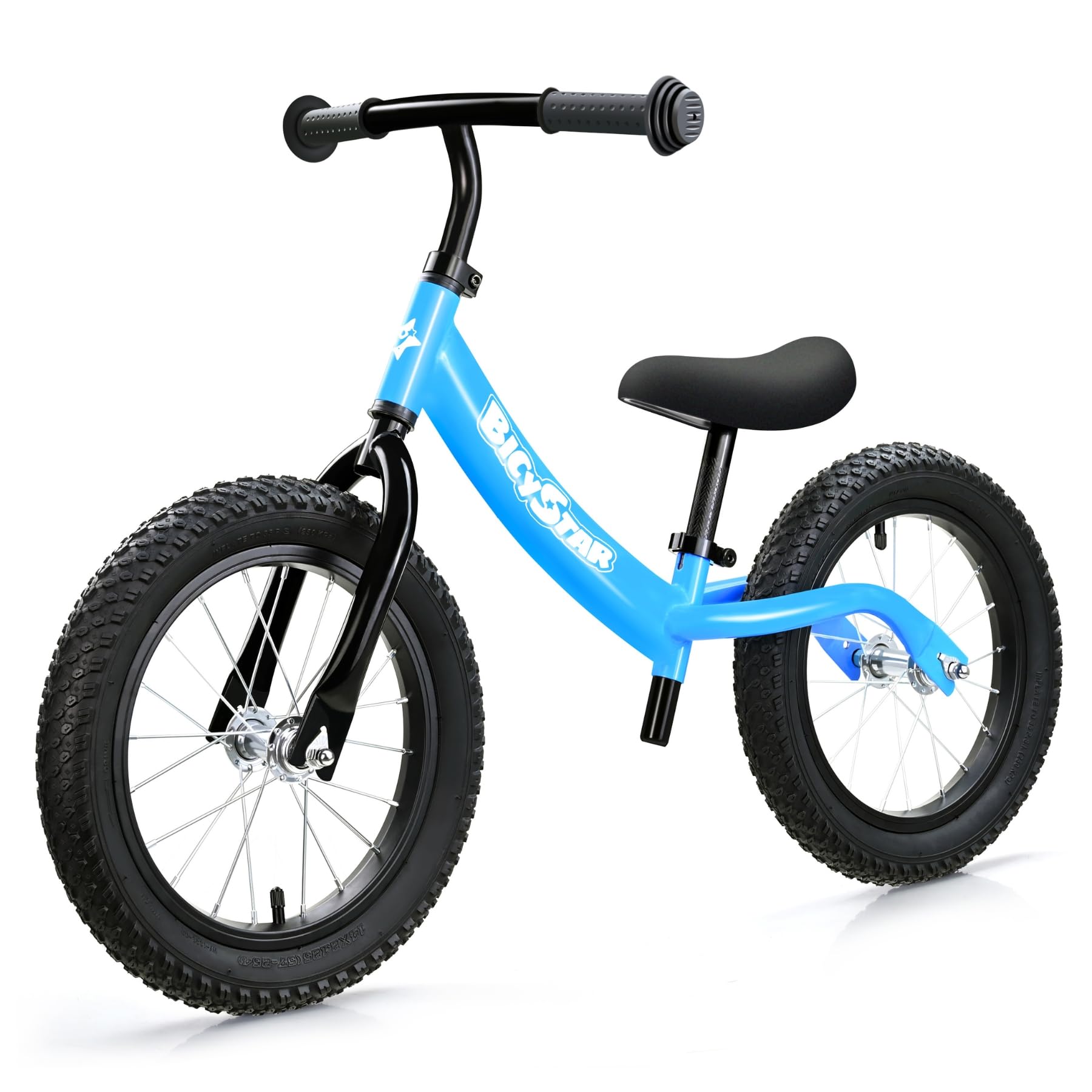
A bigger 14-inch frame with real air tires made for the 3-to-5 set.
If your child is on the taller side and ready to ride outdoors, the bicystar steps up to a 14-inch wheel size that most toddler bikes skip. The seat adjusts from 13 to 21 inches, fitting kids with a 13.5-to-22-inch inseam, and the handlebar raises from 21.6 to 24 inches — so it genuinely grows with a 3-to-5-year-old. The inflatable rubber air tires grip outdoor gravel and roll smoothly indoors, which is a big step up from slippery foam.
The wide carbon steel frame is the real safety story, supporting up to 110 pounds — more than double most balance bikes. At 8.5 pounds, though, it stays light enough for a child to steer and pick up on their own. Quality is the #1 mentioned aspect with exactly 100 owner mentions, and assembly is the second-most noted at 67, with nearly everyone saying the tools and instructions make setup fast.
Owners particularly love the value, noting it’s comparable to a Strider but lighter, and the padded seat plus soft grips keep rides comfy. One parent noted the bike helped their 8-year-old with a club foot build leg strength. The main notes are that there’s no rear footrest, and a few found they needed to re-tighten the seat and handlebar clamps after assembly.
The Outdoor Machine: The 14-inch wheels and air tires make this the pick for gravel paths and parks, where most toddler balance bikes struggle.
The Growth Spare: With a 110-pound capacity and 21-inch seat max, this is one of the few balance bikes that truly fits a 5-year-old.
Choose this if: your 3-to-5-year-old will be riding outside on mixed terrain and you want a bike that won’t need replacing for years.
The catch: there’s no footrest for coasting, so kids who like to rest their feet may miss it.
6. Glerc Fantacy Kids Bike 12″

A proper pedal bike starter with training wheels, a light, and a bell for the 2-4 set.
When your child is ready to move past balance bikes, the Fantacy is a true pedal bike designed for beginners. The 12-inch model fits kids aged 2-4 who are 33″-37″ tall with a 13″-16″ inseam, and it comes with training wheels for that first wobbly week. The coaster brake (stop by pedaling backward) and a handbrake give two ways to slow down, which is rare and useful at this size.
Assembly is genuinely easy — the bike ships 85% pre-assembled, and most parents finish in about 20 minutes with basic tools. It also comes with a water bottle holder and a safety LED light, which reviewers point out look even better in person than in the photos. Quality is the top-praised feature at 45 mentions, and the adjustable seat and handlebars mean it adapts as your child shoots up.
The honest downsides: stability gets mixed reviews because some shoppers say the training wheels loosen after about 10 minutes of riding, so they need periodic re-tightening. At 21 pounds, it’s heavier than a balance bike, which is normal for a pedal bike. For the money, though, it’s a solid, complete-feeling first pedal bike that includes everything.
The Complete Package: Training wheels, coaster brake, handbrake, LED light, and a bottle holder all included — nothing else to buy.
Watch the Wheels: The training wheels are the weak point per reviews, so budget time to re-tighten them after the first few rides.
Get this for: a 2-to-4-year-old making the leap to pedals, since the dual brakes and training wheels make it a safe, forgiving first ride.
Keep in mind: check the training wheel bolts before each ride, as they’ve been known to loosen quickly.
7. Glerc Little Molly Retro Cruiser Bike
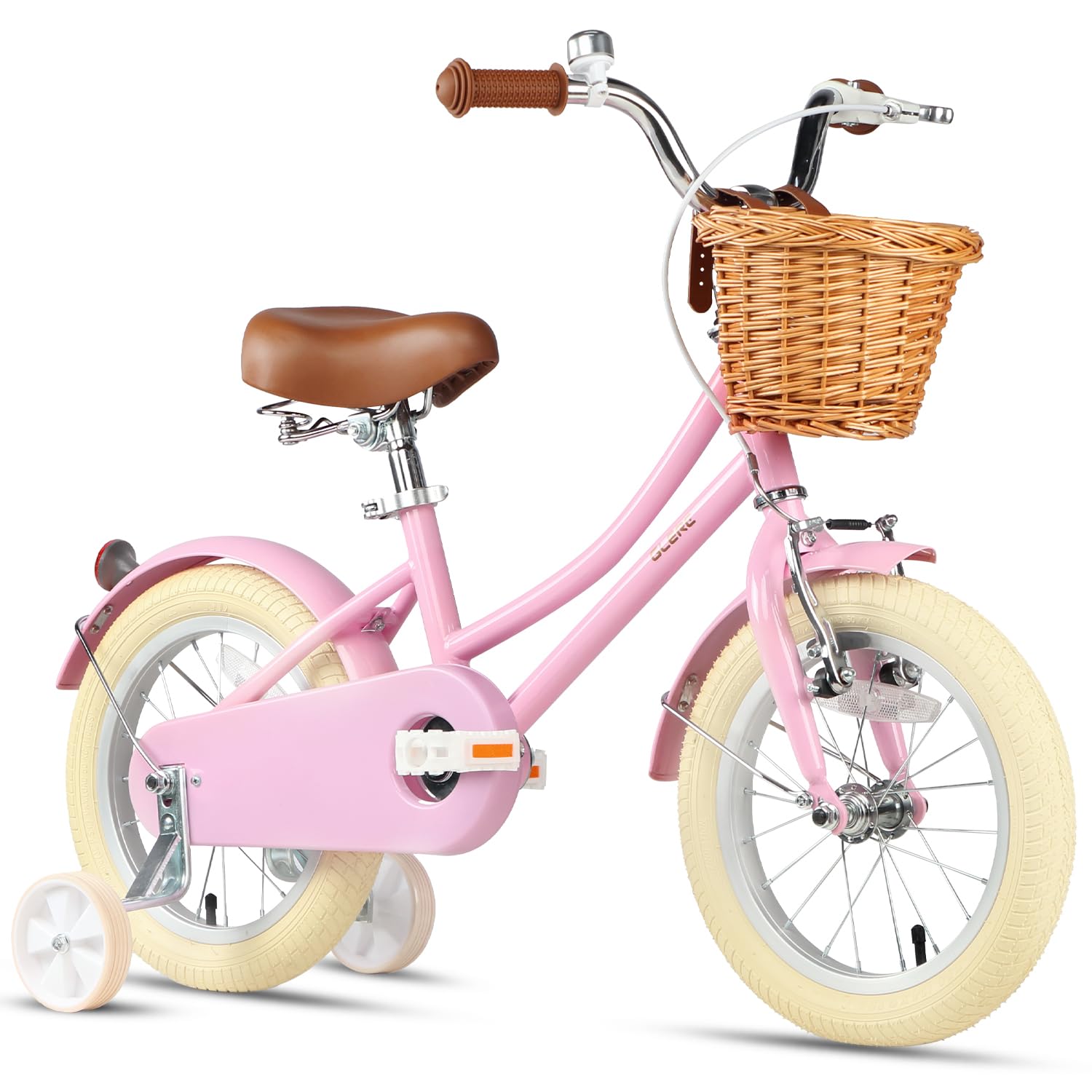
The vintage cruiser that turns a first bike into an event your kid will brag about.
This is the bike for the child who cares about style. The Little Molly has a vintage-style metal frame, a brown faux leather saddle, and an adorable wicker basket — and owners can’t stop talking about the looks, with appearance the #2 most-mentioned aspect at 77 counts. The retail price is a bit higher because it’s a premium-feeling package that some owners say beats what they’d find at big-box stores.
Safety is engineered in with short-travel aluminum brake levers sized for small hands, a lower standover height so kids can put feet down, and protective handlebar pads. It has both hand brakes and a coaster brake for plenty of stopping power. The 14-inch model fits kids 3-5 who are 36″-44″ tall with a 16″-20″ inseam, and it ships 85% pre-assembled for roughly a 25-minute build.
The clear instructions are written for beginners, and most owners find assembly straightforward — though a few mention the instructions could be clearer. Functionality and fit both get mixed notes, with some owners reporting parts that don’t align perfectly. Buyers report the braking is great and the bike is very stable, making it a beautiful and functional pick for a child who’s ready for a proper pedal cruiser.
The Charm Factor
- Stunning vintage look with a real wicker basket
- Quality is the top praise, at 116 owner mentions
- Small-hand-friendly brake levers
- 85% pre-assembled, about 25 minutes to finish
Honest Notes
- Assembly instructions could be clearer
- Fit can be slightly off on some units
- Premium price for the style
Best for: the 3-to-5-year-old who’ll be thrilled by the basket and vintage looks — it’s a bike that feels special every single ride.
Heads up: the instructions test your patience a bit, and an occasional unit has a minor alignment quirk.
8. cubsala Kids Bike BMX Style
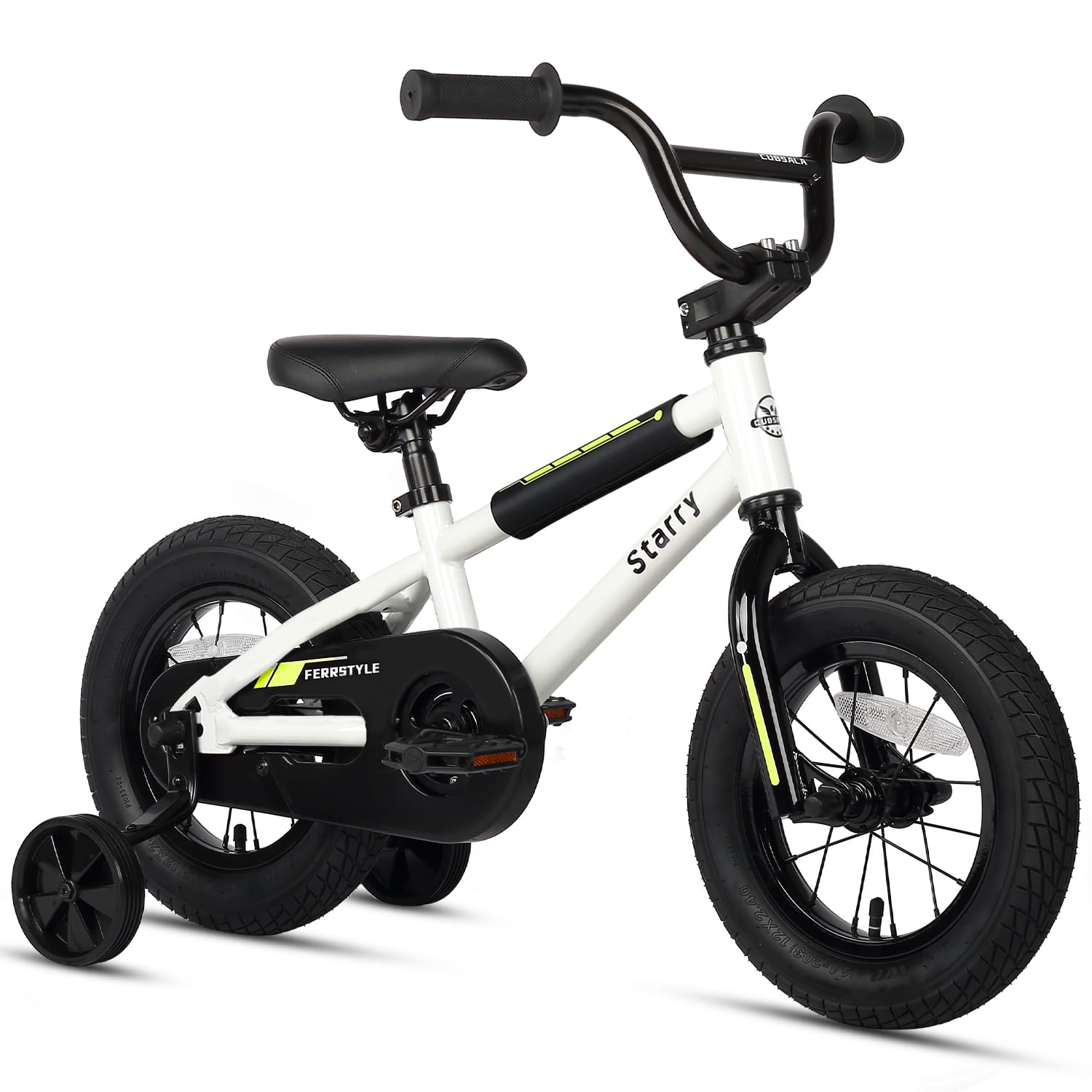
The high-carbon-steel BMX that looks like a big-kid bike and lasts like one.
This is the pick for parents who want a bike that looks like the “real” bikes older kids ride. The BMX-style frame is built from high tensile carbon steel and looks like a much more expensive model, with owners comparing it favorably to what they’d find in stores. It comes in 12, 14, 16, and 18-inch wheel sizes spanning ages 2-10, so it’s a line you can stick with as your child grows.
What really separates it is the handlebar brake. Owners note this is a feature that Walmart bikes at similar prices simply don’t have, and it gives kids real stopping power on downhills instead of relying only on the pedal-back coaster brake. The full chain guard keeps little fingers safe, and wide tires add slip-resistant traction. Quality is the dominant praise, with 140 owner mentions making it the most-reviewed positive feature here.
Assembly runs about 20 minutes with the included tools, and the bike ships 85% pre-assembled. The honest trade-offs: it’s on the heavy side at 10.73 kg, and some owners find it difficult to ride, with size getting mixed feedback. The training wheels also may loosen over time per a few reports. But for a durable, good-looking, high-end-feeling bike, it’s a strong choice backed by a limited lifetime warranty.
The Confidence Boost: A real handlebar brake gives kids downhill control most small bikes lack, and the BMX looks earn instant big-kid pride.
The Trade-Off: All that steel means weight — at 10.73 kg it’s one of the heavier picks here, so it’s best for older, stronger riders.
Pick this for: a 4-to-7-year-old who wants a tough-looking bike and benefits from a handlebar brake for safer downhill riding.
skip it if: your child is very young or small, since the weight and size lean toward the older end of the age range.
9. Strider 12 Pro Aluminum Balance Bike
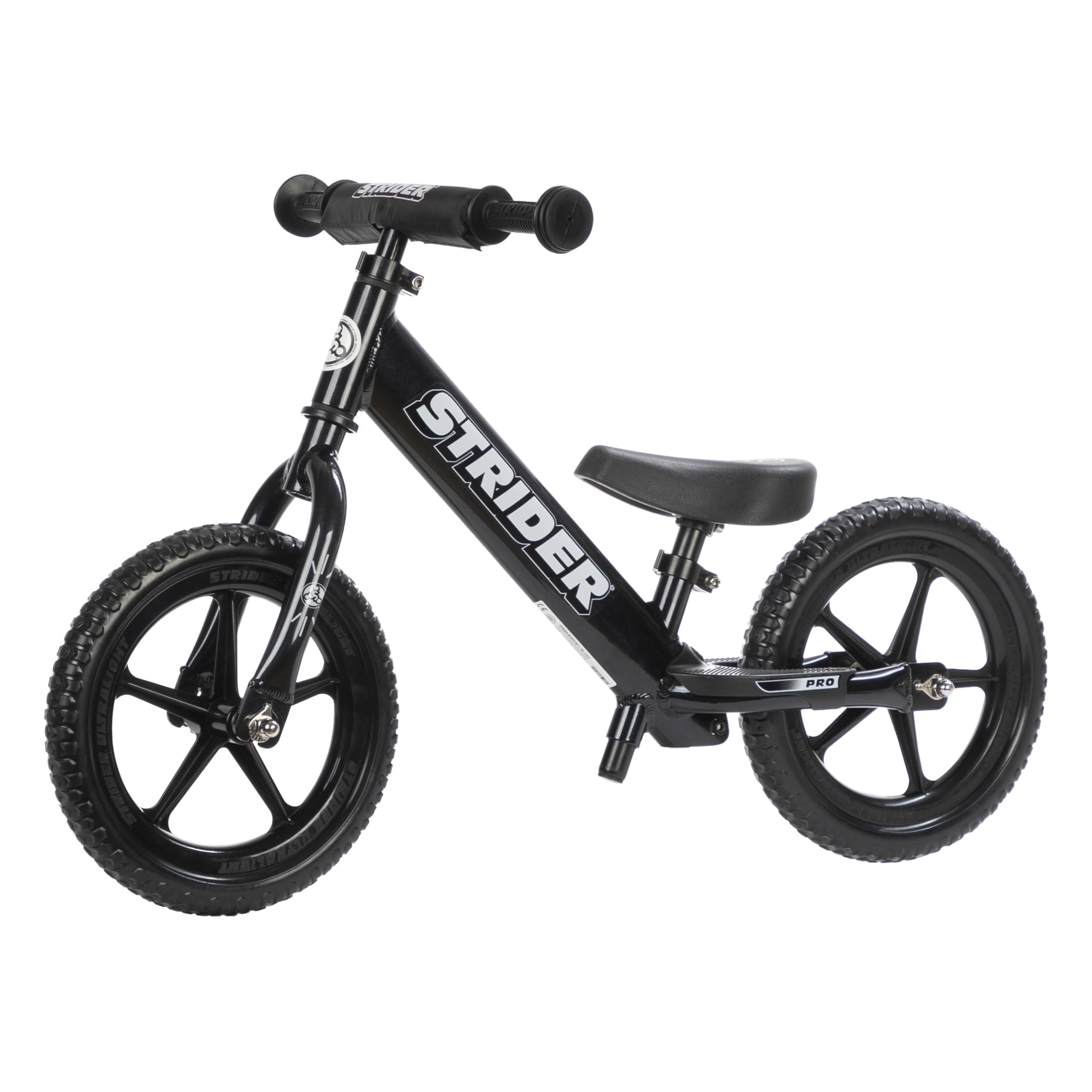
The ultralight 5.6-pound frame that makes balance feel almost easy.
This is the premium pick for a reason: at just 5.6 pounds, the aluminum frame is the lightest way to get a child on a quality balance bike. That featherlight weight is exactly what the #1 owner praise is about, with “lightweight” mentioned 30 times as the standout feature. The seat adjusts from 11 to 17 inches to fit kids aged 1-5 with a 12-to-20-inch inseam, and it holds riders up to 60 pounds.
The low weight isn’t a gimmick — it’s the thing that lets a 3-year-old actually steer, stop, and carry the bike themselves. Owners mention children mastering steering within 30 minutes of their first ride, and several mention their child could carry the bike with one hand. The Flat-Free foam rubber tires survive toddler chaos with zero maintenance, so there are no flats to fix, ever.
The real-world payoff is the transition to pedals, with owners describing kids hopping directly onto pedal bikes without training wheels after learning on this. It’s more expensive than most balance bikes, and a couple of owners note the seat post protrudes when fully lowered, which can trip young kids. But for a child’s first serious riding tool, the light weight and build quality are class-leading.
Why It’s Special
- Featherlight 5.6 lb aluminum frame — easiest for a toddler to handle
- Kids often master steering within 30 minutes
- Never-flat foam tires, zero maintenance
- Adjustable seat fits ages 1-5 years
The Price of Premium
- Higher price than most balance bikes
- Seat post can protrude when fully lowered, a trip hazard
- No braking system — it’s a pure balance trainer
The Premium Choice: For parents who want the lightest, easiest-handling bike possible and plan to skip training wheels entirely — worth the extra cost.
Think twice if: your budget is tight, since the lighter aluminum build commands a premium over steel-frame options.
Understanding the Specs
Inseam vs. Age Range
Age ranges are a rough guide, but your child’s inseam — the measurement from crotch to floor — is the real number that matters. The bike’s seat must lower enough that your child can straddle it with both feet flat on the ground. When a child can plant their feet, they feel safe and learn to balance faster. If the seat can’t go low enough, the bike is too big, no matter what the label says.
Foam vs. Air Tires
Foam rubber tires never go flat and need no maintenance at all, which makes them perfect for indoor use and smooth pavement. Inflatable air tires have more grip and roll more smoothly over gravel, grass, and dirt, but they need a pump and can puncture. Consider where your child will ride most — carpets and driveways favor foam, while parks and trails call for air tires.
FAQ
Is a balance bike really better than training wheels?
What inseam does my child need for a 12-inch balance bike?
At what age should my child start on a balance bike?
How do I know if a bike is too big for my child?
Are inflatable air tires worth the extra maintenance?
What is a coaster brake and why is it good for beginners?
How long will a toddler balance bike last my child?
What’s the difference between a 2-in-1 bike and buying two bikes?
My child is heavy for their age. Which bikes can handle it?
Is a heavier bike safer for learning to ride?
Final Thoughts: The Verdict
The bikes for kids learning to ride crown goes to the Strider Sport 2-in-1 because it’s the only one that carries a child from 6-month rocking all the way to 4-year balancing in a single, quality-built package. If you want a budget-friendly two-in-one that folds for travel, the KRIDDO is the smart pick. And for a 3-to-5-year-old riding outdoors, the bicystar 14-inch offers the best growth potential with its 110-pound capacity.
How We Picked
We do not accept paid placement. Every pick is matched to a real buyer and a real use-case; we do not hands-on test units.
Sources & Methodology
Specifications: manufacturer listings and product documentation. Review insights: verified customer reviews, as of August 2026. Pricing: not shown on this page (it changes often); check the current price via the retailer link.
As an Amazon Associate, Gadgets Feed earns from qualifying purchases. This does not affect which products we feature.