
Our readers keep the lights on and my morning glass full of iced black tea. As an Amazon Associate, I earn from qualifying purchases.
Specs are compiled from manufacturer listings and verified buyer reviews and can change over time — please confirm the key details on the product page before buying.
You want a bike that survives a real trail — roots, loose gravel, a muddy climb — without your hands going numb or the frame groaning under you. The quick answer: the Gravity FSX 1.0 is the safest bet here because it gives you full suspension front and rear on an aluminum frame at the entry end of the mid-range, and it carries the strongest owner score of the group at 4.0+ stars across 400+ ratings. Everything below explains who each of the other eight fits better.
I’m Min — the founder and writer behind Gadgets Feed. This guide is built by comparing the manufacturers’ published specifications and the patterns across verified customer reviews, so you get each pick’s real strengths and trade-offs instead of marketing spin.
The picks below are sorted by suspension, wheel size, and brake type, so you can match each bike to the terrain you actually ride. Read on for a breakdown of the bikes for trails that hold up when the surface turns loose, rocky, and steep.
Our Picks at a Glance


How To Choose The Best Bikes For Trails
Start with frame size and standover height, not the spec sheet. A trail bike you cannot stand over comfortably will fight you on every dismount. Match wheel size and frame size to your height first, then decide how much suspension you actually need.
Wheel size is your first real decision
Bigger wheels roll over rocks and roots with less fuss. A 29-inch wheel carries more momentum once it is moving, which helps on long flats and loose descents. A 27.5-inch wheel turns quicker in tight, twisty singletrack. A 26-inch wheel suits shorter riders and fat-tire builds. The Eurobike runs a 29-inch wheel on its 19-inch frame (or 27.5-inch wheels on the 18-inch frame), while the Huffy Hardtail sits on 24-inch wheels with a 16.75-inch frame — a noticeably smaller, more compact package.
Full suspension versus hardtail
A hardtail has a suspension fork up front and a rigid rear triangle. It climbs efficiently and costs less to maintain. A full-suspension bike adds a rear shock so the back wheel tracks bumps instead of bouncing you. The Gravity FSX 1.0 gives you both ends; the Eastern Alpaka gives you 130mm of front travel only. If your trails are rocky and long, rear travel saves your lower back. If they are smooth and climbing-heavy, a hardtail is the lighter, simpler machine.
Brakes and drivetrain: where cheap bikes quietly fail
Mechanical disc brakes squeeze a cable; hydraulic disc brakes push fluid and need less hand strength on long descents. Linear pull brakes are rim brakes and lose bite in mud. On gearing, a named brand like Shimano or SRAM is a stronger signal than a gear count alone — 21 speeds of generic shifting can still skip under load. The SAVADECK Titan uses a Shimano DEORE M6100 12-speed groupset, which is a genuinely different league of shifting hardware than a no-name 21-speed setup.
Quick Comparison
| Model | Best For | Wheel Size | Frame Material | Suspension | Amazon |
|---|---|---|---|---|---|
| Gravity FSX 1.0★ Best Overall | All-round trail first pick | — | Aluminum | Full (front and rear) | Amazon |
| Huffy 26″/27.5″ Mountain BikeBudget Climber | Tall riders on a tight budget | 26 or 27.5 inch | Aluminum (17-inch) | Front fork | Amazon |
| EUROBIKE 29″/27.5″ Mountain BikeBig-Wheel Value | Big-wheel rollover on a budget | 29 inch (27.5 on 18-inch frame) | Aluminum (19-inch) | Front suspension fork | Amazon |
| Mongoose Argus Trail/ST | Sand, snow and loose terrain | 26 inch | Alloy steel | Rigid fork | Amazon |
| Huffy Hardtail Mountain Trail | Younger and smaller riders | 24 inch | Aluminum (16.75-inch) | Front suspension fork | Amazon |
| Eastern Bikes Alpaka 29″ | Big front travel, fast downhills | 29 inch | 6061 Aluminum | 130mm front travel | Amazon |
| Mongoose Switchback Comp | Mixed-height households and commutes | 27.5 inch | Aluminum | Hardtail (front fork) | Amazon |
| SAVADECK Titan 612 | Technical trails and enduro days | 29 inch (2.4″ tires) | Carbon fiber | Full dual-link air shock | Amazon |
| Canyon Exceed CF 5 | Cross-country speed and climbing | 29 inch | Carbon fiber | 100mm front travel | Amazon |
In‑Depth Reviews
1. Gravity FSX 1.0 Dual Full Suspension Mountain Bike
Our pick — 4.0+★ from 400+ verified ratings; the strongest balance of quality and price.
Suspension at both ends of an aluminum frame — the setup that saves your back on rocky descents.
What makes this the pick for most trail riders is the word “dual” in the name. It gives you a shock at the rear as well as a suspension fork up front, so the back wheel follows the ground instead of bouncing you off the saddle. That is the single biggest comfort difference between this and every hardtail on the list. The frame is aluminum, which keeps the weight reasonable, and both wheels run double-wall rims (a two-layer rim wall that resists denting on square-edge hits) with quick releases at front and rear for easy removal.
Riders praise the build quality more than any other aspect, and assembly earns strong word of mouth too. The bike performs off-road, with buyers reporting smooth operation at 30mph. Braking is mechanical disc at both ends, and the front fork is rebound adjustable, so you can tune how fast it springs back after a hit. Shifting runs through Shimano trigger shifters on a front and rear derailleur setup, and a pump comes in the box.
Here is the catch, and it is a real one on this bike: it arrives needing assembly and tuning before your first ride. Shifting is generally smooth, but the adjustability side draws mixed feedback — some riders find dialing in the gears and suspension fussy. Durability is the one aspect that trends negative, so treat this as a bike for regular trail outings rather than repeated hard downhill abuse. A shop tune-up in the first week is money well spent on this frame.
Where it earns its keep
- Rear shock as well as a front fork — the only full-suspension entry in the mid-range group
- Rebound-adjustable front fork you can tune to your trail surface
- Aluminum frame with quick-release wheels front and rear for easy transport
- Shimano trigger shifting across a front and rear derailleur
What to plan around
- Requires assembly and tuning before riding — budget for a shop setup
- Gear and suspension adjustment is the most common owner frustration
- Durability sits below the bike’s other strengths, so it suits trail use over hard abuse
Ride this if: you want suspension at both ends and a proven trail frame without stepping into premium carbon territory.
Think twice if: you would rather not touch a wrench — this one demands a tuning session before your first trail day.
2. Huffy 26″/27.5″ Mountain Bikes for Men, Multiple Speeds, Fits Riders 60″+
A tall-rider frame with 21 gears, built for the rider who needs reach more than refinement.
If you are 60 inches or taller and want an aluminum trail bike at the entry end of the market, this is the shape you are looking for. The 17-inch lightweight aluminum frame gives you a manageable standover height while the 21-speed drivetrain does the hill work. Shifting runs through twist-grip shifters (you rotate the grip to change gear) on a rear derailleur. Knobby all-terrain tires are fitted for grip on rocky trails and gravel paths, and there is a kickstand for parking.
The honest read on this one is mixed value. Riders split hard: some call it fantastic for the money, others find it poor. Durability is the recurring concern, with reports of it failing within the first week of use. Assembly draws both cheer and frustration, and seat adjustment needs patience. Stopping comes from alloy linear pull brakes — rim brakes, which grip well in dry conditions but lose bite in wet mud. None of that makes it a bad bike; it makes it a bike to inspect carefully on arrival and to keep on groomed or dry trails rather than pushing it hard.
Where the money goes: a lightweight aluminum frame, a full 21-speed range, and an ergonomic saddle and grips — the essentials for a first trail bike, without extras.
The honest read: this is the one pick where you should check every bolt, brake pad, and gear index before your first ride, and treat wet, rocky descents with respect given the linear pull brakes.
Suits you if: you are a taller rider wanting aluminum and 21 gears at the budget end.
Look elsewhere if: you ride wet, rooty descents regularly or want hydraulic stopping power from day one.
3. EUROBIKE 29″/27.5″ Mountain Bike, Aluminum Frame, Front Suspension
The 29-inch wheel that carries momentum, on a 19-inch frame built for taller riders.
Wheel size is where this bike makes its case. A 29-inch wheel rolls over roots and embedded rocks with less of a jolt, and it holds speed better once you are moving. Compared with the 24-inch Huffy Hardtail, the Eurobike’s 29-inch wheel is 21% larger, which translates into a genuinely calmer roll over chunky ground. The 19-inch frame pairs with those big wheels; step down to the 18-inch frame and the bike switches to 27.5-inch wheels instead, which turns quicker in tight trees.
Riders praise the build quality most here, and the silvery finish draws its share of compliments. The suspension fork soaks up bumps, front and rear mechanical disc brakes give you wet-condition stopping, and the Shimano 3×7 shifting pairs Shimano shifters with a Shimano rear derailleur for smoother changes. Durable alloy cranks mean less maintenance. It also arrives 85% assembled — you fit the front fork, front wheel, seat and pedals, then air up the tires.
Gear range is the number that separates it from the Mongoose Argus, which runs 7 speeds against the Eurobike’s 21 — a 3.0x gap in available ratios. That gap matters on a sustained climb where you want a genuinely low gear to spin. The trade-off is that 85% assembly figure cuts both ways: it is faster to build than a boxed frame, but the front fork and wheel are still on you, and getting the fork seated correctly matters for safety.
The right call for: taller riders who want big-wheel rollover and a wide 21-speed range without premium pricing.
Second-guess it if: you ride tight, twisty singletrack where a 27.5-inch wheel would turn faster.
4. Mongoose Argus Trail or ST Fat Tire Mountain Bike, 26 Inch

Four-inch knobby tires that float over sand and snow where narrow wheels dig in.
Sand, deep snow, loose gravel — this is the bike for ground that swallows a normal tire. Those 4-inch-wide knobby fat tires give you float and grip, while drilled aluminum rims keep the wheels from feeling like boat anchors. The frame is durable steel in a hardtail shape with a rigid fork, so there is no suspension up front to soak bumps; the tires themselves are the cushion. It fits riders from 5’7″ to 6’1″ on 26-inch wheels, and a 7-speed Shimano drivetrain with twist shifters handles the gearing.
Owners talk most about how fun the fat tires are to ride, and the copper paint job draws its share of compliments. Assembly is straightforward, sturdiness gets consistent nods, and it reads as good value. Mechanical disc brakes give you stopping power that holds up in varied conditions, which matters on the loose stuff.
Two things to weigh. The 7-speed gear range is narrow next to the 21-speed Eurobike, so steep, sustained climbs will ask more of your legs. And gear indexing is the recurring gripe — several bikes arrive needing the rear derailleur dialed in before shifts land cleanly. Buy it for the fat-tire terrain, not for technical climbing.
The case for the Argus
- 4-inch knobby fat tires for sand, snow and loose gravel
- Drilled aluminum rims keep the fat wheels lighter than they look
- Fits riders from 5’7″ to 6’1″
- Mechanical disc brakes for control in varied conditions
Bear these in mind
- 7 speeds is a narrow range for steep climbing
- Gears frequently arrive needing adjustment
- Rigid fork gives you no suspension cushion beyond the tires
Point it at: beach, snow, and loose-gravel riding where float matters more than gearing.
Leave it for: buyers whose trails are steep singletrack climbs — 7 speeds will run out.
5. Huffy Hardtail Mountain Trail Bike, 24 Inch Wheels / 16.75 Inch Frame

Small frame, small wheels, and a ten-year warranty on the part that matters.
This is the smallest package on the list: a 16.75-inch aluminum frame on 24-inch wheels, aimed at riders 58 to 70 inches tall and ages 12 to 19. Against the Eurobike’s 19-inch frame, that 16.75-inch figure is 13% smaller, which is exactly what a shorter or younger rider needs to stand over the bike with confidence. The lightweight aluminum frame lets you pedal up to speed more easily than steel, and the suspension fork takes the edge off uneven ground.
Assembly is the bright spot by a wide margin — riders consistently call this an easy build, and there is a video tutorial in the related shorts section. An all-Shimano drivetrain delivers 21 speeds through twist shifting, oversized tires boost traction on dirt and gravel in wet or dry conditions, and a slight-rise handlebar keeps you upright to ease back and shoulder strain. The build also carries a limited 10-year warranty on the frame.
The honest limit is durability: build quality splits opinion and there are reports of breakage after first use. Given that, buy it understanding it is a first-trail bike for a lighter rider, not a machine for hard jumping or aggressive downhill. Also note the twist-grip shifters — younger riders usually take to them quickly, but they demand a firmer hand than trigger shifters.
Standout number: a 10-year limited warranty on the frame is a serious commitment for a bike at this level, and it signals where the engineering confidence sits.
Fair warning: keep it on groomed trails and light dirt. The durability side has real reports behind it, so match the bike to a lighter rider and easier terrain.
Buy it for: a younger or shorter rider who wants 24-inch wheels, 21 speeds, and a frame warranty.
Pass if: you are an adult rider heading straight for technical downhill terrain.
6. Eastern Bikes Alpaka 29″ Lightweight MTB, 9-Speed, Hydraulic Disc Brakes

130mm of front travel and hydraulic stopping — a trail bike that takes hits seriously.
Front suspension travel is the number that defines this bike: 130mm from the Eastern fork. That is a real chunk of bump absorption compared with the 100mm on the Canyon Exceed, and it means the Alpaka is built for rougher, faster descents rather than pure cross-country pace. The frame is hydroformed 6061 aluminum (a shaping process that adds stiffness where you need it without extra weight), and it comes in four frame sizes so you can match your height properly. Tires are 29″ x 2.2.
Stopping power steps up too — dual hydraulic disc brakes push fluid rather than pulling a cable, so long descents ask less of your hands. Sealed bearing hubs front and rear keep grit out of the rotating parts, which is the kind of detail that pays off after a muddy season. Gearing is 9 speeds through trigger shifters, and the stem, bars, and lock-on grips are Eastern’s own. The warranty covers 5 years on the frame and 12 months on all other parts.
Weigh the gear count before you buy. Nine speeds is a narrower range than the 21 on several cheaper bikes here, so if your trails include long, grinding climbs you will feel the gaps. And this listing has accumulated too few owner reviews to judge long-term reliability from the outside — the specs are strong, but the durability record is still being written.
Made for: riders on rougher descents who want 130mm of front travel and hydraulic braking.
Not the one if: you need a wide climbing gear range or want a long owner track record to lean on.
7. Mongoose Switchback Comp Expert Sport Trail Mountain Bike, 27.5-Inch

A 27.5-inch hardtail that covers riders from 5’3″ all the way to 6’2″.
Fit range is the story here. Mongoose builds this around an aluminum hardtail frame with 27.5-inch wheels for riders from 5’3″ to 6’2″ — the widest spread on the list, which makes it an easy pick for a household where two very different people share one bike. The 21-speed drivetrain uses trigger shifters for smooth changes, and mechanical disc brakes deliver all-weather stopping. Double-wall alloy rims add durability without heft, and the 2.1-inch wide tires balance grip with rolling speed.
Riders note build quality most and praise the appearance, and the comfort saddle holds up on longer rides. The 27.5-inch wheel is the compromise position between the quick-turning 26 and the momentum-carrying 29, which suits mixed trail surfaces nicely.
Assembly is the split point. Some find it simple, but pedals not screwing on cleanly is a recurring report, so check the threads before you force anything. Durability has its own concern — broken crank arms get flagged — and wheel quality draws mixed feedback. Treat this as a solid trail hardtail for moderate riding, and give the cranks and pedals a once-over after the first few outings.
Why it earns a spot
- Fits riders from 5’3″ to 6’2″ — the broadest range in this group
- 21-speed trigger shifting with mechanical disc brakes
- Double-wall alloy rims and 2.1-inch tires balance grip and speed
- Comfort saddle for longer trail days
The honest catch
- Pedal threading and assembly frustrate part of the buyer pool
- Broken crank arms and wheel quality are recurring concerns
- Wide fit range may leave some riders between sizes
Worth considering for: a shared bike that must fit riders from 5’3″ to 6’2″.
Look past it if: you want a bike that arrives assembled without question marks on the cranks.
8. SAVADECK Titan 612 Carbon Fiber Soft Tail Mountain Bike
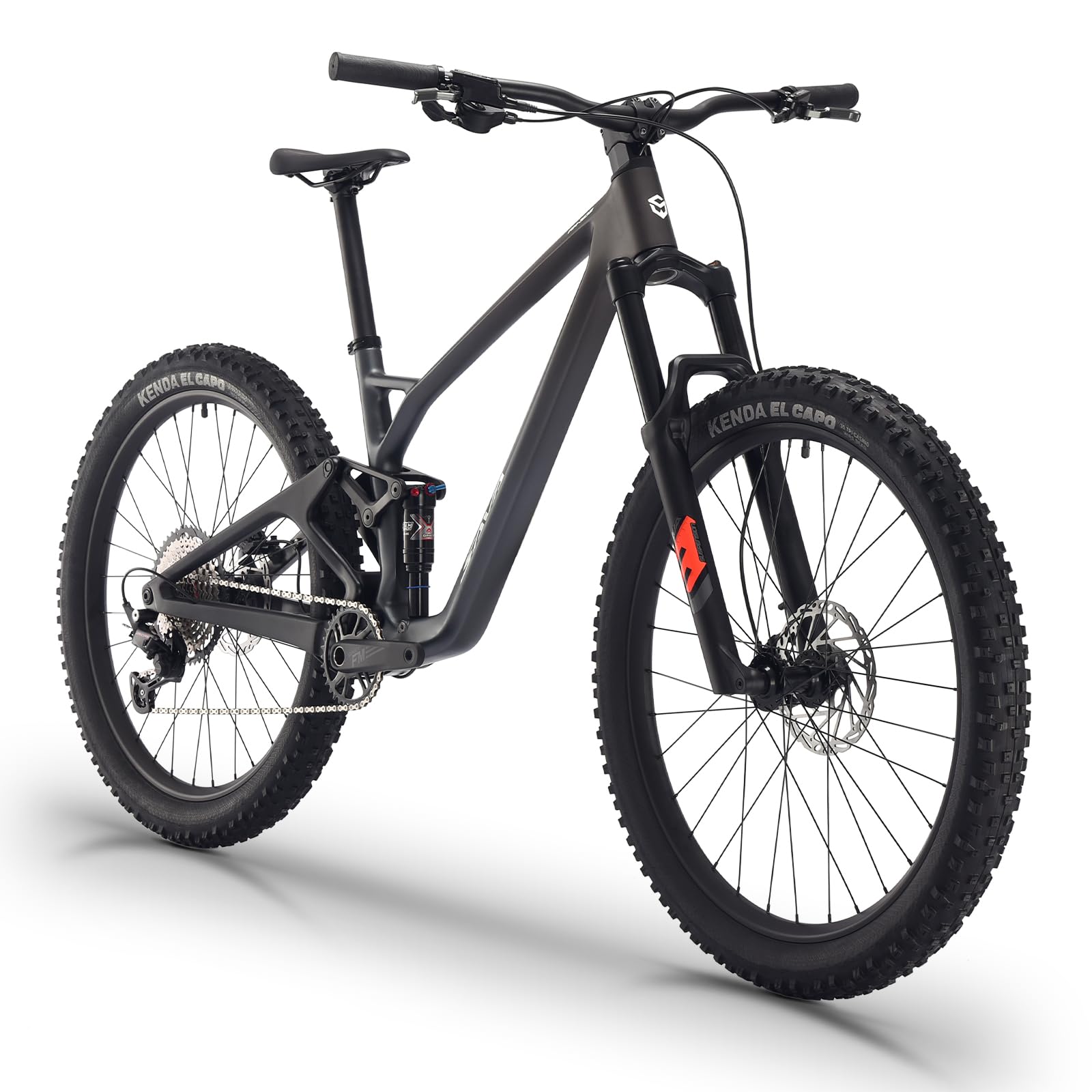
A carbon full-suspension frame with a 12-speed DEORE groupset — the technical trail build.
Carbon fiber changes the whole equation. This frame is built for technical trails and enduro riding, with a reinforced rear triangle and a dual-link suspension system. Internal cable routing keeps cables out of mud and debris, and reduces drag. Compared with the hardtail Mongoose Switchback, the difference is qualitative: this one has a DNM air shock at the rear with three-stage lockout for climbing efficiency, plus rebound adjustment so you can tune the ride to the trail. Up front, the shoulder-controlled hydraulic thru-axle keeps the wheel aligned and rigid.
Shifting is on another level here. The Shimano DEORE M6100 12-speed groupset is a name-brand drivetrain tuned for crisp, reliable changes on demanding terrain, with a wide gear range for steep singletrack and flat acceleration. Braking uses four-piston hydraulic disc brakes — dual opposed pistons and oversized pads that improve heat dissipation and reduce brake fade on long descents. Tires are 2.4-inch Continental all-terrain with multidirectional tread, and the frame accepts 2.6-inch tires if you want more stability later. It is the only full-suspension carbon build on the list, and it holds the second-highest rating of the group.
You are paying for the DEORE 12-speed groupset and the tuneable DNM air shock, and there is a learning curve: the three-stage lockout and rebound adjustment take a few rides to dial in, and a poorly set air shock will feel worse than a simple coil. A tool kit comes in the box, but expect to spend time on setup. That is the nature of a bike in this class.
Choose this: for technical trail and enduro days where a carbon full-suspension frame and a 12-speed DEORE drivetrain earn their place.
Skip the upgrade if: you will not invest the time to tune an air shock and lockout properly.
9. Canyon Exceed CF 5
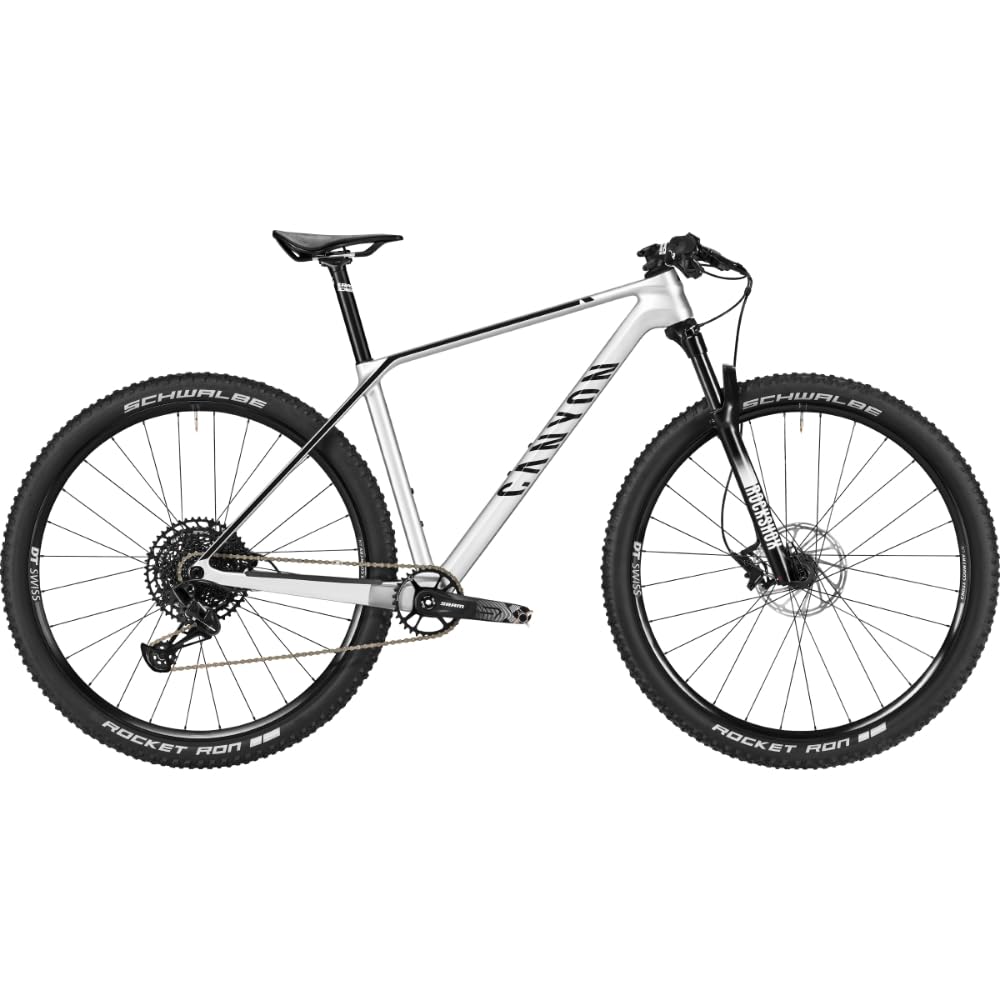
A carbon hardtail built purely for cross-country speed — short travel, stiff frame, fast everywhere.
This is a race bike, and it says so. The Exceed CF 5 pairs a stiff, strong, ultra-light carbon hardtail frame with 100mm of front travel from a RockShox Recon RL Remote fork. That short travel keeps the front end low and the steering sharp, which is what cross-country riding wants: explosive acceleration and precise handling over technical ground. It runs a SRAM SX Eagle drivetrain for wide climbing range and fast descents, with SRAM Level T brakes. Tubeless-ready wheels and a remote fork lockout let you switch the front suspension stiff for climbing without reaching down.
Where it differs from the SAVADECK Titan is character, not just build. The Titan gives you a rear air shock for enduro-style comfort; the Exceed gives you a rigid rear triangle and 100mm up front, so it climbs with less energy loss and rewards fitness over forgiveness. That makes it the fastest-feeling machine on this list for a rider who likes to push.
Two things to know before you commit. And there are too few owner reviews here to say anything reliable about long-term durability — the spec sheet is race-grade, but the real-world record is still thin.
The race case: carbon hardtail stiffness, 100mm RockShox fork, remote lockout, tubeless-ready wheels, and SRAM SX Eagle gearing — a cross-country tool without wasted travel.
The trade-off: a hardtail rear and short front travel reward smooth technique; they do not cushion rough descents the way the Titan’s rear shock does.
Reach for it if: you want cross-country speed, a remote lockout, and a carbon hardtail built for climbing.
Not for you if: your trails are rocky and steep, or you want proven long-term durability evidence before buying.
Understanding the Specs
Wheel Size And Why It Matters
Wheel size changes how a bike handles bumps and corners. A 29-inch wheel rolls over rocks with less jolt and holds speed once moving. A 27.5-inch wheel turns sooner in tight trees. A 24-inch wheel suits shorter riders and smaller frames. Match the wheel to your height and your trail type before anything else — no drivetrain upgrade fixes the wrong wheel size for your body.
Suspension Travel Explained
Travel is how far the fork can compress, measured in millimeters. 100mm is cross-country territory: sharp, efficient, less forgiving. 130mm gives you meaningful bump absorption on rougher descents. A rear shock — full suspension — saves your lower back on rocky ground but adds weight and maintenance. A hardtail gives you a rigid rear for efficient climbing.
Brake Type And Control
Linear pull brakes are rim brakes: light and simple, but they lose bite in mud. Mechanical disc brakes pull a cable to squeeze a rotor and work well in wet conditions. Hydraulic disc brakes push fluid and need less hand strength on long descents — the four-piston setup on the SAVADECK Titan adds heat dissipation to reduce brake fade.
Gear Count Versus Drivetrain Quality
More gears do not automatically mean better shifting. A named groupset like Shimano DEORE or SRAM SX Eagle signals quality hardware, while 21 speeds of generic shifting can still skip under load. Consider gear range too — 7 speeds suits flat, loose terrain; 21 or 12 speeds climb steeper ground more comfortably.
FAQ
What wheel size should I pick for trail riding?
Is full suspension better than a hardtail for trails?
How much front suspension travel do I need?
Are hydraulic disc brakes better than mechanical for trail riding?
Do I need 21 gears or is 7 or 9 speeds enough?
How much assembly does a trail bike need from the start?
What is a fat tire bike actually good for?
Is carbon fiber worth it over aluminum for a trail bike?
How do I know a trail bike will fit me?
Should I get a kickstand or keep it stripped down?
Final Thoughts: The Verdict
For most trail riders, the winner is the Gravity FSX 1.0 because it gives you suspension at both ends on an aluminum frame, with the strongest owner score in this group. If you want big-wheel rollover and a wide gear range without stepping up in price, the EUROBIKE 29″ Mountain Bike is the value pick. And if you ride technical, rocky descents and want a carbon full-suspension build, the SAVADECK Titan 612 earns the premium call.
How We Picked
We do not accept paid placement. Every pick is matched to a real buyer and a real use-case; we do not hands-on test units.
Sources & Methodology
Specifications: manufacturer listings and product documentation. Review insights: verified customer reviews, as of November 2026. Pricing: not shown on this page (it changes often); check the current price via the retailer link.
As an Amazon Associate, Gadgets Feed earns from qualifying purchases. This does not affect which products we feature.