
Windburn, road grit, and shifting glare—every ride turns your eyes into the first line of defense against the elements. The difference between a pleasant century ride and a miserable squint-filled slog often comes down to one piece of gear: the lens sitting between your pupils and the pavement.
I’m Min — the co-founder and writer behind Gadgets Feed. I’ve spent countless hours cross-referencing lens materials, frame geometries, and rider reviews to isolate exactly which optical specs separate genuinely protective cycling eyewear from mere fashion accessories.
After analyzing dozens of models by lens technology, fitment features, and real-world feedback, I’ve assembled this guide to the best biking glasses for every type of rider and budget.
How To Choose The Best Biking Glasses
Choosing cycling eyewear is a trade-off between optical clarity, impact protection, and comfort over hours of sweaty effort. The wrong pair fogs, slides off, or leaves your eyes exposed to debris. Here are the three specs that matter most.
Lens Technology: UV400, Polarization, and Photochromic
UV400 protection blocks 99 to 100 percent of UVA and UVB rays—this is the baseline, not a bonus. Polarized lenses cut glare from wet pavement and car windshields, but can make LCD cycling computers unreadable. Photochromic lenses automatically adjust tint based on ambient light, which is ideal for riders who start before dawn and finish in full sun. Pick your priority.
Frame Material and Ventilation
TR90 nylon frames offer the best strength-to-weight ratio and remain flexible in cold weather. Polycarbonate frames are cheaper but more rigid. Look for ventilated lenses or frame channels—unvented glasses fog instantly when you stop pedaling, especially on humid climbs.
Fit, Retention, and Helmet Compatibility
Temple arms must clear helmet straps without pressure points. Adjustable rubber nose pads and hydrophilic temple grips prevent slippage when sweat pools. Wraparound coverage blocks peripheral wind and road spray but can pinch narrow faces—check lens width measurements or opt for models with two frame sizes.
Quick Comparison
On smaller screens, swipe sideways to see the full table.
| Model | Category | Best For | Key Spec | Amazon |
|---|---|---|---|---|
| Tifosi Sanctum | Premium | All-day comfort & anti-fog | Hydrophilic rubber grip / 100% UV | Amazon |
| Tifosi Vogel SL | Premium | Lightweight frameless design | 22g weight / glare-tackle tint | Amazon |
| Oakley Sutro Lite | Premium | Wide field of view & style | Prizm polarized lens / OO9463 | Amazon |
| TriEye Sports | Premium | Integrated rearview mirror | Dual-sided mirror / UV400 | Amazon |
| KAPVOE Photochromic K9022 | Mid-Range | Changing light conditions | Photochromic adaptive / 137mm lens | Amazon |
| KAPVOE Polarized K76 | Mid-Range | Multi-lens versatility | 3 included lenses / adjustable nose | Amazon |
| X-TIGER 5-Lens | Budget-Friendly | Maximum lens options | 5 interchangeable / TR90 frame | Amazon |
In‑Depth Reviews
1. Tifosi Sanctum Sunglasses
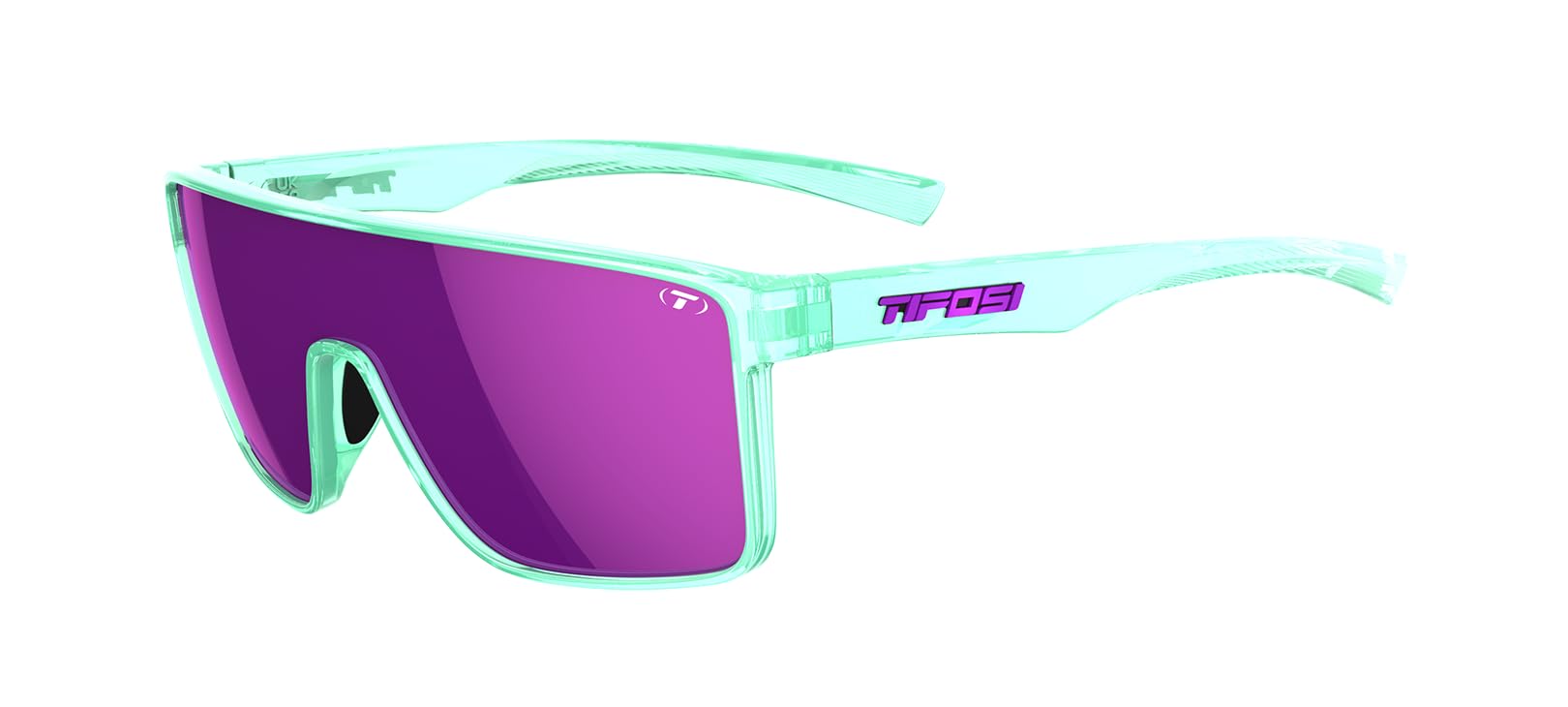
The Tifosi Sanctum hits the sweet spot where premium lens clarity meets real-world endurance features. Its hydrophilic rubber on the nose pads and temple tips actually gets grippier as you sweat—a detail that makes a tangible difference on hot 100-plus-degree climbs when cheaper frames start sliding. The single-lens design provides a wide uninterrupted field of view, and the anti-fog ventilation channels keep the optics clear during sudden stops or humid trail sections.
Reviewers consistently call out the 100 percent UV protection and effective polarized glare reduction as reasons these have become their go-to glasses for both cycling and pickleball. The included hard case and microfiber cloth are standard inclusions, but the build quality—especially the durable polycarbonate lens that survived a direct puppy attack with only shallow punctures—elevates this pair above other mid-premium options.
One caveat emerges from riders with smaller helmets: the frame’s flat top profile can channel forehead sweat downward, and the upper frame may contact certain aero helmet visors. If you ride a traditional road helmet with ample forehead clearance, this won’t be an issue, but it’s worth trying them with your specific lid before committing.
Why it’s great
- Hydrophilic grip tightens with sweat—no slippage
- Effective anti-fog ventilation for humid rides
- Durable construction that withstands real abuse
Good to know
- Frame design can trap sweat on the forehead
- Top frame may not clear some aero helmet visors
2. Tifosi Vogel SL Sport Sunglasses

Weighing just 22 grams, the Vogel SL is practically invisible on your face—a frameless design that eliminates the bulk most cycling glasses add around the periphery. The large single lens wraps far enough to block wind, road spray, and UV rays without the visual obstruction of a top frame bar. Runners and cyclists alike report these stay put even when sweat-soaked, thanks to the integrated hydrophilic nose piece.
The lavender tint option does dual duty: it enhances contrast on overcast days while still filtering enough light for bright sun. Multiple reviewers with six-plus months of heavy use note the mirror coating shows edge wear after roughly 500 hours, which is a fair trade for the weight savings and the price. The lenses also resist fogging well during high-output intervals.
Where these fall short for some is scratch resistance. The polycarbonate lens is optically excellent out of the box, but gravel-road grit and regular cleaning eventually leave fine marks.
Why it’s great
- Ultra-light frameless build at 22 grams
- Secure hydrophilic grip even when soaked in sweat
- Large wraparound lens blocks wind and debris
Good to know
- Mirror coating can wear at edges over time
- More prone to scratches than thicker lenses
3. Oakley Sutro Lite OO9463
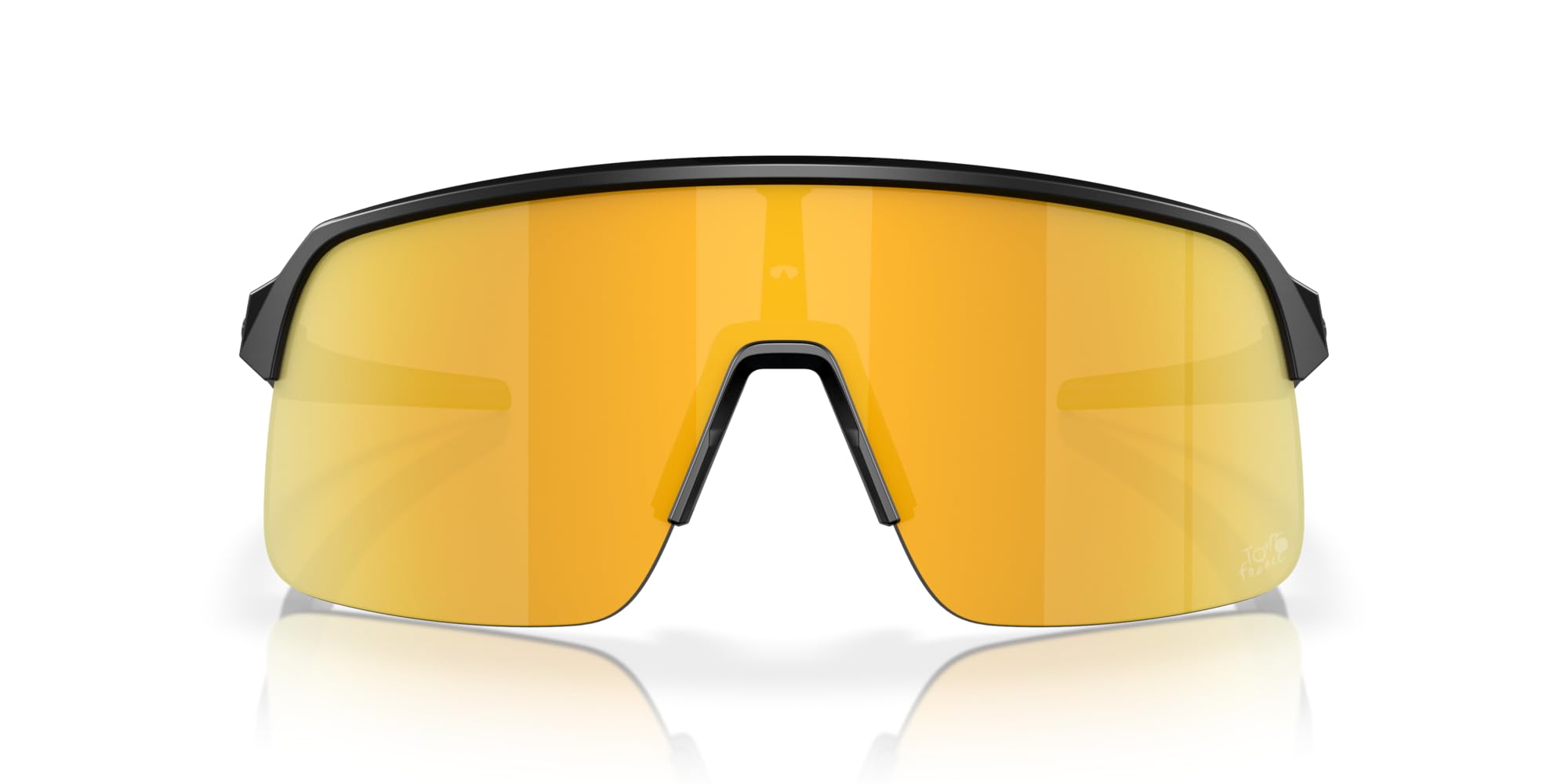
Oakley’s Sutro Lite occupies the premium tier for a reason: the Prizm polarized lens technology enhances color contrast specifically for road and trail environments while eliminating glare without the screen-darkening artifact that plagues cheaper polarized options. Riders report being able to read cycling computers and phones through the lenses—a quality-of-life improvement you don’t appreciate until you’ve suffered through the black-out effect of budget polarizers.
The semi-rimless design opens up the upper visual field significantly compared to full-frame siblings, making it easier to spot potholes, gravel patches, and traffic signals without tilting your head. The rectangular shape sits well under most helmet brims and even clears casual hats better than bulkier wraparound models. Three actual buyers confirmed the distortion-free polarization across multiple beach volleyball sessions and road rides.
The trade-off is straightforward: optical refinement at a higher investment. The lens coating is more durable than the Tifosi Vogel SL’s, but the frame uses Oakley’s proprietary O-Matter injection-molded nylon, which is tough yet retains flexibility in cold weather. If you log high weekly mileage and consider eyewear an extension of your performance kit, the Sutro Lite justifies its position.
Why it’s great
- Prizm polarization preserves screen readability
- Semi-rimless design offers an expansive upper field of view
- Durable O-Matter frame flexes without snapping
Good to know
- Premium pricing compared to mid-range options
- Lens shape may feel large on narrower faces
4. TriEye Sports Sunglasses with Rearview Mirror
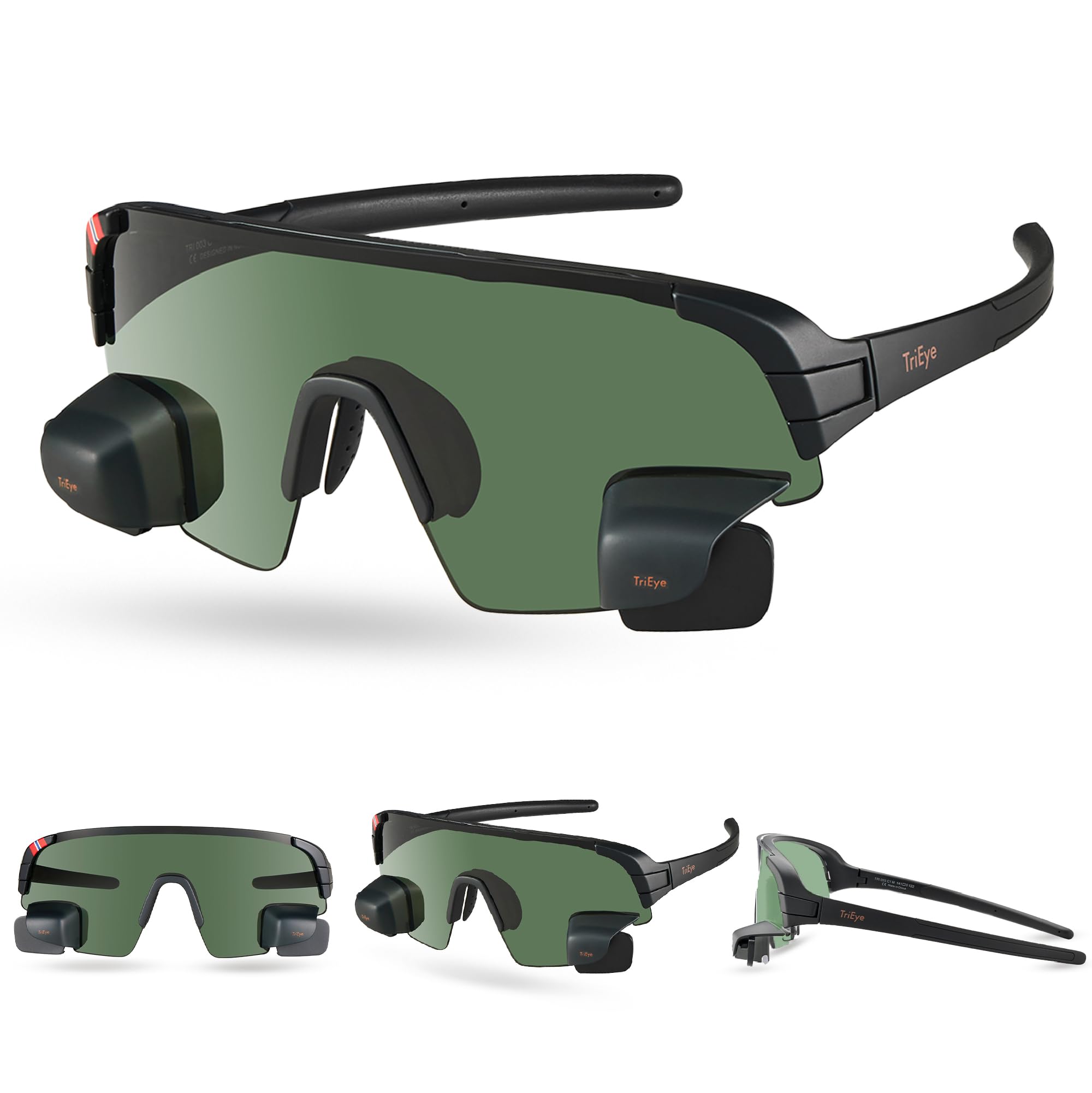
This is the only pair on the list that solves a specific safety problem: blind-spot awareness without neck craning. The TriEye integrates a convex rearview mirror into the temple arm, allowing you to check approaching traffic, a child trailer, or an e-bike overtaking from behind with just a slight head turn. The dual-sided mirror version gives coverage on both left and right, which is a genuine game-changer for cyclists towing kids or navigating multi-use paths with bidirectional threats.
The polarized lenses themselves provide proper UV400 protection, and the wraparound frame keeps wind and debris out of your periphery. Riders transitioning from helmet-mounted mirrors will appreciate the elimination of vibration-induced blur—the sunglass-integrated mirror stays steady because it moves with your head, not independently. Out of the box, the mirror requires a brief calibration session using a wall or pole to set optimal rear visibility.
There is a learning curve. The mirror sits in your natural peripheral zone, and your brain needs a few rides to stop trying to focus through it as if it were part of the road view. Once adapted, however, the safety gain is substantial. The frame itself is on the larger side, which works well with most road helmets but may feel bulky under a tight aero lid.
Why it’s great
- Integrated rearview eliminates helmet-mirror vibration
- Dual-sided version offers full rear awareness
- UV400 polarized lenses protect from glare and UV
Good to know
- Requires a brief adaptation period
- Larger frame may not fit under compact aero helmets
5. KAPVOE Photochromic Cycling Glasses K9022
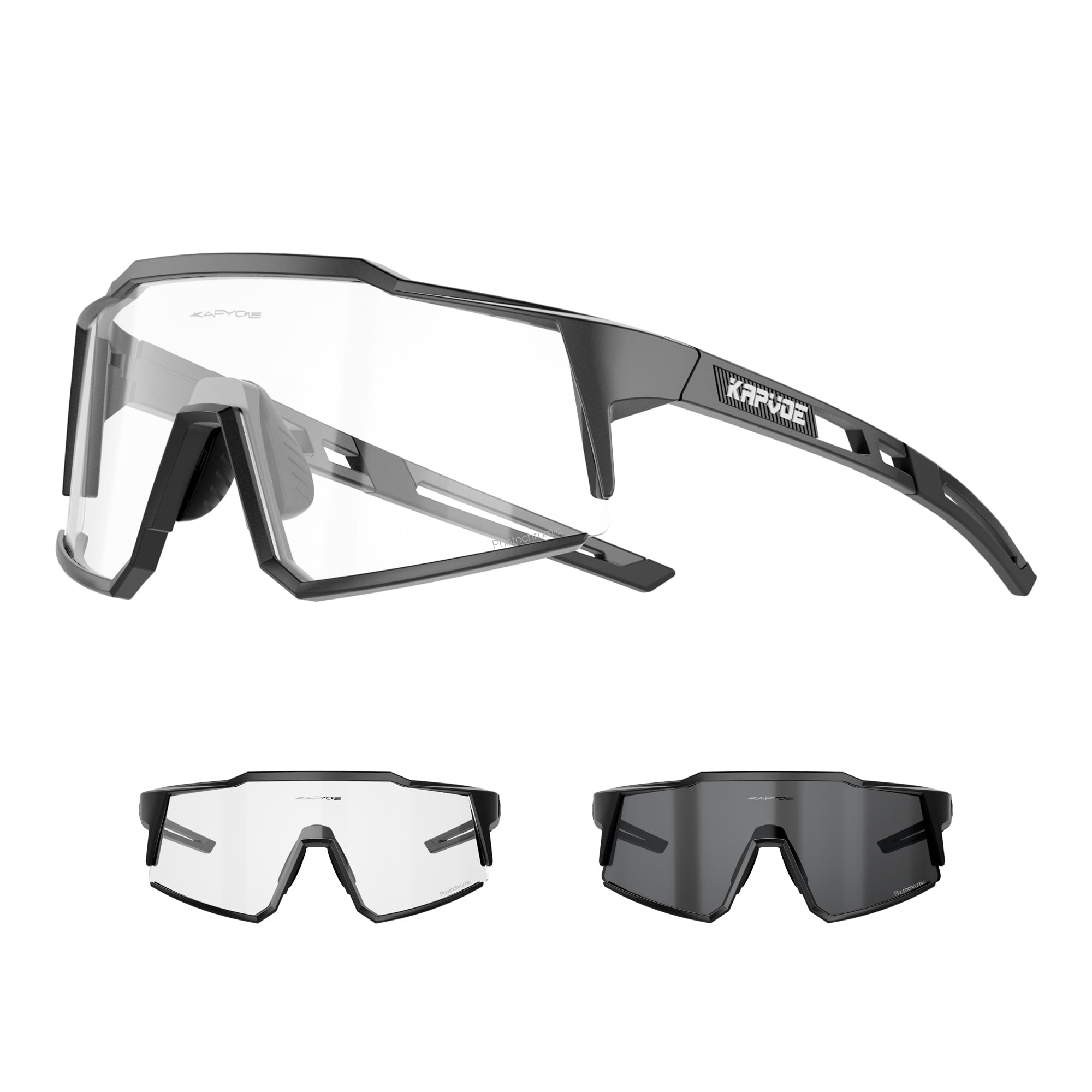
The KAPVOE K9022 brings photochromic adaptability to a price point where most competitors only offer fixed-tint or interchangeable lenses. The transition from clear to dark takes a couple of minutes and doesn’t get as dark as dedicated sunglasses in full midday sun, but it’s perfectly matched for the dawn-to-dusk rider who shifts between shaded trails and open pavement. Even more importantly, the lens stays optically clear at night—eliminating the need to swap to a second pair for evening rides.
This model’s 137-millimeter lens width makes it friendlier to smaller faces and women cyclists than many wraparounds, which tend to be scaled for larger male heads. The frame vents well during climbs, and reviewers with Giro helmets report zero fogging issues. The bundle includes a hard case, two spare nose pads, a lanyard, a soft pouch, and even insert RX frames for prescription wearers—a completeness you rarely see at this tier.
The main limitation is the photochromic speed: transitions from clear to dark take a few seconds when moving from shade to direct sun, which means you’ll experience a brief overexposure before the lens catches up. Also, the frame finish is glossy plastic that can feel less premium than the matte TR90 of pricier options, but the functionality per dollar is unmatched.
Why it’s great
- Photochromic lens works from dawn to dusk
- Fits smaller faces with a 137mm lens width
- Includes RX insert frames and full accessory kit
Good to know
- Transition speed is slower than premium photochromic
- Glossy frame finish feels less premium than matte alternatives
6. KAPVOE Polarized Cycling Glasses K76

The K76 takes a straightforward lens-swap approach: you get a polarized lens for glare reduction, a clear lens for low-light visibility, and a light-blue tint option for overcast conditions. The adjustable nose piece is rubberized and stays planted even when your face is slick with sweat, and the retro chunky frame style appeals to riders who find modern wraparounds too aggressive. Vents along the top edge keep air moving, and reviewers confirm zero fogging even during hard mountain bike efforts.
Durability is a mixed bag. The frame itself is TR90 nylon—lightweight and flexible—but the included lenses scratch more easily than the thicker TAC lenses found on the X-TIGER. The lens swap process is functional but requires firm pressure, and some users report the edges chipping after repeated changes. For riders who settle on one lens and leave it, however, this is a non-issue.
The standout feature here is the semi-adaptable fit: the K76 accommodates a cycling mirror accessory and works well under both road and mountain helmets. If you want a versatile three-lens system with solid polarization and don’t plan to swap lenses every ride, the K76 delivers better frame quality than its price suggests.
Why it’s great
- Three-lens system covers sun, low-light, and overcast
- Adjustable rubber nose piece stays secure when sweating
- Well-ventilated for no-fog climbing
Good to know
- Lenses scratch easier than TAC alternatives
- Swapping lenses requires careful pressure to avoid chipping
7. X-TIGER Polarized Cycling Glasses with 5 Interchangeable Lenses

Five lenses for the price of a single fast-food meal—the X-TIGER set is the most versatile value proposition on this list. The kit includes a polarized black lens for bright sun, a REVO mirror lens for snow and beach conditions, a yellow lens for low-light contrast, a clear lens for night riding, and an HD clear backup. Only the black lens is polarized, but the REVO coating does an excellent job maintaining color fidelity while cutting glare on reflective surfaces.
The TR90 frame is genuinely impact-resistant and flexible, bending without snapping when packed in a jersey pocket. The curved design accommodates most face shapes well, and the removable side shields add an extra layer of wind and debris protection that gravel riders and downhill enthusiasts will appreciate. The package includes a hard case, a strap, and multiple storage bags.
The trade-offs involve the lens-swap mechanism: changing lenses requires aligning tiny tabs, and the myopia insert frame that some reviewers mention tends to rattle loose after repeated swaps. Lens smudging is also harder to clean than on coated premium lenses—anticipate needing the included cloth frequently. For the rider who wants one pair that handles everything from midday sun to post-sunset commutes, the X-TIGER remains the strongest budget-friendly option.
Why it’s great
- Five lenses cover every lighting condition
- TR90 frame is durable and flex-resistant
- Removable side shields add debris protection
Good to know
- Only the black lens is polarized
- Lens swap mechanism is fiddly and inserts may rattle
FAQ
Can I use photochromic biking glasses for driving?
How often should I replace the lenses on my cycling glasses?
What lens tint is best for mountain biking in wooded trails?
Will biking glasses fit over my prescription glasses?
Final Thoughts: The Verdict
For most users, the best biking glasses winner is the Tifosi Sanctum because it combines premium hydrophilic grip, reliable anti-fog ventilation, and durable polarized optics at a price that doesn’t require a second mortgage. If you want seamless all-light adaptability, grab the KAPVOE Photochromic K9022. And for unmatched lens flexibility on a budget, nothing beats the X-TIGER 5-Lens set.