
Our readers keep the lights on and my morning glass full of iced black tea. As an Amazon Associate, I earn from qualifying purchases.
Specs are compiled from manufacturer listings and verified buyer reviews and can change over time — please confirm the key details on the product page before buying.
On a rocking deck, the wrong pair of binoculars turns a distant buoy into a blurry smudge. The right pair — waterproof, sealed against salt spray, and with the magnification that stays steady in chop — lets you read channel markers, spot birds, and track other boats without fighting the shake. This guide breaks down nine marine binoculars that are genuinely built for the water.
I’m Min — the founder and writer behind Gadgets Feed. This guide is built by comparing the manufacturers’ published specifications and the patterns across verified customer reviews, so you get each pick’s real strengths and trade-offs instead of marketing spin.
You will see which magnification holds steadiest on a moving boat, how eye relief matters for glasses wearers, and why a floating strap can save your investment. The best binoculars for boating are the ones built to survive salt, spray, and the occasional dunking.
Our Picks at a Glance


How To Choose The Best Binoculars For Boating
Buying binoculars for a boat is different from buying them for a hike. On the water you deal with rocking motion, salt spray, glare off the waves, and the real risk of dropping them overboard. Every choice you make should start with those four problems.
Magnification: why 7x usually wins on deck
Higher magnification sounds better, but a 10x pair magnifies every wobble of the boat along with the scenery. A 7x pair (7 times closer) gives you a wider, steadier picture you can actually hold on. If you mostly stand on a stable dock or pier, 10x is workable. If you are on open water, 7x is the safer bet.
Exit pupil and low-light viewing
The exit pupil is the circle of light that reaches your eye — the bigger it is, the more light you gather. A 7×50 binocular (7x magnification, 50 mm front lenses) creates a large exit pupil that stays bright at dawn and dusk. That matters when you are scanning for channel markers in fading light or spotting running lights at night.
Waterproofing and flotation
Look for nitrogen-purged, O-ring-sealed bodies that keep moisture out and stop internal fogging. IPX7 means the binocular can survive accidental submersion — some models even float, which is a lifeline if you fumble one over the rail. A floating foam strap is a smart backup either way.
Quick Comparison
| Model | Best For | Magnification | Field of View | Eye Relief | Amazon |
|---|---|---|---|---|---|
| Steiner Marine 7×50★ Best Overall | Overall marine optics | 7x | 356 ft at 1000 yd | 20 mm | Amazon |
| Bushnell H2O 10×42Best Value | Compact all-rounder | 10x | 5.84 degrees | 15.6 mm | Amazon |
| Barska Floatmaster 7×50Floating Pick | Floating budget pick | 7x | 367 ft | 23 mm | Amazon |
| AOMEKIE 10×50 | Compass + rangefinder combo | 10x | 342 ft | 23 mm | Amazon |
| Hooway 7×50 (Army Yellow) | Navigational features | 7x | 396 ft | 22 mm | Amazon |
| Hooway 7×50 (Blue) | Same optics, different color | 7x | 396 ft | 22 mm | Amazon |
| Bushnell Marine 7×50 | Coast Guard-spec marine use | 7x | 127 ft | 18 mm | Amazon |
| Nikon OceanPro 7×50 | Low-light clarity | 7x | 378 ft | 22.7 mm | Amazon |
| Fujifilm Fujinon Mariner 7×50 | Long-range field of view | 7x | 7 degrees | 18 mm | Amazon |
In‑Depth Reviews
1. Steiner Marine 7×50 Binoculars
Our pick — over 4.5★ from 500+ verified ratings; the strongest balance of quality and price.
The 7.14 mm exit pupil that outshines the water at first light.
Steiner’s Marine 7×50 is the pick that keeps delivering when the light drops and the spray picks up. The 7x magnification and 50 mm objective lens combine to produce a 7.14 millimeter exit pupil — the largest light-gathering circle in this lineup. For scale, the Bushnell H2O manages just 4.2 millimeters. That gap is the reason the Steiner keeps pushing detail in near-darkness when other glasses quit.
The Sports Auto-Focus system goes from 20 yards to infinity without you touching a focus wheel. Once you set it, the view stays sharp whether you’re tracking a channel marker 500 yards out or scanning birds closer in. The floating prism system uses flexible silicone mounts to soak up shock and hard knocks. Rubber armor with ergonomic ridges gives you grip even with wet hands.
What wins people over is that low-light performance — the 7.14 mm exit pupil and 20 mm eye relief make this pair a favorite with eyeglass wearers. The field of view runs 356 feet at 1000 yards, so you get a wide, steady picture without edge distortion. The trade-off: at roughly neck-slingable weight this pair can feel heavy after hours on watch, and the included case and strap are worth replacing early.
What works on the water
- 7.14 mm exit pupil delivers the brightest low-light image in this lineup
- Sports Auto-Focus stays sharp from 20 yards to infinity — no wheel to readjust
- 20 mm eye relief comfortable for glasses wearers
- Floating prism system absorbs shock from drops and knocks
Where it asks for patience
- Felt weight builds up across a long watch
- Bundled carry case and strap are the first upgrades most buyers make
- Auto-focus means you give up fine manual control
Reach for this if: you want the brightest, steadiest low-light view and don’t mind a little weight on your neck.
Look elsewhere if: you need featherweight carry for all-day hiking or you prefer a manual focus wheel you control.
2. Bushnell H2O Binoculars
Proof that a compact 10×42 can punch well past its size class.
This is the pair to grab when you want a compact binocular that still handles a wet deck and a dunking. The Bushnell H2O is rated IPX7 — meaning it can survive being dropped in standing water and submerged for up to 30 minutes. Nitrogen purging keeps the inside fog-free when temperatures swing between warm cabin air and cold spray.
Bushnell’s 10×42 configuration brings the subject noticeably closer than the Steiner’s 7x. That magnification advantage is real: the H2O’s 10x pulls in 3 more power than the 7x Steiner. But that extra zoom magnifies every wobble of the boat, so it rewards a steady hand or braced position. BAK-4 prisms and fully multi-coated optics produce solid contrast for the tier.
Owners consistently praise the crisp view and solid feel, which put it at the front of the compact marine binocular class. A fully sealed O-ring system means you are not babying these. The compromise: at 4.2 mm the exit pupil is noticeably smaller than the Steiner’s 7.14 mm, so the H2O runs out of brightness before the big 50 mm glass does at dusk.
Compact-class champion: at 10x with a 42 mm objective, the H2O trades raw low-light punch for a lighter frame and more magnification than most 7x marine options.
First upgrade to plan for: the diopter adjustment runs on the stiff side and the included case is on the slim side, so buyers who plan to be rough with it will want a padded case sooner rather than later.
The right call when: you want serious magnification in a compact, genuinely submersible frame.
Think twice if: your viewing happens mostly at dusk, where a larger 50 mm objective still wins on brightness.
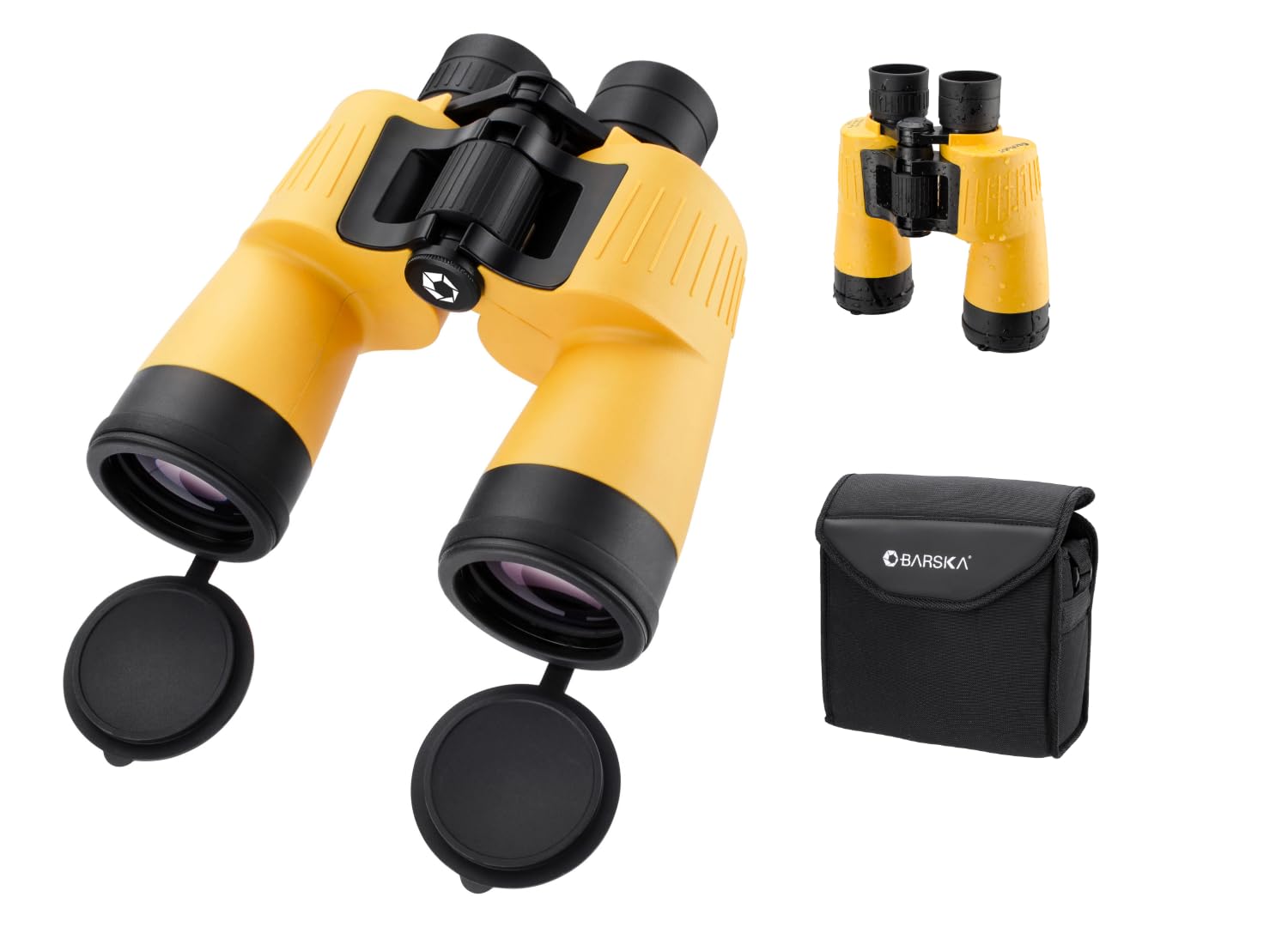
3. Barska Floatmaster 7×50 Marine Binoculars
Yes, it actually floats — and it gives your glasses the most breathing room.
If dropping your binoculars overboard keeps you up at night, the Barska Floatmaster is designed around that exact fear. The compact, buoyant body is dry nitrogen-purged and sealed, so it floats on the surface while staying fogproof, waterproof, and shockproof. A non-slip rubber exterior and included neck strap make it easy to carry on a wet deck.
Where this pair quietly beats the field is eye relief. The Floatmaster offers 23 millimeters of eye relief — compared with the Bushnell H2O’s 15.6 millimeters — which gives eyeglass wearers a full, comfortable field of view and keeps your brow off the glass when the boat rocks. The 7x magnification and 50 mm objective follow the classic nautical combination. Field of view runs 367 feet.
Owners praise the optical quality most, and the brightness holds up from sunrise to sunset. The honest catch: the focus mechanism needs a firm, two-finger turn, and durability reports vary — one owner described a lens body popping out — so treat this as a well-built but not indestructible pair. The included carrying case and the 23 mm eye relief more than compensate for casual use.
Why it earns its spot: the floatability plus the 23 mm eye relief mean this is the pick for glasses wearers who worry about dropping the optics.
The one caution: the focus mechanism is stiff enough to need two fingers, and a couple of long-term owners reported lens-body issues after extended use, so it rewards careful handling over pure abuse.
Made for: glasses wearers on a budget who want a floating binocular that forgives a slipped grip.
Skip if: you need one-handed focus or expect the ruggedness of a heavily armored premium pair.
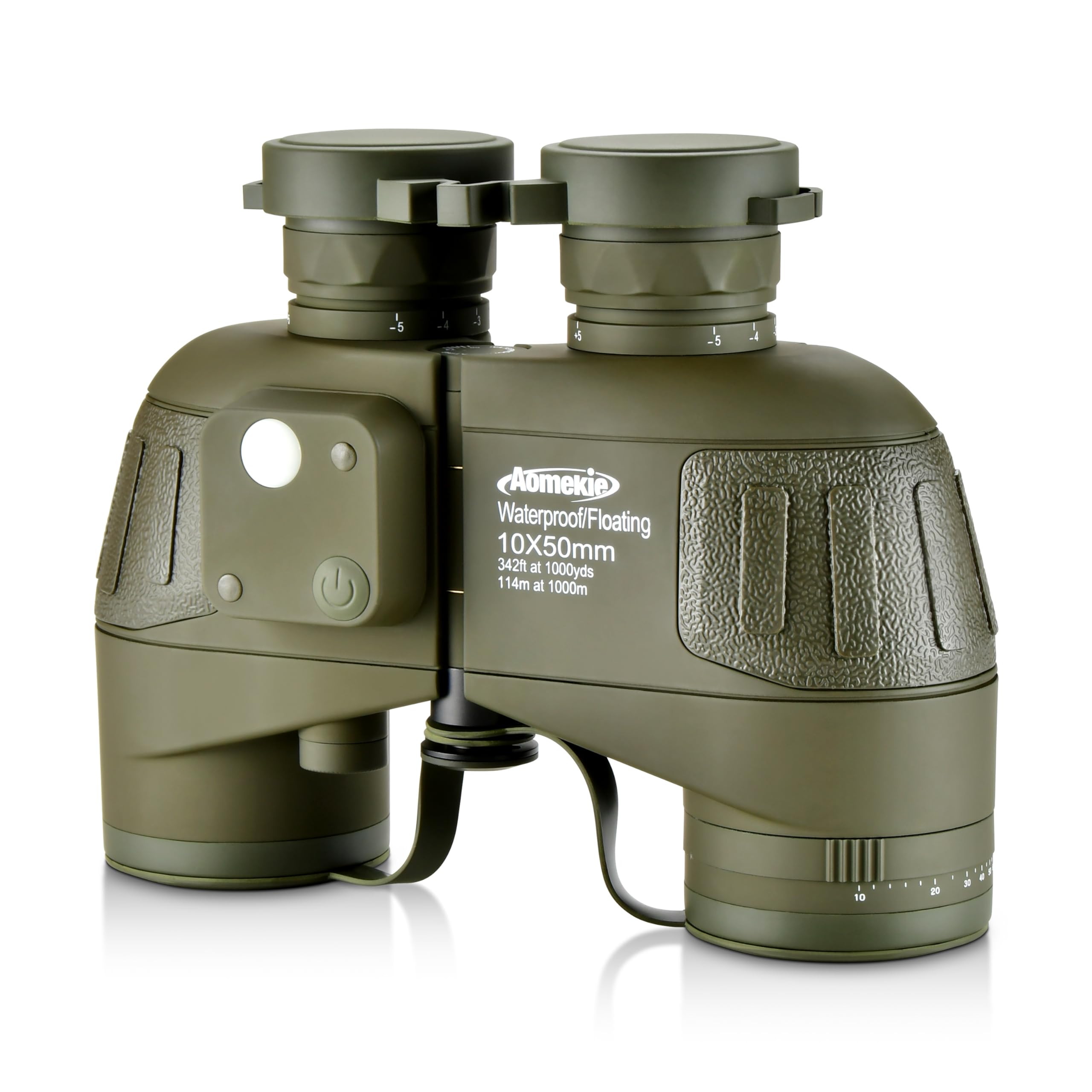
4. AOMEKIE 10×50 Waterproof Marine Binoculars
Built-in navigation tools that calculate distance while you watch the horizon.
For the navigator who wants bearing and distance readouts without pulling out a separate instrument, the AOMEKIE 10×50 pairs an illuminated compass with an internal rangefinder. The compass sits on the left eyepiece with a light button for low-light use, and the rangefinder lets you calculate distance and object size directly through the optic. BAK4 prisms and green FMC (fully multi-coated) lenses cut reflected light for a brighter, sharper image.
The 10x magnification and 50 mm objective give you a wide view — 342 feet at 1000 yards — with a 6.8 mm exit pupil. Diopter adjustment of ±5 lets you fine-tune each eye without glasses, and the foldable eyecups accommodate glasses wearers. Nitrogen filling seals out fog and moisture, and the O-ring design is IPX7-rated and buoyant, so it stays on the surface if it goes over the rail.
At entry-level pricing it is a solid value, and owners single out the compass for everyday convenience. The catch worth knowing: the rangefinder is a manual mil-dot style scale rather than a laser, so reading it takes practice, and the individual focus is set for infinity — you won’t get close-focus flexibility. A couple of owners also report uneven clarity over time, which is rare but worth knowing before you buy.
Best for: boaters who want compass and distance-scale readings built into the optic.
Only downside: the rangefinder is manual and needs learning; this isn’t a point-and-read laser.
5. Hooway 7×50 Waterproof Fogproof Marine Binoculars (Army Yellow)

The widest field of view here, plus a lit compass for night navigation.
The Hooway 7×50 covers the most water per glance of any binocular here — its 396 foot field of view at 1000 yards beats the AOMEKIE 10×50’s 342 feet. That wide sweep is exactly what you want when scanning a busy channel, watching for other boats, or following birds skimming the surface. The classic 7x magnification means the picture stays steady even on choppy water.
For nighttime work, the built-in illuminated compass points you home, and the internal rangefinder reads distance and object size off a scale. The whole unit is completely waterproof and floats, with nitrogen purging and fogproofing for humid conditions. Porro prism construction with BAK4 prisms and fully multi-coated optics produce bright, crisp images. Non-slip rubber armor absorbs shock, and the 22 mm eye relief suits glasses wearers.
Value for money leads the owner feedback, with the clarity and functionality winning people over for sailing and spotting boats and birds. But the honest notes matter here: the rubber pull-out eyepieces can degrade over time, the distance math confuses newcomers, and the individual eyepiece focus takes getting used to. Buyers who do use it consistently rate it as a solid, versatile marine tool for the price.
Widest view of the group: the 396 ft field of view at 1000 yards is the most generous in this lineup, so you take in a broader slice of water with each look.
Know before you buy: the individual eye focus is awkward to re-set and the rubber eyecups are the component most likely to show wear; the compass and rangefinder also take some practice to read fluently.
Right for you if: a wide view and built-in compass for nighttime navigation matter more than fuss-free focusing.
Look at another pick if: you want a single central focus wheel — this model demands setting each eye separately.
6. Hooway 7×50 Waterproof Fogproof Marine Binoculars (Blue)

Same rugged 7×50 core as the Army Yellow, dressed in blue.
This is the color variant of the Hooway 7×50 above, and it brings the identical marine-ready package: IPX7 waterproofing, nitrogen-filled sealing, BAK4 prisms, and fully multi-coated green optics. The binocular is 100% waterproof under one meter of depth and floats in water for about 30 minutes. A floating foam strap is included, so even a drop overboard doesn’t mean a lost instrument.
Field of view is 396 feet at 1000 yards — matching the Army Yellow model — with 6.8 mm exit pupil, 22 mm eye relief, and a 2.2 pound weight. Individual eye focus with left and right diopter rings lets you dial in sharp optics for each eye, and the eyecups fold down for glasses wearers. The illuminated compass and rangefinder scale both light up with an on/off switch for night use.
The broad quality consensus lands this as a reliable performer, with the focusing mechanism drawing mixed feedback — some owners love the self-focusing action, others find it fussy. A few also mention loose lens caps and a mismatched strap color from the start. Treat those as minor quibbles on an otherwise solid offshore companion.
Strengths on deck
- Floats for around 30 minutes and includes a floating foam strap
- Full BAK4 prisms and fully multi-coated optics for bright images
- Illuminated compass and rangefinder switch for low-light navigation
- 22 mm eye relief works with eyeglasses
Trade-offs to weigh
- Individual eye focus is not everyone’s preference
- Lens caps can feel loose; strap color may not match the body
- At 2.2 lbs it is not the lightest option on the water
Worth choosing when: you like the Hooway feature set but prefer the blue finish and want a floating strap in the box.
Compare against: the Army Yellow version if strap and cap consistency from the start matters to you.
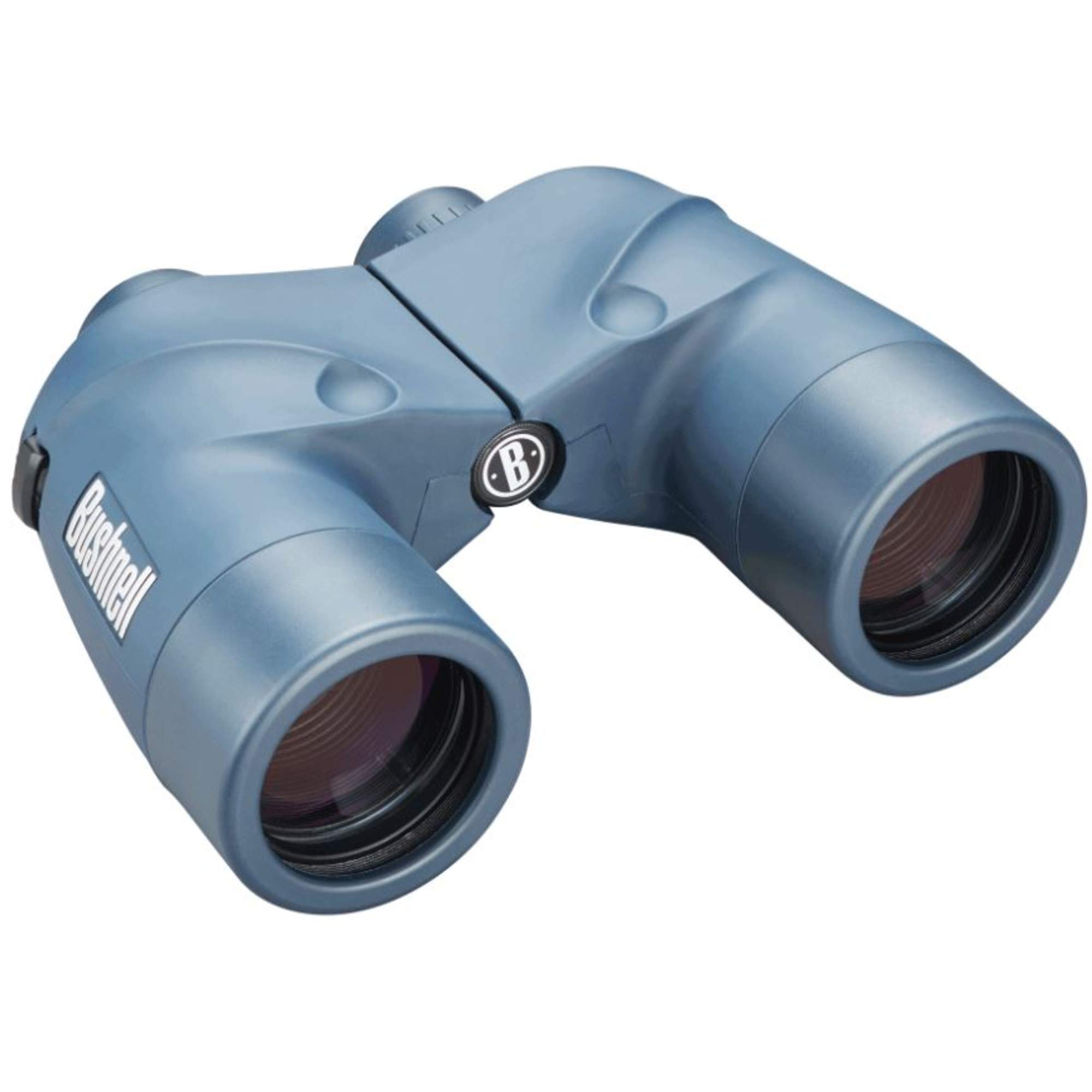
7. Bushnell Marine 7×50 Waterproof Binoculars, Blue
A hermetically sealed marine binocular built to the Coast Guard’s 7×50 spec.
The Bushnell Marine 7×50 exists for one environment: salt water. It is hermetically sealed, corrosion-resistant, and built around the 7x magnification and 50 mm objective that the Coast Guard specifies for marine use. Premium BaK-4 prisms and fully multi-coated optics with UV protection keep the image bright and color-accurate, and the Porro prism design delivers a wide field.
Owners describe it as a pair that stays on the water through years of spray, temperature swings, and sunlight. The nitrogen-sealed body shrugs off fogging, and the rubber armor with non-slip texture keeps the grip secure even with wet hands. With +-5 diopters of adjustment and an 18 mm eye relief, it fits a broad range of faces and eyes.
What keeps this near the top is sheer dependability. The one honest trade-off is its heft — 7×50 porro binoculars are never pocketable, and the weight is the recurring note buyers share. If you want a compact, all-day stowaway set, look at the Bushnell H2O instead. But for someone who wants a durable, full-sized marine instrument at a premium-tier price, the Marine 7×50 is worth every consideration.
Made to survive saltwater: the hermetically sealed, corrosion-resistant body and Coast Guard 7×50 configuration are what set this apart from the value tier.
The weight expectation: this is not a compact. It is a full-size marine glass built for stability and lasting performance, and the heft reflects that.
Choose this if: you want a rugged, sealed 7×50 built for years of saltwater abuse.
Don’t choose it if: portability is your top priority — a smaller 42 mm binocular packs easier.
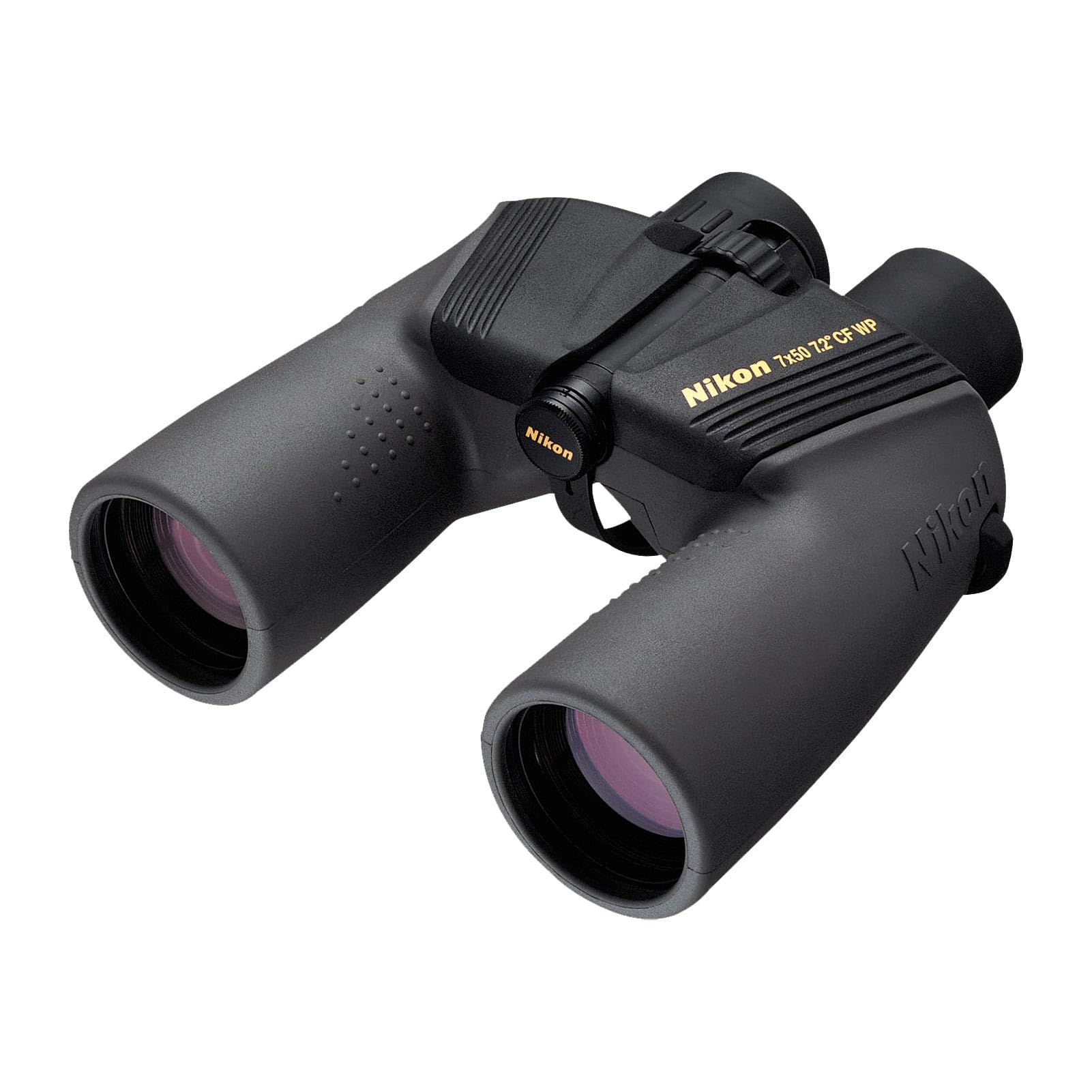
8. Nikon OceanPro 7×50 Waterproof Marine Binoculars
Nikon’s marine veteran: a 7×50 that comes alive when the sun goes down.
The OceanPro is the pair you pack when the plan runs from dawn until after dark. Its oversized 7.1 mm exit pupils gather serious light, and the multilayer-coated lenses with a precision Porro prism system deliver high-contrast images with sharp detail. A smooth central focus knob lets you fine-tune quickly, and the 22.7 mm eye relief is generous enough for eyeglass wearers on long excursions.
The body is nitrogen-filled and O-ring sealed, so it handles rain, spray, and shifting seas without fogging. The rugged rubber armor provides secure grip and impact protection. A floating neck strap comes included — a thoughtful touch on a boat. Field of view is 378 feet at 1000 yards, giving you a wide, steady scan across the water.
The long-term verdict from owners is dependable: one marine user ran a pair for three years of constant sea use without a single failure, and another reports the 7x magnification stays readable on a rocking boat in a way higher power cannot. The trade-off is weight — this is a large binocular and shows it over an extended watch. Packaging has also arrived flimsy for some, though the included case protects the optics in transit.
The centerpiece: the 7.1 mm exit pupil and multilayer-coated optics are the reasons this glass holds clarity when the light fails — ideal for tracking birds, buoys, or running lights after sunset.
What to expect on size: this is a substantial full-size binocular; it earns its keep for steady viewing but won’t be the lightest thing on your neck.
Pick this if: you want proven, long-service marine optics with excellent low-light reach and a floating strap in the box.
Pass on it if: you need a compact, lightweight binocular for hike-and-boat trips.
9. Fujifilm Fujinon Mariner 7×50 WPC-XL

Lightweight, waterproof, and proven through real ocean service.
The Fujinon Mariner 7×50 has a reputation built over time on the water — one long-serving sailor reports a pair that stayed sealed through 18 sailing seasons of neglect before needing replacement. That durability story, plus the classic 7×50 Porro prism design and waterproof body, is why it keeps earning a place in serious buyers’ kits.
The world compass is the standout feature, widely praised for being very readable and accurate for taking bearings and checking collision courses. Field of view is the headline attribute — owners consistently say they can see for miles and the clarity holds across the scene. At 7.14 mm the exit pupil matches the Steiner’s figure, so it performs well in low light and for nighttime sky viewing. The individual focus keeps the setting locked once dialed in.
Weighing less than heavier armored models makes the Mariner easier to hold for long stretches. Honest caveats: some owners find the individual eye focus awkward, the strap is bulky, and the lens caps are on the cheap side — and unlike pricier Fujinon models, the rubber protection is limited to the eyecups, so a bit of care is warranted. Given how much field-view and compass performance you get, it remains a strong value.
Built for: the sailor who values a wide, clear field of view and a reliable compass over heavy armor.
Weigh the trade-off: it is not fully ruggedized and demands careful handling; the focus is individual-eye, not central.
Understanding the Specs
Magnification and Objective Diameter
Two numbers define every marine binocular: the magnification and the objective lens diameter, written as “7×50” or “10×42.” The first number is how many times closer the target appears; the second is the front lens size in millimeters. A 7×50 collects more light and stays steadier in a rocking boat, while a 10×42 reaches farther but magnifies shake and gathers less light.
Exit Pupil and Eye Relief
Exit pupil is the circle of light leaving the eyepiece — divide objective diameter by magnification to get it. A larger exit pupil means a brighter image in low light and easier eye alignment. Eye relief is the distance from the eyepiece to your eye; 20 mm and above usually works well with glasses, while numbers in the mid-teens may feel tight for eyeglass wearers.
FAQ
Is 7x or 10x better for boating binoculars?
Do marine binoculars really float?
What does IPX7 waterproof mean for a boating binocular?
Can I use binoculars for boating with glasses on?
Are a built-in compass and rangefinder worth having?
What is the difference between Steiner autofocus and individual focus?
How do I stop marine binoculars from fogging up?
Is a 50 mm objective better than a 42 mm for night use?
How do I protect binoculars on a wet boat?
Do boating binoculars need a tripod mount?
Final Thoughts: The Verdict
The clear top pick for most boaters is the Steiner Marine 7×50 — its 7.14 mm exit pupil and Sports Auto-Focus deliver the brightest, steadiest view in this lineup, and the floating prism system takes the knocks of life on deck. If you want serious magnification in a compact, genuinely submersible frame, grab the Bushnell H2O. And for nighttime navigation where a built-in compass and wide 396 ft field of view matter, the Hooway 7×50 is the one to reach for.
How We Picked
We do not accept paid placement. Every pick is matched to a real buyer and a real use-case; we do not hands-on test units.
Sources & Methodology
Specifications: manufacturer listings and product documentation. Review insights: verified customer reviews, as of September 2026. Pricing: not shown on this page (it changes often); check the current price via the retailer link.
As an Amazon Associate, Gadgets Feed earns from qualifying purchases. This does not affect which products we feature.