
Our readers keep the lights on and my morning glass full of iced black tea. As an Amazon Associate, I earn from qualifying purchases.
Specs are compiled from manufacturer listings and verified buyer reviews and can change over time — please confirm the key details on the product page before buying.
When you are hunkered down in a cold blind at first light, the difference between a successful duck hunt and a long empty ride home often depends on one thing: how well you can see. You need binoculars that cut through marsh mist, survive a splash in the boat, and let you pick out a greenhead from a hen at 200 yards without eye strain. The wrong pair fogs up inside, feels like a brick around your neck by midday, or leaves you guessing whether that speck is a duck or a floating log.
I’m Min — the founder and writer behind Gadgets Feed. This guide is built by comparing the manufacturers’ published specifications and the patterns across verified customer reviews, so you get each pick’s real strengths and trade-offs instead of marketing spin.
Waterproofing, lens quality, and a field of view wide enough to track fast-flying birds are what separate a solid tool from a frustrating toy. Here is exactly how to find the right pair of binoculars for duck hunting.
Quick Picks
- Vortex Copperhead HD 10×42 — Best Overall
- ZEISS Terra ED 10×42 — Premium Pick
- Bushnell Engage X 10×42 — Best Value
- Leupold BX-4 Pro Guide HD 10×42 — Top Performer
- Nikon Monarch M5 10×42 — Sharpest Glass
- ScoopX 10×42 Ultra HD with Phone Adapter — Big View, Low Price
How To Choose The Best Binoculars For Duck Hunting
Duck hunting puts binoculars through a nasty test: wet conditions, low light, and the need to quickly reacquire a fast-moving bird against a busy background. A few specs matter a lot more than others here.
Waterproofing and Fogproofing Are Not Optional
You are going to get these wet. Rain, spray from a boat, or condensation from bringing cold binoculars into a warm truck — any moisture inside the lenses will ruin your view. Look for a stated waterproof rating like IPX7 (which means the binoculars can survive being submerged in a meter of water for 30 minutes) and nitrogen-purged fogproofing, which stops the internal lenses from fogging up when temperatures change. Without both, you are gambling every time you hunt a marsh.
Magnification and Objective Lens Size
The standard 10×42 configuration is the balance for duck hunting. “10x” means the image appears ten times closer than your naked eye. “42” is the diameter of the objective lens in millimeters — bigger lenses let in more light, which matters in the dim light of dawn and dusk. A 10×42 gives you a good balance of reach and brightness without turning into a boat anchor. A 12×50 setup, like the SIG SAUER Canyon HD, gets you a closer view but is heavier and harder to hold steady, especially when you are cold and tired.
Field of View
This number tells you how wide an area you can see at 1,000 yards, measured in feet. A wider field of view — 330+ feet is great — makes it easier to spot a flock coming in from the side and track a duck as it crosses your view. A narrow field of view at 293 feet means you will be hunting with the binoculars, moving them back and forth, rather than just watching. For fast-flighting birds, wider is better.
Lens Coatings
You will see terms like “fully multi-coated” (anti-reflective coatings on every glass surface) and “dielectric coating” (a prism coating that boosts light transmission and color accuracy). These are not marketing fluff — they directly determine how bright and clear the image looks in the low light conditions where ducks are most active. A fully multi-coated lens is a minimum for duck hunting; step up to dielectric or HD glass coatings if your budget allows.
Eye Relief
If you wear glasses, this is the most important spec. Eye relief is the distance in millimeters you can hold the binoculars from your eyes while still seeing the full image. You need at least 16mm, ideally 18mm or more, to use them comfortably with glasses on. Without enough eye relief, you will see a black ring around the edges or have to mash the eyecups into your glasses.
Quick Comparison
| Model | Best For | Magnification & Lens | Field of View | Eye Relief | Amazon |
|---|---|---|---|---|---|
| Vortex Copperhead HD 10×42 | All-weather durability on a budget | 10×42 | 334 ft | 17 mm | $99.00Amazon |
| Bushnell Engage X 10×42 | Lightweight performance with great eye relief | 10×42 | 7° (approx. 367 ft) | 18 mm | $136.90$149.95Amazon |
| ZEISS Terra ED 10×42 | Premium clarity in a lightweight build | 10×42 | 330 ft | 18 mm | $499.99Amazon |
| Leupold BX-4 Pro Guide HD 10×42 | Excellent low-light with a rugged build | 10×42 | 7.2° (approx. 377 ft) | — | from $566.00Amazon |
| Nikon Monarch M5 10×42 | ED glass for true color and sharpness | 10×42 | 293 ft | 18.4 mm | $287.00$349.95Amazon |
| ScoopX 10×42 Ultra HD | Best value with a phone adapter and harness | 10×42 | 347 ft | 16.7 mm | $249.00Amazon |
| Bushnell Powerview 10×42 BoneCollector | Budget-friendly entry for new hunters | 10×42 | 293 ft | 17.5 mm | $105.00Amazon |
| SIG SAUER Canyon HD 12×50 | Long-range identification with strong zoom | 12×50 | 5° (approx. 262 ft) | 15 mm | $349.99Amazon |
| Steiner Military-Marine 10×50 | Extreme durability and fast auto-focus | 10×50 | 302 ft | 16 mm | $419.95Amazon |
In‑Depth Reviews
1. Vortex Copperhead HD 10×42

The waterproof workhorse that survived rain and snow without missing a beat.
You want a binocular that does not flinch when the weather turns nasty. The Vortex Copperhead HD delivers: it is fully waterproof, fogproof, and shockproof. With 10×42 specs, you get the standard hunting magnification that is powerful enough to identify a drake at 300 yards but steady enough to hold with cold hands. The HD optical system brings good color fidelity and edge-to-edge sharpness, and the fully multi-coated lenses help you see a few minutes longer into twilight than cheaper optics. Buyers report they “used them for a full hunting season in all types of weather from rain to snow and no issues.” That is the kind of real-world proof you want before you spend your money.
The 334-foot field of view at 1,000 yards gives you plenty of scanning room to pick up a flock swinging around the decoys. The included GlassPak harness takes the weight off your neck and spreads it across your shoulders — a real comfort upgrade when you are sitting in a blind for hours. It is a touch heavier than some competitors, but the rubber armor provides a secure grip when your hands are wet.
Built for the Blind
- Unlimited, unconditional, lifetime VIP warranty — a real safety net
- Includes a GlassPak binocular harness, neck strap, and lens covers
- Waterproof, fogproof, shockproof — full weather sealing for wet hunts
The Minor Sacrifice
- Slightly heavier than premium aluminum-body models
- Edge sharpness is not quite as good as pricier options like the Diamondback HD series
Reach for these if: you want a no-surprises, fully weather-sealed binocular backed by a legendary warranty that covers accidents.
Look elsewhere if: you need the absolute lightest binocular for long hikes into the marsh — the Copperhead is sturdy but not ultralight.
2. ZEISS Terra ED 10×42
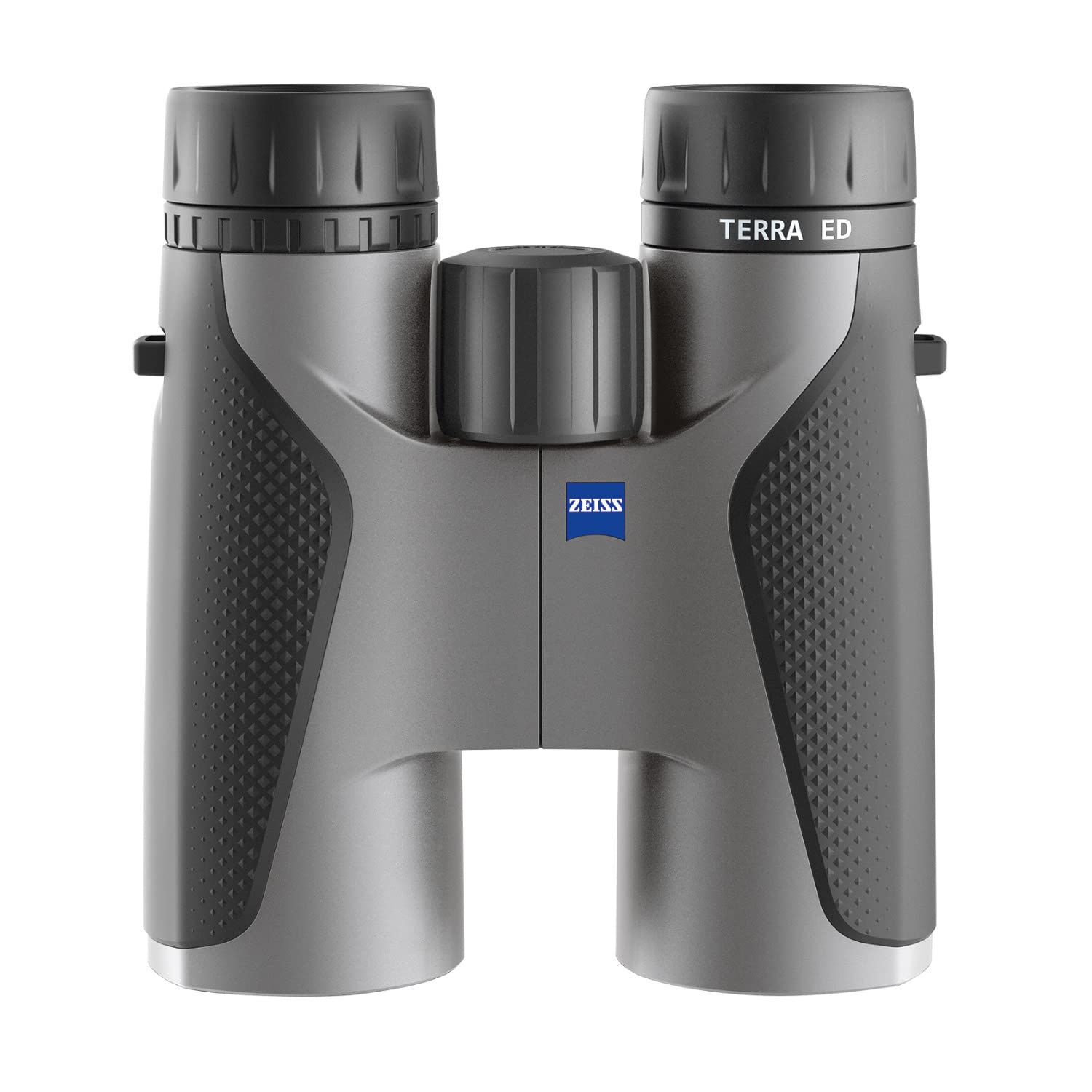
German optical engineering that makes a 6 AM marsh look bright and clear.
You pay more for a ZEISS, but you get optical performance that is tough to top. The Terra ED uses Extra-low Dispersion (ED) glass to eliminate chromatic aberration — that annoying purple fringing around high-contrast edges — and delivers a sharp, color-true image. The hydrophobic multi-coating on the lenses repels water, so a sudden rain shower does not smear your view. At an 88% light transmission rating, these binoculars are significantly brighter than many competitors in the dim light of dawn, which is exactly when ducks start moving. Owners mention these optics are “clear, bright, sharp image with accurate colors” and “the best under.”
With a 330-foot field of view and 18mm of eye relief, the Terra ED is comfortable for glasses wearers and lets you scan wide areas without moving your head too much. The fiberglass-reinforced casing is waterproof and built to take a drop, yet the binoculars remain compact and lightweight enough to fit in a small pack. The only trade-off is price — this is a serious investment for a dedicated waterfowler who wants top-tier German glass without stepping up to the alpha-level ZEISS Victory line.
Optical Excellence
- ED glass eliminates color fringing for a true-to-life image
- Hydrophobic multi-coating sheds water and resists fogging
- Lightweight and compact for a premium hunting binocular
Premium Reality Check
- High price point — you are paying for the ZEISS brand and ED glass
- Only a ±3 diopter range, which is less adjustment range than some competitors offer
Buy these if: you spend a lot of time hunting in low-light conditions and want the clearest, brightest view your budget can accommodate.
Pass if: you are on a tighter budget — the Vortex Copperhead or Bushnell Engage X are excellent alternatives.
3. Bushnell Engage X 10×42

This lightweight hangs tough in a downpour and beats pricier glass on clarity.
The Engage X hits a balance: it is built with Bushnell’s EXO Barrier, a permanent lens coating that repels water, oil, fog, dust, and debris so you are not wiping lenses every five minutes in a wet marsh. At just 2 lbs, it is noticeably lighter than the Vortex Copperhead, which makes a real difference when you are glassing for hours. With 18mm of eye relief — the widest in this lineup — it is a standout for anyone who wears glasses while hunting. The fully multi-coated optics produce an image that buyers describe as “comparable brightness and clarity to Carsons, but eliminates purple fringing.” The IPX7 waterproof rating means it can survive a full dunk in the mud.
The field of view is rated at 7 degrees (roughly 367 feet at 1,000 yards), which is wide enough to track crossing birds without swinging your head wildly. The twist-up eyecups click into place so you can dial in the perfect distance for your eyes. Some users note it is slightly heavy for quick-access use, but for the price, this binocular offers better low-light performance and build quality than many options at a higher price point.
Why It Stands Out
- EXO Barrier coating actively repels water and oil — great for rainy hunts
- 18mm eye relief is the best in class for glasses wearers
- Fully multi-coated optics deliver impressive clarity for the price
What Holds It Back
- Aluminum body is lighter but not as impact-resistant as some competitors
- Slightly larger footprint than some 10×42 models for quick access
Grab these if: you wear glasses and want exceptional eye relief combined with a durable, water-repelling build at a mid-range price.
Pass if: you prioritize the absolute toughest warranty — the Engage X is covered by Bushnell’s lifetime Ironclad Warranty, which is good, but the Vortex VIP warranty is even more generous.
4. Leupold BX-4 Pro Guide HD 10×42
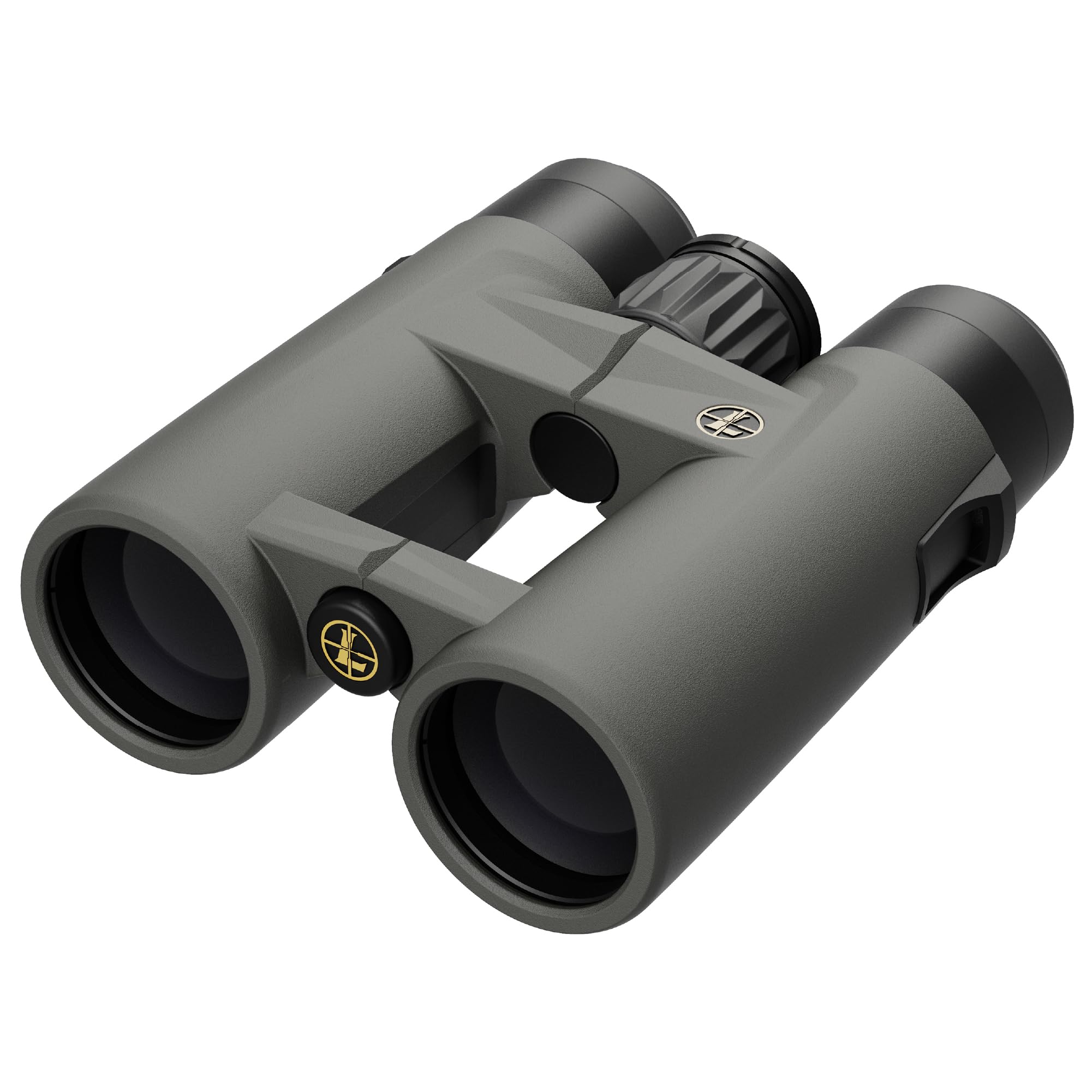
Lens coatings that shed water and dirt so you never miss a moment in the marsh.
The BX-4 Pro Guide HD is built around Leupold’s Elite Optical System, which combines their Guard-ion lens coating (it sheds water, dirt, and fingerprints like a lotus leaf) with DiamondCoat 2 for abrasion resistance. At just 1.56 lbs, the open-bridge, dual-hinge design makes these binoculars exceptionally lightweight and ergonomic for a 10×42. The field of view is generous at 7.2 degrees (roughly 377 feet at 1,000 yards), which is among the widest in this roundup and a major advantage for scanning a wide marsh or river channel. The shadow gray rubber armor provides a non-slip grip in wet conditions.
One buyer compared these directly to more expensive options, writing “I have had these now for many months and the clearity is excellent.” The binoculars are fully waterproof and fogproof, backed by Leupold’s legendary customer care. However, the eyepiece cap is not tethered, and the diopter adjustment range is generous but not specified in millimeters. This is a durable, high-performing binocular for a hunter who values a wide view and a lightweight build above all else.
Standout Features
- Very lightweight at 1.56 lbs — easy to carry all day
- Guard-ion coating sheds water, dirt, and fingerprints effectively
- Wide field of view at 7.2 degrees for scanning large areas
Trade-Offs
- No specified eye relief measurement in provided specs
- Dust covers are not as secure as some hunters would like
Choose this if: scanning large open water or wide marshes is your priority and you want a very lightweight binocular with excellent lens coatings.
Consider something else if: you need the longest possible eye relief for thick glasses — the Leupold’s eye relief is not specified in the data.
5. Nikon Monarch M5 10×42
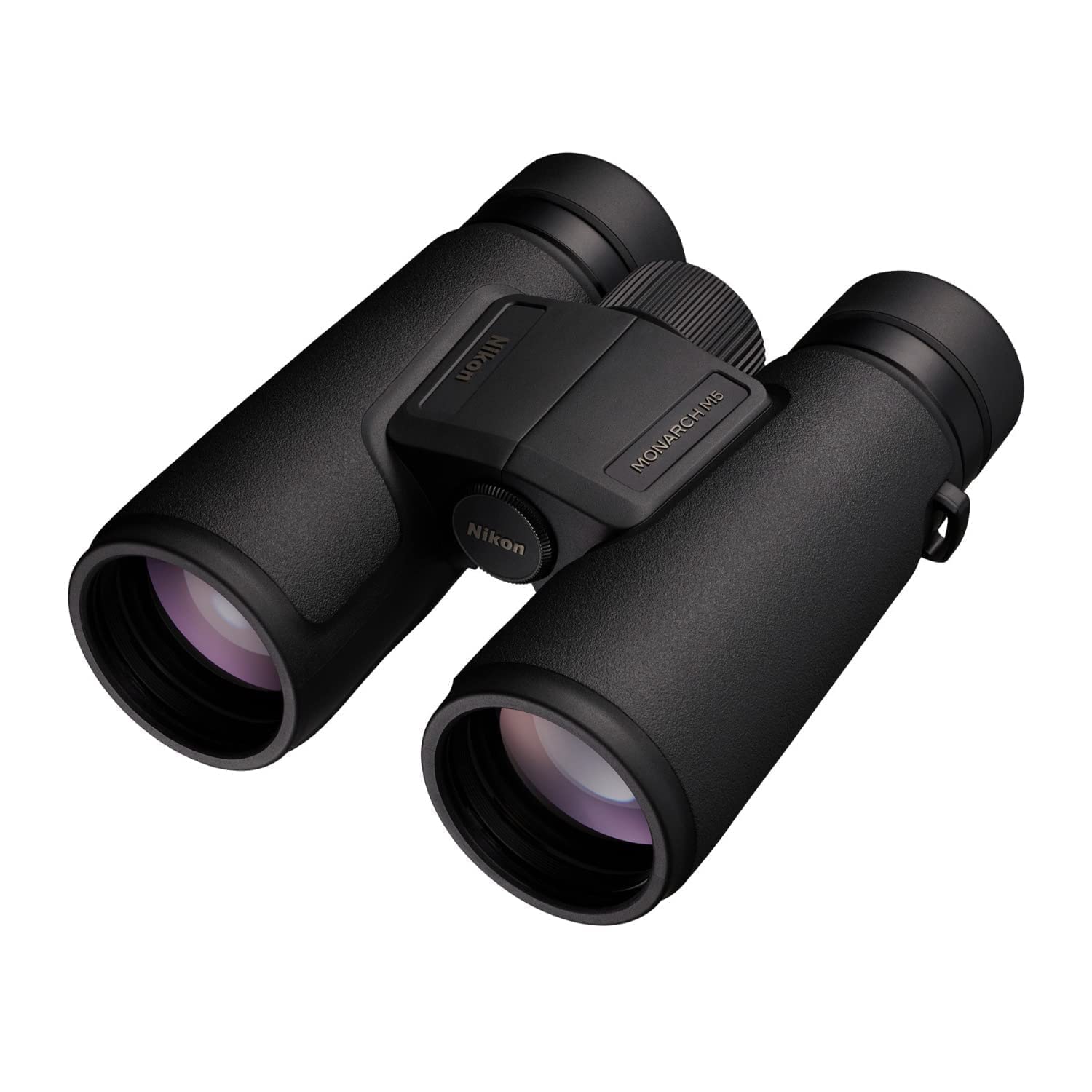
Nikon’s ED glass brings nature-documentary clarity to a rugged hunting frame.
Nikon is a trusted name in optics, and the Monarch M5 delivers on that reputation. It uses Extra-low Dispersion (ED) glass to minimize chromatic aberration and color fringing, producing high-resolution images with true-to-life colors. The dielectric high-reflective multilayer prism coatings boost light transmission, which means brighter images in the low-light conditions of dawn and dusk. With 18.4mm of eye relief, it is among the most comfortable options for glasses wearers. One reviewer called it “clean sharp image. Great value for money” and noted the image is “sharp, vivid image like a nature documentary.”
The close-focus capability is just 8.2 feet, which is handy if you need to examine a decoy or inspect gear up close — a feature duck hunters rarely get in a 10×42. The 293-foot field of view is contrasted with the Leupold’s 377 feet and the Bushnell Engage X’s 367 feet, so you will be moving your head more to scan. A few buyers mention the eyepiece cap is extremely loose and falls off easily. Still, for image quality and brand reliability, the Monarch M5 is a strong contender in this price range.
Optical Strengths
- ED glass provides exceptional image sharpness and color accuracy
- 18.4mm eye relief — excellent for eyeglass wearers
- Close-focus capability down to 8.2 feet
Known Frustrations
- 293-foot field of view is narrower than several competitors
- Loose eyepiece cap that is easy to lose in the field
Pick these if: optical clarity and color fidelity are your top priorities and you want a well-known brand with excellent eye relief.
Skip them if: a wide field of view for scanning fast-moving birds matters more than pure image sharpness.
6. ScoopX 10×42 Ultra HD with Phone Adapter

An impressive 347-foot field of view and a phone adapter built right in.
This is the dark horse of the list. The ScoopX 10×42 Ultra HD binocular packs a 347-foot field of view — the Bushnell Powerview and Nikon Monarch M5 offer 293 feet — making it much easier to track crossing ducks without moving the binoculars excessively. The 24mm large eyepiece provides a comfortable, full view, and the fully multi-coated BAK4 prisms with dielectric and phase coatings deliver bright, color-accurate images. Buyers rave about the clarity, with one noting “My friend has a pair of Swarovski that cost over, and as far as daytime clarity these Scoopx are just as clear at a fraction of the price.”
The magnesium chassis is lightweight and IPX7 waterproof, and it comes with a quick-release binocular harness that distributes weight across your back rather than your neck. The included phone adapter is a nice bonus for hunters who want to share a photo of the morning’s bag. At 16.7mm of eye relief, it is on the shorter side, so glasses wearers may need to hold it just so to see the full image. A couple of buyers reported debris inside the lenses on arrival, though customer support was quick to send replacements.
What You Get
- Field of view of 347 feet — one of the widest here for scanning
- Magnesium chassis is lightweight and waterproof (IPX7)
- Includes phone adapter and quick-release harness
What to Watch
- Eye relief is 16.7 mm — less comfortable for some glasses wearers
- Occasional quality control issues with debris in the lenses
Buy this for: the widest field of view in this price range and the convenience of a bundled phone adapter for sharing field photos.
Consider alternatives if: you need long eye relief for thick glasses or you prefer a longer-established optics brand.
7. Bushnell Powerview 10×42 BoneCollector

A Realtree camo workhorse that gets new hunters onto ducks while staying affordable.
If you are new to duck hunting or need a spare pair for the boat, the Bushnell Powerview BoneCollector is a solid entry-level choice. It is multi-coated (not fully multi-coated, but still helpful for light transmission) and offers a 293-foot field of view. At just 22 ounces and 5.5 inches long, it is compact and light enough to tuck into a blind bag. The diamond-cut grip on the sides keeps it secure in wet hands, and the oversized focus wheel is easy to dial in with gloved fingers. As one buyer put it, “Spotted may doe this season with them lol” — direct and honest feedback that the optics give you enough reach to identify game.
The plastic enclosure is less premium than the aluminum or magnesium bodies of pricier options, but it keeps the weight down and the price low. The 293-foot field of view is on the narrower side, so you will need to be more active with your scanning. At 17.5mm of eye relief, it is decent for glasses wearers. The Bushnell name comes with over 70 years of outdoor optics experience, which adds a layer of trust for a budget-oriented purchase.
Entry-Level Advantages
- Very affordable — a great starting point for new hunters
- Lightweight at 22 ounces, easy to carry all day
- Diamond-cut grip and oversized focus wheel work well with gloves
Budget Trade-Offs
- Field of view is 293 feet
- Plastic enclosure feels less durable than metal-body binoculars
Ideal for: a first-time buyer who wants an affordable, camo-patterned binocular to get started in waterfowl hunting.
Upgrade if: you are hunting in very low light or need a wider field of view to track fast-moving birds more easily.
8. SIG SAUER Canyon HD 12×50
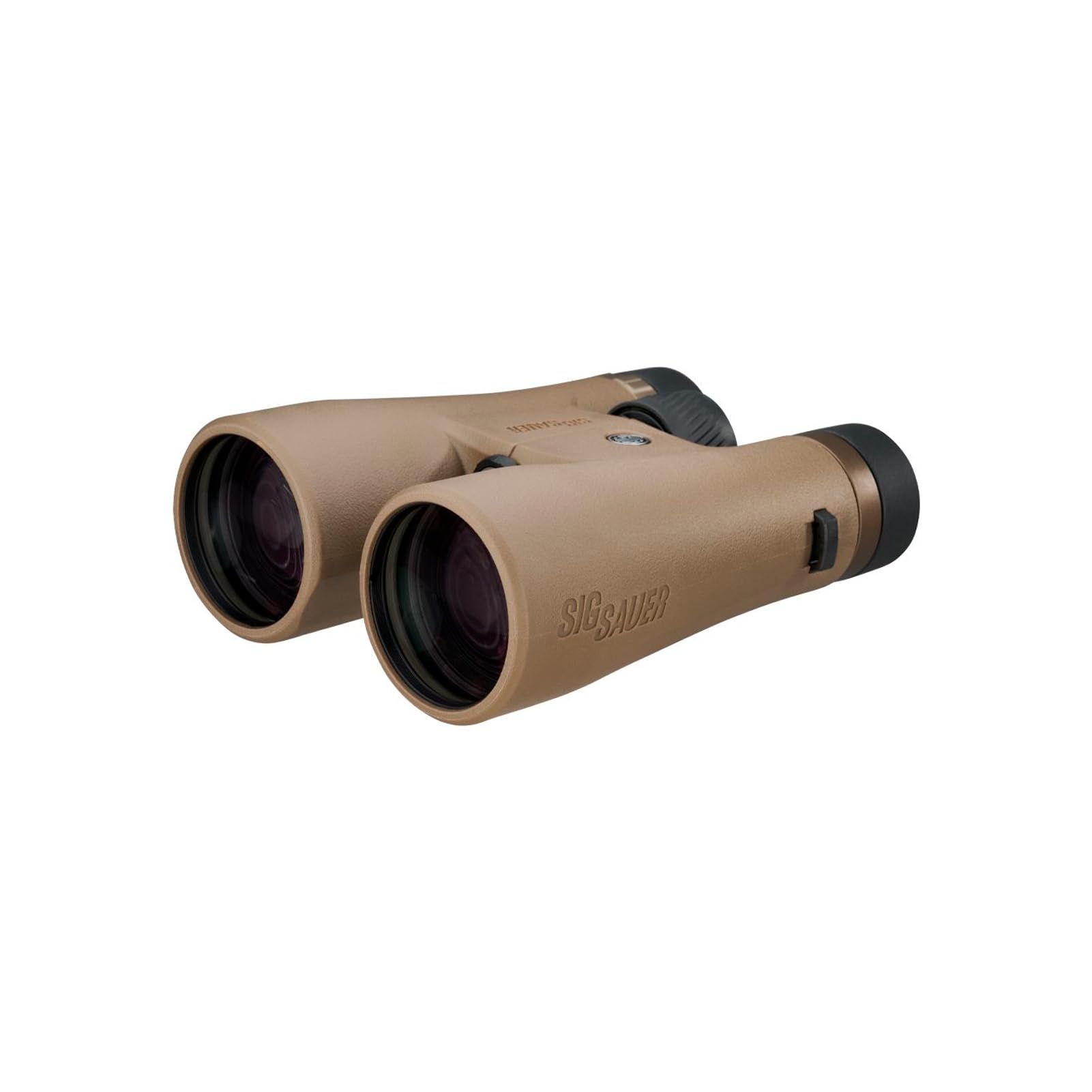
High magnification for picking out ducks at distance, built to SIG’s rugged standard.
For the hunter who wants to reach out and identify birds at extreme range, the SIG SAUER Canyon HD provides a 12×50 configuration that brings the field closer than any 10x option here. The 50mm objective lenses gather more light than the standard 42mm, which helps in the dim light of early morning. The fully multi-coated HD glass and SpectraCoat and LensArmor abrasion-resistant coatings keep the image bright and the lenses protected from scratches. The IPX7 rating ensures it is fully waterproof and fogproof — essential for a duck boat. One buyer called it “Good clarity and they feel of a good quality.”
There is a real trade-off, though: the 12x magnification amplifies every hand shake, and at 28.14 ounces (nearly 1.8 lbs), the Canyon HD is the heaviest binocular in this guide. It is also one of the narrowest views, with a 5-degree field of view (roughly 262 feet at 1,000 yards), so you will be doing a lot of hunting with the binoculars themselves. The 15mm eye relief is also tight for glasses. A buyer noted the tripod mounting bracket did not fit, so plan on holding it steady with both elbows on your knees or a window mount.
Reach Advantages
- 12×50 configuration for maximum long-range detail
- IPX7 waterproof and fogproof for harsh marsh conditions
- SpectraCoat and LensArmor lens coatings for durability
Real-World Limits
- Heavy at 28.14 oz — tiring for all-day carry
- Very narrow field of view at 5 degrees
- Only 15mm eye relief — less comfortable for glasses wearers
Best for: veteran hunters who glass wide-open water from a stationary blind or boat and want maximum reach to identify distant flocks.
Pass on this if: you walk into your spots or need a wide scanning view to track crossing birds at closer ranges.
9. Steiner Military-Marine 10×50

A rugged tank of a binocular built to Military-Marine standards of toughness.
If your hunt involves rough weather, salt spray, or a real risk of dropping gear into the mud, the Steiner Military-Marine 10×50 is built for it. The Makrolon polycarbonate housing can withstand 11 Gs of impact, and the NBR rubber armoring provides a non-slip, noise-dampening grip that resists oil and harsh weather. The 50mm objective lenses give you a bright, high-contrast image in the low light of dawn and dusk — the “golden hours” for waterfowl. As one owner put it, “crisp image, good color, minimal chromatic aberration. Rugged, well-made. 10/10 value.”
The Sports-Auto-Focus system is unique: you calibrate each eyepiece to your vision once, then everything from 20 yards to infinity stays in focus — no focus wheel to fiddle with when a flock flares. This is a genuine advantage for fast-moving targets. The floating prism system uses a flexible silicone lens mount to absorb shock, protecting the internal alignment from drops. The catch is weight: at 34.4 ounces (over 2 lbs), it is the heaviest pair here, and several buyers mention it is “Very heavy.” The 302-foot field of view is decent but not exceptional.
Tough-Gear Perks
- Can withstand 11 Gs of impact thanks to Makrolon housing
- Sports-Auto-Focus keeps everything sharp from 20 yards to infinity
- 50mm objectives gather more light for low-light performance
Physical Demands
- Weighs over 2 lbs — the heaviest in the lineup
- Only 16mm eye relief — borderline for some glasses wearers
Consider this if: your hunting environment is punishing — salt marshes, cold rain, or rough handling — and you want a binocular that can take a beating.
Avoid if: you prioritize a compact, packable, or lightweight binocular for long walks to your blind.
Understanding the Specs
Waterproofing and Fogproofing (IPX Rating)
For duck hunting, this is a make-or-break spec. IPX7 means the binocular is tested to survive being submerged in 1 meter of water for 30 minutes — plenty of protection against rain, spray, or an accidental drop in the marsh. Fogproofing means the binoculars are filled with nitrogen or argon gas, which prevents condensation from forming on the internal lenses when you move from a cold duck blind into a warm truck. Without it, your lenses will fog up and you will be wiping them constantly.
Field of View (FOV)
Field of view is measured in feet at 1,000 yards. A higher number means you can see a wider area without moving the binoculars. For duck hunting, where birds can fly across your view quickly, a FOV of 330 feet or more is ideal. A binocular with a 293-foot FOV, like the Bushnell Powerview, will require more head movement and scanning. A 347-foot FOV, like the ScoopX, lets you track the flock with less effort, which can be the difference between a clean identification and a lost bird.
Eye Relief (mm)
Eye relief is the distance from your eye to the eyepiece lens where you can still see the full image. If you wear glasses, you need at least 16mm, with 18mm or more being ideal. Standard eyecups twist up and down to adjust — for glasses, you keep the eyecups fully twisted down to bring the lens closer to your glasses. Low eye relief means you will see a black ring or lose part of the view.
Magnification and Objective Lens
10×42 is the standard for a reason: “10x” makes the image appear ten times closer, and the 42mm objective lens collects enough light to be useful in low-light conditions without making the binocular too heavy. 12×50 gives you more reach and light gathering but adds significant weight and narrows the field of view. 10×50, like the Steiner, boosts low-light performance without the magnification shake of a 12x, but still adds weight over a 42mm lens.
FAQ
Can I use a non-waterproof binocular for duck hunting?
What does IPX7 waterproof rating mean for binoculars?
Is 10×42 or 10×50 better for duck hunting?
What does “fully multi-coated” mean?
How important is eye relief for duck hunting binoculars?
What is the Sports-Auto-Focus system on the Steiner binoculars?
Should I get a 10×42 or 12×50 binocular for duck hunting?
What is the “Realtree Edge Camo” on the Bushnell Powerview?
Final Thoughts: The Verdict
For most hunters, the binoculars for duck hunting winner is the Vortex Copperhead HD 10×42 because it combines waterproof/fogproof performance, a wide 334-foot field of view, HD optics, and the best warranty in the business at a price that does not require a second mortgage. If you want a lighter binocular with better eye relief for glasses, grab the Bushnell Engage X 10×42. And for the hunter who needs maximum low-light reach on a big budget, the standout is the ZEISS Terra ED 10×42.
How We Picked
We do not accept paid placement. Every pick is matched to a real buyer and a real use-case; we do not hands-on test units.
Sources & Methodology
Specifications: manufacturer listings and product documentation. Review insights: verified customer reviews, as of July 2026. Pricing: not shown on this page (it changes often); check the current price via the retailer link.
As an Amazon Associate, Gadgets Feed earns from qualifying purchases. This does not affect which products we feature.
Related Guides
Product prices and availability are accurate as of the date/time indicated and are subject to change. Any price and availability information displayed on Amazon at the time of purchase will apply to the purchase of this product. As an Amazon Associate I earn from qualifying purchases.
CERTAIN CONTENT THAT APPEARS ON THIS SITE COMES FROM AMAZON. THIS CONTENT IS PROVIDED "AS IS" AND IS SUBJECT TO CHANGE OR REMOVAL AT ANY TIME.
Amazon and the Amazon logo are trademarks of Amazon.com, Inc. or its affiliates.