
The illusion of a perfect summit view shatters the moment you raise fogged-up, blurry binoculars to your eyes. For hikers, the weight of your pack is a constant negotiation, and choosing the wrong binoculars—bulky, dim, or non-waterproof—turns a highlight into a regret. The right pair slips into your pack without a second thought, delivering crisp, bright images that turn a distant peak or a rare bird into an intimate encounter with the trail.
I’m Min — the co-founder and writer behind Gadgets Feed. This guide distills hours of research into the optical specs, ruggedness ratings, and real-world portability trade-offs that separate true hiking binoculars from gear closet clutter.
Whether you’re scanning ridge lines on a long day hike or spotting wildlife from a campsite, finding the right pair hinges on balancing magnification, objective lens size, and waterproof integrity. This guide breaks down the market to help you choose the best binoculars for hiking.
How To Choose The Best Binoculars For Hiking
A few critical specs dictate whether a pair of binoculars feels like a trusted tool or dead weight on the trail. Focus on these factors first.
Magnification vs. Stability: 8x vs. 10x
An 8x magnification provides a wider, steadier field of view, making it easier to track moving wildlife and maintain a stable image without a tripod. A 10x brings subjects closer but amplifies hand shake, which is especially noticeable after a long climb when your arms are tired. For most hiking scenarios—scanning valleys, spotting birds in trees—8x is the pragmatic choice.
Objective Lens Size: The Portability vs. Brightness Trade-off
A 25mm objective lens keeps binoculars compact and light, ideal for fast-and-light day hikes or as a backup in a pack. A 42mm objective gathers significantly more light, delivering brighter, more detailed views in dawn, dusk, or deep forest shade—but adds bulk and weight. If your hikes often extend into low-light hours or dense canopies, the extra light transmission of a 42mm lens is worth the weight penalty.
Waterproofing and Fogproofing Are Non-Negotiable
Hiking exposes gear to rain, stream crossings, and sudden temperature swings. An O-ring sealed, nitrogen-purged binocular rated IPX7 ensures internal optics never fog up and the unit survives submersion. If a pair lacks these seals, it will fail the first time you hike through a humid valley or get caught in an afternoon shower.
Quick Comparison
On smaller screens, swipe sideways to see the full table.
| Model | Category | Best For | Key Spec | Amazon |
|---|---|---|---|---|
| Nikon Monarch M5 8×42 | Premium | Dawn/Dusk wildlife tracking | ED glass, 19.5mm eye relief | Amazon |
| ZEISS Terra ED 10×42 | Premium | Long-distance detail & clarity | 88% light transmission, ED glass | Amazon |
| Celestron Nature DX ED 8×42 | Mid-Range | Versatile all-around birding/hiking | ED glass, 17.8mm eye relief | Amazon |
| Bushnell H2O Xtreme 10×42 | Mid-Range | Wet-weather durability | IPX7 waterproof, fully multi-coated | Amazon |
| Nikon TRAVELITE EX 8×25 | Mid-Range | Ultra-light everyday carry | Multilayer-coated, waterproof | Amazon |
| Nocs Provisions Standard Issue 10×25 | Budget | Stylish, pocketable backup set | Fully multi-coated, IPX7 | Amazon |
| Celestron Outland X 8×25 | Budget | Budget-friendly trail companion | BaK-4 prisms, 8.2° FOV | Amazon |
In‑Depth Reviews
1. Nikon Monarch M5 8×42
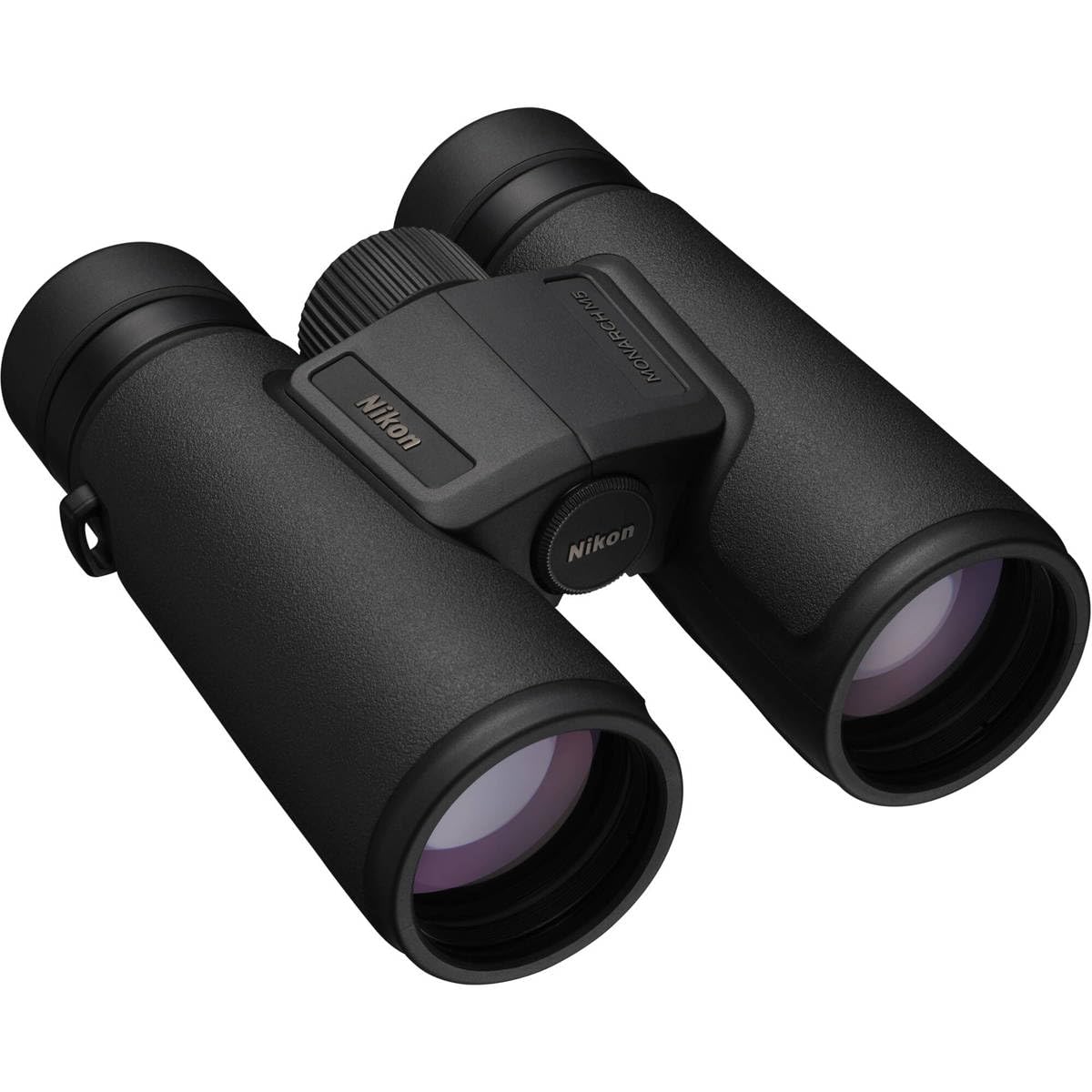
The Nikon Monarch M5 8×42 delivers pinpoint sharpness and color fidelity that rivals much more expensive optics. Its Extra-low Dispersion (ED) glass virtually eliminates chromatic aberration, while dielectric high-reflective prism coatings push light transmission to near-maximum levels. The result is a bright, natural image even in the dim understory of a forest or during the golden hour.
The 19.5mm of eye relief is generous for eyeglass wearers, and the large center focus knob allows precise, rapid adjustments even with gloves on. The closed-bridge, rubber-armored body feels substantial and secure, though at a weight that reflects its premium build—it fits best in a medium sling bag or hip pack rather than a pants pocket. The 8.2-foot close-focus capability is a bonus, letting you inspect butterflies or trailside flowers up close.
Waterproof and nitrogen-purged, the Monarch M5 is built for all-conditions reliability. While the field of view is slightly narrower than some competitors, the edge-to-edge clarity and superior low-light performance make this the definitive choice for hikers who prioritize image quality above all else.
Why it’s great
- Exceptional ED glass and dielectric coatings deliver vivid, aberration-free views
- Long 19.5mm eye relief comfortable for eyeglass users
- Rugged, waterproof, and fogproof for any hiking condition
Good to know
- Heavier than compact models; not a pocket stowaway
- Field of view is adequate but not the widest in class
2. ZEISS Terra ED 10×42

The ZEISS Terra ED 10×42 brings legendary German optical engineering to a hiking-friendly package. Its Schmidt-Pechan prisms paired with ED glass achieve 88% light transmission, producing images that remain bright and high-contrast even in adverse light and twilight. The hydrophobic multi-layer coating on external lenses beads away rain and mist, maintaining clarity when the weather turns.
The large, tactile center focus wheel is engineered for speed—your index finger lands on it naturally, enabling quick tracking of moving subjects. The fiberglass-reinforced polycarbonate casing is nearly indestructible while keeping weight manageable for a full-size 42mm binocular. The 18mm of eye relief provides comfortable viewing for most users, and the twist-up eyecups offer solid intermediate stops.
At 10x magnification, the Terra ED demands a steadier hand than an 8x, but the reward is exceptional detail at distance—ideal for scanning far ridgelines or identifying distant wildlife. For the hiker who wants Zeiss quality without the flagship price, the Terra ED is a compelling entry point.
Why it’s great
- Outstanding 88% light transmission for low-light performance
- Hydrophobic coating sheds water and resists fogging
- Quick, ergonomic focus wheel ideal for tracking
Good to know
- 10x magnification requires steady hands; not ideal for long active scans
- Premium pricing reflects the brand, not a budget pick
3. Celestron Nature DX ED 8×42

The Celestron Nature DX ED 8×42 is the benchmark for accessible premium optics. It pairs Extra-low Dispersion glass with phase-coated BaK-4 prisms to produce razor-sharp, color-accurate images that punch well above the mid-range price point. Chromatic aberration is minimal, and the 42mm objectives gather enough light for comfortable viewing in dim conditions.
At a weight that’s lighter than many full-size competitors, it manages to be packable without sacrificing optical performance. The rubber-armored polycarbonate body provides a secure grip in wet conditions, and it’s fully waterproof and nitrogen-purged. The 17.8mm eye relief is adequate, though tight for some eyeglass wearers.
The built-in tripod adapter thread is a practical addition for long observation sessions or for digiscoping with a smartphone adapter. While the focus knob is adequate, some users find it slightly slower than premium competitors. Still, for the hiker seeking ED-glass performance without the flagship markup, the Nature DX ED is the smartest buy.
Why it’s great
- ED glass delivers near-premium image clarity at a mid-range point
- Lightweight and tripod-adaptable for versatile trail use
- Waterproof, fogproof, and rubber-armored for reliability
Good to know
- Focus knob is functional but not as smooth as high-end models
- Eye relief may be slightly tight for some eyeglass wearers
4. Bushnell H2O Xtreme 10×42

The Bushnell H2O Xtreme 10×42 is engineered for hikers who routinely face rain, river crossings, and humidity. Its IPX7 rating means it can be submerged in up to three feet of water for 30 minutes without damage, and the O-ring sealed, nitrogen-purged construction prevents internal fogging. The fully multi-coated optics and BaK-4 prisms produce bright, clear images that hold up against models costing more.
The rubberized armor with soft grip pads ensures a non-slip hold even in wet hands. The 17mm of eye relief is comfortable, and the center focus knob is smooth and positive. At just over a pound, it’s manageable for a full-size 42mm model, though users seeking ultralight setups may prefer a 25mm alternative. A notable omission is the lack of a tripod adapter socket on this FRP model.
This binocular is built for active use—scanning across lakes, tracking birds in coastal fog, or spotting from a damp trail shelter. The attached front lens caps are a thoughtful touch, though the neck strap has drawn mixed feedback for comfort on long days. Overall, the H2O Xtreme is a rugged workhorse for wet environments.
Why it’s great
- IPX7 waterproof rating is best-in-class for serious wet-weather hiking
- Fully multi-coated optics and BaK-4 prisms deliver bright, clear images
- Secure rubber grip works well with wet or gloved hands
Good to know
- No tripod adapter socket for stable long-distance viewing
- Neck strap may not be comfortable for all-day carry
5. Nikon TRAVELITE EX 8×25

The Nikon TRAVELITE EX 8×25 is a masterclass in packing light without sacrificing image quality. Its die-cast aluminum body is wrapped in protective rubber armor, making it rugged yet remarkably easy to stow in a jacket pocket or hydration pack side pocket. The multilayer-coated optics and aspherical eyepiece lenses deliver edge-to-edge sharpness that minimizes the distortion typical of compact binoculars.
The turn-and-slide eyecups and click-type diopter adjustment allow a customized fit, including for eyeglass wearers. The waterproof and fogproof construction (sealed and nitrogen-purged) means it can handle trail showers and humidity without issue. The 8x magnification provides a wide, steady field of view that’s ideal for scanning open terrain or following birds in flight.
Where the 25mm objective lens shows its limits is in truly low-light situations—dawn, dusk, or deep forest shade. It’s not a substitute for a 42mm in those conditions. But for the vast majority of daytime hikes where weight and packability are the primary constraints, the TRAVELITE EX is a top-tier choice that punches well above its compact class.
Why it’s great
- Extremely compact and lightweight—truly pocketable on a hike
- Multilayer-coated aspherical optics deliver impressive edge clarity
- Waterproof and fogproof for reliable all-weather use
Good to know
- 25mm objective struggles in low-light or twilight conditions
- Small exit pupil can be finicky to align with your pupils
6. Nocs Provisions Standard Issue 10×25

The Nocs Provisions Standard Issue 10×25 is designed for the hiker who values design and ethical production as much as optical performance. The compact, pocketable frame (11.85 ounces) features a patented Rugged Wave Grip rubber casing that provides excellent traction in hand. The fully multi-coated optics and Swiss-designed Bak-4 prism deliver bright, crisp images with a 315-foot field of view at 1000 yards.
The IPX7 waterproof and fogproof rating ensures it can survive a stream dunk or steady rain. The multi-stop twist-up eyecup mechanism offers three distinct positions, accommodating both bare eyes and eyeglass wearers. The Nocs brand commitment—1% For the Planet and a “No-Matter-What” Lifetime Warranty—adds appeal for the eco-conscious hiker.
At 10x magnification on a 25mm frame, the exit pupil is small (2.4mm), which means precise alignment is needed for a full view, and low-light performance is limited. The neck strap attachment system can be finicky to install. It’s a capable companion for casual hikes and day trips where style and ease of packing matter more than low-light performance.
Why it’s great
- Stylish, durable design with a comfortable rubber wave grip
- IPX7 waterproof and backed by a lifetime warranty
- Great value for a fully featured pocketable binocular
Good to know
- 10x on a 25mm objective is not for low-light conditions
- Neck strap installation can be challenging
7. Celestron Outland X 8×25
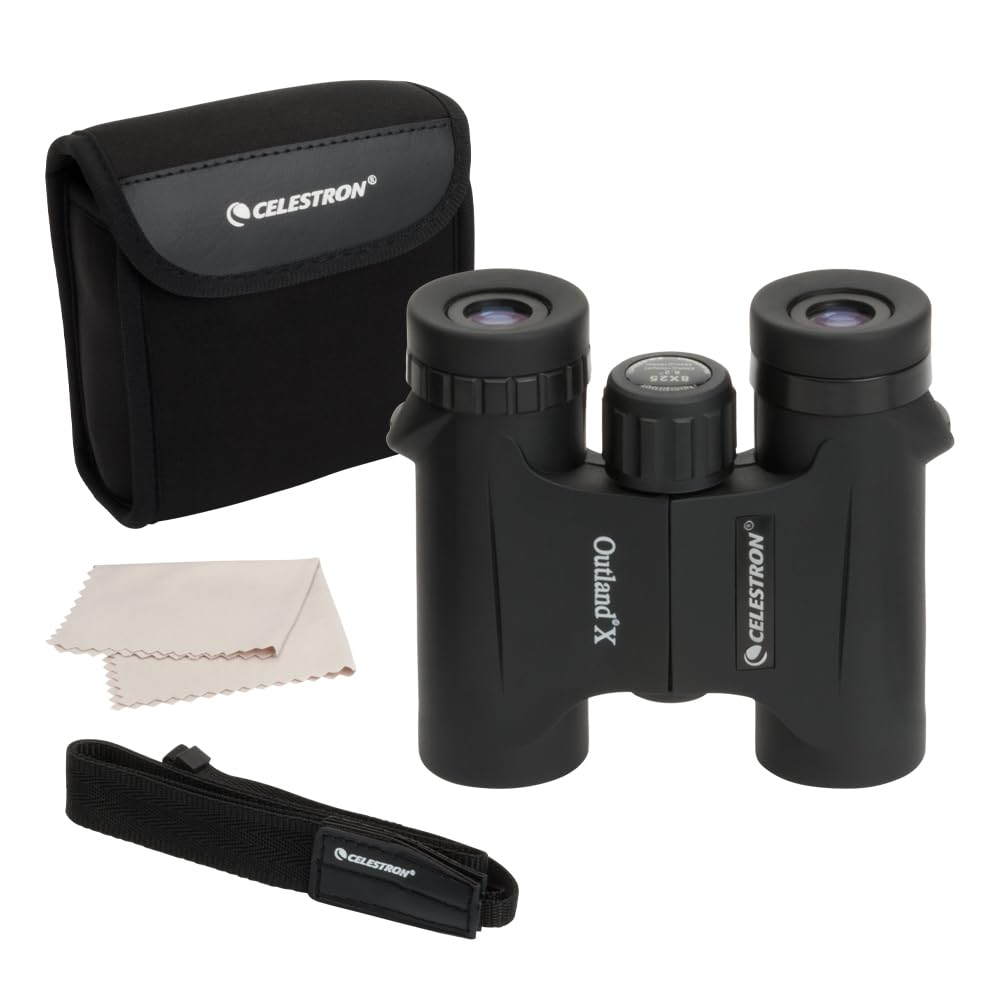
The Celestron Outland X 8×25 proves that entry-level pricing doesn’t mean trail-usability compromises. Its multi-coated lenses and BaK-4 prisms produce bright, color-accurate images that outperform the price point. The wide 8.2° angular field of view is exceptional for a compact model, making it easy to scan landscapes and follow birds in flight.
The rubber-armored polycarbonate housing is rugged enough for a kids’ trail adventure or as a spare pair in a car’s emergency kit. It’s fully waterproof and nitrogen-purged, ensuring it won’t fog up in humid or rainy conditions. The manual focus is smooth and the depth of field is generous, meaning less constant refocusing.
The 25mm objective limits low-light performance, and the 9.3mm eye relief is tight for eyeglass wearers—you’ll likely need to remove glasses for a full field of view. The compact size (under 12 ounces) makes it a non-issue in a pack. For the hiker on a budget or someone looking for a rugged, lightweight option for casual use, the Outland X delivers remarkable value.
Why it’s great
- Exceptionally wide field of view for a compact, affordable binocular
- BaK-4 prisms and multi-coated lenses punch above the price
- Waterproof, fogproof, and rugged at a very accessible point
Good to know
- 9.3mm eye relief is not ideal for eyeglass users
- Low-light performance is limited by the 25mm objective
FAQ
Is 8x or 10x magnification better for hiking?
What does IPX7 waterproof rating mean for binoculars?
Can I use 10x binoculars for hiking if I have steady hands?
Final Thoughts: The Verdict
For most users, the binoculars for hiking winner is the Nikon Monarch M5 8×42 because it delivers premium ED-glass clarity, fantastic light transmission, and a rugged build that handles any trail condition without compromise. If you want a more budget-conscious pair that still packs ED glass and excellent value, grab the Celestron Nature DX ED 8×42. And for ultralight day hikes where every ounce matters, nothing beats the compact, waterproof Nikon TRAVELITE EX 8×25.