
Scanning the vast savanna for a cheetah’s silhouette or tracking a herd of elephants at dusk demands optical gear that won’t let you down when the light fades or the dust kicks up. A shaky image, a fogged lens, or a frame that’s too heavy for a long day in the field can turn a once-in-a-lifetime trip into a blurry disappointment. The difference between spotting a leopard in a tree and simply seeing a dark blob comes down to one thing: choosing a tool built for the specific challenges of the African bush.
I’m Min — the co-founder and writer behind Gadgets Feed. I’ve spent countless hours dissecting the technical specifications for this category, analyzing dozens of models across every price echelon to understand exactly what separates a mediocre view from one that feels like you’re standing ten yards from the action.
Whether you are searching for an entry-level companion or a long-term investment in glass, this guide to the best binoculars for safari will help you match the right magnification, objective size, and optical coatings to your specific wildlife-viewing needs.
How To Choose The Best Binoculars For Safari
Safari conditions are uniquely demanding: high heat, blowing dust, direct sun glare, and critical observation during the golden hours of dawn and dusk when wildlife is most active. A design that works for baseball games or city sightseeing often fails when you are trying to resolve the stripe pattern of a kudu at four hundred meters in dying light. The following parameters will guide your decision.
Magnification and Objective Lens: The 8×42 and 10×42 Standard
The most versatile and recommended format for a general safari is the 10×42 configuration. The 10x magnification provides enough reach to identify distant animals while the 42mm objective lens gathers sufficient light for use in low-light conditions. An 8×42 offers a wider field of view and a more forgiving exit pupil, making it superior for tracking fast-moving birds or viewing through dense foliage. Anything over 12x typically requires a tripod or image stabilization to be practical from a moving vehicle or a shaky handrest.
Optical Coatings and Glass Types
Look for binoculars labeled “fully multi-coated,” meaning every air-to-glass surface is treated with multiple anti-reflective layers. For premium models, dielectric high-reflective prism coatings and phase-correction coatings on roof prisms dramatically improve color fidelity and resolution. Extra-low dispersion (ED) glass eliminates the purple-green fringing around high-contrast edges, which is particularly distracting when viewing birds or animals against a bright sky.
Build: Waterproofing, Weight, and Ergonomic Fit
Every safari binocular must be nitrogen-purged and O-ring sealed to prevent internal fogging when moving between air-conditioned vehicles and humid outdoor air. The weight of the unit matters significantly when you are carrying it on a neck strap for a full-day game drive—expect models in the 22- to 32-ounce range. A rubber-armored chassis provides necessary grip when your hands are sweaty or dusty, and a generous 16mm or greater eye relief is essential for eyeglass wearers to see the full field of view.
Quick Comparison
On smaller screens, swipe sideways to see the full table.
| Model | Category | Best For | Key Spec | Amazon |
|---|---|---|---|---|
| Nikon Monarch M5 8×42 | Mid-Range | Edge-to-edge clarity & best value | ED Glass / 335 ft FOV | Amazon |
| Swarovski EL 8.5×42 | Premium | Alpha-tier optical performance | 7.6° FOV / 20mm eye relief | Amazon |
| Vortex Razor HD 12×50 | Premium | High-power low-light observation | Plasma Tech coatings / 12x | Amazon |
| Zeiss Conquest HD 10×42 | Premium | Brightness & color fidelity | LotuTec coating / 90% light | Amazon |
| Canon 18×50 IS | Premium | Ultra-stabilized long-range viewing | Optical IS / 18x mag | Amazon |
| SIG SAUER Zulu6 16×42 | Premium | Compact image stabilization | OIS / 16x mag / IPX7 | Amazon |
| Vortex Razor UHD 18×56 | Premium | Maximum light & magnification | Abbe Koenig / 56mm obj. | Amazon |
| Nikon PROSTAFF 5 12×50 | Mid-Range | Lightweight high-power budget pick | Multilayer coat / 12×50 | Amazon |
| Bushnell H2O Xtreme 10×42 | Budget | Entry-level waterproof value | Fully multi-coated / IPX7 | Amazon |
In‑Depth Reviews
1. Nikon Monarch M5 8×42
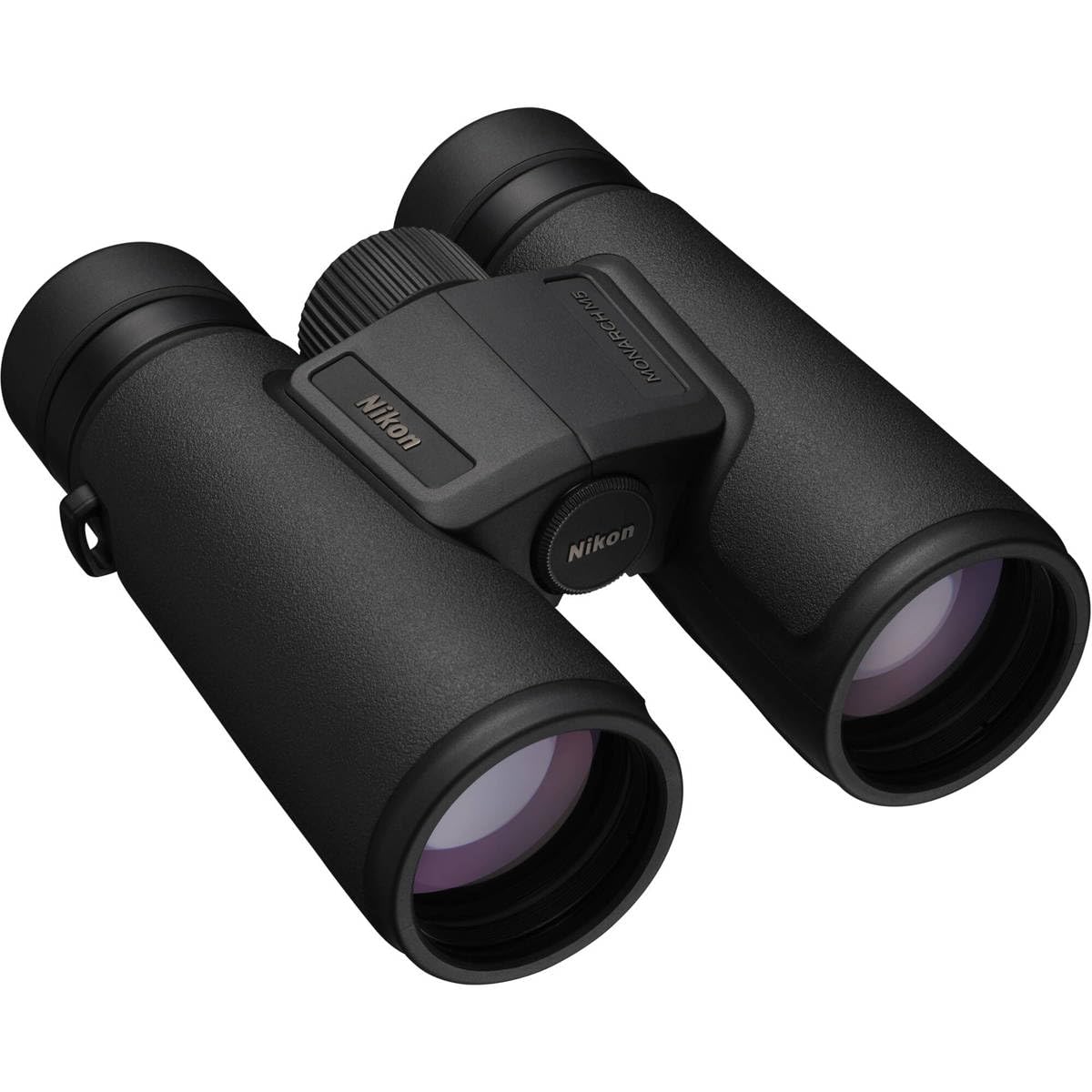
The Nikon Monarch M5 represents the high-water mark of value in the mid-range optical segment for the safari enthusiast. Its 8×42 configuration delivers a generous 335-foot field of view at 1,000 yards, which is exactly what you need when scanning a treeline for a resting leopard or tracking a herd of zebras on the move. The ED glass and dielectric high-reflective prism coatings push image clarity and color accuracy to a level that rivals optics costing three times as much.
Real-world safari users consistently praise the 19.5mm of eye relief, which allows eyeglass wearers to see the complete image without losing the edges. The rubber-armored chassis feels solid without being burdensome, and the smooth center focus knob requires only a light touch to transition from a near-termite mound to a distant acacia. The close-focus capability down to 8.2 feet means you can inspect a gecko on a wall without switching to a second optic.
The only note of caution is the weight—at just over 21 ounces it is not the lightest 8×42 on the market, and some users find the focus wheel sits slightly too close to the ocular bridge for perfectly natural index-finger operation. But neither issue undermines its standing as the most capable all-rounder you can pack for the bush without crossing into premium pricing territory.
Why it’s great
- Superb edge-to-edge sharpness with minimal chromatic aberration
- Long eye relief is ideal for eyeglass wearers
- Proven waterproof and fogproof with nitrogen purge
Good to know
- Slightly heavier and bulkier than some competitors
- Narrower field of view compared to the 8×42 standard from some premium makers
2. Swarovski EL 8.5×42

The Swarovski EL 8.5×42 is the benchmark against which all other premium binoculars are measured. It uses a unique 8.5x magnification that splits the difference between the wide field of an 8x and the reach of a 10x, producing a view that feels almost three-dimensional in its depth and clarity. The field-flattener system keeps the image tack-sharp to the very edge, which eliminates the need to constantly pan your head to re-center a subject.
In the low light of an early morning game drive, the EL series excels because of its high light transmission and precise color rendering. The 20mm of eye relief is generous enough for eyeglass wearers, and the proprietary field bag and lift carrying strap are designed to balance the weight of the 29-ounce body across your shoulders. Many professional guides and wildlife photographers trust this model as their primary optic for a reason.
The obvious barrier is the premium cost of entry, and the objective lens covers have been reported to wear out under daily use. The proprietary strap system is also polarizing—some adore it, others replace it immediately. Despite these minor quirks, this is a binocular you hand down to the next generation.
Why it’s great
- Flat-field optics deliver sharpness across the entire frame
- Exceptional low-light performance for twilight viewing
- Superior build quality with a lifetime warranty
Good to know
- Very high premium price point
- Objective lens covers can break with heavy use
3. Vortex Razor HD 12×50

When your safari itinerary includes late afternoon drives that stretch into sunset, the Vortex Razor HD 12×50 becomes an extraordinary asset. The 50mm objective lenses gather enough light to pull detail out of heavy shadows, and the 12x magnification lets you count the stripes on a distant zebra that a 10x could only resolve into a shape. The state-of-the-art anti-reflective coatings applied via plasma tech ensure that image brightness remains competitive even as the sun drops below the horizon.
The true open-hinge magnesium chassis keeps weight manageable for a 50mm class optic, but it still comes in around 30 ounces. The locking right-eye diopter prevents accidental adjustment, and the multi-position eyecups accommodate users who need precise eye relief settings. The Argon purging gives a slight edge over nitrogen for long-term waterproof integrity, and the ArmorTek coating on the exterior lenses resists scratches from the fine dust that coats everything on the savanna.
A 12x magnification amplifies hand shake proportionally, so consider using a vehicle window mount or a sturdy tripod for prolonged glassing sessions. The field of view at 285 feet is narrower than a 10x model, which means tracking a bounding impala requires more panning. But for stationary spotting of distant game, this is a stunning performer.
Why it’s great
- Excellent light gathering with 50mm objectives
- Plasma tech coatings provide superb brightness and contrast
- Unlimited, unconditional VIP warranty
Good to know
- Shaky at 12x without a support; tripod recommended
- Narrower field of view makes tracking harder
4. Zeiss Conquest HD 10×42

The Zeiss Conquest HD 10×42 delivers a level of brightness and color saturation that makes the African landscape look almost hyper-real. The proprietary T* coating is tuned individually for each lens element, and when combined with the LotuTec outer coating, water and dust bead off the glass surface with minimal effort. The company’s claim of 90-percent light transmission translates directly into a vivid, high-contrast image during the critical first and last hours of daylight.
The ergonomic design is a standout—the large focusing wheel is textured for grip even with gloves, and the slightly slanted eyecups align naturally with the orbital bone. At just under 26 ounces, the Conquest HD is light enough to wear all day without neck fatigue. The field of view of 345 feet at 1,000 yards is competitive for its class and makes scanning open plains a fluid experience.
The early editions of the Conquest had issues with gritty eyecups, though Zeiss addressed the problem post-2024 and offers replacements. The objective lens covers can pop off more easily than users would like, and the tripod adapter is sold separately at a premium. Still, for the money, this is some of the best glass Zeiss makes below its top-tier SF line.
Why it’s great
- Exceptional 90% light transmission for low-light clarity
- LotuTec coating sheds water and dust effectively
- Lightweight and ergonomic for all-day carry
Good to know
- Objective lens covers can detach easily
- Eyecup mechanism has had quality issues in older units
5. Canon 18×50 IS

The Canon 18×50 IS is a specialized tool that completely changes what you expect from a handheld binocular. The 18x magnification would be unusable from a bouncing safari vehicle without the built-in image stabilization, but Canon’s system effectively cancels out the vibration, turning a distant herd into a collection of individually identifiable animals. It is particularly useful for spotting birds of prey circling impossibly high or for scanning a far ridgeline where a 10x reveals only a golden blur.
The optical stabilization runs on two AA batteries, and the auto-off feature preserves battery life during extended periods of non-use. The lenses are multi-coated for contrast and color fidelity, and the body is both shock- and water-resistant to handle the inevitable dust and brief rain showers. For astronomy enthusiasts on night drives, this is also a capable instrument for resolving globular clusters.
The drawbacks are real. The eyecups are notoriously uncomfortable—hard plastic that can dig in during prolonged use—and many owners have customized them with Sugru putty. The accessory package is underwhelming for the price, lacking front lens caps and featuring a padded cover that offers minimal protection. At over three pounds, it is heavy to carry all day, so a harness or a chest pack is almost mandatory.
Why it’s great
- Stabilization makes 18x handheld a reality
- Excellent for long-range identification and astronomy
- AA batteries are easy to replace in remote locations
Good to know
- Uncomfortable eyecups straight from the box
- Heavy for all-day carry at over 3 pounds
6. SIG SAUER Zulu6 16×42

The SIG SAUER Zulu6 HDX 16×42 redefines what an image-stabilized binocular can be in terms of portability. It is roughly the size and weight of a standard 8×42 roof prism, yet it packs 16x magnification stabilized by SIG’s proprietary OIS technology. The Scan Mode is ideal for sweeping a landscape to locate animals, and the Target Mode increases stabilization by up to 50 percent to lock onto a specific animal for detailed observation.
The HDX glass lenses enhance resolution and light transmission, and the SpectraCoat anti-reflective coatings keep the image bright even in the challenging midday direct-sun conditions common to the savanna. The IPX7 waterproof rating means it can survive a full immersion, which is overkill for safari but reassuring during unexpected downpours. The aluminum body feels more premium than the polycarbonate frames found on some competitors in the same price bracket.
The 16×42 format inherently has a smaller exit pupil of 2.63mm, which means the image dims noticeably in deep twilight compared to a 50mm objective. The field of view is narrow at around 164 feet, so quickly acquiring a moving animal from a Land Cruiser takes practice. Battery life is adequate but not exceptional, so carrying spare CR123 cells is wise.
Why it’s great
- Incredibly compact and light for a stabilized 16x optic
- Dual stabilization modes for scanning and target lock
- IPX7 waterproof rating for total weather protection
Good to know
- Narrow field of view makes target acquisition tricky
- Small exit pupil limits low-light performance
7. Vortex Razor UHD 18×56

At the zenith of Vortex’s lineup sits the Razor UHD 18×56, a binocular engineered for the observer who demands absolute light-gathering capability and resolution. The Abbe Koenig prism design is inherently more efficient at transmitting light than traditional Schmidt-Pechan prisms, which makes the image appear startlingly bright even when the sun is barely cresting the horizon. The index-matched lenses ensure that color is consistent across the entire visual spectrum, eliminating chromatic aberration completely.
The magnesium chassis keeps the weight down relative to its massive 56mm objectives, but at just under three pounds, this is a binocular that demands a harness or tripod for serious use. The Ultra-Hard ArmorTek coating protects the lenses from the scratching that fine dust can cause, and the Argon purging provides an extra layer of protection against internal fogging. It ships with a GlassPak Pro harness and rangefinder pouch, which adds substantial value to the package.
The 18x magnification combined with a 56mm objective produces an extremely narrow field of view of 194 feet at 1,000 yards. This makes it nearly impossible to use in a close-quarters environment like a riverine forest. It is best deployed on an open plain from a stationary vehicle or tripod, where its ability to resolve the texture of a lion’s mane at 500 meters becomes a genuine superpower.
Why it’s great
- Abbe Koenig prisms provide peak light transmission
- Exceptional for extreme low-light and long-range detail
- Includes high-quality GlassPak Pro harness
Good to know
- Very narrow field of view; difficult for close tracking
- Heavy; requires a support system for prolonged use
8. Nikon PROSTAFF 5 12×50
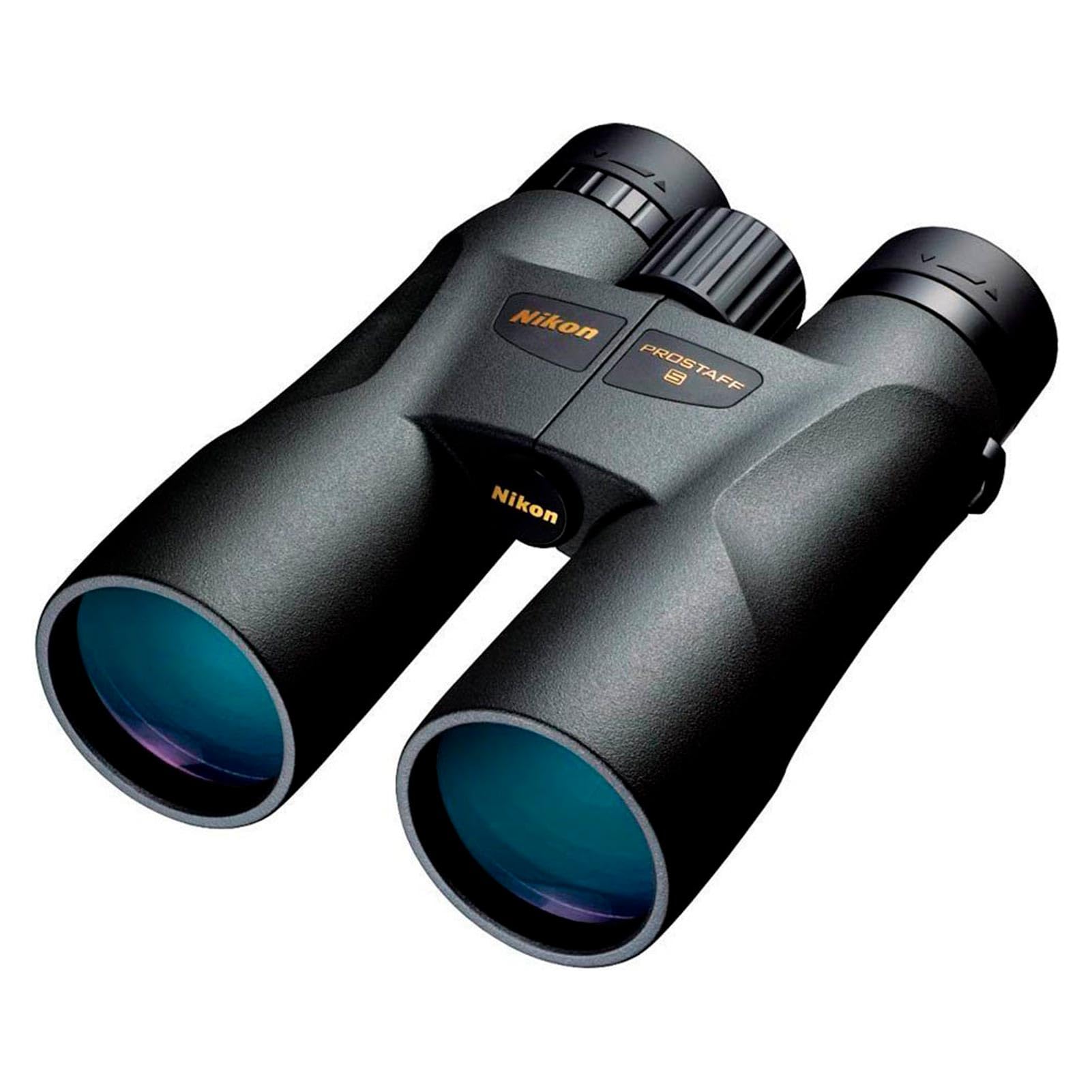
The Nikon PROSTAFF 5 12×50 offers a compelling entry point for safari-goers who want extra reach without jumping to a premium price tier. The 12x magnification is enough to bring distant animals into a recognizable frame, while the 50mm objective ensures you maintain decent brightness during the early morning and late afternoon game drives. The fiberglass-reinforced polycarbonate resin body keeps the weight surprisingly manageable for a 50mm configuration.
The multilayer-coated lenses reduce glare and provide a respectable level of contrast, though the glass is not in the same league as the ED and dielectric-coated prisms of higher-end models. The high-eyepoint design delivers 15.5mm of eye relief, which is sufficient for most eyeglass wearers. The nitrogen-filled and O-ring sealed construction makes it completely waterproof and fogproof, so you can operate confidently through unexpected rain or the high humidity of a river cruise.
At 12x, you will notice that the image is less tolerant of hand shake than a 10x, and the PROSTAFF 5 lacks any stabilization mechanism. It works well when braced against a window frame or a door pillar. The turn-and-slide rubber eyecups click into multiple positions, but the overall build feels slightly less premium than the metal-bodied models from Vortex or Zeiss in this list.
Why it’s great
- Lightweight for a 12×50 thanks to polycarbonate body
- Good budget-friendly entry to high-magnification viewing
- Fully waterproof and fogproof with nitrogen purge
Good to know
- Optical coatings are basic; image quality is not class-leading
- Hand shake is noticeable at 12x without bracing
9. Bushnell H2O Xtreme 10×42

The Bushnell H2O Xtreme 10×42 is the most affordable entry point into a real safari-capable binocular. It is upgraded from the standard H2O series with fully multi-coated glass, which marks a significant improvement in brightness and clarity over the basic coated optics found at this price point. The BaK-4 prisms ensure you are getting a round exit pupil with no dark edges, a common complaint with cheaper glass.
The 100-percent waterproof construction uses O-ring seals and nitrogen purging to prevent fogging, a feature that is non-negotiable for the abrupt temperature changes of a game vehicle. The rugged rubber design with textured soft grips provides excellent purchase even when your hands are slick with sunscreen or sweat. The included strap, case, and lens covers mean you are ready to pack for safari without buying additional accessories.
The trade-offs are expected at this level. The lens coatings are not dielectric or phase-corrected, so the color fidelity and resolution do not match the mid-range options. Some models in the H2O Xtreme line lack a tripod adapter socket, so if you plan to mount them for steady long-range viewing, confirm the specific model number includes it. The image is commendably bright for the price, but chromatic aberration and edge softness are more apparent than in higher-tier glass.
Why it’s great
- True waterproof and fogproof performance at a low entry cost
- Fully multi-coated optics and BaK-4 prisms for the price
- Compact roof prism design is easy to pack
Good to know
- Some models do not have a tripod adapter socket
- Image quality shows chromatic aberration and softer edges
FAQ
Is 10x or 8x better for a first safari?
Do I really need image stabilization for safari?
What is the best objective lens size for safari?
How important is a waterproof rating on a safari binocular?
Final Thoughts: The Verdict
For most users, the binoculars for safari winner is the Nikon Monarch M5 8×42 because it delivers ED glass clarity and a wide field of view at a price that does not require a dedicated optics savings fund. If you want the absolute best light transmission and long-range power, grab the Vortex Razor HD 12×50. And for the portable image stabilization experience that makes handheld high-power viewing a reality, nothing beats the SIG SAUER Zulu6 16×42.