
The difference between seeing a distant bird and identifying the subtle stripes on its flank comes down to the quality of the glass in your hands. For wildlife viewing, the goal isn’t just magnification—it’s gathering enough light at dawn and dusk to reveal critical details when the animals are most active.
I’m Min — the co-founder and writer behind Gadgets Feed. I comb through technical datasheets, customer field reports, and comparative optical benchmarks to identify which models deliver real-world performance for serious wildlife enthusiasts.
The analysis below focuses on the key optical specifications that define the best binoculars for wildlife viewing, helping you choose a pair built for immersive nature observation.
How To Choose The Best Binoculars For Wildlife Viewing
Picking the right binoculars for wildlife viewing comes down to balancing magnification, light-gathering ability, and physical weight. A 10×42 configuration remains the most versatile standard, but 8×42 models offer a steadier image in dense forest, while 12x or 18x options suit open plains and long-range spotting.
Magnification and Objective Lens Diameter
The first number (magnification) and the second (objective lens diameter in millimeters) define how close things look and how much light enters the system. For wildlife viewing, a 10x magnification is popular, but higher magnifications like 12x or 18x require a steady hold or tripod. A larger objective lens (42mm or 50mm) collects more light, improving visibility in low-light conditions like dawn and dusk.
Prism Quality and Glass Coatings
BaK-4 prisms deliver brighter, sharper images than BK-7 prisms by reducing internal light scatter. Fully multi-coated lenses apply anti-reflective layers to every air-to-glass surface, maximizing light transmission. Extra-low dispersion (ED) glass eliminates chromatic aberration—the purple or green fringing you see around high-contrast edges—for true-to-life colors.
Waterproofing and Fogproofing
Wildlife viewing often means unpredictable weather. Nitrogen purging and O-ring seals prevent internal fogging and moisture ingress, ensuring your binoculars function in rain, humidity, or temperature shifts. An IPX7 rating guarantees submersion in up to one meter of water for 30 minutes, offering robust protection.
Quick Comparison
On smaller screens, swipe sideways to see the full table.
| Model | Category | Best For | Key Spec | Amazon |
|---|---|---|---|---|
| Vortex Razor UHD 18×56 | Premium | Long-range open country | Abbe Koenig prism, 56mm objective | Amazon |
| ZEISS Terra ED 10×42 | Premium | All-weather birding | 88% light transmission, ED glass | Amazon |
| Celestron TrailSeeker ED 8×42 | Mid-Range | Close-focus birding | ED objective, BaK-4 phase-coated | Amazon |
| Nikon PROSTAFF P7 10×42 | Mid-Range | Bright, lightweight hiking | Dielectric prism coating, 367ft FOV | Amazon |
| Sogries 12×50 ED | Mid-Range | High magnification on a budget | ED glass, IPX7 waterproofing | Amazon |
| Nocs Provisions Field Issue 10×32 | Mid-Range | Ultra-portable travel | Lightweight 16.7 oz, IPX7 | Amazon |
| Nikon TRAVELITE EX 10×25 | Budget | Compact day hikes | Multilayer-coated, 10×25 body | Amazon |
| Bushnell H2O Xtreme 10×42 | Budget | Wet conditions on a budget | Fully multi-coated, IPX7 | Amazon |
| Vortex Copperhead HD 10×42 | Budget | Entry-level with HD glass | HD optics, 17mm eye relief | Amazon |
In‑Depth Reviews
1. Vortex Optics Razor UHD 18×56 Binoculars

The Vortex Razor UHD 18×56 sits at the apex of the consumer binocular market, using an Abbe Koenig prism design that delivers unparalleled resolution and color fidelity. Index-matched lenses correct color across the visual spectrum, and the XR Plus anti-reflective coatings maximize light transmission in fading light. This combination is ideal for open-country scanning where distant elk or pronghorn need to be identified at extreme range.
The magnesium chassis with an open-hinge design reduces weight to a manageable level for a 56mm objective, though the 18x magnification demands a tripod for stable viewing. Argon purging and O-ring seals guarantee fogproof and waterproof performance in any environment. The included GlassPak Pro harness distributes the weight comfortably during long hikes.
Users consistently praise the edge-to-edge sharpness and lack of chromatic aberration, with one reviewer noting the optics rival those of Swarovski ELs. The tradeoff is a focus wheel that requires multiple turns from near to far, which may frustrate fast-movement birders. For dedicated wildlife viewers who prioritize ultimate low-light clarity and resolution, this is the benchmark set.
Why it’s great
- Exceptional edge-to-edge sharpness with zero color fringing
- Maximizes light transmission for superior low-light performance
- Lifetime unconditional VIP warranty
Good to know
- High magnification requires a tripod for steady viewing
- Focus wheel is slow for tracking fast-moving subjects
- Weighs significantly more than 42mm models
2. ZEISS Terra ED Binoculars 10×42
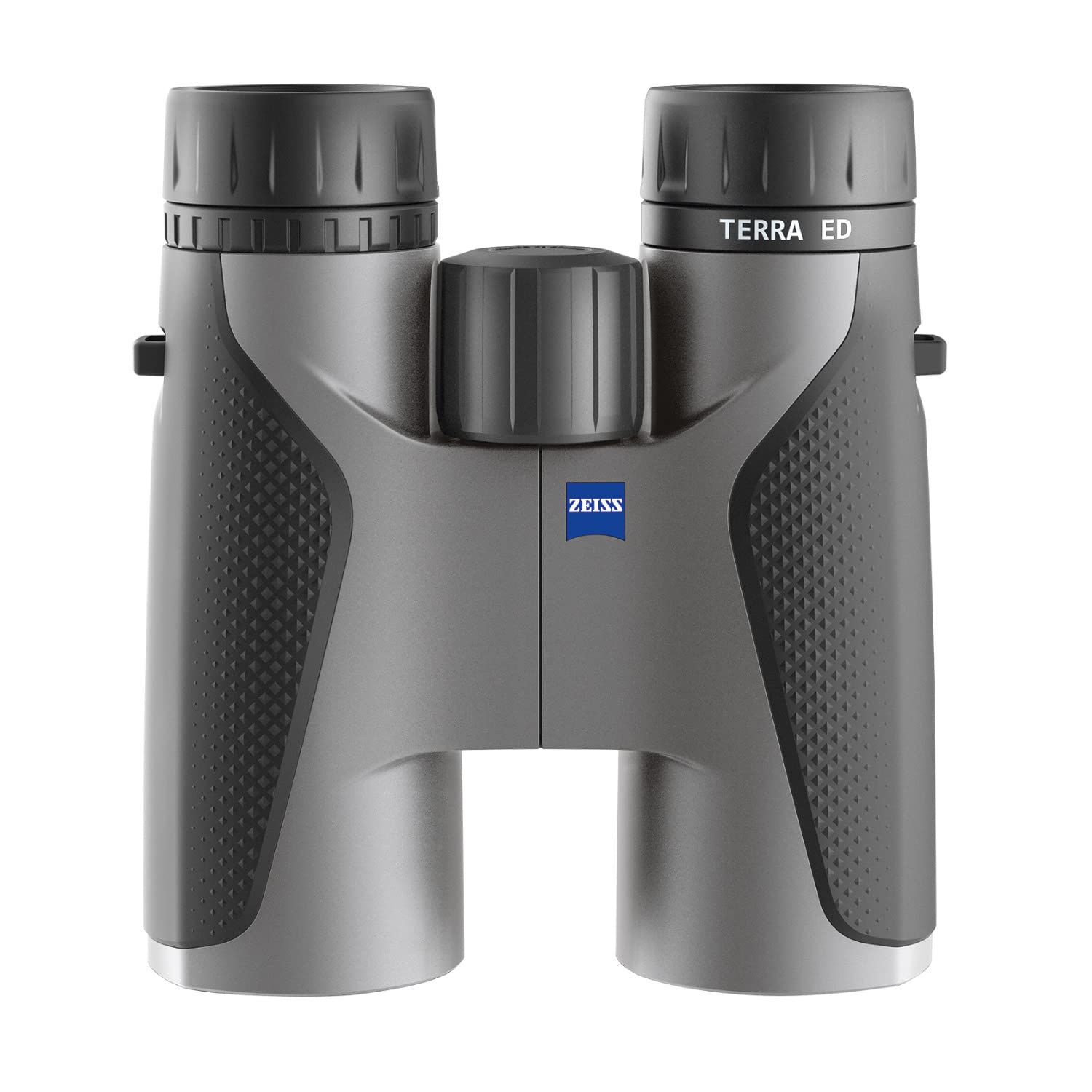
Zeiss packs its legendary ED glass and hydrophobic multi-coating into the Terra ED 10×42, achieving 88% light transmission that keeps images bright and contrast-rich even during overcast mornings. The Schmidt-Pechan prism design is paired with a precision focus wheel that your index finger naturally finds for quick adjustments when a bird flushes from cover.
The fiberglass-reinforced polycarbonate body is tough yet lightweight, and the hydrophobic coating sheds water droplets instantly in rain, maintaining a clear view. The 18mm of eye relief is generous for eyeglass wearers, and the twist-up eyecups offer multiple stop positions for optimal positioning. The included neoprene strap and hard case add to the premium feel.
User feedback consistently highlights the Terra ED’s ability to outperform its price tier, with one reviewer claiming it crowns the sub- category for clarity and color accuracy. The compact dimensions make it easy to pack for a day of hiking or safari. It’s a near-perfect do-it-all binocular for wildlife viewing.
Why it’s great
- Exceptional light transmission for low-light conditions
- Hydrophobic coating keeps lenses clear in rain
- Fast, intuitive focus wheel
Good to know
- Premium price point for the mid-range market
- Some users prefer wider field of view for scanning
- Made in China, though quality is excellent
3. Celestron TrailSeeker ED 8×42 Binoculars
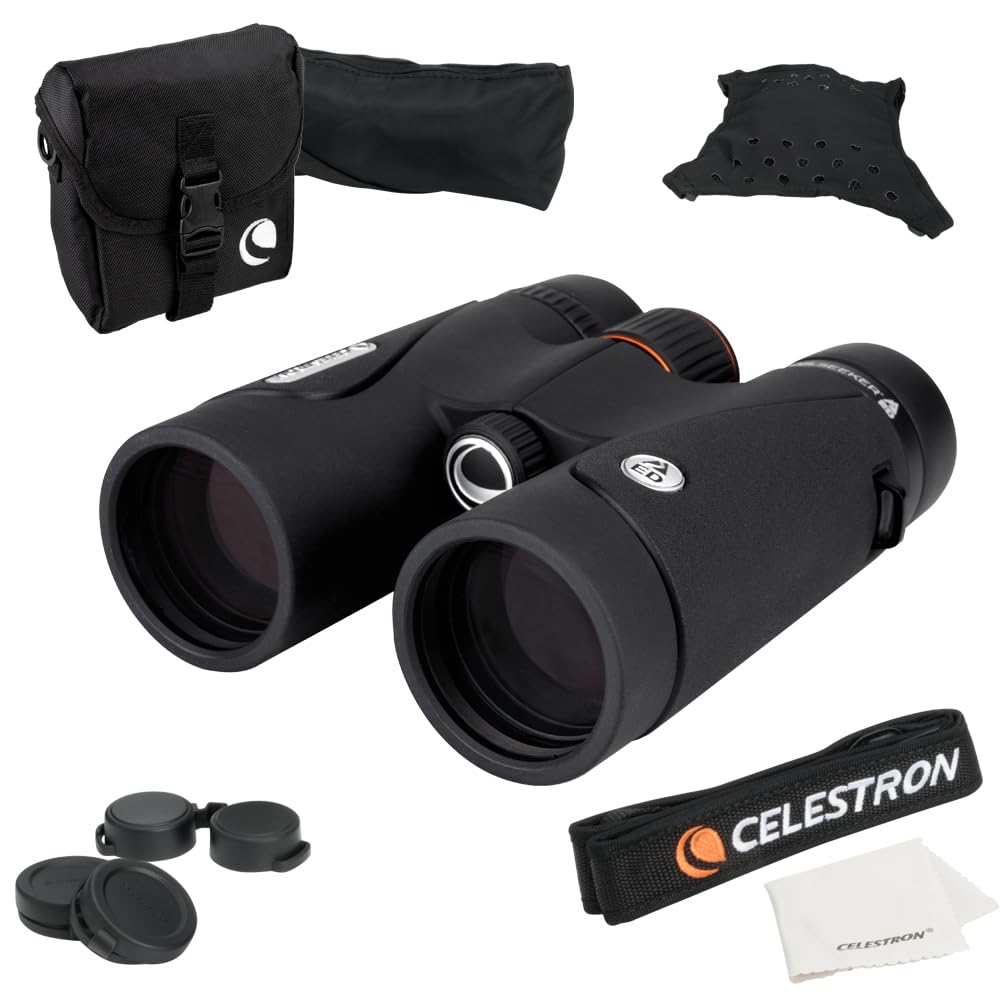
The Celestron TrailSeeker ED 8×42 brings premium ED glass and phase-coated BaK-4 prisms to a price point that undercuts most competitors with similar specs. The extra-low dispersion glass virtually eliminates chromatic aberration, producing razor-sharp images with true-to-life color. The 8x magnification offers a wide field of view (425 feet at 1000 yards) that is ideal for tracking birds in dense foliage.
The rubber-armored polycarbonate body is fully waterproof and nitrogen-purged to prevent internal fogging. A close focus of under 7 feet lets you examine small subjects just a few meters away, which is rare for binoculars in this class. The included carry harness and padded neck strap make extended sessions comfortable, though the unit weighs just under 30 ounces.
Birders who have used the TrailSeeker ED praise its clarity and fast focus action, with one reviewer noting they could see birds inside bushes thanks to the excellent light transmission. The build quality feels solid, and the Celestron limited lifetime warranty adds peace of mind. This is the pick for enthusiasts who want ED performance without the premium markup.
Why it’s great
- ED glass eliminates color fringing at a budget-friendly price
- Close focus under 7 feet for near-range observation
- Wide field of view ideal for tracking birds
Good to know
- Heavier than some 8×42 competitors
- Neck strap may cause fatigue on long hikes
- Not as compact as travel-oriented models
4. Nikon 10×42 PROSTAFF P7 Binoculars

The Nikon PROSTAFF P7 10×42 represents the flagship of Nikon’s value-oriented PROSTAFF line, featuring dielectric high-reflective multilayer prism coatings that maximize light transmission for bright, vivid images. The phase-correction coated roof prisms and fully multi-coated lenses work together to deliver sharp, high-contrast views even in low light. The 7-degree angle of view provides a generous 367-foot field at 1000 yards.
The fiberglass-reinforced polycarbonate body is wrapped in shock-resistant rubber armor, and the unit weighs just under 22 ounces for excellent portability. A locking diopter ring prevents accidental adjustments, and oil- and water-repellent lens coatings make cleaning a breeze after muddy field sessions. The turn-and-slide eyecups offer 15.7mm of eye relief, accommodating eyeglass wearers comfortably.
Users report that the PROSTAFF P7 delivers brightness and clarity that rivals Nikon’s larger 50mm models, making it a go-to for long hikes where weight matters. The focus wheel is smooth and precise, and the build quality feels confident in wet conditions. For a balanced 10×42 that doesn’t break the bank, this is a top contender.
Why it’s great
- Dielectric coatings deliver exceptional brightness and color
- Lightweight at under 22 ounces
- Locking diopter and hydrophobic lens coatings
Good to know
- Not as robust in heavy rain as higher-tier models
- Limited close focus compared to dedicated birding optics
- Some users prefer wider field of view for scanning
5. Sogries 12×50 ED Binoculars

The Sogries 12×50 ED packs professional-grade ED glass and fully multi-coated optics into a body that costs a fraction of premium alternatives, making it an aggressive contender for those who want high magnification without emptying their wallet. The 12x magnification and 50mm objective lens deliver bright images even during twilight, while the BAK4 roof prisms minimize stray light for sharp, high-resolution visuals. The ultra-wide angle design offers a 335-foot field of view at 1000 yards.
The nitrogen-filled IPX7 waterproof construction ensures fogproof performance in humid coastal areas or sudden downpours. The magnesium alloy chassis wrapped in heavy-duty rubber armor provides a secure non-slip grip even when wet. Twist-up eyecups with 18mm of eye relief accommodate glasses, and the large center focus wheel allows quick adjustments. The unit weighs 750 grams, which is reasonable for a 50mm binocular.
Customer reviews highlight the minimal chromatic aberration and smooth focusing mechanism, with many noting the build quality exceeds what the price suggests. The 12x magnification does require steady hands to avoid shake, but the image stability is good when braced. This budget-friendly 12×50 is an excellent choice for open country or stargazing where max power is needed.
Why it’s great
- Professional ED glass at a budget-friendly price
- IPX7 waterproof and fogproof construction
- High 12x magnification with wide field of view
Good to know
- High magnification requires steady hands or tripod
- Heavier than standard 10×42 models
- Customer support may be less established than major brands
6. Nocs Provisions Field Issue Compact 10×32
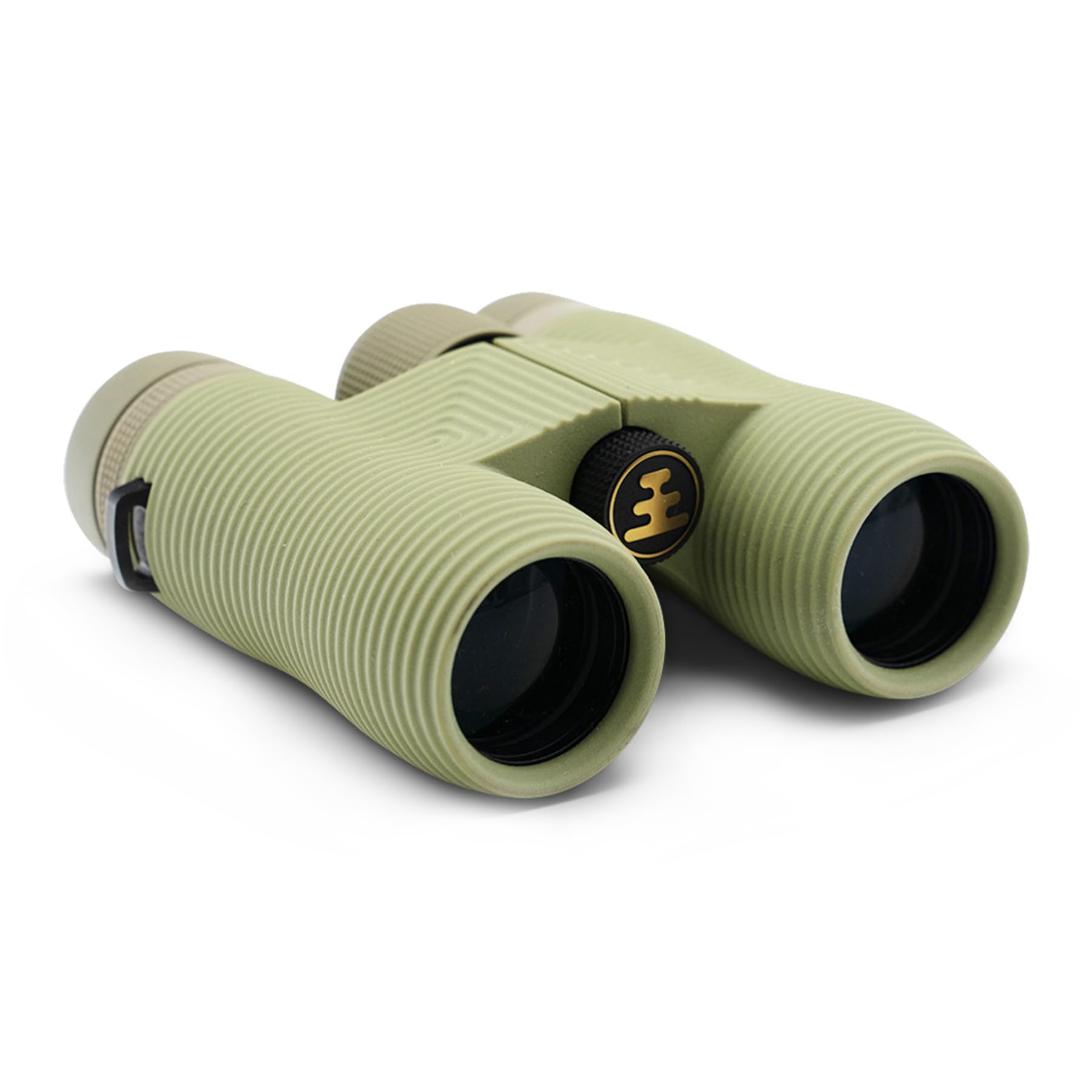
Nocs Provisions designed the Field Issue 10×32 for uncompromising portability without sacrificing optical quality, weighing just 16.7 ounces. The fully multi-coated optics and Swiss-designed BaK-4 prism system deliver bright, sharp views across a 315-foot field at 1000 yards. The oversized focus wheel allows ultra-precise adjustments from 9.3 feet to infinity, making it easy to track fast-moving wildlife.
The IPX7-rated body is nitrogen-sealed to prevent fogging, and the patented Rugged Wave Grip ensures a secure hold in wet conditions. Multi-stop twist-up eyecups offer three distinct positions for personalized eye relief, accommodating both eyeglass wearers and bare eyes. The compact form factor makes it travel-friendly for backpacks or carry-on luggage.
Users consistently praise the Field Issue for its balance of size and performance, with one reviewer calling it ideal for the Pantanal where weight and space are at a premium. The “No-Matter-What” Lifetime Warranty from Nocs adds long-term confidence. While the 32mm objective gathers less light than 42mm models in deep dusk, it’s the best compact companion for daytime wildlife viewing.
Why it’s great
- Extremely lightweight at 16.7 ounces for travel
- Precise oversized focus wheel for quick adjustments
- IPX7 waterproof with nitrogen purging
Good to know
- 32mm objective limits low-light performance
- Included case and strap quality are basic
- Field of view is narrower than full-size 10×42 models
7. Nikon TRAVELITE EX 10×25 Binoculars

The Nikon TRAVELITE EX 10×25 is purpose-built for hikers and travelers who refuse to sacrifice pocket space, squeezing 10x magnification into a compact body that weighs next to nothing. The multilayer-coated optics and aspherical eyepiece lenses deliver edge-to-edge clarity with minimal distortion, while the nitrogen-purged O-ring sealed body provides waterproof protection for up to five minutes at two meters depth.
The die-cast aluminum body wrapped in protective rubber armoring absorbs shocks and provides a secure grip. The high-eyepoint construction with turn-and-slide eyecups offers 14mm of eye relief, and the click-type diopter adjustment ensures precise calibration. The field of view is 4.2 degrees (220 feet at 1000 yards), which is adequate for scanning but tighter than larger models.
Users love the TRAVELITE EX for its tiny footprint, with one reviewer noting they take it everywhere and appreciate the sharp focus even in low light. The 10×25 configuration is daylight-optimized, so don’t expect twilight performance matching larger objectives. This is the ultimate grab-and-go companion for casual nature walks and international trips.
Why it’s great
- Ultra-compact and lightweight for pocket carry
- Waterproof and fogproof for all-weather use
- Sharp, clear image with minimal distortion
Good to know
- Limited low-light performance due to 25mm objective
- Narrow field of view compared to larger binoculars
- Small eyecups may be less comfortable for long sessions
8. Bushnell H2O Xtreme 10×42 Binoculars

Bushnell’s H2O Xtreme 10×42 upgrades the classic H2O series with fully multi-coated glass surfaces that maximize clarity and light transmission, all while keeping the price accessible for budget-conscious wildlife viewers. The BaK-4 prisms ensure bright images, and the O-ring sealed design with nitrogen purging guarantees fogproof performance in wet conditions. The compact roof-prism form factor makes it easy to pack for boating or hiking trips.
The rugged rubber armor provides non-slip grip even when wet, and the included case, strap, and lens covers offer a complete kit out of the box. The 10×42 configuration provides a 6.8-degree field of view (357 feet at 1000 yards), which is competitive for the price tier. The focus wheel is smooth, and the diopter adjustment works precisely. Note that this model lacks a tripod adapter socket, so plan for handheld use only.
Customer feedback praises the H2O Xtreme for its bright, clear optics and light weight, with many noting it’s a significant upgrade from basic entry-level models. Some users report the neck strap is uncomfortable, but the overall value proposition is strong. It’s a solid choice for those who need dependable waterproof binoculars without a premium investment.
Why it’s great
- Fully multi-coated glass for bright, sharp images
- IPX7 waterproof and fogproof construction
- Compact roof-prism design for easy portability
Good to know
- No tripod adapter socket for stable mounting
- Neck strap is basic and may be uncomfortable
- Optical coatings are less advanced than premium models
9. Vortex Copperhead HD 10×42 Binoculars

The Vortex Copperhead HD 10×42 is an entry-level binocular that punches well above its weight class thanks to an HD optical system that delivers outstanding color fidelity and edge-to-edge sharpness. The fully multi-coated lenses increase light transmission, and the 10×42 configuration provides a 334-foot field of view at 1000 yards. The rubber armor offers a non-slip grip and durable protection against drops.
Waterproof, fogproof, and shockproof construction ensures the Copperhead can handle a full hunting season in rain and snow without issues. The adjustable eyecups and diopter provide a custom fit, and the included GlassPak binocular harness distributes weight comfortably for long days in the field. The unit is tripod adaptable for added versatility during long-distance scanning sessions.
Users report that the Copperhead HD is a great value for the money, with one reviewer noting it serves well for hunting year-round. A direct comparison to Vortex‘s Diamondback line suggests the Copperhead is slightly less crisp at the edges and in low light, but for most users, the difference is minimal. Backed by Vortex’s unlimited lifetime VIP warranty, this is a risk-free entry point into HD optics.
Why it’s great
- HD optics with excellent color fidelity and sharpness
- Fully waterproof, fogproof, and shockproof
- Includes GlassPak harness for comfortable carry
Good to know
- Slightly less crisp edges than higher-tier Vortex models
- Heavier than some competitors in the same class
- Low-light performance is adequate but not exceptional
FAQ
What is the best magnification for wildlife watching?
Does ED glass really make a difference for wildlife binoculars?
Why is eye relief important for wildlife binoculars?
Final Thoughts: The Verdict
For most users, the binoculars for wildlife viewing winner is the ZEISS Terra ED 10×42 because it combines premium ED glass, 88% light transmission, and a fast focus wheel into a durable weatherproof package that works for all-day hikes. If you want the ultimate long-range performance, grab the Vortex Razor UHD 18×56 for its Abbe Koenig prism and unmatched low-light clarity. And for a compact travel companion, nothing beats the Nocs Provisions Field Issue 10×32 for its ultra-light design and sturdy build.