
That faint ammonia spike three weeks after setup isn’t bad luck—it’s a sign your biological filter media lacks the surface area to host enough nitrifying bacteria. Unlike mechanical filter pads that trap debris, bio media exists for one purpose: providing a high-surface-area home for the bacteria that convert toxic ammonia into nitrites and then into nitrates. Choosing the right material and structure determines whether your tank cycles in two weeks or struggles for two months.
I’m Min — the co-founder and writer behind Gadgets Feed. I’ve spent countless hours analyzing the porosity, density, and long-term durability of aquarium bio media to help aquarists match their filtration setup to the right substrate.
After comparing seven leading options, this guide delivers a clear verdict on the best bio media for aquarium setups, from nano tanks to large sump systems.
How To Choose The Best Bio Media For Aquarium
Not all porous chunks are created equal. A ceramic ring with 200 square feet per liter of surface area hosts far fewer bacteria than a sintered glass bead with 1,800 square feet per liter. Understanding the material science behind bio media prevents you from filling your filter with inert rock that does little more than take up space.
Surface Area Density and Porosity
The single most important metric is how many square feet of bacterial housing you get per unit volume. Sintered glass and high-fired ceramic media typically offer 800 to 1,800 square feet per liter, while standard plastic bio-balls provide roughly 100 to 200 square feet per liter. More surface area means your filter can support a larger bacterial colony, which translates directly to faster ammonia processing and greater bioload capacity.
Durability and Maintenance Cycle
Cheap ceramic rings often chip or break apart during routine cleaning, sending fine dust into your water column. Premium sintered materials resist crumbling and can be rinsed vigorously with aquarium water every one to three months without structural degradation. Consider how often you want to replace media—durable options last three to five years, while fragile ceramics may need partial replacement every six months.
Compatibility With Your Filter Type
Size matters inside your filter chambers. Large irregular pieces can create dead zones in canister trays, while very small pellets may fall through grates in sump baffles. Measure your filter basket depth and ensure the media dimensions allow even water flow without channeling, which occurs when water finds a path through gaps instead of contacting the entire media mass.
Quick Comparison
On smaller screens, swipe sideways to see the full table.
| Model | Category | Best For | Key Spec | Amazon |
|---|---|---|---|---|
| EHEIM Substrat Pro | Premium Sintered Glass | Maximum bacterial colonization | 1,800 sq ft per liter surface area | Amazon |
| Fluval BIO-FX | Premium Ceramic | Large canisters and sumps | 5 liters bulk volume | Amazon |
| Fluval SPEC Biomax | Cartridge Replacement | Fluval SPEC filters | 2.1 oz per pack (3-pack) | Amazon |
| Reefing Art Ceramic Blocks | Bulk Ceramic | Budget-friendly sump fill | 24 pieces per box | Amazon |
| CNZ Media Kit | Multi-Media Kit | All-in-one starter pack | Includes carbon, bio-balls, ceramic rings | Amazon |
| AQUACITY 5 Lbs Rings | Bulk Ceramic Rings | Medium canisters and HOB filters | 5 pounds bulk / 80 rings | Amazon |
| Aquapapa 6 Lbs Rings + Bags | Value Pack | Large ponds and heavy bioloads | 6 pounds with 6 mesh bags | Amazon |
In‑Depth Reviews
1. EHEIM Substrat Pro Biological Filter Media 1L

The EHEIM Substrat Pro is made from sintered glass—artificially fused at high temperature to create an intricate web of micro-tunnels. Its 1,800 square feet of surface area per liter is the highest density among all seven products tested here, meaning each cubic inch of media hosts dramatically more nitrifying bacteria than standard ceramic rings or plastic bio-balls. The pearl-shaped pellets pack tightly without compacting, ensuring water flows through every particle rather than channeling around them.
Users report stable ammonia and nitrite readings even during fishless cycling at 4 ppm ammonia per day, which indicates the media matures quickly and supports a robust colony. The material does not degrade or crumble during cleaning—many aquarists report the same batch lasting the entire life of their aquarium without measurable decline in performance. Rinsing every one to three months with dechlorinated water is sufficient to restore flow.
The 1-liter volume is ideal for canister filters like the EHEIM Classic or Pro series, but the media also works well in sump baskets and HOB filters when placed in mesh bags. The only trade-off is cost per liter relative to bulk ceramic rings, but the surface area density justifies the premium for serious aquarists who want maximum biological filtration from minimal filter space.
Why it’s great
- Highest surface area density at 1,800 sq ft per liter
- Does not crumble or degrade during cleaning
- Supports fast fishless cycling with stable chemistry
Good to know
- Higher upfront cost than bulk ceramic options
- Small pellets can scatter during maintenance without mesh bag
2. Fluval BIO-FX Biological Filter Media 5 Liters

Fluval’s BIO-FX media uses a deep-pore ceramic structure with interconnected micro-tunnels that prevent blockages while maintaining high water contact time. The 5-liter box provides enough media to fill an FX6 canister completely, with enough left over for an FX4 or FX2. Users who switched from standard ceramic rings consistently note the BIO-FX pieces are larger and resist compacting, which eliminates dead zones inside filter trays.
The porosity is visibly greater than generic ceramic rings—water flows through the entire piece rather than just around its surface. Reviewers report stable ammonia processing even in overstocked cichlid tanks and heavily planted aquariums. The media requires thorough initial rinsing to remove manufacturing dust, but after that, monthly rinsing with aquarium water keeps it performing at peak levels.
One distinct advantage is the included mesh bag, which simplifies placement in sumps and HOB filters. The ceramic material is inert and does not alter water chemistry, making it suitable for sensitive species like shrimp and discus. For aquarists running large canisters, this bulk option delivers premium-level porosity at a mid-range price point per liter.
Why it’s great
- Deep interconnected pores resist clogging
- Sufficient volume to fill large FX-series canisters
- Includes mesh bag for versatile placement
Good to know
- Requires extensive initial rinsing to remove fine dust
- Larger pieces may not fit small filter trays
3. Fluval SPEC Biomax Filter Media 3-Pack

The Fluval SPEC Biomax is engineered specifically for the Fluval SPEC filter foam block system, where it nests inside a dedicated compartment to provide tertiary biological filtration. Each 2.1-ounce pack contains small cylindrical pellets with high porosity designed to maximize bacterial colonization within the limited volume of an all-in-one filter housing. The three-pack gives you replacement media for multiple cycles or for setting up a second tank.
Customers consistently praise how well the Biomax maintains water quality in the Fluval Flex and SPEC aquariums, with one reviewer reporting zero water changes over six years while keeping fish and shrimp healthy. The pellets are pre-sized to fit perfectly inside the foam block cavity, so there is no guesswork about volume or placement. The material holds up well to repeated rinsing without losing structural integrity.
The main limitation is compatibility—this media is designed for the SPEC filter series and does not work as loose media in canisters or sumps without a containment bag. For owners of those specific tanks, however, this is the optimal biological media because it was engineered for the exact flow rate and chamber geometry of the SPEC system.
Why it’s great
- Perfect fit for Fluval SPEC and Flex filter blocks
- Sustainable long-term bacterial colonization
- Easy drop-in replacement with no cutting required
Good to know
- Limited to Fluval SPEC filter compatibility
- Small volume may not suit large bioloads
4. Reefing Art Ceramic Bio Filter Media 24 Pieces

The Reefing Art ceramic blocks strike a smart balance between structural density and porosity. Each piece features a porous internal structure with visible surface cavities that give nitrifying bacteria ample attachment points. The 1.75-pound box contains 24 blocks—enough to fill a half-gallon sump chamber or a medium canister basket without needing to layer or stack loosely.
Buyers note that the blocks arrive well-packed but may produce fine ceramic dust from shipping abrasion, so an initial rinse is mandatory. Once installed, the blocks are notably durable—they resist chipping during handling better than many generic ceramic rings, and customers report they last through multiple cleaning cycles without visible degradation. The material is 100 percent non-metallic and will not leach aluminum or heavy metals, making it safe for reef tanks and planted aquariums.
For the price per piece, this offers excellent value for aquarists who want a structured media that stacks neatly in filter trays. The relatively large block size also means fewer pieces to handle during maintenance compared to small rings or pellets, simplifying the cleaning process.
Why it’s great
- Durable blocks resist chipping and crumbling
- Safe for fresh, saltwater, and reef tanks
- Neat stacking in canister trays and sumps
Good to know
- Shipping may generate ceramic dust requiring rinsing
- Fewer pieces mean less total surface area than smaller media
5. CNZ Aquarium Filter Media Kit

The CNZ Filter Media Kit bundles three distinct filter media—activated carbon for chemical filtration, polypropylene bio-balls for mechanical and biological support, and ceramic rings for dedicated biological colonization. This combination allows you to address multiple filtration needs in a single purchase, which is especially useful for new aquarists setting up their first canister or HOB filter who want to avoid buying separate bags of each media type.
The ceramic rings provide a moderately porous surface for nitrifying bacteria, while the bio-balls increase dissolved oxygen levels and offer additional surface area. The activated carbon removes odors, discoloration, and organic pollutants. Customers running saltwater sumps report the bio-balls and rings work effectively together to maintain clear water and stable parameters, with the carbon lasting several weeks before needing replacement.
Goldfish keepers note the kit lasts four to five months before the carbon needs swapping, though the ceramic rings and bio-balls continue functioning indefinitely. The kit’s main constraint is that you receive fixed quantities of each media type, so you cannot customize ratios for your specific filtration needs. For general-purpose use on a 30- to 50-gallon tank, however, this one-box solution eliminates the guesswork.
Why it’s great
- Three media types in one cost-effective kit
- Bio-balls increase oxygenation in sump setups
- Carbon removes odors and discoloration effectively
Good to know
- Cannot customize the ratio of each media type
- Carbon needs replacement every 4-5 weeks
6. AQUACITY Premier Bio Ceramic Rings 5 Lbs
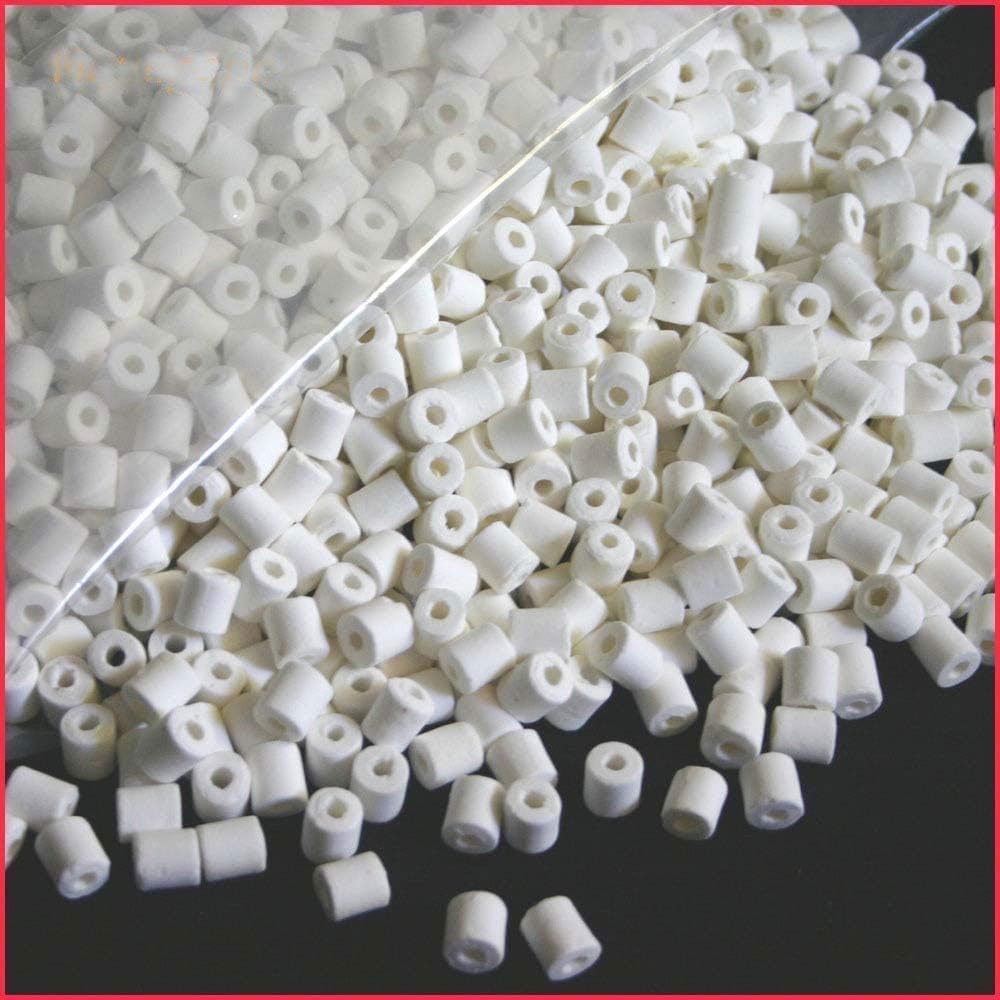
The AQUACITY ceramic rings come in a 5-pound bulk bag containing approximately 80 individual rings, each roughly half an inch in diameter and length. The material is extremely porous with fine pores that create significant surface area for bacterial attachment. The rings are small enough to pack tightly in medium canister trays and HOB filter compartments, maximizing media-to-water contact in limited spaces.
Pond owners report using these rings in mesh bags placed in waterfall boxes and on intake pipes for 3,500-gallon ponds with medium fish loads, where the rings effectively maintain clear water with weekly rinsing. The smaller ring size, however, can slow filter output flow when packed too densely, so spacing them loosely in trays or using mesh bags allows better water movement. Some rings may chip during shipping, but customers consistently note the bulk volume and low per-pound cost offset minor cosmetic damage.
A standout feature is the lifetime warranty from Aquapapa, which is rare at this price tier. For aquarists who need to fill multiple filters or a large sump on a budget, these rings offer reliable performance without the premium cost of sintered glass or branded ceramics.
Why it’s great
- Generous 5-pound bulk at low per-pound cost
- Fine pores provide good bacterial colonization surface
- Lifetime warranty adds peace of mind
Good to know
- Small ring size can restrict flow when overpacked
- Some chipping reported during transit
7. Aquapapa 6 Lbs Premier Bio Ceramic Rings + 6 Mesh Bags

The Aquapapa 6-pound ceramic ring set includes six reusable mesh bags, making it the most convenient option for large sumps, pond filters, and multi-stage canister systems. Each ceramic ring measures half an inch in diameter with a hollow center that enhances water flow through the media and reduces the risk of clogging. The porous ceramic material efficiently hosts nitrifying bacteria while the hollow shape maintains open channels for water movement.
Customers with overstocked cichlid tanks running 55- and 75-gallon aquariums report that 6 pounds is enough to fill three-quarters of a canister tray plus the media baffle in a sump. The pre-bagged format saves time during setup—simply drop a bag into each filter chamber without measuring loose rings. The plastic zippers on the bags are non-metallic and safe for saltwater use, preventing rust contamination.
The main consideration is that each pound is individually bagged, which works well for distributing media across multiple filters but may require combining bags for single large chambers. Some users note a slight odor from the ceramic material when first opened, though this dissipates after rinsing. For pond owners or aquarists with multiple tanks, this bundle offers exceptional efficiency and organization.
Why it’s great
- Includes 6 reusable mesh bags for instant setup
- Hollow shape reduces clogging and improves flow
- 6-pound bulk suits multiple filters and large ponds
Good to know
- Mild initial odor from ceramic material
- Individual bags may need combining for large single chambers
FAQ
How often should I rinse bio media?
Can I mix different types of bio media?
Does bio media need replacement or does it last forever?
Final Thoughts: The Verdict
For most users, the best bio media for aquarium winner is the EHEIM Substrat Pro because its 1,800 sq ft per liter surface area density crushes every competitor in bacterial colonization capacity. If you want bulk volume for large canisters, grab the Fluval BIO-FX 5L. And for pond owners or multi-filter setups needing organized deployment, nothing beats the Aquapapa 6 Lbs with Mesh Bags.