
Our readers keep the lights on and my morning glass full of iced black tea. As an Amazon Associate, I earn from qualifying purchases.
A disposable wipe that claims to be “green” but is actually packed with polyester or polypropylene isn’t solving the waste problem — it’s just creating a different one. True biodegradable wipes break down in a reasonable timeframe thanks to plant-based fibers like viscose, wood pulp, or lyocell, leaving no microplastic trail behind.
I’m Min — the co-founder and writer behind Gadgets Feed. For this guide, I compared the material certifications, plant-fiber compositions, and real-world performance of top contenders to separate certified compostable options from those with vague green claims.
If your priorities are a thorough clean and a clear conscience, this roundup of the best biodegradable wipes will help you find options that perform well for everything from diaper changes to trailside freshening without lingering as trash for centuries.
How To Choose The Best Biodegradable Wipes
Not all plant-based wipes are created equal. Some are certified to break down in a home compost bin within weeks, while others require industrial composting facilities — or worse, contain a small percentage of plastic binders that prevent full degradation. Here are the three factors that separate a truly sustainable wipe from a greenwashed one.
Fiber Composition: Viscose, Lyocell, or Hidden Plastic
The base material is everything. Wipes labeled “biodegradable” should be made from 100% plant-based fibers — typically FSC-certified viscose, lyocell (Tencel), or wood pulp. Avoid any product that lists polyester, polypropylene, or any polymer resin in its materials. These synthetic blends will not break down naturally and contribute to microplastic pollution even if the wipe is marketed as flushable.
Certification: OK Compost Home vs. Industrial
A “biodegradable” claim without a third-party certification is a red flag. The gold standard for home composting is TUV Austria’s OK Compost HOME certification, which guarantees the wipe breaks down in a home compost bin within 12 weeks. Industrial composting certifications (like BPI or EN 13432) require high-temperature processing that most municipal systems lack. Look for the HOME badge if you plan to compost in your backyard.
Thickness, Wetness, and Sheet Size Tradeoffs
Ultra-thin plant-based wipes tear easily when pulling them from the pack, especially when used one-handed with a squirming toddler. Heavier basis weights (35 gsm and above) provide durability and reduce the number of wipes needed per cleanup. Moisture content also matters — wipes that are too wet can leave a residue, while under-saturated sheets require more scrubbing. A 7×7 inch sheet is standard; oversized sheets in the 7.9×7.1 inch range give you more usable surface area.
Quick Comparison
On smaller screens, swipe sideways to see the full table.
| Model | Category | Best For | Key Spec | Amazon |
|---|---|---|---|---|
| Naty Baby Wipes | Premium | Newborn sensitive skin & home composting | OK Compost HOME certified, 12-week breakdown | Amazon |
| Joonya Unscented Baby Wipes | Premium | Diaper duty & eczema-prone skin | 7.9 x 7.1″ extra-large sheets with textured ridges | Amazon |
| Bravo Sierra Body Wipes | Mid-Range | Camping, field hygiene & post-workout | Extra-thick, individually wrapped, 10 count | Amazon |
| Yipes! Kids Face and Hand Wipes | Mid-Range | School lunches, travel & messy toddlers | 99% plant-based, compostable, 98% water | Amazon |
| Nolla Flushable Wipes | Budget | On-the-go quick cleanups | GD4 flush-certified, ultra-dispersible paper | Amazon |
| Kinder by Nature Baby Wipes | Budget | Bulk supply for sensitive skin families | 100% biodegradable, 60-day compost time | Amazon |
In‑Depth Reviews
1. Naty Baby Wipes Aloe
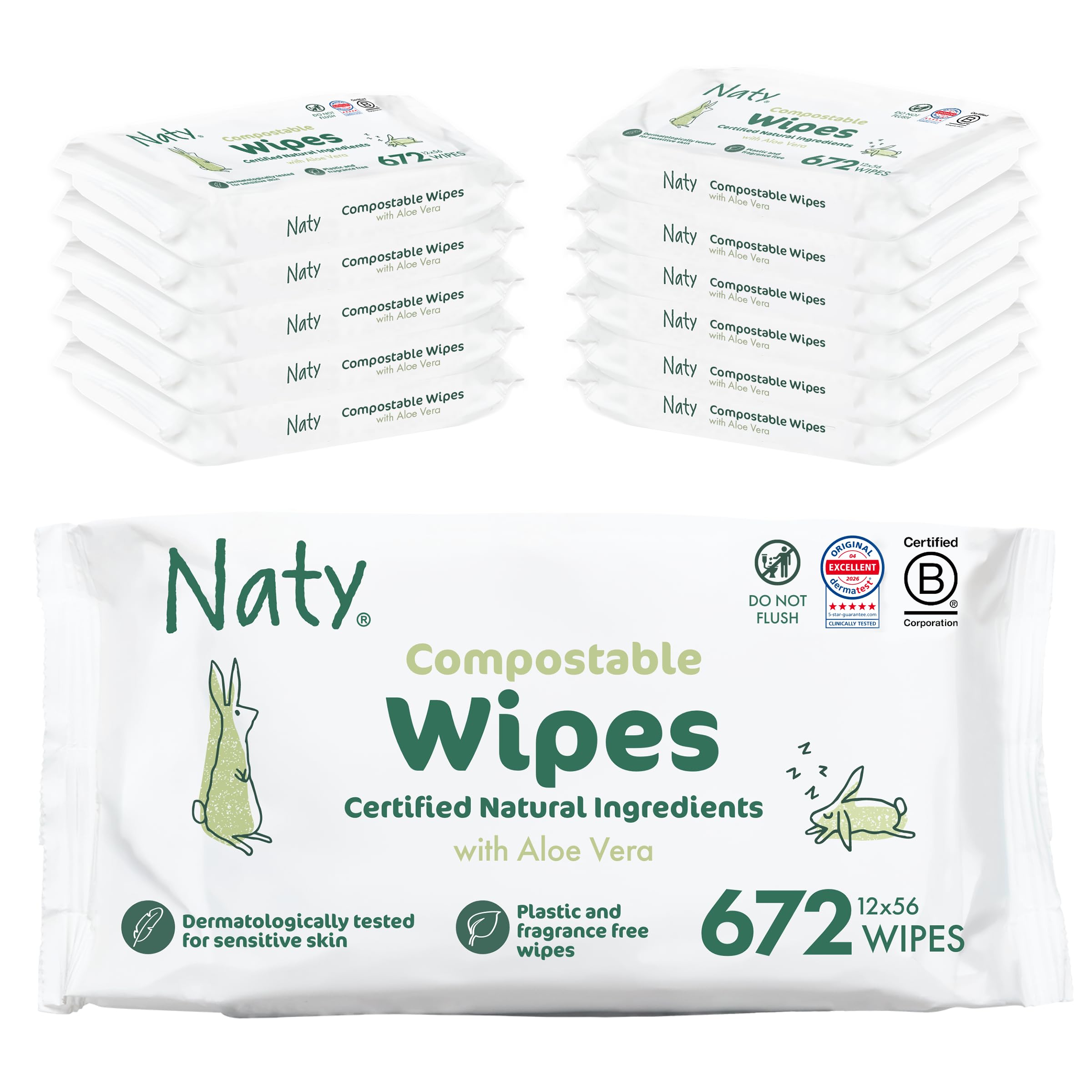
Naty is the only wipe in this lineup that holds the coveted OK Compost HOME certification from TUV Austria, meaning each 100% plant-based sheet will break down in a backyard compost heap in roughly 12 weeks with zero harmful residue. The wipes are infused with 98% purified water plus organic aloe vera — no fragrance, drying alcohols, parabens, or phenoxyethanol. That ingredient list makes them a strong choice for newborns with reactive skin or for anyone who reacts to scented baby wipes.
The tradeoff comes in sheet dimensions: Naty’s wipes are noticeably smaller and thinner than many competitors. Users reported needing two or three to handle a heavy diaper change, and the lack of textured ridges means more sliding than scrubbing. On the positive side, the thinner material reduces total waste per pack, and the wipes are flushable if your plumbing can handle them.
For eco-conscious parents who actually maintain a home compost pile, Naty is the only certified option that closes the loop completely. The price per wipe is competitive for a premium product, especially when bought in the 672-count bulk pack. Just budget for using more sheets per cleanup compared to thicker alternatives.
Why it’s great
- Only wipe with OK Compost HOME certification — breaks down in 12 weeks in a backyard bin.
- 98% purified water and organic aloe with zero fragrance or common irritants.
- Vegan certified; plastic-free FSC-certified packaging.
Good to know
- Sheets are smaller and thinner than most competitors — expect to use 2–3 per change.
- No texture or ridges, which makes cleaning messy diapers less efficient.
- Some users found the single-pack dispensing doesn’t always separate the next sheet cleanly.
2. Joonya Unscented Baby Wipes
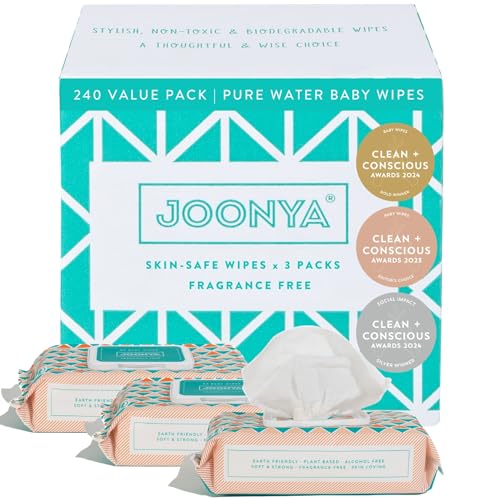
Joonya has carved out a reputation among parents who refuse to compromise on ingredient safety. Made from FSC 100% certified viscose pulp, these wipes are both biodegradable and compostable, with all ingredients scoring low on the EWG Skin Deep database. The formula is 99.7% water plus organic aloe vera, chamomile, and jojoba — no alcohol, chlorine, petrochemicals, formaldehyde, parabens, or phenols. This clean composition makes them particularly effective for babies with eczema or chronic diaper rash.
The standout physical feature is the sheet size: at 7.9 x 7.1 inches, these are among the largest biodegradable wipes available. The surface also features subtle textured ridges that grab messes better than smooth wipes, so you often need just one sheet for a full cleanup. The pop-up lid on each 80-count pack keeps moisture sealed between uses, which prevents the all-too-common problem of dried-out top sheets.
Despite the large sheet size, Joonya wipes aren’t as thick as some premium cotton options, but the texture compensates well for the moderate basis weight. The price per wipe is excellent for the quality, and the unscented formula means zero conflict with sensitive noses. The only caveat is that the wipes are not certified for home composting — they require industrial facilities to break down fully.
Why it’s great
- Extra-large 7.9 x 7.1 inch sheets mean fewer wipes per change.
- Textured surface ridges provide real scrubbing power against sticky messes.
- Ingredients are EWG-verified low hazard; safe for severe eczema.
Good to know
- Not certified for home composting — requires industrial composting conditions.
- Moderate thickness; not as plush as some premium competitors.
- Some users reported that the pop-up lid seal weakens after repeated opening.
3. Bravo Sierra Body Wipes
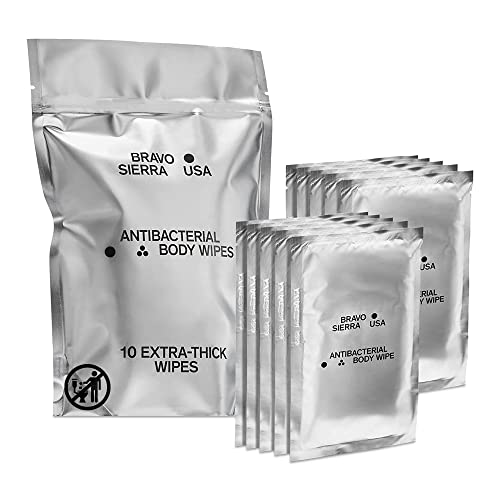
Bravo Sierra’s wipes were developed with military field-hygiene needs in mind, and the build quality reflects that origin. Each of the 10 included wipes is individually wrapped in a compact foil packet, which means zero risk of a bulk pack drying out halfway through a camping trip. The material is genuinely extra-thick — noticeably heavier than standard baby wipes — and infused with benzalkonium chloride for antimicrobial action plus soothing aloe vera, ginseng, and blue algae.
These are not flushable wipes, and for the right use case that’s actually a strength. The thick cloth holds up to scrubbing dirt, sweat, and grime from adult skin without tearing or leaving lint behind. Users who brought these on Kilimanjaro treks and extended field exercises reported that a single wipe was sufficient for a full-body freshening. The individually wrapped packets also serve as their own used-wipe disposal bag — a small but clever field hygiene detail.
The downside is that recent batches have been described as thinner and smaller than earlier production runs, with the sheet now closer to a standard wet wipe size. The price per wipe is relatively high compared to bulk baby wipes, but for the specific use case of travel, camping, or emergency hygiene kits, the portability and durability are unmatched. Made in the USA with no phthalates, parabens, or sulfates.
Why it’s great
- Extra-thick material holds up to heavy scrubbing without tearing.
- Individually wrapped — no dry-out risk; perfect for pack-and-go use.
- Infused with antimicrobial BZK plus soothing botanicals like aloe and ginseng.
Good to know
- Recent batches are thinner and smaller than earlier versions according to long-time users.
- Not flushable; must be disposed of in the trash.
- Price per wipe is steep relative to multi-pack alternatives.
4. Yipes! Kids Face and Hand Wipes
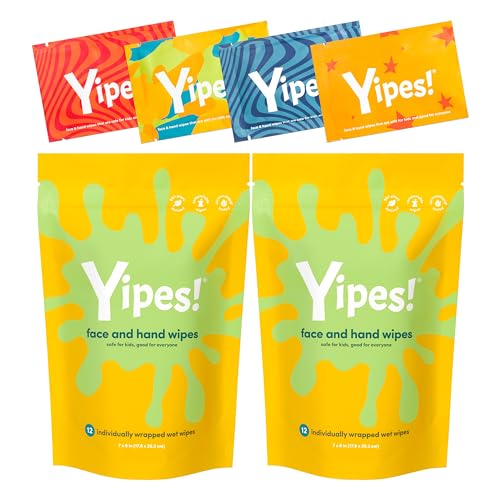
Yipes! wipes are a category-specific solution: a compostable, plant-based wipe designed for the classroom and car-pool crowd. The formula is 98% water and 99% plant-based, dermatologist-tested, hypoallergenic, and completely free of parabens, phthalates, and petrolatum. The wipes are individually wrapped in colorful, easy-tear packets that fit into a lunchbox or pencil case without taking up much space. Teachers love them as a substitute for messy paper towels or disinfecting wipes.
The wipe itself is sturdy for a plant-based sheet — users describe it as fabric-like rather than tissue-thin, and it holds together well when wiping sticky hands or faces. The individually wrapped format also solves the hygiene issue of opening a full pack in a classroom environment; each child can use their own packet without cross-contamination. The biodegradable material breaks down in composting conditions, though Yipes doesn’t specify home-compost certification.
The main criticism is that while the wipe is compostable, the plastic-foil outer wrapper is not — so the packaging still goes to landfill. A handful of users also received one dry-sealed packet in their batch, which appears to be a rare manufacturing fluke. For the price, you get a large quantity of individually wrapped wipes that outperform paper napkins or baby wipes for the specific job of cleaning kids’ hands and faces on the go.
Why it’s great
- Individually wrapped — ideal for tossing into backpacks, lunchboxes, and car door pockets.
- Soft, fabric-like material that doesn’t fall apart on sticky hands.
- Dermatologist-tested and safe for children with sensitive skin.
Good to know
- Individual wrappers are not compostable — only the wipe itself is.
- Occasional reports of a dry-sealed packet in the batch.
- Not designed for full-body or diaper cleanup; best for face and hands.
5. Nolla Flushable Wipes Travel Packs

Nolla wipes are built around a Japanese paper substrate that is 100% plant-based, plastic-free, and independently tested to exceed GD4 flushability standards. That means these wipes safely disperse as they travel through plumbing and septic systems, unlike many so-called “flushable” wipes that still clump and clog. The material is vegan, biodegradable in both marine and soil conditions, and infused with soothing aloe vera and vitamin E — no fragrance, alcohol, or harsh chemicals.
The format is travel-sized: each of the 10 packs contains 12 wipes, making them extremely convenient for slipping into a purse, glove compartment, or hiking daypack. Users praised them for camping, for quick bathroom cleanups, and even for wiping down dog paws. The wipes stay adequately moist from first to last sheet thanks to the packaging design, and the unscented formula means they won’t clash with perfumes or trigger sensitivities.
The universal complaint is that the wipes are very thin and tear-prone, especially when pulling the first sheet from the pack. Multiple users noted that you have to gently separate the wipes to avoid pulling out two at once or tearing one mid-pull. For heavy-duty wiping tasks, these are not the right choice — but for quick, light cleanups where portability is the priority, the thinness is a tolerable tradeoff for the plastic-free construction.
Why it’s great
- GD4 flush-certified — safe for septic and sewer systems.
- 100% plant-based paper substrate with no plastics or synthetic binders.
- Portable 12-count travel packs; easy to stash in any bag.
Good to know
- Sheets are very thin and prone to tearing during dispensing.
- Not designed for heavy-duty cleanup; best for light grooming and quick wipes.
- Requires careful one-handed extraction to avoid pulling out multiple sheets.
6. Kinder by Nature Plant Based Baby Wipes
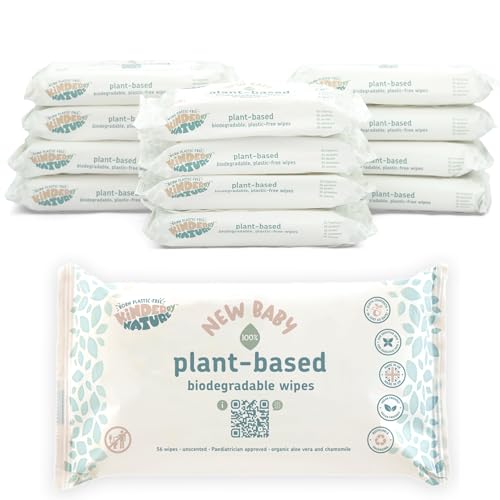
Kinder by Nature offers a high-count, plastic-free option that appeals to families who go through wipes rapidly. Made in the UK from FSC-certified plant fibers, these wipes are 100% biodegradable and compostable, with the manufacturer stating they break down in just 60 days in composting conditions. The ingredient list is minimal and clean: organic aloe vera and chamomile for soothing, with no chemical additives, fragrances, or preservatives.
The wipes are soft and gentle enough for eczema-prone skin and have almost no detectable scent. The 672-count package is a practical bulk buy for families with multiple children in diapers or for use as general household cleaning wipes. The moisture level is well-balanced — not sopping wet but not dry — and the cloth, while on the thinner side, holds up decently for light to moderate diaper duty.
The most common pain point is dispensing: the wipes tend to stick together in the pack, making it difficult to grab a single sheet one-handed. Several users reported that the packaging itself can tear around the opening, which accelerates drying of the remaining wipes. A minor but notable concern is that some adult users experienced skin irritation when using these wipes on their own chests, though the same users found them fine for their children’s sensitive skin.
Why it’s great
- High count for the price — very budget-friendly for large families.
- Backed by a 60-day compost claim; plant-based and plastic-free.
- Gentle on eczema-prone skin; unscented and free of common irritants.
Good to know
- Wipes frequently stick together, leading to multiple sheets pulled at once.
- Packaging can tear at the opening seam, causing wipes to dry out prematurely.
- Some adults reported mild irritation when used on themselves; fine for kids.
FAQ
Can biodegradable wipes go in my home compost bin?
Are flushable biodegradable wipes safe for septic systems?
Why do some biodegradable wipes feel thinner than conventional baby wipes?
Do biodegradable wipes have a shorter shelf life than regular wipes?
Final Thoughts: The Verdict
For most users, the best biodegradable wipes winner is the Joonya Unscented Baby Wipes because they combine large textured sheets, a clean unscented formula, and strong biodegradability at a reasonable per-wipe cost. If you need a certified home-compostable option that can go straight from the nursery to the backyard pile, grab the Naty Baby Wipes. And for rugged on-the-go hygiene during camping or travel, nothing beats the individually wrapped Bravo Sierra Body Wipes.