
Our readers keep the lights on and my morning glass full of iced black tea. As an Amazon Associate, I earn from qualifying purchases.
Specs are compiled from manufacturer listings and verified buyer reviews and can change over time — please confirm the key details on the product page before buying.
Your fish produce ammonia every time they breathe and eat, and without a home for the good bacteria that break it down, that waste poisons the water.
I’m Min — the founder and writer behind Gadgets Feed. This guide is built by comparing the manufacturers’ published specifications and the patterns across verified customer reviews, so you get each pick’s real strengths and trade-offs instead of marketing spin.
After checking the pore structure, volume per dollar, and real-world cycling results across six leading contenders, these are the picks that deliver a consistent, low-maintenance biological foundation for your freshwater or saltwater system. The EHEIM Substrat Pro wins our top spot for its class-leading surface density; the CerMedia MarinePure is the sump specialist; and the Premier Bio Ceramic Rings deliver massive volume per dollar for large tanks.
Quick Picks
- EHEIM Substrat Pro Biological Filter Media (Sintered Pearl-Shaped Glass) 1L — Top Performer
- CerMedia MarinePure 1.5-Inch Sphere Bio-Filter Media for Marine and Freshwater Aquariums, 2-Quart — Premium Pick
- 6 lbs Premier Bio Ceramic Rings Aquarium Filter Media in 6 Free Mesh Bags — Best Value
- AQUACITY Premier Bulk Bio Ceramic Rings Filter Media for Aquarium Koi Fish Pond Reef Filter (5 Lbs) — Pond Master
- Ceramic Bio Filter Media Vast Surface Area for Aquarium Sump Canister (1 Box / 24 pcs) — Solid Blocks
- K1 Filter Media PREMIUM GRADE Moving Bed Biofilm Reactor (MBBR) for Aquaponics • Aquaculture • Hydroponics • Ponds • Aquariums by Cz Garden Supply (1 Gallon) — Fluid Bed Ace
How To Choose The Best Biological Filter Media
Choosing the right media depends on matching its physical characteristics to your filter type and your fish load. The goal for all of them is the same: provide a stable, porous home for the aerobic bacteria that clean your water.
Surface area and pore structure
More surface area means more room for bacteria to grow. Sintered glass (glass fused at high heat) can pack a claimed 1,800 square feet per gallon, while fired ceramic blocks have visible internal pores for water flow. Pores must be large enough for water to push through, but small enough to protect bacteria from being swept away during flow.
Media format and your filter type
Loose ceramic rings and sintered glass pellets work well in canister filters and sumps. K1 media requires a moving bed bioreactor (MBBR — a tank with aeration that keeps media tumbling) and won’t work in a standard canister. For a hang-on-back (HOB) filter — one that hangs on the tank’s rim — or a small internal filter, stick with small ceramic rings or porous blocks that fit inside the chambers.
Maintenance needs and lifespan
Biological media should rarely be completely replaced. Most ceramic and sintered glass options can be rinsed gently every one to three months in old tank water to remove debris, and last for years. K1 media is self-cleaning when tumbling. Avoid using tap water to clean them, as chlorine kills the bacteria colony.
Quick Comparison
On smaller screens, swipe sideways to see the full table.
| Model | Best For | Material | Volume | Unit Count | Amazon |
|---|---|---|---|---|---|
| EHEIM Substrat Pro | Max bacteria density | Sintered glass | 1 Liter | 1,800 sq ft per gal | $21.98Amazon |
| CerMedia MarinePure 1.5″ Sphere | Heavy bio-load in sump | Inert ceramic | 2 Quarts | 35 spheres | $28.89Amazon |
| 6 lbs Premier Bio Ceramic Rings | Large canister/sump fill | Ceramic | 6.71 lbs | 6 mesh bags | $22.43Amazon |
| AQUACITY Premier Bio Ceramic Rings | Ponds and large systems | Ceramic | 5 lbs | 80 Count | $19.31Amazon |
| Reefing Art Ceramic Bio Media | Value block media | Ceramic | 1.75 Liters | 24 Count | $16.99Amazon |
| Cz Garden Supply K1 Filter Media | MBBR / fluidized bed systems | Virgin Polyethylene | 1 Gallon | 4 Cubic Feet tank | $19.99Amazon |
In‑Depth Reviews
1. EHEIM Substrat Pro Biological Filter Media (Sintered Pearl-Shaped Glass) 1L

Unbeatable surface density for rapid bacterial colony establishment.
The EHEIM Substrat Pro claims 1,800 square feet of surface area per gallon, while the ceramic-ring options here do not list a comparable square-feet-per-gallon figure in this guide. The tiny pearl-shaped glass pellets (fused at high heat) tumble freely inside a canister or sump chamber, so water reaches every side and you rarely get dead spots where bacteria starve. One reviewer noted their tank consumed 4 PPM of ammonia per day during a fishless cycle, indicating a fully colonised, fast-growing colony.
EHEIM says to rinse it with aquarium water every 1 to 3 months and replace the media every 3 to 6 months, making it a low-maintenance fit for most canister filters. At 1 Liter per bag versus the 1.75-Liter Reefing Art block, you may need multiple bags to fill a massive sump. Buyers also mention the tiny glass balls can scatter during cleaning unless you bag them — pick up mesh bags. It emphasizes surface-area density, but you pay a premium per pound for that approach.
Bacteria powerhouse
- Highest surface area density of any media here at 1,800 sq ft per gallon
- Can be reused for years with light rinsing every 1-3 months
- Round shape maximises water flow and minimises clogs
Small footprint catches
- 1 Liter volume is small compared to bulk ceramic options
- Expensive per pound compared to ceramic rings
- Tiny pellets can scatter if not placed in a mesh bag
Grab this for: a canister or sump where you want maximum bio-filtration in minimal space, especially for a densely stocked tank.
Look elsewhere if: you need to fill a very large sump on a budget — you will need several bags and the cost adds up fast.
2. CerMedia MarinePure 1.5-Inch Sphere Bio-Filter Media for Marine and Freshwater Aquariums, 2-Quart

Open-cell ceramic that outperforms live rock in saltwater systems.
These 1.5-inch spheres use a highly porous inert ceramic (chemically non-reactive clay) with an open-flow structure — water moves through the entire block, not just around the outside. One buyer mentioned it outperformed Seachem Matrix, Fluval Biomax, and live rock in a saltwater setup. The internal porosity is what makes that possible, and the manufacturer claims nitrate reduction (turning nitrate into harmless nitrogen gas) because deep internal pores create low-oxygen zones for denitrifying bacteria.
At 1 pound for the 2-quart bag versus 6.71 pounds for the Premier Bio Ceramic Rings, these spheres are easier to position inside a sump baffle (a wall that directs water flow). The trade-off is that the large 1.5-inch diameter takes up physical space — they do not fit inside most HOB filter chambers. Buyers report they place them directly in a sump baffle and see zero ammonia after cycling. If you want to replace heavy live rock in a saltwater tank, this is your bet.
Open-flow design wins
- Open-cell ceramic allows water to flow through the media, not just around it
- Owners mention it outperforms Seachem Matrix and live rock in real-world use
- Lightweight at 1 lb compared to bulk ceramic rings
Not for small filters
- 1.5-inch spheres are too large for most HOB or internal canister trays
- Packaging can arrive damaged with some spheres crushed
- Premium price for the volume you get
Perfect for: sump or wet/dry filters, especially in saltwater tanks where you want to replace live rock without the weight or cost.
skip it if: you have a small canister or HOB filter — the spheres are too big to fit inside standard media trays.
3. 6 lbs Premier Bio Ceramic Rings Aquarium Filter Media in 6 Free Mesh Bags

Bulk ceramic rings pre-bagged for instant sump or canister use.
This is the heavyweight of the list — 6.71 pounds of 1/2-inch ceramic rings already divided into six 8-inch by 5.5-inch mesh bags with plastic zippers. One owner reported that amount filled three-quarters of their canister trays and all of their sump baffle. The hollow centre of each ring lets water pass through instead of just around, which slows clogging compared to solid blocks. At 6.71 pounds versus the AQUACITY 5-pound bag, it offers more total media by weight.
The catch is that the small 1/2-inch rings can restrict outflow if you pack them too tightly in a canister tray — a common buyer complaint. Unlike the loose AQUACITY rings, these come pre-bagged so you can drop them straight into different compartments. If you have a large canister or a sump with multiple trays, this is the easiest way to fill them all at once without messing with loose media.
Bulk convenience
- 6 pre-packed mesh bags ready to drop into any filter compartment
- Hollow ring design allows water flow through the centre
- Enough media to fill 3/4 of a canister or a sump baffle
Sizing consideration
- Small 1/2-inch rings can reduce water flow if packed too densely
- At 6.71 lbs it is heavy and bulky for small tanks
- Some bags can be overstuffed, making rinsing before use difficult
Best for: large canister filters and sumps in bigger tanks where you want a big dose of media without extra work.
Not ideal if: you have a small HOB or internal filter — the bulk bag is too much media and the rings are sized for larger chambers.
4. AQUACITY Premier Bulk Bio Ceramic Rings Filter Media for Aquarium Koi Fish Pond Reef Filter (5 Lbs)
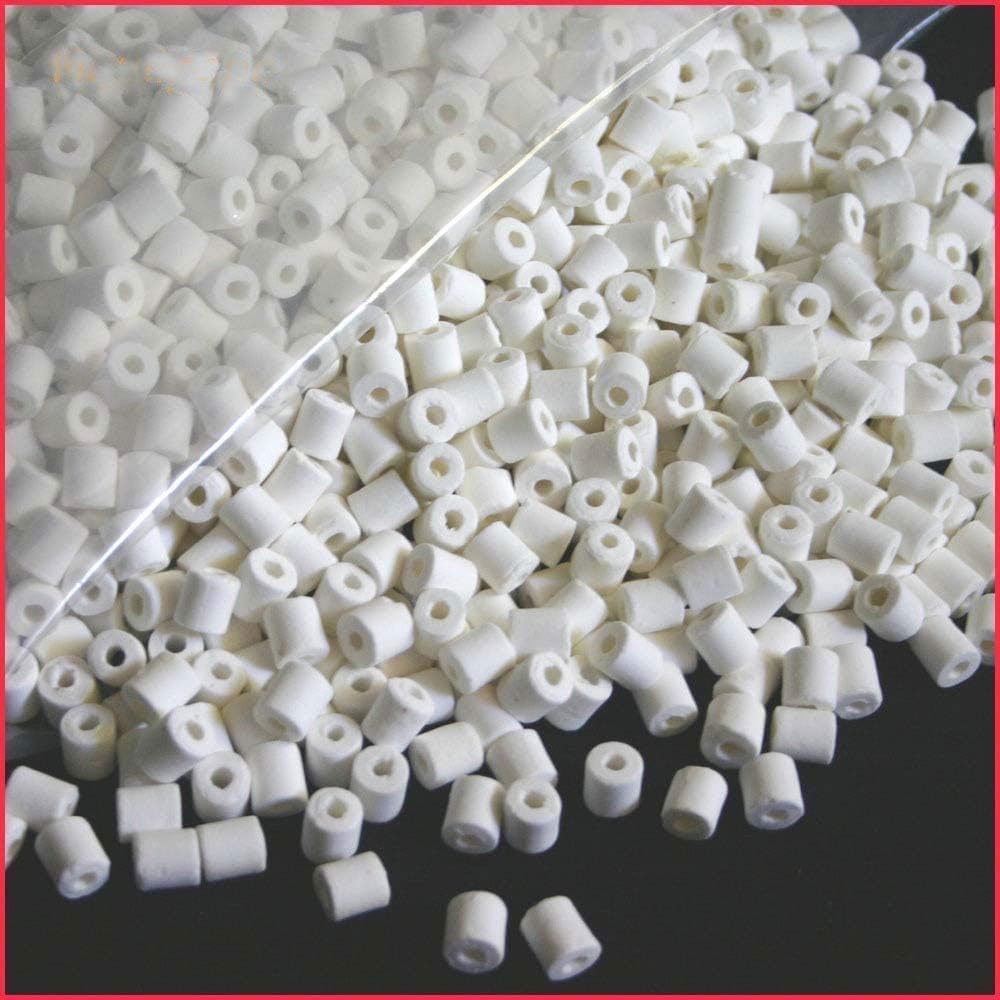
Proven to handle a 3500-gallon pond with medium fish load alone.
These 1/2-inch ceramic rings give you 80 pieces per bag, versus 24 pieces for the Reefing Art block media. One customer observed that these rings were the sole biofilter for a 3500-gallon pond with a medium fish load, confirming the high porosity. The material is fired clay with tiny pores that give bacteria homes.
Like the Premier rings, these can restrict flow if you overfill a canister tray; some customers note that. The bulk packaging means you get 5 pounds in a single box with no mesh bags, so you will need your own bags or use them loose in a sump. If you do not need the pre-bagged convenience, this bulk option gives you 5 pounds in one box versus 6.71 pounds split across six bags for the Premier option. For the Reefing Art blocks, you get a larger listed volume of 1.75 liters instead of 5 pounds of rings, but the guide does not provide a directly comparable overall surface-area figure for both products.
Massive capacity
- Can function as the sole biofilter for a 3500-gallon pond
- Extremely porous ceramic that colonises bacteria quickly
- Cost-effective per pound compared to name-brand alternatives
Size limitations
- Small 1/2-inch rings can restrict water flow in tight filter chambers
- No mesh bags included — you must buy separate bags or use loose in sump
- Some pieces may chip in transit due to bulk packaging
Reach for these if: you have a large pond, big sump, or heavy-load tank and need the most biological bang for the fewest dollars.
Look elsewhere if: you need pre-bagged media or you have very limited space in a small canister — the small rings can block flow.
5. Ceramic Bio Filter Media Vast Surface Area for Aquarium Sump Canister (1 Box / 24 pcs)

Block-type ceramic that stays put in sump or canister trays.
This 24-piece set uses large block-shaped ceramic instead of rings or spheres, so the blocks stack neatly in trays without rolling around or escaping through gaps. The 1.75-liter volume is larger than the 1-Liter EHEIM Substrat Pro bag, giving you more physical media for roughly the same price tier. One user highlighted “the porosity of the blocks seems to be a good size” — large enough for water flow, small enough to trap bacteria.
At 1.8 pounds versus 6.71 pounds for the Premier rings, the blocks are easier to handle. But the blocks are less dense, so you need more total volume for the same bacterial capacity. They are 100% non-metallic ceramic — safe for saltwater tanks. The 24-count differs from the 80-count AQUACITY bag, but each block is larger and takes up more space per piece. This is a good middle ground: more volume than the EHEIM, but less surface density.
Block advantages
- Large block shape stacks neatly in canisters without shifting
- 1.75-liter volume is one of the largest single boxes on the list
- Non-metallic, safe for saltwater and won’t leach heavy metals
Block trade-offs
- Larger individual blocks are less versatile for smaller filter compartments
- Porous but not as dense surface area per volume as sintered glass
- Some ceramic dust from shipping abrasion reported
Pick these if: you want a neat, stackable block format for a sump or canister tray that stays put during maintenance.
Not for you if: you need to pack a huge amount of surface area into a tiny space — for that, the EHEIM is better.
6. K1 Filter Media PREMIUM GRADE Moving Bed Biofilm Reactor (MBBR) for Aquaponics • Aquaculture • Hydroponics • Ponds • Aquariums by Cz Garden Supply (1 Gallon)

Self-cleaning plastic media for aeration-driven moving bed filters.
K1 media is made from virgin polyethylene plastic (a pure, consistent grade of plastic) and is designed for a moving bed biofilm reactor (MBBR — a chamber with aeration at the bottom that keeps the media tumbling). That tumbling rubs the pieces together, knocking off excess biofilm and debris, so the media self-cleans and rarely needs manual rinsing. One shopper added that initially the media floated excessively and caused overflow, but after 48 hours buoyancy decreased, and by day 3 it was fully fluidized. This is normal — plastic pieces need to become waterlogged and colonised with bacteria.
When the bacteria load is high enough, the media turns yellow or tan — a visual signal that your colony is mature. The 1-gallon bag has irregular 10mm x 7mm pieces and can handle up to 4 cubic feet of tank volume. Because it floats until colonised, this media requires the correct MBBR chamber design with aeration at the bottom. It will not work in a standard canister or HOB filter where water simply flows through — without tumbling, it clogs and loses its main advantage over ceramic and glass media.
Self-cleaning design
- Self-cleaning tumbling action reduces manual maintenance
- Made from 100% virgin polyethylene for consistent quality
- Visual colour change from white to tan/yellow signals mature bacteria colony
Setup-specific
- Requires a moving bed bioreactor with aeration — won’t work in standard canisters or HOB filters
- Initial float period needs careful monitoring to prevent overflow
- Plastic media is less porous per volume than ceramic or glass alternatives
Best for: aquaponics, outdoor ponds, or dedicated sump sections where you can supply aeration for fluidisation.
Not for you if: you have a standard canister or HOB filter where media sits still — this media needs to tumble to work properly.
Understanding the Specs
Surface area vs. porosity
Surface area is the total space inside the media where bacteria can cling and grow. It is usually measured in square feet per volume (like “1,800 sq ft per gallon” on the EHEIM). Porosity refers to the size of the individual pores that make up that surface. Very tiny pores create a lot of surface area, but water must still be able to push through them. The best media balances high surface area with pores large enough (around 10-50 microns — a micron is one-millionth of a meter) for bacteria colonies to thrive.
Media format and filter compatibility
Ceramic rings (like the AQUACITY and Premier 6-lb options) are the most universal format — they fit into any canister tray, sump chamber, or media bag. Sintered glass pellets (EHEIM Substrat Pro) and ceramic spheres (MarinePure) are better for sumps or canisters with large media baskets. K1 plastic media is a specialist tool for MBBR systems only. Always check the dimensions of your filter chamber before buying — a 1.5-inch sphere will not fit into a HOB filter tray designed for 1/2-inch rings.
FAQ
How often should I replace biological filter media?
How much biological filter media do I need for my tank?
Can I use ceramic media from freshwater in a saltwater tank?
What is the difference between ceramic rings and sintered glass?
Will K1 media work in my canister filter?
How do I clean biological filter media without killing the bacteria?
Should I use filter media in mesh bags or loose in the filter?
Do I need biological media in addition to chemical and mechanical media?
What is nitrate reduction and which media can do it?
Final Thoughts: The Verdict
For most setups, the best biological filter media is the EHEIM Substrat Pro because it claims 1,800 sq ft per gallon of surface area, making it a strong fit when you want high surface density in a compact canister or sump setup. If you have a sump and want a media that reportedly outperforms live rock, grab the CerMedia MarinePure 1.5-Inch Sphere. And for budget-minded owners covering large tanks or ponds, the standout is the 6 lbs Premier Bio Ceramic Rings in Mesh Bags for sheer volume per dollar.
How We Picked
We do not accept paid placement, and we did not hands-on test every unit. Instead, we match each pick to a real buyer and use-case by comparing the manufacturers’ published specifications against the patterns in verified customer reviews — so you get each pick’s real strengths and trade-offs instead of marketing copy.
Sources & Methodology
Specifications: manufacturer listings and product documentation. Review insights: verified customer reviews, as of July 2026. Pricing: not shown on this page (it changes often); check the current price via the retailer link.
As an Amazon Associate, Gadgets Feed earns from qualifying purchases. This does not affect which products we feature.
Product prices and availability are accurate as of the date/time indicated and are subject to change. Any price and availability information displayed on Amazon at the time of purchase will apply to the purchase of this product. As an Amazon Associate I earn from qualifying purchases.
CERTAIN CONTENT THAT APPEARS ON THIS SITE COMES FROM AMAZON. THIS CONTENT IS PROVIDED "AS IS" AND IS SUBJECT TO CHANGE OR REMOVAL AT ANY TIME.
Amazon and the Amazon logo are trademarks of Amazon.com, Inc. or its affiliates.