
Your finger is a perfect data hub — dense with capillaries that pulse with every heartbeat. The question is which device translates that capillary-rich data into actionable health insight without distracting you from your day. A bulky smartwatch on your wrist changes how you sleep, work out, and dress. A biometric ring sits invisibly, collecting the same heart rate, HRV, SpO₂, and sleep stage data while you remain completely unburdened.
I’m Min — the co-founder and writer behind Gadgets Feed. I’ve spent hundreds of hours reading through thousands of customer reviews, cross-referencing technical specifications, analyzing battery certification data, and mapping out sensor accuracy claims against real-world user reports to separate lab-grade hype from daily reality.
The market is flooded with options at different capability tiers, so I’ve distilled the available data into a rigorous, spec-focused guide to help you find the best biometric ring for your specific health tracking priorities, whether it’s sleep apnea monitoring, stress management, or no-subscription simplicity.
How To Choose The Best Biometric Ring
A biometric ring is not a smartwatch replacement — it is a dedicated health sensor that lives on your finger 24/7. Choosing the right one comes down to understanding what the sensors actually measure, how long the battery sustains continuous data collection, and whether the app ecosystem locks essential features behind a monthly paywall. These three factors define every meaningful difference between a ring that works and one that collects dust.
Sensor Accuracy and Health Tracking Depth
The best biometric rings use a combination of photoplethysmography (PPG) sensors for heart rate and SpO₂, infrared LEDs for temperature, and accelerometers for movement classification. The key spec to compare is not the number of LEDs, but how the raw data is processed. Some rings only record HRV and blood oxygen during sleep, while premium options like the RingConn Gen 2 and Gen 3 track these metrics continuously throughout the day. For sleep apnea detection, look specifically for rings with Apnea-Hypopnea Index (AHI) tracking — currently only offered by RingConn’s Gen 2 and Gen 3.
Battery Life and Charging Architecture
Because a biometric ring has no screen, battery life can range from 3 days to 14 days depending on sensor polling frequency, ring size (larger rings accommodate bigger batteries), and whether features like continuous SpO₂ monitoring are active. Battery capacity is measured in milliamp hours (mAh), with premium rings packing between 18.5 mAh and 120 mAh (the latter includes the charging case’s reserve). A ring with a smart charging case offers effectively unlimited uptime — the case recharges the ring daily while you sleep. Rings without a case require plugging in the charger every few days, which can break sleep tracking data.
Subscription vs. Lifetime Access
This is the single most impactful financial decision when buying a biometric ring. Oura charges per month after the first free month, which adds per year. Over three years, that is in subscription fees on top of the ring price. Brands like RingConn, opove, Reebok, and CUDIS offer all standard health features — sleep tracking, heart rate, HRV, SpO₂, stress, activity — at no additional cost forever. If your budget is tight, a no-subscription ring delivers significantly more long-term value.
Quick Comparison
On smaller screens, swipe sideways to see the full table.
| Model | Category | Best For | Key Spec | Amazon |
|---|---|---|---|---|
| RingConn Gen 3 | Premium | Vascular insights + haptic alerts | 14-day battery, vibration alerts, IP68 | Amazon |
| RingConn Gen 2 | Premium | Sleep apnea monitoring | AHI tracking, 12-day battery, 2g weight | Amazon |
| Oura Ring 5 | Premium | Smallest form factor + style | 40% smaller, 6-9 day battery, gold finish | Amazon |
| Oura Ring 4 | Premium | 50 health metrics, app ecosystem | Smart Sensing, 8-day battery, 40+ app integrations | Amazon |
| Oura Ring Gen3 Heritage | Premium | Research-grade accuracy | 20+ biometrics, 5-7 day battery, titanium | Amazon |
| CUDIS 002 | Mid-Range | Data ownership + AI coach | 3g titanium, 10-day battery, biological age | Amazon |
| opove O Ring | Mid-Range | Stress tracking + affordability | 3g weight, 5ATM, 5-6 day battery | Amazon |
| RingConn Gen 2 Air | Mid-Range | Ultra-thin everyday wear | 2mm thin, 2.5g, 10-day battery | Amazon |
| Reebok Smart Ring | Mid-Range | Brand trust + silicone covers | 7-day battery, 16.5 mAh, included 1-year premium app | Amazon |
In‑Depth Reviews
1. RingConn Gen 3
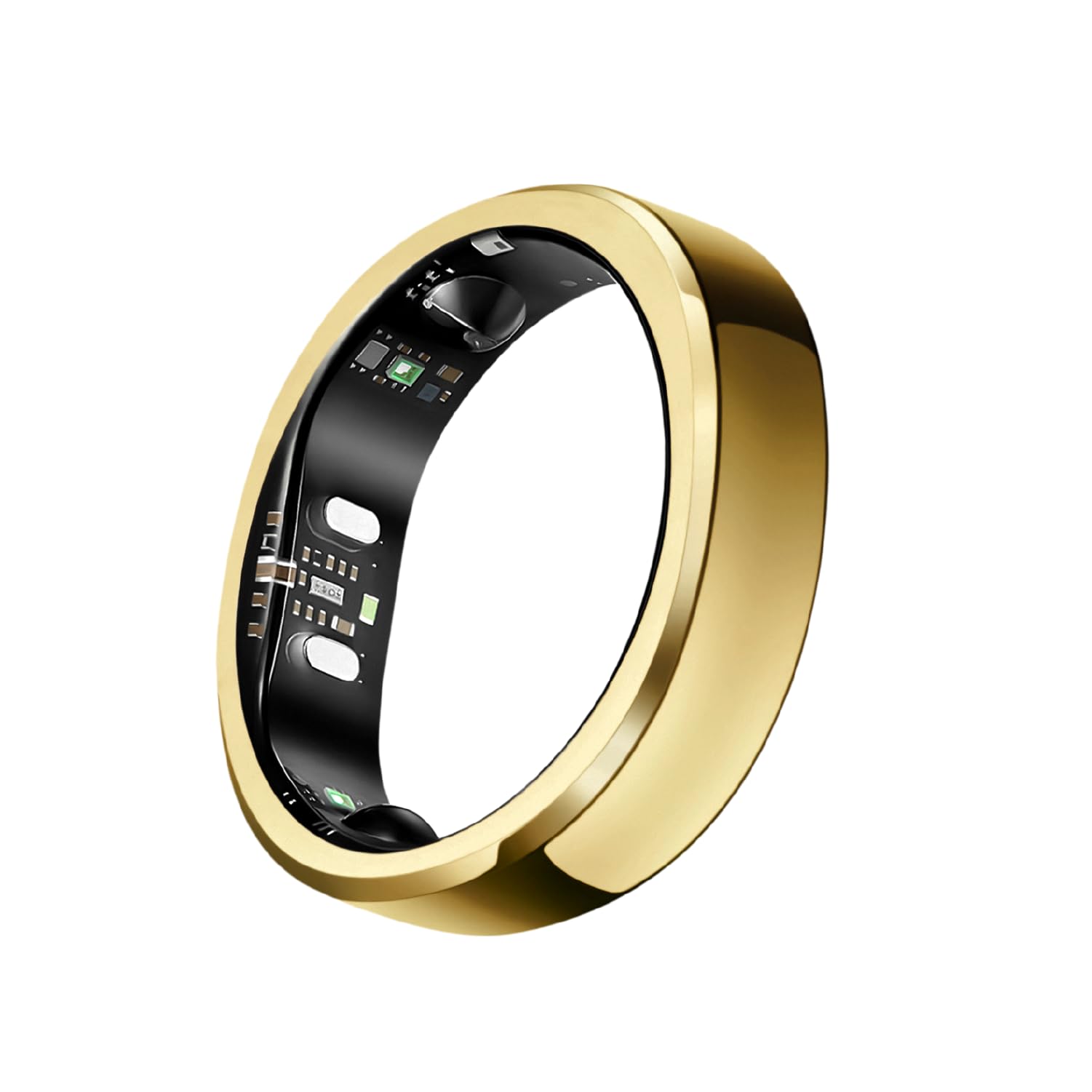
The RingConn Gen 3 is the first biometric ring to introduce vascular health trend analysis — a genuinely new sensor capability that tracks how your blood vessels respond to sleep, stress, and activity over time. At 14 days of battery life with the EcoPower Tech 2.0 system, it also sets the endurance benchmark for the entire category. The inclusion of haptic vibration alerts means you receive inactivity and low-battery reminders without pulling out your phone.
Sleep apnea monitoring is carried over from the Gen 2, but the Gen 3 adds a one-time calibration that personalizes the vascular load baseline. User reports indicate the step counter lands within 5% of manual counts, and heart rate accuracy tracks within 1-2 bpm of a Huawei smartwatch. The IP68 rating covers swimming and handwashing without removal.
The only tradeoff is that the inner sensor housing protrudes slightly, which some users with size 8 rings found noticeable during the first few days. The charging case is compact and includes a USB-C port. No subscription is required for any feature, making this the most future-proof option on the market.
Why it’s great
- Vascular trend tracking is a category-first innovation
- 14-day battery with charging case exceeds all competitors
- Haptic vibration alerts add real utility for inactivity reminders
Good to know
- Inner sensor bump may feel unusual on smaller fingers
- Limited workout auto-detection compared to smartwatches
2. RingConn Gen 2

The RingConn Gen 2 is the world’s first smart ring with clinical-grade sleep apnea monitoring, providing Apnea-Hypopnea Index (AHI) data directly on your wrist via the app. Developed in collaboration with universities and hospitals, it enables multi-day monitoring without the bulky equipment traditionally required for sleep studies. At just 2 grams, it is also one of the lightest rings available.
Battery life reaches up to 12 days on larger sizes (12-14), and the included smart charging case extends total uptime beyond 150 days. Users report the black finish scratches easily with manual labor, but the titanium case material withstands daily abuse. The app provides detailed sleep stage breakdowns, HRV trends, and SpO₂ tracking.
One reviewer noted that constant sleep apnea monitoring drains the battery faster — down to about 7 days — which is still competitive with Oura’s standard battery life. The ring is HSA/FSA eligible, and no subscription unlocks any feature. For anyone with suspected sleep apnea, this ring offers a non-invasive screening tool that traditional wearables simply cannot match.
Why it’s great
- Only ring with certified AHI sleep apnea tracking
- Ultra-thin 2mm profile at 2 grams
- Smart charging case provides over 150 days of total uptime
Good to know
- Black finish scratches more easily than silver
- Battery drops to ~7 days with continuous apnea monitoring
3. Oura Ring 5
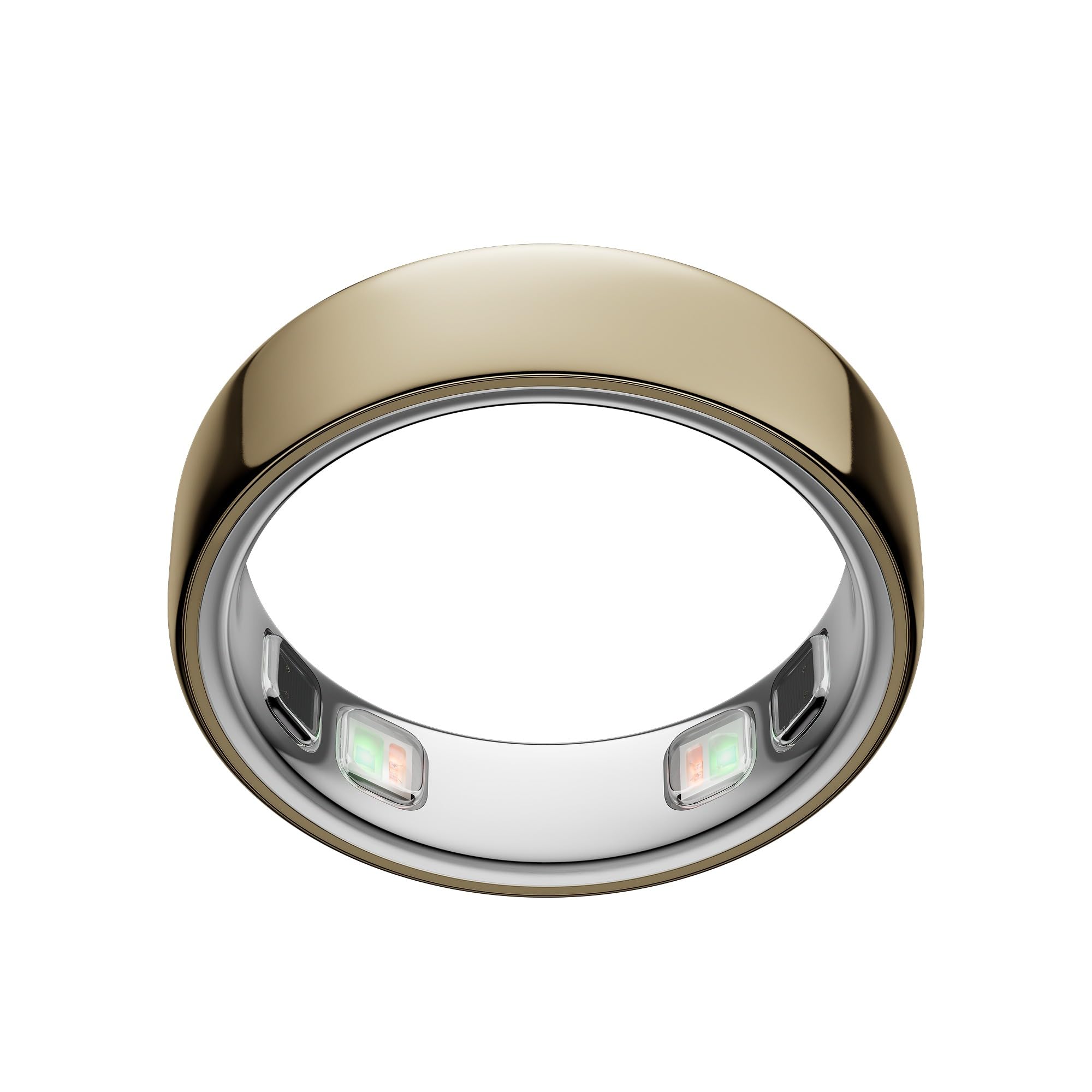
The Oura Ring 5 is 40 percent smaller than the previous generation, making it the most discreet biometric ring on the market. The gold finish now more closely matches natural 10k-14k gold jewelry, avoiding the brassy yellow tone that plagued the Gen 4. The all-titanium build is rated more scratch-resistant, and the re-engineered sensor array promises research-grade accuracy in a package that sits flush like a normal ring.
Battery life is rated at 6-9 days, with users reporting closer to 7 days in real-world use. The charging dock is compact and fast. Oura’s AI Advisor provides contextual health guidance based on your sleep, activity, and readiness scores, and the ring integrates with over 40 apps including Natural Cycles, Strava, and Apple Health.
The primary downside is the subscription model — after the first free month, Oura Membership costs per month. Over three years, that adds over to the total cost. The sizing is generation-specific, so you must purchase the Oura Ring 5 Sizing Kit, not reuse one from Gen 4. Some early users noted the gold is still not as warm as 14k+ gold, so if color matching is critical, consider the silver finish.
Why it’s great
- 40% smaller than Gen 4, sits flush like a normal ring
- Improved gold color tones match real jewelry
- Advanced AI Advisor provides personalized health guidance
Good to know
- /mo subscription after first free month
- Sizing is generation-specific — cannot reuse older sizers
4. Oura Ring 4

The Oura Ring 4 is powered by Smart Sensing technology that adapts LED power and signal processing to your skin tone, finger size, and movement, delivering continuous data across over 50 health metrics. Sleep tracking is its standout feature — users consistently report accurate sleep stage detection, HRV, respiratory rate, and body temperature trends that help detect illness before symptoms appear.
Battery life officially reaches 8 days, though many users see about 5-7 days in practice with continuous monitoring. The charger is fast — 10-15 minutes gives several days of power. The ring integrates deeply with Apple Health, Google Health Connect, and Natural Cycles, making it a strong choice for women tracking menstrual cycles and ovulation.
The same subscription cost applies as the Oura Ring 5: per month after the first free month. Several users reported battery degradation after 10-12 months, with some units dropping below 24 hours of life. Customer service has been described as inconsistent — the AI assistant “Finn” may not escalate to a human agent easily. For these reasons, the Oura Ring 4 is best suited to users who value the mature app ecosystem and are comfortable with subscription costs.
Why it’s great
- Smart Sensing adapts to individual skin tone and finger size
- Deepest third-party app integration in the category
- Fast charging — 10-15 minutes provides days of power
Good to know
- /mo subscription adds long-term cost
- Some units battery degrades significantly after 10-12 months
5. Oura Ring Gen3 Heritage

The Oura Ring Gen3 Heritage remains a benchmark for sensor accuracy, with research-grade PPG sensors that monitor over 20 biometrics including heart rate, HRV, body temperature, respiratory rate, and SpO₂. Its ability to detect illness onset through elevated resting heart rate and body temperature is well-documented across thousands of user reports. Sleep tracking is the primary draw — Gen3 owners consistently praise its sleep stage accuracy and the actionable readiness score that guides daily activity.
Battery life is 5-7 days with normal use, and a full charge takes about 80 minutes. The titanium construction is durable but the glossy finish scratches easily, developing a patina that some users find characterful. The ring is water resistant for handwashing and showering but not recommended for swimming due to the absence of a high depth rating.
The subscription model applies here as well — per month after the first free month. Some users have reported that after 100 days, heart rate and HRV readings became unreliable compared to manual verification. The sizing kit is essential, as Oura ring sizes differ from standard jewelry sizes. For users on a tight budget, the recurring cost is a significant factor to weigh against the lower-priced no-subscription alternatives.
Why it’s great
- Research-grade sensors with proven illness detection capability
- Excellent sleep stage accuracy and readiness score
- Seamless integration with Apple Health, Strava, Natural Cycles
Good to know
- /mo subscription after first free month
- Some units develop sensor inaccuracy after ~100 days
6. CUDIS 002
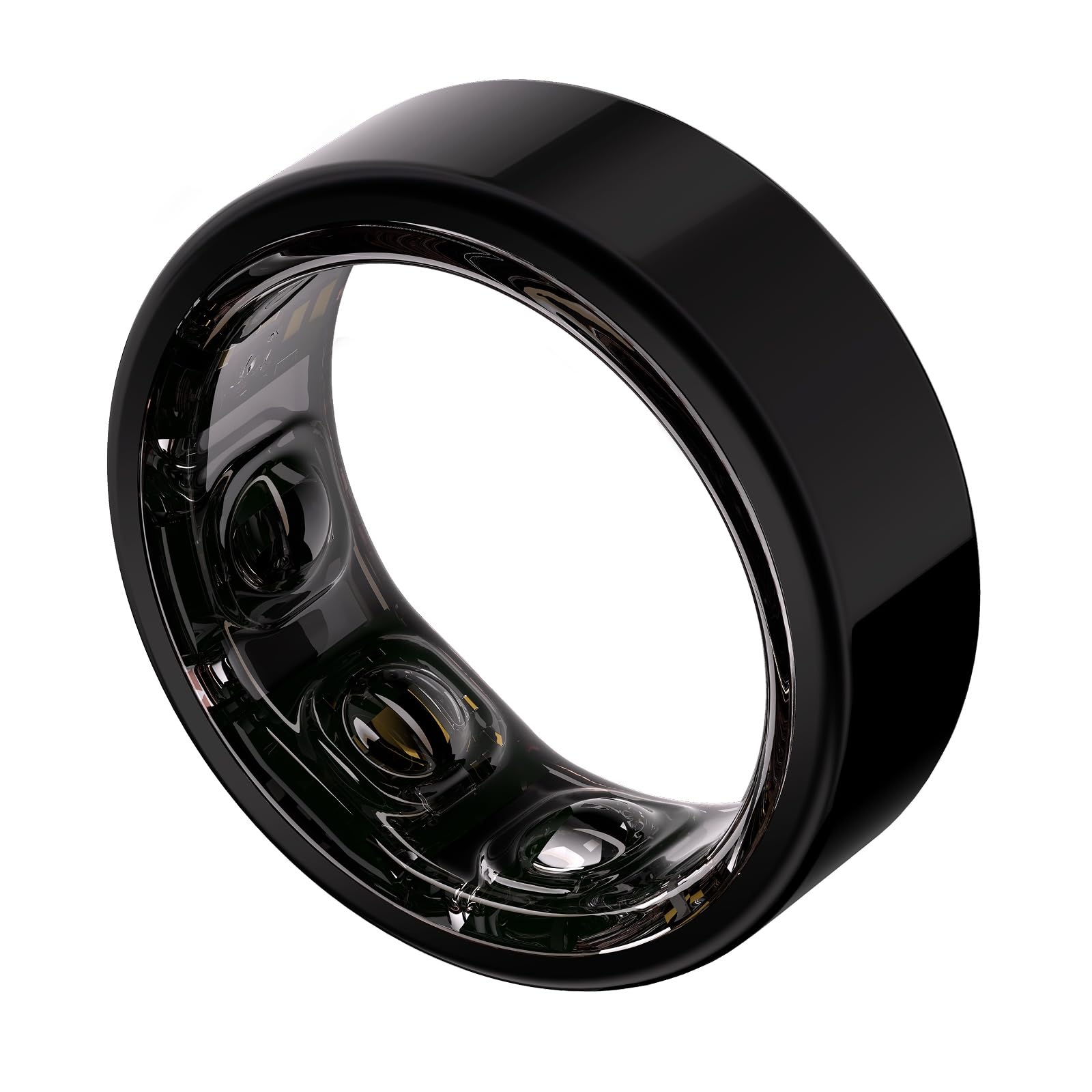
The CUDIS 002 differentiates itself with a strong data ownership proposition — you retain 100% ownership of your health data and can choose to monetize it through the CUDIS Store. The ring tracks biological age, heart rate, HRV, SpO₂, stress, sleep, and women’s health, and includes an AI wellness coach that provides personalized feedback. At 3 grams with an aerospace-grade titanium build, it is both durable and comfortable for 24/7 wear.
Battery life is rated at up to 10 days with 80-minute fast charging via a USB-C charging pod. Users confirm the battery comfortably exceeds one week, though the charging pod must remain plugged in to charge the ring — there is no battery reserve inside the pod. The 5ATM waterproof rating allows swimming and showering without removal.
The main drawback is the app, which users describe as busy, gamified, and beta-like. The interface lacks an instruction manual, and the ring may disconnect requiring the charging pod to re-pair. Sizing runs small — some users recommend ordering one to two sizes up from your normal ring size. The green sensor light is visible in total darkness, which may disturb light sleepers. Despite app roughness, the no-subscription pricing and data ownership model make it a compelling choice for privacy-focused users.
Why it’s great
- 100% ownership of your health data with monetization options
- Biological age tracking provides a unique wellness baseline
- 3g titanium build is lightweight and 5ATM waterproof
Good to know
- App is clunky, busy, and lacks a comprehensive manual
- Charging pod has no internal battery — must stay plugged in
7. opove O Ring
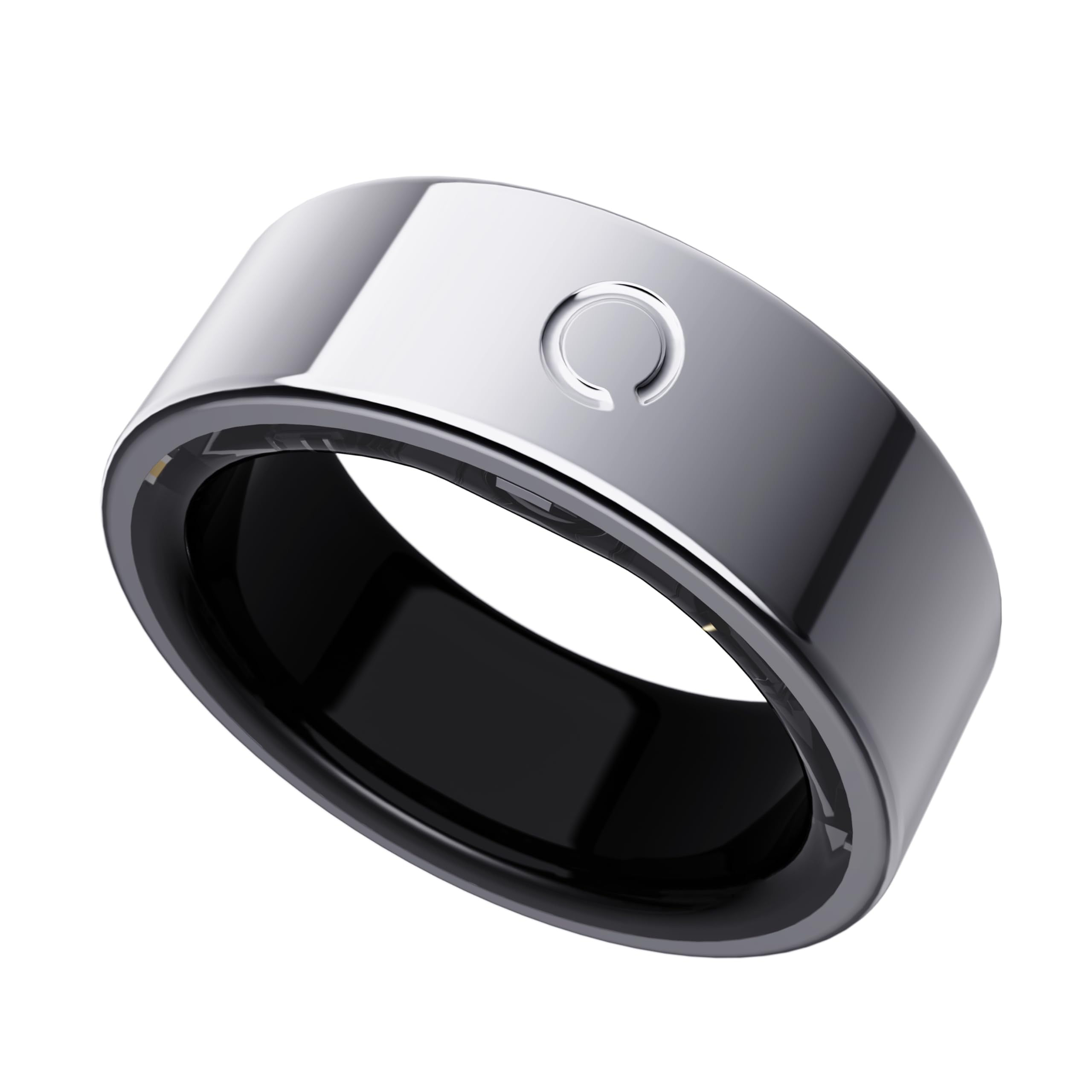
The opove O Ring focuses heavily on stress management, tracking HRV 24 hours a day to quantify stress levels and provide personalized insights. It also includes comprehensive sleep management with deep/light/REM/wake stage breakdowns, blood oxygen, and HRV during sleep. The ring weighs only 3 grams with a durable titanium outer shell, and the 5ATM waterproof rating makes it suitable for swimming.
Battery life averages 5-6 days in real-world use, which is adequate for a mid-range device but falls short of the 10-14 day leaders. The companion app (also called opove) is free with no subscription, and includes mood tracking, menstrual cycle prediction, and basal body temperature monitoring. Users report the ring is comfortable for sleep and workout wear.
The sizing kit is critical — opove uses unique sizing standards, and skipping this step leads to poor sensor contact and inaccurate HRV readings. Some users received loose sizing rings in the packaging, suggesting quality control issues with the sizing kit itself. The step and calorie counters are less accurate than dedicated fitness trackers, but for a general wellness ring that prioritizes stress and sleep, the opove O Ring delivers solid performance at a reasonable entry point.
Why it’s great
- 24/7 HRV-based stress tracking with personalized insights
- Slim 3g titanium build is comfortable for all-day wear
- No subscription for any feature, including women’s health tracking
Good to know
- 5-6 day battery requires more frequent charging than category leaders
- Sizing kit quality control reported as inconsistent
8. RingConn Gen 2 Air

The RingConn Gen 2 Air is the thinnest biometric ring available at just 2mm and 2.5 grams — so unobtrusive that most users forget they are wearing it within hours. Despite the ultra-thin profile, it packs a 22 mAh battery delivering up to 10 days of continuous tracking. The IP68 waterproof rating is tested to 100 meters, covering swimming and diving without removal.
Health tracking includes AI-powered sleep analysis, heart rate, stress levels, blood oxygen, activity, and menstrual cycle tracking. A built-in AI assistant generates personalized health reports and guidance. The new “Find Your Ring” app feature helps locate a misplaced ring via step-by-step guidance, which is a practical addition for such a small device.
Some users report that the color shown on Amazon is not perfectly accurate — the Galaxy Silver and Dune finishes may appear slightly different in natural light. The sizing kit is essential because RingConn uses its own sizing standards. There is no subscription fee for standard features. Battery life is closer to 7 days with continuous monitoring, still impressive for a ring this thin.
Why it’s great
- 2mm thickness is the thinnest in the category
- 10-day battery life from a 22 mAh cell is remarkable
- IP68 waterproof to 100m — suitable for diving
Good to know
- Ring color may differ slightly from product images
- No sleep apnea monitoring or vibration alerts
9. Reebok Smart Ring
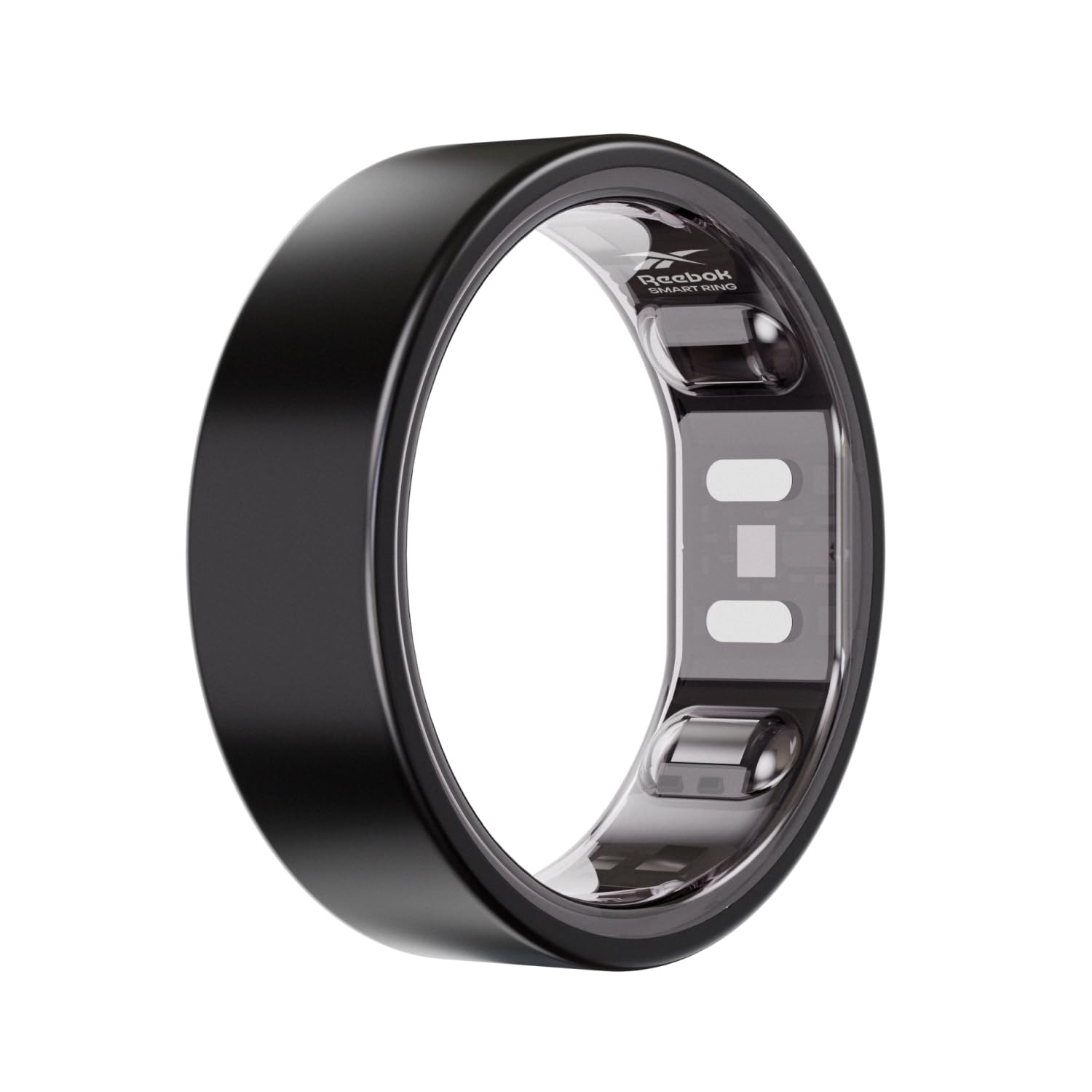
The Reebok Smart Ring brings brand recognition and a fitness-oriented app ecosystem into the biometric ring space. It tracks heart rate, HRV, sleep quality, blood oxygen, and stress, and includes a one-year premium subscription to the Reebok Fitness App, which offers guided workouts, recipes, and community features. After the first year, the basic features remain free with no mandatory subscription.
The standout design feature is the interchangeable silicone cover system — you can swap covers in black, white, blue, or red over the gold, silver, or black ring body. This makes the ring adaptable for both gym wear and formal occasions. The magnetic charger snaps on easily, and users report 6-7 days of battery life in practice. The ring itself is slim but chunky on smaller hands.
The step counter has been flagged by multiple users as reading significantly higher than reference devices (33% higher than a Samsung watch in one report). The sleep tracker, however, is praised for accurate stage detection, and the app includes detailed benchmarks. Some units have developed charging issues after one month of use, though customer support has been responsive with refunds. For users who trust the Reebok brand and want the silicone cover versatility, this is a solid mid-range entry.
Why it’s great
- Interchangeable silicone covers adapt the ring for gym or formal wear
- 1-year premium Reebok Fitness App subscription included
- Magnetic charger makes daily recharging effortless
Good to know
- Step counter over-reports by ~33% compared to reference devices
- Ring feels chunky on small hands and fingers
FAQ
Do I need a sizing kit before buying a biometric ring?
Can a biometric ring replace a medical sleep apnea device?
How does continuous HRV tracking differ from night-only tracking?
Why do some rings require a subscription while others do not?
Final Thoughts: The Verdict
For most users, the best biometric ring winner is the RingConn Gen 3 because it combines category-first vascular trend analysis with a 14-day battery, haptic vibration alerts, and a zero-subscription app. If you specifically need sleep apnea screening with AHI tracking, grab the RingConn Gen 2. And for the smallest, most stylish form factor with the deepest app ecosystem, nothing beats the Oura Ring 5 — just be prepared for the monthly subscription.