
A cage isn’t just a container—it’s the entire world for your parakeet. Get the dimensions wrong, and you’ll end up with a cramped, stressed bird that doesn’t have room to stretch its wings, climb, or play. The difference between a good cage and a bad one often comes down to a few critical inches and the width of the bars.
I’m Min — the co-founder and writer behind Gadgets Feed. I’ve spent hundreds of hours analyzing the structural integrity, material coatings, and assembly complexity of dozens of bird cage models to determine which ones actually deliver on their promises for parakeet owners.
Whether you need a compact starter home or a spacious flight cage, this guide breaks down everything you need to know to find the safest and best bird cages for parakeets on the market today.
How To Choose The Best Bird Cages For Parakeets
The right parakeet cage balances three non-negotiable factors: safety from escape, enough volume for flight, and materials that resist rust and chewing. Ignore any of these, and you’re setting yourself—and your bird—up for daily frustration.
Bar Spacing and Material
Parakeets are escape artists. Any gap wider than 1/2 inch (12.7 mm) risks them squeezing through or getting their head stuck. Go too narrow, however, and your bird can’t climb. Look for horizontal bars made of wrought iron or powder-coated steel—not painted wire that chips and rusts within months. The coating should be nontoxic since parakeets chew everything within reach.
Interior Volume vs. Footprint
Parakeets need horizontal flight space more than vertical height. A narrow 14-inch-deep cage might look tall, but your bird can barely flap its wings. Aim for at least 18 inches in width and depth. A true flight cage—at least 30 inches wide—allows your parakeet to move from perch to perch without turning into a gymnast just to get exercise.
Cleaning Access and Tray Design
A deep slide-out tray with a removable grate is non-negotiable for weekly cleaning. If you can’t get your hand or a scraper into the bottom without disassembly, you’ll neglect the hygiene. Look for trays that slide out smoothly without snagging and are made from high-impact plastic or coated metal that won’t absorb odors.
Door Configuration
Large access doors make cleaning and interaction effortless, but small inset doors let you offer treats or change water bowls without releasing a curious bird. Multiple feeding ports are ideal because they let you swap food and water without opening the main cage. Avoid guillotine-style doors where the metal panel slides up—these can trap a bird’s neck if the locking mechanism fails.
Quick Comparison
On smaller screens, swipe sideways to see the full table.
| Model | Category | Best For | Key Spec | Amazon |
|---|---|---|---|---|
| Topeakmart Large Flight | Premium | Active flyers, multiple birds | 31.1″ wide x 20.4″ deep interior | Amazon |
| Yaheetech 63-Inch | Premium | Breeders, large parakeet flocks | 30.3″ wide cage interior | Amazon |
| VIVOHOME 54-Inch | Premium | Indoor visual appeal, easy rolling | 24.2″ width with white hammered finish | Amazon |
| Mcage 54-Inch Flight | Mid-Range | Breeding setups, side nesting doors | 25″ wide, 1/2″ bar spacing | Amazon |
| YITAHOME 62-Inch | Mid-Range | Small households, 2-3 budgies | 17″ deep x 14″ wide footprint | Amazon |
| Yaheetech 35-Inch | Mid-Range | Single bird or pair, open top play | 18″ square interior, 3/8″ bar spacing | Amazon |
| VINGLI 53-Inch | Budget | Value-conscious owners, cockatiels | 25.4″ wide, wrought iron frame | Amazon |
In‑Depth Reviews
1. Topeakmart Wrought Iron Large Flight Parrot Bird Cage

The Topeakmart flight cage delivers the widest interior footprint in this lineup at 31.1 by 20.4 inches, giving your parakeets genuine horizontal flight room instead of just vertical climbing space. The powder-coated metal with a hammered paint finish resists scratches and water damage far better than standard glossy paint, which is critical when you’re scrubbing perches and food bowls weekly.
Seven doors might sound excessive, but each one serves a purpose: the two large front doors fold down to form cleaning access wide enough for your arm, while the smaller side ports let you attach breeding boxes or swap feeders without triggering a panic among nervous birds. The pull-out tray and metal grate underneath separate waste from your birds, keeping the cage floor hygienic between deep cleans.
Owners of multiple parakeets consistently report that their birds use all the available space—flying from perch to perch rather than hopping. The 15 mm bar spacing (approximately 5/8 inch) is slightly wider than the ideal 1/2 inch, so this cage works best for cockatiels and larger parakeets rather than tiny budgies who could squeeze through.
Why it’s great
- Enormous 31-inch width allows genuine flight exercise
- Hammered powder coating resists rust and chewing damage
- Seven doors provide unmatched cleaning and feeding flexibility
Good to know
- Assembly instructions are picture-only and require patience
- Bar spacing of 5/8 inch may not be safe for very small budgie hatchlings
2. Yaheetech 63-Inch Wrought Iron Large Bird Cage
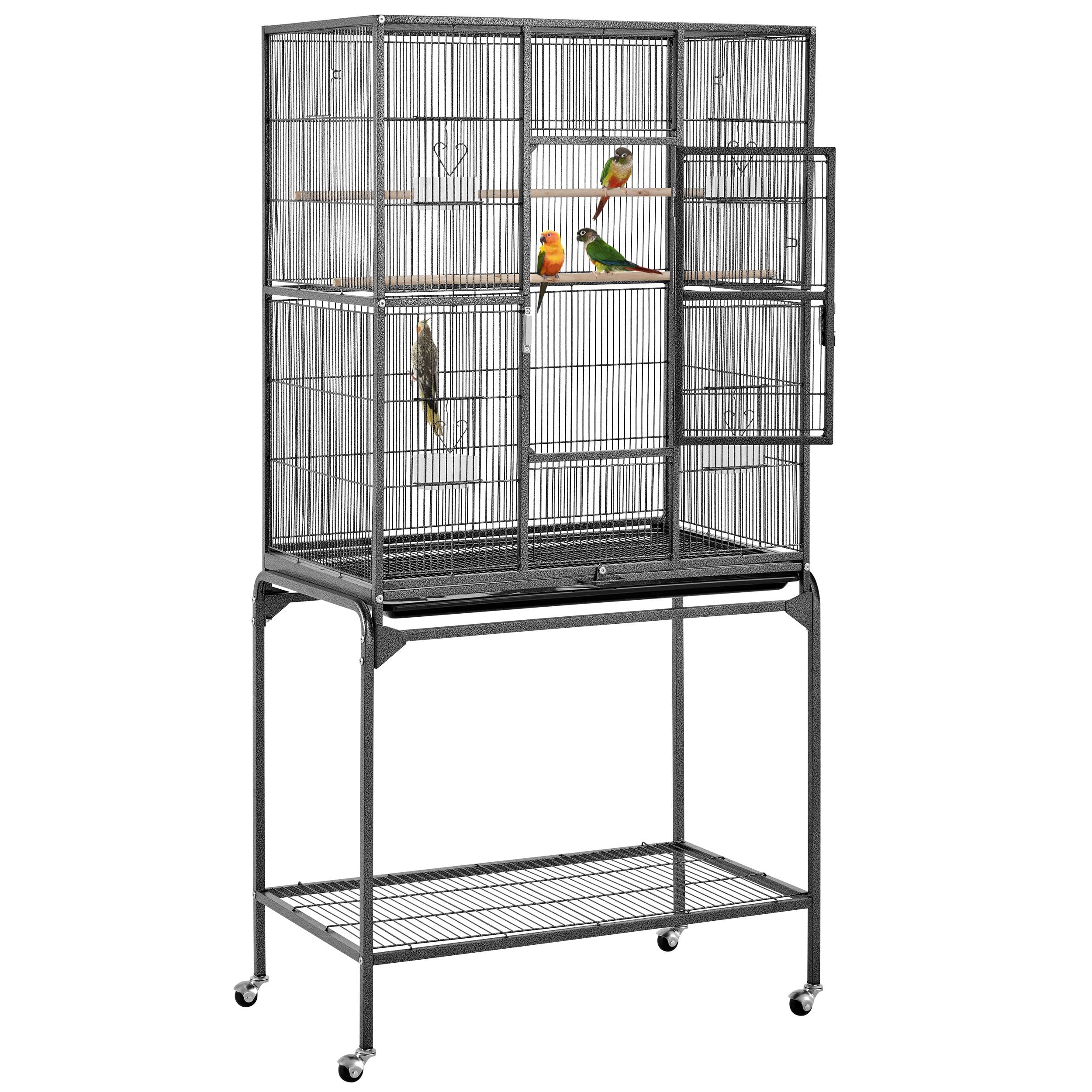
The Yaheetech 63-inch cage nails the bar spacing equation perfectly—3/8 inch (10 mm) is tight enough to contain even the smallest budgie but wide enough for natural climbing. The cage interior measures 30.3 inches long by 18.3 inches wide, giving a flock of six parakeets room to fly short distances without crashing into perches. Multiple owners confirm that their birds became noticeably more active after moving into this cage.
Yaheetech includes four feeders and two perches, but the real value lies in the door layout: a main door with a secure latch swings wide for cleaning, while a smaller inset door allows you to offer treats or refresh water without full cage access. Six additional side doors accommodate future breeding boxes or extra feeding stations without requiring any tool modifications. The slide-out tray removes from the front without disturbing the birds above.
Some owners note that the included perches are basic wooden dowels that can cause foot soreness over time—plan to swap them for natural branch perches within the first week. The assembly requires two people and about 40 minutes, and the locking mechanism on the main door can be stiff initially. Still, for its combination of safe bar spacing and generous flight volume, this cage earns its premium reputation.
Why it’s great
- 3/8-inch bar spacing is the safest range for all parakeet sizes
- Spacious 30-inch interior fits a flock of up to six budgies
- Versatile side doors support breeding boxes and extra feeders
Good to know
- Included dowel perches should be replaced with natural wood
- Main door lock can stick until broken in
3. VIVOHOME 54 Inch Wrought Iron Large Bird Flight Cage
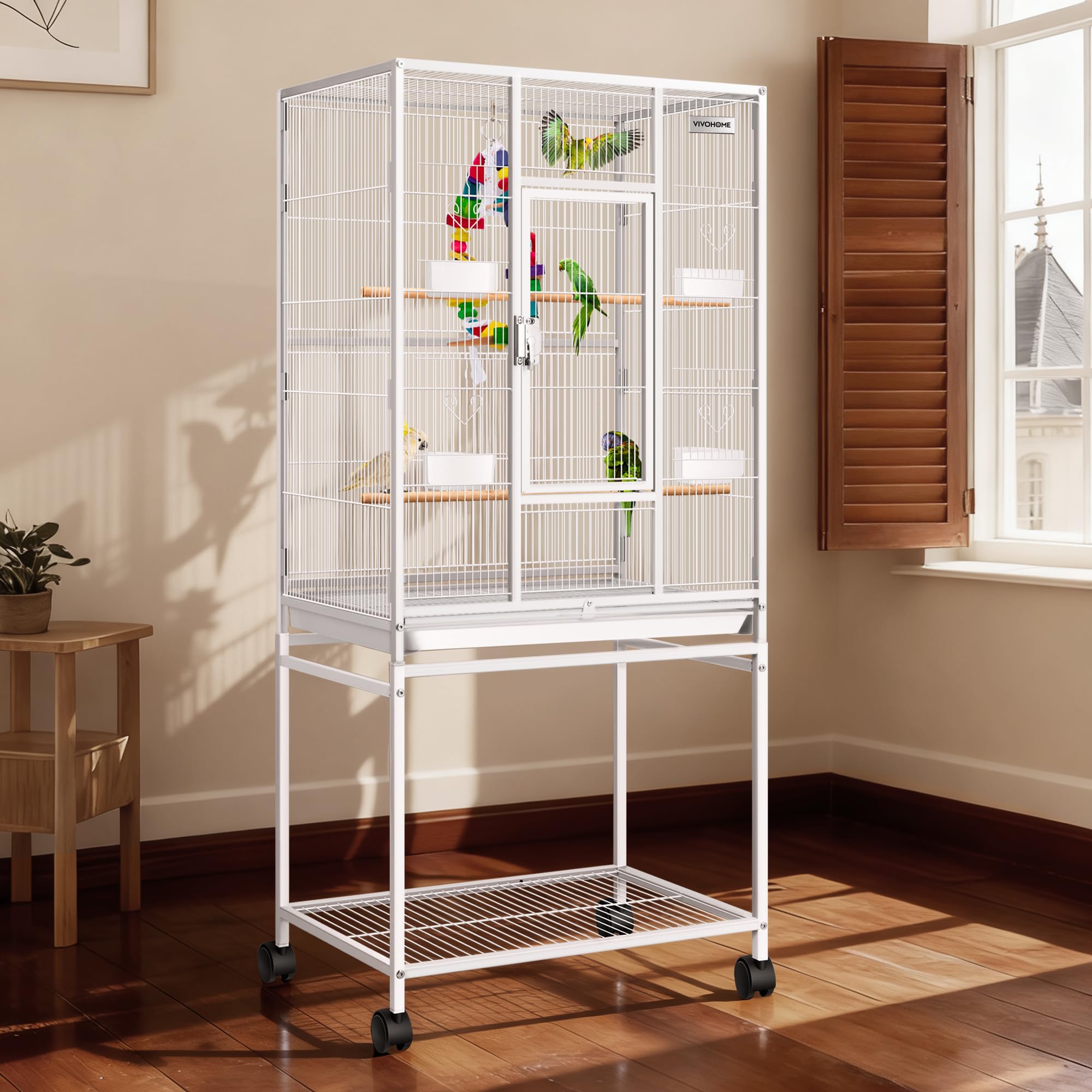
The VIVOHOME cage stands out for its white hammered-pattern paint, which resists corrosion and blends into bright or neutral home décor better than the typical black wrought iron cages. The cage measures 24.2 inches wide by 16.9 inches deep—a middle ground that gives parakeets room to stretch without dominating the corner of your living room. The nontoxic coating is a critical safety detail since parakeets chew cage bars when bored.
Four universal casters let you roll the cage from room to room or onto a covered porch for fresh air, and the flat top design allows you to hang toys or even set potted plants above the cage for visual enrichment. The slide-out tray removes easily for weekly cleaning, and the deep plastic catch pan underneath prevents seed hulls and droppings from scattering onto your floor. Owners of cockatiels and conures consistently rate the build quality as excellent for the price point.
The only notable downside is the bar spacing: at 10 mm (3/8 inch), it’s actually on the tighter side, which is perfect for budgies but limits visibility slightly compared to wider-spaced cages. Some owners report that the latch handle on the main door arrived broken, though replacement parts are readily available from the manufacturer. Overall, this is the best-looking premium cage in the lineup that doesn’t sacrifice safety for aesthetics.
Why it’s great
- Premium white hammered finish looks clean and resists corrosion
- 4-wheel casters provide smooth mobility across any floor type
- Nontoxic coating ensures safety even with constant chewing
Good to know
- Plastic catch pan feels flimsy compared to metal alternatives
- Latch handle on main door has occasional quality-control issues
4. Mcage 54-Inch Large Sturdy Wrought Iron Flight Cage
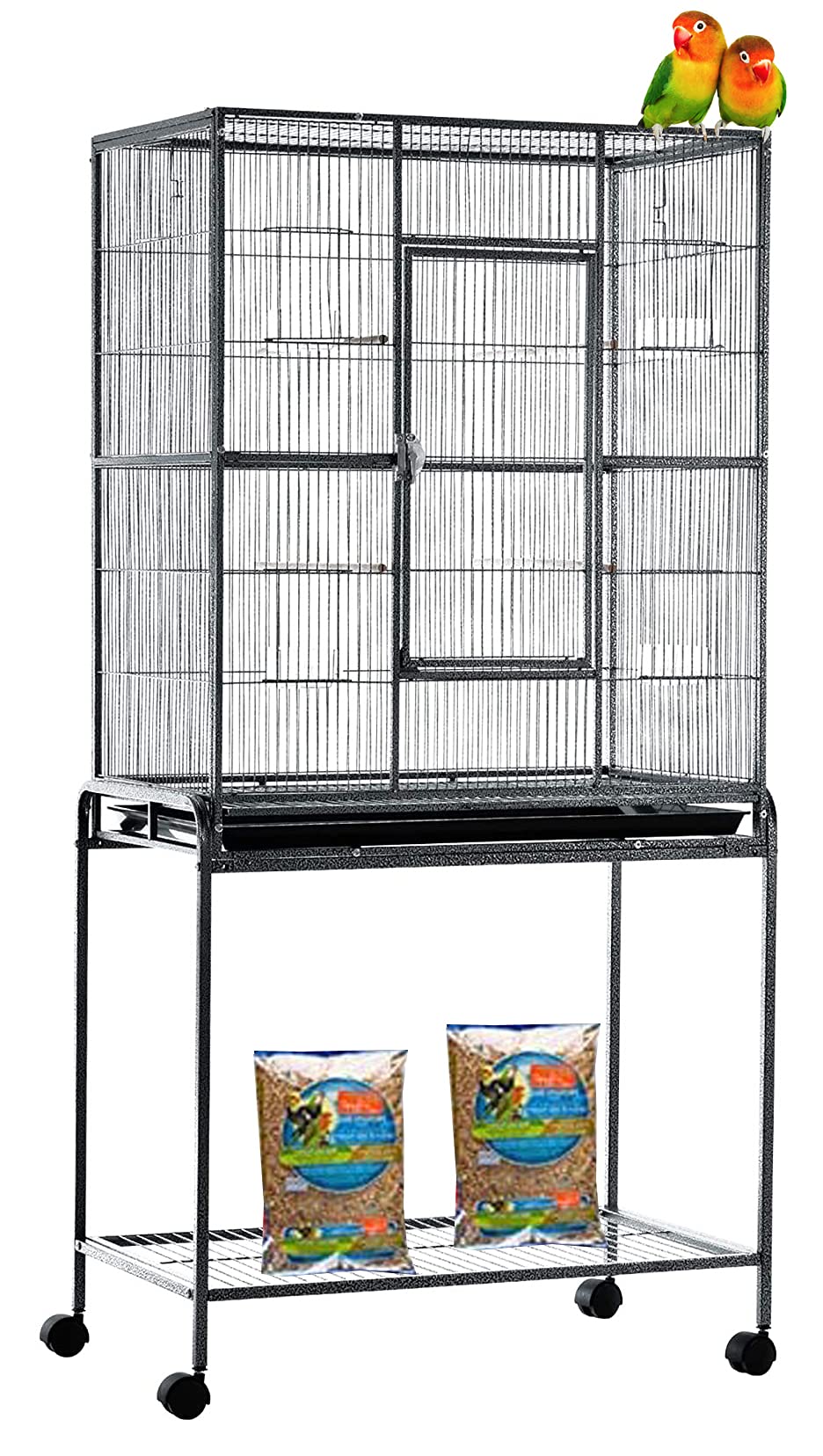
The Mcage flight cage nails the ideal bar spacing of 1/2 inch (12.7 mm), making it one of the safest options in the mid-range tier for budgies and parakeets who can’t resist squeezing through gaps. The cage body measures 25 inches wide by 17 inches deep, providing enough horizontal run for a pair of parakeets to exercise daily. The wrought iron frame with black vein coating adds scratch resistance that survives years of daily use.
What really sets this cage apart are the side nesting doors—small access ports on both sides that let you attach breeding boxes or extra perches without opening the main cage. The removable rolling stand includes a bottom storage shelf where you can stash extra toys, treats, and cleaning tools, keeping everything organized beside the cage. The large front door opens wide enough for you to reach all corners of the interior for thorough cleaning.
Some assembly quirks are worth noting: the cage sits loosely on its stand, and several owners have zip-tied the frame to the base for extra stability. The included plastic feeder cups use a guillotine-style door that could potentially trap a bird if the mechanism fails unexpectedly—consider replacing them with stainless steel bowls immediately. Despite these minor faults, the combination of safe bar spacing and side nesting access makes this the best value for breeders and multi-bird households.
Why it’s great
- 1/2-inch bar spacing is the safest standard for parakeets
- Side nesting doors allow breeding box attachment
- Bottom storage shelf keeps supplies organized nearby
Good to know
- Cage sits loosely on stand and may need zip-tie reinforcement
- Guillotine-style feeder doors pose a potential entrapment risk
5. YITAHOME 62 inch Metal Bird Cage

The YITAHOME cage takes a unique approach with 0.4-inch bar spacing—tighter than the 1/2-inch standard—which makes it ideal for especially small budgies or young parakeets who might wiggle through wider gaps. The footprint is compact at 17 inches wide by 14 inches deep, making this one of the narrower options here. It works well as a starter cage for a single parakeet or a bonded pair, but a larger flock will feel cramped quickly.
The four-door design includes two small front doors for feeder access and two larger doors for interaction and cleaning. The slide-out tray and detachable mesh grate separate easily for cleaning, and the top handle adds a surprising convenience: you can lift the cage or hang it temporarily during deep cleaning sessions. The included accessories—a long bridge, three pendants, and three perches—provide instant enrichment without an extra purchase.
Assembly is straightforward, though some owners note the bottom tray feels a bit flimsy for the price. The 62-inch total height includes the stand, so your parakeet gets plenty of vertical climbing room even if horizontal space is limited. If you’re working with a tight corner but still want 0.4-inch bar spacing for maximum safety, this is the most space-efficient choice in the mid-range tier.
Why it’s great
- 0.4-inch bar spacing prevents even the smallest budgies from escaping
- Top handle and detachable grate make cleaning a breeze
- Generous accessory pack includes bridge, pendants, and perches
Good to know
- Narrow footprint limits horizontal flight space for larger flocks
- Bottom tray materials feel less durable than the cage frame
6. Yaheetech 35 inch Wrought Iron Bird Cage
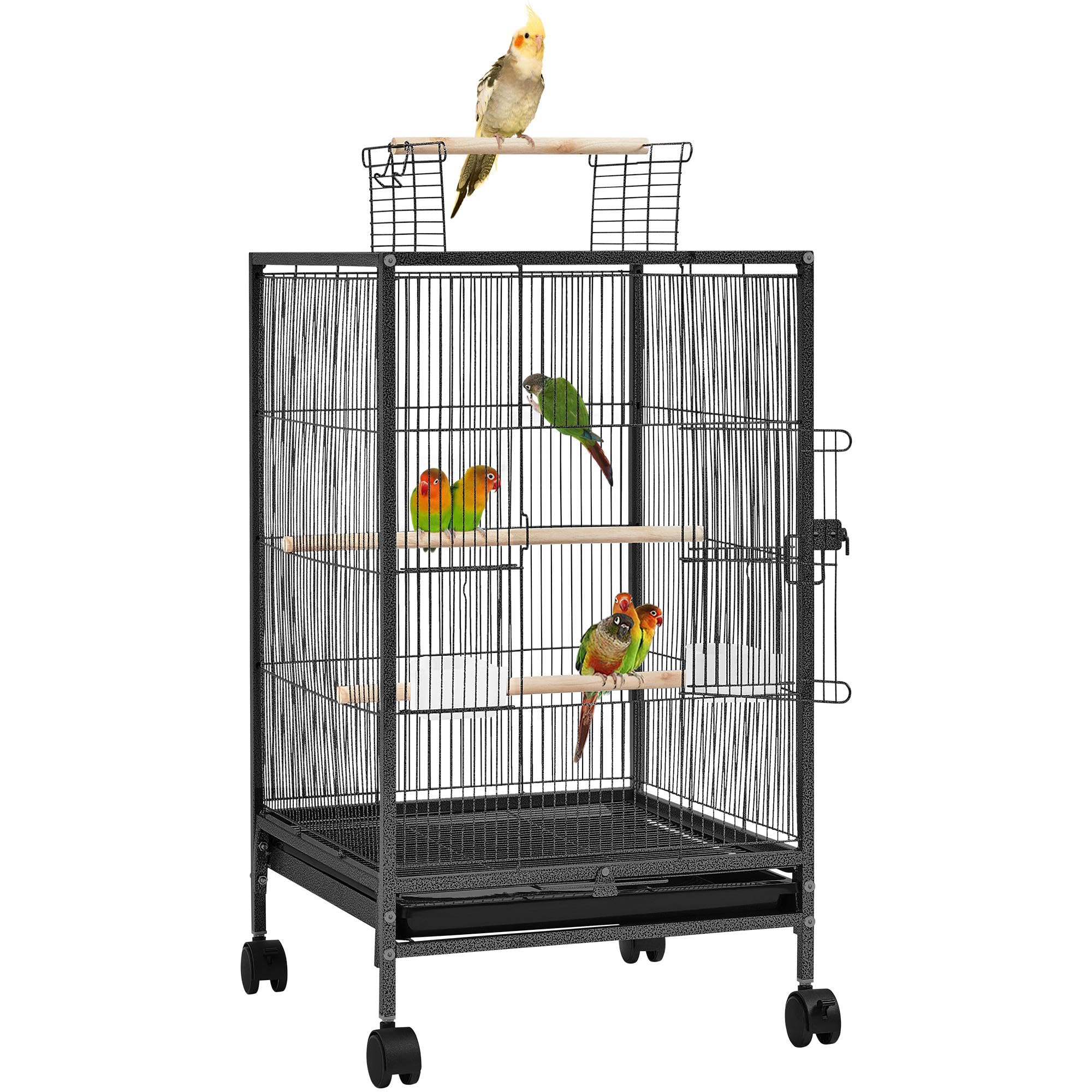
The Yaheetech 35-inch cage offers an 18-inch square interior, which is the minimum recommended footprint for a single parakeet but surprisingly generous for a cage in this price range. The 3/8-inch (10 mm) bar spacing provides an extra margin of safety for smaller birds, and the powder-coated steel with water-resistant paint resists the rust that kills cheaper cages within a year. The cage weighs only 13 pounds, making it one of the easiest to move and reposition.
The open-top design is the standout feature here: the roof swings open and locks into place with an included dowel, creating a temporary outside perch where your parakeet can sit while you clean the interior. This saves you from buying a separate play top or travel perch. The four 360-degree wheels (two with locks) let you roll the cage from room to room, or you can detach the wheels entirely to place the cage on a tabletop without scratching the surface.
Assembly can be frustrating—the bars tend to misalign, and the included screwdriver is tiny. The cage is designed for 1-2 small birds like budgies or parrotlets, not cockatiels or larger parakeets. The top latches are secure enough to prevent escape, but owners should check them regularly for wear. For the price, this is the smartest choice for a single-bird household that wants an interactive open-top feature.
Why it’s great
- Open-top design creates a perch area without extra purchases
- 18-inch square footprint meets the minimum parakeet space requirement
- Lightweight 13-pound frame with detachable wheels for table placement
Good to know
- Bar alignment during assembly can be frustrating
- Only suitable for 1-2 small birds, not a flock
7. VINGLI 53-inch Bird Cage with Wheels
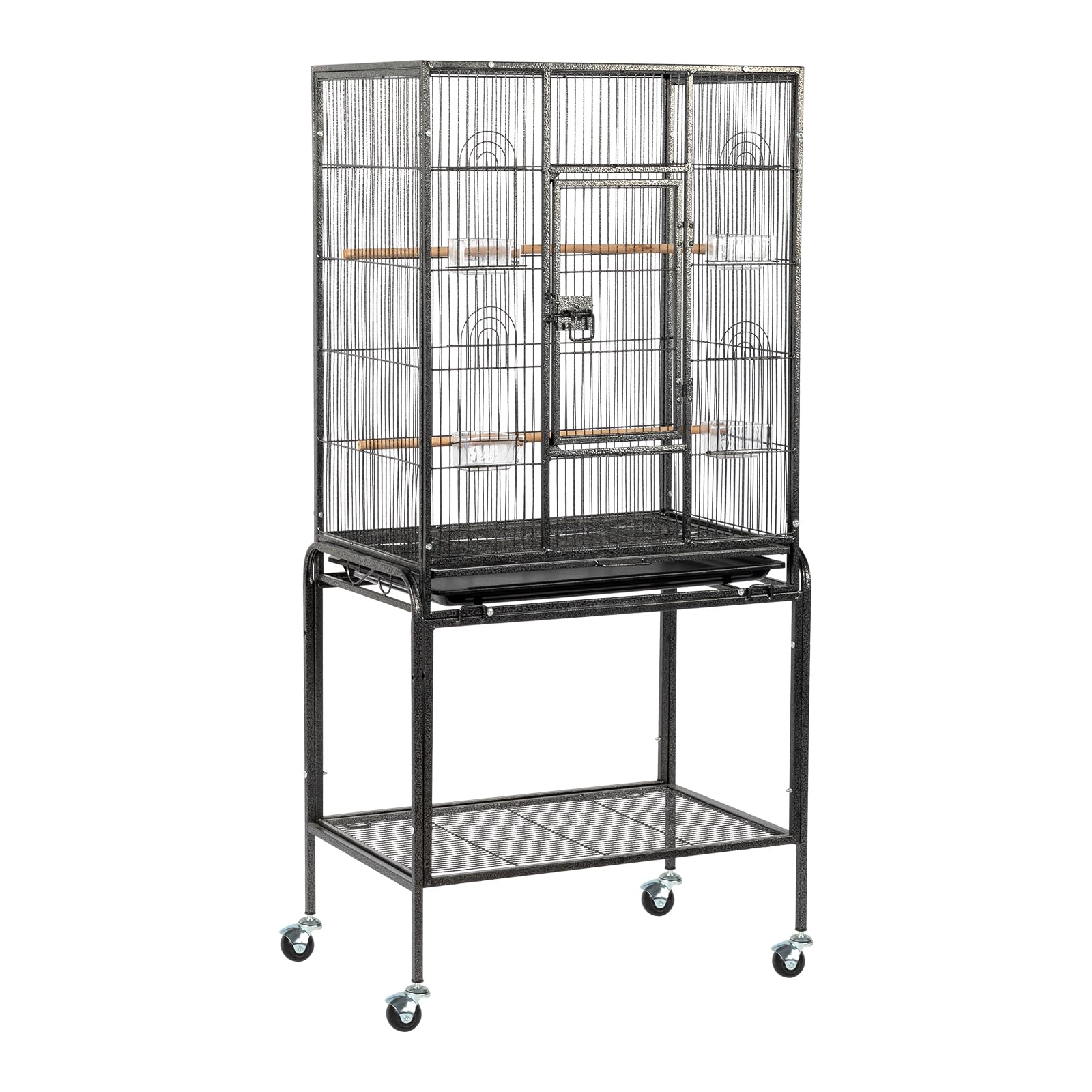
The VINGLI 53-inch cage punches well above its price tier with a premium wrought iron frame that resists chewing and scratching better than the plastic-heavy alternatives in the budget segment. The cage interior measures 25.4 inches wide by 16.5 inches deep, providing enough horizontal space for two parakeets to fly short distances. The corrosion-resistant coating adds longevity that budget cages typically lack, and multiple owners compared the build quality favorably to options costing twice as much.
The interactive play area includes a ladder, wooden perch, and stainless steel feeders—a surprising value-add that typically only appears on premium models. The slide-out tray system with a double-tray design makes cleaning quick: you pull the top tray to remove waste, while the bottom tray catches any overspill. The rotating wheels let you move the cage easily, and the detachable stand gives you flexibility to use it on a table if you prefer.
The main drawback is the lack of locking mechanisms on the food tray doors and main door—several owners have 3D-printed their own locks to prevent smart parakeets from escaping. The bar spacing isn’t explicitly listed in the specifications, so you should verify with the manufacturer if you have especially tiny budgies. For the price, this is the most affordable way to get a large wrought iron cage without sacrificing interior volume.
Why it’s great
- Full wrought iron frame at a budget-friendly price point
- Double slide-out tray system minimizes cleaning time
- Integrated play ladder and stainless steel feeders included
Good to know
- No locking mechanisms on food tray doors or main door
- Bar spacing is not explicitly stated—verify for small budgies
FAQ
What is the best cage shape for parakeets?
Can I use a cockatiel cage for my parakeet?
How often should I clean a parakeet cage?
Is powder coating safe for parakeets?
Final Thoughts: The Verdict
For most users, the bird cages for parakeets winner is the Topeakmart Large Flight Cage because its 31-inch width provides genuine horizontal flight room and the hammered paint finish resists damage better than any other model in this guide. If you want the safest bar spacing for a flock of budgies, grab the Yaheetech 63-Inch cage with its 3/8-inch bars. And for breeding setups where side nesting access is essential, nothing beats the Mcage 54-Inch Flight Cage.