
A parrotlet needs more than just a box with bars. These tiny parrots are active, curious, and require a cage that offers real flight space without letting them squeeze through the gaps. Many cages marketed for small birds have bar spacing too wide for a parrotlet’s head, creating a serious safety hazard. The right enclosure combines a secure 0.4-inch or tighter grid with enough horizontal length for actual wing-flapping movement.
I’m Min — the co-founder and writer behind Gadgets Feed. I’ve spent countless hours analyzing cage dimensions, wire thickness, and material coatings to separate the genuinely safe homes from the risky compromises that put parrotlets in danger.
Every cage on this list has been evaluated for bar spacing, structural sturdiness, and cleaning convenience so you can confidently choose the best bird cages for parrotlets without second-guessing safety or durability.
How To Choose The Best Bird Cages For Parrotlets
Parrotlets are small but powerful chewers. They also need daily flight exercise. Selecting a cage means prioritizing three things: bar spacing safety, usable flight volume, and easy cleaning access. A cage that fails any one of these will frustrate both you and your bird.
Bar Spacing Is A Non-Negotiable Safety Metric
The single most dangerous spec for a parrotlet cage is the gap between bars. Parrotlets can wedge their heads through spaces larger than 0.5 inches and become stuck. Every cage recommended here uses a 0.4-inch or tighter gap. Always measure the actual bar spacing yourself before introducing your bird — some manufacturers list it smaller than the real production measurement.
Horizontal Flight Space Matters More Than Tall Towers
Parrotlets fly horizontally, not vertically. A tall, narrow cage with multiple levels looks impressive but forces the bird to hop up rather than stretch its wings. Prioritize cages at least 24 inches wide or longer. The 30-inch flight cages on this list offer enough room for a parrotlet to actually fly from perch to perch, which directly supports muscle health and mental stimulation.
Material And Coating Affect Longevity And Safety
Powder-coated carbon steel or wrought iron resists the constant chewing parrotlets do along bar edges. Cheap paint or plastic components chip off and can be ingested. Look for non-toxic, water-resistant finishes on all metal parts. The bottom tray should be removable plastic or metal — cardboard tray liners get destroyed quickly by a parrotlet’s beak.
Quick Comparison
On smaller screens, swipe sideways to see the full table.
| Model | Category | Best For | Key Spec | Amazon |
|---|---|---|---|---|
| Yaheetech 40-inch Open Top | Premium | Parrotlets who love open-top play | 3/8 inch bar spacing with lockable top | Amazon |
| Topeakmart 53.5-inch Mobile | Premium | Multiple parrotlets or medium birds | 24.5 x 17 x 53.5 inch overall with stand | Amazon |
| VINGLI 53-inch Wheels | Mid-Range | Tall space with rolling mobility | Wrought iron frame with double tray | Amazon |
| Topeakmart 30-inch Flight | Mid-Range | Horizontal flight with side handles | 30.5 x 18.5 x 18 inch flight zone | Amazon |
| VEVOR 30-inch Stackable (Black) | Mid-Range | Stacked setups or budget flight space | Q195 carbon steel with slide-out tray | Amazon |
| VEVOR 30-inch Stackable (White) | Budget | Entry-level flight cage for a single bird | 30 x 18 x 18 inch with mesh bottom | Amazon |
| Yaheetech Open Play Top Travel | Budget | Travel or temporary housing | 15.7 x 15.7 x 22.8 inch compact cage | Amazon |
In‑Depth Reviews
1. Yaheetech 40-inch Wrought Iron Open-Top Parrot Cage

The Yaheetech 40-inch cage uses a 3/8-inch bar spacing that is tighter than the standard 0.4-inch gap, making it the safest option for preventing head entrapment in parrotlets. The open-top design uses a wood dowel to keep the roof secured open, turning the top into an extra play area without needing a separate playgym. The 18 x 18-inch footprint provides enough floor area for a single parrotlet to move comfortably between perches.
Four 360-degree wheels (two lockable) let you roll the cage onto a patio for supervised outdoor time. The powder-coated steel frame resists rust and holds up against persistent chewing. Assembly takes about 15 minutes when working on a flat table, and the slide-out tray with a locking tab prevents accidental dislodging during cleaning.
One parrotlet owner noted the cage arrived looking brand new in a “used like new” condition and was assembled quickly. The only hassle is aligning the side panels during setup — having a second person holds the bars steady while threading screws. The included perches are functional but upgrading to natural branch perches improves foot health.
Why it’s great
- 3/8-inch bar spacing is safer than most cages for tiny parrotlet heads
- Open top creates a second perch zone without extra hardware
- Lockable casters and lightweight frame make moving effortless
Good to know
- Assembly instructions are picture-based and require patience aligning panels
- Stock perches are smooth dowels; replace with natural wood for better grip
2. Topeakmart 53.5-inch Large Bird Cage

The Topeakmart 53.5-inch cage offers a 24.5 x 17-inch footprint elevated on a 20.7-inch rolling stand, bringing the cage to chest level for better interaction with your parrotlet. The 0.4-inch bar spacing is the maximum safe gap for parrotlets, and the 2mm-thick alloy steel wires resist bending even from determined chewers. Four separate feeder doors on the front let you swap food bowls without opening the main door and risking an escape.
A storage shelf on the stand keeps food bags and toys organized. The slide-out grate and tray system pulls out fully for thorough cleaning. Owners of multiple budgies and small birds report the cage feels heavy and solid, with casters that roll smoothly on hardwood floors. The Palmer Green color option blends into home decor better than standard black or white cages.
The plastic feeding bowls included are deeper than ideal for a parrotlet’s small beak — switching to shallow stainless steel cups prevents seed waste. The tray is plastic and may develop cracks over time with harsh scrubbing, but the metal grate above it protects the tray from direct droppings. One buyer reported minor rust on edges after outdoor hosing, so indoor drying is recommended.
Why it’s great
- Chest-level stand with casters reduces bending and improves bird viewing
- Four feeder doors allow outside access for food changes
- Sturdy 2mm wire holds up against persistent parrotlet chewing
Good to know
- Plastic feeding bowls are too deep; replace with shallow stainless cups
- Only one main access door limits interior decorating flexibility
3. VINGLI 53-inch Bird Cage with Wheels
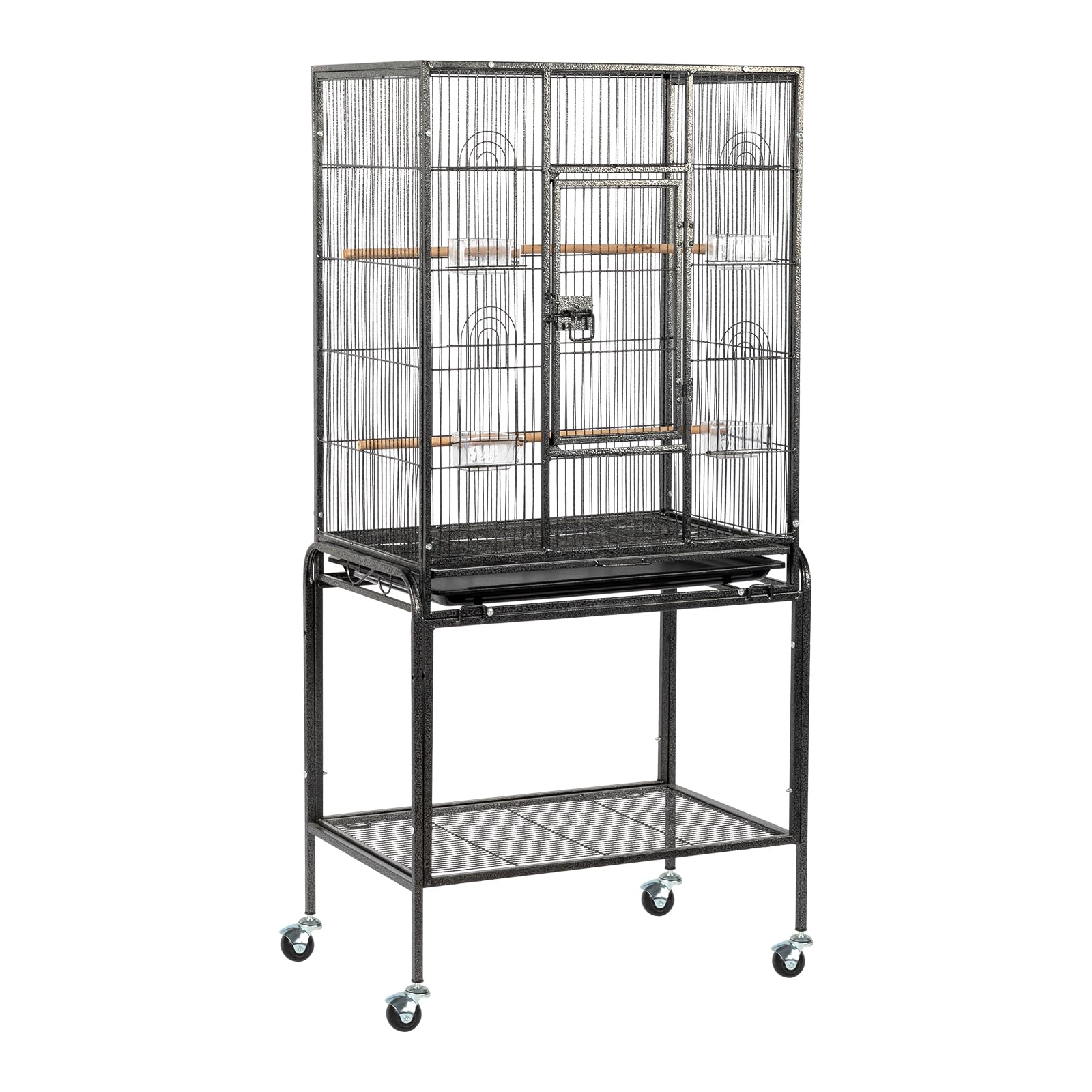
The VINGLI 53-inch cage uses wrought iron construction that feels significantly heavier and more rigid than thin-wire alternatives. The 25.4 x 16.5-inch floor area at the base opens to a full 53-inch height, creating vertical climbing space. A ladder, large wooden perch, and stainless steel feeders come included, reducing the initial accessory spend. The reinforced locking mechanism on the main door uses a spring-loaded latch that stays secure even when bumped.
Double slide-out trays with a safety grille make cleaning fast — pull the top tray, scrape debris into the bottom tray, and slide everything out in one motion. Rotating wheels allow you to move the cage from room to room without lifting. Assemble time averages 20 minutes with the included tools, and buyers consistently mention the cage exceeding expectations for its mid-range price.
The main door and feeder doors lack separate locking clips — some owners 3D-printed small locks for extra security. The cage is best suited for a single parrotlet or a bonded pair, as the floor footprint is narrower than the longer flight cages. The wrought iron coating holds up to water but should be wiped dry after cleaning to prevent moisture pooling in joints.
Why it’s great
- Heavy wrought iron frame feels premium and resists deformation
- Double tray system with grate simplifies daily cleaning routine
- Includes ladder, perch, and stainless feeders out of the box
Good to know
- Feeder doors have no separate locks; add twist ties for escape-proofing
- Floor footprint is narrower than horizontal flight cage alternatives
4. Topeakmart 30-inch Flight Bird Cage
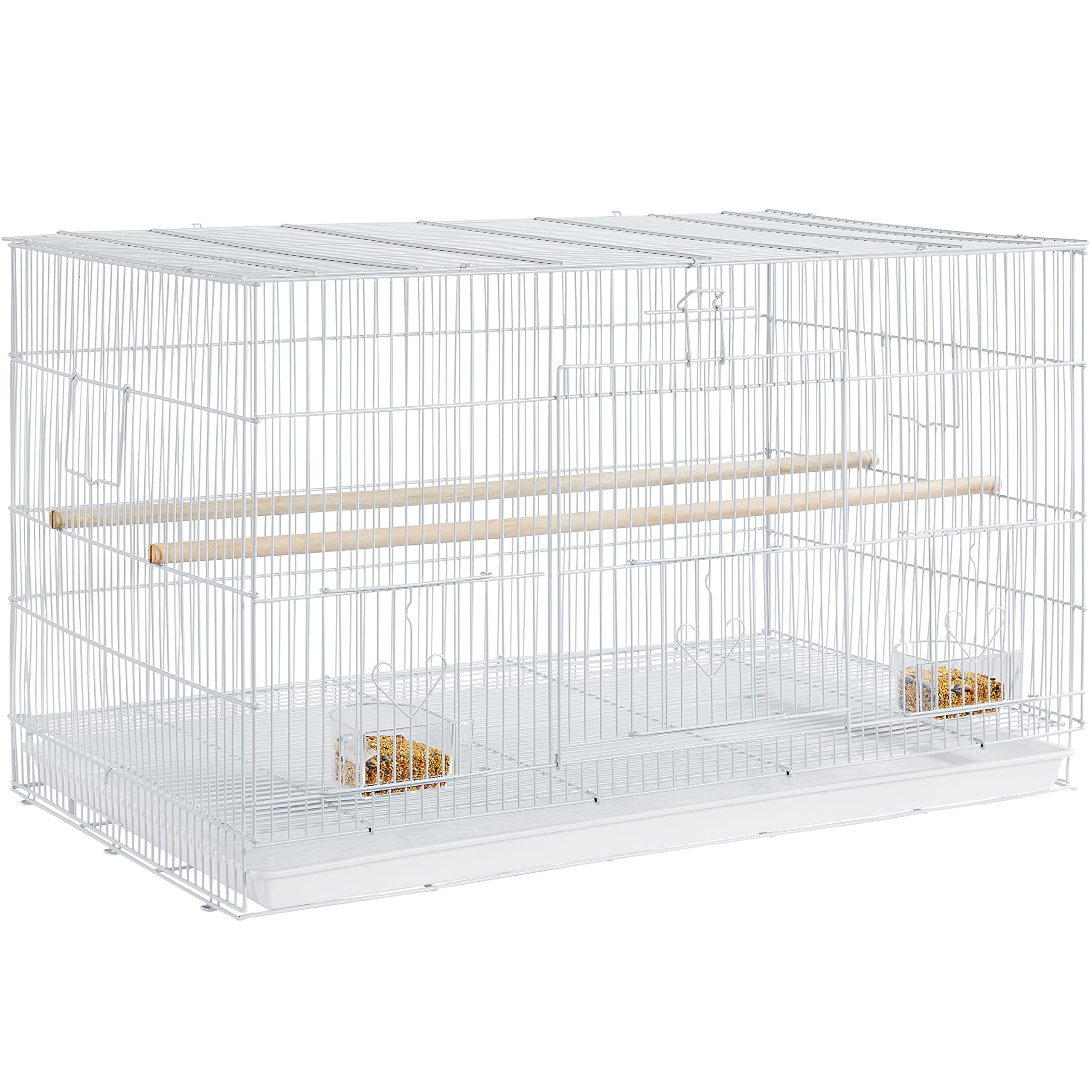
The Topeakmart 30-inch flight cage prioritizes horizontal length with a 30.5 x 18.5-inch base that gives a parrotlet genuine room for short flights. The 0.4-inch bar spacing meets the safety standard, and the powder-coated metal finish has water and oxidant resistance. Three doors serve different purposes: a large drop-down front for full access, an embedded smaller door for daily entry, and a feeder door on the side for food refills without hand intrusion.
Two side handles let you carry the cage easily, and the 11.8-pound weight is manageable for one person. A slide-out tray sits under a protective grate so droppings fall away from your bird’s feet. Assembly is straightforward — one buyer’s 10-year-old neighbor completed it in 15 minutes with no tools required beyond a screwdriver.
Some units arrive with a sharp edge on the wire where the grate sits. A quick pass with a metal file or Dremel smoothing wheel removes the hazard. The white paint finish looks clean but shows scuffs more readily than darker coatings. The feeder door latch is simple — confirm it clicks shut fully after each use to prevent accidental opening.
Why it’s great
- 30.5-inch length supports actual horizontal flight for parrotlets
- Three dedicated doors improve access for cleaning and feeding
- Lightweight with side handles for easy relocation
Good to know
- Occasional sharp edges on grate wire require sanding before bird introduction
- White paint marks easily; keep a damp cloth nearby for scuffs
5. VEVOR 30-inch Stackable Flight Cage (Black)

The VEVOR 30-inch cage in black is nearly identical to its white counterpart but uses Q195 carbon steel for the frame, which offers slightly better rigidity. The 29.9 x 18.1 x 17.9-inch dimensions give a parrotlet a generous flight area, and the 0.4-inch grid spacing is consistent across all panels. A transparent feeding box on the front lets you see food levels without opening the door — useful for monitoring a picky eater’s intake throughout the day.
The stackable design allows you to place another cage on top if you house multiple birds in separate enclosures. Assembly involves unfolding the frame and snapping in the panels, taking 5 to 10 minutes. The portable handle on the side enables one-handed carrying when moving between rooms.
Several owners noted a small gap at one corner where the panels meet — this is fixable with zip ties but is worth checking before introducing your bird. The long horizontal perches included are wider than ideal; replace them with thinner natural branch perches set apart at each end to encourage flight. The spring-loaded door latch feels less secure than manual bolt-style latches — some users wrap a small twist tie around the door post for peace of mind.
Why it’s great
- Q195 carbon steel frame resists bending better than standard iron cages
- 5-10 minute assembly with no tools needed for the base structure
- Stackable for multi-bird households with limited floor space
Good to know
- Corner gaps may require zip-tie reinforcement for escape-proofing
- Spring-loaded door latch is less secure than manual bolt locks
6. VEVOR 30-inch Stackable Flight Cage (White)

The white VEVOR 30-inch cage offers the same 30-inch flight length and 0.4-inch bar spacing as the black version at an entry-level price. The carbon steel frame with powder coating provides sufficient durability for a single parrotlet, and the mesh netting at the bottom prevents birds from walking in their waste. A clear front feeding box shows water levels, helping you catch dehydration early in small birds that hide illness well.
The slide-out bottom tray is the easiest cleaning system in this budget tier — pull the tray, dump debris, rinse, and slide back. Assembly involves unfolding the main body and securing the panels, with most buyers finishing in under 10 minutes. Side handles on both ends make it easy to lift onto a stand or table.
The included perches and feeding dishes are sized for larger birds like cockatiels and feel oversized for a parrotlet. Swap the perches for 0.5-inch-thick natural wood and the dishes for small stainless steel cups to make the interior proportional. The spring-loaded door is the same latch concern as the black VEVOR — a small binder clip on the door frame provides a quick fix until you install a proper lock.
Why it’s great
- 30-inch length provides essential horizontal flight space for the price
- Slide-out tray and mesh bottom simplify daily cleaning chores
- Quick 10-minute assembly with no specialized tools required
Good to know
- Perches and dishes are too large for a parrotlet and should be replaced
- Door latch is spring-loaded and needs additional security for escape-prone birds
7. Yaheetech Open Play Top Travel Bird Cage

The Yaheetech Open Play Top cage uses a 1.5-centimeter bar spacing (approximately 0.59 inches) that is wider than the ideal 0.4-inch gap for parrotlets. This makes it suitable only for supervised temporary housing rather than permanent living. The open top design uses a wood dowel to hold the roof open, creating a small play area on top. Two handles on the roof make this cage easy to carry for vet visits or short trips.
The 15.7 x 15.7 x 22.8-inch size is compact enough to fit in a car seat, and the 7.72-pound weight is manageable for one hand. A slide-out tray with a grate is included, and the HIPS plastic base with metal frame provides impact resistance if dropped during transport. The composite front door has a smaller built-in door for birds to enter without opening the full panel.
For a parrotlet, this cage works as a travel carrier or an emergency quarantine space — it is too small for daily living. The bar spacing is a serious concern: a parrotlet can squeeze its head through the gap. Owners of conures and cockatiels report the cage holds up well for its intended use. The assembly is more involved than the VEVOR cages and requires following the picture instructions closely. The wood dowel perch on the open top is a nice bonus but slides out easily, so check it’s secured before letting your bird play on top.
Why it’s great
- Lightweight and handles on top make it ideal for vet visits or travel
- Open top with dowel creates a temporary play space outside the cage
- Removable tray and grate allow quick cleanup during trips
Good to know
- 1.5 cm bar spacing is too wide for a parrotlet’s head; use only for monitored temporary stays
- Interior is too small for a parrotlet’s daily flight needs — not a primary home
FAQ
What is the maximum safe bar spacing for a parrotlet cage?
Can a parrotlet live in a cage meant for budgies or cockatiels?
How often should I clean a parrotlet cage with a slide-out tray?
Is a powder-coated cage safe for a parrotlet that chews bars?
Final Thoughts: The Verdict
For most users, the best bird cages for parrotlets winner is the Yaheetech 40-inch Open Top Cage because its 3/8-inch bar spacing offers the tightest safety margin and the open top doubles as a play area without extra expense. If you want a cage that rolls to a sunny spot and sits at chest level, grab the Topeakmart 53.5-inch Mobile Cage. And for budget-conscious buyers who still want real horizontal flight space, nothing beats the VEVOR 30-inch Stackable Cage.