
Bluebirds are picky diners. Unlike chickadees or house sparrows that will eat just about anything, bluebirds really prefer live or dried mealworms delivered on a flat, stable surface they can easily land on. Get the feeder wrong, and you will find your expensive mealworms going to starlings, squirrels, or rotting in the rain. That dedicated bluebird feeder you hang needs to accomplish three narrow things: keep the food dry, allow the male and female bluebirds in, and physically exclude the larger bully birds that will otherwise empty it daily.
I’m Min — the co-founder and writer behind Gadgets Feed. After analyzing the material construction, mesh spacing, entry design, and real user feedback spanning from budget glass bowls to premium starling-proof cages, I have separated the feeders that actually work for bluebirds from the ones that only look blue.
This guide covers hanging feeders, caged models, dome top designs, and premium poly-lumber units. I found the best bird feeder for bluebirds must offer a perch or platform that supports their feeding style while using physical barriers to keep out starlings, grackles, and squirrels.
How To Choose The Best Bird Feeder For Bluebirds
Bluebird feeding is not the same as general songbird feeding. A typical tube feeder with perches is almost useless for bluebirds. The critical choices revolve around entry size, food exposure, and how the feeder handles a wet climate. The three variables below separate the feeders that actually attract nesting pairs from those that become expensive starling buffets.
Starling Exclusion vs. Bluebird Access
The most common complaint across all customer reviews is that a feeder advertised for bluebirds fails because starlings fit through the bars. A 1.5 x 1.5 inch opening is the precise dimension that lets an adult bluebird slip through while blocking an adult starling’s fatter body. Any larger, and starlings will reach in and clean out the mealworms in minutes. Any smaller, and male bluebirds may struggle to squeeze in. If you live in an area with aggressive starlings, prioritize a caged or barrier guard design with this exact mesh size.
Food Presentation: Platform vs. Deep Bowl
Bluebirds naturally forage on the ground, so they prefer a flat, open feeding surface rather than a deep hopper. Feeders with a tray, platform, or wide glass base let bluebirds perch comfortably and see approaching predators while eating. Deep bowls with narrow openings discourage bluebirds because they feel trapped and cannot watch their surroundings. The best bluebird feeders use a low-profile dish or a mesh tray that keeps mealworms visible and accessible.
Drainage and Moisture Control
Mealworms mold quickly if they sit in pooled water. A feeder that has drainage holes or a mesh bottom lets rain pass through rather than soaking the food. The Kingsyard caged feeder uses a metal mesh tray for this exact reason. The Woodlink dome top feeder uses its adjustable dome to keep rain off the entire tray. If you hang a feeder without drainage, you will need to check it after every rainstorm and dump out spoiled mealworms, which defeats the purpose of low-maintenance feeding.
Quick Comparison
On smaller screens, swipe sideways to see the full table.
| Model | Category | Best For | Key Spec | Amazon |
|---|---|---|---|---|
| Kettle Moraine Recycled Bluebird Feeder | Caged / Premium | Bully bird exclusion | 1.5 x 1.5 inch mesh spacing | Amazon |
| Erva Starling-Proof Barrier Guard Feeder | Barrier Guard / Premium | Starling prevention | Vinyl-coated wire mesh + glass cup | Amazon |
| Woodlink Audubon Dome Top Feeder | Dome Top / Mid | Weather protection | Adjustable 13-inch polycarbonate dome | Amazon |
| Kingsyard Caged Platform Feeder | Caged / Mid | Small bird platform feeding | 5-lb capacity mesh tray bottom | Amazon |
| Gbekery Caged Bluebird Feeder | Caged / Mid | Entry-level caged solution | 2.15 lb weight, removable metal roof | Amazon |
| Mosaic Birds Hummble Glass Feeder | Glass Bowl / Budget | Decorative value + small birds | 3.4 oz capacity, recycled glass bowl | Amazon |
| AmishToyBox Poly Lumber Feeder | Poly Lumber / Premium | Durability and UV resistance | 12 x 8 x 8 in, removable acrylic sides | Amazon |
In‑Depth Reviews
1. Erva Starling-Proof Barrier Guard Bluebird Feeder (BBF1)

The Erva BBF1 is the single most effective starling-exclusion feeder on this list, and that is the defining problem most bluebird feeders fail to solve. It uses a densely spaced vinyl-coated wire mesh cage that physically prevents starlings and grackles from reaching the mealworm cup while allowing bluebirds to hop through. The included clear glass cup is dishwasher safe for easy sanitation, and the powder-coated blue finish will not flake or rust after multiple wet seasons. Customers consistently report that starlings gave up trying to enter after repeated failures, which is rare even among the caged competitors.
There is a catch: male bluebirds are slightly larger than females and some users had to add small wooden dowels or perches to help them feel confident landing and entering the entrance disk. Once those are installed, the feeder works as advertised. The mesh spacing is tighter than the Gbekery and Kingsyard models, which means cardinals and larger woodpeckers are also excluded. This is strictly a bluebird-and-smaller-songbird feeder, not a general-purpose guesthouse.
At the higher end of the price spectrum, the Erva is the one that actually stops mealworms from disappearing to starlings within hours. If your bluebirds are losing the food war to larger birds, this barrier guard design is the final solution. The blue glass cup is a nice color cue for the target species, and the feeder can hang from a branch or mount to a pole with minor modification.
Why it’s great
- Starling-proof cage with densely spaced vinyl-coated wire
- Removable blue glass mealworm cup is dishwasher safe
- Powder-coated blue finish resists rust and fading
- Also excludes squirrels effectively
Good to know
- Male bluebirds may need a small added perch to enter confidently
- Mesh excludes larger songbirds like cardinals completely
- Glass cup can break if feeder is knocked down by a heavy storm
2. Kettle Moraine Recycled Bluebird Mealworm Feeder
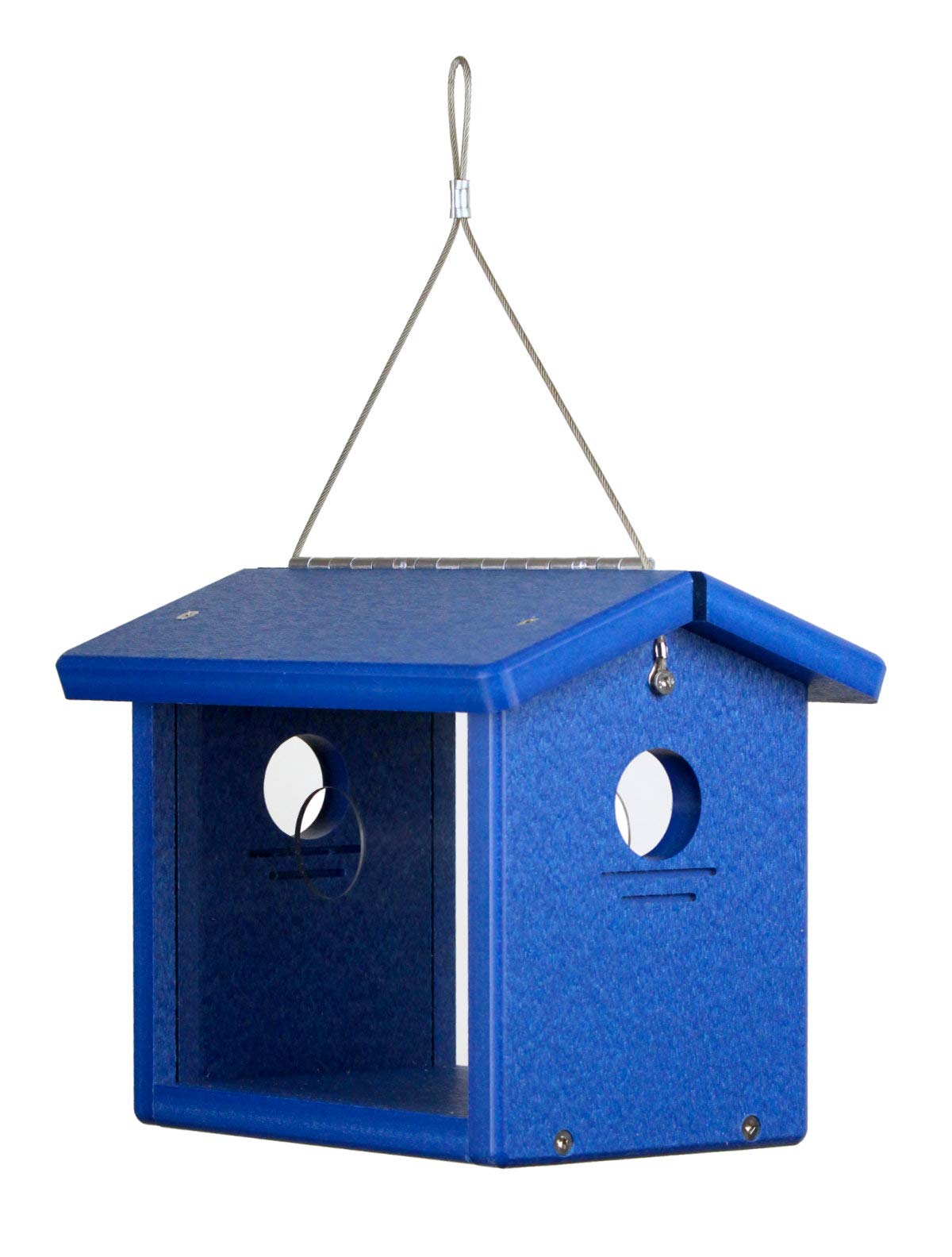
The Kettle Moraine feeder is made from recycled milk jugs into a dense poly-lumber that is guaranteed to never crack, split, peel, or fade. The heavy acrylic viewing windows let you check the mealworm level at a glance without removing the top. It uses stainless steel screws and a stainless hanging cable instead of the S-hooks and thin wires that rust out on cheaper feeders. The caged design with precise 1.5-inch openings blocks blackbirds and starlings while allowing bluebirds to enter with four distinct entry points so they never feel trapped inside.
Customers report that bluebirds discovered the feeder within a single day and that a full load of dried mealworms lasted up to two weeks because starlings could not get in. The unit is heavy at 3.6 pounds, which means it stays stable in wind but also requires a sturdy branch or pole to hang. The recycled plastic construction will outlast glass or painted steel, and the USA-made quality is visible in the tight tolerances of the doors and windows.
The only common criticism is that the acrylic side panels feel slightly thin compared to the rest of the heavy-duty build, and one customer worried about cracking over time. But in practice, this feeder consistently ranks as the best-built option for buyers who want a single purchase that will not need replacement next season. If the Erva is the best starling barrier, the Kettle Moraine is the best overall construction.
Why it’s great
- Made from recycled milk jugs with lifetime guarantee against cracking
- Four entry points prevent bluebirds from feeling trapped
- Stainless steel screws and cable outlast standard hardware
- Heavy build stays stable in wind
Good to know
- Heavy at 3.6 lbs requires a sturdy hanging point
- Acrylic windows may be less durable than solid plastic walls
- Excludes larger songbirds like cardinals
3. Woodlink NABBFDR Audubon Dome Top Seed and Bluebird Feeder
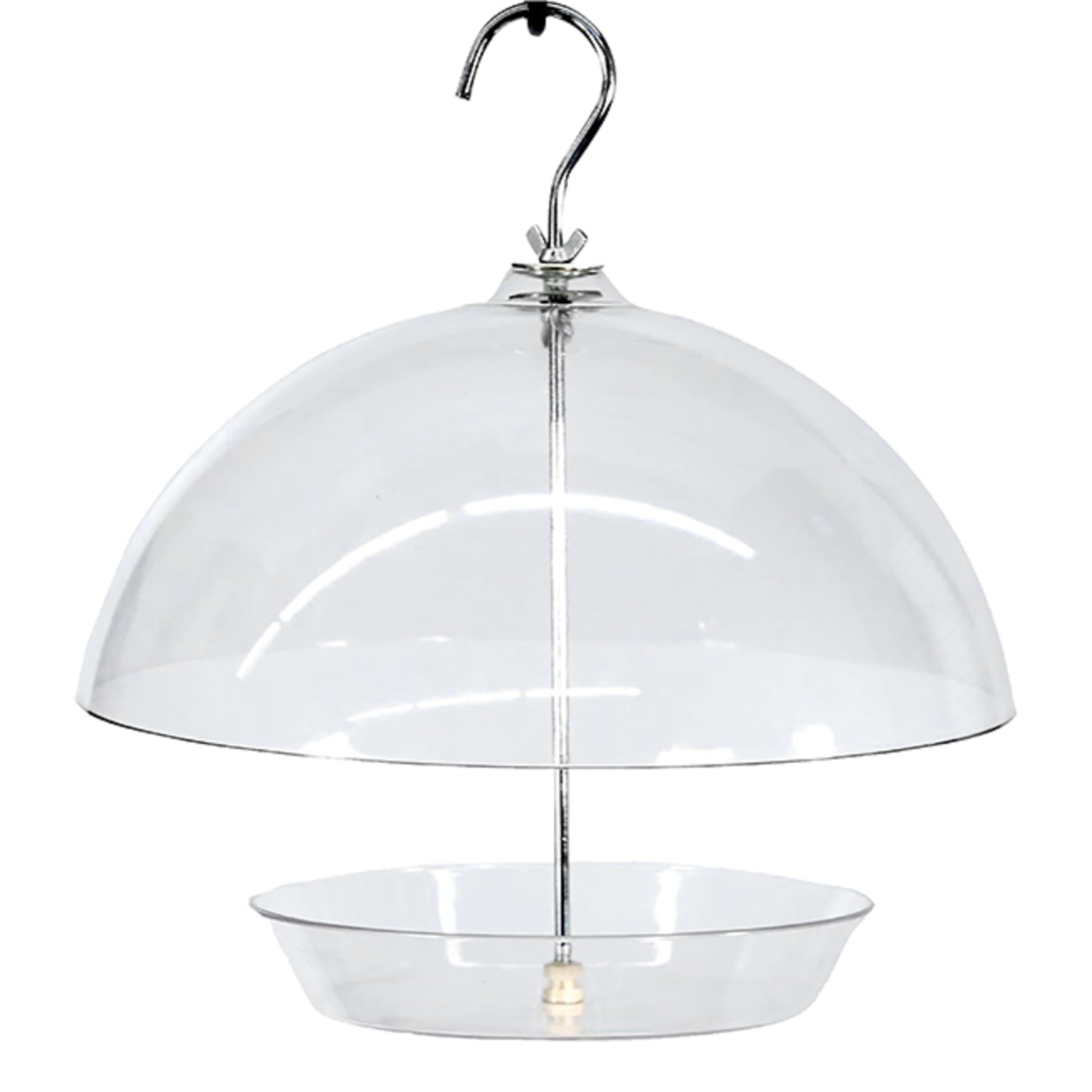
The Woodlink is a straightforward platform feeder with a clear adjustable dome on top. The dome threads onto a threaded metal post with wing nuts, so you can raise it to allow larger birds or lower it to exclude jays and grackles. The large 13-inch tray holds mealworms, seeds, fruit, or suet pellets in one open space. Bluebirds prefer this open tray style because they can see in all directions while eating, unlike enclosed box feeders where they feel cornered. The polycarbonate dome also keeps rain and snow off the food, which solves the moisture problem that plagues open feeders.
Customers who have owned this feeder for years say it is the favorite feeder in their yard, attracting both bluebirds and a mix of cardinals, chickadees, nuthatches, and titmice. The plastic construction is durable enough to withstand squirrel weight, and the dome provides a sheltered feeding environment that reduces spoilage. Some users noted that starlings and grackles eventually learned to hang from the tray rim to reach the food, so this is not a starling-proof solution but a starling-discouraging one.
For the mid-range price point, this is the most versatile feeder that still targets bluebirds. It works immediately without the bluebirds needing a learning period, and it handles wet weather better than any open tray. If you have multiple bird species in your yard and want bluebirds to get their share without excluding everyone else, the Woodlink dome top is the right balance.
Why it’s great
- Adjustable dome lowers to exclude jays or raises for larger birds
- Open tray design suits bluebird feeding behavior perfectly
- UV-resistant polycarbonate resists cracking and yellowing
- Large 13-inch tray holds a full day of mealworms
Good to know
- Starlings and grackles may reach food from the tray edge
- Not fully squirrel-proof; dome can be climbed by agile squirrels
- Plastic dome may fade slightly after several years in direct sun
4. AmishToyBox Poly Lumber Bluebird Feeder (Gray and Blue)
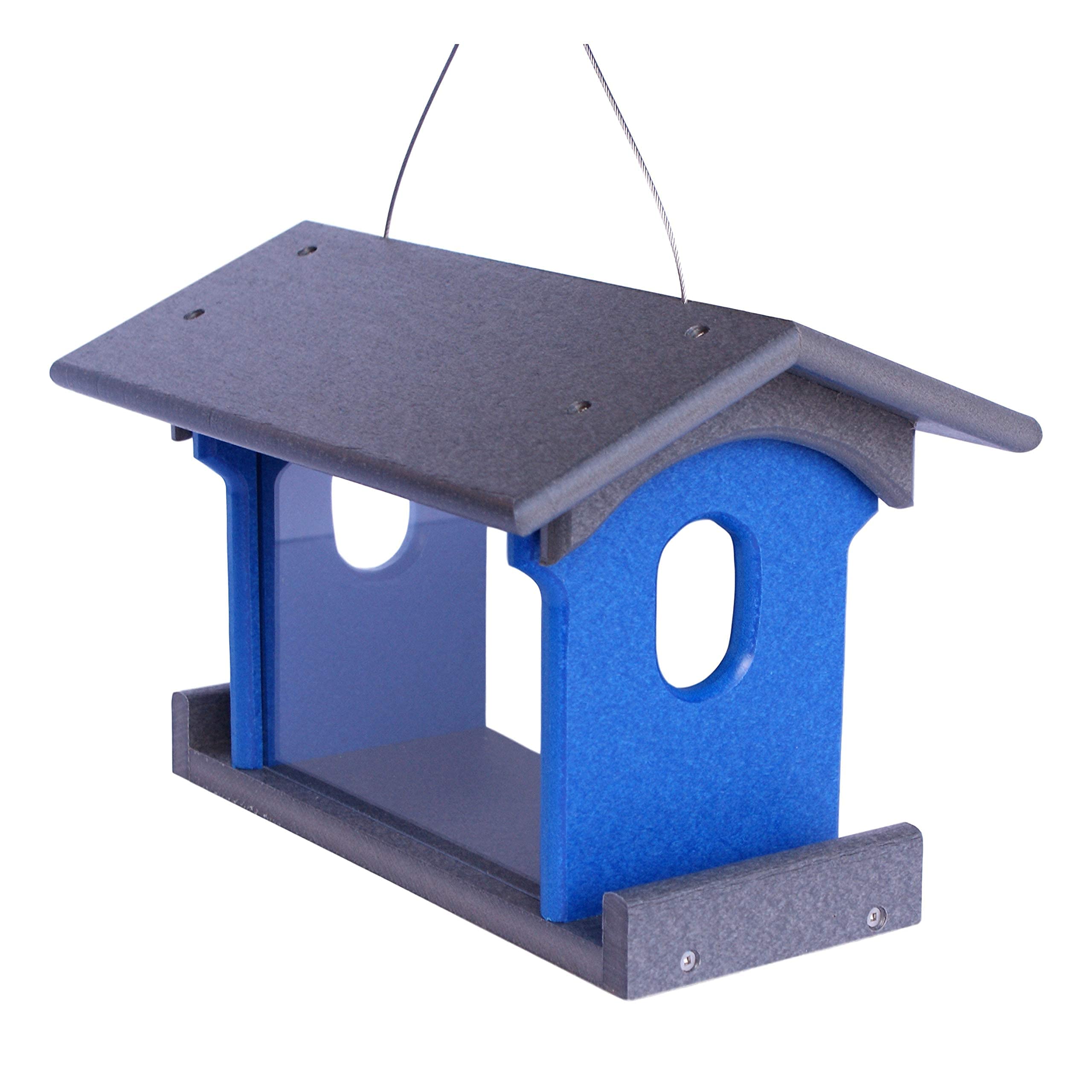
This poly-lumber feeder is handcrafted by Amish artisans in Shipshewana, Indiana, using recycled milk jugs that are UV-resistant and weatherproof. The gray and blue color combination is designed specifically to attract bluebirds, and the removable top and acrylic sides make filling and cleaning much easier than feeders with fixed roofs. The oval entry openings are large enough for bluebirds to enter with room to spare, and the roof extends over the holes to keep rain from dripping inside. At 12 inches by 8 inches, it has enough interior space for multiple bluebirds to feed at the same time.
Customers who bought this for established bluebird trails found that birds took a few days to acclimate to the oval openings, especially compared to round hole feeders. Some users modified the interior by adding grip scoring to the walls because bluebirds panicked on the smooth poly surface. However, once adjusted, the feeder effectively excludes ravens, crows, and large squirrels because they physically cannot fit through the openings. The removable sides make it possible to deep-clean between fillings, which is critical for preventing disease transmission between nesting broods.
This is the best-looking bluebird-specific feeder on the list, and the poly-lumber construction will not rot, warp, or peel like cedar or painted wood. The eco-friendly recycled material is also cooler in direct sun than metal cages. If curb appeal matters as much as function, this is the feeder that makes your bluebird station look intentional rather than improvised.
Why it’s great
- Handcrafted from recycled poly-lumber by Amish artisans in the USA
- Removable top and acrylic sides make cleaning effortless
- Roof overhang keeps rain out of entry holes
- UV-resistant material stays blue for years without fading
Good to know
- Bluebirds may need a few days to adjust to oval entry holes
- Smooth interior walls can cause panic in first-time users
- Entry hole size may allow an agile starling to squeeze through
5. Kingsyard Squirrel Proof Caged Platform Bird Feeder
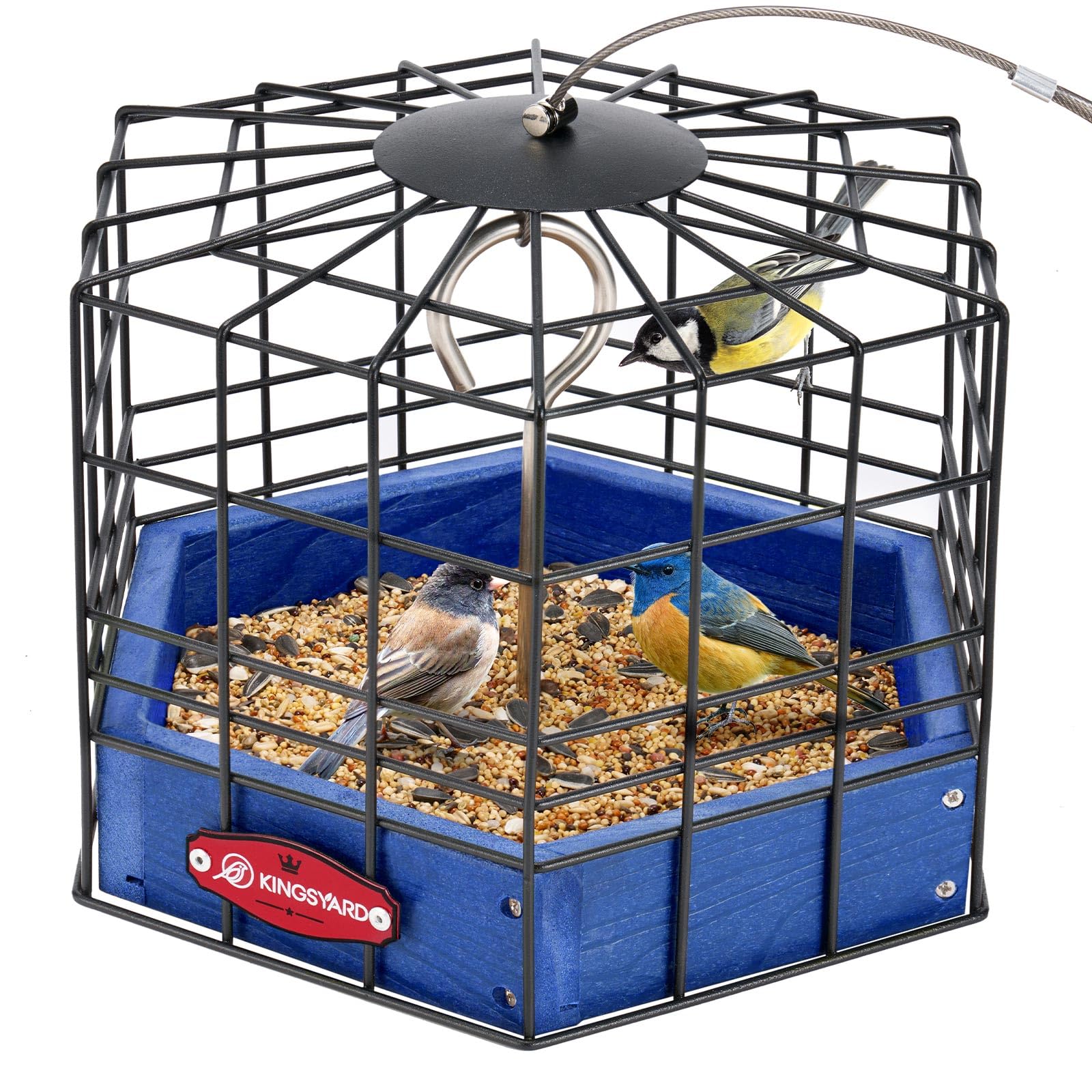
The Kingsyard caged feeder uses a 1.5-inch square mesh over a flat platform tray with a metal mesh bottom for ventilation. The recycled plastic frame is heavy-duty enough to survive all-weather hanging, and the mesh cage excludes doves, jays, grackles, and squirrels. The fly-through design with openings on all sides lets bluebirds approach from any direction, which makes them feel safer. The metal mesh tray is the standout feature here: it drains rainwater instantly so mealworms stay dry and do not mold, which is the problem all solid-bottom feeders eventually face.
Customers consistently mention that this feeder stopped their grackle and starling problem immediately once birds discovered it. However, cardinals are too big to fit through the mesh, and some users noted that determined starlings still reached their beaks through the gaps to grab mealworms near the edges. The fix is to place the feeder away from branches that starlings can use as leverage, or to add a barrier tape around the bottom edge as described in customer modifications. The 5-pound capacity platform is generous, and the recycled plastic construction feels significantly denser than the Gbekery metal model.
For buyers who want a durable platform-style feeder with built-in drainage, this is the best mid-range option. It handles rain better than any feeder with a solid bottom, and the 1.5-inch mesh is exactly right for bluebirds. The only real compromise is that starlings with very long beaks can still access food near the cage perimeter, but no feeder in this price class solves that completely without adding the barrier guard technology of the Erva.
Why it’s great
- Metal mesh tray bottom provides excellent drainage for dry mealworms
- Recycled plastic frame is heavy-duty and weather-resistant
- Fly-through design with all-around openings reduces bird hesitation
- Excludes doves, grackles, jays, and most squirrels
Good to know
- Cardinals are too large to fit through the 1.5-inch mesh
- Starlings with long beaks can still reach food near the edges
- Adding a rain dome cover makes filling slightly less convenient
6. Gbekery Caged Bluebird Feeder for Mealworms with Glass Bowl
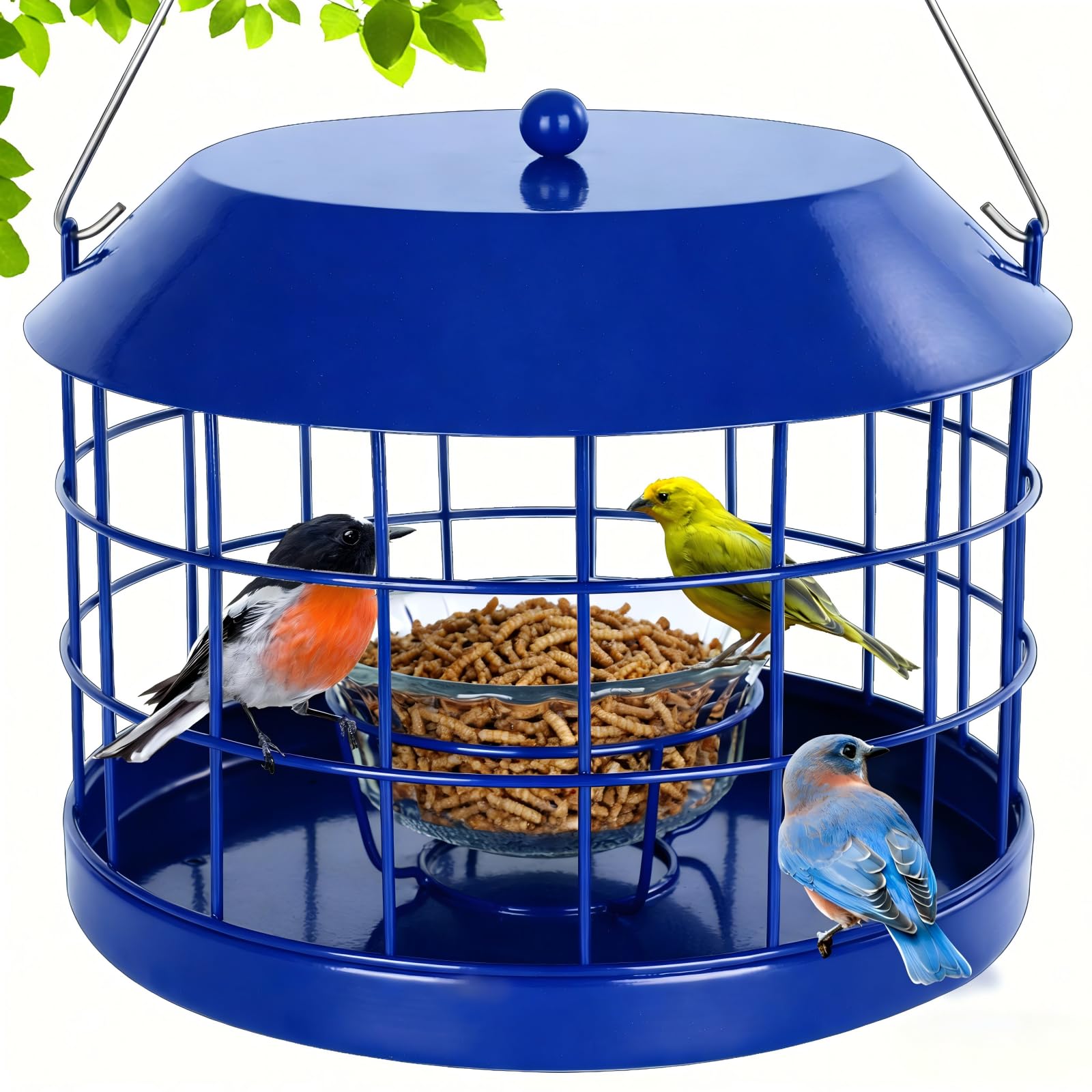
The Gbekery caged feeder uses an all-metal construction with a powder-coated blue finish and a removable glass bowl that can hold mealworms, water, jam, or suet. The roof lifts off for easy filling, and the 1.5-inch mesh cage is designed to block larger birds and adult squirrels while allowing bluebirds, goldfinches, and song sparrows to pass through. At 2.15 pounds, it is lighter than the Kingsyard and Kettle Moraine feeders, making it easier to hang from thinner branches. The glass bowl is wide and shallow, which is a good surface for bluebirds to perch and eat from.
Customer feedback reveals a split experience. The first group reports that bluebirds found the feeder within two days and that squirrels eventually gave up trying to break in. The second group, mostly customers dealing with aggressive starlings, reports that starlings reached through the cage bars and grabbed mealworms from the bowl, or even managed to squeeze their bodies through the mesh. This inconsistency suggests that the Gbekery works best in areas with moderate starling pressure rather than heavy infestations. The glass bowl is a nice touch but requires careful handling during cleaning because it can break if dropped.
At the mid-range price tier, the Gbekery is a good-looking starter cage feeder that works well when paired with dried mealworms and placed away from starling staging areas. It is not as heavy-duty as the Kingsyard, and it lacks the starling-proof track record of the Erva, but for bluebirds in a yard without overwhelming bully bird numbers, it gets the job done at a fair price.
Why it’s great
- Lightweight all-metal construction with anti-rust powder coating
- Removable glass bowl is easy to clean and versatile for various foods
- Roof lifts off completely for hassle-free refilling
- Attractive blue color blends into yard environment
Good to know
- Starlings with long beaks can reach mealworms through the cage bars
- Glass bowl can break if feeder is knocked down or dropped
- Not fully effective against aggressive starling populations
7. Mosaic Birds Hummble Hanging Glass Bluebird Mealworm Feeder

The Mosaic Birds Hummble feeder is a simple hanging glass bowl with an open hook at the top, a wide 3-inch rim for perching, and a 3.4-ounce capacity. There is no cage, no roof, and no weather protection. The recycled glass bowl is attractive and dishwasher safe, and the powder-coated metal hanger is fully recyclable with no plastic parts. At the budget-friendly price point, this is the most affordable way to offer mealworms to bluebirds if you do not have a problem with starlings or squirrels. The open design works well as a water source for smaller birds, which was how many customers ended up using it.
Customer reviews from verified buyers show that this feeder attracts Western Bluebirds reliably when filled with dried mealworms. The clear glass version is preferred over colored options because colored glass prices are significantly higher for the same function. The glass bowl slips in and out of the metal ring frame easily, and users report that the glass lasts longer than plastic versions that crack and stain from sun exposure. However, the lack of any drainage holes means that rain will pool in the bowl and spoil the mealworms unless you dump it out after every storm.
For buyers who want a decorative, low-cost entry point into bluebird feeding, this is an option. It is not a serious tool for dedicated bluebird conservation or a solution for starling pressure. It works best as a supplemental feeding station or a water source in yards where bluebirds already nest. If you are just starting out and want to see if bluebirds will visit your yard, this glass bowl tells you without a high upfront investment. But for regular feeding, you will need drainage and a cage.
Why it’s great
- Recycled glass and metal construction with zero plastic parts
- Wide 3-inch rim provides a natural perch for bluebirds
- Glass bowl is dishwasher safe for thorough cleaning
- Very affordable entry point for testing bluebird interest
Good to know
- No drainage holes cause rainwater to pool and spoil mealworms
- Open design offers no protection from starlings, jays, or squirrels
- Small 3.4 oz capacity requires frequent refilling for active birds
FAQ
Why does my bluebird feeder attract starlings instead of bluebirds?
Do bluebirds prefer live mealworms or dried mealworms?
How high should I hang a bluebird feeder?
Will a bluebird feeder keep out squirrels completely?
Final Thoughts: The Verdict
For most users, the best bird feeder for bluebirds winner is the Kettle Moraine Recycled Bluebird Mealworm Feeder because it combines starling-excluding mesh spacing, recycled poly-lumber construction that outlasts wood and metal, and a lifetime guarantee. If you want true starling-proof performance with a barrier cage that even the most determined grackles cannot defeat, grab the Erva Starling-Proof Barrier Guard Feeder. And for a weather-protected open platform that works immediately without a learning curve, nothing beats the Woodlink Audubon Dome Top Feeder.