
A feeder full of cheap, dusty seed might bring a few sparrows, but it also leaves a carpet of discarded hulls and weeds underneath. The real trick to a lively, diverse backyard aviary is selecting blends that match the nutritional needs and feeding behaviors of the species you want to attract, while minimizing waste that attracts rodents.
I’m Min — the co-founder and writer behind Gadgets Feed. I’ve spent countless hours analyzing ingredient lists, regional field tests, and customer feedback to separate high-quality blends from the filler-heavy bags that dominate store shelves.
This guide breaks down the best options for every feeder type, from no-mess suet nuggets to premium gourmet mixes, so you can find the best bird food for wild birds that keeps your feathered visitors healthy and coming back for more.
How To Choose The Best Bird Food For Wild Birds
Selecting the right bird food goes beyond grabbing the cheapest bag. The seed composition, the absence of filler ingredients like milo or wheat, and the intended feeder type all determine whether you attract chickadees and cardinals or just house sparrows and starlings.
Understand the Seed Hierarchy
Black oil sunflower seeds are the universal favorite among most songbirds, while safflower seeds discourage squirrels and grackles. A premium blend prioritizes these two core ingredients and avoids cheap fillers like red milo, which birds often kick out of the feeder. Look for bags where sunflower and safflower kernels make up the majority of the mix.
Match the Blend to Your Feeder Type
Tube feeders work best with shelled sunflower chips or small seeds like millet, while platform feeders can accommodate larger cracked corn and whole peanuts. No-mess blends like Kaytee’s Seed & Suet Nuggets are ideal for balconies and patios where you want zero debris, while regional blends are engineered to attract the specific species in your geographic area.
Quick Comparison
On smaller screens, swipe sideways to see the full table.
| Model | Category | Best For | Key Spec | Amazon |
|---|---|---|---|---|
| Pennington Wild Bird Seed | Premium Bucket | Year-round feeding, critter-proof storage | 22.5-lb. bucket with BIRD-KOTE vitamins | Amazon |
| Old Potters Black Oil Sunflower Seeds | Single-Ingredient | Non-GMO, USA-grown whole seeds | 12-lb. resealable bag, in-shell | Amazon |
| Schoen Farms Gourmet Wild Bird Food Mix | Gourmet Blend | Cardinals, woodpeckers, high nutrient density | 10-lb. bag with safflower and kernels | Amazon |
| Kaytee Seed & Suet No Mess Blend | No Mess | Balconies, patios, mess-free feeding | 10-lb. bag, 100% edible nuggets and seeds | Amazon |
| Meadow Ridge Farms Wild Bird Seed Mix | Basic Mix | Value-focused, ground-feeding birds | 10-lb. bag, sunflower/cracked corn/ millet | Amazon |
| Kaytee Southern Regional Wild Bird Blend | Regional Blend | Attracting Painted Buntings and cardinals | 7-lb. bag, university field-tested | Amazon |
| Valley Splendor Songbird Melody | Vitamin Enriched | Winter energy, berry-scent attraction | 7-lb. bag, high protein, raisins and peanuts | Amazon |
In‑Depth Reviews
1. Pennington Wild Bird Seed

The Pennington bucket offers the highest volume-to-value ratio in this comparison at 22.5 pounds, paired with a critter-proof lid that keeps raccoons and squirrels from raiding your stash. The sprinkle of BIRD-KOTE vitamins and nutrients in the sunflower seed base is a thoughtful addition for year-round health support.
This blend works seamlessly in tube, hopper, and platform feeders, attracting cardinals, titmice, and finches. The hard plastic bucket itself is reusable for storage or mixing your own seed later, adding practical durability beyond the food.
Some users find the sealer ring on the lid initially stiff, but that tight seal is exactly what keeps moisture and pests out. If you want a large supply with minimal mess and fortified nutrition, this is the single most complete package.
Why it’s great
- Large 22.5-lb. capacity with sturdy, critter-proof storage bucket
- Vitamin-enriched BIRD-KOTE formula supports bird health
Good to know
- Bucket lid can be difficult to remove at first
- No shell-free option — hulls will accumulate under feeders
2. Old Potters Black Oil Sunflower Seeds

Old Potters delivers the gold standard of single-ingredient bird food: pure, in-shell black oil sunflower seeds sourced from small, sustainable American farms. The seeds are unprocessed, carrying a natural field-debris trace that confirms they haven’t been artificially cleaned or coated.
The high protein content makes these seeds a powerhouse for year-round energy, and the resealable bag is a practical touch that keeps the contents fresh between refills. Birds consistently show a strong preference for fresh sunflower seeds over older, shriveled alternatives that lose kernel mass over time.
Because the seeds are in-shell, they do produce hull debris under the feeder. If you prioritize a truly zero-mess setup, you’ll want a tray or catch below. For any feeder that accepts whole seeds and you want a clean, single-ingredient diet, this is an excellent choice.
Why it’s great
- Non-GMO and grown on small, sustainable US farms
- Resealable bag maintains seed freshness between uses
Good to know
- In-shell seeds create hull waste that needs cleanup
- May contain occasional twigs or field debris
3. Schoen Farms Gourmet Wild Bird Food Mix
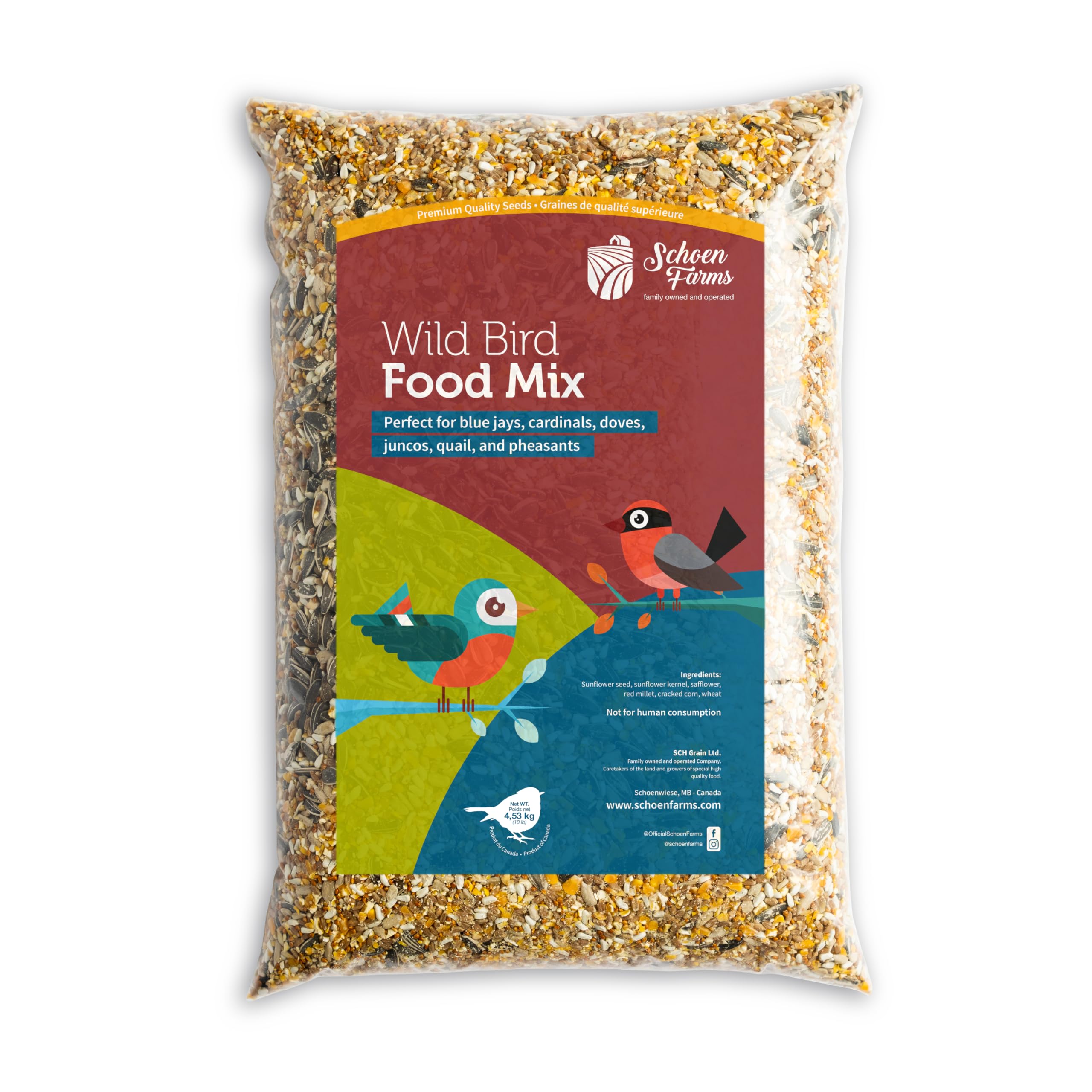
Schoen Farms brings real farm-to-feeder sourcing with a gourmet mix of sunflower seeds, shelled kernels, safflower seed, red millet, cracked corn, and wheat. The inclusion of safflower gives it an edge against squirrels, since squirrels generally dislike the bitter taste of safflower while cardinals and chickadees love it.
Customers report that birds clean the feeder entirely — almost nothing gets left behind. This is a strong indicator that the seed-to-filler ratio is heavily tilted toward edible ingredients rather than the cheap milo that birds typically ignore.
The main tradeoff is a small bag for the price; 10 pounds burns quickly with a busy feeder. However, the density of nutrition per pound is high, meaning you get less waste and more birds visiting. For attracting woodpeckers and blue jays, this gourmet blend reliably outperforms basic mixes.
Why it’s great
- Safflower content reduces squirrel interference at the feeder
- Birds consume nearly all the seed — minimal wasted leftovers
Good to know
- 10-lb. bag empties quickly with high bird traffic
- In-shell components still generate hull debris below feeder
4. Kaytee Seed & Suet No Mess Blend

The Kaytee Seed & Suet No Mess Blend solves the biggest headache of backyard bird feeding: discarded hulls and sprouting weeds. Because every component — from the sunflower chips to the blueberry-flavored suet nuggets — is 100% edible, nothing gets left behind to rot or germinate under the feeder.
Independent testing suggests this blend attracts twice as many birds as black oil sunflower alone, and specifically draws three times more woodpeckers. This makes it an ideal choice for apartment balconies or patios where a mess would cause neighbor complaints.
Some users note the bag is dusty upon opening, and the crumbly texture can leave a fine powder in the feeder. However, the birds don’t seem to mind, and the tradeoff for a completely waste-free experience is worth it for most small-space feeders.
Why it’s great
- 100% edible — no shells, hulls, or inedible debris left behind
- Blueberry suet nuggets strongly attract woodpeckers
Good to know
- Blend is somewhat dusty and crumbly in the bag
- Suet nuggets may melt in direct summer sun on platform feeders
5. Meadow Ridge Farms Wild Bird Seed Mix
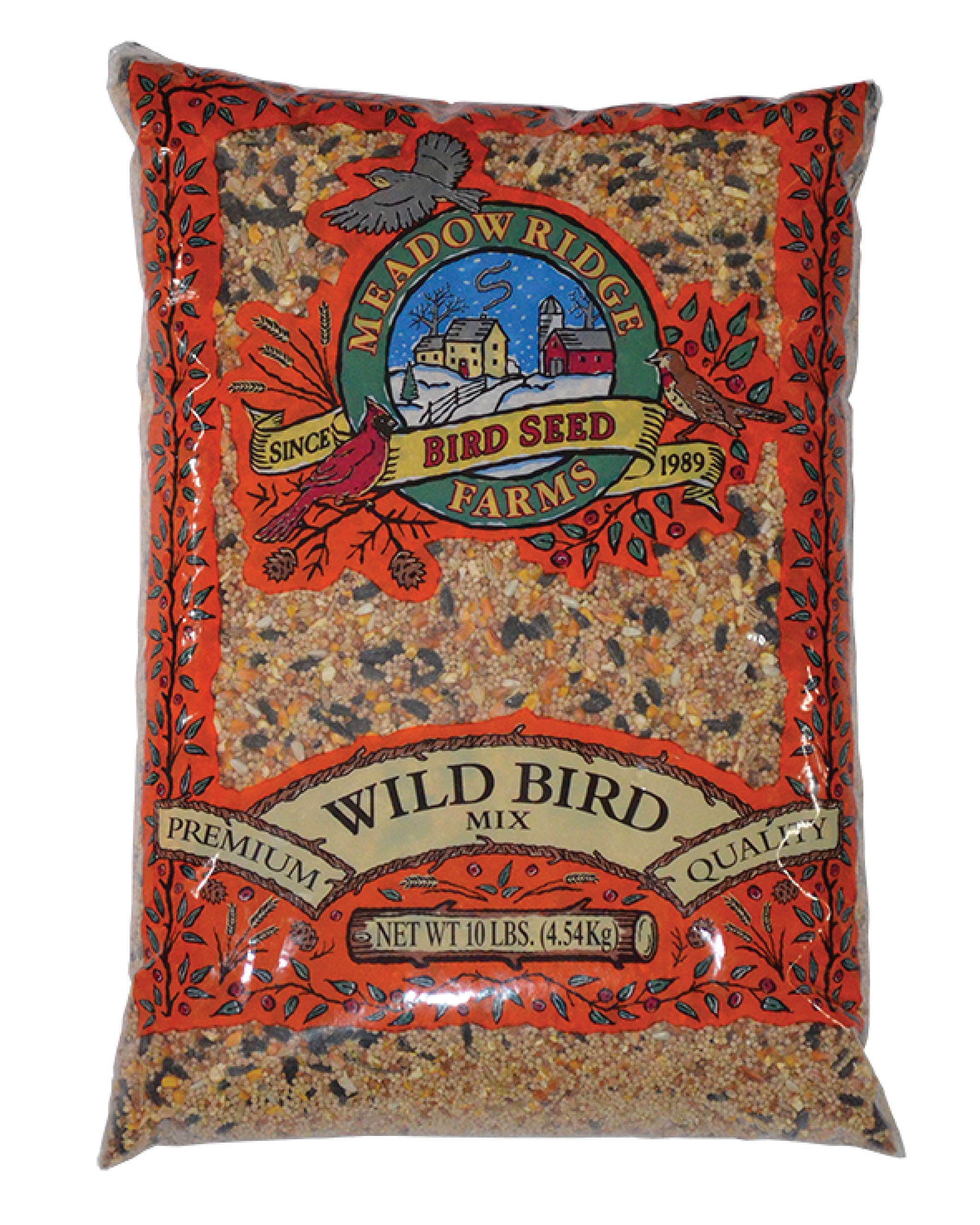
Meadow Ridge Farms is the baseline value pick for feeders that host a constant stream of ground-feeding birds like mourning doves, juncos, and white-throated sparrows. The blend of sunflower, cracked corn, wheat, oats, and millet is simple and fresh, bagged daily in Delano, Minnesota.
Customers specifically note the lack of barn moths or stale odors that affect some budget bags, which speaks to good turnover and storage practices. The 10-pound size is manageable for small- to medium-volume feeders, and the ingredient list is straightforward without chemical preservatives.
The main drawback is the higher proportion of cracked corn and millet relative to sunflower, which means you’ll attract more doves and sparrows and fewer of the high-value songbirds like chickadees or nuthatches. For a versatile, budget-friendly mix that keeps common backyard birds happy, it does the job.
Why it’s great
- Fresh, locally blended daily without barn moths
- Good variety of seeds that attracts ground-feeding species
Good to know
- High cracked-corn content may favor doves over songbirds
- Generates hull waste under the feeder
6. Kaytee Southern Regional Wild Bird Blend

Kaytee’s Southern Regional Blend is the most targeted option on this list, developed and field-tested at universities to optimize for birds in the southern United States. This is the blend that consistently attracts the stunning Painted Bunting, a notoriously picky species that many generic mixes fail to draw.
The seed composition is fine enough to avoid blowout in windy conditions — a common issue with cheaper feed that contains large, lightweight filler seeds. The bird response is immediate, with cardinals and songbirds sticking around longer compared to when generic bulk food is offered.
The 7-pound bag is smaller than most competitors, and the price per pound is higher. But for birders in the South who specifically want to see buntings, tanagers, and orioles, this targeted approach saves money overall by not wasting food on species you don’t want.
Why it’s great
- Proven to attract Painted Buntings and other southern species
- Seed texture resists blowing out of feeders in wind
Good to know
- Smaller 7-lb. bag size for the price point
- Not designed for northern species or all-purpose feeding
7. Valley Splendor Songbird Melody
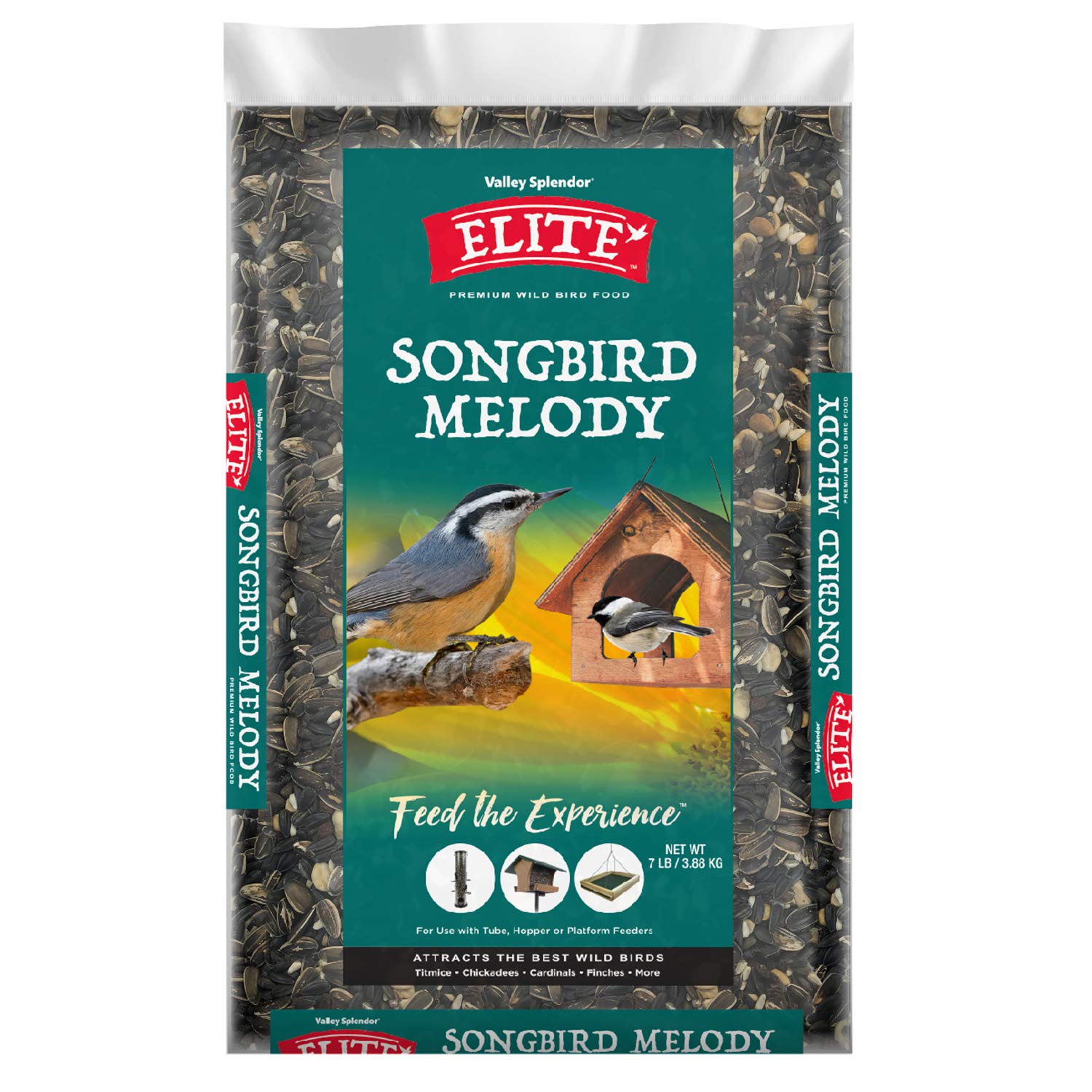
Valley Splendor’s Songbird Melody stands out for its winter-specific formulation: black oil sunflower seeds, safflower, peanuts, striped sunflower, and raisins, all enriched with Vitamins A and D to support feather growth and bone development. The berry scent is a deliberate attractant that can encourage hesitant birds to approach new feeders.
The high protein and fat content is critical when temperatures drop, giving chickadees and nuthatches the energy reserves they need to survive cold nights. The absence of cheap fillers means every ingredient earns its place, and customers report seeing cardinals, blue jays, and woodpeckers devouring the mix.
The primary downside is that the shelled peanuts and sunflower seeds still produce hulls on the ground. If you’re willing to clean up a bit, this is the best cold-weather blend for encouraging a diverse, active feeder even in frosty conditions.
Why it’s great
- High fat and protein content ideal for cold weather energy
- Raisins and peanuts add variety that entices woodpeckers
Good to know
- Berry scent is subtle but may not be equally effective on all species
- Shelled components create hull debris underneath feeders
FAQ
What seed attracts the most species of wild birds?
How can I tell if my bird food is fresh?
Final Thoughts: The Verdict
For most users, the bird food for wild birds winner is the Pennington Wild Bird Seed because its large, critter-proof bucket and vitamin-fortified sunflower base offer the best long-term value. If you want a completely mess-free balcony experience, grab the Kaytee Seed & Suet No Mess Blend. And for southern birders targeting Painted Buntings, nothing beats the Kaytee Southern Regional Wild Bird Blend.