
Ohio’s backyard birds — from cardinals and chickadees to woodpeckers and juncos — have specific nutritional needs that shift with the seasons, and choosing the wrong blend can mean wasted money and empty feeders when you need them most. The difference between a bustling feeding station and a silent one often comes down to the seed mix itself.
I’m Min — the co-founder and writer behind Gadgets Feed. I’ve spent countless hours analyzing bird seed formulations, reading through customer experiences, and cross-referencing regional birding guides to find the blends that actually work for the Buckeye State.
Whether you’re filling a tube feeder in Cincinnati or a platform in Cleveland, the right mix determines who shows up and how often. This guide breaks down the best bird seed for ohio feeding stations so you can attract more species with less mess.
How To Choose The Best Bird Seed For Ohio
Ohio’s climate — cold winters, humid summers, and transitional spring/fall seasons — demands a versatile seed blend that provides high energy when temperatures drop and stays fresh when humidity rises. The wrong mix either spoils quickly or lacks the fat and protein content birds need during migration and breeding cycles.
Ingredient Quality: Sunflower Hearts vs. Filler Grains
The single most important factor is the proportion of high-value seeds like black oil sunflower, sunflower chips, and safflower relative to cheap fillers like red milo, wheat, and cracked corn. Black oil sunflower seeds have thin shells and high oil content — an ideal 40-50% fat ratio that Ohio cardinals, chickadees, and nuthatches devour. Fillers attract starlings and grackles and often get kicked out of the feeder uneaten, creating waste and attracting rodents.
Mess Management: No-Hull and Waste-Free Blends
A major pain point for Ohio homeowners is the pile of hulls and sprouting weeds under feeders. Shell-free blends using sunflower hearts and peanut pieces eliminate this entirely. These “no mess” options cost slightly more per pound but deliver close to 100% edible material, meaning every dollar goes to feeding birds rather than creating yard cleanup. For patios and decks, this is non-negotiable.
Quick Comparison
On smaller screens, swipe sideways to see the full table.
| Model | Category | Best For | Key Spec | Amazon |
|---|---|---|---|---|
| Backyard Seeds 50lbs | Premium Bulk | Multi-species year-round feeding | 50 lbs, thin shells, high protein | Amazon |
| Audubon Park No Mess 12lb | No Mess | Patio decks and clean yards | 12 lb, shell-free, sunflower hearts | Amazon |
| Wildlife Black Oil Sunflower 12lbs | Single-Ingredient | Cardinals and chickadees | 12 lbs, Non-GMO, USA grown | Amazon |
| Pennington Ultra Double Nut 10lbs | Nut & Fruit Mix | Woodpeckers and larger birds | 10 lbs, enriched with vitamins | Amazon |
| Schoen Farms Gourmet 10lbs | Premium Blend | Diverse songbird attraction | 10 lbs, sunflower hearts & safflower | Amazon |
| Meadow Ridge Farms Mix 10lbs | Value Mix | Budget-friendly variety feeding | 10 lbs, 6 ingredient blend | Amazon |
| Armstrong All Season 40lbs | Bulk Economy | Large-volume ground feeding | 40 lbs, CO2 flushed freshness | Amazon |
In‑Depth Reviews
1. Backyard Seeds Black Oil Sunflower Seeds 50lbs
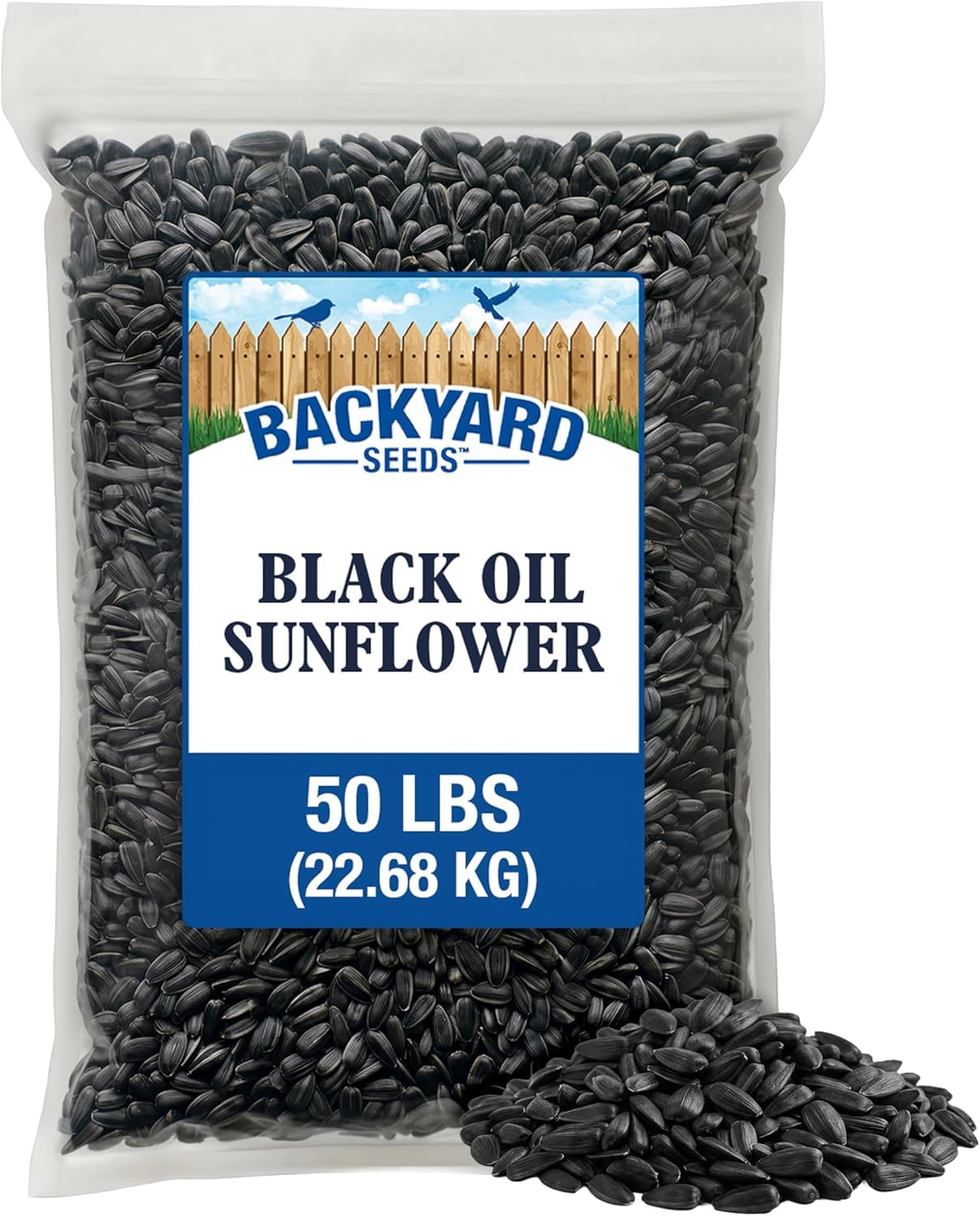
This 50-pound bag of black oil sunflower seeds is the gold standard for Ohio birders who want maximum bird traffic for minimum effort. The thin-shell design allows smaller birds like chickadees and goldfinches to crack the seed open easily, while cardinals and nuthatches clean up what remains. Sourced and processed in the USA, the seeds arrive clean with no visible sticks or debris — an important detail since lower-grade sunflower often contains field trash that reduces usable weight per pound.
At this bulk quantity, you’re looking at a bag that fills multiple hopper feeders for weeks in winter when birds need high-calorie fuel most. The protein content supports breeding season energy demands in spring and fall migration stops throughout Ohio. Because it’s a single-ingredient product, you avoid the filler grains that starlings and grackles prefer — giving you more control over which species dominate your feeder.
Storage matters at this size. A cool, dry place or a sealed 5-gallon bucket prevents moisture from spoiling the seeds, especially during Ohio’s humid summers. If you feed multiple stations or host a constant stream of cardinals, this is the most cost-effective way to keep them coming back without introducing hull waste or weeds.
Why it’s great
- Cleanest bag of sunflower seeds with zero filler or debris.
- Thin shells make it accessible to a broad range of Ohio backyard birds.
- 50-pound bulk bag reduces refill frequency significantly.
Good to know
- Requires proper storage in a sealed container to maintain freshness in humid Ohio summers.
- Single-ingredient means it won’t attract ground-feeding species like doves as effectively as a mixed blend.
2. Audubon Park Waste Free Wild Bird Seed 12lb
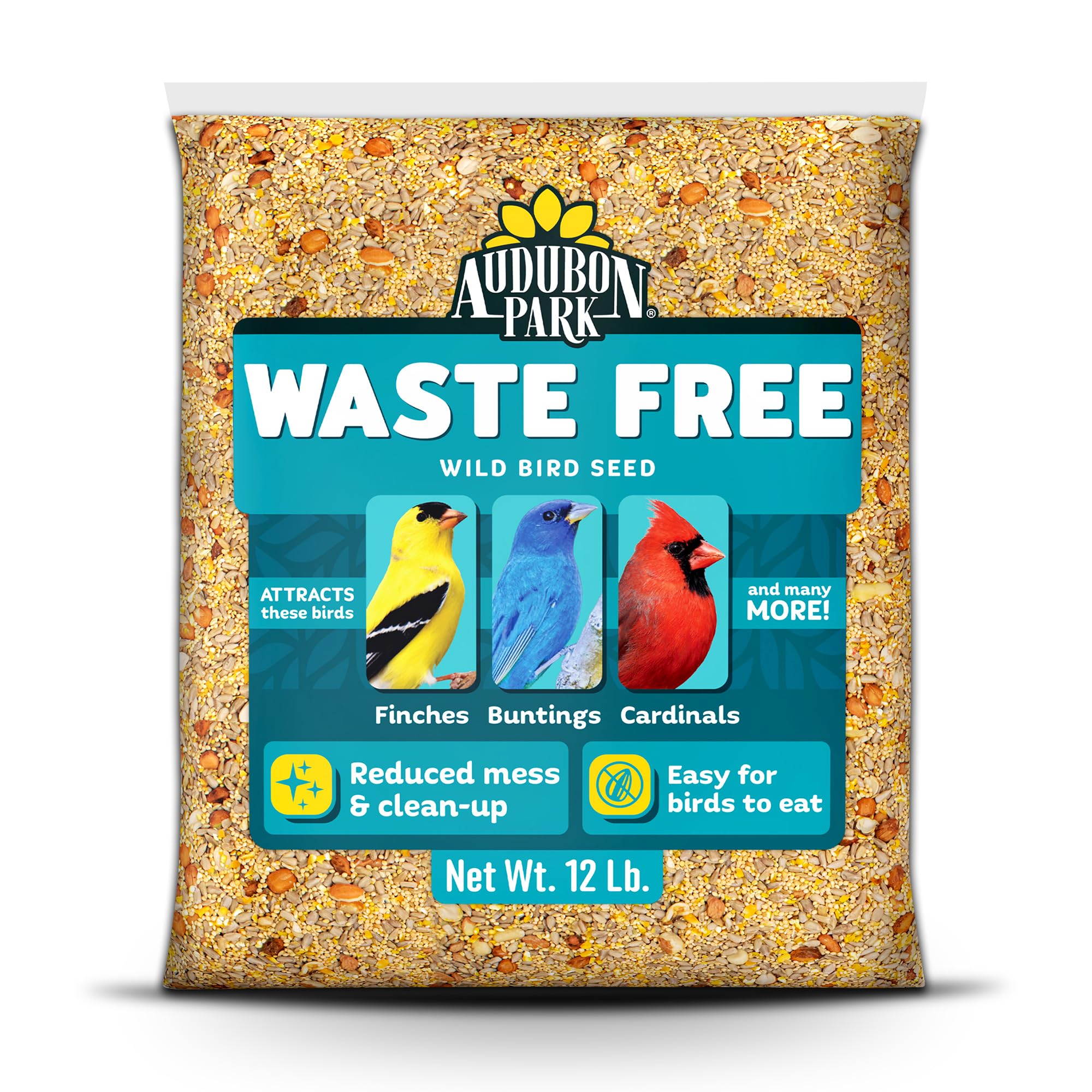
This shell-free blend solves the single biggest complaint from Ohio feeder owners: the mess of hulls piling up under the feeder. By using sunflower hearts and peanut pieces exclusively, every gram in this 12-pound bag is edible, leaving zero shell waste to rake, bag, or watch sprout into unwanted weeds. Customers consistently report that wrens, woodpeckers, and thrushes show up alongside the usual cardinals and finches — a testament to the high-value ingredient list.
For those feeding on patios, decks, or near walkways, this is the most practical choice. The absence of shells also means no sharp pieces to irritate bare feet or toy-picking pets. The blend stores well in the bag, and multiple verified buyers mention that the seed stays fresh even when stored outdoors in cool Ohio weather, making it a reliable winter option as well.
Although the per-pound cost is higher than a standard mixed seed, the no-waste factor means you actually use every ounce you buy. A 12-pound bag lasts weeks in a moderate feeder setup. If your priority is a clean feeding area without sacrificing bird variety, this blend delivers on its promise better than any other option at this tier.
Why it’s great
- Zero hull waste — ideal for decks and patios in Ohio.
- Attracts a wide range of species including wrens, thrushes, and woodpeckers.
- Stored fresh outdoors without spoiling in cold weather.
Good to know
- Higher cost per pound compared to in-shell or filler blends.
- 12-pound bag may require more frequent refills for high-traffic feeders.
3. Old Potters Wildlife Black Oil Sunflower Seeds 12lbs

This Non-GMO black oil sunflower seed is grown on small USA farms and is as close to a natural food source as you can buy in a bag. The seeds are unprocessed — you may see occasional field debris or twigs, which is actually a sign that they haven’t been chemically treated or artificially cleaned. For birders who prioritize chemical-free feeding, this is a standout pick. The thin hulls make it easy for smaller birds to access the kernel, and the high oil content delivers the fat energy Ohio birds need during winter.
The 12-pound bag is a practical size for a single feeder that gets moderate traffic. Customers report that the seeds are noticeably fresher than mass-market brands, with a higher kernel-to-shell ratio that means less waste per feeding. Multiple reviewers point out that birds consume less volume because each seed provides more nutrition — effectively saving money despite the modest upfront cost.
One tradeoff is that the natural processing means you may occasionally find a small twig or stem mixed in, which is harmless but worth noting if you expect pristine seed. The resealable bag is a convenient feature that helps maintain freshness between refills. For cardinals, chickadees, and nuthatches, this single-ingredient seed is an efficient, eco-conscious foundation.
Why it’s great
- Non-GMO and sourced from small US farms — no chemical residues.
- High kernel-to-shell ratio reduces overall waste per feeding.
- Resealable bag design extends freshness between uses.
Good to know
- May contain small twigs or field debris due to minimal processing.
- Single ingredient won’t attract ground-feeding species like doves as well as a mixed blend.
4. Pennington Ultra Double Nut, Nut & Fruit Blend 10lbs
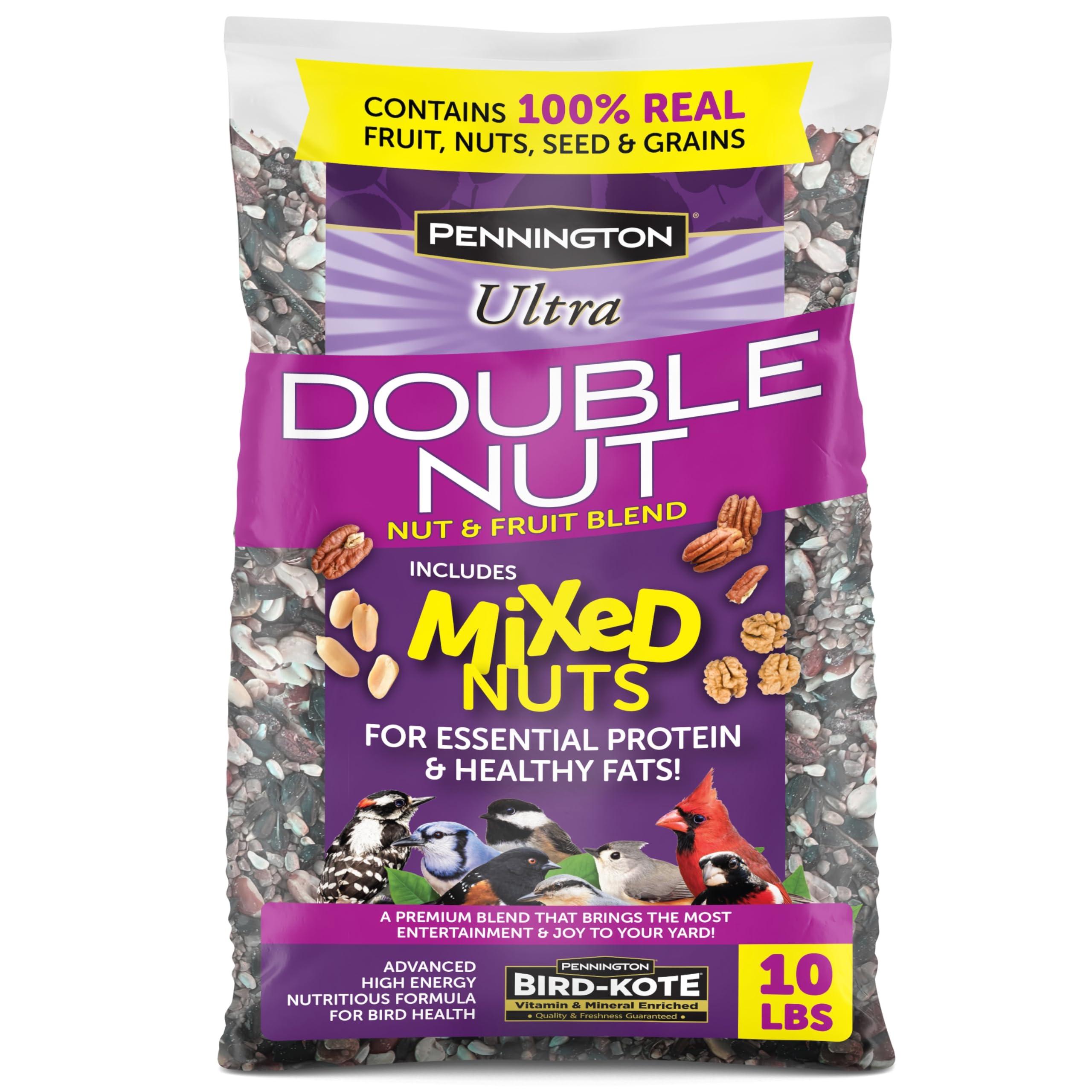
Pennington’s Ultra Double Nut blend stands out because it combines mixed nuts, real dried fruits, seeds, and grains with Bird Kote technology — an added vitamin and mineral coating that boosts the nutritional profile beyond standard seed blends. This matters for Ohio feeders during the long winter stretch when natural food sources are scarce. The fruit content (cranberries, cherries, or similar dried pieces) attracts species that might ignore plain seed mixes, including blue jays and woodpeckers.
At 10 pounds, the bag is light enough to handle easily but substantial enough to fill a medium hopper feeder for a week or two of steady traffic. Customer feedback consistently praises the variety of wildlife it attracts — cardinals, chickadees, nuthatches, and even squirrels will visit. The blend works well in gazebo, hopper, platform, and tube feeders, so you’re not locked into a specific feeder type to get results.
The main consideration is the dried fruit content: some users wonder about added sugars, though Pennington does not list sugar as a separate ingredient. If you want to avoid any potential additives, you may prefer a pure seed or nut blend instead. Otherwise, this is a premium mix that delivers visible energy and activity in the yard.
Why it’s great
- Bird Kote coating adds vitamins and minerals missing in standard mixes.
- Real dried fruits attract woodpeckers and blue jays more effectively than seed-only blends.
- Compatible with multiple feeder types including tube, hopper, and platform.
Good to know
- Dried fruit pieces may contain added sugars — not explicitly stated on packaging.
- Squirrels will actively target this mix, so plan squirrel-proofing if needed.
5. Schoen Farms Gourmet Wild Bird Food Mix 10lbs
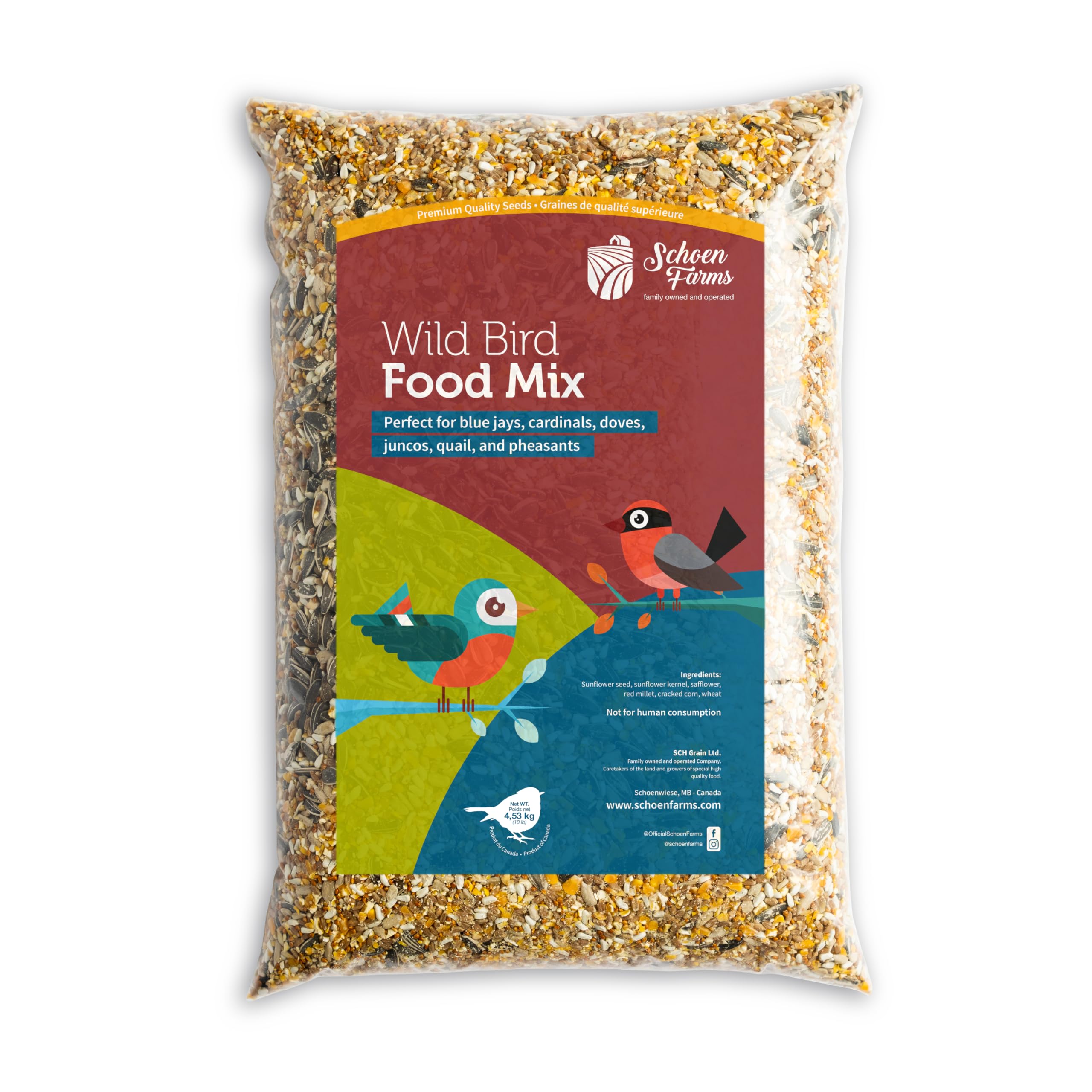
This family-farm sourced blend includes sunflower seeds, sunflower seed kernels, safflower seed, red millet, cracked corn, and wheat — a combination that hits the sweet spot between variety and value. The inclusion of safflower is a smart move for Ohio birders dealing with aggressive squirrels or grackles, since safflower is less palatable to them but beloved by cardinals and finches. Reviews consistently mention that this blend leaves almost nothing uneaten, meaning less wasted seed on the ground.
The 10-pound bag is ideal for smaller feeding setups or those who want to rotate different blends without committing to a 40-pound bulk purchase. Customers note that the seed does not sprout under the feeder as aggressively as other brands — a likely result of the heat-processing that kills germination. This is a massive quality-of-life improvement for anyone tired of grass growing through the gravel under their feeder station.
On the downside, the wheat and cracked corn content will attract doves and ground feeders, but also house sparrows and starlings if those are an issue in your area. If you’re aiming to host only songbirds, you might prefer a blend with less corn. For a general-purpose, regionally-conscious mix that supports a wide Ohio bird population, this is a strong contender.
Why it’s great
- Safflower content deters squirrels and grackles while attracting cardinals and finches.
- Seeds resist germination — fewer weeds under the feeder.
- Family farm sourcing guarantees freshness and quality control.
Good to know
- Wheat and cracked corn may attract house sparrows and starlings.
- 10-pound bag may require frequent refills for high-traffic areas.
6. Meadow Ridge Farms Wild Bird Seed Mix 10lbs
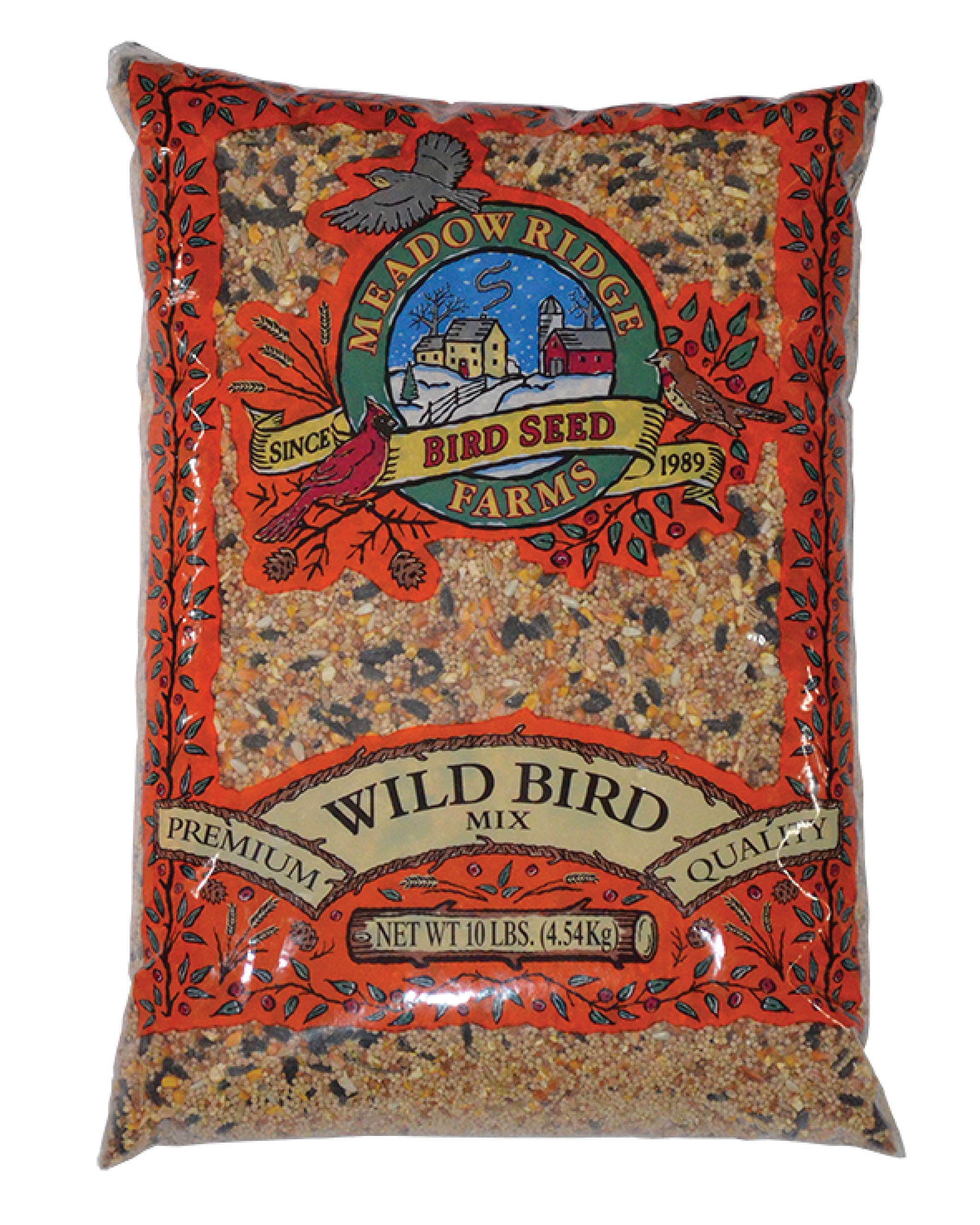
This 10-pound blend from Meadow Ridge Farms is a straightforward, locally-blended mix of sunflower, cracked corn, safflower, wheat, oats, and millet. It’s bagged daily in Delano, Minnesota, which means you get a fresher product compared to pre-packaged blends that may sit on warehouse shelves. The ingredient list covers the basics that attract Ohio’s most common feeder birds: house sparrows, chickadees, finches, juncos, mourning doves, and nuthatches are all regular visitors.
At this price point, you’re getting a functional, no-frills blend that performs well for the species it targets. Customers report that the seed is fresh, free of barn moths or weevils, and that birds clean through it quickly. The mix has enough variety to keep ground-feeding species interested while still providing sunflower kernels for perching birds. Squirrels and larger birds will also visit, which some users see as a feature rather than a problem.
The tradeoff is the presence of wheat and oats — lower-energy grains that some birds may ignore, leaving them to accumulate on the ground. If your primary goal is to attract cardinals and woodpeckers exclusively, a more specialized blend would perform better. But for a general-purpose “fill the feeder and watch the activity” mix at a reasonable cost, this delivers consistent results.
Why it’s great
- Freshly blended and bagged daily — no stale warehouse stock.
- Attracts a wide variety of common Ohio backyard birds straight away.
- No barn moths or weevils reported — clean product right out of the bag.
Good to know
- Wheat and oats are lower-energy fillers that some birds may leave uneaten.
- Less specialized for species like cardinals or woodpeckers compared to premium blends.
7. Armstrong All Season Wild Bird Food Blend 40lbs
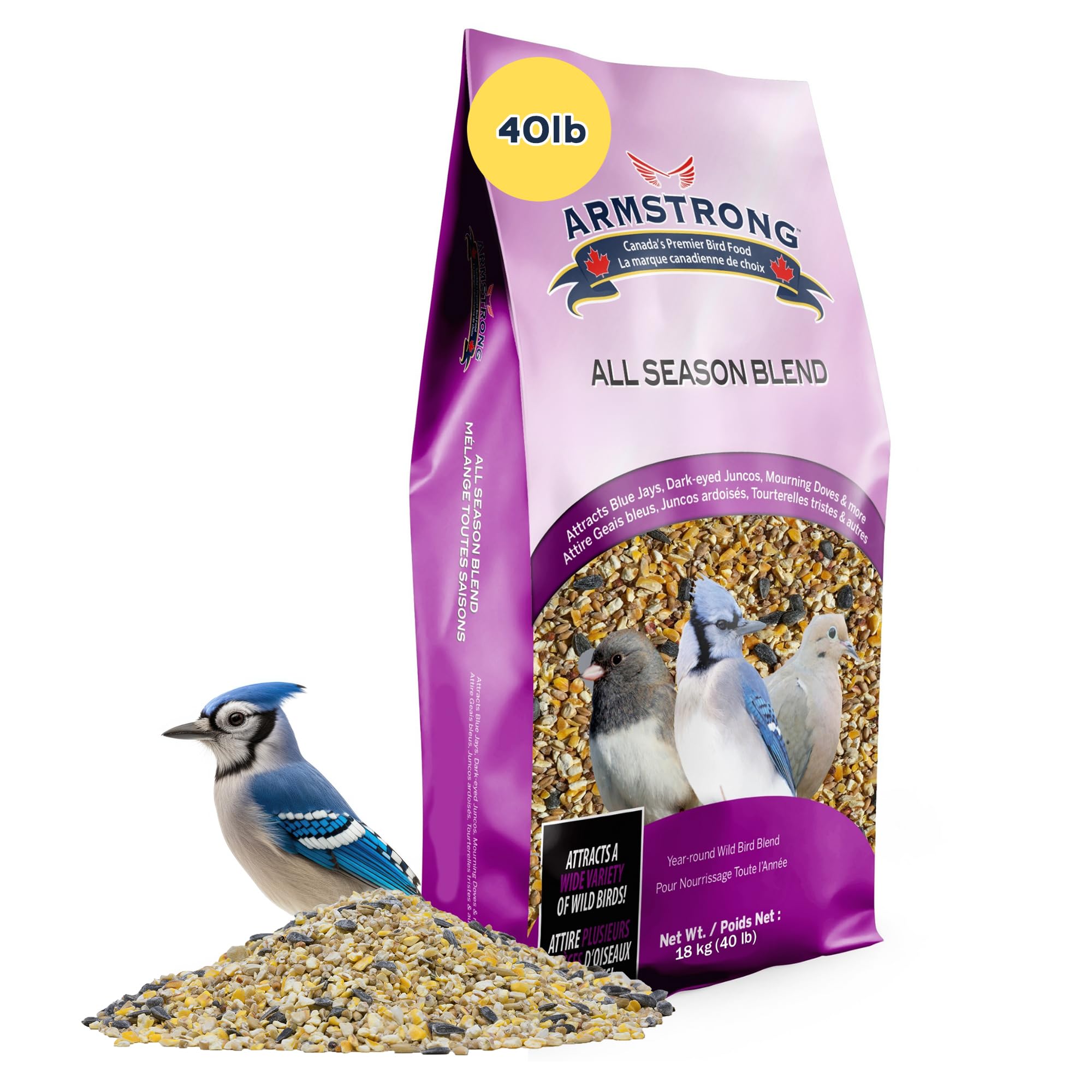
The Armstrong All Season blend delivers 40 pounds of bird seed formulated for general feeding year-round. The ingredient lineup includes cut corn, wheat, red milo, white millet, and black oil sunflower seeds — a classic broad-spectrum mix designed to attract blue jays, mourning doves, dark-eyed juncos, chickadees, cardinals, and house sparrows. The bag is sealed air-tight and CO2 flushed to lock in freshness, which is a meaningful feature when buying in bulk.
For Ohio birders with large feeders or multiple feeding stations, this bag reduces the number of trips to restock. The cut corn and milo content do attract ground-feeding species effectively, and the sunflower seeds ensure that perching birds also have a high-value option in the mix. Customers report high activity levels and consistent visits from the expected species list. The price per pound is among the lowest in this lineup, making it a tempting choice for heavy feeders.
The single biggest caveat comes from a verified review that reported a bag containing a high percentage of sawdust-like filler that hardened into a concrete mass when exposed to drought conditions. This appears to be a batch-level quality control issue rather than a universal problem, but it is worth flagging. If you choose this option, inspect the first bucketful carefully. If the seed looks and pours cleanly, you’ll likely have a positive experience.
Why it’s great
- 40-pound bulk size offers the lowest per-pound cost in the lineup.
- CO2 flushed packaging preserves freshness for long-term storage.
- Broad ingredient mix attracts both ground-feeding and perching species.
Good to know
- Some batches reported filler that hardened into a mass — inspect first use carefully.
- Red milo and corn content may attract more starlings and grackles than desired.
FAQ
What type of bird seed works best for Ohio cardinals?
Should I worry about seed germination under my Ohio feeder?
What is the best size bag to buy for Ohio winter feeding?
Final Thoughts: The Verdict
For most users, the best bird seed for ohio winner is the Backyard Seeds Black Oil Sunflower 50lbs because it delivers high-protein, clean sunflower seed in a bulk size that keeps Ohio’s cardinals, chickadees, and woodpeckers fed through every season with zero filler waste. If you want a spotless patio or deck, grab the Audubon Park No Mess 12lb for its fully edible, shell-free formula. And for a farm-fresh mix that deters squirrels while attracting songbirds, nothing beats the Schoen Farms Gourmet 10lbs.