
When the temperature drops and natural food sources vanish, your backyard birds rely entirely on what you put in the feeder. A mix loaded with cheap fillers like milo or cracked corn does little more than litter your lawn with inedible hulls while the birds burn precious calories searching for actual nutrition. The right winter blend delivers dense fats and proteins that help chickadees, cardinals, and woodpeckers maintain their body heat through sub-freezing nights.
I’m Min — the co-founder and writer behind Gadgets Feed. I’ve spent countless hours analyzing seed composition reports, customer feeding behavior data, and nutritional breakdowns to identify which blends actually support winter survival rather than just filling a feeder.
After comparing protein content, fat ratios, hull percentages, and species-attraction data across dozens of bags, these seven formulations stand out as the most effective bird seed for winter feeding.
How To Choose The Best Bird Seed For Winter
Winter feeding is not the same as summer topping off. Birds need calorie-dense food that digests quickly to fuel their elevated metabolism in cold weather. A seed with low oil content forces them to eat more volume, expending energy they cannot afford to lose. Prioritize high-fat ingredients and minimize filler seeds that birds simply kick out of the feeder.
Fat and Protein Density
Black oil sunflower seeds deliver roughly 50% fat and 20% protein by weight, making them the gold standard for winter feeding. Striped sunflower has a thicker shell that smaller birds struggle to crack, costing them time and energy. Nyjer seed is high in fat but too tiny for larger birds like cardinals or blue jays. Suet cakes push fat content above 80%, which is why woodpeckers and nuthatches devour them in hours rather than days during cold snaps.
Mess Factor and Waste Percentage
In-shell seeds produce hulls that accumulate under feeders, attract rodents, and represent weight you paid for but the birds cannot eat. No-mess blends remove shells entirely so every ounce is edible. The trade-off is price per pound — shelled seeds cost more upfront — but you stop paying for garbage you would otherwise rake up. During winter, wet hulls also freeze into clumps that clog feeder ports, so shell-free options keep your feeding station operational in icy conditions.
Species Diversity in Your Blend
A single-species seed like straight black oil sunflower attracts finches, chickadees, and cardinals but may deter ground feeders like juncos and sparrows that prefer millet. A balanced mix with sunflower hearts, safflower, and peanuts draws the widest range of birds. Saffalone specifically discourages squirrels and grackles while cardinals and grosbeaks love it. If you want woodpeckers, suet is non-negotiable — they cannot extract enough energy from seeds alone during winter.
Quick Comparison
On smaller screens, swipe sideways to see the full table.
| Model | Category | Best For | Key Spec | Amazon |
|---|---|---|---|---|
| CountryMax Coarse Sunflower Hearts | No-Mess Seed | Zero-waste winter feeding | 10 lb, 100% Shelled Hearts | Amazon |
| Backyard Seeds 50 lb Black Oil | Bulk Sunflower | High-volume winter stockpiles | 50 lb, Thin Shell, USA Grown | Amazon |
| Wildlife Black Oil Sunflower Seeds | Non-GMO Premium | Organic-focused backyards | 12 lb, Non-GMO, USA Small Farm | Amazon |
| Cool Birds All Birds Classic Blend | Diverse Mix | Maximum species variety | 10 lb, 5-Ingredient Blend | Amazon |
| Heath Outdoor All Season Suet Cakes | Suet Block | Woodpeckers and nuthatches | 18-Pack, No Melt to 122°F | Amazon |
| C&S Orange Suet Cake | Flavored Suet | Attracting orioles and tanagers | 12-Pack, Orange Flavor, No Melt | Amazon |
| Kaytee Seed & Suet No Mess Blend | Combo Blend | Balcony and patio feeders | 10 lb, Blueberry Flavored Suet Nuggets | Amazon |
In‑Depth Reviews
1. CountryMax Backyard Seeds Coarse Sunflower Hearts
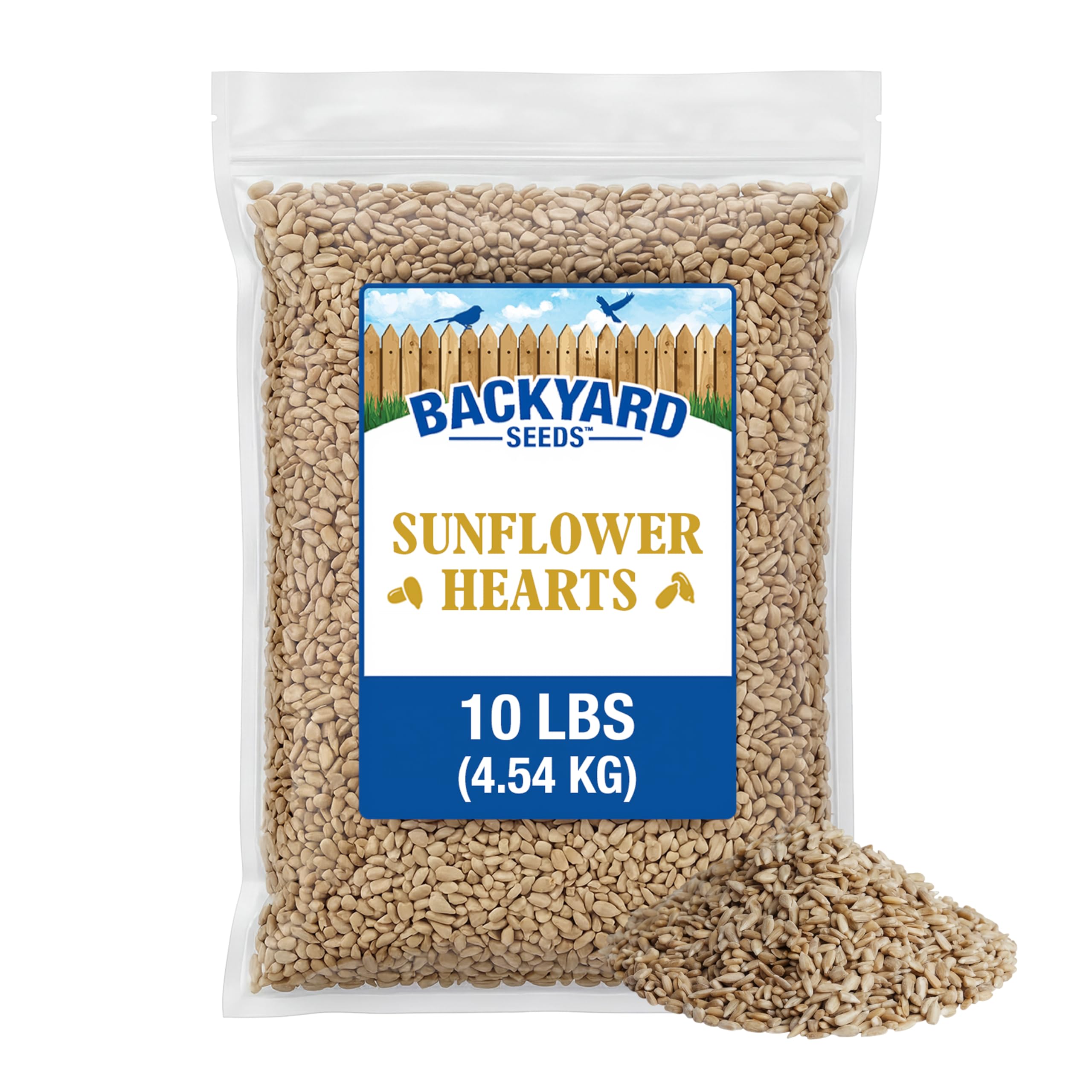
Every kernel in this bag is a shelled sunflower heart, which means zero hull waste accumulating under your feeder. During winter, wet shell piles freeze into solid mats that block drainage and attract unwanted rodents — this blend eliminates that problem entirely. The coarse cut keeps the pieces large enough that cardinals and grosbeaks can grab them easily, while smaller birds like chickadees can still break off manageable bites.
The fat content of straight sunflower hearts sits around 50%, providing the concentrated energy birds need when daylight hours shrink and overnight temperatures drop below freezing. Buyers consistently report that a single 10-pound bag lasts roughly two weeks with steady feeder traffic, and the resealable packaging prevents moisture from getting inside during storage. The seeds arrive with minimal dust and no stem fragments or filler grains.
Customer reviews highlight that this seed attracts everything from goldfinches and nuthatches to woodpeckers and blue jays within days of switching from cheaper blends. Several buyers noted that their cardinals visibly preferred these hearts over the in-shell sunflower they previously used. The only caveat is that ground-feeding birds like doves and juncos may struggle with larger kernels, so a cracked sunflower heart blend is a better choice if those species dominate your yard.
Why it’s great
- Zero inedible hulls — every ounce is eaten
- High fat density that fuels winter metabolism
- Resealable bag keeps seed fresh and dry
Good to know
- Large kernels may need chopping for very small birds
- Premium price per pound compared to in-shell options
2. Backyard Seeds Black Oil Sunflower Seeds 50 lb
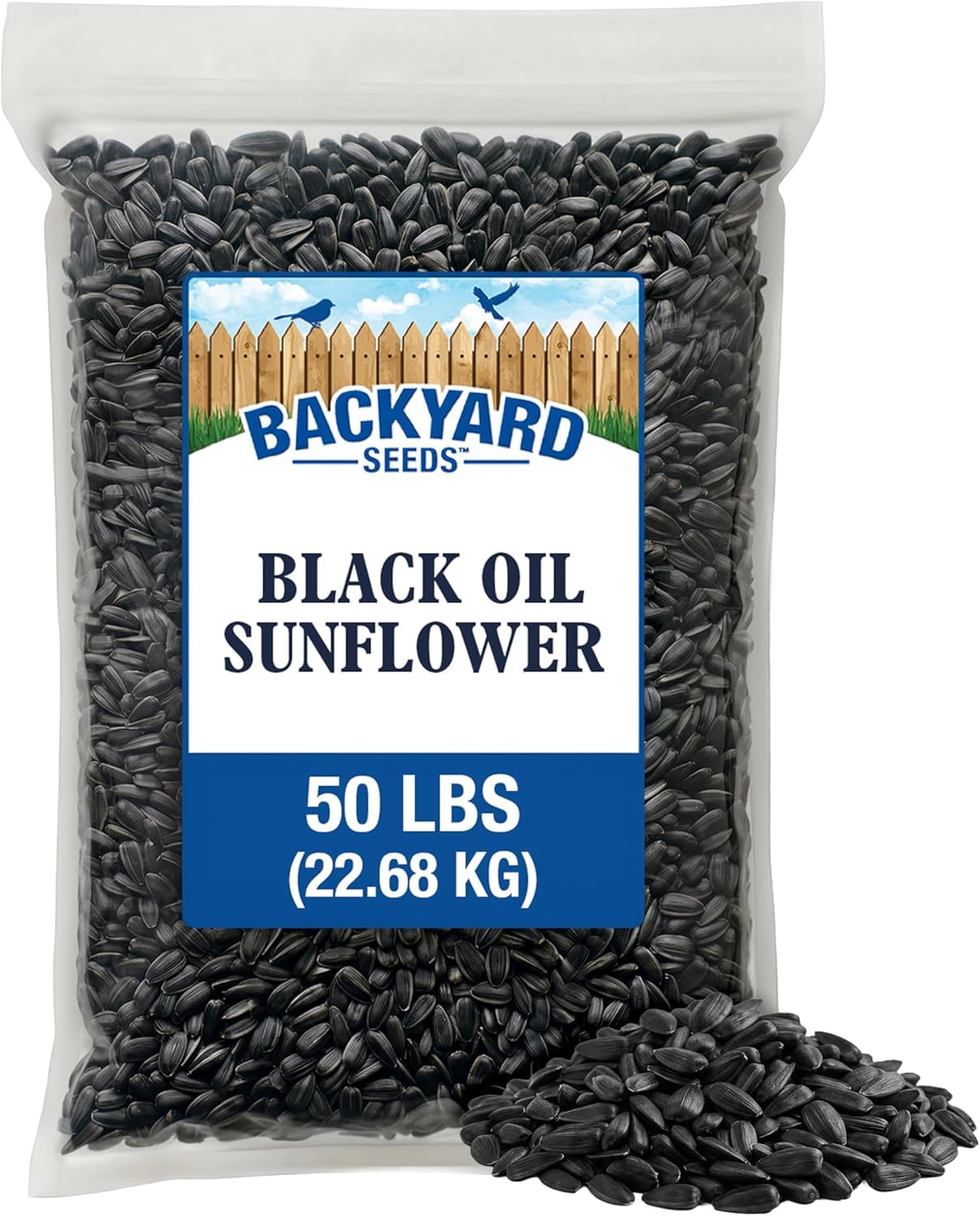
For serious winter feeders who maintain multiple stations, this 50-pound bag delivers the lowest cost-per-pound of any option on this list without sacrificing seed quality. The thin shells are easy for smaller species — chickadees, titmice, and pine siskins — to crack open quickly, which matters when a bird needs to eat hundreds of seeds per day just to stay warm. The seeds are USA grown and contain no filler grains or weed seeds.
Multiple customer reviews specifically mention the cleanliness of this bag, noting zero sticks, stones, or broken shell fragments mixed in. Each seed is plump and oil-rich rather than shriveled from old stock, which is a common problem with cheap bulk sunflower sold at big-box stores. The bag itself is a heavy-duty woven poly that holds up to storage without tearing, though transferring the seed into a metal or plastic bin is recommended to deter mice and squirrels.
Cardinals and blue jays dominate the visitor list reported by buyers, but the thin shell also attracts house finches and white-breasted nuthatches that can be picky about seed hardness. The main downside is the sheer volume — 50 pounds of in-shell sunflower produces roughly 15 pounds of hull waste that needs to be cleaned up over the winter. If you value a tidy yard, pair this with a tray that catches falling shells.
Why it’s great
- Thin shells allow small birds to feed efficiently
- Exceptionally clean batch with no debris
- Best value per pound for high-volume winter feeding
Good to know
- Hull waste accumulates and needs fall cleanup
- 50 lb bag is heavy to pour and store
3. Wildlife Black Oil Sunflower Seeds by Old Potters

This bag is for birders who prioritize what goes into their yard as much as the birds that visit. Old Potters sources its black oil sunflower from small USA farms and certifies the seeds Non-GMO, with no chemical treatments or pesticide residues. The seeds arrive in their natural state with occasional twig fragments and field debris that serve as evidence of minimal processing — something purists appreciate but first-time buyers might mistake for poor quality.
The resealable bag is a practical touch that preserves freshness between refills, and the 12-pound size hits a sweet spot between manageable weight and sufficient supply for a moderately busy feeder. Buyers consistently report that the seeds taste fresh to the birds — meaning they are not stale or rancid — and that their feeders empty faster than with supermarket brands. Multiple reviews mention that the same amount of this seed attracts noticeably more bird visits compared to cheaper alternatives.
Squirrels are just as enthusiastic about these seeds as the birds are, so a squirrel-proof feeder or baffle is recommended. The natural origin of the seeds means they are slightly dustier than heavily processed commercial brands, but this is a consequence of the minimal handling rather than a defect. For anyone trying to avoid glyphosate and artificial preservatives in their backyard ecosystem, this is the safest choice on the list.
Why it’s great
- Non-GMO and chemical-free from small USA farms
- Resealable bag maintains seed freshness
- Higher bird visit density reported by customers
Good to know
- Natural debris may alarm buyers expecting sterile seed
- Slightly dustier than highly processed brands
4. Cool Birds All Birds Wild Bird Seed Classic Blend
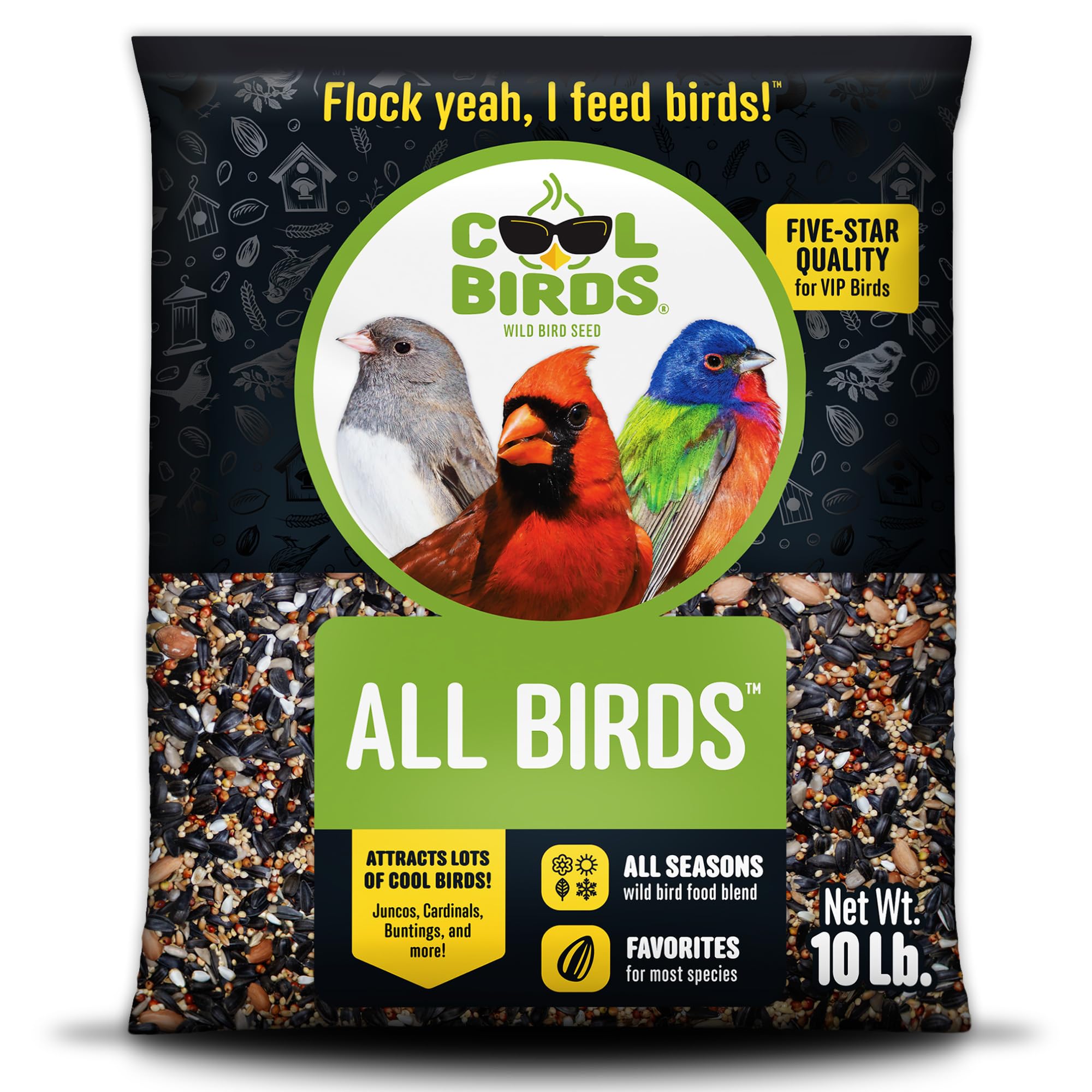
This blend combines black oil sunflower, white millet, safflower, peanuts, and sunflower hearts into a single mix that attracts the widest variety of winter birds without relying on cheap filler grains. White millet draws ground-feeding juncos and sparrows that often get overlooked by pure sunflower offerings, while the safflower component deters squirrels and aggressive blackbirds. Customers specifically mention attracting cardinals, blue jays, eastern bluebirds, and even new species they had not seen before switching to this blend.
The peanut pieces add a protein boost that helps birds build fat reserves before overnight freezes. The sunflower hearts provide the immediate energy hit of shelled seed, while the in-shell black oil sunflower keeps larger birds occupied. Buyers report minimal dust and a fresh, nutty aroma when opening the bag — a reliable indicator of decent turnover and stock rotation. The 10-pound size is ideal for single-feeder households that refill weekly.
One limitation is that the millet and peanut pieces are small enough to fall through mesh tray feeders, so a tube feeder with larger ports or a solid-bottom tray works best. The blend also contains a modest amount of cracked corn, which some finches ignore but doves and pigeons appreciate. If you strictly want sunflower to target cardinals and chickadees, this mix casts a wider net than you need.
Why it’s great
- Safflower component discourages squirrels naturally
- Attracts both perching and ground-feeding species
- Fresh-smelling with minimal dust reported
Good to know
- Small millet falls through mesh tray feeders
- Contains some cracked corn ignored by finches
5. Heath Outdoor Products All Season High Energy Suet Cakes

Suet is the single most calorie-dense food you can offer winter birds, and this 18-pack from Heath delivers a consistent blend of beef fat, seeds, and nuts that woodpeckers, nuthatches, and chickadees demolish. Each cake is formulated to stay solid up to 122°F, so you can feed through spring without the suet turning into a greasy puddle. The “Bird’s Blend” flavor contains a mix of millet, sunflower chips, and peanuts embedded in the fat block.
Customers report that a single cake lasts roughly two days in a busy yard during cold weather, with woodpeckers specifically mobbing the feeder within minutes of a fresh cake being installed. The easy-peel pull tab means you do not need scissors or a knife to open the wrapper, which is a small but genuine convenience when your hands are cold and you are outside at dawn refilling feeders. The case of 18 cakes typically covers two to three weeks of heavy winter feeding.
A small number of buyers have reported finding minor mold or insect activity in individual cakes, which can happen when suet sits in warm warehouses. Checking the cakes for freshness before hanging them is wise, and storing the unopened package in a cool place extends shelf life. The suet also attracts starlings in some areas, so a caged suet feeder that excludes large birds may be necessary if those become a problem.
Why it’s great
- Concentrated fat fuel for sub-freezing nights
- No melt formulation works year-round
- Easy peel tab saves hassle in cold weather
Good to know
- Individual cakes can develop mold if stored warm
- Attracts starlings without a caged feeder
6. C&S Orange Suet Cake 12-Pack
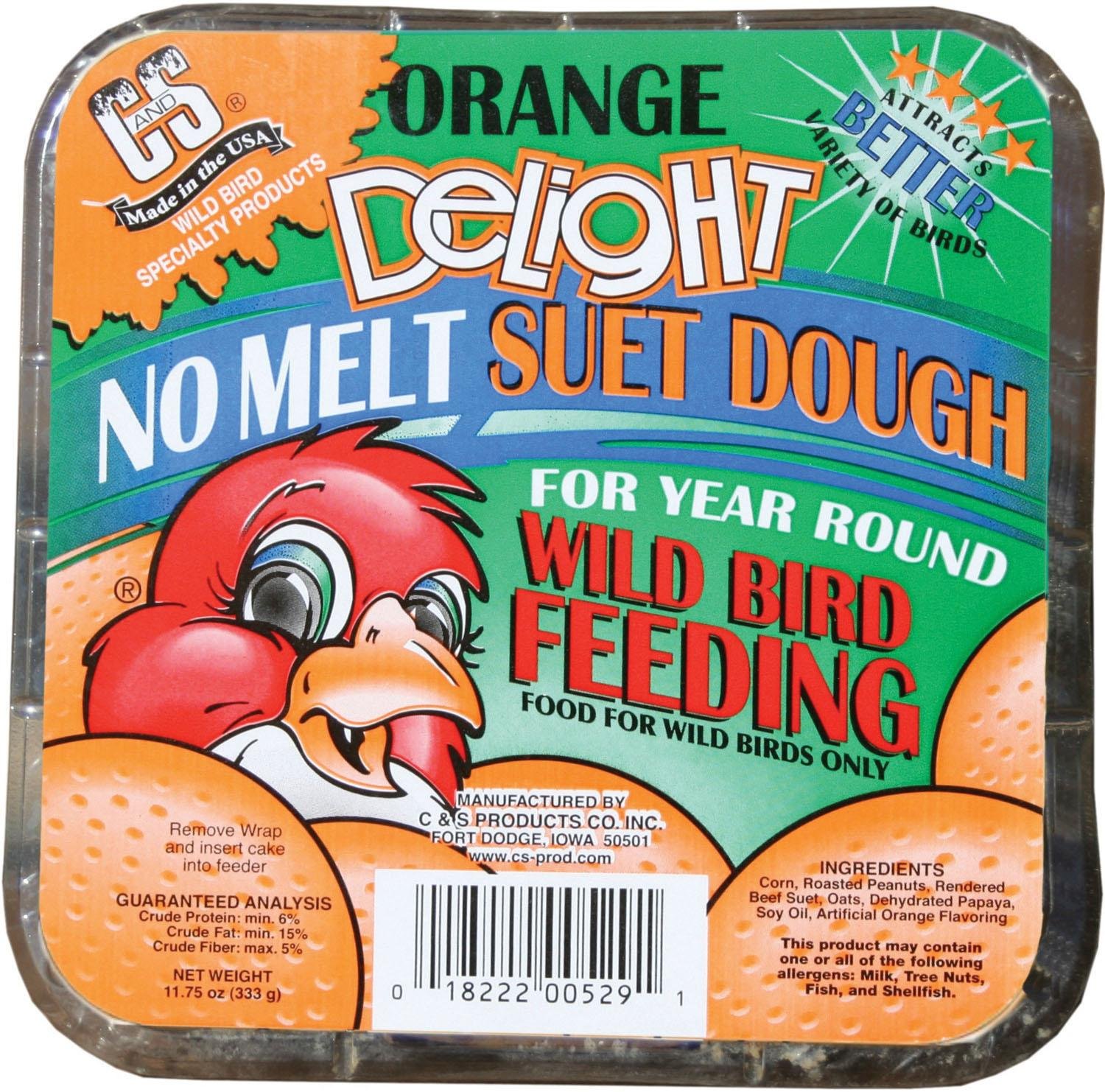
The fruit-infused flavor in these C&S suet cakes specifically appeals to orioles, tanagers, and warblers that may ignore plain beef-fat suet. During winter in warmer regions where these birds linger, the orange additive acts as a strong attractant that pulls in species not typically associated with suet feeders. The no-melt formula holds up in Florida and Gulf Coast winters where temperatures can fluctuate well above freezing even in January.
Buyers consistently report that woodpeckers and cardinals flock to these cakes just as eagerly as they do to standard suet, with the bonus of attracting orioles during migration windows. The cakes are individually wrapped for freshness and the 12-pack provides roughly two weeks of continuous feeding. Customers in Texas noted that their local birds ignored the orange suet for months before suddenly discovering it, after which consumption exploded to a cake every few days.
The primary trade-off is cost — flavored suet commands a premium over basic blends, and the birds do not seem to eat it any faster once accustomed to it. Some buyers also reported that the orange scent is mild rather than strong, so it may not provide the instant attraction that heavily aromatic suets deliver. If your goal is specifically to attract Baltimore orioles or scarlet tanagers, this is the most effective option on the market.
Why it’s great
- Fruit flavor attracts orioles and tanagers
- No melt formulation survives warm winter days
- Individually wrapped cakes stay fresh
Good to know
- Premium cost versus plain suet blends
- Birds may take weeks to discover it
7. Kaytee Seed & Suet No Mess Blend Blueberry Flavor

Kaytee solves the mess problem differently than shelled hearts — instead of removing hulls entirely, this blend mixes seed pieces with blueberry-flavored suet nuggets so that everything is 100% edible. The suet nuggets bind the loose seed together, reducing the amount that gets knocked out of tube feeders by birds flicking for preferred pieces. Customers consistently report zero weed growth under their feeders, which is the practical test of whether a “no mess” claim holds up.
The blueberry flavoring is not just marketing — it specifically attracts three times more woodpeckers than plain black oil sunflower according to the manufacturer’s data, and buyer reviews confirm that woodpeckers, cardinals, and blue jays flock to this blend enthusiastically. The 10-pound bag is compact enough for apartment balcony feeders, and multiple third-floor users report clean feeding without hulls raining down on their neighbors below.
Several reviews note that the blend is dustier than expected, with a fine powder at the bottom of the bag that some birds ignore. The suet nuggets are also crumbly and can break apart during shipping, though the birds still eat the fragments. For the price point, this is the most accessible way to add suet-based feeding without buying a separate suet feeder, making it ideal for beginners testing winter feeding for the first time.
Why it’s great
- 100% edible — no hull waste on your lawn
- Blueberry suet nuggets multiply woodpecker visits
- Works in tube, hopper, or platform feeders
Good to know
- Bag contains noticeable dust at the bottom
- Suet nuggets crumble during shipping
FAQ
Why do birds kick seed out of the feeder in winter?
Can I feed suet in freezing weather without it going bad?
How often should I refill feeders during a cold snap?
Final Thoughts: The Verdict
For most users, the bird seed for winter winner is the CountryMax Coarse Sunflower Hearts because it eliminates hull waste entirely while delivering the high fat content birds need for cold-weather survival. If you want bulk value for multiple feeders, grab the Backyard Seeds 50 lb Black Oil Sunflower. And for woodpecker-heavy yards, nothing beats the Heath Outdoor All Season Suet Cakes.