
A birdwatching monocular must deliver crisp, bright images at distance while fitting in one hand or a jacket pocket — binoculars are too bulky for quick scans along a trail. The real challenge is balancing magnification power, objective lens diameter, and optical coatings without ending up with a shake-prone blur machine that frustrates you in the field.
I’m Min — the co-founder and writer behind Gadgets Feed. I’ve spent hundreds of hours analyzing lens coatings, prism types, field-of-view specs, and build quality across dozens of optics to separate the genuinely useful monoculars from the overhyped zoom bait that fails when you need it most.
Whether you’re scanning marsh edges at dawn or tracking songbirds through dense canopy, this guide cuts through the noise to deliver a clear verdict on the best birdwatching monocular for every budget and skill level.
How To Choose The Best Birdwatching Monocular
The birdwatching monocular market is flooded with exaggerated magnification claims and cheap plastic builds. Understanding three critical specs will save you from buying a glorified toy that washes out in low light and leaves you squinting at a blurry silhouette.
Magnification vs. Objective Lens Diameter
An 8×32 or 10×42 configuration is the sweet spot for birding. The first number (8x or 10x) is the magnification — anything above 12x becomes nearly impossible to hold steady without a tripod. The second number (32mm or 42mm) is the objective lens diameter, which dictates light-gathering ability. A larger objective lens delivers brighter images in dawn or dusk conditions, but adds weight and bulk. For most trail use, 8×32 balances portability with brightness, while 10×42 gives extra reach at a modest weight penalty.
Optical Glass and Coatings
BAK4 prism glass is non-negotiable for edge-to-edge sharpness; cheaper BK7 prisms produce a dark cutoff at the image boundary. Fully Multi-Coated (FMC) lenses — where every air-to-glass surface receives multiple anti-reflective layers — maximize light transmission and suppress flare. Without FMC, you lose contrast and color fidelity, especially when birds are backlit against a bright sky.
Waterproofing and Build
An IPX4 rating or better (O-ring sealed, nitrogen-purged) ensures you can use the monocular in rain, fog, or high humidity without internal fogging. Rubber armoring protects against drops on rocky terrain. A 1/4-inch tripod mount allows you to attach the monocular to a tripod for steady digiscoping (photographing through the eyepiece). Avoid models that lack these features if you plan to birdwatch in wet or alpine environments.
Quick Comparison
On smaller screens, swipe sideways to see the full table.
| Model | Category | Best For | Key Spec | Amazon |
|---|---|---|---|---|
| Nocs Provisions Zoom Tube 8×32 | Best Overall | Everyday birding, hiking, travel | 8×32, FOV 384ft @ 1000yds, IPX4, 9.5oz | Amazon |
| Bushnell Legend 10×42 Ultra HD | Premium Pick | Low-light conditions, extended reach | 10×42, ED Prime glass, UWB, fog-proof | Amazon |
| Maven CM.1 8×32 | Top Optics | Optical purity, compact EDC | 8×32, ED glass, 393ft FOV, 8.7oz | Amazon |
| AYRAVIIO 12×60 | Best Value | Budget birding with phone digiscoping | 12×60, BAK4 prism, FMC, tripod included | Amazon |
| ASxmhGo 80×100 | Entry Level | Casual daytime use, beginners | 80×100, BAK-4, FMC, phone adapter, tripod | Amazon |
| PhysioPhyx 80×100 | Value Zoom | High magnification for stationary use | 80×100, BAK4, FMC, dual focus, tripod | Amazon |
| AMITHER 80×100 | Budget Pick | First monocular, phone photography | 80×100, BAK4, FMC, 7° FOV, tripod | Amazon |
In‑Depth Reviews
1. Nocs Provisions Zoom Tube 8×32

The Nocs Zoom Tube proves that a birding monocular doesn’t need to be heavy or expensive to deliver professional-grade clarity. Its 8×32 configuration with Fully Multi-Coated optics and a Swiss-designed BAK4 prism produces a crisp, color-accurate image edge to edge, with a generous 384-foot field of view at 1000 yards that makes tracking fast-moving warblers effortless.
At just 9.5 ounces with an IPX4 water-resistance rating and a patented rugged wave grip, this monocular is built for real field conditions — rain, fog, and bumpy trail rides. The multi-stop twist-up eyecup accommodates eyeglass wearers comfortably, and the 1/4-inch tripod mount means you can attach it to a lightweight support for prolonged scanning or digiscoping sessions.
Backed by Nocs’ “No-Matter-What” lifetime warranty and a 1% For The Planet commitment, the Zoom Tube is the most well-rounded birdwatching monocular on this list. It’s portable enough for daily carry, bright enough for dawn patrols, and durable enough to handle whatever the trail throws at it.
Why it’s great
- Exceptional clarity and color with FMC + BAK4 prism
- Lightweight 9.5oz build with IPX4 water resistance
- Ergonomic wave grip and tripod mount
Good to know
- 8x magnification lacks reach for long-distance scouting
- Not pocket-friendly in jeans; best in a jacket or pack
2. Bushnell Legend 10×42 Ultra HD

The Bushnell Legend 10×42 Ultra HD is built for birders who need every photon possible in low-light conditions — thick forest understory or the magic hour after sunset. Its ED Prime glass and Ultra Wide Band Coating deliver extraordinary resolution and color fidelity, letting you separate a Brown Creeper from bark texture when lesser optics turn into a muddy soup.
With 10x magnification and a 42mm objective lens, the exit pupil sits at 4.2mm, which is generous enough for handheld steady views while still pulling in ample light. The rugged, rubber-armored chassis is O-ring sealed and nitrogen-purged for fog-proof reliability, and the smooth focus knob allows precise one-handed adjustments even with gloves on.
At 374 grams, it’s a touch bulkier than the compact 8×32 options, but the trade-off in low-light performance is significant. Birders who regularly scan at dawn or in deep cover will find the Legend’s clarity worth the extra weight.
Why it’s great
- ED Prime glass with UWB coating for exceptional low-light performance
- 10×42 provides genuine reach without excessive shake
- Fog-proof, waterproof, and built for rugged use
Good to know
- More expensive than entry-level models
- Lens cap design can be slightly inconvenient
3. Maven CM.1 8×32

The Maven CM.1 8×32 is a marvel of optical engineering at this price tier, packing Extra-Low Dispersion (ED) glass and Fully Multi-Coated lenses into a chassis that weighs just 8.7 ounces. Its 393-foot field of view at 1000 yards is among the widest in this class, making it a formidable tool for scanning open marshlands or following a flock of Cedar Waxwings across a treeline.
Waterproof and fog-proof with a rubber-armored body that provides a secure grip in wet conditions, the CM.1 is ready for year-round field use. The twist-up eyecup offers good eye relief for glasses wearers, and the included microfiber pouch and lens covers keep the optics protected on the go.
One trade-off is the stiff focus ring, which several users note requires deliberate effort — this helps maintain precise focus once set, but makes rapid re-focusing less snappy. Maven’s unconditional lifetime warranty means you’re covered regardless of where or how the monocular was damaged.
Why it’s great
- ED glass produces stunning color and sharpness
- Very wide 393ft FOV for tracking birds
- Ultra-light 8.7oz, easily pocketable
Good to know
- Stiff focus ring requires two hands for quick adjustment
- No 1/4-inch tripod socket for digiscoping
4. AYRAVIIO 12×60 Monocular

The AYRAVIIO 12×60 is a standout value proposition for birders who want both magnification and a full accessory kit — including a smartphone adapter and tripod — without jumping into the three-figure range. The 12x magnification gives you extra reach for spotting distant raptors or shorebirds, while the 60mm objective lens maintains decent brightness when used on a tripod.
Equipped with a BAK4 prism and Fully Multi-Coated optics, the image quality is surprisingly crisp for this price tier, with better contrast and light transmission than typical entry-level glass. The included tripod is lightweight, so you’ll want to upgrade it for serious stability, but the smartphone adapter works well for capturing documentation shots of lifers.
Note that 12x magnification is best used with the tripod — handheld shakes become very apparent at this magnification. This monocular is ideal for the birder who values versatility and reach over pocket portability.
Why it’s great
- Excellent value with BAK4 prism and FMC optics
- Includes smartphone adapter and tripod for digiscoping
- 12x magnification gives real reach for distant birds
Good to know
- 12x is shaky handheld; tripod is recommended
- Included tripod is basic and may need replacement
5. ASxmhGo 80×100 Monocular
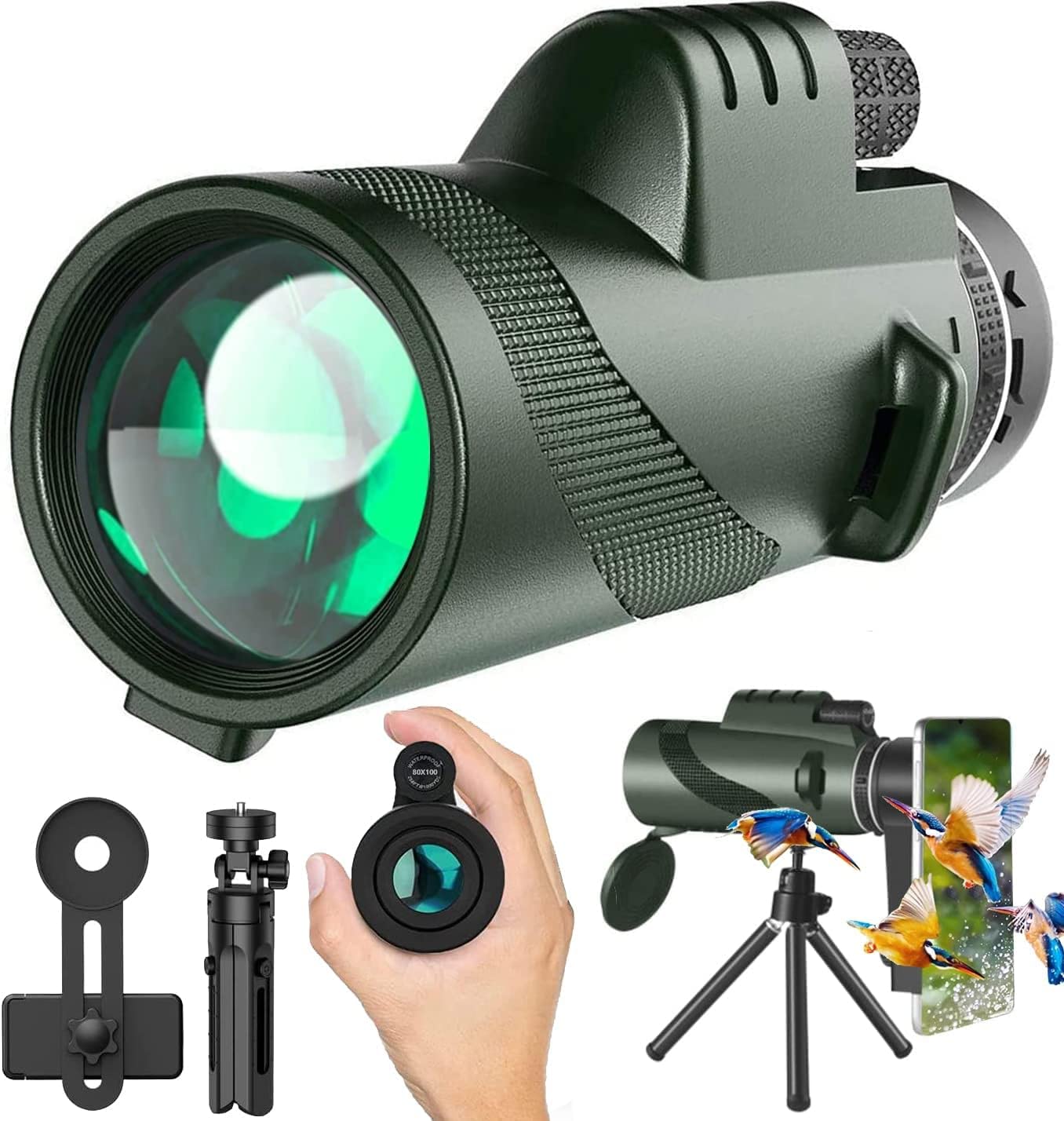
The ASxmhGo 80×100 brings high-magnification optics to the entry-level birder at a remarkably accessible price point. While the “80x” claim is marketing hyperbole (true 80x would be nearly unusable handheld), the monocular still delivers a noticeably magnified view that beginners will find exciting for scanning treelines, lakeshores, and even the moon.
It features a BAK-4 prism and Fully Multi-Coated lens system that provide better brightness and color than the cheapest plastic monoculars — light transmission reaching up to 99.5% according to the spec sheet. The kit includes a retractable tripod, phone holder, hand strap, and carry bag, making it a complete starter package for the aspiring birder who wants to try digiscoping.
Image quality is impressive for the price, with several users reporting clear views of restaurant signs and birds at considerable distance. The twist-up eyecup accommodates glasses wearers, and the lightweight build (about 1 pound) makes it easy to toss into a daypack.
Why it’s great
- BAK-4 prism and FMC optics at an entry-level price
- Complete kit with tripod and phone adapter
- Lightweight and compact for day trips
Good to know
- Exaggerated “80x” magnification claim
- Best for stationary use; shaky at high zoom
6. PhysioPhyx 80×100 Monocular
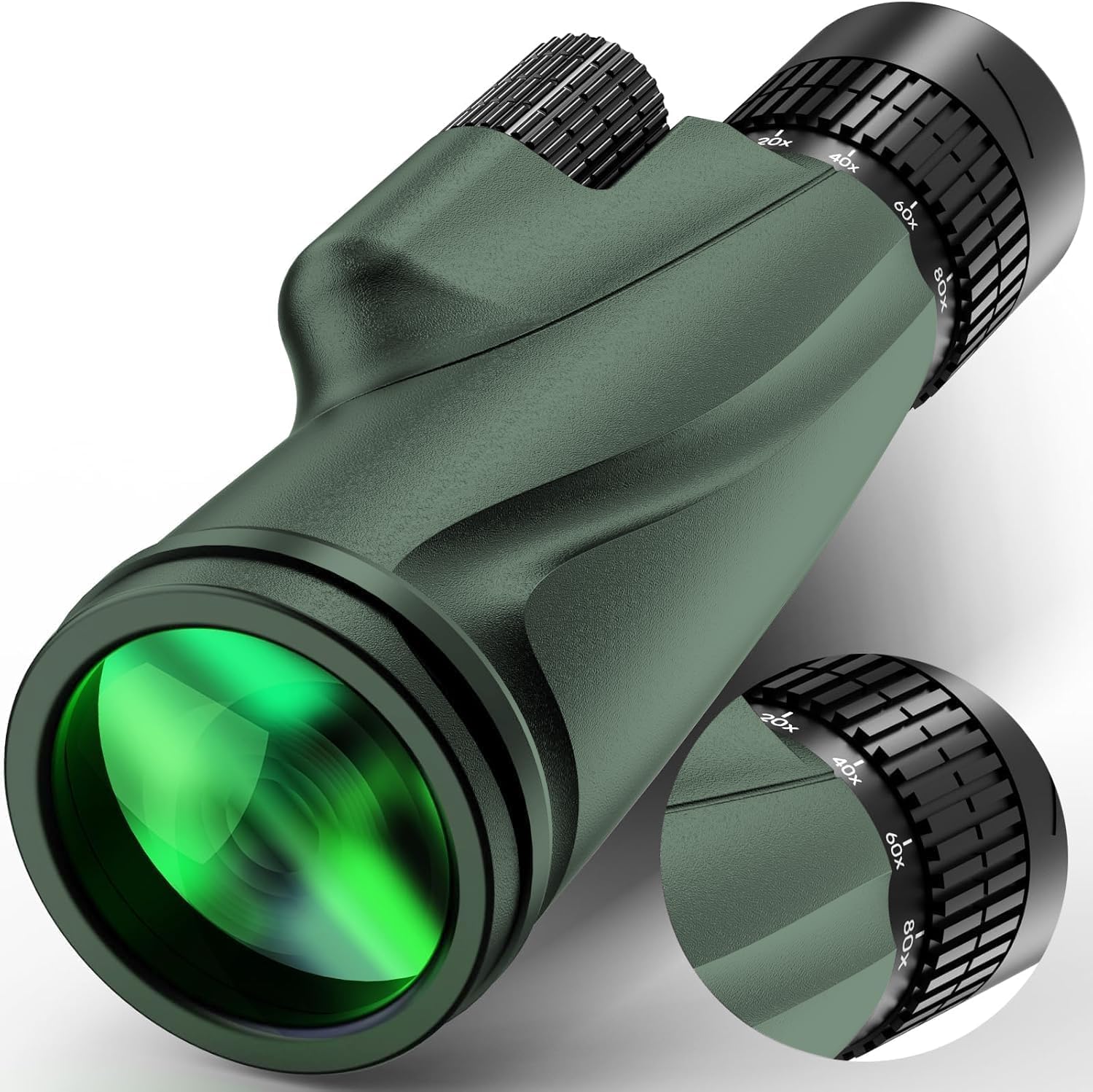
The PhysioPhyx 80×100 monocular targets the enthusiast who wants flexible magnification and robust build quality. Its dual-focus wheel system allows for both coarse and fine focus adjustments, a useful feature when locking onto a distant kingfisher after scanning with the fast focus and then refining with the slow-fine wheel.
The BAK4 prism and FMC lens coatings deliver vivid, clear images, and the high-quality rubber armor provides a non-slip grip while protecting against minor bumps and scratches. The kit includes a quick-positioning smartphone bracket and a tripod, making remote operation and image sharing straightforward.
Like other budget 80×100 models, the magnification claim should be taken with a grain of salt — real-world usable magnification is significantly lower. Users consistently praise its durability and solid feel, and the dual-focus system genuinely helps in getting a sharp image at long range.
Why it’s great
- Useful dual-focus system for precision adjustment
- Rubber-armored body feels durable and secure
- Includes phone bracket and tripod for digiscoping
Good to know
- 80x magnification claim is exaggerated
- Best performance requires a tripod
7. AMITHER 80×100 Monocular

The AMITHER 80×100 monocular is the most budget-friendly option here, designed for the first-time birder or casual observer who doesn’t want to invest heavily. It features a BAK4 prism and Fully Multi-Coated lens that provide noticeably better light transmission than the cheapest monoculars, with the manual claiming up to 7 degrees of viewing angle and a 363-foot field of view at 1000 yards.
The “low light vision” claim refers to the FMC green film lens that reflects and collects ambient light — this works in twilight or moonlight but the monocular cannot see in complete darkness. The included tripod and smartphone adapter allow basic digiscoping, and users report surprisingly clear daytime images for the price point.
Build quality is decent, though some users received units with damaged tripod legs. The monocular itself is praised for easy focusing and good optical performance for the price. This is the best entry point for someone who wants to try birdwatching before committing to a higher-tier optic.
Why it’s great
- Lowest price point with BAK4 prism and FMC coating
- Includes tripod, phone adapter, and carry bag
- Decent daytime clarity for beginners
Good to know
- 80x magnification claim is heavily exaggerated
- Some QC issues with included tripod
FAQ
What magnification is best for birdwatching with a monocular?
What is the difference between a monocular and a spotting scope for birding?
Do I need a waterproof monocular for birdwatching?
Can I take photos through a birding monocular?
Final Thoughts: The Verdict
For most users, the best birdwatching monocular winner is the Nocs Provisions Zoom Tube 8×32 because it blends premium optical coatings, IPX4 weather resistance, and a lightweight 9.5oz build into a package that works for everything from dawn marsh walks to rainy canopy scans. If you need maximum low-light reach, grab the Bushnell Legend 10×42 Ultra HD. And for the budget-conscious birder who wants a complete digiscoping kit, the AYRAVIIO 12×60 delivers remarkable value.